

Ever wake up with a mind full of thoughts? You’re not alone. Many of us struggle to get out of bed in the morning. Sleep plays a big role in how we feel and perform, but we often ignore it until we’re tired.
Our sleep quality can impact our daily lives in many ways. It affects our mood and how well we do at work. Almost one-third of Americans don’t get enough sleep, leading to problems at work and in life1. Lack of sleep can make us less sharp and emotionally drained, hurting our work performance1.
In the U.S., 38% of workers feel tired at work, costing the economy billions1. It’s clear that good sleep is key to being productive and performing well.
Key Takeaways
- Sleep deprivation can significantly hamper cognitive functions and emotional stability.
- Over one-third of Americans don’t meet the recommended sleep guidelines.
- Fatigue at work is prevalent and costly to both individuals and employers.
- Quality sleep is essential for maintaining focus and productivity.
- Understanding sleep patterns can help improve overall workplace performance.
The Importance of Sleep for Overall Well-being
Sleep is key for our health, helping with physical recovery, mental health, and brain function. We spend about a third of our lives sleeping, showing how vital it is for everyone2. Adults need at least seven hours of sleep each night for good health. School-age kids need nine hours3.
Sleep boosts our immune system, helps us remember things, and keeps our mood stable. Not getting enough sleep can make us tired, forgetful, and irritable. It affects how well we do our daily tasks and our overall happiness2.
Issues like anxiety and depression often cause sleep problems, showing we need to treat both together2. Studies show that cognitive-behavioral therapy (CBT) can help with insomnia, even for those who’ve had trouble sleeping for a long time2. It’s important to spread the word about sleep’s role in our health. As we get older, our sleep quality often gets worse, making it crucial to find ways to help older adults sleep better3.

Understanding Sleep Quality and Its Impact
Sleep quality is key for staying healthy and productive. It includes how well you sleep, how refreshed you feel, and how your body cycles through sleep. Good sleep means spending enough time in different sleep stages, like REM and NREM cycles. Bad sleep can lead to memory loss and mood swings.
Defining Sleep Quality
Quality sleep is about how long you sleep and how deep it is. A global study found one in three people struggle with insomnia. In the U.S., over half of adults had sleep issues during the COVID-19 pandemic, more so among those 35-444.
The American Academy of Sleep Medicine says adults need at least 7 hours of sleep each night. Not getting enough sleep can cause many problems, like memory and mood issues4.
The Role of Sleep Cycle Stages
The sleep cycle is crucial for good sleep. People go through three NREM stages and one REM stage every 90 to 120 minutes5. Each stage helps with physical and mental recovery. Not getting enough sleep can make you feel tired and affect your mood and focus5.
So, it’s important to keep a balanced sleep cycle. This helps improve your overall health and brain function.
How Sleep Affects Your Cognitive Functions
Sleep is key for our brain’s functions like attention, memory, and making decisions. Studies show that not getting enough sleep can really hurt these areas. This is true for both a little sleep loss and a lot67.
People who don’t sleep well often have trouble remembering things and staying focused. They also make decisions more slowly. This makes their brain work less well overall7.
When we don’t sleep enough, our brain’s memory center can get damaged. This hurts our ability to learn and remember7. Also, not getting enough deep sleep messes with how our brain handles threats and affects how well we think6.
Not sleeping well also messes with how different parts of our brain talk to each other. This makes it harder to make good choices6. Studies using EEG show that our brain tries to make up for lack of sleep, but it doesn’t work6.
So, getting better sleep can really help our brain work better. It improves our memory, focus, and decision-making skills7.
Sleep Affects Productivity and Performance
Research shows sleep is key for work efficiency. Sadly, nearly 30% of American workers sleep less than six hours a day. This affects their work and wellbeing8. Around 7% of U.S. workers often don’t get enough sleep, costing companies about $44 billion a year9. People who sleep well tend to work better.
The Relationship Between Sleep and Work Efficiency
Sleep is crucial for top brain function and work efficiency. Those who don’t sleep well face many problems, like thinking issues and bad decisions. The CDC calls sleep disorders a big health problem, showing we need to tackle sleep issues at work8. Good sleep keeps energy up, helping people work better in many fields.
Long-term Effects of Sleep Deprivation on Performance
Not sleeping enough hurts work performance and team dynamics. It leads to more absences, stress, and accidents at work9. It also raises the risk of health problems like obesity and anxiety. People with sleep issues see a big drop in productivity and happiness, showing how important sleep is in a tough work world8.

Symptoms of Sleep Deprivation
Sleep deprivation shows up in many ways, affecting emotions, thoughts, and body. It can make work harder, leading to more mistakes and less done.
Emotional and Cognitive Symptoms
Feeling irritable and less motivated are common signs. These feelings can cause problems at work. Long-term sleep loss might lead to anxiety, depression, or even hallucinations10.
It also makes it hard to make good decisions and focus. Lack of sleep can hurt how well we pay attention and learn11. Many U.S. adults don’t get enough sleep, making this a big concern11.
Physical Symptoms and Their Impact on Work
Being tired is just the start. It can make moving clumsily, raising the chance of accidents. This is true for jobs that are very risky, like driving or using big machines11.
It also weakens the immune system, making us sicker longer10. Bad sleep can mess with insulin, raising the risk of diabetes and heart disease12. People who don’t sleep well might get sick more often and be less happy at work11.

The Economic Impact of Poor Sleep
Poor sleep affects work greatly, causing a big drop in productivity. Over a third of American adults don’t get enough sleep. This leads to lower work performance and higher healthcare costs for sleep issues13.
In the U.S., not getting enough sleep costs the economy between $280 billion and $411 billion each year13. People who sleep less than six hours a night lose 2.4 percentage points in productivity. This is compared to those who sleep seven to nine hours13.
The financial loss is huge. About 1.23 million working days are lost in the U.S. each year due to not enough sleep. This equals 9.9 million working hours lost13. Poor sleep is linked to seven of the fifteen leading causes of death in the U.S13..
This affects not just people’s health but also the health of companies. It lowers motivation and performance. So, good sleep habits are key for both personal health and business success14.

Improving Sleep Habits for Better Productivity
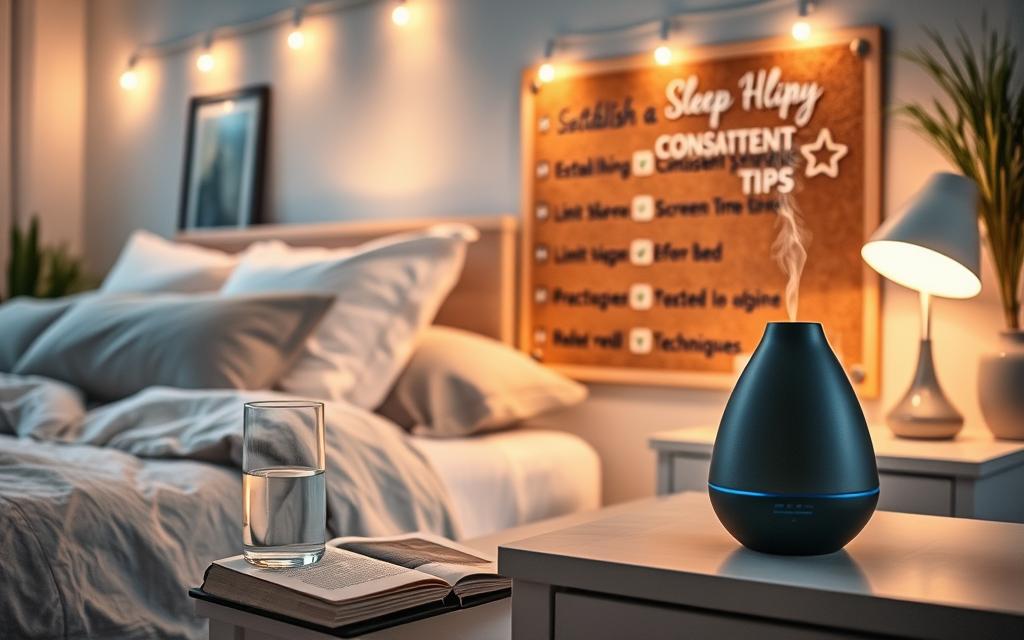
Improving sleep habits is key to boosting productivity. Good sleep hygiene and a sleep-friendly environment are crucial. Consistent routines and organized sleep spaces help a lot. They are vital for quality sleep and better work performance.
Sleep Hygiene Practices
Good sleep hygiene is essential for quality sleep. It’s important to have a regular bedtime routine. Also, avoid screens for at least an hour before bed to reduce blue light’s effect on melatonin.
This can improve sleep quality by up to 20%15. Stay away from caffeine and nicotine before bed to sleep better.
Creating a Sleep-Friendly Environment
A good sleep environment is vital for better sleep. Room temperature, noise levels, and light control matter a lot. Keep your bedroom cool, quiet, and free from digital distractions for better sleep16.
Also, sticking to a regular sleep schedule helps regulate your body’s clock. This can lead to better sleep and more productivity15.
The Role of Napping in Enhancing Performance
Napping has many napping benefits that help improve workplace productivity. Short naps of 5 to 15 minutes can make you feel more alert and sharp for 1 to 3 hours17. Longer naps, over 30 minutes, might make you feel groggy at first but then boost your thinking skills for hours17.
The best time for a power nap is between 1 PM and 3 PM. This matches when our energy naturally drops after lunch18. A 26-minute “NASA” nap was found to increase alertness by 54% and performance by 34% in pilots, showing short naps can be very effective18.
A study looked at 11 studies and found napping greatly improves thinking skills, with a big boost in alertness at 0.2919. People who nap regularly get more benefits than those who nap less often17. Napping can be a smart way for workers who often don’t get enough sleep; about one-third of Americans don’t sleep enough each night18.
Two 30-minute naps, one in the morning and one in the afternoon, can lower inflammation and protect against sleep loss18. Also, short naps can help with memory and learning, making napping a great way to boost workplace productivity and job performance18.

Strategies for Managing Sleep Deprivation at Work
Employees often struggle with sleep deprivation at work. Finding good strategies can help them stay alert and productive. Companies should focus on supporting their employees’ health.
Breaks and Downtime for Improved Alertness
Regular breaks and downtime help recharge energy during the workday. Short naps can boost alertness, focus, and memory. They also lower stress levels, making them a good choice for tired employees20.
Workplaces should value these brief rest periods, even in demanding roles. People with insomnia miss about five extra workdays a year. This leads to big productivity losses21.
Communication with Employers About Sleep Needs
Talking openly about sleep needs with employers is key. It helps create a supportive work environment. This open communication allows employees to share their sleep issues and find solutions.
Companies that talk about sleep can develop strategies that include rest. This improves work-life balance. Not getting enough sleep can lead to higher healthcare costs and lower productivity20
Common Myths Surrounding Sleep
Sleep is often misunderstood, filled with myths and misconceptions. These can harm our health and productivity. Looking into these myths shows how far off public beliefs are from science.
Myths About Sleep Duration
Many think adults need less sleep as they age. But, experts say this is a big lie. They believe we still need plenty of sleep as we get older22.
About one-third of adults in the U.S. sleep less than seven hours a night22. The idea that some can get by with just five hours is seen as very harmful22 and23. Experts also say sleeping in on weekends doesn’t make up for lost sleep during the week22.
Misconceptions About Napping
Napping is often seen as bad, but research shows it’s good. Many think napping messes up nighttime sleep. But, short naps can make us more alert and perform better23.
Experts say napping can fight sleep deprivation and boost creativity23. Another myth is that naps make us groggy. But, a short nap can refresh us without making us feel disoriented23. Understanding these myths can help us sleep better and live better.

Scientific Studies on Sleep and Work Performance
Research shows a strong connection between sleep quality and work performance. A study found that athletes sleeping six hours a night face over a 70% chance of injury. Those sleeping nine hours have less than a 20% chance24. Also, 60% of adults say not getting enough sleep affects their work, with 70% mentioning it lowers their productivity25.
More than 50% of people say they work less efficiently when they don’t get enough sleep25. This is a big problem in jobs that require long hours, like management. In these roles, 40.5% of workers report not getting enough sleep26. The same issue is seen in manufacturing and transportation, where shift work leads to poor sleep26.
Between 15% and 30% of workers in developed countries have jobs with irregular hours. This can lead to poor sleep quality26. Good sleep is key for staying emotionally stable and thinking clearly. Without enough rest, people struggle with social interactions and making decisions25.
Aetna’s sleep program showed a 69-minute productivity boost per month for employees sleeping seven hours or more24. This highlights the importance of sleep for better work performance and employee health.
Improving Your Sleep Quality
Getting better sleep is key to feeling more productive and happy. Using good sleep techniques can really help how you do things when you’re awake. Many people don’t get enough sleep, which can hurt their work and health.
Techniques for Better Sleep
There are many ways to sleep better. Having a regular bedtime routine is important. Going to bed and waking up at the same time every day helps your body’s clock.
Writing down your thoughts can clear your mind and help you relax before bed. Doing deep breathing or muscle relaxation can also make you calm and sleep better.
Mindfulness and Relaxation Practices
Adding mindfulness to your evening can boost your mental health and sleep. Meditation or yoga before bed can lower stress and get your mind ready for sleep. The Philips SmartSleep Deep Sleep Headband has been shown to improve sleep by helping with slow wave sleep. This is important for brain function and feeling more awake27.
By using these relaxation methods, you might sleep better and be more productive during the day.
Link Between Sleep and Mental Health
The connection between sleep and mental health is intricate. It greatly impacts our emotional state and brain function. Not getting enough sleep can lead to more anxiety and depression, affecting our mental health.
Insufficient sleep harms the brain. It causes cognitive decline and makes daily tasks harder.
Cognitive Decline and Sleep
Studies show that not sleeping well can hurt our brain. Almost one-third of Americans don’t get enough sleep, leading to mental and physical tiredness1. About 38% of U.S. workers feel tired at work, which worsens their brain function and productivity1.
Anxiety, Depression, and Sleep Quality
People with anxiety often have trouble sleeping, making their anxiety worse28. Around 75% of those with depression have insomnia28. There’s a cycle where poor sleep worsens anxiety and vice versa.
Good sleep habits, like cognitive behavioral therapy, can help manage mental health issues28.
The Future of Sleep Research
The future of sleep research looks bright, with new discoveries about sleep and its effects on our minds and bodies. Technology is playing a big role in this field. Wearable devices help track our sleep, showing how our daily habits impact our rest.
AI is now analyzing brain waves and sleep logs to forecast insomnia risks. This is based on our lifestyle and health history29.
As more people struggle with sleep, finding effective treatments becomes crucial. New medicines and therapy methods are showing promise in treating chronic insomnia29. Studies also suggest that better sleep can lower the risk of diseases like diabetes and heart disease29.
Future studies will dive deeper into the effects of sleep disorders. The American Academy of Sleep Medicine suggests we aim for 7 to 9 hours of sleep each night30. This focus is key for research and public health efforts. It’s also vital for improving workplace performance.
Almost 30% of adults face serious insomnia, making it a pressing issue for sleep research30. By finding better ways to sleep and promoting healthy habits, we can look forward to a future with better health and productivity.
Final Thoughts on Sleep and Productivity
It’s vital for everyone to make sleep a priority. Understanding how sleep boosts productivity and health is key. Adults need 7 to 8 hours of sleep each night, but many get only 6. This leads to a big drop in work performance31.
Not getting enough sleep hurts creativity, decision-making, and memory. Just one night without enough sleep can cause problems32. Also, sleep-deprived workers are almost three times more likely to get sick, including colds31.
Improving sleep quality can greatly benefit both people and companies. For example, making your sleep space dark, quiet, and comfy can really help32. Well-rested employees are more alert and productive, which reduces stress33. Encouraging good sleep habits can make work more efficient and emotionally healthier.
In summary, focusing on sleep can greatly improve productivity, creativity, and workplace happiness. With the high rates of absenteeism and injuries due to poor sleep, it’s crucial to value rest in the workplace33.
Conclusion
Sleep is key to being productive and performing well. Sadly, about 35% of U.S. adults don’t get enough sleep, which is seven to nine hours a night. This lack of sleep causes big problems, like more accidents at work and a huge loss in productivity. It costs the U.S. economy about $44.6 billion every year341.
Sleep issues don’t just affect one person; they spread through the workplace. This shows how sleep problems can hurt job performance and mental health.
Getting enough sleep brings many benefits. For example, workers who sleep well are happier and make fewer mistakes. They also think more creatively and make better decisions35.
This leads to a positive cycle. Better thinking and memory mean better work, more engagement, and a healthier work place.
It’s time for everyone to see how sleep and productivity are linked. By understanding this, we can make work better and more rewarding. Creating a sleep-friendly work culture is crucial for everyone’s well-being and success.
FAQ
How does sleep affect overall productivity and performance?
Sleep is key for our brains, emotions, and health. Not getting enough sleep can hurt our focus, memory, and choices. This makes us less productive and creative at work.
What constitutes good sleep quality?
Good sleep means waking up feeling refreshed. It’s about the right mix of sleep stages. These stages help our brains and emotions recover.
What are the signs and symptoms of sleep deprivation?
Lack of sleep shows in many ways. You might feel moody or unmotivated. Your brain might struggle to make decisions or focus. It can also make you more accident-prone at work.
How does poor sleep impact an organization’s bottom line?
Bad sleep costs employers a lot. It’s estimated at 6.4 billion a year in the U.S. This loss comes from less work done and higher health costs.
What strategies can improve sleep habits for better workplace productivity?
To sleep better, stick to a routine and avoid caffeine before bed. Make your bedroom comfy and relax before sleeping. These steps can make you more efficient at work.
Is napping beneficial for workplace performance?
Yes, short naps can really help. They make you more alert and focused. This can counteract the effects of not sleeping well and improve your job skills.
What common myths about sleep should I be aware of?
Some myths say older people need less sleep and that napping is bad. But, adults usually need seven hours of sleep a night. Napping can actually help you do better at work.
How can mindfulness practices improve sleep quality?
Mindfulness can help you relax and sleep better. Try exercises, journaling, or a calming bedtime routine. These can reduce stress and improve your sleep and work performance.
What impact does sleep have on mental health?
Not enough sleep can make mental health problems worse. It can lead to a decline in thinking skills. Better sleep can greatly improve your mood and mental health.
What advancements can we expect in sleep research?
Sleep research will likely dive deeper into sleep disorders. New tech could help us understand and fix sleep issues better. This could lead to better sleep for everyone worldwide.
Source Links
- The Link Between Sleep and Job Performance – https://www.sleepfoundation.org/sleep-hygiene/good-sleep-and-job-performance
- Sleep Matters: The Impact Of Sleep On Health And Wellbeing – https://www.mentalhealth.org.uk/explore-mental-health/publications/sleep-matters-impact-sleep-health-and-wellbeing
- Good Sleep for Good Health – https://newsinhealth.nih.gov/2021/04/good-sleep-good-health
- How Sleep Deprivation Impacts Mental Health – https://www.columbiapsychiatry.org/news/how-sleep-deprivation-affects-your-mental-health
- How Lack of Sleep Impacts Cognitive Performance and Focus – https://www.sleepfoundation.org/sleep-deprivation/lack-of-sleep-and-cognitive-impairment
- The consequences of sleep deprivation on cognitive performance – https://pmc.ncbi.nlm.nih.gov/articles/PMC10155483/
- From Zzzs to memories: How sleep habits shape cognitive function – https://thedaily.case.edu/from-zzzs-to-memories-how-sleep-habits-shape-cognitive-function/
- The relationship between sleep quality and occupational well-being in employees: The mediating role of occupational self-efficacy – https://pmc.ncbi.nlm.nih.gov/articles/PMC9911531/
- Why Healthy Sleep and Productivity at Work Go Hand in Hand – https://www.wellright.com/resources/blog/why-healthy-sleep-and-productivity-at-work-go-hand-in-hand
- Sleep Deprived? Here Is What Lack of Sleep Does to Your Body – https://www.healthline.com/health/sleep-deprivation/effects-on-body
- Five eye-opening ways sleep impacts your employees – https://www.bighealth.com/blog/five-eye-opening-ways-sleep-impacts-employees
- How sleep deprivation affects work-related performance – Sleep Cycle – https://www.sleepcycle.com/sleep-deprivation/how-sleep-deprivation-affects-work-related-performance/
- Why Sleep Matters—The Economic Costs of Insufficient Sleep: A Cross-Country Comparative Analysis – https://pmc.ncbi.nlm.nih.gov/articles/PMC5627640/
- Functional and Economic Impact of Sleep Loss and Sleep-Related Disorders – Sleep Disorders and Sleep Deprivation – https://www.ncbi.nlm.nih.gov/books/NBK19958/
- The Impact of Sleep on Productivity and How to Improve It – https://www.linkedin.com/pulse/impact-sleep-productivity-how-improve-antoaneta-tsocheva-tsmnf
- Relationship between sleep and productivity: The ultimate guide – https://www.wellics.com/blog/sleep-and-productivity
- The effects of napping on cognitive functioning – PubMed – https://pubmed.ncbi.nlm.nih.gov/21075238/
- The science behind power napping and work productivity | Muse™ EEG-Powered Meditation & Sleep Headband – https://choosemuse.com/blogs/news/the-science-behind-power-napping-and-work-productivity?srsltid=AfmBOopDhulJ82NQ6n0AhdyAEVfJzvr5Iwk3jX1S4xLy1Hvt6PcffECh
- Effects of a Short Daytime Nap on the Cognitive Performance: A Systematic Review and Meta-Analysis – https://pmc.ncbi.nlm.nih.gov/articles/PMC8507757/
- Sleep-deprived workforce? Boost productivity with better rest – https://www.bighealth.com/blog/sleep-deprived-workforce-boost-productivity-with-better-rest
- Workplace Interventions to Promote Sleep Health and an Alert, Healthy Workforce – https://pmc.ncbi.nlm.nih.gov/articles/PMC6457507/
- Sleep myths: An expert-led study to identify false beliefs about sleep that impinge upon population sleep health practices – https://pmc.ncbi.nlm.nih.gov/articles/PMC6689426/
- Myths and Facts About Sleep – https://www.sleepfoundation.org/how-sleep-works/myths-and-facts-about-sleep
- You snooze, you win – https://www2.deloitte.com/content/www/us/en/insights/focus/behavioral-economics/sleep-benefits-impact-employee-performance.html
- Poor Sleep Hurts Work Productivity, Survey Shows – https://www.healthday.com/health-news/general-health/poor-sleep-hurts-work-productivity-survey-shows
- Frontiers | Sleep and Organizational Behavior: Implications for Workplace Productivity and Safety – https://www.frontiersin.org/journals/psychology/articles/10.3389/fpsyg.2020.00045/full
- Sleep Smart: Sleeping your way to a productive day – https://www.philips.com/a-w/about/news/archive/standard/news/articles/2020/20200603-sleep-smart-sleeping-your-way-to-a-productive-day.html
- Mental Health and Sleep – https://www.sleepfoundation.org/mental-health
- The Future of Sleep Research: New Discoveries and Emerging Technologies | Kinnu – https://kinnu.xyz/kinnuverse/science/science-of-sleep/the-future-of-sleep-research-new-discoveries-and-emerging-technologies/
- The Cost of Sleep Lost: Implications for Health, Performance, and the Bottom Line – https://pmc.ncbi.nlm.nih.gov/articles/PMC6530553/
- Impact of Sleep Deprivation on Employee Productivity – https://www.truworthwellness.com/blog/impact-of-sleep-deprivation-on-employee-productivity/
- How Does Sleep Impact Productivity? | BetterSleep – https://www.bettersleep.com/blog/how-does-sleep-impact-productivity
- Poor Sleep Linked to $44 Billion in Lost Productivity – https://news.gallup.com/poll/390797/poor-sleep-linked-billion-lost-productivity.aspx
- The Link Between Work Productivity and Sleep | Shortlister – https://www.myshortlister.com/insights/sleep-and-productivity
- The Impact of Sleep on Productivity: What You Need to Know – https://snorelessnow.com/blogs/the-good-night-blog/the-impact-of-sleep-on-productivity?srsltid=AfmBOordU2fG768d9kZzciBgk5sUEt1DWuNbLZ44QvEJFdJ-5jNIsSi7