

In today’s fast world, stress often takes over our lives. We long for peace and balance. Reiki healing offers a beacon of hope, leading us to a world of energy healing and holistic well-being.
Imagine a calm space where anxiety fades away. Here, deep breaths fill us with calming energy. This ancient practice shows that healing goes beyond the physical, touching our emotions, mind, and spirit.
As we learn more about Reiki, from its history to practical techniques, we start a journey to better well-being. Studies show Reiki can greatly improve our health. It reduces pain, anxiety, and boosts mood in those facing challenges12. Let’s see how this gentle yet powerful energy can help us find balance and healing.
Key Takeaways
- Reiki is gaining popularity as a powerful form of energy healing.
- It promotes overall well-being by addressing physical, emotional, and spiritual health.
- Research indicates significant benefits for patients experiencing pain and anxiety.
- Reiki sessions can enhance mood and reduce stress in various populations.
- Integrating Reiki into our wellness routines can offer profound improvements.
- The potential costs for private sessions vary, making it accessible for many.
Understanding Reiki: A Brief Overview
Reiki is a way to heal using universal life energy. It was started by Mikao Usui, a Japanese Buddhist monk, in 1922. He developed it after a spiritual experience during a 21-day meditation on Mount Kurama3.
The name “Reiki” comes from “Rei,” meaning universal wisdom, and “Ki,” the life force energy4. Practitioners use this energy to help the body heal itself4. It’s a non-invasive therapy that helps with emotional, physical, and spiritual health5.
Reiki is great for relaxation and balance. Practitioners put their hands on or near the body to help the energy flow5. It’s guided by a higher power, making it good for people of all beliefs4.
Some think Reiki is a religious practice, but it’s not. It’s a healing art without any specific beliefs4. There are different schools of Reiki, like Usui, Karuna, and Holy Fire Reiki. Each has its own way but shares the same core principles3.
The Origins of Reiki and Its Historical Context
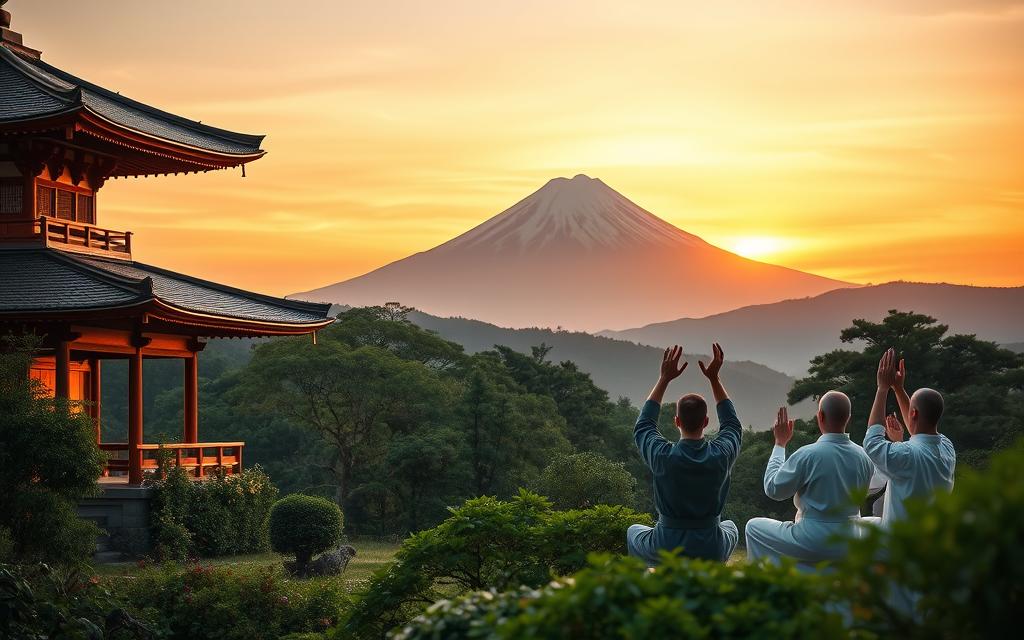
The Reiki history goes back about 2,500 years to ancient Eastern practices. It includes qi from Chinese medicine and prana from Indian philosophy. Mikao Usui created Reiki in the early 1900s, aiming for a universal healing method beyond religious beliefs.
Usui was born in 1865 to a wealthy Buddhist family. He wanted a healing practice for everyone, not just those with certain beliefs6. He studied martial arts and Kiko, a Japanese Chi Kung form, to deepen his knowledge of energy healing7.
Usui’s life changed during a 21-day fast on Mount Kurama. There, he got ancient Sanskrit symbols key to the Usui Reiki system6. Afterward, he opened a clinic in Kyoto and started teaching Reiki to others7.
Dr. Chujiro Hayashi later improved the Usui system. He trained Hawayo Takata, a Japanese-American woman. Takata brought Reiki to the United States, making it known worldwide6.
How Reiki Works: The Concept of Universal Life Force Energy
Reiki is a Japanese healing art that believes in a universal life force energy. This energy flows through and around all living beings8. Practitioners use their hands to direct this energy and help balance it in the recipient8.
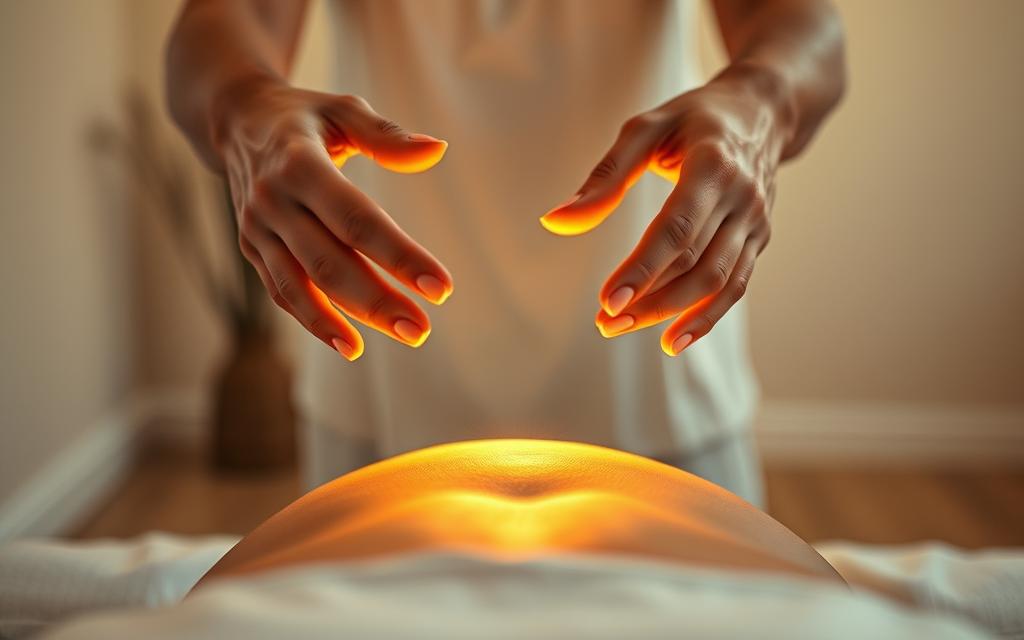
They place their hands on or just above the person. This helps the energy flow through the practitioner’s crown chakra, down the meridians, and out through the palms9. The energy targets areas of the body that need healing9.
Reiki sessions last 45 to 90 minutes. During this time, the practitioner uses specific hand positions and symbols. These help enhance the energy flow8.
Studies suggest Reiki can reduce pain, anxiety, and stress. It also improves relaxation and well-being8. Practitioners receive initiation and attunement to channel this energy for healing9.
Reiki not only heals individuals but also protects them and their spaces. It cleanses environments and supports animal well-being9. It’s becoming more accepted in hospitals, hospice care, and veterinary medicine. It’s often used alongside other therapies9.
Reiki Techniques and Practices
Reiki techniques are key to improving energy flow. Practitioners start by centering, stabilizing their energy. This step is crucial for effective energy transfer to the recipient. It prepares the practitioner and boosts the session’s success by clearing energy channels10.
Clearing techniques are also vital. They remove negative energy that hinders healing. This makes way for vitality and health to flow.
Beaming is another common technique. Practitioners send specific energy frequencies to the recipient’s body. This method promotes deep healing and restoration11. The practitioner acts as a bridge, connecting universal energy to the recipient.
Energy Healing: Benefits for Physical Health
Energy healing is based on the idea that imbalanced energy can cause physical problems. This shows it has a solid scientific foundation for its health benefits12. It’s a non-invasive, painless way to help, making it a safe choice for improving sleep, reducing pain, and boosting overall health12.
Studies show that people feel more relaxed after energy healing. They go from feeling an average of M=5.036 before to M=7.86 after, proving its effectiveness with a p-value of .001713.
People also feel more at peace and less anxious after energy healing. This is backed by data showing a rise in well-being from M=5.86 to M=8, with a p-value of .000113. It also helps reduce pain, with people feeling less pain after, going from M=4.0 to M=2.2513.
This shows how energy healing can greatly improve physical health and help people relax. It leads to better health outcomes.
Emotional Benefits of Reiki Healing
Reiki is known for boosting emotional well-being. It uses gentle energy to help people relax deeply. This leads to a calm mind, making it easier to handle tough emotions14.
Many feel calm during Reiki sessions. This calmness helps reduce stress and anxiety14. A 2024 study found Reiki can lessen anxiety, depression, and stress. It supports emotional healing15.
Reiki also helps improve mood. People often feel better emotionally after a session. This shows Reiki’s power in enhancing emotional states.
Reiki goes beyond just relaxing. It helps manage emotional pain from chronic conditions16. A 2024 study with cancer patients showed better sleep and less anxiety before surgery. This highlights Reiki’s holistic benefits15.
In short, Reiki is a safe way to balance emotions. It improves mood and well-being. By adding Reiki to our wellness routine, we gain emotional benefits. This leads to better handling of life’s challenges16.
Integrating Reiki into Your Wellness Routine
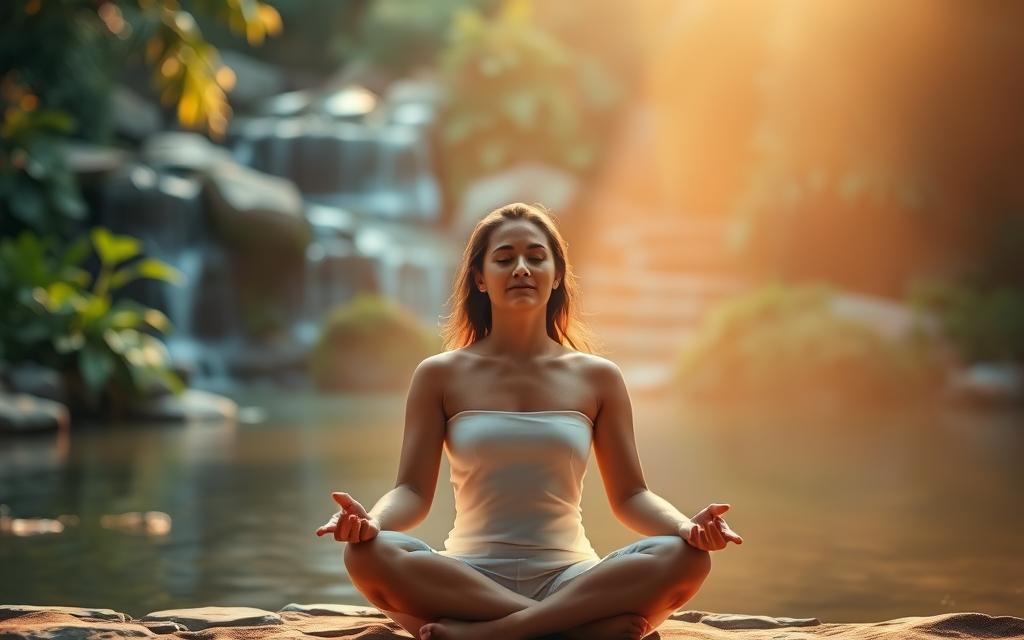
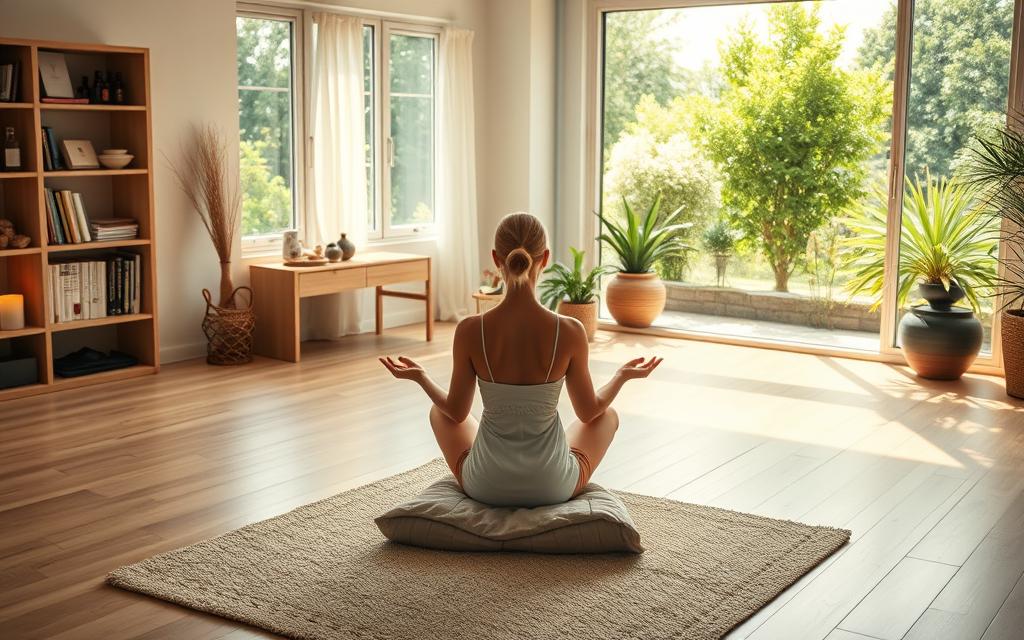
Adding Reiki to our wellness routine can boost our holistic health journey. We can start by doing short Reiki sessions throughout the day. For instance, a few minutes of hands-on Reiki in the morning can help us clear out stagnant energy and set a positive tone for the day17.
As our schedules allow, setting aside time for self-Reiki before bed can help us visualize letting go of stress and negativity. This can lead to better sleep and relaxation17.
We can also use quick Reiki practices during coffee breaks or commutes to tackle specific tension areas. This keeps us in tune with our body’s needs. Combining Reiki with meditation and yoga can greatly boost their effects18.
Using Reiki to charge our food and water with positive energy is a great way to nourish our bodies17.
Studies show that Reiki can reduce pain and anxiety, making it a great addition to traditional medical treatments. It offers comfort without affecting medications19. Regular Reiki practice improves emotional well-being and supports physical health by managing stress18.
Embracing Reiki, we find it works well with other energy healing practices like acupuncture and shiatsu. This allows us to deepen our wellness journey19.
Expectations: What Happens During a Reiki Session
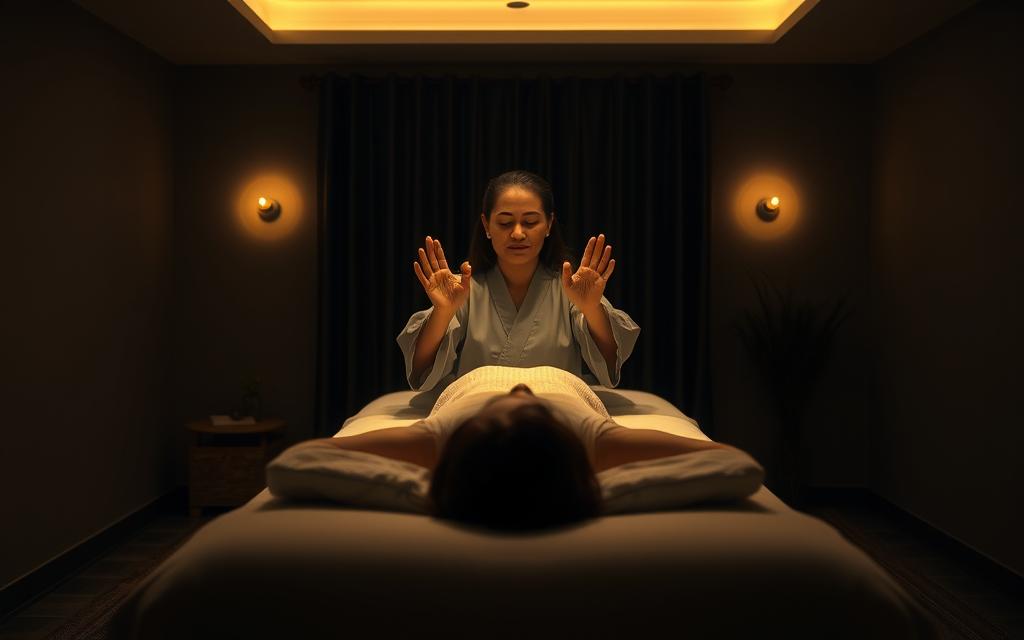
Getting ready for our first Reiki session can be exciting but also a bit nerve-wracking. Knowing what to expect can help ease any worries. A Reiki session usually lasts between 45 minutes to an hour. This gives us plenty of time to relax and let the healing begin20.
The room is set up to help us relax, with soft music and dim lights. We stay in our clothes but take off our shoes, glasses, and big jewelry to feel more comfortable20.
The practitioner makes sure we’re cozy, offering blankets and pillows. We can move around to find the best position for comfort during the session20. We can choose if we want the practitioner to touch us or not, depending on what feels right21.
During the session, we might feel warmth or tingling. These feelings show that the energy is working on us21. The practitioner uses their hands to send energy, helping to clear blockages and bring balance21.
After the session, drinking water is important. It helps our body and mind feel better and supports the healing process20.
Scientific Perspectives on Reiki: Research and Findings
Exploring scientific research on Reiki, we find a mix of curiosity and doubt about its benefits. Recent studies show interesting results on Reiki’s effect on physical relaxation. For example, a study by Witte and Dundes found Reiki better than a placebo in relaxing people. They saw big changes in heart rate and body temperature (n = 25)22.
Another study by Baldwin et al. looked at Reiki’s effects on stressed rats. They found Reiki lowered heart rate and reduced damage in blood vessels. This was seen in multiple trials (n = 4 per group, replicated 3 times)22. These results could help us understand how Reiki might help with stress.
Research by Salles et al. also caught our attention. They found Reiki lowered blood pressure in people. This was compared to sham Reiki and control groups (n = 22 per group)22. These findings add to the growing evidence of Reiki’s health benefits.
Yet, we face big challenges in studying Reiki scientifically. Issues like small sample sizes and inconsistent results make it hard to understand its true effects23. These problems highlight the need for more research to confirm Reiki’s role in therapy.

Reiki in Medical Settings: Acceptance and Application
Reiki is becoming a key part of health care in the U.S. It’s used in over 800 hospitals, with 15% making it a regular service. This shows a big increase in the acceptance of energy healing in medicine24. At Portsmouth Regional Hospital, 20 healthcare workers offer Reiki, giving over 8,000 treatments by 2008. This shows how it’s becoming a routine part of hospital care24.
Hospitals are now mixing Reiki with traditional treatments to improve care. At the California Pacific Medical Center’s Health and Healing Clinic, Reiki helps patients with HIV, pain, and chemotherapy side effects24. Studies have shown Reiki can lower anxiety in patients, which is great for those with chronic illnesses25. A study at Columbia/HCA Portsmouth Regional Hospital found Reiki can also reduce pain and anxiety after surgery. Patients needed less anesthesia and stayed in the hospital less26.
Reiki is also being taught to healthcare workers at places like the University of Michigan. This shows more doctors and nurses are open to energy healing24. By using Reiki in operating rooms and recovery areas, it’s helping to make health care more holistic. This shows that combining traditional and holistic treatments can greatly improve patient care26.

Potential Risks and Ethical Considerations in Reiki
Reiki can be calming, but it’s key to know its risks. Clients might feel emotional or experience physical sensations like tingling during a session27. It’s crucial to remember that Reiki should not replace medical treatments, as it could delay necessary care27.
Practicing Reiki ethically is vital. It’s important for clients and healthcare providers to talk openly, mainly for those with health issues27. Practitioners must follow ethical rules, keep things confidential, and maintain safety27. The lack of standard regulation and certification for Reiki raises concerns about its quality and safety27.
Ethical issues also involve spiritual aspects. The U.S. Conference of Catholic Bishops warns about Reiki, citing its lack of scientific backing and potential conflicts with Christian beliefs28. Some might find Reiki’s spiritual elements clash with their beliefs, causing spiritual distress despite its stress-relieving effects28.
Reiki’s lack of scientific proof means many benefits might be due to the placebo effect29. It’s important to remember that Reiki should not replace medical advice or treatment29. The varying standards for Reiki training and certification also raise ethical concerns about the reliability of treatments29.
Reiki as a Complementary Therapy
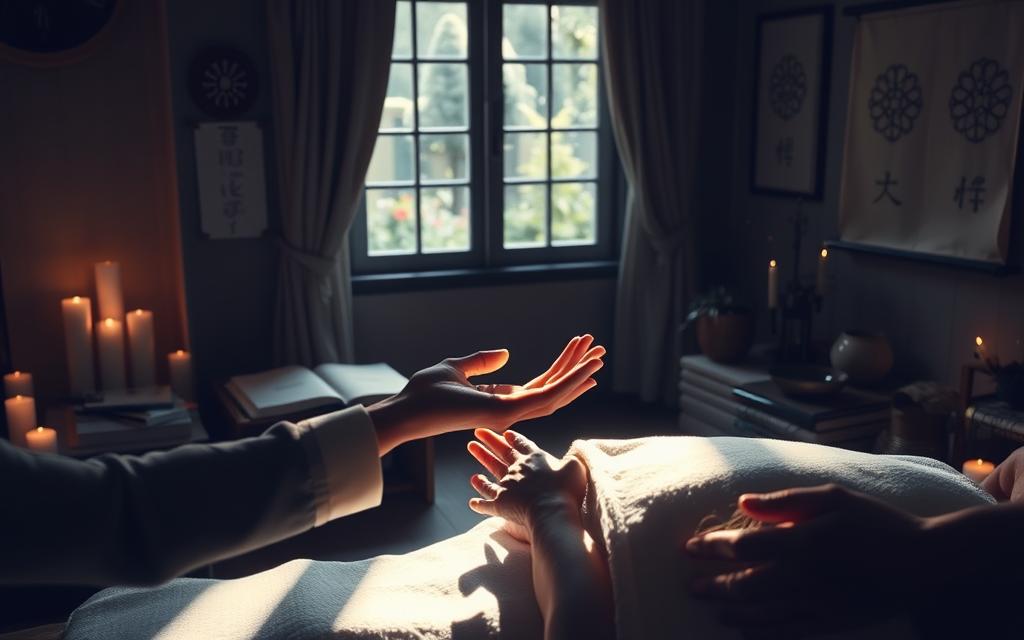
Reiki is a powerful complementary therapy that works well with traditional medicine. It helps us relax and feel better, improving our health. As a form of energy healing, it helps our body heal itself, leading to better physical and emotional health30.
In hospitals and clinics, Reiki is now seen as a valuable addition to medical care. It’s even offered for free or at low cost in places like cancer centers and hospices. This makes it easier for more people to try it out31. Prices for private sessions vary, from £15 to £100 an hour, depending on where you are and who’s doing it31.
The benefits of Reiki go beyond just feeling relaxed. People often say they feel less pain, heal faster, sleep better, and feel clearer emotionally30. It’s open to everyone, no matter their beliefs, as a way to support their healing journey.
Finding a Qualified Reiki Practitioner
Finding the right Reiki practitioner can be tricky. It’s important to know the professional standards in the field. Practitioners can be trained at different levels, with Level II showing they are professionals. Level III means they can teach and offer advanced healing32.
Experience is key, but so is the practitioner’s ability to connect with us. They should understand energy healing well32. Different Reiki types, like Western Usui or Holy Fire, mean we need to find the right match for our needs32.
Looking for a qualified practitioner? Use the IARP (International Association of Reiki Professionals) directories. They list Reiki Practitioners in places like Connecticut and New York33. The IARP follows a Code of Ethics and has strict membership rules33.
When searching, ask about their training and experience. A good practitioner makes you feel at ease32. The IARP Worldwide Reiki Locator can help find a skilled practitioner near you33.
Conclusion
In our journey through energy healing, we’ve seen how Reiki and other methods can boost our health. Reiki helps with physical pain, emotional stress, and spiritual growth34. It shows us that health is more than just the body; it’s about the mind and spirit too.
Studies show Reiki can help with back pain and other long-term issues, making it a good choice alongside regular medicine35. It also improves sleep, helps with emotional issues, and gives us a sense of purpose. This makes it a great option for those looking for a natural healing way.
We encourage you to explore energy healing further. It can work alongside traditional medicine to improve our health. By doing this, we support a more complete view of health, helping us all reach our wellness goals.
FAQ
What is Reiki?
Reiki is a healing method that uses universal energy. It aims to heal the body and mind, remove blockages, and boost well-being.
How does a Reiki session work?
In a Reiki session, the practitioner channels energy through various techniques. The recipient lies down and relaxes. The practitioner moves their hands over the body to help energy flow.
Can anyone benefit from Reiki?
Yes, anyone can benefit from Reiki. It helps with stress, anxiety, pain, and emotional issues. It’s great for anyone looking to improve their health.
Is there scientific evidence supporting Reiki?
Some studies show Reiki can help with pain and stress. But, more research is needed. Many rely on personal experiences to believe in its benefits.
Is Reiki safe?
Reiki is generally safe and has few side effects. But, it shouldn’t replace medical treatments. Always talk to a doctor before trying it.
How do I find a qualified Reiki practitioner?
Look for certified practitioners. Check their experience and read testimonials. This ensures you find a good energy healer.
What can I expect during my first Reiki session?
You’ll talk about your concerns before the session. During it, you might feel warmth or tingling. After, you might feel relaxed and peaceful.
Can Reiki help with emotional issues?
Yes, Reiki can help with stress, anxiety, and emotional healing. It can improve your mood and mental clarity. It’s great for spiritual and holistic healing.
How often should I receive Reiki?
How often depends on your needs. Some get it regularly, while others get it when needed. It’s good for stress or recovery.
What should I do after a Reiki session?
Drink water and rest to enhance the benefits. Mindfulness practices like meditation or yoga can help keep the energy balance.
Source Links
- Reiki: How This Energy Healing Works and Its Health Benefits – https://www.everydayhealth.com/reiki/
- Reiki: What it is, techniques, benefits, risks, and more – https://www.medicalnewstoday.com/articles/308772
- Understanding Reiki: A Comprehensive Exploration of Energy Healing – https://medium.com/@brianchapmanportadown/understanding-reiki-a-comprehensive-exploration-of-energy-healing-911b0966a877
- What is Reiki Energy Healing and Do I Need it? — Society Yoga – https://society-yoga.com/blog/what-is-reiki-energy-healing-and-do-i-need-it-f4sew
- A skeptic’s guide to understanding Reiki and its benefits – https://www.corrections1.com/health-wellness/a-skeptics-guide-to-understanding-reiki-and-its-benefits
- History of Reiki – https://iarp.org/history-of-reiki/
- The History of Reiki – https://www.georgianamoncktonreiki.com/the-history-of-reiki.php
- Does Reiki Therapy Work? – https://www.verywellhealth.com/reiki-therapy-6362562
- Understanding Reiki + Harnessing Life Force Energy | Head + Heart – https://www.headplusheart.com/life-force-energy/
- Reiki: Everything You Wanted To Know About Energy Healing – Enlightened Recovery – https://enlightenedrecovery.com/reiki-everything-you-wanted-to-know-about-energy-healing/
- Reiki and Energy Healing — Going Beyond the Pink – https://www.goingbeyondthepink.org/blog/reiki-and-energy-healing
- 5 Things Everyone Needs to Know About Energy Healing — The Growth and Wellness Therapy Centre | Toronto and Ontario In Person Health and Wellness – https://www.growthwellnesstherapy.com/our-blog/5-things-everyone-needs-to-know-about-energy-healing
- Client experiences of virtual energy healing – https://pmc.ncbi.nlm.nih.gov/articles/PMC10212593/
- What a Reiki Session Feels Like – https://health.clevelandclinic.org/reiki
- What Is Reiki? Benefits and Risks – https://www.healthline.com/health/reiki
- Benefits of Reiki: Improving Wellness Through Energy Healing – https://www.massageliabilityinsurancegroup.com/blog/benefits-of-reik/
- How to Integrate Reiki into Your Self-Care Routine – https://sherries-holistic-healing.com/blog/how-to-integrate-reiki-into-your-self-care-routine
- How to Incorporate Reiki for Stress Reduction in Your Wellness Routine – https://gaea-naturals.com/blogs/news/how-to-incorporate-reiki-for-stress-reduction-in-your-wellness-routine
- How to Incorporate Reiki Therapy into Your Holistic Wellness Routine – https://theherbalacademy.com/blog/incorporate-reiki-therapy/?srsltid=AfmBOoqXPZR1yaNjvrlJIVrc6qSNHFQUMueebujXJ2ILFuX5y-Tqik4P
- Helene Williams Reiki — What to Expect From Your First Reiki Session – https://www.helenewilliamsreiki.com/blog/2019/3/3/what-to-expect-from-your-first-reiki-session
- Reiki Energy Healing, Benefits, What to Expect, How It Works – https://precisionhealing.org/reiki-energy-healing-what-is-it-how-it-works/
- Reiki Is Better Than Placebo and Has Broad Potential as a Complementary Health Therapy – https://pmc.ncbi.nlm.nih.gov/articles/PMC5871310/
- LWWJ340-01.tex – https://www.uclahealth.org/sites/default/files/documents/Integrative_Review_of_Reiki_Research.pdf
- Reiki In Hospitals – https://www.reiki.org/articles/reiki-hospitals
- Therapeutic effects of Reiki on interventions for anxiety: a meta-analysis – https://pmc.ncbi.nlm.nih.gov/articles/PMC11170819/
- Reiki in the Clinical Setting – https://iarp.org/reiki-clinical-setting/
- Is Reiki Safe? Discover Energy Healing Risks & Rewards – https://www.massageliabilityinsurancegroup.com/reiki/safe/
- The Dangers of Reiki – https://www.catholic.com/magazine/print-edition/the-dangers-of-reiki
- Review of Reiki: The Pros and Cons – Golden Pen Empower Mature Health Blog – https://goldenpenllc.com/review-of-reiki-the-pros-and-cons/
- Reiki: Energy Work as Complementary Therapy – Heaven & Health – https://heavenhealthllc.com/news/reiki-energy-work-as-complementary-therapy/
- Reiki and cancer – https://www.cancerresearchuk.org/about-cancer/treatment/complementary-alternative-therapies/individual-therapies/reiki
- Finding the Right Reiki Master or Reiki Practitioner For You – https://www.starchaser-healingarts.com/finding-the-right-reiki-practitioner-or-reiki-master-for-you/
- Regional Reiki Practitioners and Teachers Near You – https://iarp.org/regional-reiki-practitioners-and-teachers-near-you/
- What Is Energy Healing? – https://www.quantum.spa/blog/healing-4/what-is-energy-healing-13
- Energy therapy: What it is, types, and uses – https://www.medicalnewstoday.com/articles/energy-therapy