

Imagine biting into a juicy, vibrant berry that not only tantalizes your taste buds but also nourishes your body at the same time. Berries like blueberries, strawberries, and raspberries pack a nutritional punch that feels almost magical. These nutritious berries are not just delicious; they offer an impressive range of health benefits that can help you feel your best every day.
With their powerful antioxidant properties, they may reduce the risk of chronic diseases, improve heart health, and even elevate your mood. Incorporating healthy berries into your daily diet is a simple yet effective way to embrace self-care and cultivate a healthier lifestyle. In fact, research suggests that including a variety of antioxidant-rich berries can greatly enhance your overall well-being, making it easier to navigate the stresses of daily life1.
Whether you add them to your morning smoothie or enjoy them as a mid-afternoon snack, these little gems can provide the nourishment you need to thrive.
Key Takeaways
- Berries are packed with antioxidants, essential vitamins, and minerals.
- Incorporating different types of berries can enhance overall health.
- They support heart health, improve gut function, and reduce disease risk.
- Enjoying a variety of berries daily can boost your mood and vitality.
- Simple ways to add them to your diet include smoothies, salads, and snacks.
Introduction to Berries and Their Nutritional Benefits
Berries are a colorful group of fruits known for their nutritional value. They are packed with vitamins, minerals, and antioxidants. This makes them a key part of healthy diets.
Blueberries have 84 calories per cup and are full of fiber and vitamin C. They also have anthocyanins, which may help your heart and brain2. Raspberries are another great choice, with 64 calories per cup and lots of fiber and vitamin C2. They contain ellagitannins, which can boost your immune system and gut health3.
Goji berries have 98 calories per ounce and are rich in vitamin A, good for your heart2. Strawberries are packed with 46 calories per cup and 94% of your daily vitamin C. They are sweet and good for your heart and blood sugar2. Bilberries have 48 calories per 100 grams and lots of manganese, which may fight inflammation and help with blood sugar2.
Adding berries to your diet is fun and healthy. You can put them in smoothies, salads, or desserts. Berries offer many nutrients that are good for your health.
Blueberries: Nature’s Antioxidant Powerhouse
Blueberries are known for their nutritional profile, making them a favorite in healthy diets. These antioxidant-rich berries are loved for their taste and health perks. They have more antioxidants than 40 common fruits and veggies, showing they’re a nutritional powerhouse4.
A cup of wild blueberries has 13,427 antioxidants, way more than the USDA’s daily goal4.
Nutritional Profile of Blueberries
Blueberries are low in sodium but high in vitamins and fiber. One cup has 82 calories, 4 grams of fiber, and 30% of vitamin C’s RDA4. They also have anthocyanins, which help fight cancer, heart disease, dementia, and type 2 diabetes4 and5.
Health Benefits of Blueberries
Eating blueberries regularly can improve your health. Studies show eating more anthocyanins, found in blueberries, lowers heart disease risk by 11% for every 16.5 mg5. Blueberries also lower type 2 diabetes risk by 26% and improve insulin sensitivity5.
Recent studies show they boost memory and brain function in older adults after 12 weeks5.
Raspberries: High Fiber and Vitamin C Champion
Raspberries are a nutritional powerhouse, offering many health benefits. They have about 8 grams of dietary fiber per cup. This is about 29% of what adults need daily6. They also have 26.2 mg of vitamin C per 100 grams, making them a top source of this nutrient6. Plus, their fiber helps keep your digestive system healthy.
Nutritional Composition of Raspberries
Raspberries are not just high in fiber but also in manganese, helping your body work well. They have only 4.4 grams of sugar per 100 grams, making them a better choice than many fruits6. They also have antioxidants like quercetin and ellagic acid. These fight inflammation and boost heart health7.
Impact of Raspberries on Gut Health
The fiber in raspberries is key for a healthy digestive system. It helps with digestion and keeps blood sugar levels in check. This is good for people with diabetes7. Eating raspberries regularly supports gut health and boosts the immune system, making them great for overall health8.
Goji Berries: The Traditional Superfood
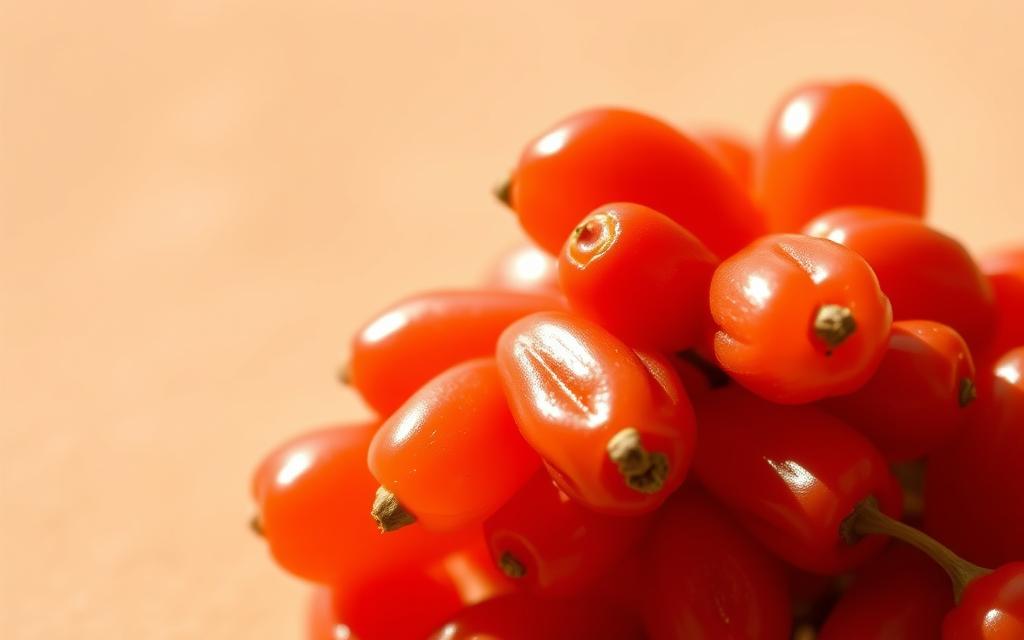
Goji berries, also known as wolfberries, are packed with health benefits and nutrients. They come from Asia and taste sweet and slightly sour. A 28-gram serving has only 98 calories but is rich in protein, fiber, and sugar9.
They are full of antioxidants, like zeaxanthin, which helps your eyes and fights age-related diseases10.
Health Benefits of Goji Berries
Goji berries are great for your immune system, thanks to vitamins A and C10. They also fight oxidative stress and might stop cancer by slowing tumor growth10.
These berries keep your skin healthy by fighting aging and protecting against UV rays10. They can also help control blood sugar and improve mood and brain function10.
How to Include Goji Berries in Your Diet
It’s simple to add goji berries to your meals. Try them in cereals, yogurt, or smoothies. Mixing dried goji berries into trail mixes adds flavor and nutrition9.
Use them in baked goods or soups for a nutritional boost. Always talk to a doctor if you’re worried about allergies or drug interactions9.
Strawberries: Sweet and Nutrient-Dense
Strawberries are not only tasty but also packed with nutrients. They have only 45 calories per 1-cup serving and are full of important vitamins and minerals. Strawberries are rich in vitamin C, which is more than an orange and boosts your immune system11.
They also contain antioxidants like anthocyanins. These help fight inflammation and may protect against serious diseases11.
Strawberries are a great source of manganese and potassium. These minerals are key for many body functions12. They also have folate (vitamin B9) for cell growth and 3.32 grams of fiber for digestion11. Their low glycemic index of 40 helps keep blood sugar stable, which is good for those watching their sugar intake11.
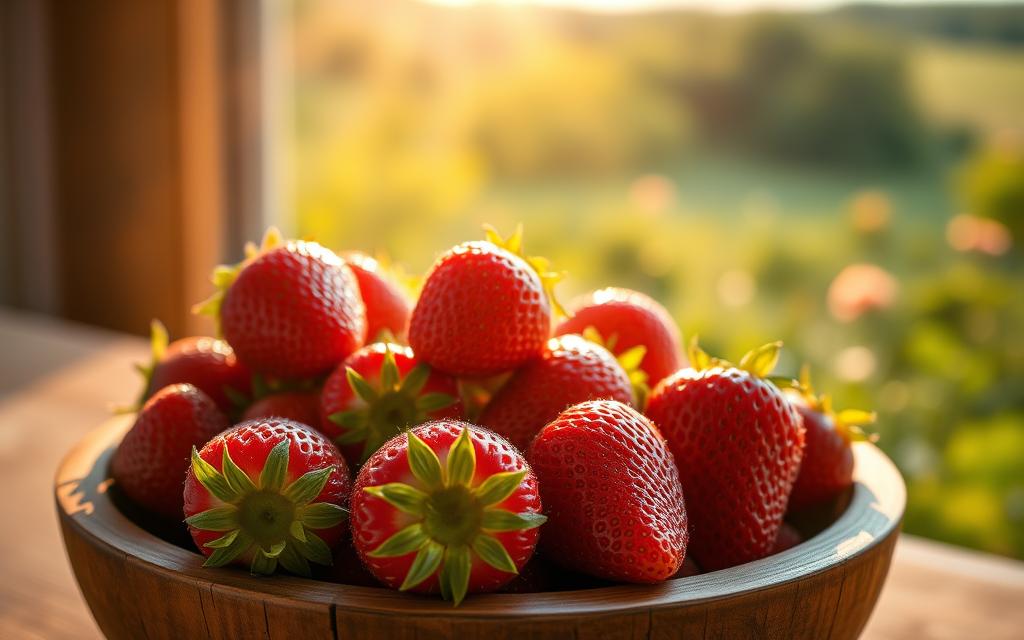
Eating strawberries regularly can help your heart by improving insulin sensitivity and lowering cholesterol11. They also support good gut bacteria, which is good for your overall health11. With a variety of antioxidants, strawberries are a great addition to a healthy diet12.
Bilberries: The European Blueberry
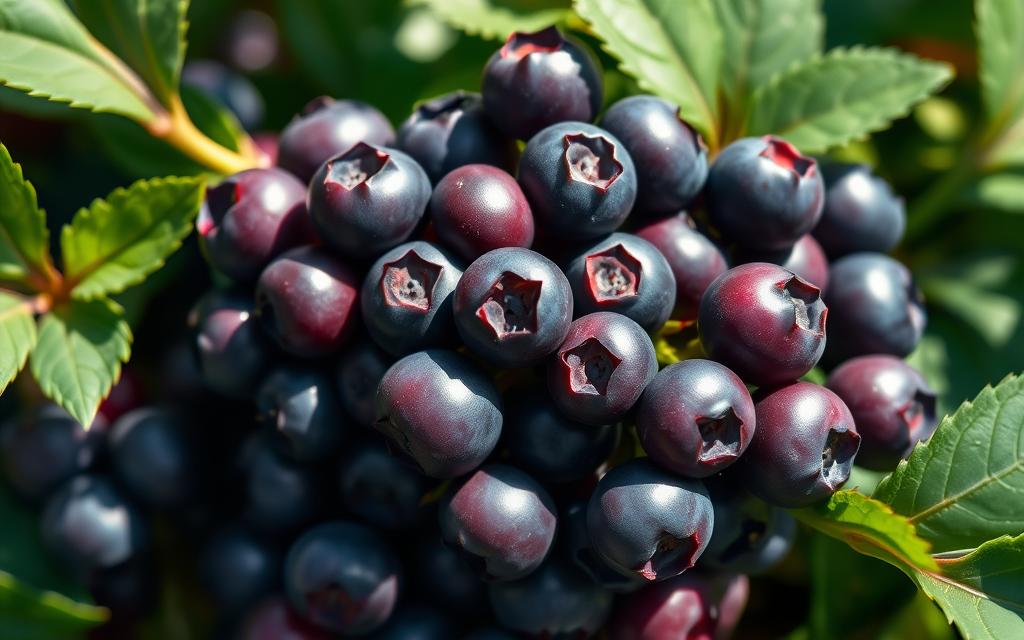
Bilberries, also known as European blueberries, are small, dark blue berries. They have a sweet yet slightly acidic taste. These berries grow well in acidic, poor soils in Europe, mainly in cool and cold areas13.
The Vaccinium myrtillus species is the most common. It has a deep blue color. This color is not just pretty but also shows its high nutritional value13.
Nutritional Value of Bilberries
Bilberries are packed with anthocyanins, which are strong antioxidants14. A 100-gram serving of bilberries has only 48 calories and 2.8 grams of fiber13. This fiber, along with vitamins C and manganese, helps with digestion and boosts the immune system15.
Potential Health Benefits of Bilberries
Bilberries offer more than just nutrition. Their anthocyanins help keep the heart healthy by reducing stress and inflammation14. They are also used in herbal medicine for skin issues and to improve vision in dim light15.
Early studies suggest they might help control blood sugar. This makes them a good choice for those watching their blood sugar13.
Açaí Berries: Amazonian Nutrition
Açaí berries come from the Amazon rainforest and are becoming more popular. They are packed with healthy fats, fiber, and minerals like calcium, iron, and zinc. This makes them a great choice for any diet16. Their deep purple color shows they are full of anthocyanins, powerful antioxidants that help fight free radicals and boost the immune system17.
What Makes Açaí Berries Unique
The açaí berry has a very high ORAC score of 15,405 per 100 grams of frozen pulp. This shows it’s full of antioxidants16. These antioxidants can help lower cholesterol and might even fight cancer, making açaí berries very special16. They also have healthy fats like omega 3, 6, and 9, which are good for the heart, brain, and skin, just like olive oil and walnuts17.
Açaí berries are usually eaten as frozen purées, powders, or juices. Purées are the best way to keep their nutrients16. They have very little sugar, making them a good choice for those watching their sugar intake but still want a tasty treat17. With these benefits, açaí berries are a key part of Amazonian nutrition.

Cranberries: Tart and Terrific for Urinary Health
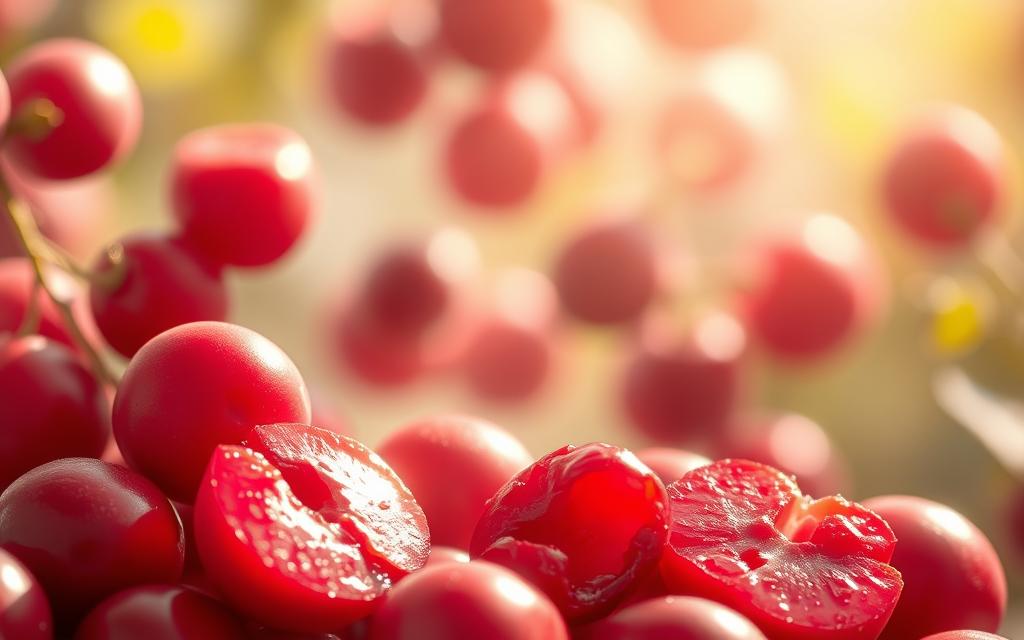
Cranberries are not just tasty; they’re also great for your urinary health. These small, tart berries are full of antioxidants and nutrients. They help prevent urinary tract infections (UTIs) thanks to special compounds called proanthocyanidins1819.
Benefits of Raw Cranberries
Raw cranberries are low in calories, with about 25 calories per half-cup. They’re rich in vitamin C and fiber20. They boost your immune system and help your heart by improving cholesterol and blood pressure2019.
Their anti-inflammatory properties may also lower the risk of chronic diseases like cancer and diabetes19.
How Cranberries Help Prevent UTIs
Research shows cranberry extract can cut down UTI cases. This is thanks to compounds that stop bacteria from sticking to the urinary tract walls1820. You can add them to salads, smoothies, or baked goods to get more health benefits.
To get the most out of them, choose raw or lightly processed cranberries. Avoid sugary versions that can reduce their health benefits20.
Berries as a Part of a Healthy Diet
Berries are a great addition to a healthy diet. They are full of nutrients and add color and sweetness to meals. Adding them to breakfast can make it more flavorful and nutritious.
How to Incorporate Berries into Your Daily Meals
It’s easy and fun to add berries to your meals. Blend them into smoothies for a boost or mix them into salads for a fresh taste. Berries like blueberries and wild strawberries are packed with vitamins and fiber, helping keep you healthy21.
Berries as Snacks: Tasty and Healthy Alternatives
Berries are perfect for snacks because they’re both tasty and healthy. Fresh raspberries and blackberries are full of antioxidants and fiber. They’re great for quick snacks or desserts.
Cranberries can help prevent urinary tract infections and are rich in vitamin C22. Mixing berries with yogurt makes a snack that’s good for your digestion23.
The Antioxidant-Rich Nature of Berries
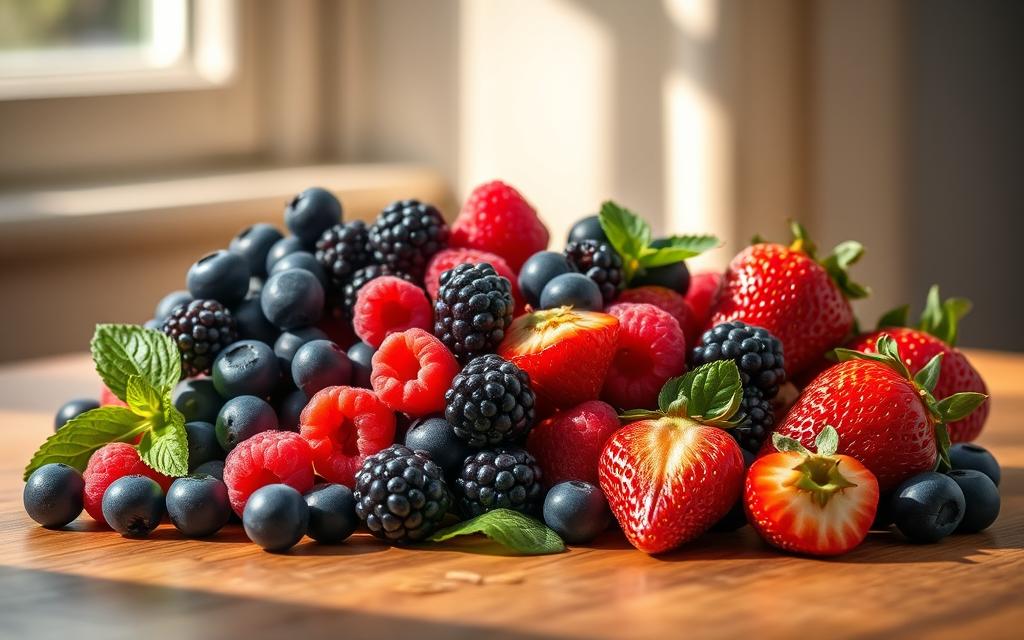
Berries are known for their high nutritional value, mainly because of their antioxidants. These substances help protect our bodies from damage caused by free radicals. Eating foods rich in antioxidants is key to staying healthy.
The Role of Antioxidants in Health
Berries are top sources of antioxidants. Wild blueberries have 13,427 antioxidants per cup, meeting nearly ten times the USDA’s daily recommendation24. Cultivated blueberries also have 9,019 antioxidants per cup24. Other berries like cranberries, blackberries, raspberries, and strawberries add to the antioxidant count, with values ranging from 8,983 to 5,938 per cup24.
Why Antioxidant-Rich Foods Matter
The health benefits of antioxidants in berries go beyond just numbers. Aronia berries have an antioxidant capacity of 159.2 μmol of Trolox equivalents per gram, showing their high potency25. Blueberries, though less in quantity, have 525 mg/100g of phenolic compounds, including anthocyanins, which are good for our health25. These berries are essential for a healthy diet, helping our hearts, brains, and overall well-being.
Seasonal Berries: Enjoying Freshness Year-Round
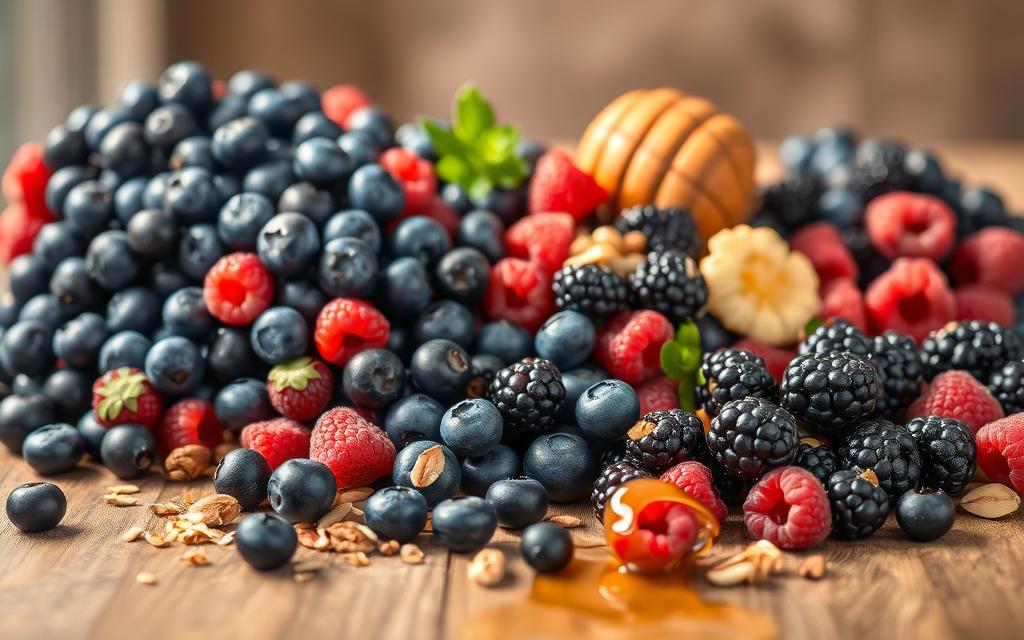
Seasonal berries offer the best taste and nutrition. Learning to pick fresh berries ensures they are tasty and healthy. Knowing when berries are in season lets you enjoy them all year.
How to Choose Seasonal Berries
Choose berries that are bright in color and firm. Avoid any that are bruised or moldy. Buying from wholesale suppliers ensures you get the freshest berries26. This can also save you money since bulk purchases are often cheaper26.
There are many types of berries, each with its own taste and uses. Strawberries add sweetness to cakes and muffins27. Blueberries, rich in antioxidants, are great in pancakes and crumbles, boosting heart and brain health27.
To keep berries fresh, wash them in a vinegar solution and dry them well28. Store them on a tray lined with paper towels to prevent damage28. Freezing berries is another way to enjoy them year-round. Simply freeze them on a baking sheet, then move them to a container28.

Organic Berries: Are They Worth It?
Many people wonder if they should choose organic berries or go for conventional ones. The main concern is the benefits of organic produce, like avoiding pesticide residues. Organic berries are often free from synthetic chemicals, which could be better for your health.
Benefits of Choosing Organic Berries
Organic berries have less pesticide residue than conventional ones. For example, strawberries, blueberries, and raspberries are often on the “Dirty Dozen” list. This means they have high pesticide levels.
Strawberries, for instance, had 99% of samples showing pesticide residue. Some even had up to 22 different types29. Blueberries and raspberries also had high contamination rates, with 90% and 58% of samples showing pesticide residues, respectively29.
Organic farming is better for the environment. It uses natural methods to control pests and fertilize, which is good for both people and the planet30.
Comparing Organic vs. Conventional Berries
Conventional berries can pose health risks due to pesticides. These chemicals have been linked to serious health problems, like cancer and hormone issues29. Organic berries might cost more, but they offer lower pesticide exposure and safety benefits30.
Even though organic berries might not be more nutritious, some studies suggest they could have more nutrients30. Choosing organic berries can help avoid pesticide risks, making it a smart choice.
Tasty Berries Recipes to Try
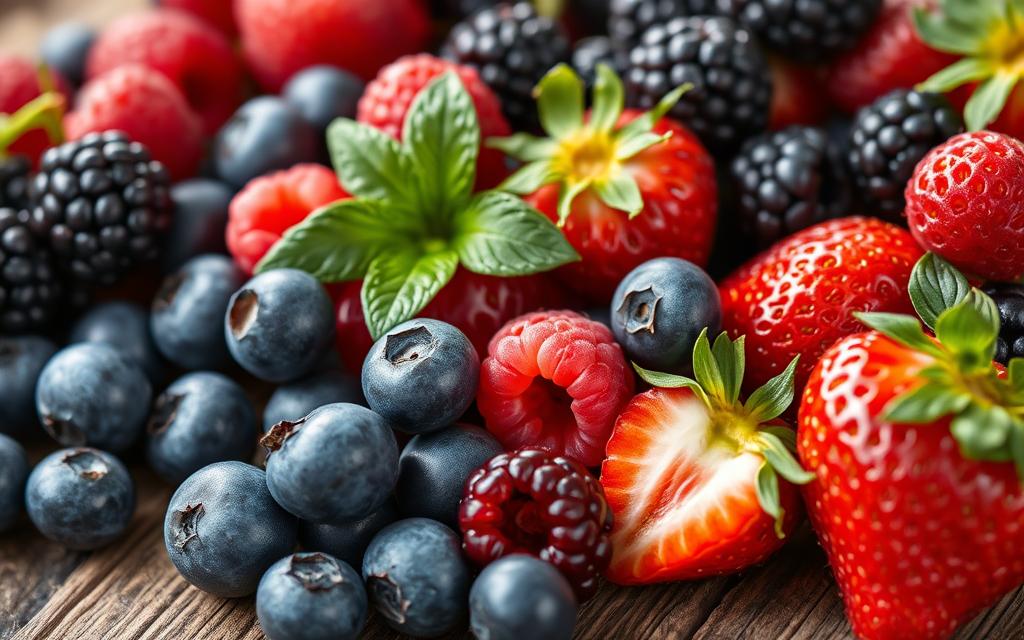
Berries are super versatile in cooking, making many tasty and healthy dishes. You can whip up refreshing drinks, hearty breakfasts, or sweet desserts with them. Adding berries to your meals not only makes food taste better but also adds nutrients. Here are some berry-packed breakfast ideas and smoothie recipes to try.
Healthy Smoothie Ideas with Berries
Starting your day with a berry smoothie is a great idea. Mix frozen strawberries, blueberries, and raspberries with yogurt or plant-based milk for a creamy drink. Adding spinach or kale boosts health benefits. You can also add banana or orange juice for different flavors. This smoothie is perfect for breakfast or a quick snack.
Berry-Infused Breakfast Options
Adding berries to your breakfast can make it unforgettable. Try overnight oats with rolled oats, almond milk, chia seeds, and fresh berries on top. Blueberry pancakes are another tasty option, served warm with maple syrup or honey. For a special treat, make a mixed berry crisp with pears and cranberries. It’s baked until golden and bubbly, topped with a crumbly crust.
A homemade mixed berry pie is also a must-try. It combines flavors from fresh berries31. This pie is great for dessert or even breakfast!
Berries Nutrition: A Closer Look at Their Micro Nutrients
Berries are full of tiny nutrients that are key to staying healthy. They have vitamin C and antioxidants that help our bodies work right. Knowing what’s in berries shows why they’re good for us.
Essential Vitamins and Minerals Found in Berries
Many berries are rich in vitamins, like vitamin C. Strawberries give us 150% of what we need in just one cup32. This helps our immune system and skin. Blueberries and blackberries also have lots of vitamin C, with blackberries giving us 35% of what we need32.
They’re also full of manganese, which is good for our bones and how our body works. Blackberries have 32% of what we need in just 3.5 ounces32. Berries are not just vitamins; they also have plant compounds like anthocyanins and quercetin. These fight off stress and inflammation in our bodies33.
How Berries Support Overall Health
Berries do more than just taste good. They’re low in calories but full of nutrients, making them great for weight control. A 3.5-ounce serving of blueberries has only 57 calories and lots of fiber33.
The antioxidants in berries, like anthocyanins, help our hearts and brains. Plus, frozen berries keep their nutrients, making them a good choice all year34. Eating different kinds of berries can make us healthier and more energetic.
Combining Different Berries for Maximum Health Impact
Adding different berries to your meals can greatly improve your health. These fruits are full of vitamins, minerals, and antioxidants. Mixing berries like blueberries, blackberries, and strawberries adds variety in taste and nutrients.
Research shows that mixing berries can help your body absorb more health benefits. This is because each berry type has its own special nutrients. For example, blueberries are rich in antioxidants, while blackberries are good for your immune system.
Benefits of Mixing Berries in Your Diet
Each berry type has its own health perks. Blueberries are packed with antioxidants, while blackberries are high in fiber and vitamin C.
A table below shows why mixing berries is good for you.
| Berry | Anthocyanidins (mg) | Fiber (g) | Vitamin C (mg) | Calories |
|---|---|---|---|---|
| Blueberry | 163.52 | 2.4 | 9.7 | 57 |
| Blackberry | 90.46 | 5.3 | 21 | 43 |
| Strawberry | 33.63 | 2.0 | 58.5 | 32 |
| Red Raspberry | 38.68 | 6.5 | 26.2 | 52 |
Mixing berries not only makes food taste better but also increases nutrient intake. Berries work well together, enhancing their health benefits. This mix can help you get the daily recommended amount of flavanols, which is good for your heart and brain.
By mixing berries, you add a tasty and nutritious element to your diet. This can lead to a healthier lifestyle and better overall well-being35.
Conclusion
Eating a variety of berries every day is fun and good for your health. You get vitamins like C and iron, and antioxidants too. These fruits make your meals taste better and add important nutrients with each bite3637.
Berries are more than tasty. They help your digestion with 3 to 10 grams of fiber per serving. They also fight inflammation and ease joint pain with their polyphenols37.
Berries are easy to add to many foods like smoothies, salads, and snacks. Making them a part of your meals leads to a healthier lifestyle. You’ll enjoy a more balanced life with their nourishing benefits36.
FAQ
What are the health benefits of consuming berries?
Berries are full of antioxidants that fight chronic diseases. They boost heart health, support digestion, and strengthen the immune system. Their vitamins, minerals, and fiber are key to feeling good.
How can I incorporate berries into my daily diet?
Adding fresh berries to smoothies, salads, pancakes, or desserts is easy. They’re also great as snacks or blended into yogurt or sauces for extra nutrition.
Are organic berries better than conventional berries?
Yes, organic berries have more antioxidants and less pesticides. They offer health benefits and support green farming. Choosing organic is good for you and the planet.
What are some easy recipes using berries?
Try berry smoothies with yogurt, berry-infused oats, or salads with fresh berries. Berry muffins or toppings for pancakes or desserts are tasty too.
What nutrients are found in berries?
Berries are rich in vitamin C, manganese, and antioxidants like anthocyanins. These nutrients boost immunity, heart health, and fight inflammation.
How do seasonal berries differ from others?
Seasonal berries are fresher and taste better than out-of-season ones. Eating them when in season means more flavor and nutrients. Choose berries that are vibrant and firm.
Can berries help with weight management?
Yes, berries are low in calories but high in fiber. This can help you feel full. Adding them to your meals or snacks can aid in weight control and improve your diet.
Are there any specific benefits for brain health from berries?
Research shows that berries, like blueberries, can improve brain function and protect against cognitive decline. Their antioxidants may reduce brain stress, supporting cognitive health.
Source Links
- 7 Super-Berries That You Should Be Eating Every Day – https://www.onlymyhealth.com/7-super-berries-that-you-should-be-eating-every-day-1566800452
- The 8 Healthiest Berries You Can Eat – https://www.healthline.com/nutrition/8-healthy-berries
- Health Benefits of Berries – https://www.webmd.com/diet/health-benefits-berries
- Blueberries Full of Antioxidants – https://www.uaex.uada.edu/counties/miller/news/fcs/fruits-veggies/Blueberries_Full_of_Antioxidants.aspx
- Recent Research on the Health Benefits of Blueberries and Their Anthocyanins – https://pmc.ncbi.nlm.nih.gov/articles/PMC7442370/
- Blueberries vs raspberries: Nutritional differences – https://www.january.ai/blog/blueberries-vs-raspberries
- Is there a healthiest berry? Benefits and nutrients of 7 types including strawberries, blueberries and acai – https://www.yahoo.com/lifestyle/is-there-a-healthiest-berry-benefits-and-nutrients-of-7-types-including-strawberries-blueberries-and-acai-100024884.html
- The Berry Trinity: The Power of Strawberries, Raspberries, and Blueberries – https://www.bigfridgeboy.com/en/blog/7715/the-berry-trinity-the-power-of-strawberries-raspberries-and-blueberries
- Goji Berries: Nutrition, Benefits, and Side Effects – https://www.healthline.com/nutrition/goji-berry
- 7 goji berry benefits backed by science – https://www.medicalnewstoday.com/articles/322693
- Health Benefits of Strawberry – https://www.webmd.com/diet/health-benefits-strawberry
- Strawberries 101: Nutrition Facts and Health Benefits – https://www.healthline.com/nutrition/foods/strawberries
- Bilberry – https://en.wikipedia.org/wiki/Bilberry
- Bilberry or European blueberry (Vaccinium myrtillus L.) – https://www.nordgen.org/projects/crop-wild-relatives/plant-portraits/bilberry-or-european-blueberry-vaccinium-myrtillus-l/
- Vaccinium myrtillus – https://en.wikipedia.org/wiki/Vaccinium_myrtillus
- 5 Impressive Health Benefits of Acai Berries – https://www.healthline.com/nutrition/benefits-of-acai-berries
- What is Acai? Health & Nutritional Benefits of Acai Berries | SAMBAZON – https://www.sambazon.com/pages/discover-acai
- Health Benefits of Cranberries – https://www.webmd.com/food-recipes/health-benefits-cranberries
- Are Cranberries Healthy? 6 Surprising Benefits – https://health.clevelandclinic.org/benefits-of-cranberries
- Cranberries: Benefits, nutrition, and risks – https://www.medicalnewstoday.com/articles/269142
- Berries | Health and Social Services – https://www.hss.gov.nt.ca/en/services/nutritional-food-fact-sheet-series/berries
- Berries for Inflammation and Osteoarthritis Treatment – https://nutritionfacts.org/topics/berries/
- Discover the sweet health benefits of berries and an easy recipe – https://www.nuvancehealth.org/health-tips-and-news/discover-the-sweet-health-benefits-of-berries-and-an-easy-recipe
- Antioxidants in Fruits – https://www.webmd.com/diet/features/antioxidants-in-fruits
- Berry Phenolic Antioxidants – Implications for Human Health? – https://pmc.ncbi.nlm.nih.gov/articles/PMC5890122/
- Berries in Season 2024 | Fresh Berries Guide | Riviera – https://www.rivieraproduce.com/the-complete-guide-to-berries-season-2024/
- Taste the Seasons With Our Seasonal Fruit Guide | Krusteaz – https://www.krusteaz.com/tips-and-tricks/krusteaz-seasonal-fruit-guide/
- The Scoop on the Best Berries of the Season – https://www.cominghomemag.com/featured-articles/best-berries-of-the-season
- Why Eat Organic Berries? | Organic Voices – https://www.organicvoices.org/why-eat-organic-berries/
- Is Organic Produce Worth the Price? – https://www.scripps.org/news_items/4160-is-organic-produce-worth-it
- 40 Blackberry Recipes Bursting with Juicy Flavor – https://www.tasteofhome.com/collection/blackberry-recipes/?srsltid=AfmBOoorEDSMLV555Jqt1DIvlM97WdprIFdMSnYPLjdBT5jZybQdYR1q
- 11 Reasons Why Berries Are Among the Healthiest Foods on Earth – https://www.healthline.com/nutrition/11-reasons-to-eat-berries
- Blueberries 101: Nutrition Facts and Health Benefits – https://www.healthline.com/nutrition/foods/blueberries
- Frozen Berries Nutrition Facts and Health Benefits – https://www.verywellfit.com/frozen-berries-nutrition-facts-and-health-benefits-5075040
- Berries: emerging impact on cardiovascular health – https://pmc.ncbi.nlm.nih.gov/articles/PMC3068482/
- What makes a berry a berry? | UC Agriculture and Natural Resources – https://ucanr.edu/blogs/blogcore/postdetail.cfm?postnum=60537
- Berry Best Berries for Women – https://www.linkedin.com/pulse/berry-best-berries-women-stephanie-k-turkel-ms-rdn-cpt-frs8c