

Many of us struggle with not sleeping well at night. We toss and turn, hoping to find a good night’s rest. Sleep is key for our minds and bodies to stay healthy. In the U.S., over 60 million people deal with insomnia, leading to serious health problems like depression and heart disease1.
But, there are natural ways to fight insomnia without drugs. By trying out different natural remedies and non-drug treatments, we can get better sleep. This way, we can enjoy restful nights and feel better overall.
Key Takeaways
- Insomnia affects over 60 million Americans and can lead to serious health issues.
- Non-pharmacological approaches offer effective treatments for better sleep.
- Natural remedies, such as herbal supplements, can aid in improving sleep.
- Creating a calm environment and consistent routine are essential for sleep hygiene.
- Regular exercise can play a significant role in enhancing sleep quality.
Understanding Insomnia and Its Impact on Our Lives
Insomnia is a common problem that makes it hard to fall or stay asleep. Its symptoms can be mild or severe, affecting our daily activities. It not only makes us tired but also harms our brain, leading to memory and focus problems.
It can also make us feel moody and stressed. Studies show that long-term insomnia can lead to serious health issues like anxiety and heart disease2. Knowing how insomnia affects us is key to finding ways to improve our sleep and overall health.
To fight sleep disorders, we can try sleep hygiene practices. This means setting a regular sleep schedule and having a calming bedtime routine2. We can also look into mental health treatments for stress or anxiety2. Herbal supplements like valerian root or chamomile can help improve sleep naturally2.
It’s important to learn about how insomnia impacts our lives. This knowledge helps us find better ways to sleep and stay healthy.
Common Causes of Insomnia
Many of us struggle with sleep due to various factors. Stress, anxiety, and depression are big contributors to insomnia3. Things like noise, room temperature, and uncomfortable beds also play a part3.
What we drink can also affect our sleep. Too much caffeine and nicotine in the evening messes with our sleep3. Alcohol might make us sleepy at first but can disrupt our sleep later3.
Keeping a regular sleep schedule is key. Going to bed and waking up at the same time every day is important4. A calming bedtime routine, like a warm bath or reading, can also help4.
Creating a cozy sleep space is essential. It should be quiet, dark, and only used for sleep and intimacy4.
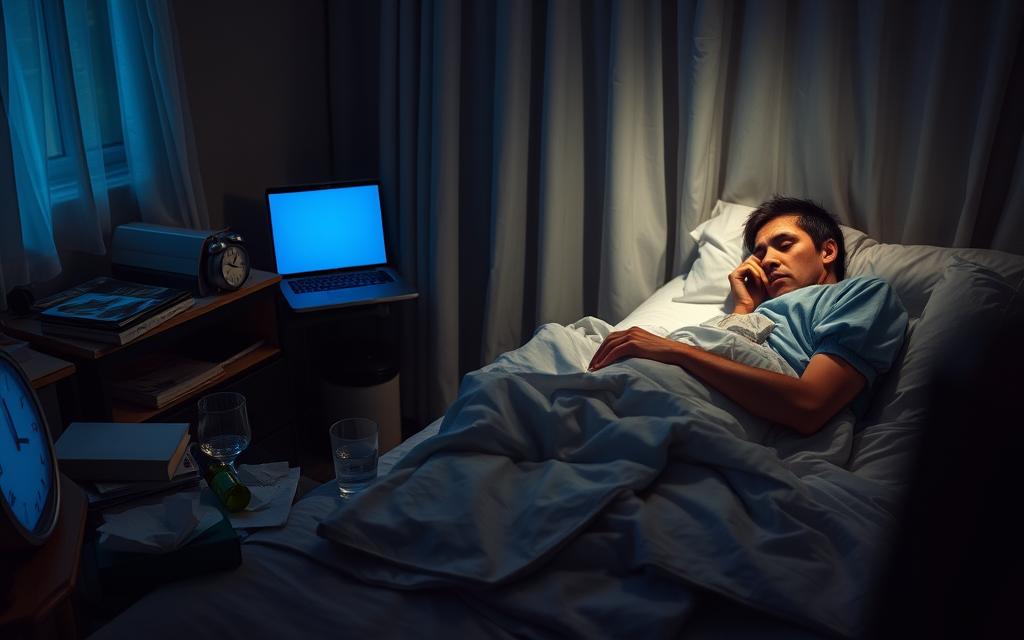
Alternative Treatments for Insomnia
We often look for ways to sleep better that don’t involve medicine. Non-pharmacological methods can greatly improve our sleep quality. By trying different therapies, we can tackle the real reasons behind our sleep issues.
Overview of Non-Pharmacological Approaches
Many people with insomnia have heard of Cognitive Behavioral Therapy (CBT). It’s often the first choice for long-term sleep problems. This therapy works by fixing the root cause, not just covering up symptoms. It has lasting benefits without any side effects5.
Most people need 6 to 8 sessions of CBT. These can be in-person or online, making it easy to access. It helps us develop healthy sleep habits by avoiding things that disrupt our rest.
Holistic Therapies for Sleep Problems
CBT can be paired with other holistic therapies to help with insomnia. About 4.5% of adults with insomnia try alternative medicine6. Yoga, for example, has shown to greatly improve sleep quality, with results as high as d = 2.566.
Tai chi also helps, showing big improvements in sleep for older adults. Acupuncture has mixed results, but some studies show it can greatly improve sleep quality, like d = 1.146. These therapies give us tools to manage insomnia naturally.
Natural Remedies for Sleeplessness
Looking into natural remedies for sleep can really help us sleep better. Many people use herbal supplements to fight insomnia. Herbs like chamomile and valerian root are popular for their sleep benefits.
Chamomile is known to be safe, but valerian root can have side effects and interact with medicines. Always talk to a doctor before adding herbal supplements to your routine.
Herbal Supplements: An Overview
Valerian root is a top choice for sleep supplements. It can improve sleep quality, with doses of 400 to 900 mg before bed7. Chamomile is also popular for its calming effects, helping older adults sleep better8.
Lavender oil is used in sprays and diffusers to help with sleep7. Each of these herbs has its own way of helping us sleep well.
Benefits and Risks of Valerian Root
Valerian root is seen as a good sleep aid, improving sleep quality8. But, we need to be careful because it might harm the liver. It’s crucial to get a doctor’s advice before using it8.
Adding herbal supplements to our sleep routine needs careful thought. We must weigh the benefits against the risks to make smart choices for better sleep.

Exploring the Role of Melatonin in Sleep
Melatonin is key in controlling our sleep patterns. It acts as a natural sleep hormone. As the sun sets, melatonin levels rise, telling our body it’s time to sleep9. Many turn to melatonin supplements for insomnia and other sleep issues like jet lag and shift work9.
Studies show melatonin helps those with delayed sleep phase syndrome sleep faster by 38.8 minutes on average10. It also helps those with general insomnia sleep a bit quicker, by about 4.3 minutes10. Plus, it boosts sleep quality by 1.9% in people with secondary sleep disorders10.
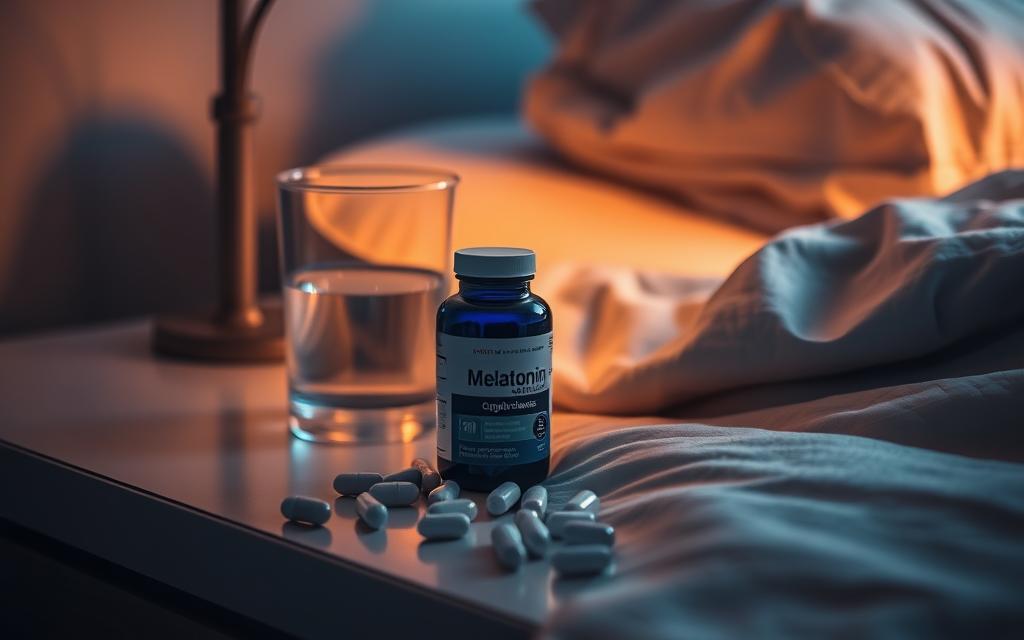
Melatonin supplements are usually safe, but some might feel drowsy, have headaches, or nausea10. Despite these side effects, melatonin is not sedating and doesn’t mess with sleep quality. This makes it a good choice for long-term use9. Exploring melatonin further reveals its role in sleep health and even in fighting neurodegenerative diseases9.
The Importance of Sleep Hygiene Practices
Improving our sleep hygiene is a big step towards better sleep. These habits not only help us sleep better at night but also make us feel better during the day. Making a few simple changes can greatly improve our sleep quality, making it crucial for everyone to try these strategies.
Creating a Sleep-Inducing Environment
A peaceful bedroom is key for a good night’s sleep. We should aim for a dark, quiet, and cool room, ideally at 65°F. Comfortable bedding that we like can also make a big difference.
Using an eye mask or heavy curtains can block out light. Earplugs or a white noise machine can help reduce noise1112. Adding calming scents, like lavender, can also help us relax and sleep better.
Establishing a Consistent Sleep Schedule
Having a regular sleep routine is important for better sleep. Going to bed and waking up at the same time every day helps our body clock1312. Try to avoid long naps and keep them early in the afternoon to not disrupt your night sleep.
Relaxation techniques, like mindfulness or light stretching, can help us relax before bed. Studies show that good sleep habits lead to less daytime sleepiness and better mental health13. By following these tips, we can enjoy better sleep every night.
Exercise as a Remedy for Insomnia
Regular physical activity is a strong way to fight insomnia. Choosing the right exercises can make our sleep better and help us fall asleep faster. Studies show that aerobic exercises improve sleep quality and duration, boosting our overall health14.
Types of Exercise Beneficial for Sleep
There are many exercises that can help us sleep better:
- Aerobic exercises like jogging, cycling, and swimming raise our heart rate and release endorphins. This improves our mood and reduces anxiety.
- Yoga and tai chi are great for those who want low-impact exercises. They help us relax and are perfect for before bed.
Moderate aerobic exercise can cut down the time it takes to fall asleep by 55% and increase total sleep time by 18%. This is great for people with chronic insomnia15. After four weeks of regular exercise, people with insomnia can fall asleep 13 minutes faster and sleep for 18 minutes longer16.
Timing Your Workouts for Better Sleep
When we exercise affects how well we sleep. Exercise makes our body temperature rise, keeping us awake. It’s best to wait 1 to 2 hours after exercising to sleep for the best results14.
Some people prefer morning workouts, while others like evening sessions. Both can work well. The most important thing is to be consistent with our workout times to improve our sleep16.

Adding exercise to our daily routine can greatly improve our sleep. It’s important to choose the right exercises and consider when we work out for better sleep.
Mindfulness and Meditation Techniques for Better Sleep
Recent studies show that mindfulness meditation for insomnia is becoming a popular way to improve sleep. It includes practices like mindfulness-based stress reduction (MBSR) and mindfulness-based cognitive therapy (MBCT). These aim to reduce anxiety and stress, which often lead to insomnia. In fact, 18 studies with 1,654 participants found that mindfulness meditation greatly improved sleep quality17.
Also, relaxation techniques like guided meditation and deep breathing help calm racing thoughts. These thoughts often keep us awake. Practices like Qigong and tai chi are also effective in promoting relaxation and better sleep18.
Yoga nidra has shown great promise in improving sleep by reducing time spent awake at night. Combining meditation with healthy sleep habits like a regular sleep schedule can lead to significant benefits. Mindfulness practices are key in enhancing sleep quality and can be as effective as traditional treatments like cognitive-behavioral therapy for insomnia18.
Importance of Proper Nutrition and Herbal Teas
Nutrition plays a big role in how well we sleep. Eating foods that help sleep can make our nights better. These foods are tasty and full of nutrients that help us relax and sleep well.
Foods That Promote Sleep
Some foods can really help us sleep better. Almonds are full of magnesium, which helps us sleep faster and better19. Turkey has tryptophan, which boosts serotonin and helps us sleep19. Bananas give us potassium and vitamin B6, helping turn tryptophan into melatonin19.
The Benefits of Warm Milk and Chamomile Tea
Drinking warm milk before bed can be very calming. It has tryptophan, which helps us sleep19. Herbal teas like chamomile also help us relax and sleep better20. Valerian tea boosts GABA, reducing anxiety and improving sleep20. Lavender tea can also ease anxiety and depression, helping us sleep better20.
Aromatherapy and Essential Oils for Relaxation
Aromatherapy for insomnia is becoming more popular as a natural way to relax. It uses essential oils like lavender and chamomile, which help you unwind. Studies show that these oils can improve sleep and make it easier to fall asleep.
For instance, lavender oil is known to help with sleep and reduce anxiety. This is important because sleep disorders affect many people, including 10% to 20% of adults and 30% to 40% of the elderly21.
There are many ways to enjoy aromatherapy for relaxation. You can put a cotton ball with lavender oil near your pillow or add essential oils to a warm bath. These steps can make your bedtime routine more calming.
Inhaling essential oils is the best way to use them for sleep, according to research21. This method shows the power of lavender and other oils in improving sleep quality.
It’s important to use essential oils safely. Always mix them with a carrier oil before applying to the skin and do a patch test. Also, talking to a healthcare provider is key, whether you have health issues or are pregnant or breastfeeding22.
By following these tips, we can make aromatherapy a part of our bedtime routine. This can help us sleep better and feel more relaxed overall.
Acupuncture: An Ancient Solution for Modern Insomnia
In recent years, ancient therapies for sleep have seen a comeback. Acupuncture is now a top choice. It comes from traditional Chinese medicine and aims to fix Qi imbalances, mainly in the heart and liver, which often cause insomnia23. By using specific points, acupuncture helps balance Qi flow and Yin and Yang, key for health23.
It also boosts serotonin and endorphins, reducing stress and helping us relax23.
Acupuncture does more than just relax us; it improves blood flow and Qi, which helps with insomnia23. A 2020 review showed it helps people fall asleep quicker, stay asleep longer, and sleep better24. It’s suggested to get acupuncture 1-2 times a week for a few weeks to see results24.
Acupuncture is as good as medicine for insomnia, making it a great alternative25. A review of 21 studies found it greatly improves sleep quality. It works best when combined with other treatments like Cognitive Behavioral Therapy for Insomnia (CBT-I) and light therapy2425. Acupuncture fits well with herbal medicine and diet changes, offering a full plan for better sleep23.
Understanding Sleep Hypnosis for Overcoming Insomnia
Many of us struggle with insomnia, longing for a good night’s sleep. Sleep hypnosis offers a new way to tackle this problem. It helps us relax and calm our minds, making it easier to fall asleep. Studies show it can change our sleep patterns by helping us relax at bedtime26.
Hypnotherapy is a way to tackle insomnia by reaching our subconscious mind. It changes negative thoughts and helps us feel emotionally balanced. This method is different from drugs because it deals with the cause of insomnia, like stress27. It’s a safe and drug-free way to get better sleep.
Using hypnotherapy with a regular sleep schedule and good sleep habits can make it even more effective. Many people have seen their sleep improve and feel more productive26. Adding these techniques to our daily routine could lead to better sleep and a fresh start every morning.
CBD and Cannabis for Improving Sleep Quality
CBD for insomnia is becoming a popular choice for those seeking better sleep. Studies show that about 70% of young adults who use cannabis for fun also use it to sleep better28. Around 85% of people who use medical cannabis say it helps them sleep better28. This shows a strong link between cannabis and better sleep.
THC in cannabis can help people fall asleep faster by increasing NREM sleep. This type of sleep is more restful28. CBD also looks promising in reducing symptoms of REM sleep behavior disorder and daytime sleepiness. It’s a good option for those wanting to sleep better28.
A study found that 60% of people with insomnia no longer had symptoms after using THC/CBD oil for two weeks29. Their sleep quality improved by up to 80% in the active treatment group29. These findings highlight the importance of cannabis in treating sleep issues.
Incorporating Relaxation Techniques into Daily Life
Adding relaxation techniques for better sleep to our daily life can change how we handle stress and sleep. Techniques like progressive muscle relaxation help us feel our body and control tension. This makes it easier to relax and sleep better30.
Daily mindfulness practices, like the 4-7-8 breathing, can also help. We breathe in for four seconds, hold for seven, and breathe out for eight. This lowers anxiety and heart rate, making it simpler to fall asleep31.
Having a calming bedtime routine is key. Reading or listening to sleep stories can slow our heart rate and calm our mind31. Also, avoiding screens and bright lights before bed helps our body get ready for sleep32.
It’s good to avoid activities that get us excited or active before bed. This helps our body relax naturally32.
Using techniques like visualization can help with insomnia. We imagine a peaceful place, which relaxes our mind and distracts us from insomnia thoughts31. Regular use of these methods can make our sleep better over time. They can also lower blood pressure and heart rate, improving our health and sleep30.
Conclusion
Looking into different ways to treat insomnia shows we don’t need just medicine. Cognitive Behavioral Therapy for Insomnia (CBT-i) is a top choice. It works as well as sleep meds but without side effects. A 2015 study found CBT-i cut sleep time by 19 minutes and improved sleep quality33.
We can also try other natural ways to sleep better. This includes mindfulness, eating right, and using things like valerian and acupuncture34.
Using these natural remedies can help us sleep better and feel better overall. But, not enough people know about CBT-i because of a lack of knowledge among doctors and patients33. By spreading the word, we can help more people get the sleep help they need without relying on meds.
By using these different methods, we can get better sleep. This can make our lives better in many ways. Let’s explore and find what works best for us.
FAQ
What are the alternative treatments for insomnia?
For insomnia, try natural remedies like herbal supplements and holistic therapies. Acupuncture and yoga are good options. Mindfulness practices and relaxation techniques also help. Making lifestyle changes is another way to tackle insomnia without medication.
How can herbal supplements help with sleeplessness?
Herbal supplements like chamomile and valerian root can help you relax and sleep better. But, valerian root might have side effects and interact with some medicines. Always talk to a healthcare provider before using them.
What role does melatonin play in sleep?
Melatonin is a hormone that helps control our sleep-wake cycle. Taking melatonin as a supplement can help those with sleep disorders. But, it’s important to use the right amount and at the right time.
What are some effective sleep hygiene practices?
Good sleep hygiene means having a dark, cool, quiet bedroom. Stick to a regular sleep schedule. Avoid screens before bed and use comfy bedding for better sleep.
How can exercise improve sleep quality?
Exercise boosts sleep quality by increasing slow-wave sleep. Yoga, tai chi, and aerobic exercises are great. But, avoid intense workouts before bed to stay relaxed.
What mindfulness techniques can help with insomnia?
Mindfulness helps with insomnia by reducing anxiety and stress. Try guided meditation, deep breathing, and focusing on the present. These can improve your sleep.
What foods are beneficial for sleep?
Foods like almonds, turkey, and bananas help with sleep. Warm milk and chamomile tea are also good for a relaxing evening routine. They can help you sleep better.
How does aromatherapy aid in achieving better sleep?
Aromatherapy uses essential oils like lavender and chamomile to relax and improve sleep. These scents can calm your mood and create a soothing bedtime atmosphere.
Can acupuncture be effective for insomnia?
Yes, acupuncture can help with insomnia. It involves fine needles in specific body points to relax and address sleep issues.
What is sleep hypnosis and how does it help with insomnia?
Sleep hypnosis guides you into a relaxed state to change sleep behaviors and mindset. It can reduce sleep anxiety and improve hygiene, leading to better sleep.
How might CBD help with sleep issues?
CBD may help with sleep by relaxing and improving onset without psychoactive effects. But, consider legality and side effects before trying CBD for insomnia.
How can we incorporate relaxation techniques into our daily lives for better sleep?
Add relaxation techniques like gentle yoga, breathing exercises, and mindfulness to your daily routine. They help manage stress and insomnia, improving your sleep.
Source Links
- Alternative Treatments for Insomnia – https://www.webmd.com/sleep-disorders/alternative-treatments-for-insomnia
- Insomnia: What It Is, Causes, Symptoms & Treatment – https://my.clevelandclinic.org/health/diseases/12119-insomnia
- Insomnia – https://www.nhs.uk/conditions/insomnia/
- Insomnia – Symptoms and causes – https://www.mayoclinic.org/diseases-conditions/insomnia/symptoms-causes/syc-20355167
- Insomnia treatment: Cognitive behavioral therapy instead of sleeping pills – https://www.mayoclinic.org/diseases-conditions/insomnia/in-depth/insomnia-treatment/art-20046677
- The Impact of Complementary and Alternative Medicine on Insomnia: A Systematic Review – https://pmc.ncbi.nlm.nih.gov/articles/PMC9509538/
- Home remedies for insomnia: 9 options – https://www.medicalnewstoday.com/articles/home-remedies-for-insomnia
- Natural Cures for Insomnia: From Acupressure to Yoga – https://www.sleepfoundation.org/insomnia/treatment/natural-cures-for-insomnia
- New perspectives on the role of melatonin in human sleep, circadian rhythms and their regulation – https://pmc.ncbi.nlm.nih.gov/articles/PMC6057895/
- Melatonin for Treatment of Sleep Disorders: Summary – AHRQ Evidence Report Summaries – https://www.ncbi.nlm.nih.gov/books/NBK11941/
- Mastering Sleep Hygiene: Your Path to Quality Sleep – https://www.sleepfoundation.org/sleep-hygiene
- Cognitive Behavioral Therapy for Insomnia (CBT-I): An Overview – https://www.sleepfoundation.org/insomnia/treatment/cognitive-behavioral-therapy-insomnia
- Sleep Hygiene Practices and Its Impact on Mental Health and Functional Performance Among Adults in Tabuk City: A Cross-Sectional Study – https://pmc.ncbi.nlm.nih.gov/articles/PMC10105495/
- Exercising for Better Sleep – https://www.hopkinsmedicine.org/health/wellness-and-prevention/exercising-for-better-sleep
- Is exercise an alternative treatment for chronic insomnia? – https://pmc.ncbi.nlm.nih.gov/articles/PMC3370319/
- Exercise and Insomnia – https://www.sleepfoundation.org/insomnia/exercise-and-insomnia
- The effect of mindfulness meditation on sleep quality: a systematic review and meta-analysis of randomized controlled trials – https://pmc.ncbi.nlm.nih.gov/articles/PMC6557693/
- Meditation for Sleep – https://www.sleepfoundation.org/meditation-for-sleep
- Herbal and Natural Supplements for Improving Sleep: A Literature Review – https://pmc.ncbi.nlm.nih.gov/articles/PMC11321869/
- The 6 Best Bedtime Teas That Help You Sleep – https://www.healthline.com/nutrition/teas-that-help-you-sleep
- Effects of aromatherapy on sleep disorders: A protocol for systematic review and meta-analysis – https://pmc.ncbi.nlm.nih.gov/articles/PMC8084014/
- Which Essential Oils Can Help You Sleep Better? – https://www.verywellhealth.com/aromatherapy-for-sleep-89673
- Acupuncture: An Ancient Remedy for Modern Insomnia – https://www.themassageclinic.ca/news/acupuncture-an-ancient-remedy-for-modern-insomnia/
- Acupuncture for Insomnia: Natural Path to Better Sleep – https://www.westendwellness.ca/blogs/acupuncture-treating-insomnia
- The Role of Acupuncture in the Management of Insomnia as a Major or Residual Symptom Among Patients With Active or Previous Depression: A Systematic Review and Meta-Analysis – https://pmc.ncbi.nlm.nih.gov/articles/PMC9051249/
- Hypnosis For Insomnia: Is Hypnotherapy Beneficial For Better Sleep? – https://solidpsychiatry.org/hypnosis-for-insomnia-is-hypnotherapy-beneficial-for-better-sleep/
- Hypnotherapy for Insomnia | Naturally Beat Sleeping Problems – https://www.hypnotoday.com/hypnosis-for-insomnia-and-sleep-disorders
- Cannabis for Sleep: Benefits and Risks – https://www.sleepfoundation.org/sleep-aids/cannabis-and-sleep
- Medicinal cannabis improves sleep in adults with insomnia: a randomised double-blind placebo-controlled crossover study – PubMed – https://pubmed.ncbi.nlm.nih.gov/36539991/
- Relaxation techniques: Try these steps to lower stress – https://www.mayoclinic.org/healthy-lifestyle/stress-management/in-depth/relaxation-technique/art-20045368
- 5 Relaxation Techniques for Sleep to Help People with Insomnia – https://sleepreviewmag.com/sleep-treatments/behavioral-sleep-medicine/cognitive-behavioral-therapy/5-relaxation-techniques-sleep-insomnia/
- Behavioral Strategies, Including Exercise, for Addressing Insomnia – https://pmc.ncbi.nlm.nih.gov/articles/PMC6715137/
- Cognitive-Behavioral Therapy for Insomnia: An Effective and Underutilized Treatment for Insomnia – https://pmc.ncbi.nlm.nih.gov/articles/PMC6796223/
- Frontiers | Identifying complementary and alternative medicine recommendations for insomnia treatment and care: a systematic review and critical assessment of comprehensive clinical practice guidelines – https://www.frontiersin.org/journals/public-health/articles/10.3389/fpubh.2023.1157419/full