

In today’s fast world, we often face health challenges that leave us seeking balance. Many of us deal with chronic pain, stress, or anxiety. We might feel that modern health solutions don’t fully meet our needs.
That’s where Traditional Chinese Medicine (TCM) comes in. It offers a holistic approach that considers our physical, emotional, and environmental health. Studies show that TCM, like acupuncture, can help with chronic pain by improving blood flow and reducing inflammation1. It also supports our mental health, helping with anxiety, depression, and sleep issues through calming herbs1.
At its heart, TCM believes wellness is more than just not being sick. It’s about finding harmony between our body and mind. This allows us to improve our health together.
Key Takeaways
- Traditional Chinese Medicine offers a holistic approach to health by addressing chronic pain, stress, and emotional well-being.
- Acupuncture, a key technique in TCM, influences the central nervous system, proving effective for pain relief2.
- Herbal remedies like ginseng and ginger support our digestive health and reduce inflammation1.
- TCM emphasizes preventive care, helping us balance internal systems for overall longevity and vitality.
- Integrating TCM with modern health techniques paves the way for a comprehensive understanding of healing.
What is Traditional Chinese Medicine?
Traditional Chinese Medicine (TCM) is a blend of biology and philosophy. It aims for natural balance and holistic health. It’s based on the flow of Qi, our vital life force, which nourishes and regulates our health.
Understanding Yin and Yang helps grasp TCM’s goal. These opposites need to be in harmony for our well-being. This shows how TCM works to restore our health.
Overview of TCM Principles
TCM sees humans as connected to nature. It stresses the need for balance in our bodies and the world around us. This includes our internal organs and the elements of earth, fire, water, wood, and metal.
TCM uses treatments like acupuncture, moxibustion, cupping, massage, and herbal remedies34.
Key Concepts: Qi, Yin, and Yang
Qi, Yin, and Yang are TCM’s core ideas. Qi flows through our bodies, keeping us alive. The balance of Yin and Yang affects our physical, mental, and emotional health.
TCM doesn’t just treat symptoms. It encourages a lifestyle that promotes health. It helps us live in harmony with these fundamental concepts54.
History of Traditional Chinese Medicine
We start by looking into the long history of Traditional Chinese Medicine (TCM). This system has grown a lot over thousands of years. The roots of TCM go back over 5,000 years, as seen in the Huangdi Neijing (The Yellow Emperor’s Inner Classic) from the 3rd century BCE. This text is key to TCM, teaching about yin and yang balance for health6.
Origins of TCM Practices
Early TCM included pulse diagnosis by Wang Shuhe and herb use by Zhang Zhongjing. Zhang focused on treating different diseases6. Li Shizhen, from the 16th century, listed many herbs and treatments in the Bencao gangmu. He greatly changed how medicine was practiced6.
Also, the idea of qi, or life force, is central to TCM. It helps us understand health and sickness in TCM.
Evolution Through the Centuries
TCM spread to Korea and Japan in the 6th century AD. Buddhist priests brought its teachings during the Tang dynasty7. Key figures like Emperor Huang Ti and Emperor Shen Nung shaped TCM. Shen Nung is even called the “Father of Chinese Medicine”7.
This growth shows TCM’s ability to adapt. It keeps its old wisdom while adding new ideas. The balance of yin and yang is still key to health7.

Core Practices of Traditional Chinese Medicine
Traditional Chinese Medicine (TCM) uses many practices to help us heal and find balance. An integrative approach often leads to significant health improvements. At the core are acupuncture and herbal medicine, key in treating various health issues.
Acupuncture: The Art of Needle Therapy
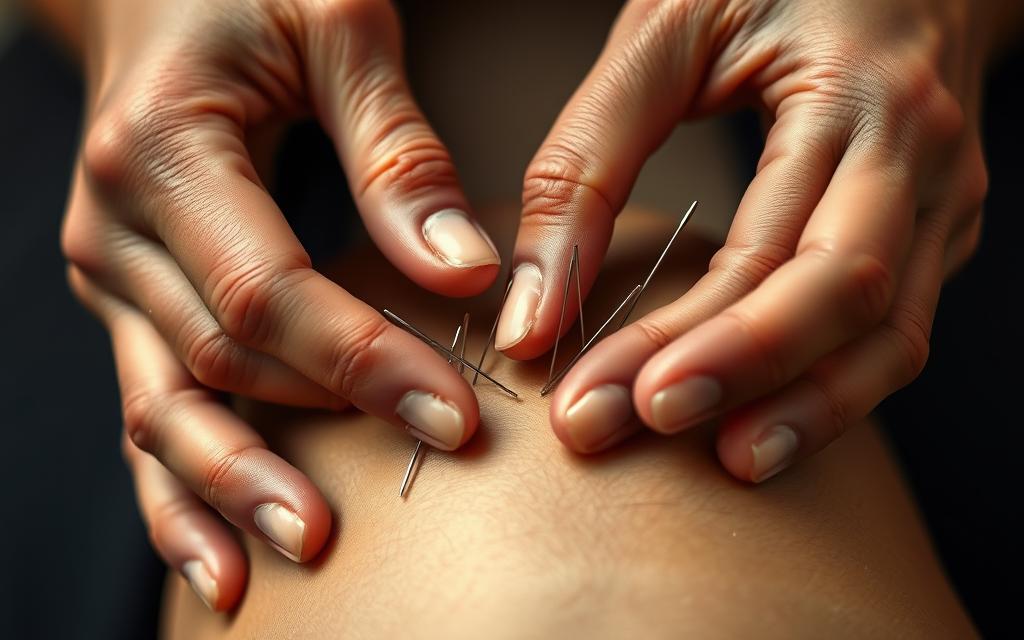
Acupuncture is a leading TCM practice. It involves inserting thin needles at specific body points to boost qi flow. This helps the body heal itself, easing chronic pain and stress.
Studies show acupuncture is a core TCM practice, along with herbal medicine and others. This approach is vital for health and harmony89.
Herbal Remedies and Formulations
Herbal medicine is also crucial in TCM. Practitioners use natural herbs to create custom remedies for health issues. These help balance the body, supporting digestion and energy.
The combination of acupuncture and herbal medicine shows TCM’s holistic nature. It allows for a health journey tailored to each person’s needs8.
Traditional Chinese Medicine and Holistic Healing
We seek wellness through the TCM wellness approach, focusing on the mind-body-spirit connection. This view holds that our emotional state greatly affects our physical health. TCM sees the body as part of a larger whole, including our environment, leading to a more complete health plan10.
By linking our mind and body, we gain a better understanding of ourselves. This helps us recognize our emotional and physical health more clearly.

Integrating Mind, Body, and Spirit
Qigong and visualization are key to holistic healing. They help us notice tension and improve our energy flow11. TCM’s Zheng differentiation lets us choose treatments that fit our specific needs, making wellness more personal10.
TCM’s methods, like acupuncture and herbal medicine, offer a natural way to health. They have fewer side effects, making them attractive for our health journeys10.
Together, we can use TCM to prevent illness and boost our body’s health. This approach, combined with modern medicine, can greatly improve our health outcomes10.
The Benefits of Acupuncture in Modern Health
In today’s fast world, many look for ways to manage pain and feel better emotionally. Acupuncture is a proven method that offers many health benefits. It aims to balance the body’s energy, known as Qi, and is now widely accepted in healthcare.
Effective Pain Management Techniques
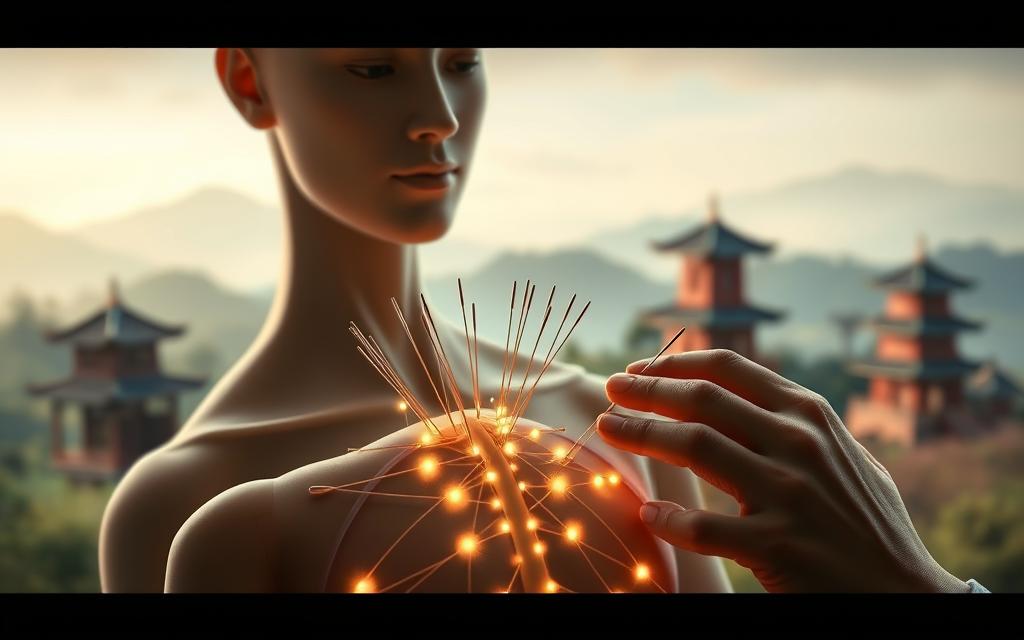
Acupuncture is great for managing pain. It helps with headaches, low back pain, and osteoarthritis, giving many people relief12. It works by stimulating points on the body, improving blood flow and reducing swelling13. This way, acupuncture helps our bodies fight pain naturally.
Stress Reduction and Emotional Balance
Acupuncture also helps with emotional well-being. Studies show it can reduce anxiety and depression, making us feel more relaxed and stable12. It balances Qi and uses our body’s healing powers to deal with stress. Acupuncture benefits us not just physically but also mentally and emotionally.
Herbal Remedies for Common Ailments
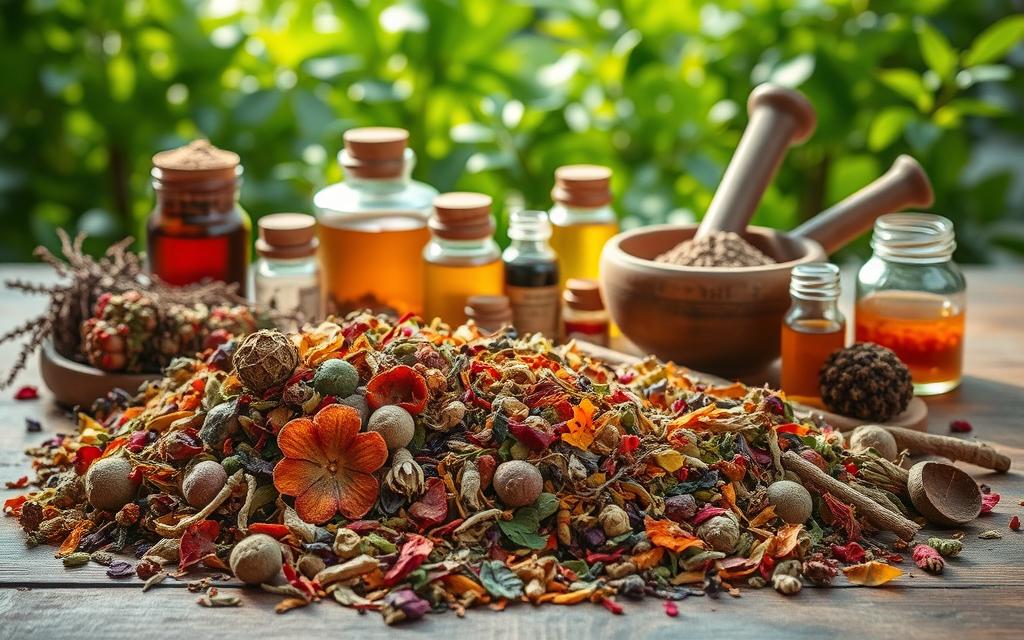
Traditional Chinese medicine uses many Chinese herbs to treat common problems. These plants help with stress, digestion, and more. Each herb has special benefits, making herbal formulas a strong way to improve health.
Top Herbs Used in Traditional Chinese Medicine
Some of the most valued Chinese herbs are:
- Red Ginseng Root: It helps our bodies handle stress and improves skin by boosting collagen14.
- Codonopsis Root: It helps with digestion and boosts energy, helping us feel more alive14.
- Astragalus Root: It strengthens our immune system by fighting inflammation and oxidative stress14.
- Turmeric and Ginger: They are known for reducing pain and inflammation at a cellular level15.
- Corydalis: It helps manage pain, including menstrual and abdominal pain15.
How to Use Herbal Formulas Safely
Using herbal formulas can be beneficial, but we must be careful. Working with experts helps us pick the right mix for our health. This way, we avoid side effects and get the most out of these remedies.
Traditional Chinese Medicine for Chronic Conditions
Traditional Chinese Medicine (TCM) offers valuable insights and effective strategies for managing chronic conditions. It takes a holistic approach, focusing on the body as a whole. This helps restore balance and harmony, addressing the root causes of chronic conditions like arthritis and mental health disorders.
Acupuncture is known for its remarkable efficacy in managing chronic pain. It’s effective for conditions like low back pain and arthritis. This natural option often has fewer side effects than conventional treatments1617.
Managing Chronic Pain with TCM
TCM’s approach to managing chronic pain is significant. Acupuncture can provide substantial pain relief for various conditions, including carpal tunnel syndrome and migraines. A TCM practitioner can create a personalized treatment plan based on your medical history and lifestyle17.
Many patients are open to trying TCM for chronic diseases. They recognize its multifaceted benefits18.
TCM’s Role in Treating Anxiety and Depression
TCM also understands the connection between physical and mental health. It emphasizes maintaining a balance of Qi, yin, and yang to prevent chronic conditions, including mental health issues like anxiety and depression17.
Herbal medicines, refined over thousands of years, are used to address these concerns. They offer a natural pathway to recovery. About two-thirds of patients acknowledge TCM’s various effects, showing its importance in anxiety treatment strategies18.
The Role of Diet in Traditional Chinese Medicine
In Traditional Chinese Medicine (TCM), diet is key to our health. It sees food as medicine, helping us find balance. By eating right, we match our diet to the seasons and our health needs.
Principles of TCM Nutrition
TCM nutrition focuses on balance in food choices. It looks at body types, health patterns, and the environment. The diet aims to balance five flavors: sweet, sour, pungent, bitter, and salty, based on our needs and the seasons19.
It suggests eating non-glutinous grains like rice and quinoa. These grains help with digestion and reduce dampness19. Also, cooked veggies are better than raw ones, as they’re easier on our stomachs19.
Food as Medicine: Balancing the Body
Using food to treat health issues is a core idea in TCM. Research shows TCM diets can help with high blood pressure, diabetes, and cancer, improving patients’ lives20. It’s recommended to eat moderate amounts of animal protein and beans for their fiber and protein19.
It’s also best to avoid dairy, as it’s cold and can cause dampness19. Eating with the seasons helps us stay healthy. We eat warmer foods in winter and lighter ones in summer19.
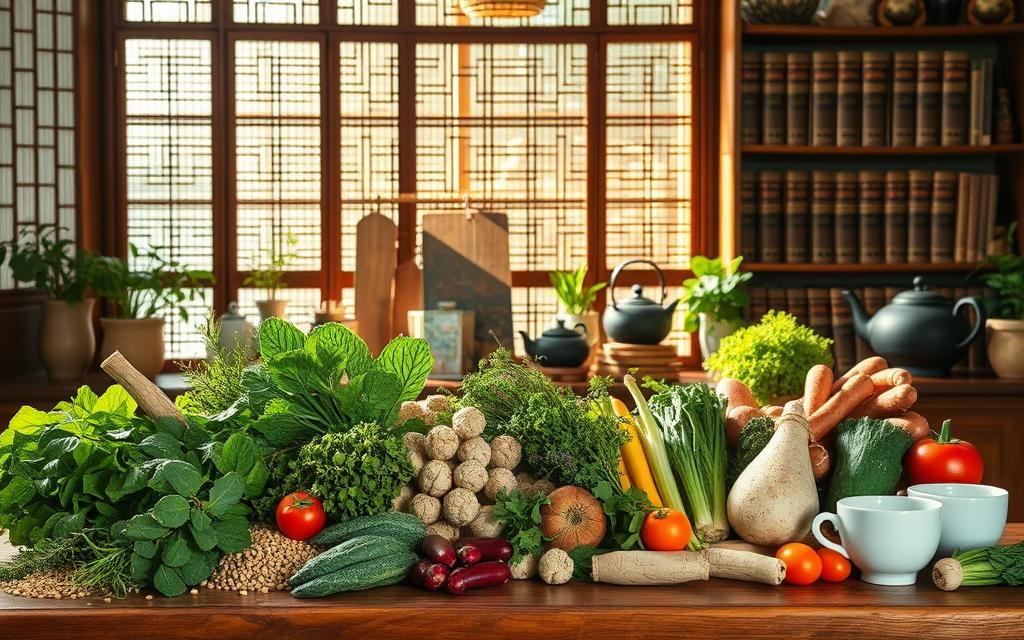
By following TCM’s mindful eating, we can improve our health and balance. Combining TCM with modern nutrition is beneficial, but more research is needed to fully understand its benefits20.
Energy Work in TCM: Qi Gong and Tai Chi
In Traditional Chinese Medicine, Qi Gong and Tai Chi are key. They help manage our body’s energy, or Qi. These practices are not just physical; they aim to balance and improve our wellness through movement and breath.
Practicing Qi Gong and Tai Chi can greatly benefit our mental and emotional health.
Benefits of Movement Therapies
Qi Gong and Tai Chi improve our balance and lower fall risks. They build core strength and improve how we sense our body’s position21. The slow movements increase flexibility and muscle strength, enhancing our physical health21.
These practices also boost heart health by improving blood flow and lowering blood pressure21.
People with chronic pain, like arthritis and back pain, find relief in Tai Chi21. The mindfulness and breathing in these practices reduce stress and anxiety, improving our life quality21. Tai Chi’s specific movements, developed over centuries, help address health issues22.
Combining Qi Gong with Tai Chi enhances our health by effectively flowing chi in our body.
For beginners, start by finding a quiet space and practicing deep breathing. Try simple exercises like “Holding the Ball” or “Marching Qi”21. These practices not only improve physical fitness but also build emotional resilience against stress.
Research shows that Qi Gong and Tai Chi are crucial in TCM for managing health. Studies confirm their effectiveness in improving both psychological symptoms and physical functions23. Committing to these practices is more than exercise; it’s a journey toward holistic well-being.

Research and Evidence Supporting TCM
Exploring Traditional Chinese Medicine (TCM) shows its value in health. Clinical studies prove its benefits for many health issues. This makes TCM a key part of integrative medicine.
Clinical Studies on Efficacy
A 1998 study looked at treating Irritable Bowel Syndrome (IBS) with TCM. It found that standard TCM treatments worked better than custom ones. This shows the power of standardized TCM therapies24.
In 2011, a big trial compared TCM with Oseltamivir for H1N1 flu. The results showed both treatments were effective and safe24 and25. The CHIMES study in 2013 also found TCM helped stroke patients recover better24.
How TCM Interacts with Western Medicine
Studies show TCM and Western medicine can work well together. For example, TCM treatments helped patients with severe pneumonia25. Combining TCM with Western medicine can lead to better health outcomes. Research supports using TCM in a way that fits with modern medicine, despite its unique nature24.

Challenges and Misconceptions about TCM
Understanding TCM is key as it gains popularity worldwide. Yet, we often face TCM misconceptions that block its acceptance. Many think TCM is unregulated, but this is wrong. For example, in Dubai, doctors must finish a five-year degree and pass a test to work legally26.
In Singapore, the Traditional Chinese Medicine Practitioners Board makes sure doctors meet high standards27.
Another myth is that TCM only uses acupuncture or herbs. But TCM is more than that. It includes cupping, tuina massage, diet changes, and exercise27. This myth makes people miss out on TCM’s wide range of practices.
Some think TCM is not as good as Western medicine. But TCM and Western medicine can work together. TCM focuses on the whole body, while Western medicine treats specific problems2627. This myth also says TCM is only for long-term problems. But TCM can also handle sudden issues like fever and asthma26.
Many worry about the pain from acupuncture. But most people say it feels like a mild sensation, not pain. They think this means the treatment is working well2728.
It’s important to tackle these challenges in traditional medicine. By learning more about TCM, we can show its true value. This helps us see how traditional practices can fit into modern healthcare.
Finding a Qualified TCM Practitioner
Looking for TCM practitioners means we need to check their qualifications. It’s important to verify their credentials and experience. A licensed acupuncturist has a master’s degree and lots of training29. They also pass national exams, ensuring they can treat us safely and effectively.
What to Look for in a TCM Practitioner
Look for practitioners who are licensed and board certified in acupuncture and Chinese herbs. Their qualifications show they know how to use TCM modalities like cupping and massage30. Board certification in Chinese Herbology is key, showing they know how to use herbs29. Use directories like Yes to Life or the NCCAOM to find good practitioners31.
Understanding Different Treatment Modalities
Choosing a practitioner depends on the TCM modalities they offer. Some work in private settings, while others are in community clinics29. It’s also important they can explain their treatment plans well and work with other doctors29. This makes our TCM experience better and more effective.
Personalizing Your TCM Experience
Getting a personalized TCM experience means treatments fit our unique health needs. Practitioners look at our physical symptoms, emotions, and lifestyle. This way, we get health plans that help us on our wellness path.
Creating a Tailored Health Plan
Specialists create treatment plans by grouping TCM into eight categories. They use 415 traditional Chinese medicines. This helps find the best treatments for diseases like acute myeloid leukemia (AML)32.
They use ideas like synthetic lethality to reduce side effects. This makes treatments more effective32.
Artificial intelligence is improving TCM diagnostics. It uses machine learning to create personalized treatment plans. This includes looking at tongue and facial features, key in TCM diagnostics33.
AI also helps analyze our health stories. It gives us advice on diet and exercise33.
AI can predict disease progress accurately. This means we get health plans that really meet our goals33. By being part of our health plans, we learn more about TCM and our health.
The Future of Traditional Chinese Medicine in Modern Healthcare
We’re excited about TCM’s future in modern healthcare. AI has improved drug discovery and diagnosis, making TCM better for patients34. More healthcare places are using TCM, with 10,617 in 2021, showing it’s gaining acceptance35.
Standardizing TCM practices is key. It helps TCM reach more people worldwide34.
TCM is becoming a big part of modern medicine. It’s helping treat more diseases, showing a holistic health approach34. The Yin-Yang and Five Elements theories help us understand TCM’s role today36.
More TCM practitioners are being licensed, giving patients more options35.
TCM is getting better thanks to sustainable practices and new technologies34. Studies proving TCM’s effectiveness are crucial for its acceptance in modern healthcare36.
TCM is becoming more popular, with 75,735,249 visits in 202135. It’s time for TCM to be a key part of wellness, offering complete healthcare solutions.
Conclusion
Looking back at our journey with Traditional Chinese Medicine (TCM), we see its benefits go beyond just treating symptoms. It focuses on the whole person, including physical, mental, and emotional health. This approach helps us live a more balanced and healthy life.
TCM offers real solutions for many health issues. It helps us understand our bodies better. For example, Chinese herbal medicine is better than some drugs for menstrual pain. It also helps with depression and colds3738.
Embracing TCM lets us use ancient wisdom to improve our health. It helps us find balance in body, mind, and spirit. This approach is becoming more popular as we look for natural ways to stay healthy3738.
FAQ
What is Traditional Chinese Medicine (TCM)?
Traditional Chinese Medicine (TCM) is an old healing system. It focuses on balance in the body through methods like acupuncture and herbal remedies. It aims to improve health by looking at the body, mind, and environment together.
How does acupuncture work?
Acupuncture uses fine needles at specific body points to help Qi flow. This helps with pain, stress, and emotional issues by balancing energy and starting the body’s healing.
What are herbal remedies in TCM?
Herbal remedies in TCM are special plant and root mixes for health. They boost immunity, aid digestion, and improve wellness. Always get them from qualified practitioners for safety and effectiveness.
Can TCM help with emotional health?
Yes, TCM treats emotional health as part of physical health. Acupuncture and herbal therapies can help with anxiety and depression by balancing the body and mind.
What role does diet play in TCM?
In TCM, diet is key to health. Food is seen as medicine. Practitioners suggest foods to balance the body, focusing on food’s qualities and energies.
How can we incorporate Qi Gong and Tai Chi into our routine?
Qi Gong and Tai Chi are gentle exercises for Qi cultivation. They involve slow movements and deep breathing. Adding them to daily life can boost fitness, reduce stress, and clear the mind, leading to better health.
What are the challenges associated with TCM?
TCM faces challenges like misconceptions and inconsistent practitioner qualifications. It’s important to learn and seek trained professionals for a safe TCM experience.
How do I find a qualified TCM practitioner?
Look for accredited certifications and professional affiliations when finding a TCM practitioner. Asking the right questions during consultations ensures a safe and effective treatment.
Is TCM suitable for everyone?
TCM can help many, but it’s crucial to consult with a qualified practitioner. They assess your health and create a personalized treatment plan, ensuring therapies match your needs.
What is the future of TCM in modern healthcare?
TCM’s future in modern healthcare looks bright. There’s growing interest in combining traditional and modern medicine. Research and better training for practitioners could make TCM more accepted and effective in healthcare.
Source Links
- Exploring the Benefits of Traditional Chinese Medicine Practices – https://pressbooks.umn.edu/umnblog/chapter/exploring-the-benefits-of-traditional-chinese-medicine-practices/
- The Relationship between Traditional Chinese Medicine and Modern Medicine – https://pmc.ncbi.nlm.nih.gov/articles/PMC3745867/
- Chinese Medicine – https://www.hopkinsmedicine.org/health/wellness-and-prevention/chinese-medicine
- What Is Traditional Chinese Medicine? – https://www.webmd.com/balance/what-is-traditional-chinese-medicine
- Traditional Chinese medicine – https://en.wikipedia.org/wiki/Traditional_Chinese_medicine
- Traditional Chinese medicine (TCM) | Description, History, & Facts | Britannica – https://www.britannica.com/science/traditional-Chinese-medicine
- Traditional Chinese Medicine – https://www.nlm.nih.gov/hmd/topics/chinese-traditional/index.html
- Traditional Chinese Medicine basics and how they support well-being – https://www.uclahealth.org/news/article/traditional-chinese-medicine-basics-and-how-they-support
- Traditional Chinese Medicine: Principles, Safety, Techniques – https://www.verywellhealth.com/traditional-chinese-medicine-overview-5496352
- Theory of traditional Chinese medicine and therapeutic method of diseases – https://pmc.ncbi.nlm.nih.gov/articles/PMC4572216/
- Holistic Healing: Integrating Principles from Traditional Chinese Medicine with Psychotherapy – https://medium.com/community-mental-health/holistic-healing-integrating-principles-from-traditional-chinese-medicine-with-psychotherapy-bf0d00a3dff
- Acupuncture – https://www.hopkinsmedicine.org/health/wellness-and-prevention/acupuncture
- Acupuncture – Mayo Clinic – https://www.mayoclinic.org/tests-procedures/acupuncture/about/pac-20392763
- Traditional Chinese Medicine Herbs List to Improve Overall Health – https://wthn.com/blogs/wthnside-out/traditional-chinese-medicine-herbs-list?srsltid=AfmBOop9XpsoXonyvA50PQS0msspLgr4z-zJxtKqIYGJYH8AswLkD0qu
- Herbal Medicine: A Deep Dive into Chinese Herbal Remedies – https://purehealthalliance.com/herbal-medicine-a-deep-dive-into-chinese-herbal-remedies/
- Benefits Of Traditional Chinese Medicine For Chronic Conditions – https://sunacupuncturemn.com/the-benefits-of-traditional-chinese-medicine-for-chronic-conditions/
- Traditional Chinese Medicine (TCM) – https://www.uchealth.org/services/traditional-chinese-medicine-tcm/
- Medical Conditions & Use of Traditional Chinese Medicine | PPA – https://www.dovepress.com/medical-conditions-and-preference-of-traditional-chinese-medicine-resu-peer-reviewed-fulltext-article-PPA
- The Chinese Medicine Diet – https://innerlight-wellness.net/the-chinese-medicine-diet/
- Nutrition and traditional Chinese medicine (TCM): a system’s theoretical perspective – European Journal of Clinical Nutrition – https://www.nature.com/articles/s41430-020-00737-w
- Tai Chi and Qigong: Traditional Chinese Medicine for Wellness – https://danuwellness.com/2025/01/30/tai-chi-and-qigong-traditional-chinese-medicine-for-wellness/
- Tai Chi and Traditional Chinese Medicine – Energy Arts – https://www.energyarts.com/tai-chi-traditional-chinese-medicine/
- A Comprehensive Review of Health Benefits of Qigong and Tai Chi – https://pmc.ncbi.nlm.nih.gov/articles/PMC3085832/
- Developing Traditional Chinese Medicine in the Era of Evidence-Based Medicine: Current Evidences and Challenges – https://pmc.ncbi.nlm.nih.gov/articles/PMC4407626/
- A brief discussion on evidence-based clinical research of traditional Chinese medicine – https://apm.amegroups.org/article/view/49903/html
- 5 Common Misconceptions About Traditional Chinese Medicine | Shanghai Medical Clinic – https://www.shanghaimedicalclinic.com/5-common-misconceptions-about-traditional-chinese-medicine/
- Misconceptions About Traditional Chinese Medicine – https://www.parkwayshenton.com.sg/health-plus/article/tcm-misconceptions
- Chinese Medicine: The Common Misconceptions – SITCM – Explore Your Future – https://www.sitcm.edu.au/blog/chinese-medicine-the-common-misconceptions/
- How to Find a Great Practitioner | The Yinova Center – https://www.yinovacenter.com/blog/how-to-find-a-great-chinese-medicine-practitioner/
- How To Find A Great Chinese Medicine Doctor | Further Food – https://www.furtherfood.com/blogs/articles/how-to-find-a-great-chinese-medicine-doctor?srsltid=AfmBOorvkTKPOusg1YGuXQMVqpFXVQjmL5WsLafsmvqz49Cg4_L3XQgn
- Traditional Chinese Medicine and Professionals in Cancer Care – CancerChoices – https://cancerchoices.org/resources/cancer-handbooks/how-to-integrate-your-choices/integrative-oncologists-and-other-practitioners/traditional-chinese-medicine/
- Personalizing Chinese medicine by integrating molecular features of diseases and herb ingredient information: application to acute myeloid leukemia – https://pmc.ncbi.nlm.nih.gov/articles/PMC5522171/
- AI: Bridging Ancient Wisdom and Modern Innovation in Traditional Chinese Medicine – https://pmc.ncbi.nlm.nih.gov/articles/PMC11245652/
- Possible opportunities and challenges for traditional Chinese medicine research in 2035 – https://pmc.ncbi.nlm.nih.gov/articles/PMC11224461/
- Frontiers | Progress and challenges in integrated traditional Chinese and western medicine in China from 2002 to 2021 – https://www.frontiersin.org/journals/pharmacology/articles/10.3389/fphar.2024.1425940/full
- The Role of Traditional Chinese Medicine (TCM) in Modern Healthcare Practices – https://aithor.com/essay-examples/the-role-of-traditional-chinese-medicine-tcm-in-modern-healthcare-practices
- Traditional Chinese Medicine (TCM) Spotlight – Global Wellness Institute – https://globalwellnessinstitute.org/wellnessevidence/traditional-chinese-medicine-tcm/traditional-chinese-medicine-tcm-spotlight/
- Understanding Traditional Chinese Medicine Therapeutics: An Overview of the Basics and Clinical Applications – https://pmc.ncbi.nlm.nih.gov/articles/PMC8000828/