

In our fast-paced lives, many of us seek balance and a deeper connection with our well-being. We often remember simpler moments, like a gentle breeze or the scent of lavender. These moments remind us that alternative medicine is more than a trend. It’s a way to honor our whole being.
By trying therapies like meditation, herbal remedies, and yoga, we care for our bodies and minds. We grow in a way that feels real and rewarding. Let’s start this journey to reimagine our health with holistic wellness solutions that truly resonate with us.
Adding these practices to our lives can bring big changes. Studies show meditation cuts down stress1 and acupuncture eases chronic pain2. By exploring these options, we open the door to a healthier, more vibrant life.
Key Takeaways
- Integrating alternative medicine can enhance our overall well-being.
- Regular meditation and mindfulness practices effectively reduce stress.
- Yoga promotes physical and mental health, contributing to resilience.
- Herbal remedies and dietary adjustments align with holistic wellness strategies.
- Consulting health practitioners ensures safe use of alternative therapies.
- Acupuncture and massage therapy can be vital in comprehensive health plans.
Understanding Alternative Medicine
Exploring health care, it’s key to understand alternative medicine definition. This field includes practices not part of regular medicine. Examples are acupuncture, aromatherapy, meditation, and yoga3. These help by focusing on physical, emotional, and spiritual health.
The integrative medicine approach mixes regular medicine with proven complementary therapies. This mix can improve health, as we add these practices to our lives. Evidence shows CAM can help with many health issues, making it safe and effective4. Many healthcare systems worldwide offer these options, helping us find new ways to feel better.
It’s important to talk to healthcare providers before trying new therapies3. This ensures we make smart choices. The National Center for Complementary and Integrative Health is a great resource for learning more about alternative medicine.
Benefits of Integrating Alternative Medicine
Adding alternative medicine to our lives brings big benefits for our well-being. It focuses on the whole person, including emotions, mind, and spirit. This can really boost our mental health and help us heal naturally5.
About two out of three cancer patients try complementary therapies. This shows they’re open to different healing ways6. Mixing traditional and alternative treatments helps tackle health from all angles5. It also improves our mental focus and helps manage stress with yoga and meditation, which many find helpful5.
Studies show that using complementary therapies can make us appreciate ourselves more and feel stronger. It gives us a sense of control6. Many medical students see the value in combining conventional and complementary medicine. They believe patients get more benefits when both are used7.
These methods can reduce our need for psychotropic drugs. They tackle mental health problems in a holistic way5. Adopting different views from traditional practices makes our health care richer. It shows the key role of natural healing in today’s wellness5.
How to Integrate Alternative Medicine into Your Daily Routine
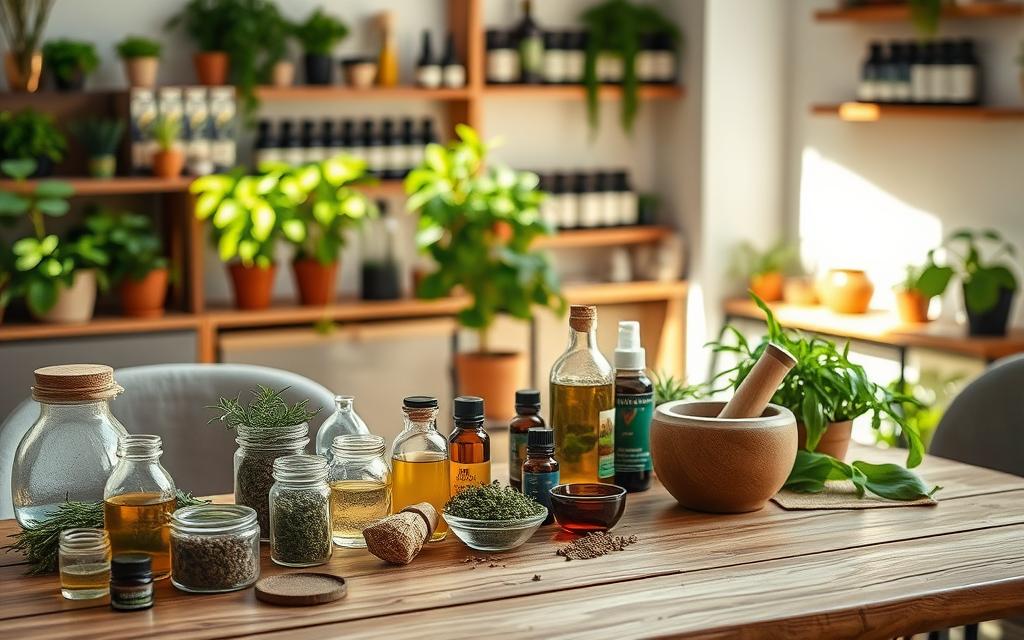
Starting with simple daily rituals can make a big difference in our well-being. Using medicinal herbs and aromatherapy can make our health better. This way, we can match treatments to our own needs and lifestyle8.
Creating a Daily Ritual with Medicinal Herbs
Adding herbal remedies to our daily routines can boost our health. Making herbal teas with chamomile or peppermint can calm us down. Herbal medicine is used by many people worldwide, showing it’s effective and flexible9.
This fits well with our personal beliefs about food, making herbal remedies more likely to work for us8.
Incorporating Aromatherapy into Daily Life
Aromatherapy is a simple way to improve our mood and health. Using essential oils in a diffuser can help us stay focused and less stressed. Our belief in alternative medicine also plays a big role in its success8.
Adding aromatherapy to our daily lives can also enhance our senses. It helps improve our overall well-being, along with other alternative medicine practices10.
Mind-Body Practices for Holistic Wellness
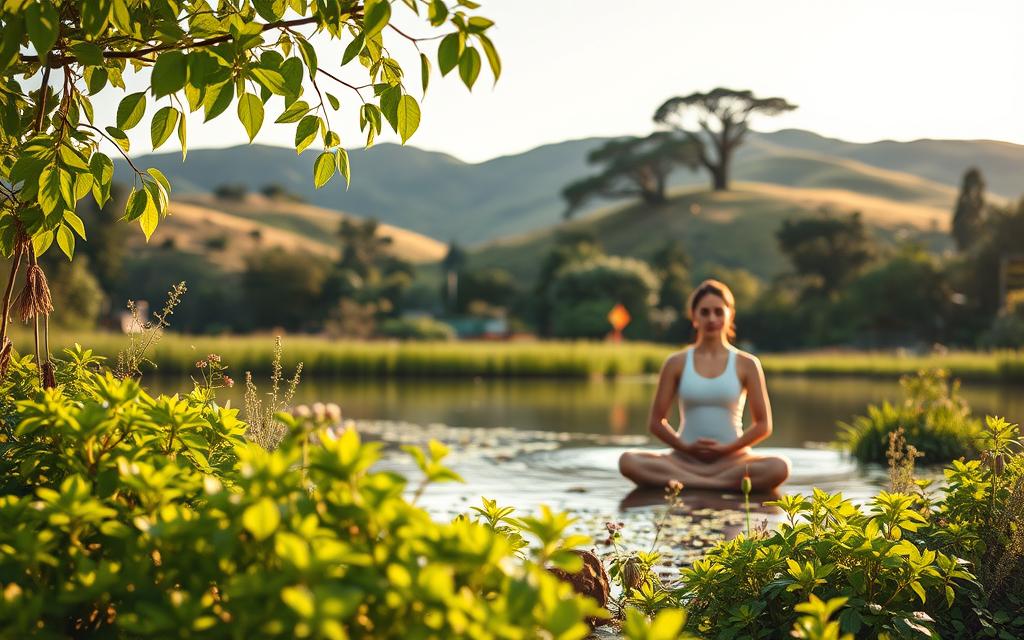
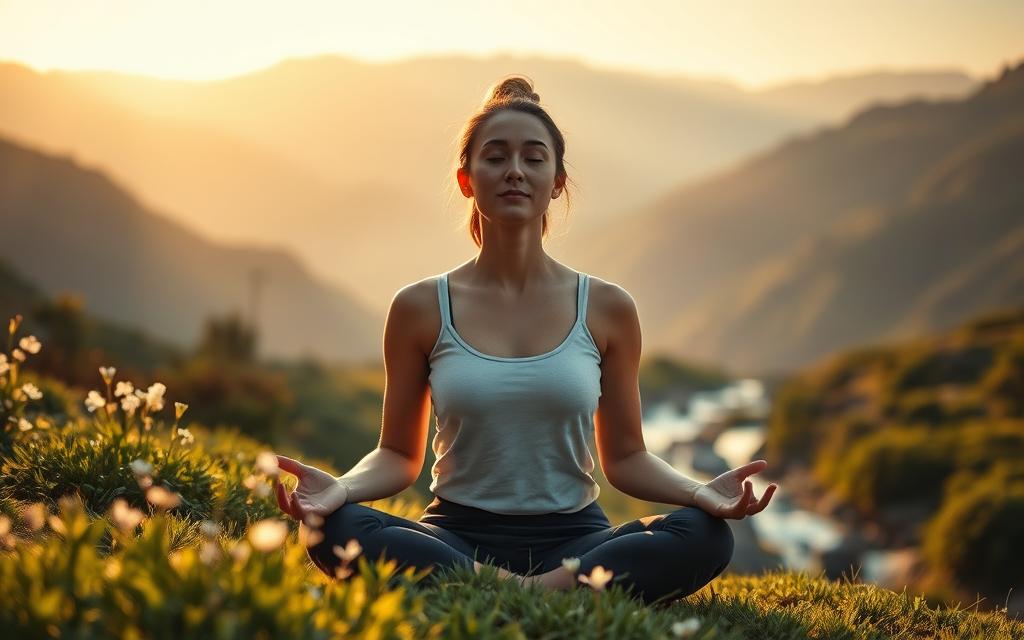
On our path to holistic wellness, mind-body practices are key. Meditation and yoga help us connect our minds and bodies. This connection brings many health benefits. By adding these practices to our daily routine, we can improve our well-being and handle stress better.
Benefits of Meditation and Mindfulness
Meditation helps us focus on our breath or a mantra. It greatly reduces stress and boosts concentration11. Mindfulness practices also make us feel better, increase self-awareness, and lower anxiety12. Regular use of these methods can improve how we handle our emotions, helping our mental health13.
Yoga as a Complementary Therapy
Yoga combines physical poses, breathing exercises, and meditation. It increases flexibility and strength while promoting relaxation and peace11. Yoga can also improve our emotional health and stability, helping us stay balanced in life’s ups and downs12. Mind-body practices like yoga are great for stress relief, enhancing mental clarity and emotional strength13.
Dietary Adjustments for Natural Healing
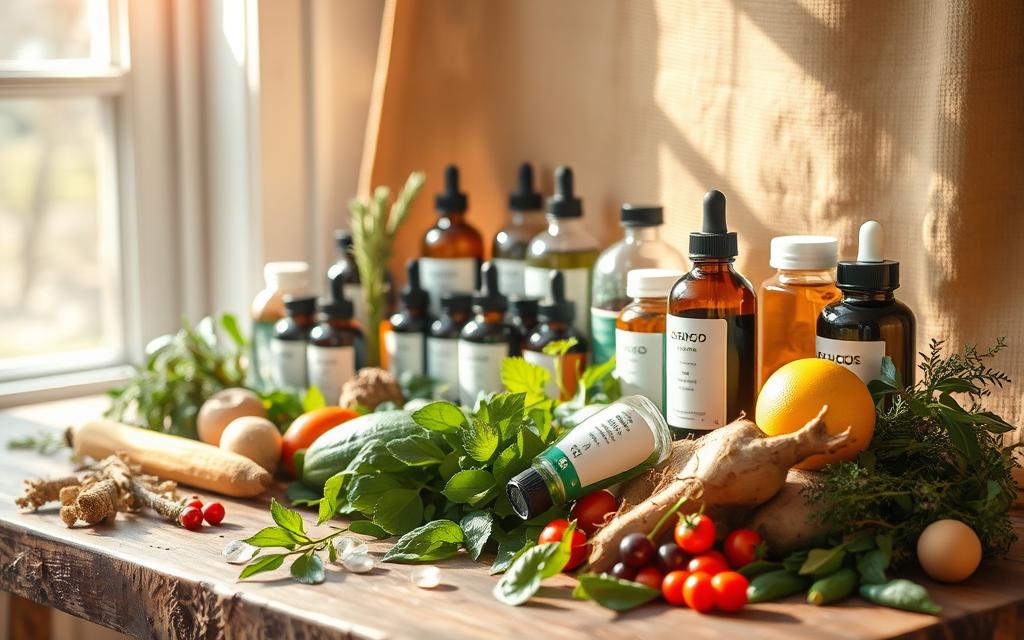
Our diet is key to natural healing. Eating nutritious whole foods helps our body heal. Herbs and spices add flavor and health benefits. For example, turmeric has anti-inflammatory curcumin14. Ginger and cinnamon boost wellness with antioxidants14.
Using Culinary Herbs and Spices
Herbs and spices are vital in a healing diet. They make food taste better and pack nutrients. Traditional Chinese Medicine teaches about food’s health impact15. Adding turmeric and ginger to meals can help balance our health15.
There are many spices that offer health benefits. For example:
- Turmeric: It’s full of curcumin, which fights inflammation.
- Ginger: It helps with digestion and nausea.
- Cinnamon: It’s good for antioxidants and blood sugar control.
Using herbs wisely helps us get the nutrients we need for healing14.
Exploring Dietary Supplements
Looking into nutritional supplements can help fill diet gaps. Vitamins C and E boost our immune system and fight free radicals14. Minerals like iron and calcium are crucial for oxygen transport and bone health14. Ayurvedic medicine suggests diets based on our unique body types16.
Adding supplements like vitamins, minerals, and herbs can boost our health. This is true when they match our individual health needs16 and15.
Simple Ways to Use Herbal Remedies
Exploring herbal remedies can boost our wellness. These natural options help with many daily issues. We’ll look at two ways to use them: evening tea for calm and herbal salves for skin.
Evening Tea Rituals for Relaxation
An evening tea ritual can calm us down. Choose herbs like valerian for sleep and lavender for its scent. Chamomile is also great for relaxation and is safe for most people.
Drinking herbal tea helps us relax. It’s a natural way to unwind without synthetic risks.
Creating Herbal Salves for Skin Care
Making herbal salves is a rewarding hobby. It lets us use natural ingredients for skin care. Calendula and comfrey are good for healing dry or irritated skin.
Herbal salves connect us with nature. They improve our skin care in a simple, effective way.
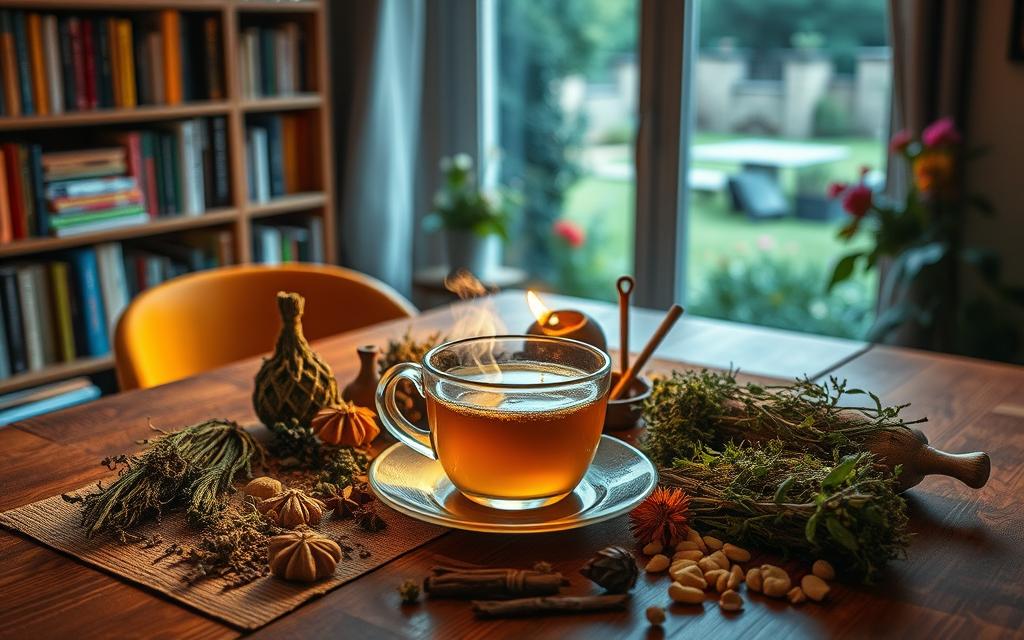
Using herbal remedies wisely can improve our health routines. With the right knowledge, we can enjoy the calmness of herbal teas and salves. This journey into herbal remedies leads us to a more natural way of living1718.
The Role of Acupuncture and Massage Therapy
Acupuncture and massage therapy are key parts of alternative medicine. They offer many benefits for our health and wellbeing. Studies show acupuncture works well for chronic pain and nausea, helping those who suffer from these issues19. Massage therapy also helps with back pain, with little risk, even though there’s not much proof it works19.
Using both therapies together can help with different health problems. A treatment plan made just for us is important. It looks at our health concerns and goals20. This way, we get a plan that fits us best.
It’s important to keep checking how we’re doing and change the plan if needed. Our feedback helps make the treatments better. This way, we get the best care we can20.
Integrating Natural Healing Modalities into Your Routine
Adding natural healing methods to our daily lives can boost our overall health. We must explore the options and pick what fits our lifestyle best. A study from 1997 found that 42% of U.S. adults used alternative medicine21. This shows more people are open to these practices.
Common reasons for using alternative medicine include back pain, allergies, and arthritis. These issues are often treated with various therapies21.
We can begin by adding chiropractic care and reflexology to our daily routine. Research shows massage and acupuncture help with physical issues and improve well-being22. Trying practices like reiki and therapeutic touch can also enhance our self-care.
It’s important to use these therapies wisely. Talking to our doctors about alternative medicine helps avoid any bad interactions. Mind-body practices like yoga and meditation also help our mental health. They reduce stress and improve our overall wellness22.
Consulting with Health Practitioners
Talking to health experts is key when adding alternative medicine to our health plans. These professionals, like alternative medicine providers and integrative health professionals, give us advice that fits our health needs. They usually start with a 60-minute meeting, then a 30-minute check-up to see how we’re doing and adjust plans if needed23.
They look at many parts of our lives, like what we eat, how we sleep, and how stressed we are. This makes sure we get a full view of our health23.
Integrative medicine means working together with our doctors. This can include things like acupuncture, yoga, and massage therapy24. By teaming up with health experts, we can safely add these to our daily routine. This helps us feel better physically, emotionally, and spiritually24.
The first meeting might use old-school tests to understand our health better23. As we go along, talking openly with our care team is important. It makes sure our treatment works well and fits with any other treatments we’re getting2. This teamwork helps us take charge of our health and make smart choices.
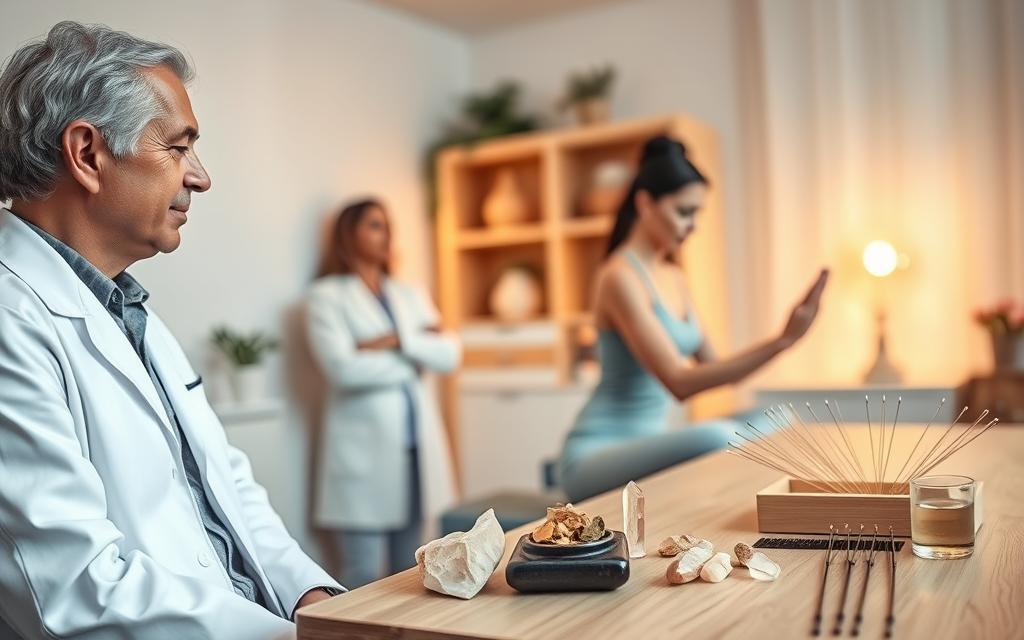
Finding Balance with Integrative Medicine
Seeking health can change our lives. Integrative medicine mixes traditional treatments with natural solutions. It shows us how to use acupuncture, chiropractic care, and mindfulness to improve our health.
Acupuncture uses thin needles to help the body heal and avoid pain25. Chiropractic care fixes the spine and joints to help the body heal naturally25. Mindfulness and meditation also help, reducing stress and aiding those with IBS and anxiety25.
Integrative medicine also includes yoga and Tai Chi for better health. Yoga helps with pain and anxiety through breathing and poses26. Tai Chi improves balance with slow movements and deep breathing25. Eating right, like veggies and fermented foods, boosts nutrition and gut health26.
Exploring these options shows how natural supplements, mindfulness, and diet can help our treatments. This approach improves both physical and mental health. It helps us achieve lasting health and energy.
Common Misconceptions about Alternative Medicine
Many people think alternative medicine is just one thing. But it’s really a mix of many therapies, each with its own science backing27. Some, like homeopathy, don’t work, studies show27.
People often rely on what others say about alternative medicine. But personal stories aren’t as good as scientific studies for finding real health solutions27. The term “alternative medicine” makes it seem like these treatments don’t need to be tested. But, when they are proven, they become part of regular medicine27.
Using untested alternative therapies can be harmful. This is true for some supplements or acupuncture done by unqualified people27. It’s important to know that not all alternative medicine comes from non-Western cultures. Some, like chiropractic care, started in Western countries27.
About 77% of patients say they don’t know enough about alternative medicine28. Some think herbal remedies are always safe, but they can harm when mixed with other medicines28. Also, while some think alternative medicine saves money, it often costs more28.
In short, knowing more about alternative medicine helps clear up many myths. By understanding CAM better, we can see its true benefits. 
Conclusion
Looking at alternative medicine in our lives, it shows a way to live more holistically. About one-third of adults in the U.S. use it, but only a few tell their doctors29. This shows many are already using it.
Using holistic practices can make us feel better and balance our health care. It combines traditional medicine with alternative therapies. Homeopathy and naturopathy can help prevent diseases and save money30.
Also, how well we work with our doctors affects how well CAM works31. Good doctor-patient relationships make CAM more effective. By focusing on care, compassion, and patient involvement, we can handle health care better.
By adding holistic health to our daily lives, we move towards a more fulfilling life. It’s about living in balance.
FAQ
What is alternative medicine?
Alternative medicine includes practices like acupuncture, herbalism, and homeopathy. It’s not part of traditional medicine. It aims for holistic health, blending with conventional treatments for better wellness.
How can we benefit from integrating alternative medicine into our lives?
Adding alternative medicine can boost our mental clarity and reduce stress. It can also improve our physical health and emotional strength. Yoga and acupuncture help with chronic pain and anxiety, leading to better well-being.
What are some easy ways to start incorporating alternative therapies into our daily routine?
Begin with small steps like using herbal remedies or essential oils. Try meditation and yoga for mind-body practices. Using calming herbs in teas or aromatherapy can greatly improve our health.
What role do dietary adjustments play in alternative medicine?
Our diet is key to health. Adding herbs like turmeric and ginger to our meals can help. Exploring dietary supplements can also fill nutritional gaps and aid in healing.
How do acupuncture and massage therapy contribute to our well-being?
These therapies are vital in alternative medicine. Acupuncture helps with pain and stress, while massage therapy relaxes and boosts circulation. Adding them to our routines can greatly benefit our health.
What should we consider when consulting with alternative medicine practitioners?
When seeing health practitioners like naturopaths or acupuncturists, talk openly about your health needs. Make sure they work safely with your conventional treatments.
What are some common misconceptions about alternative medicine?
Some think alternative therapies are ineffective or only for supplements. But, evidence shows they can be beneficial. Learning the truth can help us see their value.
Why is it important to find a balance between conventional and alternative medicine?
Finding a balance maximizes health benefits and minimizes risks. Integrative medicine combines the best of both worlds. It creates a personalized plan for long-term health.
Source Links
- Holistic Health Approaches: Integrating Traditional and Modern Medicine – https://ccaps.umn.edu/story/holistic-health-approaches-integrating-traditional-and-modern-medicine
- Integrative Medicine and Health – Overview – https://www.mayoclinic.org/departments-centers/integrative-medicine-health/sections/overview/ovc-20464567
- Integrative medicine – Mayo Clinic – https://www.mayoclinic.org/tests-procedures/complementary-alternative-medicine/about/pac-20393581
- Evidence-Based Complementary and Alternative Medicine in Current Medical Practice – https://pmc.ncbi.nlm.nih.gov/articles/PMC10857488/
- Integral Healthcare: The Benefits and Challenges of Integrating Complementary and Alternative Medicine with a Conventional Healthcare Practice – https://pmc.ncbi.nlm.nih.gov/articles/PMC3093682/
- Integrative Medicine and Complementary Therapies | What are Integrative Medicine and Complementary Therapies? – https://www.lls.org/treatment/integrative-medicine-and-complementary-therapies
- Med students say conventional medicine would benefit by integrating alternative therapies – https://www.uclahealth.org/news/release/med-students-say-conventional-medicine-would-benefit-by-integrating-alternative-therapies
- Integrating medicine with lifestyle for personalized and holistic healthcare – https://jphe.amegroups.org/article/view/9442/html
- Benefits of Alternative Medicine – Everglades University – https://www.evergladesuniversity.edu/blog/benefits-alternative-medicine/
- Integrating complementary/alternative medicine into primary care: evaluating the evidence and appropriate implementation – https://pmc.ncbi.nlm.nih.gov/articles/PMC4676622/
- Mind Body Connection Techniques – Holistic Treatments – https://www.sunshinecitycounseling.com/blog/mind-body-connection-techniques
- Holistic Wellness: Integrating Mind, Body, and Spirit – https://aihcp.net/2024/08/19/holistic-wellness-integrating-mind-body-and-spirit/
- Types of Holistic Health Practices: Guide to Whole-Person Wellness – https://www.lotusbh.org/post/types-of-holistic-health-practices
- Integrating traditional medicines with modern nutrition for holistic health – https://www.news-medical.net/news/20241112/Integrating-traditional-medicines-with-modern-nutrition-for-holistic-health.aspx
- Holistic Approach of Nutrients and Traditional Natural Medicines for Human Health: A Review – https://www.xiahepublishing.com/2835-6357/FIM-2023-00089
- Integrative Behavioral Health & Medicine – https://www.integrativebehavioral.com/blog/nutrition-in-alternative-medicine
- Integration of Herbal Medicine into Evidence-Based Clinical Practice – Herbal Medicine – https://www.ncbi.nlm.nih.gov/books/NBK92760/
- Herbal remedies and complementary medicines – https://www.rcpsych.ac.uk/mental-health/treatments-and-wellbeing/complementary-and-alternative-medicines
- The role of complementary and alternative medicine – https://pmc.ncbi.nlm.nih.gov/articles/PMC1118903/
- Reap the Benefits of Combining Acupuncture and Massage Therapy at The Source Wellness Center – The Source Wellness Center – https://thesourcewellnessnj.com/benefits-acupuncture-massage-therapy/
- C:\AA-PIM-UNC\AAA-Resource Guide Units – May 2004\Unit 7\UNC-PIM-book-intro.PDF – https://www.med.unc.edu/phyrehab/pim/wp-content/uploads/sites/615/2018/03/Integrating.pdf
- Complementary and Alternative Medicine (CAM) – https://www.cancer.gov/about-cancer/treatment/cam
- Integrative Medicine Consultation – https://www.ucsfhealth.org/treatments/integrative-health-consultation
- Integrative Medicine – UF Health – https://ufhealth.org/specialties/integrative-medicine
- Integrative Medicine | Mercy – https://www.mercy.net/service/integrative-medicine/
- Integrative medicine — treating mind, body & soul – https://www.geisinger.org/health-and-wellness/wellness-articles/2020/09/09/16/12/integrative-medicine
- Debunking the myths and misnomers of alternative medicine – https://bowmanreport.com/blogs/all-articles/debunking-myths-of-alternative-medicine
- How the public is being misled about complementary/alternative medicine – https://pmc.ncbi.nlm.nih.gov/articles/PMC2586853/
- Conclusion – Complementary and Alternative Medicine in the United States – https://www.ncbi.nlm.nih.gov/books/NBK83803/
- Conclusion, Appendixes, Glossary, and Index – https://chiro.org/alt_med_abstracts/FULL/Expanding_Medical_Horizons/Alternative_Medicine_Expanding_PT_3.html
- Unit 4 cover – https://www.med.unc.edu/phyrehab/pim/wp-content/uploads/sites/615/2018/03/Effectiveness.pdf