

In our world, we often see health through the lens of pills and prescriptions. Yet, a profound truth is overlooked—food has the power to heal. When we share meals with loved ones, we do more than just eat. We engage in a powerful ritual of wellness.
The link between nutrition and health is not just scientific; it’s deeply emotional. Many of us have felt the impact of food on our health. It can boost energy, manage chronic illnesses, or simply nourish our bodies. The idea of food as medicine touches us all.
In the realm of alternative medicine, nutrition is becoming a key part of healing. This shift opens up new ways to improve health through diet. Medically tailored meals and groceries are crucial in these programs. They help bridge the gap between knowing what to eat and actually doing it.
A study with 1,020 participants showed a 16% drop in healthcare costs and fewer hospital visits. Yet, less than 1% of medical education in the U.S. focuses on nutrition. This leaves a big gap in healthcare providers’ knowledge1.
As we explore nutrition’s power in alternative medicine, we invite you to rethink how food affects our health. Our plates can lead to healthier lives, stronger communities, and lower healthcare costs. The journey of food medicine impacts not just our health but also society’s challenges, like food insecurity1.
Together, let’s discover the full potential of nutrition in our quest for better health and well-being.
Key Takeaways
- The notion of food as medicine emphasizes the healing potential of nutrition.
- Nutrition plays a pivotal role in alternative medicine approaches.
- Medically tailored meals can significantly decrease healthcare costs and improve health outcomes.
- A lack of focus on nutrition in medical education presents challenges in healthcare.
- Food insecurity is a pressing issue that impacts health and healthcare expenditures.
Introduction to Alternative Medicine and Nutrition
In recent years, we’ve seen a big move towards alternative medicine. It’s about treating the whole person, not just symptoms. Nutrition is key in this approach, helping with overall wellness2.
By eating whole, unprocessed foods, we get more nutrients and avoid harmful additives3.
Looking back, nutrition has always been part of alternative medicine. Ancient traditions like Ayurveda and traditional Chinese medicine used diet to help health. They believed in eating foods that match your body’s needs, making treatments more effective3.
Exploring alternative medicine, we find it combines many practices. These include acupuncture, herbal medicine, and energy healing. They all work together with nutrition to help us heal4.
This shows our dedication to living a balanced life. It’s about keeping our body and mind in harmony.
Defining Food as Medicine
The term food as medicine is about using nutrition to improve health. It shows how food can prevent diseases and keep us healthy. It also focuses on making sure everyone has access to safe and nutritious food5.
This idea tells us to eat whole foods and avoid foods high in sugar, salt, and unhealthy fats6.
Studies show that eating lots of fruits, veggies, whole grains, and lean proteins is good for our hearts and overall health6. For example, diets like the Mediterranean and DASH diets have many health benefits. They can even lower healthcare costs, which is important since chronic diseases cost a lot in the U.S6..
Using food as medicine in healthcare can lead to big health wins. Meals made by Registered Dietitian Nutritionists can help people with specific health issues. These meals have shown to improve quality of life and help manage diseases better7.
These special meals have also been linked to lower healthcare costs and fewer emergency visits. This shows they are effective in managing health7.
The Link Between Nutrition and Chronic Disease
Chronic disease rates are rising fast. Poor nutrition is linked to heart disease, high blood pressure, type 2 diabetes, and obesity. These conditions affect nearly half of American adults8. Our food choices are key, as plant-based foods help prevent and manage these diseases8.
Following dietary guidelines is a challenge, with less than 50% of people doing so. But, medically tailored meals could boost this to 90%. This could lead to big health gains9.
Choosing healthier foods can help kids lose weight. But, eating too much of ultra-processed foods can increase stroke risk and harm brain function8. Programs like “Food is Medicine” at Mass General Brigham are working to make healthy food more accessible. They offer mobile markets and partner with community kitchens8.
The cost of managing chronic diseases is huge, with U.S. spending hitting $3.3 trillion in 2016. Most of this, 86%, is for chronic conditions9. Better nutrition could save a lot of money. For example, diabetes management could save $75 billion a year. Healthcare costs could drop by $27 to $48 billion9.
Understanding the Impact of Diet on Health
Diet is key to our health and wellness. We must know how not getting enough nutrients can harm us. Eating whole foods, full of nutrients, helps prevent chronic diseases. Adding nutrient-rich foods to our diet boosts our health.
How Nutritional Deficiencies Affect Wellness
Nutritional gaps can cause many health problems. They can make us tired, weaken our immune system, and slow healing. People lacking nutrients are at higher risk for heart disease and diabetes. Eating nutrient-dense foods is crucial for a balanced life.
The Role of Whole Foods in Preventing Disease
Whole foods are vital for preventing diseases. They are full of antioxidants and beneficial compounds. For example, berries may protect against some cancers10. Broccoli and kale can lower heart disease risk10.
Fatty fish like salmon and sardines fight inflammation10. A Mediterranean diet, rich in olive oil or nuts, cuts down heart disease risk by 30%11. Eating whole foods boosts wellness and lowers chronic disease risk.
The Principles of Holistic Nutrition
We focus on whole foods in holistic nutrition. This ensures each person gets a diet that fits their health needs. It’s a key part of alternative medicine and leads to better health.
Whole Foods Emphasis
Whole foods are the heart of holistic nutrition. They give us the nutrients we need without extra additives. Eating real, unprocessed foods helps keep our bodies balanced and healthy.
This idea has been around for thousands of years. It shows how food has always been seen as a way to heal12. Choosing whole foods is good for us and the planet.
Individualized Nutrition Plans
Creating plans that fit each person is a big part of holistic nutrition. Everyone’s body is different, needing a diet that considers their whole self13. We look at their lifestyle and eating habits to give advice that boosts their health.
These plans teach people how to eat well and manage stress12. They help us live better and feel more energetic. It’s all about improving our overall health and well-being.

Traditional Practices: Ayurveda and Nutrition
Ayurveda is a deep system that mixes traditional nutrition with holistic methods. It’s called the “science of life” and focuses on a diet that fits each person’s body type, or dosha. Each dosha—Vata, Pitta, and Kapha—has its own food tips based on its traits14.
Vata folks do well with warm, cooked foods like sweet potatoes and nuts. Pitta types should eat cool foods like ripe bananas and leafy greens1516. Kapha dosha does best with light foods, like apples and legumes, to keep things balanced16.
Ayurveda values whole foods full of nutrients. This helps avoid chronic diseases and boosts overall health. Research shows an Ayurvedic diet can lead to weight loss in three months15. It also teaches mindful eating, which improves self-control and food relationships15.
Ayurveda uses fresh, unprocessed foods and plants like Turmeric and Ashwagandha for health benefits. These plants help with inflammation and boosting the immune system14. It also has food types—sattvic, rajasic, and tamasic—that guide lifestyle choices for calmness or energy16. This shows how Ayurveda’s nutrition helps with holistic health and lasting wellness.

Nutrition in Traditional Chinese Medicine
In Traditional Chinese Medicine (TCM), nutrition is key. It helps us choose foods that match the principles of Qi and balance Yin and Yang. This ancient system sees diet therapy as a crucial part of staying healthy. It aims to bring our bodies into harmony and help with different health problems.
Foods are sorted by their energy types: warming, cooling, drying, and dampening. For example, onions, garlic, and ginger warm us up and fight cold. On the other hand, watermelon and leafy greens cool us down and help with heat17.
The Huang Di Nei Jing talks about a balanced diet. It says food and medicine come from the same source. Foods are divided into four groups: han (cold), re (hot), wen (neutral), and bu (strengthening). Kelp and veggies are han, while ginger and mutton are re18.
Each food has its own role in our diet. They help us stay healthy and prevent illnesses.
Too much of any energy type can cause health problems. For example, too much dryness can lead to arthritis and dry skin. Too much dampness can cause fluid retention and weight gain. Knowing this helps us make better food choices for our health and mood. Eating foods with different energies helps us stay well through TCM1718.

Food Medicine Interventions
Food medicine interventions, like medically tailored meals and produce prescriptions, are key for at-risk groups. They meet the dietary needs of those with chronic conditions. For example, meals made by Registered Dietitian Nutritionists (RDNs) are crucial for patients with complex health issues. They often need insurance to cover these meals19.
Community resources, like supportive groceries and produce prescriptions, help people get healthy food. They empower individuals to manage their health through better nutrition.
Medically Tailored Meals
Medically tailored meals meet specific dietary needs to improve patient health. These meals help manage chronic diseases and are backed by medical evidence. They are part of healthcare plans to help patients achieve better health, even when food access is a challenge20.
Produce Prescriptions and Grocery Programs
Produce prescriptions give people fresh fruits and veggies to fight food insecurity. They encourage healthier eating through nutritional education and grocery programs. Working with community partners ensures these programs reach those who need them most, helping to reduce health disparities20.
Functional Foods and Their Benefits
Functional foods are key for our health. They offer more than just basic nutrition. They help prevent nutrient deficiencies and provide essential vitamins and minerals21. Foods like fruits, vegetables, nuts, seeds, and whole grains are great examples. So are fortified products like cereals and juices21.
These foods protect us from chronic diseases like heart disease, cancer, and diabetes. This is thanks to their natural antioxidants and anti-inflammatory properties21.
Functional foods are vital for growth and development, mainly in children and infants. They provide important nutrients like omega-3 fatty acids, iron, and calcium21. For example, oats help heart health with beta-glucan. Fermented foods like yogurt and kefir boost gut health with probiotics22.
Whole grains, such as brown rice and quinoa, are packed with bioactive components. These include dietary fiber, vitamins, and antioxidants. They help our heart health and lower cancer risks23.
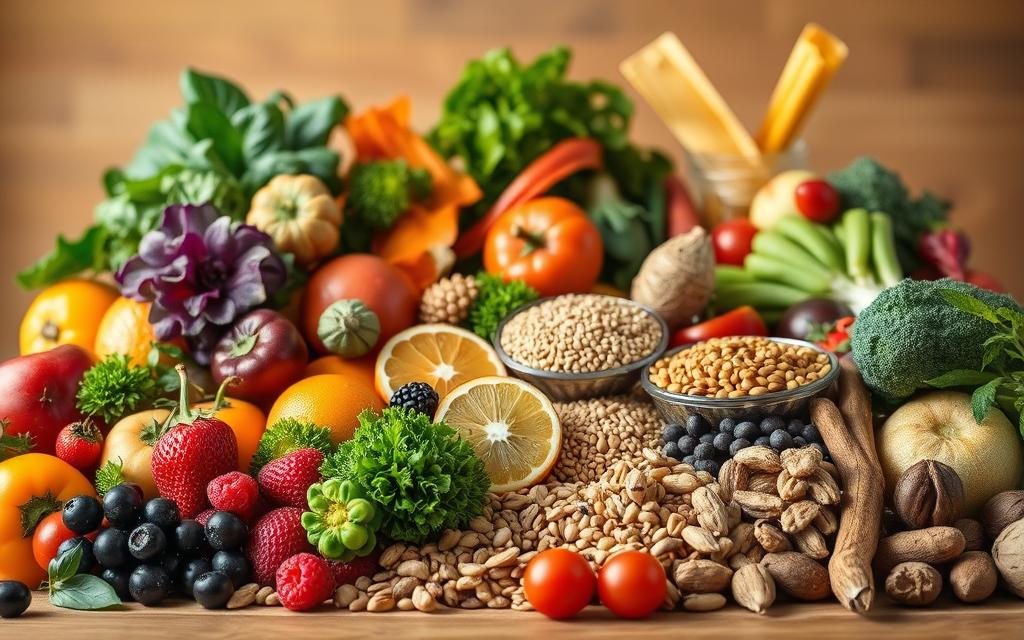
Choosing foods like calcium-fortified orange juice and probiotic yogurts can greatly impact our health22. Plant stanols in fortified foods lower bad cholesterol. This reduces heart disease risk22.
As we learn more about nutrition science, it’s clear. Adding more functional foods to our diets improves our health and well-being23.
Integrative Health Solutions through Nutrition
We see that integrative health solutions are a great way to boost overall wellness through food. This method focuses on creating personalized diets for each person. It considers lifestyle, food likes, genetics, and environment to help the whole person, body and mind24.
By knowing how food affects our health, we work towards the best results. This is key to our goal.
Functional nutritionists are crucial in this approach. They use tests like organic acids and stool tests to make diet plans that fit each person’s needs25. This tailored method improves health at all ages and with various health issues.
Nutrition is at the heart of integrative health, affecting our immune system, how long we live, and our mental health26. Diets like the Elimination Diet and Low Inflammatory Diet help with chronic diseases like heart problems, diabetes, and obesity26. Foods rich in phytonutrients, like plants, offer thousands of health-boosting compounds.

Integrative dietitians offer care that focuses on the patient, using whole foods for health24. They tackle both short-term health issues and long-term goals. This shows how food can lead to a healthier, more vibrant population.
Plant-Based Medicine: Diets for Healing
Plant-based diets are powerful for healing and improving health. Studies show they lead to weight loss and better health markers like blood pressure and cholesterol27. For example, a 63-year-old with type 2 diabetes saw a 1.23-point drop in HbA1C and cholesterol improvements in 16 weeks27.
This matches findings from Barnard et al. (2006), which showed a low-fat vegan diet can lower HbA1C by 1.23 points, more than a standard diabetes diet27.
Our experience with healing foods in daily meals shows plant-based diets manage chronic diseases and boost wellness. The Lifestyle Heart Trial found 82% of participants on a plant-based diet saw atherosclerosis regression27. A meta-analysis also showed vegetarians had a 29% lower risk of heart disease mortality27.
To get the most from plant-based nutrition, knowing what’s in these diets is key. Soy, legumes, nuts, and seeds are good protein sources, with a daily need of 0.8 grams per kg of body weight28. Plant sources like bok choy and broccoli offer more calcium than dairy28. Fruits, vegetables, and whole grains are rich in fiber, vital for gut health and disease prevention28.
It’s also important to get vitamins and minerals. Vitamin D comes from fortified foods and sun, and vitamin B12 from fortified foods or supplements28. Foods like spinach and seeds are rich in magnesium, which helps with muscle and nerve function28. A plant-based diet not only improves health but also promotes a sustainable lifestyle.
Nutritional Supplements and Alternative Medicine
Nutritional supplements are key in alternative medicine, boosting our health and wellness. As more people add dietary supplements to their routine, knowing their pros and cons is crucial. Supplements like vitamins, minerals, and probiotics help meet our daily nutrient needs29.
In 2002, the dietary supplements market was worth $18.7 billion, showing a rise in their use in America30. About 40% of Americans take vitamin or mineral supplements regularly30. This is because many believe supplements are safe, with 53% of users seeing them as rarely harmful30.
Choosing the right supplements is important for our health. It’s wise to talk to healthcare experts to avoid side effects and interactions29. The FDA checks the safety of supplements, giving us confidence in their quality29.
Using the right supplements can greatly improve our health, making our nutrition therapy more effective.
Implementing Nutrition in Healthcare Systems
Adding nutrition to healthcare systems comes with its own set of challenges and chances. It’s key to have leaders who are committed to making it work. They can really help get Food as Medicine (FIM) programs up and running in clinics31.
It’s also important to make sure the organization’s goals and nutrition goals match. Having the right setup is crucial for success31. Keeping an eye on quality and making sure everyone is on the same page is vital. This includes using electronic records and keeping everyone informed31.
Having enough staff and clear roles helps support these efforts well31. In the U.S., more people are seeing the value of using food to help health. This approach can make mental health better and make doctors happier32.
For example, the Gus Schumacher Nutrition Incentive Program has shown it can help people eat better and feel better32.
It’s also good for the wallet, as it can save money on health costs32. The World Health Organization says adding nutrition to health plans is key, mainly for diseases that aren’t spread from person to person32.
For over 20 years, the American College of Lifestyle Medicine (ACLM) has been teaching doctors about food as medicine. Now, almost 200,000 healthcare providers have this knowledge33.
Also, 1,400 health centers are getting training to use food to treat diseases like Type 2 diabetes33. These changes show how important nutrition is for better healthcare and health for everyone.
| Key Factors for Successful FIM Programs | Description |
|---|---|
| Leadership Commitment | Essential for driving adoption and fostering an environment supportive of nutrition implementation. |
| Organizational Alignment | Mission-driven focus aligned with nutritional goals enhances program success. |
| Quality Monitoring | Use of EMRs and communication to maintain program fidelity. |
| Adequate Staffing | Clear roles and adequate personnel support FIM initiatives effectively. |
| Training Opportunities | Widespread availability of training for healthcare providers boosts knowledge and buy-in. |
Challenges and Barriers to Accessing Nutrition Interventions
Getting to nutrition help is hard because of many obstacles. High workloads and low commitment from healthcare staff are big problems. Not having the right tools to measure body size makes it tough to help people eat better. Also, some health centers are closed, making it hard to get the help we need34.
Not wanting to change or being too busy can stop people from joining nutrition programs. Life gets in the way, and health issues like tiredness or sadness can make it hard to stick with plans. Not having friends or family to support us also makes it harder to keep up with healthy habits35.
Where we live can also affect our access to healthy food. In 2015, the average distance to a supermarket was 2.19 miles. About 23.5 million people live far from big grocery stores, making it hard to buy healthy food36. Black and Hispanic areas often have fewer big grocery stores than White areas, leading to unequal access to healthy food. To fix this, we need more grocery stores in poor areas and ways to make healthy food cheaper36.
Breaking Down Food Insecurity Issues
Food insecurity is a big public health problem. It’s linked to how much money people have and where they live. Many families struggle to get enough good food because of money and other barriers.
This struggle can lead to health problems. It creates a cycle of bad nutrition and chronic diseases.
The Role of Socioeconomic Status in Nutrition Access
How much money a family has affects their food choices. People with less money often can’t get the food they need. This can lead to expensive health problems and bad health outcomes37.
It’s hard for families to buy fresh, healthy food when they’re struggling financially. This keeps them in a cycle of poor nutrition.
But, there are programs that help. For example, “Food FARMacia” gives fresh, healthy food to families in need. After six months, these families have better food security38.
This program also helps kids under six avoid obesity. It shows that improving nutrition access can save money for the U.S. healthcare system. Hunger costs the U.S. $130.5 billion each year37.
Fixing the money and living situation problems is key to solving food insecurity. With the right help and support, we can make everyone’s health better. This way, everyone can live a healthier life.
Benefits of Nutrition in Conventional versus Alternative Medicine
Nutrition is key in both traditional and alternative medicine, but they use it differently. Traditional medicine aims to manage diseases. On the other hand, alternative methods like functional nutrition focus on improving health and boosting well-being. This comparison shows how nutrition can change treatment results in both areas.
Traditional medicine, like Ayurveda and traditional Chinese medicine, uses natural remedies and diets to keep health and fight off illnesses. Eating a balanced diet with the right nutrients helps the body work better39. Foods high in good fats are also good for conditions like arthritis and inflammatory bowel disease, showing nutrition’s role in health40.
There are also specific diets and products that offer benefits. Some unusual nutritional treatments, like lots of vitamin C and zinc, work for some but not all40. Functional nutrition uses special diets and tests to create plans tailored to each person, focusing on the quality of food41. Following traditional diets that are mostly plant-based can help avoid too much nutrition while keeping us healthy39.
In the end, using nutrition in both traditional and alternative medicine makes treatments better and patients happier. By looking at both sides, we see that a broad view of nutrition can lead to better health and more treatment choices.
Conclusion
Incorporating nutrition into our daily lives is key for holistic health and well-being. It’s not just a suggestion; it’s essential. By understanding how our diet affects our health, we can prevent diseases and boost our quality of life.
This commitment can lead to fewer health problems. For example, studies show a 42% drop in hospital visits for heart failure. This is thanks to better access to healthy foods and fewer symptoms42.
Specific nutrients also offer great benefits. Carbohydrates help keep us physically fit. Caffeine and tyrosine boost our brain power, even when we’re stressed43. These facts highlight the importance of food in our healthcare.
We should focus on balanced, plant-based diets and nutrition plans that fit our needs. This way, we can improve our health and the health of our communities.
Let’s use food medicine to enhance our nutrition and well-being. We invite everyone to see how these practices can be part of our lives and healthcare systems. This approach benefits our health and helps our communities by cutting healthcare costs and improving access to resources42.
Together, we can create a healthier future. By making informed dietary choices and focusing on nutrition, we can make a big difference.
FAQ
What is food medicine?
Food medicine uses certain foods to help improve health and manage diseases. It sees food as a natural way to heal and maintain health. This approach is part of integrative health.
How does nutrition impact chronic diseases?
Nutrition is key in preventing and managing diseases like obesity, diabetes, and heart disease. Studies show that better food choices can lower the risk of these conditions.
What are the principles of holistic nutrition?
Holistic nutrition focuses on whole foods that meet individual health needs. It’s based on the idea of balancing the body through tailored diets.
How are dietary interventions applied in healthcare settings?
In healthcare, dietary interventions use proven methods. They include medically tailored meals and programs that help patients and save costs.
What is the significance of functional foods?
Functional foods have health benefits beyond basic nutrition. They contain nutrients like probiotics and antioxidants that help prevent diseases and improve health.
How do plant-based diets support healing?
Plant-based diets are powerful for healing and managing chronic illnesses. Research shows they work well. They add whole foods to our diets.
What role do supplements play in alternative medicine?
Supplements help in alternative medicine by filling nutritional gaps. They offer benefits but also have risks based on health conditions.
What are some barriers to accessing nutrition interventions in healthcare?
Barriers include socioeconomic issues, education gaps, and resistance in institutions. Overcoming these is crucial for equal access to food medicine.
How does food insecurity affect public health?
Food insecurity limits nutritional access, harming health outcomes. Policy changes can help fight food insecurity and boost public health.
How can we integrate nutrition into conventional healthcare?
Integrating nutrition means combining diets with traditional medicine. This holistic method can lead to better health outcomes, showing nutrition’s key role in treatment.
Source Links
- Food is medicine: actions to integrate food and nutrition into healthcare – https://pmc.ncbi.nlm.nih.gov/articles/PMC7322667/
- Introduction – Complementary and Alternative Medicine in the United States – https://www.ncbi.nlm.nih.gov/books/NBK83804/
- Integrative Behavioral Health & Medicine – https://www.integrativebehavioral.com/blog/nutrition-in-alternative-medicine
- Alternative Medicine – StatPearls – NCBI Bookshelf – https://www.ncbi.nlm.nih.gov/books/NBK538520/
- Food as Medicine – Academy of Nutrition and Dietetics Foundation – https://www.eatrightfoundation.org/resources/food-as-medicine
- Food as medicine: A debated concept – https://www.medicalnewstoday.com/articles/can-food-be-medicine-pros-and-cons
- PDF – https://chlpi.org/wp-content/uploads/2013/12/Food-is-Medicine_Peer-Reviewed-Research-in-the-U.S.1.pdf
- Food Is Medicine | Mass General Brigham – https://www.massgeneralbrigham.org/en/about/newsroom/articles/food-is-medicine
- Food as medicine? Exploring the impact of providing healthy foods on adherence and clinical and economic outcomes – https://pmc.ncbi.nlm.nih.gov/articles/PMC9032066/
- Food as Medicine: Does What You Eat Influence Your Health? – https://www.healthline.com/nutrition/food-as-medicine
- An Evidence-based Look at the Effects of Diet on Health – https://pmc.ncbi.nlm.nih.gov/articles/PMC6650179/
- Food as Medicine | KCC – https://kootenaycolumbiacollege.com/food-as-medicine-holistic-nutrition-for-whole-health-and-wellness/
- What is Holistic Nutrition? | National Association of Nutrition Professionals – https://nanp.org/what-is-holistic-nutrition/
- Indian Traditional Ayurvedic System of Medicine and Nutritional Supplementation – https://pmc.ncbi.nlm.nih.gov/articles/PMC3705899/
- What Is the Ayurvedic Diet? Benefits, Downsides, and More – https://www.healthline.com/nutrition/ayurvedic-diet
- Traditional methods of food habits and dietary preparations in Ayurveda—the Indian system of medicine – Journal of Ethnic Foods – https://journalofethnicfoods.biomedcentral.com/articles/10.1186/s42779-019-0016-4
- The Energy of Foods in Chinese Medicine – CNM College of Naturopathic Medicine – https://www.naturopathy-uk.com/news/news-cnm-blog/blog/2020/07/16/the-energy-of-foods-in-chinese-medicine/
- Food & Nutrition Information – https://apjcn.nhri.org.tw/server/apjcn/2/2/91.htm
- Types of Interventions | odphp.health.gov – https://odphp.health.gov/foodismedicine/understanding-food-medicine/types-interventions
- Food is medicine intervention shows promise for engaging patients attending a safety-net hospital in the Southeast United States – https://pmc.ncbi.nlm.nih.gov/articles/PMC10613492/
- Functional Foods: Definition, Benefits, and Uses – https://www.healthline.com/nutrition/functional-foods
- Functional Foods and Their Benefits – https://www.webmd.com/diet/video/functional-foods
- Functional Foods for Health – 9.391 – Extension – https://extension.colostate.edu/topic-areas/nutrition-food-safety-health/functional-foods-for-health-9-391/
- The Role of Nutrition and Integrative Medicine – https://fullscript.com/blog/nutrition-and-integrative-medicine
- Integrative and Functional Nutrition’s Role in Your Health – Saybrook University – https://www.saybrook.edu/unbound/integrative-and-functional-nutrition-benefits/
- No title found – https://www.rupahealth.com/post/the-role-of-nutrition-in-integrative-medicine
- Nutritional Update for Physicians: Plant-Based Diets – https://pmc.ncbi.nlm.nih.gov/articles/PMC3662288/
- The Benefits of Plant-Based Nutrition – https://lifestylemedicine.org/articles/benefits-plant-based-nutrition/
- FDA 101: Dietary Supplements – https://www.fda.gov/consumers/consumer-updates/fda-101-dietary-supplements
- Dietary Supplements – Complementary and Alternative Medicine in the United States – https://www.ncbi.nlm.nih.gov/books/NBK83789/
- Implementation of Food is Medicine Programs in Healthcare Settings: A Narrative Review – https://pmc.ncbi.nlm.nih.gov/articles/PMC11535093/
- ‘Food is Medicine’ to advance mental health and build resilient food systems globally – Nature Food – https://www.nature.com/articles/s43016-025-01145-8
- Food as Medicine – https://lifestylemedicine.org/nutrition-as-medicine/
- Barriers and facilitators to the implementation of nutrition interventions at primary health care units of Ethiopia: A consolidated framework for implementation research – https://pmc.ncbi.nlm.nih.gov/articles/PMC9749594/
- Barriers and facilitators to diet, physical activity and lifestyle behavior intervention adherence: a qualitative systematic review of the literature – International Journal of Behavioral Nutrition and Physical Activity – https://ijbnpa.biomedcentral.com/articles/10.1186/s12966-023-01424-2
- Access to Foods That Support Healthy Dietary Patterns – Healthy People 2030 – https://odphp.health.gov/healthypeople/priority-areas/social-determinants-health/literature-summaries/access-foods-support-healthy-dietary-patterns
- Hunger & Poverty in America – Food Research & Action Center – https://frac.org/hunger-poverty-america
- Food FARMacia Breaks the Link Between Food Insecurity and Obesity in Children | NYP – https://www.nyp.org/news/food-farmacia-breaks-the-link-between-food-insecurity-and-obesity-in-children
- The synergy of nutrition and traditional medicine for holistic health and wellbeing – https://www.news-medical.net/news/20241113/The-synergy-of-nutrition-and-traditional-medicine-for-holistic-health-and-wellbeing.aspx
- Unconventional approaches to nutritional medicine – https://pmc.ncbi.nlm.nih.gov/articles/PMC1275978/
- Conventional vs. Functional Nutrition Care: What’s the Difference? – https://www.ccfmed.com/blog/conventional-vs.-functional-nutrition-care-whats-the-difference
- Mom’s Meals®, Inland Empire Health Plan food as medicine pilot demonstrates long-term benefits beyond conclusion | Mom’s Meals – https://www.momsmeals.com/our-newsroom/moms-meals-inland-empire-health-plan-food-as-medicine-pilot-demonstrates-long-term-benefits-beyond-conclusion-/
- Conclusions and Recommendations – Food Components to Enhance Performance – https://www.ncbi.nlm.nih.gov/books/NBK209055/