Monday, June 1, 2026
spot_img
Home Blog Page 10

How Stress Affects Blood Sugar and What You Can Do About It

Stress is a part of our lives, coming and going with a force that can feel too much. It impacts not just our minds but also our bodies, which is a big concern for people with diabetes. When we’re under stress, our blood sugar levels can spike. This is because stress hormones like cortisol and adrenaline make our bodies less responsive to insulin1.

This can lead to higher blood sugar levels. Feeling stressed can also increase our risk of diabetes complications. So, managing stress is key to keeping our health in check.

Key Takeaways

  • Understanding the relationship between stress and blood sugar is vital for effective diabetes management.
  • Stress-induced insulin resistance can lead to complications, particular for individuals with type 2 diabetes.
  • Recognizing the symptoms of stress-related blood sugar fluctuations empowers us in managing our health.
  • Incorporating stress management strategies can significantly assist in stabilizing blood sugar levels.
  • Support from healthcare teams and community resources is crucial for those coping with diabetes-related stress.

Understanding Stress and Its Physiological Impact

Stress is a complex human reaction to tough situations. The body’s stress response is mainly controlled by the neuroendocrine system. This system triggers hormonal activities that can greatly affect our health, notably for those with diabetes stress.

Both short-term and long-term stress have different effects on our bodies. For instance, people with diabetes often feel more anxious, which can harm their metabolic function2.

Emotional stress makes it hard for people with diabetes to take care of themselves. Chronic stress can cause blood sugar levels to swing, thanks to hormones like adrenaline3. It’s important to understand these links, as studies show that people with diabetes are more likely to feel depressed2.

Even fewer people with diabetes who are depressed get help2. This is a big problem.

Stress can have serious long-term effects. It can make insulin resistance worse, making it harder to control blood sugar2. Almost one-third to half of people with diabetes struggle with stress related to their condition4.

Without ways to manage stress, like mindfulness or exercise, its effects can get worse. This can harm our overall health.

How Stress Influences Blood Sugar Levels

Stress can really affect our blood sugar levels. When we’re stressed, our body releases hormones like cortisol and adrenaline. These hormones can make our blood sugar go up. This makes managing diabetes harder and can lead to more hyperglycemia, as our body thinks it needs more energy5.

Dealing with daily stress can lead to unhealthy habits like eating too much or choosing bad foods. These habits can make it harder for our blood sugar to stay stable. But, studies show that managing stress well can lower blood sugar by 10-20%6.

It’s key to know that long-term stress, like what we face with diabetes, affects our blood sugar more than other stresses. Chronic stress and feeling overwhelmed can make it harder to keep our diabetes in check7. This can make us feel lonely or anxious, which can make our diabetes symptoms worse over time.

Also, not getting enough sleep and hormonal changes can make stress’s impact on blood sugar worse. To manage stress and diabetes, doing regular physical activity is helpful. It not only reduces stress but also lowers anxiety5. Let’s focus on finding ways to deal with stress and blood sugar together for better health.

The Role of Hormones in Stress-Induced Blood Sugar Changes

When we’re stressed, our body releases glucocorticoids and catecholamines. These hormones help control blood sugar levels. They make sure we have enough glucose for our body’s needs.

Glucocorticoids tell the liver to make more glucose. At the same time, they stop other parts of the body from using glucose. This can lead to high blood sugar levels8 and insulin resistance9.

People under constant stress may see their metabolic health suffer more. High blood sugar, or hyperglycemia, can happen when levels go over 180 mg/dl10. This is common in critically ill patients, with over 50% showing high blood sugar soon after being in the ICU8.

High stress hormones not only raise glucose levels but also cause long-term health issues.

Chronic Stress and Its Effects on Metabolic Function

Chronic stress can harm our metabolic health, causing insulin resistance and obesity. Studies show that long-term stress increases the risk of diseases like Type-2 diabetes and heart disease11. It makes us crave high-calorie foods, leading to metabolic problems11. Work stress can make this worse, leading to more obesity11.

Stress can deeply affect our health. People who faced stress as kids are more likely to get metabolic diseases12. Adults under stress may face a higher risk of obesity, diabetes, and liver disease12. Long-term stress can also make diseases worse, leading to more health problems12.

Findings Implications
Chronic stress is linked to T2DM and CVD. Increases the urgency for stress management strategies.
Stress alters feeding behaviors. Promotes obesity and metabolic dysfunction.
Individuals with childhood adversity face a higher risk of metabolic diseases. Highlights the need for early interventions.
Long-term stress increases the risk of obesity and diabetes. Focus on therapeutic benefits of stress management can improve outcomes.

chronic stress and metabolic dysfunction

Stress and Diabetes: What We Need to Know

It’s important to understand how stress affects diabetes. This is true for both type 1 and type 2 diabetes. Each type has its own challenges that stress can make worse.

Type 1 Diabetes and Stress Response

People with type 1 diabetes face unpredictable blood sugar changes due to stress. Some may see their blood sugar go up, while others may see it go down13. When they get sick, their blood sugar often goes up, making it crucial to keep an eye on it14.

Staying healthy and following wellness routines can help keep blood sugar stable.

Type 2 Diabetes and Stress: A Vicious Cycle

For those with type 2 diabetes, stress makes insulin resistance worse, creating a cycle. Stress can make blood sugar levels go up in about 50-75% of people13. It’s also a risk factor for getting type 2 diabetes, affecting older women and men14.

Stress can lead to bad habits, making diabetes complications like high blood pressure and heart disease worse13.

Symptoms of Elevated Blood Sugar Due to Stress

Stress can make our blood sugar levels go up, leading to diabetes symptoms we should know. We start to see these signs when our blood sugar hits 180 to 200 mg/dL (10 to 11.1 mmol/L)15. Signs include feeling very thirsty, needing to pee a lot, and feeling really tired. These symptoms can creep up over days or weeks15.

People with diabetes need to watch out closely. If their blood sugar stays above 240 mg/dL (13.3 mmol/L) and they have ketones in their urine, they need to get help right away15.

Our feelings can really affect our health. Stress can make our blood sugar go up because of hormone changes. This can make us feel angry or sad, and it can mess with our mood and life quality16. Stress can also make our body release cortisol, which raises blood sugar levels17.

It’s important to understand how stress and diabetes symptoms are connected. Knowing how our body reacts to stress can help prevent big problems like heart issues or infections15. So, it’s key to check our blood sugar often when we’re stressed15.
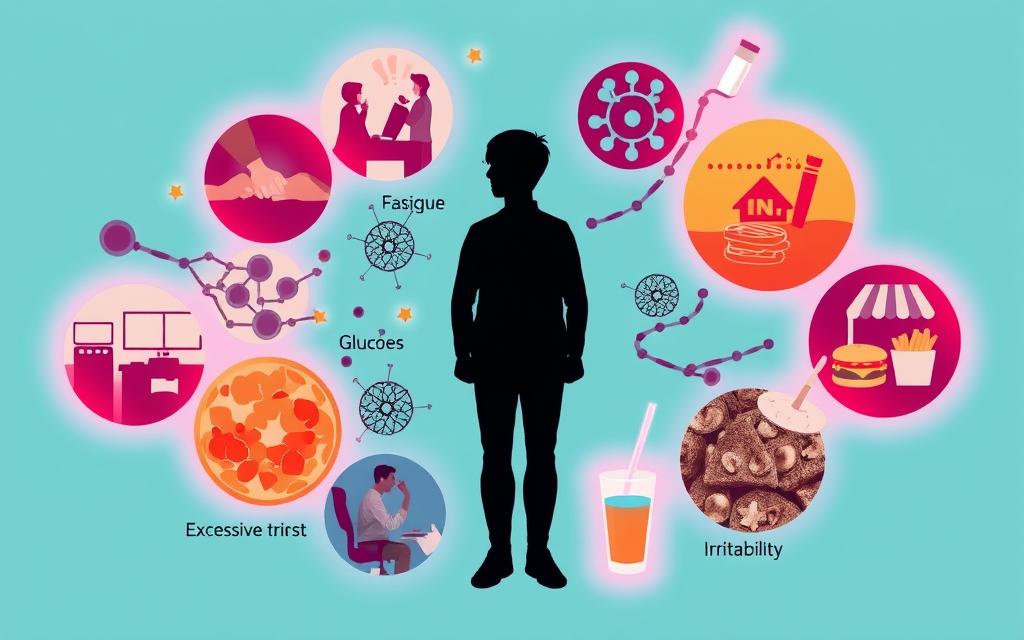
Symptoms of Elevated Blood Sugar Due to Stress

Blood Sugar Level (mg/dL) Potential Symptoms Recommended Action
Below 180 None or mild symptoms Regular monitoring
180 – 200 Increased thirst, frequent urination Stay hydrated, check levels frequently
200 – 240 Fatigue, blurred vision Seek advice from a health professional
Over 240 Severe fatigue, confusion, potential ketones present Immediate medical attention required

Managing Stress and Diabetes: Practical Strategies

Managing stress is key for those with diabetes. Physical activity and relaxation techniques are great tools. They help balance and improve overall health.

Exercise as a Stress Relief and Blood Sugar Stabilizer

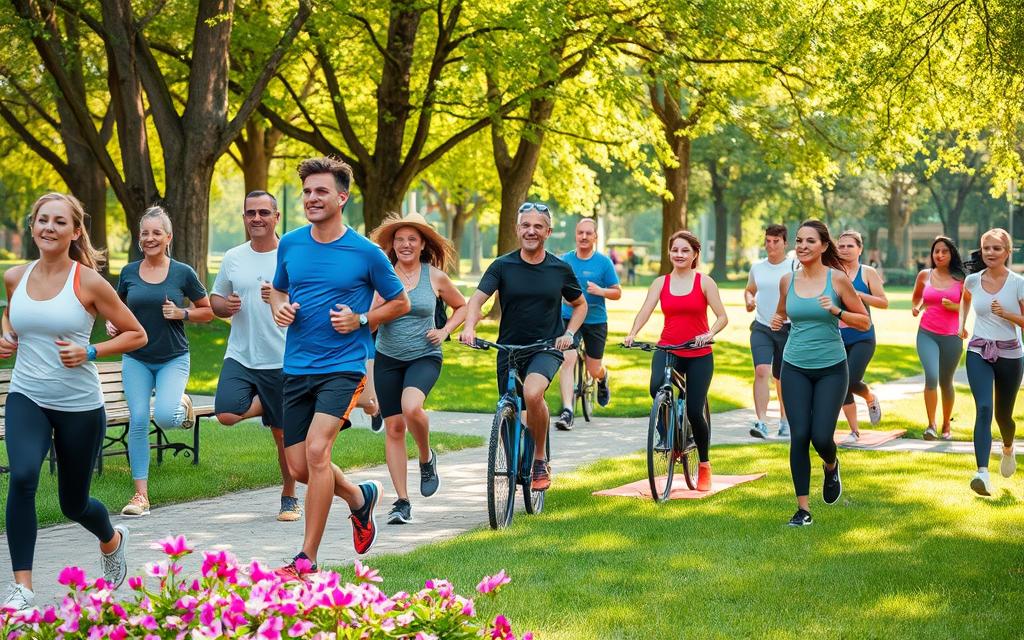
Regular exercise brings many health benefits. It’s a big stress reliever and helps keep blood sugar stable. Studies show moderate exercise can lower blood pressure by 5-10 mmHg18.

People who exercise regularly have a 30-60% lower risk of getting type 2 diabetes18. But, stress can make it hard to keep up with exercise19. So, finding fun exercises is crucial to stay consistent.

Mindfulness and Relaxation Techniques

Mindfulness and relaxation are vital for stress management. Studies show mindfulness can lower cortisol levels by up to 30%18. Techniques like meditation or progressive muscle relaxation can reduce anxiety and help relax.

A study found that people with type 2 diabetes who practiced progressive muscle relaxation saw blood sugar drops after 12 weeks19. About 60% of people who meditate say it greatly reduces stress19. These methods boost emotional health and aid in diabetes management.

The Importance of a Balanced Diet in Stress Management

A balanced diet is key for managing diabetes and stress. It helps our body control blood sugar levels, which is vital during stressful times. For example, chronic stress can make us crave unhealthy foods, leading to weight gain and obesity20 and21.

Choosing whole fruits over juices is important. It boosts fiber intake and keeps blood sugar stable. This is crucial for a diabetes diet.

Eating foods rich in omega-3 fatty acids, like fish, is also beneficial. Adding nonstarchy vegetables and lean proteins to our meals supports our metabolism21. Regular meal times help our body use insulin better and reduce stress eating20.

By making smart food choices, we can better manage stress and improve our health.

balanced diet in stress management

Professional Support: When to Seek Help

It’s crucial to know when we need professional help with stress and diabetes. About 70% of people with diabetes feel overwhelmed by managing their condition every day22. Getting professional help can give us personalized ways to handle stress and diabetes, helping us cope better.

There are signs that tell us it’s time to ask for help. Feeling really stressed or burnt out is a big one. A study found that 25% of adults with diabetes struggle with depression, making it hard to manage their blood sugar22. This shows how important it is to seek help when stress gets too much.

Also, getting the right diabetes education is key. Sadly, about 50% of people with diabetes don’t have access to it, which is vital for better health22. Working with certified diabetes experts can really help, like lowering hemoglobin A1c levels by 1-2%22.

There are also special programs for diabetes care that can help a lot. The ADA’s DSMES programs help us learn and feel more confident in managing our diabetes23. For emotional support, there’s a free program on healthy eating and exercise23.

We can use tools like the Diabetes Support Plan to find local help23. There are over 170 free materials to help us manage diabetes better23. Working with a registered dietitian can even save us money, showing how important professional help is22.

In short, getting professional help is crucial when dealing with diabetes and stress. Knowing when to ask for help can lead to better diabetes management and emotional health.

Sign Description
Feeling Overwhelmed 70% of individuals with diabetes feel this way22.
Emotional Distress 25% of adults with diabetes experience significant levels of depression22.
Lack of Education 50% of people with diabetes lack access to comprehensive education22.
A1c Improvement Working with specialists can lead to a 1-2% reduction in A1c22.

Community and Online Resources for Stress Management

Managing diabetes well shows us how important community and online resources are. These platforms offer support groups where we can meet others with similar issues. We can share tips and feel like we belong.

Online resources for diabetes community

The National Diabetes Prevention Program (NDPP) is a great example. It has CDC-recognized programs in over 500 places. People go to 16 weekly sessions and then meet up less often24.

Diabetes self-management education and support (DSMES) programs are open to all. They teach us about healthy eating and exercise25.

DiabetesSisters is great for women, offering a safe space to talk about stress. It helps us build a support network and learn to manage diabetes better. Mindfulness practices like deep breathing and meditation are also taught, helping us reduce stress and control blood sugar.

Technology helps us track our health better. Tools for changing behavior are getting more common. But, we need more research to know if they really work24.

By joining our local and online diabetes community, we learn a lot. We share our experiences and help each other deal with stress and diabetes.

Conclusion

The link between stress and blood sugar levels is key for managing diabetes. We must see how stress can harm our blood sugar control. By using good stress relief methods, we can improve our health and well-being, which is very important for diabetes management.

This mix of stress and diabetes needs a full plan. It includes changing our diet, being active, and working with doctors262728.

Also, the role of community and professional support is huge. Knowing about our health conditions helps us make better choices. Using resources like the American Diabetes Association can really improve our life quality262728.

By managing stress well, we can better handle diabetes and improve our overall health. Let’s work together for a healthier lifestyle that boosts both our physical and mental health.

FAQ

How does stress impact blood sugar levels in people with diabetes?

Stress can raise blood sugar levels by releasing hormones like cortisol and adrenaline. These hormones can make it harder for insulin to work. This can make managing diabetes harder and lead to high blood sugar.

What are some common symptoms of elevated blood sugar due to stress?

Signs of high blood sugar include feeling very thirsty, needing to pee a lot, feeling tired, and blurry vision. Spotting these signs early is key to managing diabetes well.

What strategies can we implement to manage stress related to diabetes?

To manage stress, try regular exercise, meditation, and eating foods that are good for you. These steps can help keep blood sugar stable and reduce stress.

When should we consider seeking professional help for stress management?

If stress is too much and affects your diabetes care or health, get help. Look for signs like constant worry, trouble sleeping, or hard time controlling blood sugar.

How can a balanced diet help in managing both stress and diabetes?

Eating well helps control blood sugar and gives energy for daily stress. Foods that keep energy steady can help manage stress and improve diabetes care.

Are there online resources or communities that support stress management for those with diabetes?

Yes, many online places and groups help with diabetes stress. They let you connect with others, share tips, and feel part of a community.

Source Links

  1. Stress and diabetes – https://www.diabetes.org.uk/living-with-diabetes/emotional-wellbeing/stress
  2. The Connection Between Stress and Diabetes – https://health.umms.org/2024/09/20/connection-between-stress-and-diabetes/
  3. Stress, Depression and Diabetes: What To Know – https://health.clevelandclinic.org/stress-and-diabetes
  4. Diabetes and Mental Health – https://www.cdc.gov/diabetes/living-with/mental-health.html
  5. PDF – https://www.maine.gov/mdot/challengeme/topics/docs/EmotionsStress.pdf
  6. How stress affects blood glucose levels – https://www.allinahealth.org/health-conditions-and-treatments/health-library/patient-education/gestational-diabetes/healthy-eating-physical-activity-stress-management/how-stress-affects-blood-glucose-levels
  7. How Stress Affects Your Blood Sugar – https://www.dexcom.com/en-ca/blog/how-stress-affects-blood-sugar
  8. Stress-Induced Hyperglycemia: Consequences and Management – https://pmc.ncbi.nlm.nih.gov/articles/PMC9360912/
  9. Researchers Suggest Stress Hormones Explain How Obesity Causes Diabetes – https://rutgershealth.org/news/researchers-suggest-stress-hormones-explain-how-obesity-causes-diabetes
  10. Stress hyperglycemia: Why does stress raise blood sugar levels? – https://www.medicalnewstoday.com/articles/stress-hyperglycemia
  11. Stress and Metabolic Disease – Sociality, Hierarchy, Health: Comparative Biodemography – https://www.ncbi.nlm.nih.gov/books/NBK242443/
  12. The multiple roles of life stress in metabolic disorders – Nature Reviews Endocrinology – https://www.nature.com/articles/s41574-022-00746-8
  13. Helping Patients with Diabetes Manage Stress – Blog – NIDDK – https://www.niddk.nih.gov/health-information/professionals/diabetes-discoveries-practice/helping-patients-with-diabetes-manage-stress
  14. Stress is affecting your type 2 diabetes – https://intermountainhealthcare.org/blogs/stress-is-affecting-your-type-2-diabetes
  15. Hyperglycemia in diabetes-Hyperglycemia in diabetes – Symptoms & causes – Mayo Clinic – https://www.mayoclinic.org/diseases-conditions/hyperglycemia/symptoms-causes/syc-20373631
  16. Is Your Mood Disorder a Symptom of Unstable Blood Sugar? – The Pursuit – U-M School of Public Health – https://sph.umich.edu/pursuit/2019posts/mood-blood-sugar-kujawski.html
  17. Hyperglycemia – https://my.clevelandclinic.org/health/diseases/9815-hyperglycemia-high-blood-sugar
  18. Managing Stress When You Have Diabetes – https://www.webmd.com/diabetes/managing-stress
  19. 6 Ways to Reduce Stress With Diabetes – https://www.everydayhealth.com/hs/type-2-diabetes-management/reduce-stress/
  20. Stress and Health – https://nutritionsource.hsph.harvard.edu/stress-and-health/
  21. Diabetes diet: Create your healthy-eating plan – https://www.mayoclinic.org/diseases-conditions/diabetes/in-depth/diabetes-diet/art-20044295
  22. Your Health Care Team| ADA – https://diabetes.org/health-wellness/diabetes-and-your-health/your-healthcare-team
  23. Diabetes Support Resources | American Diabetes Association – https://professional.diabetes.org/diabetes-support-resources
  24. Support Your Patients with Resources & Referrals – NIDDK – https://www.niddk.nih.gov/health-information/professionals/clinical-tools-patient-management/diabetes/game-plan-preventing-type-2-diabetes/help-patients-make-lifestyle-changes-after-prediabetes-diagnosis/support-your-patients-with-resources-referrals
  25. Living with Diabetes – https://www.cdc.gov/diabetes/living-with/index.html
  26. Summary and Conclusion – A Practical Guide to Diabetes-Related Eye Care – https://www.ncbi.nlm.nih.gov/books/NBK582430/
  27. The prevention and control the type-2 diabetes by changing lifestyle and dietary pattern – https://pmc.ncbi.nlm.nih.gov/articles/PMC3977406/
  28. Diabetes awareness – East Basildon Primary Care Network – https://www.eastbasildonpcn.nhs.uk/news/diabetes-awareness/


10 Simple Ways to Boost Your Mental Health Every Day

0

We know how vital mental health, wellness, and emotional wellbeing are. Simple habits can greatly improve our mental state and overall wellbeing. For example, starting with a cup of coffee can boost alertness and energy. It’s linked to a 10%-20% lower risk of depression compared to those who don’t drink coffee1.

Keeping a gratitude journal can also lift our spirits. Studies show a 25% jump in positive feelings1.

We aim to share practical tips to enhance your mental health daily. We’ll discuss the significance of mental health, offer wellness tips, and stress management strategies. By focusing on our mental health, we can elevate our emotional wellbeing and life quality.

Key Takeaways

  • Starting the day with a cup of coffee can help increase alertness and energy, and may reduce the risk of depression by 10%-20%1.
  • Tracking gratitude and achievement with a journal can enhance overall well-being, with a 25% increase in positive emotions1.
  • Planning a vacation can boost happiness levels for up to 8 weeks, as supported by psychological studies on anticipatory joy1.
  • Engaging in creative activities can improve mental health, with approximately 70% of participants feeling a boost in overall well-being after creative expression1.
  • Close, quality relationships are significantly correlated with increased life satisfaction, with individuals who report strong social ties being 50% more likely to feel fulfilled1.
  • Prioritizing mental health is crucial, as poor mental health can lead to physical health problems, indicating a significant relationship between the two2.
  • Healthy living habits can lower the risk of mental illnesses such as depression and anxiety2.

Understanding Mental Health in Modern Life

In today’s world, taking care of our mental health is key. The second source explains that mental health is about how we feel about ourselves and our relationships. It’s also about managing our feelings and facing challenges3. This is closely linked to being mentally resilient, which helps us deal with tough times.

About 1 in 4 people worldwide face mental health issues at some point3. Emotional skills and mental factors can help protect us from these problems3. By focusing on our mental health, we can live better lives and bounce back from hard times.

Signs we might need help include changes in how we eat, sleep, or feel4. It’s important to notice these signs and get help. By caring for our mental health and seeking support, we can stay well and feel better.

The Science Behind Mental Well-being

The science of mental well-being is complex. It involves genetics, environment, and lifestyle. Understanding these factors helps us take care of our mental health and build resilience.

Why Daily Mental Health Practices Matter

Practices like exercise, meditation, and staying connected are vital4. They help us stay mentally strong and reduce the risk of mental health issues. Adding these to our daily routine boosts our mental wellness.

Common Challenges to Mental Wellness

Stress, anxiety, and trauma can hit anyone, no matter their background4. Knowing these challenges and tackling them helps us stay mentally well. This improves our overall mental health.

Starting Your Day with Purpose

Starting your day with a purpose can really help your mental health. It can make you feel more stable and strong mentally5. You can do this by setting goals, being thankful, and staying active. Adding these habits to your day can make you feel better overall.

A good morning routine can give you more energy and make you feel positive6. You might do things like exercise, meditate, or go outside. Taking care of your mind is key to feeling better and stronger.

Starting your day right can also bring many benefits. You’ll feel clearer, more energetic, and mentally stronger. Plus, you’ll feel better overall.

Changing your morning routine a bit can make a big difference in your mental health7. Choose activities that make you happy and fulfilled. Don’t be afraid to try new things and adjust as needed.

mental stability

The Power of Morning Movement

Starting your day with exercise can greatly improve your mental and emotional health. Regular physical activity can reduce stress, boost memory, and help you sleep better8. Morning workouts also increase the release of neurotransmitters, leading to better focus and mental clarity9.

Feeling accomplished from morning exercise can lead to healthier choices and better eating habits all day9. Morning workouts can also enhance your brain function by up to 30%, especially in tasks that need focus and problem-solving8. Start with simple routines like yoga or brisk walking to add morning movement to your day.

morning exercise

Building a habit of morning exercise, like 30 minutes a day, can greatly improve your mental and emotional health8. It helps connect physical activity with emotional balance, reducing stress and improving mood8. It’s key to stick to a routine and adjust as needed to keep your mental and emotional wellbeing in check.

Nutrition’s Role in Mental Wellness

We know how important nutrition is for our mental health. Eating well is key to keeping our minds healthy. Foods like salmon and walnuts, full of omega-3s, can help with depression and anxiety.

A healthy diet boosts our brain function and mood. Eating lots of fruits and veggies can fight inflammation, which helps our mental health. The third source says eating right every day can make us feel better overall.

Some foods that are good for our minds include:

  • Fatty fish like salmon, rich in omega-3 fatty acids
  • Nuts and seeds, such as walnuts and chia seeds
  • Leafy greens, like spinach and kale
  • Fresh fruits, including berries and citrus fruits

Choosing the right foods can help a lot with our mental health. As we learn more about nutrition and mental health, we can live healthier lives.

Foods Mental Health Benefits
Fatty fish Reduced symptoms of depression and anxiety
Nuts and seeds Improved cognitive function and mood
Leafy greens Reduced inflammation and improved mental health

Mindful Breathing Techniques for Stress Relief

Practicing mindful breathing can greatly improve our mental health and emotional wellbeing. By adding these techniques to our daily routine, we can lower stress and anxiety. This can also enhance our mental health10. Studies show that diaphragmatic breathing is especially helpful for those with COPD, heart problems, and cancer11.

Simple exercises like deep breathing, box breathing, and alternate nostril breathing can help. These methods calm the mind and body, easing stress and anxiety symptoms10. For instance, deep breathing before bed can improve sleep. Box breathing during the day can reduce stress and anxiety11.

To start with mindful breathing, find a quiet, comfortable spot. Here are some tips to begin:

  • Begin with short sessions, like 2-5 minutes, and increase as you get more comfortable11.
  • Focus on your breath, noticing the air moving in and out.
  • If your mind drifts, gently bring it back to your breath.

mindful breathing techniques for stress relief

By making mindful breathing a part of our daily life, we can boost our mental health and emotional wellbeing. This reduces stress and anxiety, leading to a better quality of life10. Be patient and consistent with your practice. If you have questions or concerns, don’t hesitate to seek help from a healthcare professional11.

Breathing Technique Benefits
Deep Breathing Reduces stress and anxiety, improves sleep quality
Box Breathing Reduces stress and anxiety, improves focus and concentration
Alternate Nostril Breathing Reduces stress and anxiety, improves respiratory function

Creating Boundaries in Digital Life

To keep our mental health in check, we need to set limits in our digital world. This means not spending too much time on screens, avoiding social media at night, and taking tech breaks12. These steps help us build mental strength and stability, making us feel better overall.

Here are some ways to set digital boundaries:

  • Set a specific time to check emails and notifications
  • Stay off screens for at least an hour before bed13
  • Make time for physical activities by taking regular tech breaks

By making these habits part of our daily life, we can lower stress and anxiety. It’s also key to be aware of how our tech use affects our mental health12.

mental resilience

Creating digital boundaries is vital for our mental well-being. By being mindful of our tech use, we can boost our mental resilience and stability. This leads to a healthier, happier life13.

Boundary Benefit
Limiting screen time Improves sleep quality and reduces stress12
Avoiding social media before bed Enhances mental stability and reduces anxiety13

The Impact of Social Connections on Mental Health

Social connections are key to good mental health14. Building strong relationships and setting healthy boundaries are important. Using tech for good social interactions also helps.

Research shows people with strong social ties live 50% longer than those with weak ones15.

Here are some benefits of social connections for mental health:

  • Reduced risk of heart disease and stroke by 30%15
  • Lower risk of developing dementia by 20%15
  • Decreased likelihood of depression and anxiety by up to 25%15
  • Improved stress, anxiety, and depression management by about 60%15

By focusing on social connections, we can boost our mental wellness and life quality14. We can do this by participating in social activities, joining groups, and staying in touch online.

mental wellness

Investing in social connections is vital for mental health and well-being. It helps us live happier, healthier lives15.

Developing Emotional Resilience

Emotional resilience is key for good mental health. It can be built through self-compassion, changing negative thoughts, and doing things that make us happy. This boosts our mental balance and emotional wellbeing. By working on emotional resilience, we can handle life’s ups and downs better.

Studies show that resilience can lower the risk of mental health issues like depression and anxiety16. Also, having strong social support makes us feel better than those without it17. This shows how important social connections are for coping and mental balance.

To grow emotional resilience, try these steps:

  • Practice self-compassion and challenge negative thoughts
  • Do regular physical activity to fight anxiety and depression
  • Build and keep strong social support networks
  • Find activities that make you happy and fulfilled

By using these methods every day, we can boost our emotional resilience. This leads to better mental balance and overall wellbeing1617.

emotional wellbeing

Sleep Optimization Strategies

Sleep is key for good mental health. Studies show that quality sleep affects mental health disorders like depression and anxiety18. To sleep better, make your bedroom dark and quiet. Avoid screens before bed and relax with activities like reading or meditation.

Not getting enough sleep can make you tired and unmotivated. It can also make you more emotional when stressed19. Poor sleep worsens symptoms of anxiety, depression, and bipolar disorder19. Improving sleep quality is a big step towards better mental health.

Here are some ways to better your sleep:

  • Stick to a regular sleep schedule
  • Have a calming bedtime routine
  • Stay away from caffeine and screens at night
  • Exercise regularly to sleep better

Using these strategies can boost your sleep quality. This can help your mental health and wellness20.

Nature’s Role in Mental Balance

Being in nature can deeply affect our mental balance and emotional wellbeing21. Adding nature to our daily lives can boost our mental health and wellbeing. It’s as easy as walking in a park or hiking in the woods22.

Studies show that nature can lower cortisol levels, lift our mood, and lessen anxiety and depression symptoms23. Nature also helps us relax and focus better, making us more creative.

Some key benefits of being in nature include:

  • Less stress and anxiety
  • Better mood and fewer depression symptoms
  • Enhanced thinking and creativity
  • Stronger sense of community and social bonds

By integrating nature into our daily lives, we can achieve better mental balance and emotional wellbeing. This leads to a happier, healthier life212223.

Benefits of Nature Exposure Description
Reduced stress and anxiety Being in nature can lower cortisol levels and improve mood
Improved mood and reduced symptoms of depression Nature exposure can lead to increased release of mood-enhancing neurotransmitters
Improved cognitive function and creativity Nature can enable cognitive restoration and improve focus, concentration, and creativity

Practical Mindfulness for Busy Lives

Living a busy life doesn’t mean we can’t focus on our mental health. Mindfulness practices can help us feel better and less stressed24. Quick exercises like deep breathing and body scans can calm us down25.

Mindfulness has many benefits. It can lower stress, boost our thinking skills, and make us happier24. It can also reduce body inflammation and sharpen our minds24. Start by dedicating a few minutes each day to deep breathing or guided meditation.

Here are some tips for adding mindfulness to your daily life:

  • Start small, with just a few minutes of mindfulness practice each day
  • Find a quiet and comfortable space to practice
  • Use a guided meditation app or video to get started
  • Be consistent and make mindfulness a habit

By making mindfulness a daily habit, we can enhance our mental health and happiness25.

Benefits of Mindfulness Results
Reduces stress and anxiety Improves mental wellness and psychological health
Improves cognitive function Increases overall happiness and emotional regulation
Decreases inflammation markers Improves focus and mental clarity

Creative Expression for Emotional Release

Creative activities like painting, drawing, writing, or playing music are key for good mental health. They help us process our feelings and lower stress26. This is because they make our brains work in ways that boost positive feelings, cutting down cortisol levels by 20-30%26.

Being creative can also lessen anxiety symptoms by 40-60% with regular art26. It can also make us feel less stressed by 30-50% when we’re fully engaged in creative tasks26. Art therapy shows big improvements in mood and emotional health in just 6-12 sessions26.

Music therapy is another powerful tool for tackling anxiety and mood issues27. Playing instruments or listening to music can help us express and release tough emotions27. It’s a way to express sadness or frustration through sound27.

Adding creative activities to our daily lives can greatly benefit our mental health26. Creative expression can lift our mood, reduce stress, and boost our overall wellbeing26. So, let’s explore our creative sides and see how it can positively impact our lives.

Professional Support and Resources

When we focus on our mental wellness, getting professional help is key. The second source says it’s vital for good mental health. This can mean therapy, counseling, or joining support groups28. It’s especially helpful for those dealing with anxiety or depression.

Many resources are out there to help us. The National Alliance on Mental Illness (NAMI) and the Substance Abuse and Mental Health Services Administration (SAMHSA) are great examples. They offer access to mental health experts, support groups, and educational materials. For instance, NAMI’s HelpLine is open Monday to Friday, 10 a.m. to 10 p.m. ET. They offer confidential support and help at 800-950-NAMI (6264)29.

There are also hotlines and resources for specific groups, like the Veterans Crisis Line and the Trevor Project. These offer immediate help and connect you with crisis counselors. Remember, asking for help is a sign of strength. There are many resources ready to support our mental wellness and psychological health.

  • NAMI’s HelpLine: 800-950-NAMI (6264)
  • Veterans Crisis Line: 988 and press 1
  • The Trevor Project: 1-866-488-7386

These resources offer valuable support and guidance for those facing mental health challenges. They help us focus on our mental wellness and psychological health30.

Conclusion: Building a Sustainable Mental Wellness Practice

Looking back, we see that a sustainable mental wellness practice is key for good mental health. Adding healthy habits like exercise, mindful breathing, and social connection to our day helps us grow emotionally strong. This way, we can find balance in today’s fast-paced world31.

Even small, regular efforts can make a big difference in mental wellness. By focusing on our mental health, we not only improve our own well-being but also help others. This creates a kinder, more supportive community31.

We urge you to start your journey towards better mental wellness. Begin with a mindful meditation, a walk, or a call to a friend. Every step you take can positively impact others32.

Your mental health is a valuable asset. Investing in it now will benefit you for many years. Let’s build a world where mental wellness is valued, supported, and available to everyone32.

FAQ

What are the key factors that influence mental health and well-being?

Mental health is shaped by genetics, environment, and lifestyle. Daily habits like exercise, meditation, and socializing can boost mental strength. They also lower the risk of mental health issues.

Why are daily mental health practices important?

Daily habits like exercise, meditation, and socializing are key. They help build mental strength, reduce stress, and improve overall well-being. Adding these to your routine can greatly impact your mental health.

What are some common challenges to mental wellness?

Stress, anxiety, and trauma are common mental wellness challenges. They can affect anyone. Daily mental health practices can help improve your well-being and quality of life.

How can starting the day with purpose help boost mental health?

Starting your day with purpose sets a positive tone. Setting goals, practicing gratitude, and exercising can improve mental stability. These habits lead to better well-being.

What are the benefits of morning exercise for mental health?

Morning exercise, like yoga or brisk walking, boosts mental clarity and reduces stress. It supports emotional balance. Creating these habits improves mental balance and well-being.

How does nutrition impact mental wellness?

Nutrition is crucial for mental wellness. A healthy diet, rich in omega-3 fatty acids, can reduce depression and anxiety symptoms. It also improves cognitive function and supports mental health.

What are the benefits of mindful breathing techniques?

Mindful breathing exercises, like deep breathing and box breathing, calm the mind and body. They reduce stress and anxiety. Adding these to your routine improves mental health and well-being.

How can setting digital boundaries support mental health?

Setting digital boundaries, like limiting screen time, improves mental resilience. It reduces stress and anxiety. These habits support overall mental well-being.

Why are social connections important for mental health?

Meaningful relationships and healthy social boundaries are vital for mental wellness. Using technology positively also helps. These habits support mental health and well-being.

What are the benefits of emotional resilience for mental health?

Emotional resilience, through self-compassion and reframing negative thoughts, improves mental balance. It reduces self-criticism and improves mood. These habits support better mental health.

How can sleep optimization strategies support mental health?

Creating a sleep-friendly environment and establishing pre-sleep routines improve sleep quality. They support mental health. Optimizing sleep boosts mental wellness and overall well-being.

What is the role of nature in maintaining mental balance?

Nature, like walking in parks or hiking, reduces stress and anxiety. It improves mood and supports mental balance. Incorporating nature into your routine positively impacts mental health and well-being.

How can practical mindfulness exercises benefit mental health?

Quick mindfulness exercises, like deep breathing and body scans, improve mental wellness. They reduce stress and anxiety. These practices support better emotional regulation.

What are the benefits of creative expression for mental health?

Creative activities, like painting or playing music, are powerful for emotional release. They improve mental health. These practices help process emotions, reduce stress, and improve mood.

When should someone seek professional support for their mental health?

Seeking professional help, like therapy or support groups, is crucial for mental health. It helps process emotions, develop coping strategies, and provides a sense of community. These support mental wellness and overall well-being.

Source Links

  1. 31 Tips to Boost Your Mental Health – https://mhanational.org/31-tips-boost-your-mental-health
  2. 10 ways to help improve your mental wellness | Guardian – https://www.guardianlife.com/mind-body-wallet/mental-health-and-wellness
  3. Mental health – https://www.who.int/news-room/fact-sheets/detail/mental-health-strengthening-our-response
  4. Defining and understanding mental health – UChicago Medicine – https://www.uchicagomedicine.org/forefront/health-and-wellness-articles/2022/may/mental-health-awareness-q-and-a
  5. {OG: Title} – https://www.nami.org/Blogs/NAMI-Blog/August-2017/The-Power-of-a-Morning-Routine
  6. Start a Daily Routine to Support Your Health & Wellbeing – https://www.bu.edu/studentwellbeing/how-to-live-well/daily-wellbeing-routine/
  7. Self-Care Strategies to Improve Your Overall Mental Health – https://www.helpguide.org/mental-health/wellbeing/self-care-tips-to-prioritize-your-mental-health
  8. The Power of Early Morning Exercise: A Personal Journey to Energy and Focus 🏃‍♀️ – https://kristieleong.medium.com/the-power-of-early-morning-exercise-a-personal-journey-to-energy-and-focus-️-4c1842801be7
  9. Five Benefits of Exercising in the Morning – https://www.piedmont.org/living-real-change/5-benefits-of-morning-exercise
  10. How Breathing Can Help Reduce Stress – https://www.mentalhealthfirstaid.org/2021/07/how-breathing-can-help-reduce-stress/

  11. 10 Breathing Techniques for Stress Relief – https://www.healthline.com/health/breathing-exercise
  12. Boundaries for Positive Technology Use | Learning.com – https://www.learning.com/blog/technology-boundaries/
  13. Having a Strategy for Managing Technology – https://www.weber.edu/academicpeercoaching/blog/digital-boundaries.html
  14. Social connectedness as a determinant of mental health: A scoping review – https://pmc.ncbi.nlm.nih.gov/articles/PMC9560615/
  15. Social Connection – https://www.cdc.gov/social-connectedness/about/index.html
  16. How to build resiliency – https://www.mayoclinic.org/tests-procedures/resilience-training/in-depth/resilience/art-20046311
  17. Building your resilience – https://www.apa.org/topics/resilience/building-your-resilience
  18. Mental Health and Sleep – https://www.sleepfoundation.org/mental-health
  19. Boost Your Mental Health with Improved Sleep: 4 Strategies To Beat Poor Sleep – https://mindfulhealthsolutions.com/boost-your-mental-health-with-improved-sleep-4-strategies-to-beat-poor-sleep/
  20. Improving sleep quality leads to better mental health: A meta-analysis of randomised controlled trials – https://pmc.ncbi.nlm.nih.gov/articles/PMC8651630/
  21. Associations between Nature Exposure and Health: A Review of the Evidence – https://pmc.ncbi.nlm.nih.gov/articles/PMC8125471/
  22. Nature’s Healing Power for Mental Health – https://saliencehealth.com/news/natures-healing-power-for-mental-health/
  23. The Impact of Nature on Mental Health: Exploring the Science Behind th – https://feelgrounded.com/blogs/resources/the-impact-of-nature-on-mental-health-exploring-the-science-behind-the-connection?srsltid=AfmBOopzvasKvFp4V4aBlOn5O1g4yacjsiVKhu_9OLdx14i-VF6HVYrD
  24. Mindfulness for Busy Lives: Practical Tips to Stay Present and Reduce Stress – https://medium.com/@MrBrandonMills/mindfulness-for-busy-lives-practical-tips-to-stay-present-and-reduce-stress-817a79d801fb
  25. 5 Simple Mindfulness Practices for Daily Life – https://www.mindful.org/take-a-mindful-moment-5-simple-practices-for-daily-life/
  26. Healing Through Expression: The Therapeutic Power of Creative Outlets – https://jennarainey.com/healing-through-expression-the-therapeutic-power-of-creative-outlets/
  27. Emotional Healing Through Creative Expression – Immunize Nevada – https://immunizenevada.org/art-and-music-therapy-emotional-healing-through-creative-expression/
  28. Help for Mental Illnesses – https://www.nimh.nih.gov/health/find-help
  29. Confidential and Professional Support – https://www.nami.org/your-journey/frontline-professionals/health-care-professionals/confidential-and-professional-support/
  30. Mental Health Resources – https://www.cdc.gov/mental-health/caring/index.html
  31. Making mental health an integral part of sustainable development: the contribution of a social determinants framework – https://pmc.ncbi.nlm.nih.gov/articles/PMC6998323/
  32. Frontiers | The Model for Sustainable Mental Health: Future Directions for Integrating Positive Psychology Into Mental Health Care – https://www.frontiersin.org/journals/psychology/articles/10.3389/fpsyg.2021.747999/full

The Importance of Sexual Health Checkups and Preventive Care

We think regular sexual health checkups are key for staying healthy and stopping STIs1. These exams help find health problems early and keep us feeling good. They include STI tests, which are important for catching and treating infections early.

It’s vital to know how good regular health checks are for us. They help stop STIs and keep us healthy. This is especially true for those who are active sexually, as they can catch health issues like STIs early2.

These health checks can also spot other problems, like reproductive or mental health issues. Finding these early can stop serious damage and keep us healthy. Remember, preventive care is key for our sexual health, and regular checks are a big part of it3.

Key Takeaways

  • Regular sexual health checkups are essential for maintaining overall health and preventing the spread of STIs.
  • Sexual wellness exams typically include STI screenings and other health checks.
  • Preventive care plays a significant role in maintaining our sexual health.
  • Regular checkups can help detect potential health issues early, including STIs and reproductive problems.
  • Addressing health issues early can prevent long-term damage and ensure our overall health and well-being.

Understanding the Basics of Sexual Health Checkups

Sexual health checkups are key to staying healthy. They include a physical exam, medical history, and lab tests like reproductive health screenings and gynecological exams1. These help find problems early, which can prevent bigger issues.

Getting regular sexual health tests can cut STI risks by up to 80% with condom use1. Yet, many don’t get tested often. Only 12% of sexually active young women in the U.S. get STI tests each year1. This shows how crucial it is to know the value of regular checkups.

Some important facts to remember are:

  • About 1 in 2 sexually active people will get an STI by age 251.
  • In 2020, 70% of new HIV cases in the U.S. were in men who have sex with men1.
  • Getting annual health checkups can lower hospital risks by 30% for preventable health issues1.

Knowing about sexual health checkups and the need for regular screenings helps people manage their health. We’ll explore what a complete sexual health exam includes. We’ll also talk about how often you should get checked, based on your age, sexual activity, and health history.

Age Group Recommended Checkup Frequency
15-24 Annual checkups
25-44 Every 2-3 years
45 and older Every 1-2 years

The Rising Statistics of STIs in the United States

The Centers for Disease Control and Prevention (CDC) reports an increase in STIs. Some infections have hit record highs4. This shows why regular sti screenings and preventative care for sexual health are key. Here’s a look at the trend:

Year Number of STI Cases
2018 2.4 million
2019 2.6 million
2020 2.8 million

The table shows STI cases have gone up each year. This underlines the need for regular sti screenings and preventative care for sexual health. Remember, these numbers are just reported cases. The real number of STIs might be even higher4.

By focusing on preventative care for sexual health and sti screenings, we can fight STIs. This helps keep everyone’s sexual health in check.

Getting regular sti screenings is vital. It helps catch STIs early and stops them from spreading. Adding preventative care for sexual health to our routine helps protect our well-being.

Common Sexual Health Screening Tests and Procedures

There are many tests and procedures for sexual health check-ups. These help find potential problems early. It’s key to get regular screenings to stay healthy and stop diseases from spreading. Make sure to get professional help for your sexual health.

Some common tests and procedures include:

  • Physical examinations: These are essential for identifying any visible signs of infection or disease5.
  • Laboratory testing: This involves testing blood or urine samples for signs of infection or disease6.
  • Diagnostic imaging: This may include ultrasounds or other imaging tests to examine the reproductive organs7.

Physical Examinations

A physical exam is key in sexual health check-ups. It helps doctors spot any signs of infection or disease.

Laboratory Testing

Laboratory testing is also vital. It can find infections or diseases that aren’t seen during a physical exam.

Diagnostic Imaging

Diagnostic imaging, like ultrasounds, lets doctors check the reproductive organs. They can spot any issues.

By focusing on sexual health check-ups and screenings, you can keep your health in top shape.

Screening Test Description
Physical Examination Visual examination of the reproductive organs
Laboratory Testing Testing of blood or urine samples for signs of infection or disease
Diagnostic Imaging Imaging tests, such as ultrasounds, to examine the reproductive organs

Why Regular Sexual Health Checkups Matter: A Patient’s Story

Sexual health checkups are key to our overall well-being. They help find health problems early, so we can treat them quickly. The Centers for Disease Control and Prevention (CDC) says nearly 20 million new STIs happen every year in the U.S8..

Young people, aged 15-24, get about half of all new STIs8. This shows why regular screenings are so important.

A story that stands out to us is about catching health issues early. By going for regular checkups, people can cut their STI risk by up to 50%8. The American Sexual Health Association says routine tests can spot STIs early. About 70% of people with STIs don’t show symptoms8.

This shows why regular checkups are crucial, even if you don’t feel sick.

Regular sexual health checkups offer many benefits:

  • Early detection and treatment of STIs
  • Reduced risk of long-term complications
  • Increased awareness of STI status
  • Improved overall health and well-being

By focusing on sexual health checkups, we can control our health and lower STI risks. The World Health Organization (WHO) says untreated STIs can raise HIV risk by up to 5 times8. This highlights the need for regular screenings and quick treatment. We urge everyone to value their sexual health and make regular checkups a habit.

Breaking Down the Barriers to Sexual Health Care

Getting the right sexual health care is key to staying healthy and avoiding STIs9. But, many people face barriers when trying to get these services. Money, social stigma, and finding a healthcare provider are big hurdles.

Recent studies show many sexually active people skip routine health checks9. This shows we need to spread the word about why these checks are important. Also, about 20% of both men and women are too scared or embarrassed to get help9.

We must make healthcare more accessible and educate people about the value of these screenings. Programs and campaigns can help. They can make more people get checked by up to 40%9.

Barrier Impact
Financial considerations Limits access to care for lower-income populations
Social stigma Prevents individuals from seeking care due to fear or embarrassment
Access to healthcare Limits availability of comprehensive sexual health services

By tackling these barriers, we can improve health outcomes and lower STI rates9.

The Role of Preventative Care in Sexual Wellness

We understand how important preventative care for sexual health is for our overall well-being. Regular sexual health tests and checkups help find problems early. This way, we can treat them quickly. By focusing on preventative care, we lower the chance of getting STIs and other health issues1.

Preventative care includes safe sex practices, learning about health, and getting vaccinated. These steps help protect us and our partners from STIs. They also help find health problems early, so we can get medical help and avoid serious issues10.

Some important parts of preventative care for sexual health are:

  • Regular sexual health tests and screenings
  • Practicing safe sex and using protection
  • Staying informed about sexual health and related issues

By adding these to our lives, we can stay healthy and well in our sexual lives2.

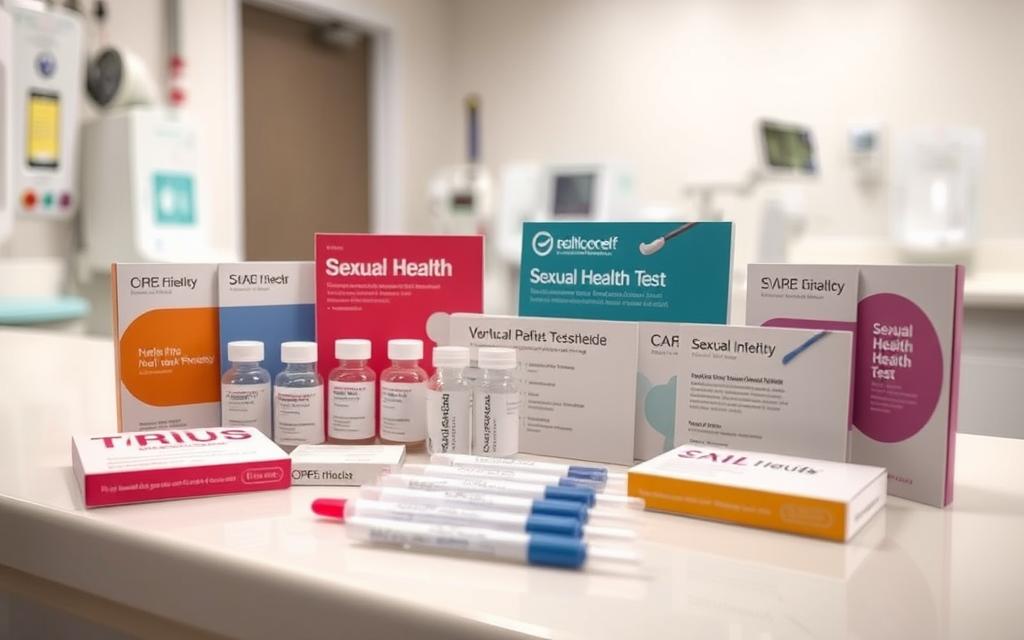
sexual health tests

Preventative care is key for keeping our sexual wellness and health in check. Regular checkups, sexual health tests, and safe practices lower STI risks. This leads to a healthier, happier life1.

Case Study: Impact of Regular Screenings on Early Detection

Regular screenings are key to catching health problems early. Now, let’s look at a case study that shows how sexual health check-up services and sexual health screening help in early detection.

A study showed that regular screenings can catch health issues early. This means people can get treatment quickly and have better results11. For sexual health screening, catching problems early can stop diseases from spreading and improve health overall.

Regular screenings have many benefits:

  • They help find health issues early.
  • They allow for quick treatment and better health outcomes.
  • They help stop diseases from spreading.
  • They improve overall health.

Also, regular sexual health check-up services give people peace of mind and lower anxiety about their sexual health11. By making screenings a regular part of their routine, people can actively care for their health and well-being.

The case study highlights the value of regular sexual health check-up services and sexual health screening in catching and preventing health problems early.

Benefit Description
Early Detection Regular screenings can lead to early detection of health issues
Timely Treatment Early detection allows for timely treatment and improved outcomes
Disease Prevention Regular screenings can prevent the spread of diseases

Finding the Right Healthcare Provider for Your Sexual Health Needs

Finding the right healthcare provider is key for reproductive health screenings and gynecological exams. We look for expertise, a good communication style, and easy access to build trust1. A provider who knows about reproductive health and has experience with gynecological exams offers the best care.

To find the right provider, start by asking friends, family, or your primary care doctor for recommendations. Look at online reviews and ratings to see how they’re rated. It’s important to think about insurance, office hours, and location when choosing2.

Some questions to ask include:
* What experience do they have with reproductive health screenings and gynecological exams?
* How do they approach patient care and communication?
* What insurance plans do they accept?
* What are their office hours and location?
By asking these questions, we can find a provider who meets our needs and gives us the best care3.

reproductive health screenings

Factor Importance
Expertise High
Communication style High
Accessibility Medium

Insurance Coverage and Sexual Health Services

Insurance coverage is key when it comes to sexual health services. Navigating the healthcare system can be tough. Medicare in New Mexico covers people over 65 or with disabilities1.

In the U.S., you can choose from private insurance, Medicare, or Medicaid. Private insurance often covers sexual health services well. But, Medicare and Medicaid have their own rules. For example, Medicare Part B charges 20% for treatment costs2.

Insurance for sexual health services can change based on your plan and provider. Some plans might cover more, like counseling. Always check with your insurance to know what’s covered. You can also use online tools to find plans in your area1.

If you can’t afford insurance, free clinic resources are there. These clinics offer important sexual health services for free or low cost. It’s important to use these resources for your health.

In summary, knowing about insurance and sexual health services is vital. By understanding your options, you can make better choices for your health. Always prioritize your health by using available resources like sexual health check-ups and screenings12.

The Link Between Mental Health and Sexual Wellness

Mental health is key to sexual wellness. Issues with mental health can impact sexual function and overall well-being3. Regular sexual health checkups help people see how mental health affects their sex life. This lets them take steps to get better.

It’s important to understand how mental health affects sex. Anxiety, depression, and trauma can harm sexual well-being. So, it’s crucial to tackle these issues with importance of sexual health checkups. This way, people can grasp the mental health-sex wellness connection and improve their health.

sexual health checkups

A healthy mind is essential for a fulfilling sex life. Sexual health checkups can spot mental health problems that mess with sex life. By recognizing mental health’s role in sex wellness, we aim for a more complete sexual health checkups approach. This includes both physical and mental health12.

In summary, mental health and sexual wellness are closely linked. By focusing on importance of sexual health checkups and mental health, people can start their journey to wellness and a better sex life13.

Reproductive Health Screening Guidelines

Reproductive health screenings are key for keeping you healthy. They help find problems early, so you can get treatment fast. For women, gynecological exams are very important. They check for things like cervical cancer and STIs14.

The American College of Obstetricians and Gynecologists (ACOG) says women should see a doctor every year starting at 2115. This visit should include a pelvic exam, Pap test, and STI screening. Men should also see a doctor yearly for a testicular exam and STI screening16.

The table below shows what screenings are recommended for different groups:

Population Recommended Screenings
Women Gynecological exam, Pap test, STI screening
Men Testicular exam, STI screening
LGBTQ+ Individuals Reproductive health screening tailored to individual needs

Remember, screenings can change based on your age and health history. Regular reproductive health screenings are vital for your health and well-being14.

Technology Advances in Sexual Health Testing

Technology has made sexual health tests more accurate and easy to get. Now, people can do sexual health tests at home with kits and apps17. About 15% of adults in the U.S. have never been tested for STIs, showing we need more access to these tests17.

Mobile health (mHealth) has helped up to 25% of people get tested who never did before17. Almost 40% of patients want to get tested more if it’s easy through apps17. There are now over 40% more at-home STI testing kits available, thanks to tech and demand17.

Here are some key benefits of technology advances in sexual health testing:

  • Improved accuracy and accessibility of sexual health tests
  • Increased awareness and education about preventative care for sexual health
  • Convenient access to sexual health tests from home
  • Reduced incidence of STIs through regular sexual health checkups

sexual health testing

Telehealth services let people talk to doctors online, making sexual health tests more accessible17. As tech keeps improving, we’ll see more ways to test for and prevent STIs17.

Technology Benefit
At-home testing kits Convenient access to sexual health tests
Mobile health applications Increased awareness and education about preventative care for sexual health
Telehealth services Reduced need for in-person visits

The Future of Preventive Sexual Healthcare

Looking ahead, we see big changes in preventive sexual healthcare. New tech, telemedicine, and research will shape the field. We’ll see better care for sexual health that’s easier to get. Studies show telemedicine is growing, with more virtual doctor visits18.

This change helps more people get care, especially in rural areas. It’s all about making health services better and more available.

New tech brings many benefits. It makes getting care easier and faster. For example, you can get health checks at home, skipping the long waits19. Also, new research brings new treatments like personalized medicine and genetic tests.

Here’s how new tech is changing health care:

  • More telemedicine and virtual visits
  • Better diagnostic tests
  • New treatments and therapies

We must focus on preventive care for sexual health. We need to make sure everyone can get the care they need. By using new tech and research, we can make health services better and more accessible18.

The future of health care looks bright. There’s a lot of room for growth and new ideas. By keeping up with the latest, we can help our community stay healthy and informed19.

Emerging Technology Benefits
Telemedicine Increased access to care, reduced wait times
Diagnostic testing Improved accuracy, earlier detection
Personalized medicine Targeted treatments, improved health outcomes

Making Sexual Health Checkups Part of Your Routine

We know how crucial sexual health checkups are. We want everyone to make them a top priority. Regular visits can stop and find sexually transmitted infections (STIs) and other health problems. Studies show about 50% of sexually active adults skip these checkups20.

This shows we need to spread the word more about why these checkups are key. It’s time to learn and act on the importance of sexual health checkups.

To include sexual health checkups in your routine, book regular visits with your doctor. You might need to go every year or as your doctor suggests. It’s also vital to know about sexual health and take steps to prevent problems. For example, safe sex and STI vaccines can cut STI risk by up to 75%20.

Here are some tips to help you make sexual health checkups a part of your routine:

  • Schedule regular appointments with your healthcare provider
  • Stay informed about sexual health and take preventative measures
  • Practice safe sex and get vaccinated against certain STIs
  • Encourage your partner to get regular checkups as well

By prioritizing sexual health checkups, you protect your health and well-being. Remember, regular checkups are key for spotting and stopping health issues. They also keep you updated on your sexual health. About 90% of healthcare providers say regular sexual health checkups are a must for routine care20.

importance of sexual health checkups

Conclusion

As we wrap up, it’s clear that21 regular sexual health checkups are key. They help us stay healthy and catch problems early. This leads to a better life.

These check-ups do more than just check our bodies. They also help our minds and feelings. By facing issues quickly, we keep our sexual health in focus. This helps us thrive in all areas of life.

Sexual health is a lifelong journey. By making it a routine, we get early detection and treatment. This boosts our confidence and control over our bodies.

Let’s all take charge of our21 sexual health. Let’s embrace the steps that make a big difference. Together, we can overcome barriers and stigma.

We can empower ourselves and our communities. Let’s make sexual health checkups a key part of our health. We should fight for services that meet everyone’s needs in the United States.

By focusing on sexual health, we’re looking towards a brighter future. We’ll be proactive, informed, and empowered. Let’s make sexual health checkups a lifelong promise for a vibrant life.

FAQ

What is the importance of regular sexual health checkups?

Regular checkups are key for your health. They help stop STIs from spreading. They also catch health problems early and encourage a healthy lifestyle.

How often should I get a sexual health checkup?

How often you need a checkup depends on your life. It’s good to get screened every year or as your doctor suggests.

Who needs regular sexual health screenings?

Everyone who’s sexually active should get checked. This includes people of all ages and backgrounds. It’s especially important if you have many partners or have had STIs before.

What are the most common sexually transmitted infections (STIs) in the United States?

In the U.S., common STIs are chlamydia, gonorrhea, syphilis, and HPV. These infections are on the rise. So, regular screenings and care are crucial.

What types of screening tests and procedures are typically included in a sexual health checkup?

A checkup includes a physical exam and a review of your health history. You’ll also get lab tests like STI screenings and Pap smears. Imaging might be needed too.

What are the barriers to accessing sexual health care, and how can they be addressed?

Barriers include money, stigma, and limited access. To overcome these, we need better insurance, education to reduce stigma, and more free or low-cost services.

How can mental health impact sexual wellness, and vice versa?

Mental health issues like anxiety and depression can harm your sex life. Taking care of your mental health is vital for a healthy sex life.

How do the screening guidelines for sexual health differ for women, men, and LGBTQ+ individuals?

Screening guidelines vary by gender and orientation. Doctors tailor care to meet the needs of women, men, and LGBTQ+ individuals.

What are the latest technological advancements in sexual health testing, and how do they impact accessibility and accuracy?

New tech like at-home kits and apps has made testing easier and more accurate. These changes could change how we manage our sexual health.

How can I make sexual health checkups a routine part of my healthcare regimen?

To make checkups a habit, schedule them yearly. Stay informed about guidelines and talk openly with your doctor about your health.

Source Links

  1. Medicare in New Mexico – https://www.medicalnewstoday.com/articles/medicare-in-new-mexico
  2. Medicare in Florida – https://www.medicalnewstoday.com/articles/medicare-in-florida
  3. How is CIDP Diagnosed? – https://www.healthline.com/health/chronic-inflammatory-demyelinating-polyneuropathy-diagnosis
  4. Contraceptive trends indicate reduced hormone use and rise in natural methods – https://www.contemporaryobgyn.net/view/contraceptive-trends-indicate-reduced-hormone-use-and-rise-in-natural-methods
  5. 100+ Workout Motivation Quotes to Help You Smash Your Goals – https://www.yahoo.com/lifestyle/100-workout-motivation-quotes-help-181300178.html
  6. What to know about sparkling water and weight loss, according to new study – https://news.yahoo.com/lifestyle/know-sparkling-water-weight-loss-164343385.html
  7. FDA approves first-of-its-kind nasal spray for severe depression – https://www.yahoo.com/lifestyle/fda-approves-first-kind-nasal-162717212.html
  8. Jada Pulls In Her First Suspect as the Stalker Chooses Their Next Victim – https://soaps.sheknows.com/days-of-our-lives/recaps/767231/jada-question-kerry/
  9. Everything Trump did in the first executive orders of his presidency – https://www.clickorlando.com/news/politics/2025/01/22/everything-trump-did-in-the-first-executive-orders-of-his-presidency/
  10. Offre d’emploi pour le poste Regional Business Director, aT1D Early Detection chez Sanofi – https://jobs.sanofi.com/fr/emploi/new-jersey/regional-business-director-at1d-early-detection/2649/21276981888
  11. 5-HT2 Agonist Clinical Trial Pipeline Appears Robust With 20+ Key Pharma Companies Actively Working in the Therapeutics Segment | DelveInsight – https://uk.finance.yahoo.com/news/5-ht2-agonist-clinical-trial-180000094.html
  12. Single iron infusion in late pregnancy significantly reduces anemia risk – https://www.contemporaryobgyn.net/view/single-iron-infusion-in-late-pregnancy-significantly-reduces-anemia-risk
  13. Whitmer signs 16 bills expanding reproductive freedom in Michigan – https://www.sooleader.com/local-news/whitmer-signs-16-bills-expanding-reproductive-freedom-in-michigan-10109899
  14. Stronger muscles may improve survival chances for cancer patients – https://www.news-medical.net/news/20250121/Stronger-muscles-may-improve-survival-chances-for-cancer-patients.aspx
  15. Nneka Ihim’s Bittersweet Baby News; ‘RHOP’ Alum Reveals She’s Pregnant but Lost Twin Sibling in Utero (Exclusive) – https://people.com/real-housewives-of-potomac-star-nneka-ihim-shares-bittersweet-baby-news-exclusive-8778270
  16. Late and Long-Term Side Effects | BMT Infonet – https://bmtinfonet.org/transplant-article/late-and-long-term-side-effects
  17. Video security analysis for privileged access management using generative AI and Amazon Bedrock | Amazon Web Services – https://aws.amazon.com/blogs/machine-learning/video-security-analysis-for-privileged-access-management-using-generative-ai-and-amazon-bedrock/
  18. The Latest: The Pentagon will send 1,500 troops to secure US-Mexico border, officials say – https://www.yahoo.com/news/latest-trump-flexes-authority-targeting-132527301.html
  19. Davos 2025: Trade, tariffs, AI and UN chief Guterres dominate World Economic Forum agenda – https://www.yahoo.com/news/davos-2025-trade-tariffs-ai-083209772.html
  20. Pharmacy Assistant (Bilingual) PT24 at Kaiser Permanente – https://www.kaiserpermanentejobs.org/job/long-beach/pharmacy-assistant-bilingual-pt24/641/76364127712
  21. Human use of fire has produced an era of uncontrolled burning: Welcome to the Pyrocene – https://www.yahoo.com/news/human-fire-produced-era-uncontrolled-133807101.html

The Impact of Hormones on Women’s Wellbeing

0

Hormones have a big impact on our lives, affecting things like blood sugar and blood pressure. They also influence growth, fertility, sex drive, metabolism, and sleep1. It’s clear that keeping hormones in balance is key to staying healthy and feeling good.

Hormones are like messengers in our body, helping it grow and work right. They are very important for women’s health and keeping everything in balance.

Research shows that about 5% of people during pregnancy have thyroid problems2. This shows how important it is to watch our hormones during big life changes. Women go through more hormonal shifts than men, especially during big times like puberty, pregnancy, and menopause1. Knowing how hormones affect us is crucial for staying healthy.

Key Takeaways

  • Hormones play a significant role in women’s wellbeing, affecting various bodily functions.
  • Hormonal balance is crucial for maintaining overall health and wellbeing.
  • Significant life events, such as pregnancy and menopause, can impact hormonal health.
  • Monitoring hormonal health is essential for preventing and managing hormonal imbalances.
  • Understanding the impact of hormones on women’s wellbeing is vital for maintaining hormonal balance and overall health.

Understanding the Fundamentals of Female Hormones

Female hormones are key to keeping our bodies in balance. Estrogen, progesterone, and testosterone are the main hormones in women. They are controlled by the endocrine system3. Knowing how these hormones work is vital for staying healthy.

The endocrine system, which includes glands like the thyroid and pituitary, manages hormones4. When there’s too much or too little of a hormone, it can cause problems4. Almost half of all women deal with hormonal imbalances4.

Signs of hormonal imbalance include irregular periods and trouble getting pregnant3. You might also see adult acne, too much hair, or feel tired all the time3. These signs can point to issues like PCOS or obesity3. PCOS affects 6-12% of women, showing how important hormone balance is5.

Hormone Function
Estrogen Regulates menstrual cycle and maintains bone density
Progesterone Prepares uterus for pregnancy and maintains pregnancy
Testosterone Regulates libido and maintains muscle mass

The Complex Web of Hormonal Balance in Women

Exploring women’s health hormones shows us how vital hormonal balance is. It’s about the balance between different hormones in our bodies. Any upset can cause symptoms and health problems. Stress, bad diet, and not exercising enough can mess with hormone levels, causing imbalance6.

Studies say up to 80% of women face hormonal imbalances, especially in their reproductive years7. This can bring on mood swings, weight gain, and irregular periods. Also, it can raise the risk of hormone-related cancers, like breast cancer, by up to 30%6. Eating right and living a healthy lifestyle can help lower this risk and keep hormones in check.

Several things can affect hormonal balance, including:

  • Diet and nutrition: Eating whole foods can cut hormone-related symptoms by up to 40%7
  • Exercise: Staying active can boost hormone function and lower cancer risk6
  • Stress: Ongoing stress can mess with hormone balance and cause anxiety and depression6

hormonal balance

By grasping the complex nature of hormonal balance in women, we can work to support it. This can help avoid hormone-related health problems and improve overall health.

Factor Impact on Hormonal Balance
Diet and Nutrition Can reduce hormone-related symptoms by up to 40%
Exercise Can improve hormonal function and reduce the risk of hormone-related cancers
Stress Can disrupt hormonal balance and lead to a range of symptoms

Analyzing the Impact of Hormones on Women’s Wellbeing: A Clinical Perspective

Hormone therapy can greatly affect women’s wellbeing, especially with hormonal changes8. These changes can impact both physical and mental health. It’s important to understand how hormones influence our bodies and minds.

Hormonal shifts can cause physical symptoms like changes in menstrual cycles and fertility8. They can also lead to mood swings, anxiety, and depression8. Hormones play a big role in how we feel and function every day.

Important factors to think about include:

  • Physical effects of hormonal changes, such as changes in menstrual cycle and fertility8
  • Mental health implications, including mood swings and anxiety8
  • Quality of life considerations, such as sleep quality and energy levels8

Dr. Hermann says hormones greatly affect mood and anxiety8. Estrogen acts like an antidepressant in the brain8. Also, thyroid hormone imbalance can cause depression or anxiety8.

Hormone therapy is key in managing hormonal changes and improving women’s health8. Understanding hormonal health helps us create better treatment plans. This way, we can make informed choices about hormone therapy.

Common Signs of Hormonal Imbalance

Knowing the signs of hormonal imbalance is key to keeping your hormonal health in check. About 80% of women see big hormonal changes during their periods9. These changes can cause symptoms like irregular periods, mood swings, and weight changes9.

Some common signs of hormonal imbalance include:

  • Irregular periods
  • Mood swings
  • Weight gain or loss
  • Changes in sleep patterns
  • Changes in skin, hair, and nail health
  • Digestive issues

These symptoms often come from changes in female hormones like estrogen and progesterone. They can really affect a woman’s life quality10.

It’s important to know these signs and see a doctor if they don’t go away. By living a healthy lifestyle and watching your hormone levels, you can help avoid hormonal imbalances. This helps keep your hormonal health in top shape9.

hormonal health

By knowing the signs of hormonal imbalance, women can take charge of their hormonal health. Remember, keeping your hormones balanced is key to staying healthy. Spotting these signs is the first step to better hormonal health10.

Common Signs of Hormonal Imbalance Description
Irregular periods Changes in menstrual cycle length or frequency
Mood swings Changes in emotional state, such as anxiety or depression
Weight gain or loss Changes in weight due to hormonal fluctuations

The Menstrual Cycle’s Role in Hormonal Regulation

The menstrual cycle is key to women’s health hormones and hormone regulation. Knowing how the menstrual cycle works is vital for keeping hormonal balance. It usually lasts 28 days, with two to seven days of menstruation11. Hormones like FSH and LH start and control the cycle11.

The follicular phase happens from day 1 to 14, with rising estrogen levels. The luteal phase, from day 15 to 28, sees rising progesterone levels11. Most cycles are between 24 to 38 days12. But, only 10 to 15% of women have a 28-day cycle12.

At the cycle’s end, if no fertilization, progesterone starts a new cycle11. The average age for first menstruation is 12.4 years13. Normal cycles are 24 to 38 days13. Cycles over 38 days are infrequent, and under 24 are frequent13.

women's health hormones

Understanding the menstrual cycle’s role in hormone regulation and hormonal balance helps women manage their health. By seeing the menstrual cycle’s importance, women can improve their overall health and wellbeing.

Life Stages and Hormonal Transitions

Women go through different life stages, each with big hormonal changes14. These changes, like puberty, pregnancy, and menopause, affect their health15. It’s key to know these changes to keep hormones balanced and avoid imbalances.

Some important life stages include:

  • Puberty: A time of big hormonal shifts, thanks to estrogen and progesterone15
  • Pregnancy: Estrogen and progesterone levels rise to help the baby grow and get ready for birth15
  • Menopause: Around age 50, estrogen and progesterone levels drop a lot14

Hormone therapy helps with symptoms during these times15. Knowing how life stages affect hormones helps women stay balanced and avoid health problems.

hormonal fluctuations

Hormonal changes can really affect women’s mental health, with up to 70% feeling mood swings during their cycle14. Recognizing this link helps women find the right help and support for their mental health.

Life Stage Hormonal Changes Effects on Health
Puberty Estrogen and progesterone increase Physical and emotional changes
Pregnancy Estrogen and progesterone surge Supports fetal development and prepares the body for childbirth
Menopause Estrogen and progesterone decrease May lead to hot flashes, night sweats, and osteoporosis

Environmental Factors Affecting Hormone Levels

Many things in our environment can affect our hormones. This includes what we eat, how we live, and the toxins we’re exposed to. Eating well, with less sugar and more protein, can help keep hormones in check16. Lifestyle choices, like stress levels, sleep, and exercise, also matter a lot.

Some key factors that can impact hormone levels include:

  • Diet and nutrition: Eating too much sugar and refined carbs can cause insulin spikes. This can lead to insulin resistance and affect hormone levels16.
  • Lifestyle influences: Too much stress can cause cortisol levels to rise. This can mess with hormones like estrogen and progesterone16.
  • Environmental toxins: Exposure to certain chemicals can harm reproductive health in women, especially with conditions like PCOS16.

Knowing how our environment affects hormones helps us make better choices. By eating right, managing stress, and avoiding toxins, we can keep our hormones balanced. This supports our overall health and wellbeing.

hormonal health

It’s important to be mindful of toxins in our environment. Choosing products without harmful chemicals can help protect our hormones16. By controlling our environment and making smart choices, we can support our hormonal health and avoid imbalances.

Environmental Factor Impact on Hormone Levels
Diet and nutrition High intake of refined carbs and sugar can lead to insulin resistance and negatively impact hormone levels16
Lifestyle influences Chronic stress can disrupt reproductive hormones such as estrogen and progesterone16
Environmental toxins Exposure to EDCs is linked to various reproductive health issues in women, particularly conditions like PCOS16

Stress and Its Effects on Hormonal Balance

Stress can really mess with hormone regulation in women, causing imbalances and health problems17. The third source says stress can upset hormone levels. It can also lead to mental health issues like anxiety or depression17. About 50 million women in the U.S. face hormonal imbalances each year. 10% of women of childbearing age have polycystic ovary syndrome (PCOS), a big cause of these imbalances18.

Long-term stress raises cortisol levels, which can up estrogen by about 20%18. This can mess with hormonal health and cause mood swings, irregular periods, and weight gain. Around 75% of women go through menopausal symptoms during perimenopause because of dropping estrogen and progesterone levels18. Knowing how stress affects female hormones helps women find ways to manage stress and avoid hormonal imbalances.

A study found 34% of women with thyroid disorders also have hormonal imbalances18. Not getting enough essential fatty acids can cut sex hormone production by up to 50%18. Also, 25% of women on a high-sugar diet are more likely to get insulin resistance, affecting hormonal health18. By managing stress and living healthily, women can help their hormone regulation and overall health.

hormonal balance

Women need to know the signs of hormonal imbalance, like heavy or frequent periods, stopped or missed periods, hair loss, and weight gain17. By spotting these signs and managing stress, women can lower their risk of health problems and keep their hormonal health in check.

Symptoms of Hormonal Imbalance Description
Heavy or frequent periods Abnormal uterine bleeding
Stopped or missed periods Amenorrhea or oligomenorrhea
Hair loss Alopecia or excessive hair shedding
Weight gain Unintentional weight gain or difficulty losing weight

Modern Medical Approaches to Hormone Testing

Knowing your hormone levels is key for women’s health. Hormonal changes can greatly affect how you feel. Hormone therapy can help, but you need to know what’s wrong first. Dr. Katz says lab tests can check hormone levels, but it’s more about how they make you feel19.

There are many ways to test hormones, like blood, saliva, and urine tests. Blood tests are most common and very accurate, over 90%19. Saliva and urine tests are easier and don’t hurt. Knowing your hormone levels helps you stay healthy and can even improve fertility19.

Hormonal imbalances can cause many problems, like irregular periods, mood swings, and weight changes19. Testing early can help fix these issues. This way, women can choose the best treatments for themselves, like hormone therapy19.

hormone testing

Other tests like saliva and urine can also give important info about hormone changes20. Many women stop using hormone-based birth control because of side effects20. This shows the importance of managing hormones well and finding the right treatments.

Natural Methods for Supporting Hormonal Health

Keeping hormonal health in check is key for feeling good, especially for women. Eating right, with less sugar and refined carbs, and more protein and omega-3s, helps balance hormone levels21. Also, staying active, managing stress, and getting enough sleep are vital for hormonal balance22.

Here are some natural ways to support hormonal health:

  • Eat a balanced diet with vitamins like D, magnesium, and B vitamins21
  • Stay active to make hormone receptors work better22
  • Use stress management to lower cortisol levels23

By adding these natural methods to your life, women can actively support their hormonal health. This can help avoid hormonal imbalance22. Always talk to a healthcare expert before changing your diet or exercise routine.

The Role of Exercise in Hormone Regulation

Exercise is key for keeping women’s health hormones in check and for overall hormonal balance. It helps lower stress, boosts mood, and keeps hormone levels steady24. Dr. Hermann says that mood and anxiety issues linked to hormones are often stress-related. Exercise can help ease these problems.

For the best hormone regulation, consider these exercise benefits:

  • Cardio boosts dopamine and sleep quality24
  • Strength training increases testosterone and muscle24
  • Timing is key, with at least 30 minutes of heart rate activity daily24

Research links physical activity to a 25% lower breast cancer risk in women25. Exercise also affects estrogen levels, easing menopause symptoms24. By exercising regularly, women can actively support their hormonal balance and health.

Nutrition’s Impact on Hormonal Balance

Nutrition is key to keeping hormonal health in check. A diet low in sugar and refined carbs and high in protein and omega-3s helps balance hormone levels26. Research shows that bad diet choices can mess with hormone production, causing imbalance26.

Eating a balanced diet is crucial for hormonal equilibrium and reproductive health27. Foods like omega-3s, vitamin D, and magnesium are good for female hormones28. But, eating too much-processed food can cause health problems like diabetes and heart disease28. A diet full of whole foods, fruits, and veggies helps keep hormone levels in check26.

To keep hormonal health in balance, eat well and live healthy. This means eating a variety of whole foods, drinking plenty of water, and exercising27. Making smart diet and lifestyle choices helps regulate hormone levels and supports hormonal health26.

Sleep Quality and Hormonal Health Connection

Sleep quality is closely linked to hormonal health. It’s key to understand this connection for hormonal balance. We spend about one third of our lives asleep29. Lack of sleep can raise stress hormone levels by 30%29, affecting hormone regulation.

Women are 40% more likely to have insomnia than men29. So, improving sleep quality is vital for hormonal health.

Improving sleep quality for hormonal balance involves several steps:

  • Establishing a consistent sleep schedule
  • Creating a relaxing sleep environment
  • Avoiding caffeine and alcohol before bedtime

Mindfulness practices can also help. They can lower stress hormones like cortisol and adrenaline, leading to better sleep29. By focusing on sleep quality, women can support their hormonal health and wellbeing.

Sleep disturbances, like insomnia, can signal hormonal imbalance. Women are 41% more likely to have insomnia than men30. Understanding the link between sleep and hormones helps women improve sleep and balance hormones. This supports their female hormones and overall health.

Treatment Options and Medical Interventions

Women’s hormones are key in finding the right treatment for hormonal imbalances. Dr. Katz says treatments include medication, hormone therapy, and lifestyle changes31. Each treatment is tailored to the individual, as there’s no one-size-fits-all solution. Hormone therapy is especially helpful for menopausal hot flashes, especially when started early32.

Some women choose hormone replacement therapy (HRT) for menopausal symptoms like hot flashes and vaginal discomfort31. But, HRT can also increase the risk of heart disease, stroke, blood clots, and breast cancer31. Estrogen therapy is best for those with severe hot flashes and helps prevent bone loss31.

Other options include non-hormonal meds like SSRIs and SNRIs for hot flashes, especially for those who can’t take estrogen32. Lifestyle changes like exercise and weight management can also help32. It’s important for women to talk to their doctor about their health history and needs to find the best treatment33.

The main goal of treatment is to ease symptoms and improve life quality. By knowing the different treatments, women can make better choices for their hormonal health31. Regular health checks and screenings, like mammograms, are key for those on hormone therapy31. Working with their healthcare provider, women can find the right balance and manage their hormonal health.

Long-term Strategies for Maintaining Hormonal Health

Women need to focus on long-term strategies to keep their hormonal health in check. A balanced diet with 25–30 grams of protein per meal is key for hormone levels34. Regular exercise, like cardio, strength training, and flexibility, also helps balance hormones35.

Getting 7-9 hours of quality sleep each night is crucial for hormonal regulation and health35. Drinking at least eight glasses of water daily and limiting alcohol and caffeine can also help keep hormonal balance35. These steps can lower the risk of hormonal imbalance and diseases like diabetes and heart disease34.

Here are some important tips for hormonal health:
* Eat a balanced diet with fruits, veggies, whole grains, and lean proteins
* Stay away from processed foods and sugary snacks
* Do at least 30 minutes of exercise, like walking or jogging, every day
* Get enough sleep and try stress-reducing activities like meditation or yoga
By following these tips and living a healthy lifestyle, women can support their hormonal health and avoid health problems35.

Conclusion: Empowering Women Through Hormonal Understanding

Understanding the complex web of36 women’s hormonal balance is key to empowering them. By knowing how hormones affect their health, women can manage their hormones better. This helps prevent health problems36.

With knowledge about hormones, women can make better choices. This includes what they eat36, how much they exercise36, how they handle stress36, and how well they sleep36. This proactive approach lowers the risk of hormonal imbalances36. It also lets women take charge of their health36.

Understanding hormonal health empowers women to care for themselves. This leads to a better quality of life and more resilience36. It’s important for women to thrive in all aspects of life36.

FAQ

What are the key hormones in women’s bodies?

Women’s bodies have several key hormones. These include estrogen, progesterone, testosterone, thyroid hormones, insulin, and cortisol. Each hormone has a specific role. They work together to keep the body’s systems in balance.

What is the role of the endocrine system in hormone regulation?

The endocrine system, with glands like the thyroid and pituitary, makes and controls hormones. Knowing how hormones work is key. They help with growth, development, and metabolism.

What is hormonal balance and why is it important for women’s wellbeing?

Hormonal balance means all hormones in the body work together well. When they don’t, it can cause many problems. Keeping hormones balanced is vital for women’s health and happiness.

What are the common signs of hormonal imbalance in women?

Signs of hormonal imbalance include irregular periods and mood swings. Other signs are weight changes, sleep issues, and changes in skin, hair, and nails. Digestive problems can also occur.

How does the menstrual cycle affect hormonal regulation?

The menstrual cycle is key for hormone balance. Estrogen levels rise in the follicular phase. Progesterone levels increase in the luteal phase. These changes can affect mood, energy, and overall health.

How do life stages, such as puberty, pregnancy, and menopause, impact hormonal health?

Hormones change a lot throughout a woman’s life. Puberty, pregnancy, and menopause bring big hormonal shifts. These changes can affect health and wellbeing.

How do environmental factors, such as diet, lifestyle, and toxins, impact hormone levels?

Diet, lifestyle, and toxins can change hormone levels. Eating well, living healthily, and avoiding harmful chemicals can help keep hormones balanced.

What is the connection between stress and hormonal balance?

Stress can really affect hormone balance. Too much stress can mess with hormone production. This can lead to health issues, like anxiety or depression.

What are the common methods for testing hormone levels?

To test hormone levels, people often use blood tests, saliva tests, or urine analysis. Each method has its own benefits and drawbacks. Knowing these can help women choose the best option for them.

What are the natural methods for supporting hormonal health?

Natural ways to support hormonal health include eating well, exercising, managing stress, and getting enough sleep. These actions can help keep hormones in balance.

How does exercise impact hormone regulation?

Exercise is very important for hormone balance. Different types of exercise, like cardio and strength training, can help keep hormones balanced.

What is the impact of nutrition on hormonal balance?

Nutrition is very important for hormone balance. Eating foods low in sugar and refined carbs and high in protein and omega-3s can help regulate hormones.

How does sleep quality affect hormonal health?

Sleep quality is very important for hormone health. The body’s natural rhythm and sleep disorders can affect hormone balance. Improving sleep quality is key for hormonal health.

What are the treatment options and medical interventions for hormonal imbalance?

Treatment for hormonal imbalance includes medicine, hormone therapy, and lifestyle changes. Finding the right treatment is important. Women should work with their doctors to find the best plan.

What are the long-term strategies for maintaining hormonal health?

Long-term strategies for hormonal health include a healthy lifestyle. This includes a balanced diet, regular exercise, and enough sleep. Understanding these factors and making plans can help women support their hormonal health over time.

Source Links

  1. Hormones’ Role on Our Health, and Wellness – https://weillcornell.org/news/hormones’-role-on-our-health-and-wellness
  2. Here’s what a change in hormones can mean for women’s health – https://www.singlecare.com/blog/female-hormones-and-mental-health/
  3. What You Need To Know About Female Hormones | Haney GYN – https://haneygyn.com/gynecology/what-you-need-to-know-about-female-hormones/
  4. Women’s Hormones 101: How Much They Affect Us – https://www.avantgynecology.com/2019/10/30/womens-hormones-101-how-much-they-affect-us/
  5. Role of Hormones: Their Influence on Women’s Health – https://creeksideobgyn.com/role-of-hormones-and-womens-health/
  6. Functional Medicine for Women’s Health: Balancing Hormones Naturally – https://rhealthc.com/functional-medicine/functional-medicine-for-womens-health-balancing-hormones-naturally/
  7. Women’s Hormone Health in Birmingham, AL | OB/GYN – https://obgynal.com/navigating-female-hormone-health-a-comprehensive-guide-for-well-being/
  8. Effects of Hormone Therapy on Cognition and Mood – https://pmc.ncbi.nlm.nih.gov/articles/PMC4330961/
  9. 7 signs of a hormonal imbalance — and what to do about it – https://www.uclahealth.org/news/article/7-signs-hormonal-imbalance-and-what-do-about-it
  10. 9 Signs Your Hormones Are Out of Whack – https://www.templehealth.org/about/blog/signs-your-hormones-are-out-of-whack
  11. The Role of Hormones in the Menstrual Cycle – West Suburban Medical Center – https://www.westsuburbanmc.com/the-role-of-hormones-in-the-menstrual-cycle/
  12. Menstrual Cycle – Women’s Health Issues – Merck Manual Consumer Version – https://www.merckmanuals.com/home/women-s-health-issues/biology-of-the-female-reproductive-system/menstrual-cycle
  13. Physiology, Menstrual Cycle – StatPearls – https://www.ncbi.nlm.nih.gov/books/NBK500020/
  14. Women’s health Women’s life stages – https://www.mayoclinic.org/healthy-lifestyle/womens-health/basics/womens-life-stages/hlv-20049411
  15. How Do Hormones Impact a Woman’s Health Throughout Her Life? – https://mogamd.com/how-do-hormones-impact-a-womans-health-throughout-her-life/
  16. Could Your Lifestyle and Environment Be Disrupting Your Hormones? – https://coyleinstitute.com/habits-affect-hormones/
  17. The Connection Between Stress & Your Hormones – Capital Women’s Care of Rockville – https://rockvilleobgyn.com/blog/the-connection-between-stress-your-hormones/
  18. The Impact of Hormonal Imbalances on Women’s Health: Identification and Management – https://hera-health.com/impact-of-hormonal-imbalances/
  19. Hormone Testing for Women: Take Control of Your Health – https://www.harleyhealthcentre.com/blog/womens-health/hormone-testing-for-women-taking-control-of-your-health-and-hormonal-balance
  20. Women’s health, hormonal balance, and personal autonomy – https://pmc.ncbi.nlm.nih.gov/articles/PMC10347535/
  21. Ways to Support Female’s Hormones Through Nutrition – Recreational Services – https://recreation.gsu.edu/2023/09/28/ways-to-support-females-hormones-through-nutrition/
  22. How to Balance Hormones  – Women For Women OBGYN – https://women4womenobgyn.com/how-to-balance-hormones
  23. How to balance hormones naturally: 10 ways – https://www.medicalnewstoday.com/articles/324031
  24. Here Are Ways Exercise Helps Balance Hormones – https://www.piedmont.org/living-real-change/how-exercise-helps-balance-hormones
  25. Effect of physical activity on sex hormones in women: a systematic review and meta-analysis of randomized controlled trials – https://pmc.ncbi.nlm.nih.gov/articles/PMC4635995/
  26. What Role Does Nutrition Play in Women’s Health and Well-being? – https://whsobgyn.com/what-role-does-nutrition-play-in-womens-health-and-well-being/
  27. How the intricate relationship between nutrition and hormonal equilibrium significantly influences endocrine and reproductive health in adolescent girls – https://pmc.ncbi.nlm.nih.gov/articles/PMC10973102/
  28. The Role of Nutrition in Hormonal Balance – https://asktia.com/article/the-role-of-nutrition-in-hormonal-balance
  29. How Women’s Hormones Can Affect Their Sleep – And Tips for Improving It! – https://vpfw.com/blog/how-womens-hormones-can-affect-their-sleep-and-tips-for-improving-it/
  30. Neurobiological and Hormonal Mechanisms Regulating Women’s Sleep – https://pmc.ncbi.nlm.nih.gov/articles/PMC7840832/
  31. Comparing the risks and benefits of hormone therapy – https://www.mayoclinic.org/diseases-conditions/menopause/in-depth/hormone-therapy/art-20046372
  32. Menopause – Diagnosis and treatment – https://www.mayoclinic.org/diseases-conditions/menopause/diagnosis-treatment/drc-20353401
  33. Menopause treatment | Office on Women’s Health – https://womenshealth.gov/menopause/menopause-treatment
  34. How To Balance Your Hormones Naturally – https://www.healthline.com/nutrition/balance-hormones
  35. Tips for Balancing Hormones and Wellness for Women Over 40 – Albuquerque Total Health – https://www.albuquerquetotalhealth.com/tips-for-balancing-hormones-and-wellness-for-women-over-40/
  36. The Importance of Hormone Balance for Womens Health | Dr. Asmita Dongare – https://www.drasmitadongare.com/the-importance-of-hormone-balance-for-womens-health/

The Basics of Nutrition: Macronutrients and Micronutrients

Exploring nutrition, I see how vital macronutrients and micronutrients are for a healthy diet. Macronutrients like carbs, proteins, and fats give us energy and help our bodies grow. They have 4 calories per gram, except for fats, which have 91. Micronutrients, like vitamins and minerals, are key for our immune system, nerve function, and bone health. They are needed in smaller amounts, measured in milligrams or micrograms2.

Knowing about macronutrients and micronutrients helps us make better food choices. The Dietary Guidelines suggest we get 45% to 65% of our calories from carbs, 20% to 35% from fat, and 10% to 35% from protein1. Also, nutrients like calcium, magnesium, and potassium are important for strong bones, blood pressure, and muscle function1.

Key Takeaways

  • Macronutrients provide energy and support growth and maintenance of body tissues.
  • Micronutrients play a crucial role in various bodily functions, including immune function, nerve function, and bone health.
  • The Dietary Guidelines for Americans recommend specific percentages of daily calories from carbohydrates, fat, and protein.
  • Micronutrients like calcium, magnesium, and potassium are vital for maintaining strong bones, regulating blood pressure, and supporting muscle function.
  • A personalized meal plan from a registered dietitian can be developed based on dietary assessments and individual health concerns1.
  • Macronutrients are categorized into three primary types: fats, proteins, and carbohydrates2.

Understanding Macronutrients and Micronutrients: My Journey into Nutrition

As I explored nutrition, I learned about the key nutrients like protein, carbs, and fats. These are vital for a balanced diet3. Carbs give us quick energy, proteins build and repair our bodies, and fats store energy and help with vitamin absorption3.

I also discovered the role of micronutrients like vitamins and minerals. They boost our immune system, help our nerves, and keep our bones strong4. Eating a diet rich in plants, like legumes, grains, veggies, and fruits, gives us everything we need for health4.

The Dietary Guidelines for Americans suggest we get 50% of our calories from carbs, 30-35% from fats, and 15% from proteins3. But too much protein can lead to serious health issues like cancer and heart disease4.

Here’s what I learned about macronutrients and micronutrients:

  • Carbohydrates: 4 calories per gram, provide quick fuel for energy3
  • Proteins: 4 calories per gram, support structure and function of organs and tissues3
  • Fats: 9 calories per gram, serve as energy reserve and aid in absorption of fat-soluble vitamins3
  • Micronutrients: essential for supporting immune function, nerve function, and bone health4

Understanding the importance of these nutrients helped me make better choices for my diet and lifestyle. This knowledge led to a personal transformation5.

The Power of Proteins in Daily Life

Protein is key for building and fixing muscles, tissues, and organs. It also helps with hormone balance6. Eating enough protein is vital for staying healthy. The Dietary Guidelines for Americans say protein needs change with age, sex, and if you’re pregnant6.

It’s important to eat a variety of protein sources. This includes lean meats, fish, eggs, dairy, and plant-based foods like beans and nuts. A diet rich in protein can lower the risk of heart disease and some cancers7. Here are some high-protein foods:

  • Lean meats: chicken, turkey, and fish
  • Dairy products: milk, cheese, and yogurt
  • Plant-based options: beans, lentils, and nuts

Adding nuts or seeds to oatmeal or yogurt can boost protein and fiber. Choosing lean meats and plant-based foods also cuts down on saturated fats and calories7.

protein rich foods

Protein is essential for good health and well-being. By eating protein-rich foods, you can lower disease risks and stay active6.

Food Protein Content (g)
Chicken breast 31
Salmon 20
Black beans 15

Carbohydrates: Breaking Down the Complex Truth

Carbohydrates are key to a healthy diet, giving our bodies energy8. They are divided into simple and complex types. Simple carbs, like sugars, quickly raise blood sugar levels9. Complex carbs, like whole grains and fruits, provide energy more slowly9.

A healthy eating plan should mix both simple and complex carbs. It should also include dietary minerals like fiber. Most people don’t get enough fiber, which is 25-30 grams a day9. More fiber can help with digestion and feeling full.

Understanding the glycemic index is important for carbs. It shows how fast a food raises blood sugar9. Foods with a low glycemic index, like whole grains and veggies, are better for you. Knowing about carbs helps us make better diet choices, keeping a healthy balance of nutrients10.

carbohydrates

In summary, a balanced diet with carbohydrates, dietary minerals, and other nutrients is vital for health8. Making smart diet choices can lead to better health and lower disease risk.

Essential Fats: My Discovery of Healthy Lipids

I learned how vital essential fats are for a balanced diet. They are made of fatty acids and glycerol. They also carry fat-soluble vitamins A, D, E, and K11. These nutrients are key for healthy skin, hair, and energy.

A good diet has different types of fats. Unsaturated fats, found in nuts, seeds, and fish, are good for the heart12. It’s important to choose high-quality fats. Healthy fats come from nuts, seeds, oils, and avocado.

Here are some ways to add healthy fats to your meals:
* Snack on nuts and seeds
* Use vegetable oils for cooking
* Include fatty fish in your meals
* Add avocado to your salads and sandwiches

essential fats

In conclusion, essential fats are crucial for a balanced diet. They give energy, help absorb vitamins, and keep skin and hair healthy. Adding healthy fats to your diet ensures you get the nutrients your body needs11.

Fat Type Food Sources Health Benefits
Saturated Meat, dairy, coconut oil Energy source, but high intake may increase heart disease risk12
Monounsaturated Nuts, seeds, avocado Promotes heart health, reduces inflammation
Polyunsaturated Fatty fish, flaxseeds, chia seeds Supports heart health, reduces inflammation

The Hidden World of Micronutrients

Micronutrients, like vitamins and minerals, are key to staying healthy13. They are tiny amounts needed for our bodies to work right, like fighting off sickness and making energy13. Eating the right mix of these nutrients is vital for good health14.

Some important vitamins and minerals include:

  • Vitamin C, which helps our immune system and makes collagen13
  • Calcium, important for strong bones and growth13
  • Iron, needed for healthy blood cells13

We can get enough of these nutrients by eating a variety of foods. This includes fruits, veggies, whole grains, lean proteins, and healthy fats14. The amount we need changes based on our age, gender, and more13.

Vitamin/Mineral Recommended Intake
Vitamin C 75-90 mg
Calcium 1000-1200 mg
Iron 8-18 mg

micronutrients

Learning about micronutrients and adding them to our diet helps us stay healthy and feel our best13.

My Experience with Vitamin Deficiencies

Exploring nutrition taught me how vital vitamins and micronutrients are. They help keep our eating habits healthy. Vitamin deficiencies can lead to weak immune systems, tiredness, and skin issues15. Iron deficiency affects over 25% of people globally, and this number jumps to 47% in young children15.

Eating a balanced diet is key to avoiding these problems. For vitamin A, women need 700 mcg daily, and men need 900 mcg16. I made sure to eat foods full of vitamins and minerals like fruits, veggies, whole grains, and lean proteins.

Here is a table summarizing the RDAs for some essential vitamins:

Vitamin RDA (mcg/day)
Vitamin A 700-900
Vitamin D 30-100 ng/mL
Vitamin E 15 mg

By focusing on healthy eating and getting enough vitamins and minerals, I stayed healthy and avoided deficiencies16. I urge everyone to do the same. A balanced diet is vital for our overall health.

healthy eating

Mineral Balance: A Case Study in Athletic Performance

As an athlete, I know how key a balanced diet is for top performance. Minerals like iron, calcium, and magnesium are vital for energy, muscle function, and staying hydrated17. Eating foods rich in these minerals can boost your game and lower injury risks.

Studies show that vitamins and minerals are key for athletes. Not having enough can harm muscle power, strength, and endurance18. A diet full of whole foods gives you the minerals you need to perform at your best.

Iron’s Role in Energy Levels

Iron is vital for making energy. It carries oxygen to muscles, which is needed for energy17. Without enough iron, athletes might feel tired, weak, and out of breath.

Calcium and Magnesium Synergy

Calcium and magnesium are a team for muscle function and contraction. They keep bones strong and prevent injuries18. Foods like dairy, leafy greens, and nuts are rich in these minerals, supporting athletic performance.

minerals for athletic performance

In short, a diet full of minerals like iron, calcium, and magnesium is key for athletes. Knowing the importance of mineral balance helps athletes get the nutrients they need to excel17.

Mineral Function Food Sources
Iron Energy production Red meat, spinach, beans
Calcium Muscle function and bone health Dairy products, leafy greens
Magnesium Muscle function and contraction Nuts, seeds, whole grains

Water-Soluble vs Fat-Soluble Vitamins

Vitamins are divided into two groups: water-soluble and fat-soluble. Water-soluble vitamins, like vitamin C and B vitamins, are not stored in the body. They need to be eaten regularly19. Fat-soluble vitamins, including vitamins A, D, E, and K, are stored in the body. Too much of them can be harmful19.

Eating a variety of foods helps get both types of vitamins. Healthy eating includes foods like leafy greens, whole grains, and lean proteins20. But, too much of fat-soluble vitamins can cause problems like nausea and vomiting21.

Here’s a quick look at the differences between water-soluble and fat-soluble vitamins:

  • Water-soluble vitamins: not stored in the body, must be consumed regularly19
  • Fat-soluble vitamins: stored in the body, can be toxic in excess19
  • Food sources: leafy green vegetables, whole grains, lean proteins20
  • Excessive intake: can lead to adverse effects, such as nausea and vomiting21

vitamins and healthy eating

The Synergy Between Nutrients in Whole Foods

Whole foods offer a natural mix of nutrients like vitamins, minerals, and more22. This mix is key for eating well and can be found in a variety of whole foods. Nutrient synergy means that different nutrients work together to boost their effects, improving health overall.

Choosing the right foods together can help your body absorb nutrients better. For instance, eating healthy fats with veggies can help your body get more from fat-soluble vitamins23. Foods like fruits, veggies, and whole grains are also full of fiber. This fiber helps with digestion and supports good gut bacteria.

Some top nutrient-rich whole foods include:

  • Leafy greens like spinach and kale
  • Berries like blueberries and strawberries
  • Nuts and seeds like almonds and chia seeds
  • Fatty fish like salmon and sardines

Eating these foods can give your body the nutrients it needs for health. As the second source notes, whole foods naturally combine nutrients for better health22.

Food Nutrient Benefit
Leafy greens Folate Cell growth and development
Berries Vitamin C Immune function and antioxidant
Nuts and seeds Healthy fats Heart health and digestion

Building My Perfect Meal Plan

To make a good meal plan, think about what you need nutritionally. This includes how many calories you need, the right mix of macronutrients, and enough vitamins and minerals24. A balanced diet should have lots of fruits, veggies, whole grains, lean proteins, and healthy fats. A well-thought-out meal plan ensures you get all the nutrients for good health24.

When planning meals, remember the importance of a balanced diet. Your meal plan should match your personal needs. This means considering your age, sex, weight, height, and how active you are25. For instance, if you’re very active, you might need more calories and protein to build and repair muscles26.

Here are some tips for creating the perfect meal plan:

  • Think about your daily calorie and macronutrient needs24
  • Choose a variety of foods, like fruits, veggies, whole grains, lean proteins, and healthy fats25
  • Drink plenty of water all day26

A sample meal plan could have three meals and two snacks a day. Each meal should have carbs, protein, and healthy fats in balance25. For example:

Meal Calories Carbohydrates Protein Fat
Breakfast 400 60g 30g 15g
Lunch 500 70g 40g 20g
Dinner 500 70g 50g 25g

By following these tips and thinking about your nutritional needs, you can make a meal plan that supports your health. It should follow the principles of meal planning, healthy eating, and a balanced diet.

Common Nutrient Deficiencies in American Diets

Exploring nutrition, I find many Americans lack key nutrients. About half of adults in the U.S. have a chronic disease linked to bad eating27. Their diets are often full of foods that are high in calories but low in nutrients, like vitamin D, calcium, and iron28.

Diet varies by region, income, and culture in America. For instance, iron deficiency hits hard on kids, young women, and pregnant women29. To fix this, we need to eat better. This means a diet full of fruits, veggies, whole grains, lean proteins, and healthy fats.

Some common nutrient gaps in American diets include:

  • Vitamin D deficiency can be fixed by eating fortified dairy, fatty fish, and getting sunlight29
  • Calcium deficiency can be solved by eating dairy, leafy greens, and fortified foods29
  • Iron deficiency can be tackled by eating red meat, poultry, fish, beans, and fortified cereals29

Seasonal Changes and Nutrient Needs

As we go through seasonal changes, our nutrient needs change too. It’s key to adjust our diets to fit the seasons and climates30. Research shows our energy intake stays about the same, around 2214.6 ± 623.4 kcal, across seasons30. But, other studies found we eat more in fall and winter, and most carbs in summer31.

Having a diet that’s full of healthy eating can help us meet these changing needs. For instance, in spring, we should eat more fruits and veggies. In winter, we might need more whole grains and lean proteins31. Also, drinking lots of water is important, especially in summer when we lose more water32.

Here are some tips to adjust our meal plans to meet seasonal nutrient needs:

  • Incorporate seasonal fruits and vegetables into our diets
  • Stay hydrated by drinking plenty of water
  • Maintain a balanced diet that includes whole grains, lean proteins, and healthy fats

By paying attention to our seasonal changes and nutrient needs, we can make better diet choices. This can greatly improve our health and well-being303132.

Season Nutrient Needs
Spring Fruits, vegetables, whole grains
Summer Hydration, lean proteins, healthy fats
Autumn Whole grains, lean proteins, fruits
Winter Whole grains, lean proteins, healthy fats

Measuring Success Through Biomarkers

As I explore the importance of nutrient status and healthy eating, I’ve learned about biomarkers. Biomarkers help track nutrient levels and health, showing how well my diet and lifestyle work. This is based on research from33.

Some biomarkers include:

  • Alkylresorcinols, which show whole-grain food intake33
  • Carotenoids, markers for fruit and veggie consumption33
  • n-3 fatty acids, showing omega-3 levels33

Using these biomarkers helps me understand my nutrient levels better. This lets me make smart choices about my diet and lifestyle. As34 points out, people often don’t report their food intake accurately, especially in weight-loss studies. Biomarkers are key to tracking progress.

In summary, using biomarkers is vital for achieving health and wellness. By tracking my nutrient levels and making informed choices, I can manage my health effectively. This ensures I’m on the right track to reaching my goals.

Biomarker Description
Alkylresorcinols Indicate whole-grain food consumption
Carotenoids Markers for fruit and vegetable intake
n-3 fatty acids Indicative of omega-3 fatty acid status

Conclusion: Integrating Nutritional Knowledge into Daily Life

As we wrap up our look at macronutrients and micronutrients, it’s clear that knowing about them can change our health. Eating a Mediterranean diet full of fruits, veggies, whole grains, and healthy fats can lower disease risks35. This diet helps avoid obesity, diabetes, and heart disease35.

The Western diet, on the other hand, is linked to many health problems. It’s important to balance carbs, proteins, and fats to keep our energy up and muscles strong36. This balance is key for feeling good and staying healthy36.

Vitamins and minerals are also crucial for our bodies to work right35. Not getting enough or too much of them can cause problems. Making smart food and supplement choices helps our bodies get what they need35.

Through my own experiences, I’ve learned that lasting health comes from a balanced nutrition approach. By living this way, we can reach our full potential. This leads to a healthier, happier future3536.

FAQ

What are macronutrients and micronutrients?

Macronutrients like carbs, proteins, and fats give us energy. They help our bodies grow and repair. On the other hand, micronutrients like vitamins and minerals are key for our immune system, nerve function, and bone health.

How did you discover the importance of nutrient balance?

I learned about nutrient balance through my own journey. I discovered how macronutrients affect our health and the role of micronutrients in our body’s functions.

What is the power of proteins in daily life?

Proteins are vital for muscle and tissue repair. They also help regulate hormones. I’ll share protein sources and how to add them to a healthy diet.

What is the truth about carbohydrates?

I’ll explain the difference between simple and complex carbs. I’ll also talk about the glycemic index and the benefits of fiber for digestion and feeling full.

Why are essential fats important?

Essential fats are crucial for energy and vitamin absorption. They also keep our skin and hair healthy. I’ll cover different fats and how to include them in a balanced diet.

What is the hidden world of micronutrients?

I’ll discuss essential vitamins and their benefits. I’ll also cover mineral needs, including iron, calcium, and magnesium. Plus, I’ll explore trace elements and their health impact.

What is your personal experience with vitamin deficiencies?

I’ll share about vitamin deficiency symptoms, causes, and effects. I’ll talk about preventing and treating deficiencies with diet and supplements. I’ll also give tips on recognizing and addressing vitamin deficiencies.

How does mineral balance affect athletic performance?

I’ll look at iron’s role in energy, calcium and magnesium’s synergy, and electrolyte balance for athletes. I’ll cover sodium, potassium, and other minerals for hydration and nerve function.

What is the difference between water-soluble and fat-soluble vitamins?

I’ll explain the characteristics and benefits of each vitamin type. I’ll also discuss the importance of balancing them. I’ll share tips on getting a variety of vitamins in your diet.

What is the synergy between nutrients in whole foods?

I’ll talk about how food combinations enhance nutrient absorption. I’ll cover the role of fiber, healthy fats, and other nutrients. I’ll also discuss natural vs. supplemental nutrients, their benefits and drawbacks.

Source Links

  1. What Are Macronutrients and Micronutrients? – https://health.clevelandclinic.org/macronutrients-vs-micronutrients
  2. Understanding the Basics of Macronutrients and Micronutrients – https://equi.life/blogs/foundational-nutrition/understanding-the-basics-of-macronutrients-and-micronutrients?srsltid=AfmBOoro5FdLK301Uv2cFnHmomkTNf0IOSfTqDfE-XITbHvtT67sWTlx
  3. Difference Between Macronutrients and Micronutrients – Mindful by Sodexo – https://www.mindful.sodexo.com/difference-between-macronutrients-and-micronutrients/
  4. Understanding Macronutrients and Micronutrients – https://thrive-magazine.co.uk/understanding-macronutrients-and-micronutrients/
  5. Macronutrient balance and micronutrient amounts through growth and development – https://pmc.ncbi.nlm.nih.gov/articles/PMC8106138/
  6. Macronutrients: Definition, importance, and food sources – https://www.medicalnewstoday.com/articles/what-are-macronutrients
  7. Fueling Your Body: The Role of Nutrition in Overall Health – Saint Mary’s Health Network – https://saintmarysreno.com/the-role-of-nutrition-in-health/
  8. Macronutrients: A Simple Guide to Macros | Avita Health System – https://avitahealth.org/health-library/macronutrients-a-simple-guide-to-macros/
  9. Carbohydrates: Getting the Most Out Of Fiber, Starches & Sugars – https://my.clevelandclinic.org/health/articles/15416-carbohydrates
  10. Breaking Down Food – https://newsinhealth.nih.gov/2023/08/breaking-down-food
  11. 6 Essential Nutrients: What They Are and Why You Need Them – https://www.healthline.com/health/food-nutrition/six-essential-nutrients
  12. What To Know About Macronutrients: Carbs, Fat, Protein – https://zoe.com/learn/carbohydrate-fat-protein-macronutrients
  13. Micronutrients: Types, Functions, Benefits and More – https://www.healthline.com/nutrition/micronutrients
  14. Macronutrients vs. Micronutrients: What’s the Difference? – https://www.loseit.com/articles/macronutrients-vs-micronutrients-whats-the-difference/
  15. 7 Nutrient Deficiencies That Are Incredibly Common – https://www.healthline.com/nutrition/7-common-nutrient-deficiencies
  16. Nutrition: Micronutrient Intake, Imbalances, and Interventions – StatPearls – https://www.ncbi.nlm.nih.gov/books/NBK597352/
  17. Exploring the Relationship between Micronutrients and Athletic Performance: A Comprehensive Scientific Systematic Review of the Literature in Sports Medicine – https://pmc.ncbi.nlm.nih.gov/articles/PMC10302780/
  18. Emerging Trends in Sports Cardiology: The Role of Micronutrients in Cardiovascular Health and Performance – https://www.sportsmedoa.com/apdf/jsmt-aid1086.pdf
  19. Micronutrients and Water Module Script – https://www.health.state.mn.us/docs/people/wic/localagency/training/nutrition/modules/basicmod2/bmod2_script.pdf
  20. Ritual – https://ritual.com/articles/1-what-vitamins-are-water-soluble?srsltid=AfmBOoqacXesN9Ilqc_2ExJ0Zs4Co9oHtKfD8wNhly_80wUGp-jHP8Vr
  21. What Is the Difference Between Fat-Soluble and Water-Soluble Vitamins? – https://www.verywellhealth.com/fat-vs-water-soluble-998218
  22. Frontiers | Nutrient synergy: definition, evidence, and future directions – https://www.frontiersin.org/journals/nutrition/articles/10.3389/fnut.2023.1279925/full
  23. Nutrient synergy: definition, evidence, and future directions – https://pmc.ncbi.nlm.nih.gov/articles/PMC10600480/
  24. How to Build Awesome Meal Plans That Fit Your Client’s Macros – https://blog.thatcleanlife.com/macro-meal-planning/
  25. Your Perfect Macro Based Meal Plan – MacroPlate Blog – https://macro-plate.com/blog/macroplate-your-perfect-macro-based-meal-plan/
  26. The Only 1-Week Meal Plan You Need to Feel Great – https://www.verywellfit.com/an-example-of-a-healthy-balanced-meal-plan-2506647
  27. Micronutrient Inadequacies in the US Population: an Overview – https://lpi.oregonstate.edu/mic/micronutrient-inadequacies/overview
  28. Micronutrient Deficiency – https://ourworldindata.org/micronutrient-deficiency
  29. Understanding common mineral deficiencies | Dietitians On Demand Blog – https://dietitiansondemand.com/understanding-common-mineral-deficiencies/
  30. Dietary Intake Patterns are Consistent across Seasons in a Cohort of Healthy Adults in a Metropolitan Population – https://pmc.ncbi.nlm.nih.gov/articles/PMC4698062/
  31. From Winter to Summer: How Micronutrient Cycles Influence Your Diet – https://optimisingnutrition.com/from-winter-to-summer-how-micronutrient-cycles-influence-your-diet/
  32. Seasonal Variations in Dietary Diversity and Nutrient Intakes of Women and Their Children (6–23 Months) in Western Kenya – https://pmc.ncbi.nlm.nih.gov/articles/PMC7982591/
  33. Biomarkers of Nutrition and Health: New Tools for New Approaches – https://pmc.ncbi.nlm.nih.gov/articles/PMC6567133/
  34. Perspective: Dietary Biomarkers of Intake and Exposure—Exploration with Omics Approaches – https://pmc.ncbi.nlm.nih.gov/articles/PMC7442414/
  35. Importance of Nutrients and Nutrient Metabolism on Human Health – https://pmc.ncbi.nlm.nih.gov/articles/PMC6020734/
  36. What Are Macronutrients? All You Need to Know – https://www.healthline.com/nutrition/what-are-macronutrients

The Impact of Physical Activity on Immune Function

Thinking about how exercise affects my immune system makes me realize its huge role in health. Studies show that regular exercise boosts our immune system, lowering the chance of getting sick1. The World Health Organization (WHO) says not moving enough is a big risk for death worldwide1. I find it interesting how exercise works with our immune cells and signals to keep us healthy. Knowing how exercise helps our immune system helps us make better health choices, which is why I’m eager to share this info.

Exercise is good for our immune system and helps us stay healthy2. Every year, infections like pneumonia kill about 3 million people2. Studies show that regular, moderate exercise can help us avoid getting sick more than sitting around1. As someone who knows how important exercise is, I think it’s key to talk about its health benefits.

Being active regularly can lower our risk of getting sick by 31%1. Doing physical activities 3–5 times a week for 30 minutes can boost our immune system1. Adding exercise to our daily lives can make our immune system stronger and help our body fight off sickness faster.

Key Takeaways

  • Regular physical activity improves immune function and reduces the risk of illnesses and infections.
  • Acute exercise is an immune system adjuvant that improves defense activity and metabolic health2.
  • Regular moderate exercise reduces the risk of infection compared to a sedentary lifestyle1.
  • Physical activity is associated with a 31% lower risk of infectious disease1.
  • Incorporating physical activity into our daily routine can strengthen our immune system and enhance the speed of our body’s immune response.
  • Regular physical activity can help reduce the risk of infectious diseases, including lower respiratory tract infections, which cause around 3 million deaths annually2.

Understanding the Connection Between Exercise and Immunity

Regular exercise boosts immune function, lowering the risk of getting sick3. It helps immune cells move better, making them more effective at fighting off germs3. Also, exercise reduces inflammation and enhances the immune response4.

Starting a fitness routine with moderate exercise can cut down on heart disease and colds, flu, and other illnesses4. It also helps clear out bacteria from the lungs and airways, lowering the risk of respiratory illnesses5. Some good examples of moderate exercise include:

  • Bicycling with children a few times a week
  • Engaging in daily walks lasting 20 to 30 minutes
  • Attending the gym every other day

Remember, while exercise is great for immunity, it’s key to listen to your body. Too much effort can lead to a higher risk of getting sick after intense workouts3.

My Research Methodology and Study Parameters

To study how physical activity affects the immune system, I used a specific research method. I looked at how different exercises impact immune responses. The study focused on various exercises like cardio, strength training, and high-intensity interval training. It also examined how these exercises affect university students6.

The study aimed to understand how physical activity influences immune function. It also explored how exercise affects stress and academic performance6.

The research involved collecting data from university students. They had an average age of 22.49 ± 3.84 years and weighed about 73.94 ± 11.4 kg7. The study found that taking physical activity breaks improved stress and academic performance6.

It also showed that leisure-time physical activity positively affects stress and academic performance. However, it negatively impacts dysfunctional stress and recovery6.

This study provides valuable insights into the effects of physical activity on immune function. The results indicate that regular exercise can boost immune function and overall health6. These findings can help create exercise programs that improve immune function and reduce illness risk.

physical activity

Variable Mean SD
Age 22.49 3.84
Weight 73.94 11.4
VO2 max (LAPG) 40.32 6.07
VO2 max (HAPG) 47.91 6.89

The study’s findings are crucial for creating exercise programs. They aim to enhance immune function and lower illness risk7.

How Different Types of Physical Activity Affect Immune Response

Regular physical activity is key for a strong immune system. Different exercises, like cardio, strength training, and high-intensity interval training, affect the immune system in different ways. For example, cardio exercises like running and cycling can boost immune function by lowering illness and infection risks8. Strength training also benefits the immune system, especially in older adults8.

High-intensity interval training can also enhance immune function, but the exact reasons are still being studied8. Studies also show that regular moderate exercise lowers infection risk more than a sedentary lifestyle9. But, very long or intense workouts can increase the risk of getting sick9.

Some important findings on physical activity and immune response include:

  • Cardio exercises can improve immune function by reducing the risk of illnesses and infections8
  • Strength training has a positive impact on immune function, particularly in older adults8
  • High-intensity interval training can improve immune function, although the mechanisms are not fully understood8
  • Regular moderate exercise reduces the risk of infection compared to a sedentary lifestyle9

physical activity

In conclusion, various physical activities impact the immune system differently. While cardio and strength training can boost immune function, high-intensity interval training’s effects are more complex89. It’s vital to balance exercise with rest to keep the immune system healthy and avoid overtraining9.

Measuring the Benefits of an Active Lifestyle

Living an active lifestyle is key for good health and wellness. It can be measured by how much, how hard, and how often you exercise10. Regular exercise can cut the risk of eight cancers. Also, it could prevent 110,000 deaths yearly if more adults aged 40 and older exercised more10.

Some big benefits of an active lifestyle are:

  • Lower risk of premature death
  • Reduced risk of heart disease and stroke
  • Improved fitness and overall health and wellness
  • Increased energy levels

Doing at least 150 minutes of moderatephysical activity weekly can lower heart disease and stroke risk. More physical activity than 150 minutes a week can also reduce heart disease, stroke, type 2 diabetes, and metabolic syndrome risk10.

Studies show being fit or active can cut death risk by more than 50%. An extra 1000 kcal of physical activity per week can also lower mortality by about 20%11. Regular physical activity can also control blood sugar and lower heart disease and nerve damage risk for type 2 diabetes patients10.

active lifestyle

Adding exercise to your daily life can greatly improve your health and wellness. It’s important to find fun activities that keep you motivated to stay active12.

Benefits of Active Lifestyle Reduced Risk of
Regular Exercise Heart Disease and Stroke
Increased Physical Activity Type 2 Diabetes and Metabolic Syndrome
Improved Fitness Premature Death

Duration and Intensity: Finding the Sweet Spot

Both duration and intensity are key in physical activity for health benefits. Research is ongoing to understand the best mix for immune function13. Studies show that moderate exercise is at 50% to 70% of maximum heart rate. Vigorous exercise is at 70% to 85% of maximum heart rate13.

For beginners, a 30-minute walk, three times a week, is a good start14. For those who run, 25 minutes at a heart rate of 120-125 bpm, two times a week, is recommended14. Finding the right balance is crucial for the best results.

The CDC reports that 10% of deaths in Americans aged 40-70 are linked to lack of exercise15. Adults should aim for 150 minutes of moderate exercise weekly for health15. The ideal daily steps are between 7,000-8,000 or 30-45 minutes of exercise most days15.

physical activity

Finding a balance in duration and intensity is key for physical activity benefits14. This balance should be consistent in one’s lifestyle14. By doing so, individuals can lower their risk of death and improve health and well-being15.

Tracking Immune Markers Through Different Seasons

As the seasons change, it’s key to track immune markers. This helps us see how physical activity and exercise affect our immune health. The medical world is focused on finding and validating these markers16.

A good set of biomarkers should cover nutrition, metabolic health, and more. It should also include muscle status, endurance, injury risk, and inflammation16.

Our immune system changes with the seasons. Factors like temperature and sunlight play a role. Physical activity boosts our immune system, but we must track immune markers to avoid overdoing it.

A study showed elite soccer players’ immune systems were stressed during intense games17.

To track immune markers well, test at the start and end of big training periods16. Testing after a workout gives insight into immune response16. By monitoring immune markers across seasons, we learn how exercise affects our immune system. This helps us make choices that support our health.

Overcoming Exercise-Related Immune Suppression

Overtraining can weaken your immune system, making you more likely to get sick18. It’s important to know the signs of overtraining, like constant tiredness and trouble sleeping18. To fight this, rest well, stretch, and use foam rolling to recover19.

Eating right is also key to keeping your immune system strong. A diet full of protein, complex carbs, and healthy fats is best18. Drinking lots of water and avoiding sugary drinks also helps19.

Here are some effective recovery methods:

  • Adequate rest and sleep
  • Proper nutrition and hydration
  • Stretching and foam rolling
  • Active recovery techniques, such as yoga or light cardio

Using these methods can help you avoid immune suppression and keep your immune system strong18.

The Long-Term Effects of Consistent Physical Activity

Regular physical activity greatly improves our immune function. It leads to long-term health benefits. Exercise boosts our baseline immunity, lowering the chance of getting sick20. Adding physical activity to our daily life can greatly improve our immune function over time.

Research shows that long-term exercise enhances brain health and cognitive skills21. It also reduces the risk of serious diseases like heart disease, diabetes, and some cancers21. Making physical activity a part of our daily routine can significantly improve our health and wellbeing.

Some key benefits of regular exercise include:

  • Improved baseline immunity
  • Reduced risk of chronic diseases
  • Improved cognitive performance and brain health
  • Lower risk of premature mortality

By changing our lifestyle to include regular exercise, we can see lasting improvements in our immune function and overall health20. It’s important to remember that exercise has a big impact on our health. It’s never too late to start21.

Conclusion: Transforming Research into Practical Guidelines

My research clearly shows that physical activity boosts our immune system22. The right mix of workouts, like aerobic, strength training, and high-intensity intervals, makes a big difference22. It’s all about finding the perfect balance in how long and how hard you work out.

I strongly suggest making physical activity a big part of your life23. Try to do at least 150 minutes of moderate aerobic activity or 75 minutes of vigorous activity each week23. Also, make sure to do muscle-strengthening exercises two times a week23. This will help keep your immune system strong and lower your chances of getting sick.

Being consistent is crucial23. Add physical activity to your daily routine, like going for a walk, swimming, or doing strength training23. As you keep it up, you’ll notice how it improves your health and happiness. Let’s turn this research into real-life advice and make exercise a key part of our health journey.

FAQ

What is the impact of physical activity on immune function?

Regular exercise boosts the immune system, lowering the chance of getting sick. It works by improving how immune cells interact and by releasing important molecules.

How does the immune system work, and why is it important to study the connection between exercise and immunity?

The immune system protects us from infections and diseases. Exercise helps it work better, making us less likely to get sick. Knowing how exercise affects the immune system is key to staying healthy.

What was the research methodology and study parameters used to investigate the impact of physical activity on immune function?

The study looked at how different exercises affect the immune system. It included cardio, strength training, and high-intensity workouts. The findings show exercise’s positive effects on our health.

How do different types of physical activity affect immune response?

Cardio exercises like running boost the immune system. Strength training helps, especially in older adults. High-intensity workouts also improve immunity, though the reasons are still being studied.

How can the benefits of an active lifestyle be measured?

We can measure an active lifestyle by how much, how hard, and how often we exercise. Seeing these benefits helps us understand why regular exercise is so important.

What is the optimal duration and intensity of physical activity for immune function?

Longer and more intense workouts improve immunity more. But, finding the perfect balance is still a topic of research.

How does the impact of physical activity on immune function vary throughout the year?

Our immune function changes with the seasons. Tracking immune markers shows how important exercise is all year round.

How can exercise-related immune suppression be overcome?

Overtraining weakens the immune system, making us more susceptible to illness. Recognizing overtraining signs and using recovery strategies and nutrition can help maintain immune strength.

What are the long-term effects of consistent physical activity on immune function?

Regular exercise leads to lasting immune system improvements. Adding physical activity to our daily lives offers long-term health benefits, including better immunity.

Source Links

  1. Frontiers | Physical Activity and Nutritional Influence on Immune Function: An Important Strategy to Improve Immunity and Health Status – https://www.frontiersin.org/journals/physiology/articles/10.3389/fphys.2021.751374/full
  2. Editorial: The Effects of Physical Activity and Exercise on Immune Responses to Infection – https://pmc.ncbi.nlm.nih.gov/articles/PMC8892244/
  3. The compelling link between physical activity and the body’s defense system – https://pmc.ncbi.nlm.nih.gov/articles/PMC6523821/
  4. Exercise and immunity: MedlinePlus Medical Encyclopedia – https://medlineplus.gov/ency/article/007165.htm
  5. Exercise and immunity – UF Health – https://ufhealth.org/conditions-and-treatments/exercise-and-immunity
  6. Physical activity improves stress load, recovery, and academic performance-related parameters among university students: a longitudinal study on daily level – BMC Public Health – https://bmcpublichealth.biomedcentral.com/articles/10.1186/s12889-024-18082-z
  7. Relationship between Physical Fitness and Academic Performance in University Students – https://pmc.ncbi.nlm.nih.gov/articles/PMC9690464/
  8. The Relationships between Physical Activity, Exercise, and Sport on the Immune System – https://pmc.ncbi.nlm.nih.gov/articles/PMC9180823/
  9. Effects of Exercise on Immune Function – http://www.gssiweb.org/sports-science-exchange/article/sse-151-effects-of-exercise-on-immune-function
  10. Benefits of Physical Activity – https://www.cdc.gov/physical-activity-basics/benefits/index.html
  11. Health benefits of physical activity: the evidence – https://pmc.ncbi.nlm.nih.gov/articles/PMC1402378/
  12. A Practical Guide to Measuring Physical Activity – https://pmc.ncbi.nlm.nih.gov/articles/PMC3915355/
  13. How to Find the Exercise Intensity Sweet Spot  – https://hemaware.org/mind-body/how-find-exercise-intensity-sweet-spot
  14. The Exercise Sweet Spot – https://medium.com/crows-feet/the-exercise-sweet-spot-38745d5c1bbb
  15. The Step Count “Sweet Spot” | Laura Cipullo – https://lauracipullo.com/blog/the-step-count-sweet-spot/
  16. Biomarkers in Sports and Exercise: Tracking Health, Performance, and Recovery in Athletes – https://pmc.ncbi.nlm.nih.gov/articles/PMC5640004/
  17. Immune inflammation markers and physical fitness during a congested match play period in elite male soccer players – Scientific Reports – https://www.nature.com/articles/s41598-024-81225-0
  18. Physical exercise as a tool to help the immune system against COVID-19: an integrative review of the current literature – https://pmc.ncbi.nlm.nih.gov/articles/PMC7387807/
  19. Debunking the Myth of Exercise-Induced Immune Suppression: Redefining the Impact of Exercise on Immunological Health Across the Lifespan – https://pmc.ncbi.nlm.nih.gov/articles/PMC5911985/
  20. Physical Activity, Fitness, and Physical Education: Effects on Academic Performance – Educating the Student Body – https://www.ncbi.nlm.nih.gov/books/NBK201501/
  21. Physical Activity and Physical Education: Relationship to Growth, Development, and Health – Educating the Student Body – https://www.ncbi.nlm.nih.gov/books/NBK201497/
  22. Evaluating the Science to Inform the Physical Activity Guidelines for Americans Midcourse Report – https://profpubs.com/index.php/jheal/article/view/55
  23. Physical activity: associations with health and summary of guidelines – https://pmc.ncbi.nlm.nih.gov/articles/PMC10335097/

How The Sleep Affects Your Body and Mind Daily?

Thinking about my sleep habits, I see how crucial it is for a healthy life. Adults need 7 to 8 hours of sleep each night1. I’ve learned that focusing on sleep greatly improves my health and well-being. Understanding sleep science helps me make better choices for my health sleep and sleep hygiene.

Studies show that not sleeping enough can lead to obesity and heart disease1. I’ve noticed how good sleep habits can lower these risks. By following sleep hygiene practices, I’ve bettered my sleep quality and reduced sleep disorder risks.

Key Takeaways

  • Adults require at least 7 hours of sleep each night for optimal health2
  • Prioritizing health sleep and sleep hygiene can help reduce the risk of obesity and heart disease1
  • Consistent sleep-wake cycles are essential for promoting healthy sleep2
  • Exercise has been found to improve sleep quality and ease the process of falling asleep2
  • Well-rested individuals who receive the flu vaccine develop stronger protection against the illness1
  • Lack of adequate sleep can reduce immunity and increase the risk of infection2
  • Recovery from sleep deprivation can lead to improved mood, increased energy and attention, and enhanced feelings of well-being2

Understanding the Basics of Health Sleep

Sleep is crucial for our health and well-being3. It helps our body fix damaged cells, build bones and muscles, and boost our immune system4. The sleep we need changes as we age. Newborns need 14-17 hours, and adults need 7-9 hours5.

A sleep cycle has non-REM and REM phases, lasting 90-120 minutes4. The first cycle is the shortest, lasting 70-100 minutes3. Understanding these stages helps us see why good sleep is key for our health and rhythm.

  • Sleep accounts for 25-33% of the human lifespan3.
  • Not enough sleep can weaken our immunity, increase obesity risk, and raise stress levels5.
  • Quality sleep isn’t just about how long we sleep but also how refreshing it is5.

Learning about healthy sleep helps us improve our sleep quality. This is vital for keeping our circadian rhythm in check. It helps prevent sleep disorders like insomnia and ensures we get enough deep sleep4.

The Power of Circadian Rhythms

Our bodies have an internal clock that controls our sleep-wake cycles, known as circadian rhythms. This natural process is influenced by light and darkness. These factors can affect our rem sleep and overall sleep quality6. Disruptions in circadian rhythms can raise the risk of chronic diseases like diabetes and obesity6. It’s important to understand how our bodies respond to light and darkness to keep a healthy sleep pattern.

Circadian rhythms usually follow a cycle close to 24 hours for most people7. Body temperature rises during the last hours of sleep, making us feel alert when we wake up7. A small drop in body temperature happens between 2 p.m. and 4 p.m., making us feel sleepy in the early afternoon7. This natural temperature drop can influence our sleep disorders and overall health.

Keeping a regular sleep schedule is key to aligning with our circadian rhythms. This improves sleep quality and health outcomes6. Good sleep hygiene can also enhance sleep quality, impacting our overall health and recovery6. By grasping the power of circadian rhythms and their effect on sleep, we can foster healthy sleep habits. This can help reduce the risk of sleep disorders8.

Sleep Stage Duration Effects on Body
REM Sleep 90 minutes Memory consolidation, emotional processing
Deep Sleep varies Physical restoration, immune function enhancement

Your Brain on Sleep: Neural Processes and Recovery

When we sleep, our brains work hard to recover from the day. These efforts are key to keeping our sleep quality and patterns good. Studies show we need at least 7 hours of sleep each day for our minds and bodies to function well9. Sleep makes us think clearer, react faster, and focus better10.

During sleep, our brains process memories, emotions, and clean out toxins. These activities help us keep information, manage feelings, and get rid of brain waste. For instance, sleep helps clear out brain debris, especially the stuff that builds up between brain cells9. The glymphatic system, which removes brain toxins, also gets a boost during sleep9.

Here are some key facts about sleep and brain recovery:

  • Sleep helps to consolidate memories and improve cognitive function10.
  • Emotional processing during sleep helps to manage stress and anxiety11.
  • Brain cleaning during sleep helps to remove toxins and waste from the brain9.

Sleep is vital for maintaining good sleep quality and patterns. By understanding how our brains work during sleep, we can improve our sleep and health.

Sleep Stage Duration Brain Activity
Non-REM Sleep 70-120 minutes Slow brain waves
REM Sleep 90-120 minutes Increased brain activity

Physical Restoration During Deep Sleep

Deep sleep is key for our body’s repair and growth. It helps us build bone, muscle, and boosts our immune system12. To get better sleep, we need to follow good sleep hygiene. This means keeping a regular sleep schedule and making our sleep space comfy.

Sleep is vital for our physical health, helping our body fix and grow tissues13. As we age, our deep sleep time changes, affecting our sleep quality13. Here are some important facts about deep sleep:

  • Deep sleep happens early in the night and is crucial for fixing and growing tissues12.
  • It helps clean our brain by removing waste through synaptic pruning12.
  • Lacking REM sleep can lead to problems with learning, memory, and mood12.

By focusing on health sleep and good sleep hygiene, we can enhance our sleep quality. Adults need 7 to 9 hours of sleep each night for the best health12.

health sleep

Remember, sleep is a big part of our health. By valuing sleep, we can boost our physical and mental health.

Sleep Stage Duration Characteristics
NREM Stage 1 1-7 minutes Rhythmical alpha waves at a frequency of 8-13 cycles per second13
NREM Stage 2 10-25 minutes Approximately 50% of the total sleep cycle later in the night13
NREM Stage 3 20-40 minutes Varies across cycles13

The Connection Between Sleep and Mental Health

Sleep is key to good mental health. Problems with sleep can really affect how we feel. Studies show that insomnia can make manic and depressive episodes worse in people with bipolar disorder14. Also, about 75% of people with depression have trouble sleeping14.

Anxiety disorders hit about 20% of adults and 25% of teens in the U.S. Chronic insomnia might make people more likely to get anxiety14. The American Academy of Sleep Medicine says adults should sleep at least 7 hours a night for best health15. It’s important to know that sleep issues can affect up to 25% of young kids. Screen time before bed can cut melatonin production by 20-30%, making it hard to fall asleep16.

To keep your mental health in check, make sleep a priority. Start by setting a regular sleep schedule. Also, make your sleep area calm and avoid exciting activities before bed. These steps can help you sleep better and lower the chance of getting anxiety or depression141516.

How Sleep Impacts Your Immune System

Sleep is key to our immune system’s health. Not getting enough sleep can weaken it17. Sleep and the immune system work together; sleep boosts immune function, and immune responses can impact sleep quality17. During sleep, our body makes more cytokines, which help fight off illness or injury17.

Studies show sleep helps our immune system remember and fight off pathogens18. Immune markers like T cells and cytokines are at their highest during early sleep18. Sleep also helps T cells move to lymph nodes, boosting our defenses18. Getting enough sleep is vital for our overall health, showing the harm of too little sleep on our immune system18.

Some important points about sleep and the immune system include:

  • Sleep helps both our innate and adaptive immunity, making us stronger against germs17
  • Not sleeping enough can harm our immune system, leading to sickness in the short and long term17
  • Long-term sleep loss raises the risk of chronic diseases like diabetes and heart issues17

sleep quality

Sleep disorders can hurt our immune system by reducing sleep quality17. It’s crucial to value sleep and keep good sleep habits for a strong immune system18.

Sleep Disorders and Their Effects

Sleep disorders can greatly affect our health sleep. It’s key to know the common types and their signs. About one-third of adults have insomnia symptoms19. Also, around 70 million Americans deal with sleep disorders20.

Common sleep disorders include insomnia, sleep apnea, and restless leg syndrome. Insomnia makes it hard to fall or stay asleep. It can be short-term, ongoing, or keep coming back19. Sleep apnea causes breathing pauses during sleep, lasting 10 seconds or more21.

Knowing the signs of sleep disorders is important. Look out for too much daytime sleepiness, trouble focusing, and mood swings. If these signs don’t go away, getting help is crucial. This can stop serious health issues, like heart disease20.

By focusing on health sleep and tackling sleep disorders, we can feel better. This includes getting better deep sleep.

To handle sleep disorders, set a regular sleep schedule. Make your sleep area calm and avoid exciting activities before bed. Taking these actions and getting help when needed can lead to better health sleep. This improves our deep sleep and overall health.

Optimizing Your Sleep Environment

To get better sleep, focus on sleep hygiene like keeping a regular sleep schedule and a dark, quiet room22. This helps control melatonin levels, which are influenced by light. A cooler bedroom, around 65 degrees Fahrenheit, can also boost sleep quality for about 70% of people23.

Here are some tips for a better sleep space:

  • Use blackout curtains or eye masks to block out light
  • Do regular exercise to enhance sleep duration and quality
  • Limit caffeine in the afternoon and evening to avoid sleep problems

These steps can cut down on sleep disruptions and enhance sleep quality23.

Also, making your sleep area more sleep-friendly can help, as the second source shows23. Try to reduce noise, use white noise machines, and add calming scents like lavender. By focusing on sleep hygiene and a good sleep environment, we can wake up feeling better and more refreshed.

sleep hygiene

The Role of Lifestyle in Sleep Quality

Our lifestyle choices greatly affect our sleep quality. It’s key to make smart choices for better sleep. Eating well, exercising regularly, and managing stress can help improve sleep and keep our body clocks in sync24.

Exercise, especially in the morning, helps sleep quality by aligning our body clocks24. Diet also matters a lot for sleep. Eating more fiber can lead to deeper sleep, while too much sugar or fat can hurt it24.

Drinking too much sugar, caffeine, or alcohol at night can disrupt sleep24. Stress management, like meditation or deep breathing, can also help by lowering stress levels24. Avoiding screens and bright lights before bed can also enhance sleep quality24.

By making these lifestyle changes, we can improve our sleep and overall health. This is crucial since about 50 to 70 million US adults struggle with sleep disorders or don’t get enough sleep25.

Conclusion: Making Sleep Your Health Priority

Sleep is key to our health and happiness26. Kids need nine hours, teens eight to ten, and adults seven26. Good sleep keeps us physically and mentally strong.

Not enough sleep weakens our immune system and messes with hormones27. It also hurts our brain and raises the risk of serious diseases27. But, enough sleep helps our bodies heal and grow.

Many things can mess with our sleep, like insomnia and sleep apnea26. But, we can improve our sleep by following good habits, managing stress, and getting help when needed26.

By focusing on sleep, we can boost our health and happiness2627. This leads to a better life.

FAQ

What is the importance of sleep for our overall health?

Sleep is key to our health, affecting both body and mind. It helps our brains and bodies repair and refresh. This makes sleep essential for our health and how well we function.

What happens during the different stages of sleep?

Our bodies go through four sleep stages: light, deep, and REM sleep. Each stage helps with memory, emotions, and brain cleaning.

How do circadian rhythms affect our sleep patterns?

Our circadian rhythms control our sleep-wake cycles. They’re influenced by light and darkness. Disruptions can cause sleep disorders.

What are the cognitive and emotional benefits of getting quality sleep?

Good sleep boosts our brain and emotions. It helps our brains process info, store memories, and manage feelings. This is vital for our mental sharpness.

Why is deep sleep important for physical health?

Deep sleep helps our bodies repair and grow. Good sleep hygiene, like a regular schedule and a quiet room, improves deep sleep quality.

How are sleep and mental health connected?

Sleep and mental health are closely tied. Sleep issues can harm our mental state. Fixing sleep problems can help with anxiety and depression.

What is the relationship between sleep and the immune system?

Sleep boosts our immune system by removing toxins and making cytokines. Poor sleep weakens our immune system. So, quality sleep is crucial for health.

What are some common sleep disorders, and when should someone seek professional help?

Common sleep issues include insomnia, sleep apnea, and restless leg syndrome. If you have ongoing sleep problems, seek help. A professional can find the cause and treat it.

How can optimizing your sleep environment improve sleep quality?

A good sleep environment helps a lot. Keep a regular sleep schedule, a dark room, and avoid bedtime activities. These steps help your body adjust to sleep better.

How do lifestyle factors, such as diet, exercise, and stress management, impact sleep quality?

Our lifestyle affects our sleep. Diet, exercise, and managing stress can change our sleep patterns. Making smart choices in these areas can improve sleep.

Source Links

  1. The Benefits of Slumber – https://newsinhealth.nih.gov/2013/04/benefits-slumber
  2. Physical Health and Sleep – https://www.sleepfoundation.org/physical-health
  3. The Science of Sleep: Understanding What Happens When You Sleep – https://www.hopkinsmedicine.org/health/wellness-and-prevention/the-science-of-sleep-understanding-what-happens-when-you-sleep
  4. Controlled ZZZs – https://my.clevelandclinic.org/health/body/12148-sleep-basics
  5. About Sleep – https://www.cdc.gov/sleep/about/index.html
  6. Exploring the Role of Circadian Rhythms in Sleep and Recovery: A Review Article – https://pmc.ncbi.nlm.nih.gov/articles/PMC11221196/
  7. Circadian Rhythms – https://www.uclahealth.org/medical-services/sleep-disorders/patient-resources/patient-education/circadian-rhythms
  8. Sleep and circadian rhythms: pillars of health—a Keystone Symposia report – https://pmc.ncbi.nlm.nih.gov/articles/PMC8688158/
  9. The Neuroprotective Aspects of Sleep – https://pmc.ncbi.nlm.nih.gov/articles/PMC4651462/
  10. Brain Basics: Understanding Sleep – https://www.ninds.nih.gov/health-information/public-education/brain-basics/brain-basics-understanding-sleep
  11. What Happens When You Sleep? – https://www.sleepfoundation.org/how-sleep-works/what-happens-when-you-sleep
  12. What happens when we sleep, and why we need just the right amount each night – https://www.heart.org/en/news/2023/03/16/what-happens-when-we-sleep-and-why-we-need-just-the-right-amount-each-night
  13. Physiology of Sleep – StatPearls – https://www.ncbi.nlm.nih.gov/books/NBK482512/
  14. Mental Health and Sleep – https://www.sleepfoundation.org/mental-health
  15. How Sleep Deprivation Impacts Mental Health – https://www.columbiapsychiatry.org/news/how-sleep-deprivation-affects-your-mental-health
  16. Sleep and mental health – https://www.mentalhealth.org.uk/explore-mental-health/a-z-topics/sleep-and-mental-health
  17. Sleep & Immunity: Can a Lack of Sleep Make You Sick? | Sleep Foundation – https://www.sleepfoundation.org/physical-health/how-sleep-affects-immunity
  18. Sleep and immune function – PMC – https://pmc.ncbi.nlm.nih.gov/articles/PMC3256323/
  19. What are Sleep Disorders? – https://www.psychiatry.org/patients-families/sleep-disorders/what-are-sleep-disorders
  20. Sleep disorders – Symptoms and causes – https://www.mayoclinic.org/diseases-conditions/sleep-disorders/symptoms-causes/syc-20354018
  21. Sleep Disorders | MedlinePlus – https://medlineplus.gov/sleepdisorders.html
  22. Bedroom Environment: What Elements Are Important? – https://www.sleepfoundation.org/bedroom-environment
  23. Mastering Sleep Hygiene: Your Path to Quality Sleep – https://www.sleepfoundation.org/sleep-hygiene
  24. Sleep Better With Healthy Lifestyle Habits – https://www.heart.org/en/healthy-living/healthy-lifestyle/sleep/sleep-better-with-healthy-lifestyle-habits
  25. Sleep Duration and Quality: Impact on Lifestyle Behaviors and Cardiometabolic Health: A Scientific Statement From the American Heart Association – https://pmc.ncbi.nlm.nih.gov/articles/PMC5567876/
  26. Good Sleep for Good Health – https://newsinhealth.nih.gov/2021/04/good-sleep-good-health
  27. The impact of making sleep a top priority | Parkview Health – https://www.parkview.com/blog/the-impact-of-making-sleep-a-top-priority

How can I lose weight at home without exercise?

Starting a weight loss journey can feel overwhelming. But, remember, small steps can make big changes. To lose weight at home without exercise, focus on healthy eating, managing stress, and getting enough sleep1. These habits can help you lose weight effectively. It’s not just about the number on the scale; it’s about living a healthy lifestyle.

The Centers for Disease Control and Prevention (CDC) says all adults should adopt healthy habits. Exercise is key, but it’s not the only thing that matters for weight loss1.

Making simple changes in your daily life can help with weight loss. For example, eating more fiber can help you stick to your diet1. Also, watch your portion sizes. Big plates can make you eat more, which can lead to weight gain2. Drinking water before meals can also help you eat less without feeling hungry2.

By making these small changes, you can start your weight loss journey on the right path.

Key Takeaways

  • Focus on healthy eating habits, stress management, and sufficient sleep for effective weight loss1.
  • Increase fiber intake to help adhere to diets1.
  • Be mindful of portion sizes to avoid overeating2.
  • Drink water before meals to reduce food consumption2.
  • Aim for at least 7 hours of sleep per night to help regulate appetite and manage weight2.
  • Reduce sugar intake and limit processed foods to promote healthy weight loss3.

My Weight Loss Journey: From Struggle to Success

Starting a weight loss journey can feel overwhelming, especially when old methods don’t work. I realized I needed to change and set achievable goals. I found a way to lose weight that I could keep up with4.

Research shows losing 1-2 pounds a week is a good pace4. Having people to support you can really help4.

On my journey, I learned the value of weight loss tips and a good weight loss diet. I found out that weight loss exercise isn’t everything. Getting enough sleep and managing stress are key too5.

By adding these elements and setting reachable goals, I stayed on track. This kept me motivated and focused on my goals.

My journey taught me it’s not just about losing weight. It’s about living healthier. By following weight loss tips and eating well, I made lasting changes6.

As I keep working towards being healthier, I see that every little step matters. It’s the journey, not just the end goal, that shows true success.

The Science Behind Effective Weight Loss Without Physical Activity

Understanding natural weight loss is key to a healthy weight. A caloric deficit is needed for weight loss, meaning eat less than you burn7. Diet and lifestyle changes can help, not just exercise. Studies show diet changes can lead to 10-15% body weight loss in 6 months, without exercise7.

A rapid weight loss plan should aim for a sustainable calorie deficit. Eat nutrient-dense foods like fruits, veggies, and lean proteins to cut calories by 10-20%7. Stress eating can add 300-400 calories daily, so managing stress is crucial for weight loss7.

For effective weight loss, hormones like insulin and leptin play a big role. They control hunger and metabolism. An imbalance can lead to weight gain, especially with high insulin levels7. A balanced diet and lifestyle can lead to 1-2 pounds of weight loss per week, a more realistic goal8.

  • Creating a calorie deficit through diet and lifestyle changes
  • Consuming nutrient-dense foods to reduce caloric intake
  • Managing stress levels to avoid overeating
  • Understanding the role of hormones in regulating appetite and metabolism

By following these tips, you can lose weight effectively without too much exercise9.

Transforming Your Kitchen for Weight Loss Success

The kitchen is key for a successful weight loss diet. A tidy kitchen helps you make healthy choices. A messy kitchen can lead to overeating and bad food choices10. To lose weight, make your kitchen a place for healthy eating.

Start by cleaning out your pantry. Get rid of junk snacks and add healthy ones. This way, you’ll avoid unhealthy temptations and choose better for your diet. Also, organize food by type for easier access to healthy options10.

healthy kitchen

Meal planning is crucial for weight loss. Plan meals, make a shopping list, and stick to it. This prevents last-minute junk food runs and keeps you on track. Also, put unhealthy appliances up high to use them less11.

Controlling portions is key. Use small plates and bowls to eat less. Place healthy snacks where you can see them to make better choices12. These tips can turn your kitchen into a weight loss supporter.

Mindful Eating: The Game-Changer in My Journey

As I kept working towards healthy weight loss, I learned how crucial mindful eating is. It blends mindful eating and intuitive eating, helping people have a better relationship with food13. By eating slowly and enjoying each bite, I could tell when I was hungry or full. This made it easier to control my weight13.

Mindful eating focuses on weight loss without feeling deprived. It helps people listen to their body’s needs, not just follow a strict diet14. By adopting mindful eating, I built a positive relationship with food. This way, I avoided extreme dieting and found a more balanced way to eat14.

Some key mindful eating principles are:

  • Eating slowly and savoring each bite
  • Avoiding distractions while eating
  • Recognizing hunger and fullness cues
  • Developing a healthier relationship with food

By following these principles, I achieved a healthier weight loss and a better body image13. Mindful eating also helped me lose weight in a lasting way, without feeling deprived or restricted14.

mindful eating for weight loss

Mindful eating has been a game-changer for me in my weight loss journey. It helped me develop a healthier relationship with food and achieve sustainable weight loss13. I recommend trying mindful eating to anyone looking to lose weight14.

Benefits of Mindful Eating Description
Improved relationship with food Developing a healthier and more balanced approach to eating
Increased satisfaction Enjoying food more and feeling more satisfied after meals
Sustainable weight loss Achieving and maintaining a healthy weight in a sustainable way

Lifestyle Changes That Sparked Natural Weight Loss

Starting a diet and exercise plan can be tough. But, making lifestyle changes can help you lose weight naturally. Getting enough sleep is key, as not enough sleep can make you eat more, especially unhealthy foods15. Try to sleep 8-9 hours each night and keep a regular sleep schedule to aid in weight loss.

Managing stress is also important for losing weight. Try activities like meditation or yoga to reduce stress and help with weight loss. It’s vital to enjoy your exercise routine. Find activities you like and can do regularly. Try walking during your lunch break or jumping jacks during TV commercials.

Here are some more tips for losing weight:

  • Eat a balanced diet with lots of fruits, veggies, and whole grains
  • Drink plenty of water all day
  • Limit foods with added sugars and saturated fats

By adding these tips to your life, you can naturally lose weight and feel better16. Always talk to a doctor before starting any new diet or exercise plan.

weight loss tips

Weight Loss Tip Benefits
Sleep Optimization Improves weight regulation, reduces food intake
Stress Management Reduces stress-related eating, improves mood
Weight Loss Exercise Increases caloric burn, improves overall health

By following these tips and making lifestyle changes, you can lose weight naturally and feel better overall17.

Hidden Calories: Identifying and Eliminating Subtle Weight Gain Triggers

For rapid weight loss, it’s key to spot and cut out hidden calories18. These sneaky calories are in many foods and drinks. It’s important to watch what we eat. Cutting down on refined carbs and sugar helps keep a calorie deficit18.

To lose weight well, knowing how hormones, food sensitivities, and gut health affect us is crucial19. Hormonal issues can mess with hunger and fullness hormones, leading to more cravings and weight gain18. Food sensitivities can also cause inflammation, messing with our metabolism and weight19.

Common culprits include gluten, dairy, soy, and artificial additives in processed foods19. An elimination diet can reveal sensitivities. Eating anti-inflammatory foods can help with weight loss19. Knowing about these hidden calories helps us make better food choices for weight loss18.

In short, finding and removing hidden calories is key for effective weight loss. Understanding hormones, sensitivities, and gut health helps us make better choices for losing weight20. With the right approach, both rapid weight loss and natural weight loss are possible18.

Weight Loss Method Description
Rapid Weight Loss Achieved through significant calorie reduction and increased physical activity18
Natural Weight Loss Achieved through dietary changes, mindful eating, and lifestyle modifications19
Effective Weight Loss Achieved through a combination of dietary changes, physical activity, and lifestyle modifications20

Monthly Progress Tracking: Numbers Don’t Lie

Tracking progress is key for healthy weight loss. It keeps you motivated and focused. A consistent scale is a good way to track weight loss21. Also, measuring once a week helps avoid daily weight worries21.

Take a front and side picture weekly for a visual check21. This shows progress, even if the scale doesn’t change much. Tracking helps spot patterns and adjust your diet and exercise as needed.

Some key areas to track include:

  • Weight
  • Measurements (such as neck, shoulders, chest, bicep, waist, hips, and thigh)
  • Body fat percentage
  • Progress photos

Tracking these areas gives a full view of your progress. Remember, “80% of your successes or failures will be a direct result of how you eat”21. So, focus on healthy eating and a balanced diet for healthy weight loss.

Tracking progress is vital for weight loss. Use weight, measurements, and photos to stay motivated. Even small changes, like healthier meals, can greatly improve health and weight loss22.

Overcoming Common Weight Loss Plateaus and Challenges

To beat common weight loss hurdles, it’s key to grasp the physical and mental sides of losing weight. Studies show that eating less than 50 grams of carbs a day can lead to more weight loss than usual diets23. Also, a study with 283 adults found that drinking less alcohol helped them eat less and lose more weight23.

Experts say adults should eat 20 to 30 grams of protein a day to keep muscle while losing weight23. Getting 7-8 hours of sleep each night is also crucial for losing weight, helping with hormone balance and metabolism23. Remember, genetics and environment, like food and activity, play big roles in weight24.

Some top weight loss tips include checking why you want to lose weight and finding support. The P.R.O.G.R.E.S.S. system helps by setting realistic goals and tracking progress24. A good weight loss diet and regular weight loss exercise can also help you get past weight loss plateaus.

Here are some key strategies for overcoming weight loss plateaus:

  • Reassess your weight loss diet and make adjustments as needed
  • Incorporate regular weight loss exercise into your routine
  • Get enough sleep and practice stress management techniques
  • Stay motivated and focused on your goals

By using these strategies and staying dedicated to your goals, you can beat common weight loss plateaus. This will lead to a healthier, happier you.

Strategy Benefits
Reassess your diet Helps identify areas for improvement and supports weight loss
Incorporate regular exercise Supports weight loss and overall health and well-being
Get enough sleep Supports hormone regulation and metabolism

Conclusion: Sustainable Weight Loss Is Possible Without Exercise

As we’ve explored, losing weight without exercise is possible. The secret is a holistic approach to a healthy lifestyle25.

Quality sleep, mindful eating, and a balanced diet are key. A diet rich in protein can start your journey to lasting results25. Adding strength training a few times a week helps keep muscle and boosts metabolism26.

Weight loss is personal. It’s about finding the right mix of diet and lifestyle changes for you. With patience, persistence, and a positive attitude, you can reach your goals and live a healthier life26.

FAQ

What are the key benefits of losing weight at home without exercise?

Losing weight at home without exercise is easy and flexible. It focuses on making lasting lifestyle changes. This method is great for those who find it hard to stick to exercise plans.

How can I create a calorie deficit for weight loss without exercise?

To lose weight without exercise, start by controlling your diet. Eat the right amount of food and choose nutrient-rich options. Understanding how your body burns calories and hormones can also help.

What are some effective meal planning and preparation tips for weight loss at home?

For weight loss at home, plan your meals well and prepare healthy foods. Stock up on nutritious items and learn to control your portions. Trying new recipes and making healthy meals fun can also help.

How can I overcome common weight loss plateaus and challenges without exercise?

To beat weight loss plateaus without exercise, manage stress and stay focused. Keep a positive mindset and track your progress. Adjust your approach as needed to overcome challenges.

What are the key lifestyle changes that can support natural weight loss at home?

For natural weight loss at home, improve your sleep and manage stress well. Adjust your daily routine to include healthy habits. These changes can greatly impact your health and weight loss.

Source Links

  1. https://www.medicalnewstoday.com/articles/322780 – How to lose weight without diet or exercis
  2. https://www.healthline.com/nutrition/11-ways-to-lose-weight-without-diet-or-exercise – 9 Proven Ways to Lose Weight Without Diet or Exercise
  3. https://www.nutrisense.io/blog/20-ways-to-lose-weight-without-exercise?srsltid=AfmBOoq4jxQO-9TlSUKD04Kz8X-B9sykP1nE9FI3r0P61hFYkv6U0MKz – 20 Ways to Lose Weight Without Exercise – Nutrisense Journal
  4. https://aimgrouppc.com/blog/5-strategies-to-stay-motivated-on-your-weight-loss-journey/ – 5 Strategies To Stay Motivated On Your Weight Loss Journey | East Hills, NY | Advanced Internal Medicine Group, PC (AIM)
  5. https://www.eatingwell.com/article/7885627/lessons-i-learned-from-my-weight-loss-journey/ – 10 Lessons I Learned from My Weight-Loss Journey
  6. https://www.middleburycampus.com/article/2025/01/my-weight-loss-journey – My weight loss journey – The Middlebury Campus
  7. https://momentuminjury.com/science-behind-effective-weight-loss/ – Understanding How Effective Weight Loss Works: A Scientific Perspective

  8. https://www.ncbi.nlm.nih.gov/books/NBK221839/ – Weight-Loss and Maintenance Strategies – Weight Management
  9. https://pmc.ncbi.nlm.nih.gov/articles/PMC5556592/ – Role of Physical Activity for Weight Loss and Weight Maintenance
  10. https://www.linkedin.com/pulse/q-i-want-eat-healthier-my-kitchen-too-messy-cook-leslie-josel – Q: “I Want to Eat Healthier, But My Kitchen Is Too Messy to Cook.”
  11. https://www.pinnaclerenovations.ca/ways-to-make-kitchen-renovations-help-with-your-weight-loss-journey/ – Ways to Make Kitchen Renovations Help with Your Weight Loss Journey
  12. https://assets.ctfassets.net/02o36124tiz8/Gk8ZO2vIGW0W2eCiYWYU0/70eb550d56277ba6df84a0d1757ebb07/RA_SuccessGuide_Session07_web.pdf – PDF
  13. https://katemjohnston.com/mindful-munching-the-art-of-intentional-eating/ – Mindful Munching: The Art of Intentional Eating | Kate M. Johnston | Eating Habit Coach for Career Women
  14. https://nutritionatlanta.com/30d-mec-testimonies – 30D MEC TESTIMONIES
  15. https://www.healthline.com/nutrition/30-ways-to-lose-weight-naturally – How to Lose Weight Naturally: 29 Tips Supported by Science
  16. https://www.nbcnews.com/better/health/what-5-months-consistent-healthy-weight-loss-looks-ncna829356 – What 5 months of consistent, successful weight loss looks like
  17. https://www.newsweek.com/i-lost-50lbs-3-lifestyle-changes-1850827 – I lost 50lbs with 3 lifestyle changes
  18. https://www.drberg.com/blog/not-losing-weight-vs-slow-weight-loss-must-watch – Not Losing Weight vs Slow Weight Loss | Healthy Keto™ Dr. Berg
  19. https://www.nutrunity.com/updates/are-food-sensitivities-preventing-weight-loss – Can Food Sensitivities Prevent Weight Loss? — Nutrunity UK ⎪Naturopathic Nutrition Clinic ⎪London
  20. https://nutritionalwellnesscenter.com/unveiling-the-layers-of-weight-gain-root-causes-and-how-to-navigate-them/ – Unveiling the Layers of Weight Gain: Root Causes and How to Navigate Them – Nutritional Wellness Center
  21. https://www.nerdfitness.com/blog/how-to-track-progress/ – Taking Body Measurements: How to Track Fitness Progress | Nerd Fitness

  22. https://www.evexiahealth.com/for-the-health-of-it/2019/10/17/numbers-dont-lie-but-they-dont-tell-the-whole-truth – Numbers Don’t Lie, But They Don’t Tell The Whole Truth Either — Evexia
  23. https://www.knownwell.co/blog-posts/how-to-break-a-weight-loss-plateau – Understanding Weight Loss Plateaus & Ways to Overcome Them – knownwell
  24. https://www.withings.com/eu/en/health-insights/about-weight-plateaus?srsltid=AfmBOooxKe6cnCAvD0ts9Me6HgBL0RVzGR2NMH0-lMuTPAEz26HWDrgB – Weight loss plateaus explained | Withings
  25. https://www.evergreen-life.co.uk/health-wellbeing-library/5-evidence-based-strategies-how-to-lose-weight-without-exercise/ – How to lose weight without exercise – Evergreen Life

  26. https://www.healthhub.sg/live-healthy/exercise-vs-diet – Diet vs Exercise: What Matters Most for Sustainable Weight Management?

10 Common Drugs That Kill Your Memory

As we get older, our bodies change in many ways. This includes how our brain works and our memory. Some medicines, like anticholinergics and benzodiazepines, can really hurt our memory and thinking skills1. It’s key to know the risks these drugs can have and look for other ways to treat problems.

Many drugs we take, including antihistamines and statins, can make us forget things and affect our thinking2.

We’ll look into how medicines affect our memory. We’ll talk about the good and bad sides of different drugs. We’ll also see why it’s important to manage our medicines well to avoid memory loss and other thinking problems1.

By learning how these drugs work with our brain and body, we can make better choices for our health. This helps protect our memory and thinking skills.

Key Takeaways

  • Certain medications, such as anticholinergics and benzodiazepines, can have a significant impact on our memory and cognitive function1.
  • Long-term use of anticholinergics can heighten the risk of memory loss, especially when used with other anticholinergic medications1.
  • About 35% of adults taking Tricyclic Antidepressants (TCAs) report some degree of memory impairment2.
  • Older adults are particularly vulnerable to adverse effects from anticholinergic drugs, which can include a range of complications such as constipation, blurred vision, dizziness, anxiety, depression, and hallucinations1.
  • It’s essential to find the right balance in medication management to minimize the risk of memory loss and other cognitive effects1.
  • Certain medications, such as statins, can have a significant impact on our cognitive function, with approximately 90% of patients who stopped Statin therapy reporting improvements in cognition2.
  • By understanding how these substances interact with our brain and body, we can make informed decisions about our health and take steps to protect our memory and cognitive function.

Understanding How Medications Affect Your Brain

Medications, including prescription and over-the-counter treatments, can significantly impact brain function and memory. It’s important to know how they work with the brain and their effects on memory. The blood-brain barrier controls what enters the brain, and some medications can change this3.

Studies show long-term drug use can severely change brain function, possibly leading to addiction. This affects about 21 million Americans each year3. Also, repeated drug use can make it harder to enjoy natural rewards4.

Here are some key points to think about when taking medications and their effects on brain function and memory:

  • Medications can interact with the blood-brain barrier, altering memory formation and potentially leading to memory loss.
  • Long-term drug use can lead to significant impairments in cognitive functions, affecting memory, attention, and learning abilities4.
  • Certain medications, such as those used to treat depression and anxiety, can have a significant impact on brain chemistry and memory3.

In conclusion, understanding how medications affect brain function and memory is crucial. Knowing the risks and benefits of different treatments helps individuals make informed choices about their medication use.

Medication Type Potential Impact on Brain Function Potential Impact on Memory
Antidepressants Alters brain chemistry May lead to memory loss
Anxiety Medications Interacts with the blood-brain barrier May affect memory formation

The Science Behind Drug-Induced Memory Loss

Drug-induced memory loss changes how our brains work. It messes with brain chemistry and how neurotransmitters function5. The drug industry has made treatments, but knowing the science is key for them to work6. Studies show that addictive drugs can hurt memory by affecting key brain areas7.

Neurotransmitters like acetylcholine and dopamine are vital for memory5. Some drugs can upset their balance, causing memory loss and other thinking problems6. For instance, methamphetamine and PCP can mess with how neurons talk to each other6.

A study on mice showed that addictive substances can really hurt memory. But, some treatments can fix this6. This study shows how important it is to understand and treat drug-induced memory loss7.

Substance Effect on Memory
Methamphetamine Significant memory deficits
PCP Memory loss through neurotransmitter switching
Cocaine Enhanced neural activation, but potential for memory impairments

In conclusion, drug-induced memory loss is a complex issue. It involves changes in brain chemistry and neurotransmitter function5. We need better treatments, and more research to fully understand it7.

Anticholinergic Medications and Cognitive Function

Anticholinergic medications can greatly affect how well older adults think. They are used to treat many issues, like overactive bladder and allergies. But, studies show they can make thinking skills worse over time8.

About 20% of older adults take these drugs, including four million with dementia9. If someone already has trouble thinking, these drugs can make it worse. Also, having the ApoE-ε4 gene makes these drugs more harmful8.

The table below shows how these medications can affect thinking:

Medication Type Cognitive Effect
Anticholinergic anti-depressants Better cognitive function, with a small effect size10
High potency anticholinergic medications Most detrimental to cognition in older adults10
Low potency anticholinergic medications Less detrimental to cognition in older adults10

Knowing the effects of these medications is key. Talk to your doctor about any worries. This way, you can make smart choices about your health and keep your mind sharp9.

Benzodiazepines: The Memory Erasing Drug Class

Benzodiazepines are a type of medication that can impact memory. They are often used to treat anxiety and insomnia. In 2007, over 112 million prescriptions were given out in the United States11. This shows how common they are.

These drugs can make it hard for the brain to create new memories. This leads to a condition called anterograde amnesia.

The dangers of benzodiazepines are real. They can cause tolerance, dependence, and harm to thinking and memory. Long-term use can also increase the risk of serious health problems like epilepsy and brain tumors12.

It’s important to be careful when using benzodiazepines. We need to weigh the benefits against the risks of this substance.

Here are some important things to know about benzodiazepines:

  • They can be taken in different ways, affecting how they work in the body
  • Drugs that dissolve easily in fat are absorbed faster and start working quicker
  • The time it takes for these drugs to leave the body varies, which can affect how often they need to be taken

Because of the risks, it’s important to look for other ways to treat problems. Understanding how benzodiazepines affect memory and thinking can help people make better choices. This way, they can find safer alternatives when needed1112.

Sleeping Pills and Their Impact on Memory Formation

Sleeping pills can greatly affect how we remember things. Studies show they can mess with the brain’s memory-making process13. This might make it hard to recall events or learn new stuff.

Long-term use of these pills can also raise the risk of dementia14. Some research links them to lower levels of brain proteins linked to Alzheimer’s13.

But, not all sleeping pills are the same. Some, like zolpidem, might even help with memory, especially for certain types of memories15. Still, it’s key to think about the risks and look for other ways to sleep better.

There are safer ways to get good sleep without pills. Options include:

  • Cognitive behavioral therapy
  • Melatonin
  • Relaxation techniques, such as meditation or deep breathing

Trying these alternatives can help you avoid the dangers of sleeping pills. This way, you can protect your memory and brain health14.

Sleeping Pill Effect on Memory Formation
Zolpidem Improves memory performance for hippocampal-dependent episodic memories15
Suvorexant Decreases levels of amyloid and hyperphosphorylated tau proteins in the brain13

Statins and Other Cholesterol Medications

Statins are often given to lower blood cholesterol, helping prevent heart attacks and strokes16. They cut down on LDL cholesterol and triglycerides but might slightly raise HDL cholesterol16. Yet, statins can cause muscle pain, higher blood sugar, and liver issues17.

Other drugs like Ezetimibe, PCSK9 inhibitors, and bile acid sequestrants can also lower LDL levels16. The right medication depends on your cholesterol levels and health18. Always talk to your doctor about the pros and cons of each option.

Some people might feel forgetful or confused on statins, but the link is not clear17. It’s important to think about the benefits and side effects. Lifestyle changes, like diet and exercise, can also help18.

Medication Effect on Cholesterol Levels Possible Side Effects
Statins Decrease LDL, increase HDL Muscle pain, increased blood sugar
Ezetimibe Decrease LDL, slightly decrease triglycerides Stomach pain, diarrhea, fatigue
PCSK9 inhibitors Decrease LDL Itching, swelling, pain at injection site

cholesterol medication

The main goal of cholesterol meds is to lower heart disease risk without too many side effects16. By teaming up with your doctor and looking at your unique situation, you can find a treatment that works for you1718.

Antidepressants and Memory Function

Antidepressants are used to treat depression but can also affect memory. Some antidepressants, like SSRIs, can change how the brain works, especially in older adults19. This can lead to issues with memory and learning.

Research shows that people taking antidepressants might face a higher risk of memory loss20. Yet, another study suggests SSRIs could help improve memory in older adults with depression21. The link between antidepressants and memory is complex, and more studies are needed.

Instead of just medication, therapy and lifestyle changes can also help with depression and memory. These methods can lower the risk of memory problems linked to antidepressants. They can be used alongside medication to support brain health.

Medication Effect on Memory Function
SSRIs May improve cognitive function in older adults with depression21
Other Antidepressants May increase risk of cognitive decline20

Talking to a healthcare provider about antidepressants is crucial, especially if you’re worried about memory. Knowing how these drugs affect the brain can help you make better choices. It’s a step towards keeping your brain healthy.

Beta-Blockers and Mental Clarity

Beta-blockers are used to treat high blood pressure and heart issues. They can help manage these conditions but might affect your mental clarity. Research shows that beta-blockers can impact thinking in older adults22.

They can change brain chemicals, leading to mood and thinking changes. Some studies link beta-blockers to higher depression and anxiety risks23. But, the risk varies by type of beta-blocker and individual health.

If you’re on beta-blockers and notice mood or thinking changes, talk to your doctor. They can help address these issues.

There are natural ways to support heart health and mental clarity. Regular exercise, a healthy diet, and stress-reducing activities like meditation and yoga are good options. These can help lessen beta-blocker side effects and improve overall health.

Before making lifestyle changes or adding supplements, talk to your doctor. They can offer personalized advice to meet your needs.

beta-blockers and mental clarity

It’s crucial to understand the risks and benefits of beta-blockers. Discussing your concerns with your doctor is key. Together, you can find a treatment that balances heart health with mental clarity and overall well-being. This might involve exploring different prescription options or natural remedies2223.

Medication Potential Side Effects
Beta-blockers Depression, anxiety, changes in mood and cognitive function
Natural alternatives None or minimal side effects, depending on the specific remedy

Identifying Memory Loss Symptoms from Medications

It’s important to know the signs of memory loss from medicines. Some treatments can really affect how well we think24. Medicines like anticholinergics, benzodiazepines, and corticosteroids can cause confusion and memory problems25.

Older people are more likely to notice these changes. They might think it’s just getting older or even Alzheimer’s25.

Knowing the side effects of medicines is key to avoiding memory loss. Talking to your doctor can help find better treatments26. Even medicines like statins might affect memory, so it’s important to watch out for these effects24.

Common signs of memory loss from medicines include:

  • Frequent fatigue and confusion
  • Delirium and brain fog
  • Memory lapses and gait changes
  • Increased risk of falls and car accidents

By changing your treatment plan and trying other ways to manage anxiety and insomnia, you can fight memory loss26. Being proactive can help keep your memory sharp while you’re getting treatment.

Working with Your Healthcare Provider

When you’re worried about memory issues due to medication, talking to your doctor is key. They can explain how certain drugs might affect your brain and offer tips on handling side effects. Over 20% of U.S. adults aged 40 and older take five or more prescription drugs27. So, it’s important to discuss your medications openly with your doctor.

To make the most of your talks with your doctor, prepare ahead of time. Write down all your medications, including how much and how often you take them. Bring this list to your appointments. You can also use a medicine wallet card to keep track of your drugs and any possible interactions27. Don’t be shy about asking questions or sharing your concerns about your medications or memory problems.

Documentation and Monitoring Tips

It’s crucial to keep accurate records of your medication use and any changes in your brain function. Use a journal or a mobile app to track your symptoms and any side effects from your medications. Regular check-ups with your doctor are also key to monitoring your condition and adjusting your treatment plan as needed. By working closely with your doctor and being proactive about managing your medications, you can lower the risks to your memory27.

Also, resources like MedlinePlus and RXNorm offer reliable health information and help you understand your medications28. By being an active participant in your healthcare and staying informed, you can make better choices about your treatment. This can help reduce the chance of harmful interactions.

Medication Management Tips Benefits
Keep a list of your medications Helps you track your pharmaceuticals and potential interactions
Use a medicine wallet card Provides a convenient way to carry your medication information
Schedule regular check-ups Allows your healthcare provider to monitor your condition and adjust your treatment plan

Conclusion: Protecting Your Memory While Managing Your Health

As we wrap up our look at medications that can affect your memory, remember to take care of your brain. Managing your health is key, but don’t forget to talk to your doctor about any memory issues29. By knowing the risks and taking steps to avoid them, you can keep your memory sharp.

Making small changes in your life can help a lot. For example, regular30 exercise, good sleep, and staying active mentally and socially31 are important. Also, watch your31 blood pressure and manage any ongoing health problems to keep your brain healthy29.

Protecting your memory and managing your health is a team effort. By being informed, speaking up for yourself, and being proactive, you can control your brain health. This way, your memory will stay sharp for many years29.

FAQ

What are the 10 most common drugs that can kill your memory?

This article will look at the 10 most common drugs that can harm your memory. We’ll cover anticholinergics, antihistamines, benzodiazepines, and statins. You’ll learn how these drugs can affect your memory and what safer options are available.

How do medications affect the brain and memory?

We’ll dive into the science of how drugs impact the brain and memory. You’ll learn about the blood-brain barrier and how it controls what enters the brain. We’ll also explore how memory is formed and how different drugs can affect it.

What is the science behind drug-induced memory loss?

We’ll examine how neurotransmitters like acetylcholine and dopamine help create memories. You’ll see how different drugs can alter brain chemistry, leading to memory loss.

What are the risks of anticholinergic medications?

We’ll discuss the dangers of anticholinergic drugs, both over-the-counter and prescription. You’ll learn about their potential side effects on memory and find safer alternatives.

How do benzodiazepines affect memory?

We’ll focus on benzodiazepines, used for anxiety and insomnia. You’ll learn about their risks, including memory loss and cognitive impairment. We’ll also explore safer options and how to safely stop taking these drugs.

What are the risks of sleeping pills?

We’ll look at the dangers of sleeping pills, including their effects on memory. You’ll learn about the cognitive risks and find better ways to sleep without medication.

How do statins and other cholesterol medications affect memory?

We’ll examine the risks of statins and other cholesterol drugs on memory. You’ll understand how they work and their impact on cognitive function. We’ll also discuss safer ways to manage cholesterol.

What are the risks of antidepressants?

We’ll discuss the dangers of antidepressants, including their effects on memory. You’ll learn about how SSRIs work and their impact on memory. We’ll also explore other ways to treat depression.

How do beta-blockers affect mental clarity?

We’ll look at the risks of beta-blockers on mental clarity. You’ll understand how they work and their impact on cognitive function. We’ll also discuss natural ways to support heart health.

How can I identify memory loss symptoms from medications?

We’ll talk about recognizing memory loss symptoms caused by medications. You’ll learn how to spot signs and what to do if you think your meds are affecting your memory.

How do I work with my healthcare provider to address memory concerns?

We’ll stress the importance of talking to your doctor about memory issues. You’ll get tips on discussing concerns and what to expect. We’ll also cover the value of keeping records and monitoring your memory.

Source Links

  1. https://www.aarp.org/health/drugs-supplements/info-2017/caution-these-10-drugs-can-cause-memory-loss.html – 7 Drugs That Can Affect Your Memory
  2. https://womensbrainhealth.org/think-tank/think-about-it/10-drugs-that-may-cause-memory-loss – 10 Drugs That May Cause Memory Loss — Women’s Brain Health Initiative
  3. https://nida.nih.gov/research-topics/parents-educators/lesson-plans/mind-matters/drugs-and-brain – Mind Matters: Drugs and the Brain | National Institute on Drug Abuse
  4. https://nida.nih.gov/publications/drugs-brains-behavior-science-addiction/drugs-brain – Drugs and the Brain | National Institute on Drug Abuse
  5. https://pmc.ncbi.nlm.nih.gov/articles/PMC3120118/ – Addiction and Cognition – PMC
  6. https://www.psypost.org/neuroscientists-identify-a-reversible-biological-mechanism-behind-drug-induced-cognitive-deficits/ – Neuroscientists identify a reversible biological mechanism behind drug-induced cognitive deficits
  7. https://www.frontiersin.org/journals/psychiatry/articles/10.3389/fpsyt.2016.00024/full – Frontiers | Memory Systems and the Addicted Brain
  8. https://www.elsevier.es/en-revista-revista-psiquiatria-salud-mental-486-articulo-effect-anticholinergic-drugs-on-cognitive-S2173505015000035 – Effect of anticholinergic drugs on cognitive impairment in the elderly
  9. https://pmc.ncbi.nlm.nih.gov/articles/PMC2697587/ – The cognitive impact of anticholinergics: A clinical review
  10. https://www.nature.com/articles/s41598-020-80211-6 – The effects of anticholinergic medications on cognition in children: a systematic review and meta-analysis – Scientific Reports
  11. https://pmc.ncbi.nlm.nih.gov/articles/PMC3684331/ – Benzodiazepine Pharmacology and Central Nervous System–Mediated Effects
  12. https://adf.org.au/drug-facts/benzodiazepines/ – Benzodiazepines – Alcohol and Drug Foundation
  13. https://medicine.washu.edu/news/sleeping-pill-reduces-levels-of-alzheimers-proteins/ – Sleeping pill reduces levels of Alzheimer’s proteins | WashU Medicine
  14. https://www.ucsf.edu/news/2023/01/424661/do-sleep-medications-increase-your-chances-dementia – Do Sleep Medications Increase Your Chances of Dementia?
  15. https://pmc.ncbi.nlm.nih.gov/articles/PMC8064806/ – The effect of zolpidem on memory consolidation over a night of sleep
  16. https://www.mayoclinic.org/diseases-conditions/high-blood-cholesterol/in-depth/cholesterol-medications/art-20050958 – Cholesterol medications: Consider the options
  17. https://www.mayoclinic.org/diseases-conditions/high-blood-cholesterol/in-depth/statin-side-effects/art-20046013 – Statin side effects: Weigh the benefits and risks
  18. https://www.heart.org/en/health-topics/cholesterol/prevention-and-treatment-of-high-cholesterol-hyperlipidemia/cholesterol-medications – Cholesterol Medications
  19. https://pmc.ncbi.nlm.nih.gov/articles/PMC4618694/ – Antidepressant Use and Cognitive Decline: The Health and Retirement Study
  20. https://pmc.ncbi.nlm.nih.gov/articles/PMC5002481/ – Cognitive Function before and during Treatment with Selective Serotonin Reuptake Inhibitors in Patients with Depression or Obsessive-Compulsive Disorder
  21. https://bbrfoundation.org/content/some-antidepressants-may-help-reduce-cognitive-deterioration-late-life-major-depression – Some Antidepressants May Help Reduce Cognitive Deterioration in Late-Life Major Depression
  22. https://newsroom.heart.org/news/beta-blockers-not-likely-to-cause-depression-yet-may-contribute-to-sleep-disturbances – Beta-blockers not likely to cause depression yet may contribute to sleep disturbances
  23. https://pmc.ncbi.nlm.nih.gov/articles/PMC9888684/ – Associations between β-blockers and psychiatric and behavioural outcomes: A population-based cohort study of 1.4 million individuals in Sweden
  24. https://www.brightfocus.org/alzheimers/article/is-it-something-im-taking-medications-that-can-mimic-dementia – Drugs and Medications That Induce Dementia-Like Symptoms
  25. https://westhartfordhealth.com/news/dementia-care/medication-side-effects/ – Medication Side Effects and Dementia | West Hartford Health
  26. https://memory.ucsf.edu/treatments-stays/medications-dementia – Medications & Dementia
  27. https://www.hopkinsmedicine.org/health/wellness-and-prevention/help-for-managing-multiple-medications – Medication Management and Safety Tips
  28. https://www.nlm.nih.gov/portals/healthcare.html – For Healthcare Professionals
  29. https://pmc.ncbi.nlm.nih.gov/articles/PMC6758907/ – Improving Medication Understanding and Adherence Using Principles of Memory and Metacognition: In Press – Policy Insights from Behavioral and Brain Sciences
  30. https://www.hopkinsmedicine.org/health/wellness-and-prevention/memory-5-ways-to-protect-your-brain-health – Memory: 5 Ways to Protect Your Brain Health
  31. https://www.nia.nih.gov/health/alzheimers-and-dementia/preventing-alzheimers-disease-what-do-we-know – Preventing Alzheimer’s Disease: What Do We Know?

Why New Obesity Definition Challenges Current Use of B.M.I Today

Understanding weight loss and obesity is complex. Our current tools, like Body Mass Index (BMI), have their limits. Healthcare experts have long debated BMI’s accuracy, especially for certain groups. This debate is crucial for how we see obesity and weight loss.

The old definition of obesity is being reevaluated. It’s important to update it to match the real world of body fat. This change will help us find better ways to manage weight and obesity. By looking at the current definition’s flaws, we can improve our health understanding.

Key Takeaways

  • The current use of BMI to define obesity has limitations in accurately measuring body fat.
  • Recent studies have highlighted the need for a new definition of obesity that reflects the complexities of body composition.
  • Understanding the challenges of the current definition is crucial for developing effective strategies for weight loss and obesity management.
  • A more comprehensive understanding of obesity will enable us to better address the obesity crisis in the United States.
  • The new definition of obesity will take into account factors beyond BMI, such as body composition and metabolic health.
  • This shift in understanding will have significant implications for healthcare protocols and treatment plans.

The Historical Evolution of Body Mass Index (BMI)

The idea of BMI started in the 19th century with Adolphe Quetelet, a Belgian mathematician. He first suggested using body mass to measure health risks. Today, we use BMI to easily check if someone is obese.

Over the years, BMI became a key tool in medicine. It helps doctors see health risks for being too thin, too heavy, or obese. But, early on, people pointed out its flaws, especially for athletes or those from different ethnic groups.

Origins of BMI Measurement

Quetelet’s work is the base of BMI. It uses weight and height to give a simple way to check weight status.

Traditional Applications in Medicine

Doctors use BMI to spot health risks. It helps find who might get diseases like diabetes or heart disease.

Early Criticisms and Concerns

Despite its use, BMI has faced many criticisms. It doesn’t always show body fat accurately, especially for athletes or those with more muscle. Some people might look normal but have too much body fat.

Knowing BMI’s history helps us see its limits. It’s important to find better ways to measure health and wellness. By understanding BMI’s origins and flaws, we can improve how we assess health.

BMI Category BMI Range Health Risk
Underweight Less than 18.5 Malnutrition risk
Normal weight 18.5-24.9 Low risk
Overweight 25-29.9 Moderate risk
Obese 30 or higher High risk

Understanding the Current Obesity Crisis in America

The obesity crisis in America is a big public health worry. More than one-third of adults in the United States are obese, says the Centers for Disease Control and Prevention (CDC). This shows we need good obesity prevention plans. Being overweight or obese is complex, with many factors like genetics, environment, and lifestyle playing a part.

To tackle the obesity crisis, we must have a wide-ranging plan. This should include prevention, education, and treatment. We can help by promoting healthy eating, boosting physical activity, and making healthcare more accessible. Some important steps for obesity prevention are:

  • Promoting healthy eating habits through education and awareness campaigns
  • Increasing physical activity through community-based programs and initiatives
  • Providing access to healthcare services, including weight management and nutrition counseling

By knowing the causes and effects of obesity, we can find ways to solve this big health issue. Overweight and obesity affect not just individuals but also the healthcare system and economy. So, it’s key to focus on obesity prevention and treatment to lessen these impacts.

Limitations of BMI as a Diagnostic Tool

Body Mass Index (BMI) is often used to check for obesity. But, it has its flaws, especially for some groups. For example, athletes or those with a lot of muscle might have a high BMI but not be obese. This can cause wrong diagnoses and harm treatment plans.

Research shows BMI can be off for people of Asian descent. A lower BMI might not mean they’re healthy, and a higher one might not mean they’re obese. This shows we need a more detailed way to check for obesity, looking at more than just weight and height.

  • Ethnic and racial considerations: BMI might not work for everyone.
  • Athletic body types: Muscle can make BMI high without obesity.
  • Age and gender disparities: BMI doesn’t always match body composition across ages and genders.

Knowing these limits helps doctors find better ways to treat obesity. They might use other methods, like body composition analysis or metabolic health markers, to understand a person’s health better.

Population BMI Limitations
Athletes High BMI without obesity
Individuals of Asian descent Lower BMI without being underweight
Elderly individuals BMI may not account for age-related changes in body composition

The New Definition of Obesity: A Paradigm Shift

The new definition of obesity is a big change in how we see and tackle this health issue. It looks at body composition, metabolic health, and lifestyle. This helps doctors understand obesity better and its risks. It’s important because obesity statistics show it affects millions globally, impacting public health a lot.

Some key parts of the new definition are:

  • Body composition analysis to check fat and muscle
  • Metabolic health markers like blood pressure and blood sugar
  • Lifestyle factors like diet, exercise, and sleep

This new way of looking at obesity lets doctors create better plans to prevent and treat it. This can lead to better

Key Factors Beyond BMI in Obesity Assessment

Assessing obesity goes beyond just Body Mass Index (BMI). It’s important to look at body composition, metabolic health, and lifestyle. These help understand obesity risk better and guide weight loss efforts.

Body composition analysis shows body fat percentage, a better health risk indicator. Metabolic health markers like blood pressure and cholesterol levels are also key. Lifestyle and environment, including diet and exercise, are crucial for assessing obesity and losing weight.

  • Body fat percentage
  • Blood pressure
  • Cholesterol levels
  • Diet and nutrition
  • Physical activity level

Healthcare professionals can better understand obesity risk by considering these factors. They can then create effective weight loss plans.

Factor Importance in Obesity Assessment
Body composition analysis High
Metabolic health markers High
Lifestyle and environmental factors High

Impact on Healthcare Protocols and Treatment Plans

The new definition of obesity will change how healthcare works. It will focus more on preventing and treating obesity early. Healthcare teams will use new tools, like body composition analysis, to help.

People who are obese will get personal plans for diet and exercise. They might work with a dietitian or fitness expert. This way, they can reach a healthy weight, fitting their lifestyle and goals.

obese individuals

When making new healthcare plans, several things are important. These include:

  • Body composition analysis to assess muscle mass and body fat percentage
  • Metabolic health markers, such as blood sugar and blood pressure, to assess overall health
  • Lifestyle and environmental factors, such as diet and physical activity level, to identify areas for improvement

Healthcare teams will use these factors to understand a person’s health better. They can then offer specific support to help reach health goals.

Real-World Case Studies: When BMI Gets It Wrong

Body Mass Index (BMI) is often used to check weight and health. But, it’s not perfect. For athletes and people of Asian descent, BMI can be very misleading. Athletes with lots of muscle might have a high BMI but not be overweight. People of Asian descent might have a low BMI but not be underweight.

This shows we need a better way to check for obesity. We should look at more than just BMI. This way, doctors can spot who’s at risk of obesity problems and help them prevent it.

Here are some examples of BMI’s limits:

  • Athletes with lots of muscle might have a high BMI but not be overweight.
  • Studies on different ethnic groups show we need BMI cut-offs for each group.
  • For older adults, BMI doesn’t always show their health status.

These examples show we need to go beyond BMI. We should look at body composition, metabolic health, and lifestyle. This way, we can tackle overweight and obesity better. And we can find good ways to prevent it.

Population BMI Limitations Comprehensive Approach
Athletes High muscle mass may lead to high BMI Assess body composition and metabolic health
Asian descent Lower BMI may not accurately reflect health risks Use ethnicity-specific BMI cut-offs and assess other health markers
Elderly adults BMI may not be an accurate indicator of health Assess functional ability and other health markers

Modern Tools and Technologies for Measuring Body Composition

Measuring body composition is key in obesity assessment. BMI gives a basic idea, but it’s not always right. New tools like dual-energy X-ray absorptiometry (DXA) and hydrostatic weighing give a better look at body fat, lean mass, and bone density.

These advanced tools help doctors understand a person’s body better. They can spot obesity health risks early and plan better treatments. Some of these tools include:

  • Dual-energy X-ray absorptiometry (DXA)
  • Hydrostatic weighing
  • Body fat percentage measurements

These tools help doctors make better obesity treatment plans. This way, they can lower the risk of obesity-related health issues. Using these tools, doctors can give their patients more precise and effective care.

Using modern tools for body composition is a big step in fighting obesity. These tools give doctors a clear picture of a person’s body. This helps doctors create specific plans to lower obesity health risks and improve health overall.

Tool Description
Dual-energy X-ray absorptiometry (DXA) Measures body fat, lean mass, and bone density using advanced imaging techniques
Hydrostatic weighing Measures body fat percentage using underwater weighing

The Role of Genetics in Understanding Obesity

Research shows genetics play a big part in obesity. Certain genes raise the risk of getting obese. With obesity statistics showing obesity is getting more common, it’s key to know the genetic causes. This helps in making better prevention and treatment plans.

Studies found several genes linked to obesity, like those affecting leptin and insulin. These genes work with our environment, like diet and exercise, to affect obesity. For instance, someone with obesity genes might gain more weight if they don’t exercise much and eat a lot of calories.

Genetic Markers and Predisposition

Some important genes linked to obesity include:

  • Leptin receptor gene: Changes in this gene raise obesity risk
  • Insulin receptor gene: Mutations here can cause insulin resistance, leading to obesity
  • MC4R gene: This gene helps control hunger and energy balance. Changes in it are linked to obesity

Environmental Gene Interactions

Our environment, like what we eat and how active we are, affects obesity genes. For example, someone with obesity genes might gain more weight if they eat a lot and don’t move much. Knowing how genes and environment interact is key to fighting obesity.

obesity statistics

Healthcare experts can make better plans to prevent and treat obesity by understanding its causes. This might include tailored diets and exercise, or medicines targeting specific genes. A full approach to obesity prevention and treatment can help lower its rates and improve health.

Future Implications for Public Health Policy

The new definition of obesity will change public health policy a lot. It will focus more on preventing obesity than just treating it. Policymakers will need to find new ways to fight obesity-related health issues.

This might mean changes in insurance and healthcare. For example, more coverage for weight loss programs and treatments. Schools might also change, teaching more about nutrition and physical activity. This is to help kids develop healthy habits early on.

Insurance and Healthcare Coverage Changes

  • Increased coverage for obesity-related health services
  • Expanded access to weight loss programs and treatments
  • Greater emphasis on preventive care and early intervention

Educational System Adaptations

Schools might start teaching more about nutrition and physical activity. This could help prevent obesity and improve overall health. It’s a step towards a healthier future for everyone.

Implementing the New Obesity Guidelines in Clinical Practice

The new obesity guidelines will change how healthcare professionals work. They will focus more on preventing and treating obesity early. This means finding new ways to spot and help those at risk of obesity-related health issues.

Some key things to consider when starting these new guidelines include:

  • Using body composition analysis to get a more accurate picture of a patient’s health
  • Assessing genetic markers to determine an individual’s risk of obesity
  • Developing personalized nutrition and exercise plans to help patients achieve a healthy weight

By not just looking at bmi, healthcare professionals can give better care. This is crucial for those who are obese and face health risks. The right approach can lower these risks and improve health outcomes.

The new obesity guidelines could change how we treat and prevent obesity. By focusing on prevention and early treatment, we can lower health risks. This will help improve the health and wellbeing of obese individuals.

Guideline Description
Assess body composition Use body composition analysis to get a more accurate picture of a patient’s health
Assess genetic markers Assess genetic markers to determine an individual’s risk of obesity
Develop personalized plans Develop personalized nutrition and exercise plans to help patients achieve a healthy weight

Conclusion: Moving Beyond BMI to Comprehensive Health Assessment

The new definition of obesity marks a big change in how we view body weight and health. Healthcare experts can now understand health risks better. They can also start targeted plans to fight and treat obesity.

This new way of thinking sees obesity as more than just a number. It looks at body composition, metabolic health, lifestyle, and environment too. This change is key for giving care that really works, cutting down health problems, and boosting well-being.

As we move forward, it’s vital for healthcare, insurance, and policy to change with the new obesity rules. By focusing on a full health check, we help people manage their health better. They can make lasting lifestyle changes to fight overweight and obesity prevention.

FAQ

What is the current definition of obesity and why is it being challenged?

The current definition of obesity uses Body Mass Index (BMI). BMI is based on height and weight. But, it has its limits, especially for athletes and people of Asian descent.

The new definition looks at body composition, metabolic health, and lifestyle. This approach aims to better identify and treat obesity.

What is the historical evolution of Body Mass Index (BMI)?

BMI has been around since the 19th century. It was first used by Adolphe Quetelet to measure health risks. Over time, it became a common tool in medicine.

However, early on, people pointed out its flaws. Despite this, BMI remained a key tool in health assessments.

What is the current obesity crisis in America?

Obesity is a big problem in America. The CDC says over a third of adults are obese. It’s caused by genetics, environment, and lifestyle.

To tackle this, we need a comprehensive plan. This includes prevention, education, and treatment.

What are the limitations of BMI as a diagnostic tool?

BMI has its downsides. It can’t accurately measure body fat in everyone. Athletes and people of Asian descent often face misclassification.

It also doesn’t consider other health risks like waist size and blood pressure. This can lead to incorrect diagnoses.

What is the new definition of obesity and how does it differ from the traditional BMI-based approach?

The new definition of obesity is a big change. It looks at body composition, metabolic health, and lifestyle. This approach recognizes obesity’s complexity.

By considering more factors, healthcare professionals can better identify and treat obesity.

What are the key factors beyond BMI that should be considered in obesity assessment?

Beyond BMI, body composition analysis is key. It gives a more accurate body fat measurement. Metabolic health markers like blood pressure and cholesterol are also important.

Lifestyle and environmental factors, such as diet and exercise, are crucial too. A comprehensive approach helps understand obesity risk better.

How does the new definition of obesity impact healthcare protocols and treatment plans?

The new definition will change healthcare. There will be more focus on prevention and early treatment. Healthcare professionals will need new strategies and tools.

This may include body composition analysis and genetic testing. New treatment plans, like personalized nutrition, will also be developed.

Can you provide real-world case studies that illustrate the limitations of BMI?

Yes, there are many examples. Athletes and people with muscular builds can have high BMI without being obese. People of Asian descent may have low BMI without being underweight.

These cases show BMI’s limitations. A more comprehensive approach is needed for accurate obesity assessment.

What modern tools and technologies are available for measuring body composition?

Modern tools like dual-energy X-ray absorptiometry (DXA) and hydrostatic weighing are available. They measure body fat, lean mass, and bone density accurately.

These tools help healthcare professionals understand body composition better. This leads to more effective obesity prevention and treatment.

How do genetics play a role in the development of obesity?

Genetics play a big role in obesity. Certain genetic markers increase obesity risk. Diet and physical activity also influence obesity development.

Understanding these factors helps develop better prevention and treatment strategies.

What are the future implications of the new definition of obesity for public health policy?

The new definition will impact public health policy. There will be more focus on prevention and early intervention. This may lead to changes in insurance and healthcare coverage.

There may also be changes in education, especially in nutrition and physical education. A comprehensive approach can help reduce obesity-related health problems.

How can the new obesity guidelines be implemented in clinical practice?

Implementing the new guidelines will require changes in clinical practice. Healthcare professionals will need new strategies for identifying and treating obesity.

This may involve using new diagnostic tools and technologies. Personalized nutrition and exercise plans will also be developed.