Monday, June 1, 2026
spot_img
Home Blog Page 7

Eating for Energy: How to Fuel Your Body Right

Ever felt that mid-afternoon slump where even simple tasks seem hard? It’s common. Many of us face energy dips that make our days feel too much. Eating for energy is more than just food; it’s about fueling our bodies right.

Our diet greatly affects our energy and health. It plays a key role in how we feel all day. By learning about nutrition for energy, we can boost our vitality and enjoy our days more.

In this article, we explore how to eat for energy and stay energized. It’s about making choices that help us feel our best. Every decision, from what we eat to when we eat, matters. It’s about giving our bodies what they need to perform at their best12.

Key Takeaways

  • Eating frequently helps maintain normal blood sugar levels, preserving muscle tissue.
  • Complex carbohydrates provide slow-releasing energy, stabilizing our blood sugar.
  • Healthy fats, protein, and complex carbohydrates together promote sustained energy.
  • Staying hydrated with an intake of 6 to 8 cups of water daily supports energy levels.
  • Small, healthful meals can increase energy and aid in weight management.

The Importance of Nutrition in Energy Levels

The importance of nutrition is huge, and it’s key for our energy levels. Eating right keeps us full of life and ready to go. Good food is essential for our health, affecting how we feel and think.

Research shows that what we eat adds up to 10%-15% of our daily energy use3. This means our diet plays a big role in how much energy we have. Eating foods that are full of nutrients but low in calories can boost our health.

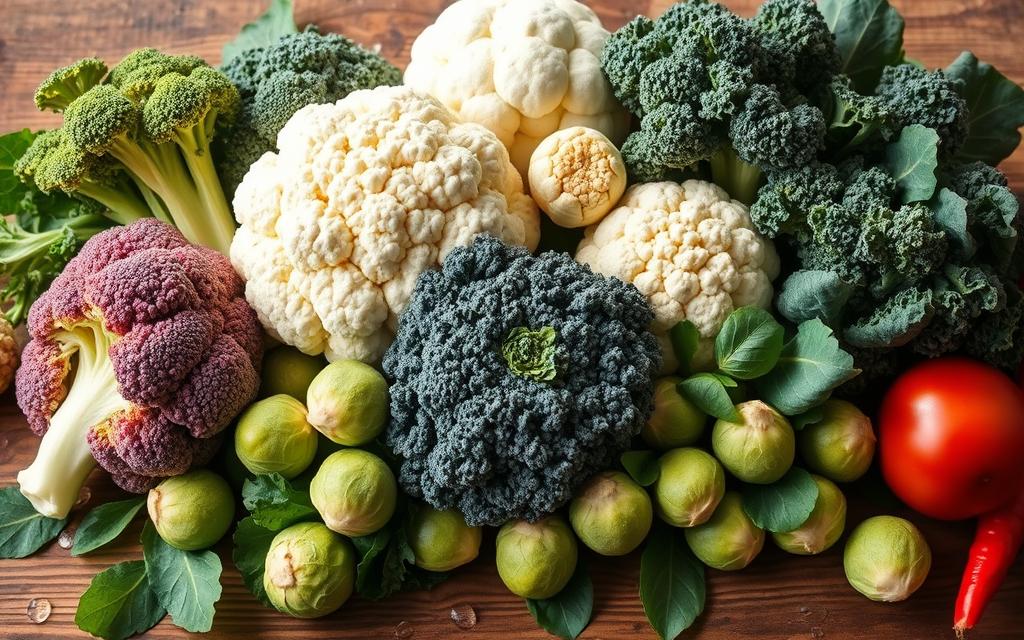
Eating a mix of colorful veggies and whole grains helps our energy and cuts disease risk4. We should choose lean meats and other protein sources to keep fat intake down. Changing our diet can help us recover faster and live better through healthy eating.

Learning to eat healthily is key to using nutrition to our advantage. What we eat affects our energy, showing how big of a role nutrition plays in our lives.

Understanding Calories: Quality versus Quantity

When we talk about understanding calories, it’s key to know the difference between quality and quantity. Calories give us energy, but not all are good for us. An active male might need 3,000 kcal a day, while an active female might need 2,400 kcal daily5.

It’s important to think about where our calories come from. Foods like veggies, whole grains, fruits, nuts, and yogurt are good for losing weight6. On the other hand, foods like potato chips, sugary drinks, and processed meats can lead to weight gain6.

A balanced diet for energy includes many nutrient-rich foods. We should avoid foods with empty calories, like solid fats and added sugars. Over half of Americans drink sugary drinks daily, making them a big source of added sugars in our diet5.

To stay healthy and have enough energy, we should choose quality over quantity in our food. Focusing on the quality of calories we eat can greatly improve our health and energy levels. Let’s see how we can make these changes in our daily lives.
understanding calories

Filling versus Fueling Your Body

Knowing the difference between filling versus fueling is key for managing energy. Processed foods might fill our bellies but lack vital nutrients. This can cause energy crashes, hurting our daily tasks. We should focus on nutrient-dense foods that keep us full and nourish us well.

Nutrient density means how many nutrients a food has per calorie. Foods rich in vitamins, minerals, and good stuff are better than those that aren’t7.

Good nutrient-dense foods include fruits, veggies, whole grains, and lean proteins. But, we should eat less of foods like processed snacks7. A balanced diet boosts our health, mood, and energy7.

When we eat matters too. Eating two hours before exercise is best for performance. After working out, carbs like whole-grain pasta help refill energy, within 30-60 minutes8. Healthy fats from avocados and nuts also boost energy for long activities8.
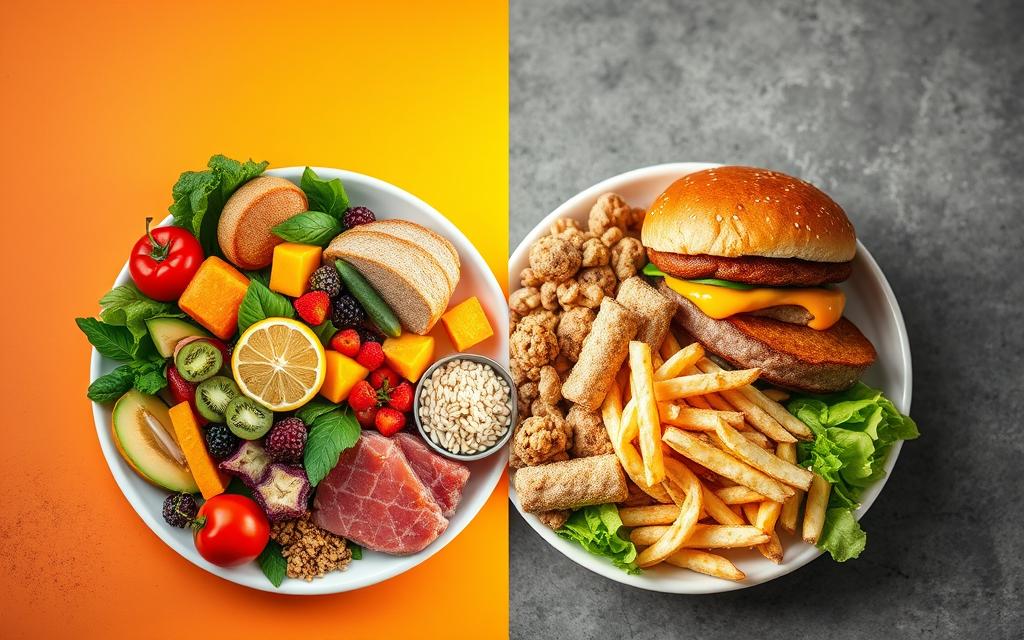
filling versus fueling for energy

Eating for Energy: Nutrient-Dense Foods

Nutrient-dense foods are key to fueling our bodies well. They are packed with vitamins and minerals but have fewer calories. This helps keep our energy up all day. By eating these foods, we support our health and energy.

Types of Nutrient-Dense Foods

We have many nutrient-dense foods to choose from. Each one offers special benefits:

  • Fruits: Berries, apples, and bananas give us antioxidants and energy for better performance.
  • Vegetables: Leafy greens like kale are low in calories but full of vitamins and minerals. For example, a cup of kale has just 9 calories but lots of vitamins C, A, K, and B6, plus potassium and calcium9.
  • Whole grains: Foods like brown rice and oatmeal keep our energy up because of their fiber. This makes us feel full and avoids energy crashes10.
  • Lean proteins: Foods like wild Atlantic salmon are great for muscles and energy. A 100-gram serving has about 25.4 grams of protein9.
  • Healthy fats: Foods like dark chocolate (70-85% cocoa) are full of antioxidants. They support heart health and give us energy10.

Incorporating Nutrient-Dense Foods into Your Diet

Adding nutrient-dense foods to our meals is easy and fun:

  1. Begin with a breakfast that has fruits or whole grains, like oatmeal with berries.
  2. Make hearty salads with many vegetables, including leafy greens and protein-rich foods like chickpeas or nuts.
  3. Choose protein-rich snacks, like sardines or boiled eggs, to stay full without too many calories.
  4. Switch to whole grains like quinoa or brown rice in your meals for more nutrients.

Learning about and using nutrient-dense foods leads to better health and more energy in our busy lives.
nutrient-dense foods providing energy

Healthy Eating Habits to Maintain Energy

To keep our energy up all day, we need to eat well. Starting with a good breakfast is key.

The Role of Breakfast in Energy Maintenance

Breakfast is our first chance to refuel after sleep. Eating protein in the morning boosts our energy and metabolism. This improves our focus and stamina11.

Eating a balanced breakfast sets the stage for a day of energy. It’s a crucial part of our daily routine.

Structuring Meals and Snacks for Consistent Energy

To keep our energy steady, we should plan our meals and snacks. Eating protein, fiber, and healthy fats every three to four hours is key. This keeps our blood sugar stable and prevents energy drops11.

Eating at least five portions of fruits and veggies a day is also good for nutrition12. Here’s a table with tips for meal planning:

Time Meal/Snack Key Nutrients
8:00 AM Breakfast Oatmeal with berries and nuts
10:30 AM Snack Yogurt with fruit
12:30 PM Lunch Grilled chicken salad with olive oil
3:00 PM Snack Hummus with carrot sticks
6:00 PM Dinner Baked salmon with quinoa and steamed broccoli

Focus on Complex Carbohydrates

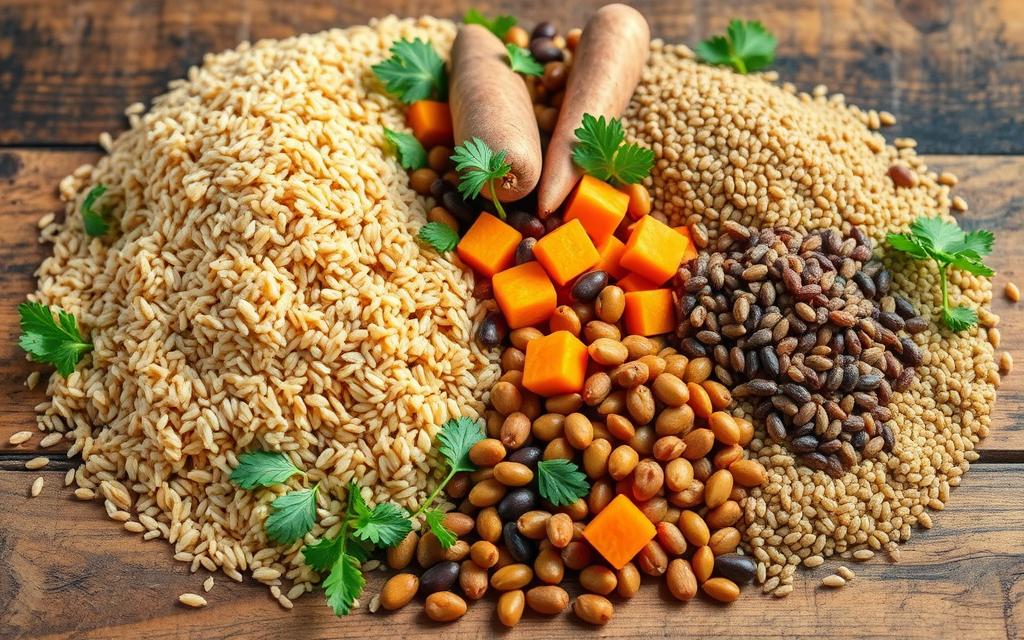
Understanding complex carbohydrates is key to keeping our energy up. They digest slowly, giving us a steady flow of energy. This is different from simple sugars, which can cause energy spikes and drops. Adding complex carbs to our diet helps us stay energized all day.
complex carbohydrates

We need complex carbs to make up 45-65% of our calories. Eating a variety of whole grains, fruits, and veggies is best. These foods are full of fiber and nutrients. For example, pregnant women should eat lots of complex carbs, like 6 ounces of grains and cereals in the first trimester, increasing to 8 or 9 servings later13.

Choose whole grains over refined ones. Foods like barley, lentils, chickpeas, and quinoa are great. They give us energy and help us meet our daily fiber goal of 25-30 grams14 and15.

Adding snacks like nuts, Greek yogurt, or edamame to our diet is a good idea. Whole fruits are better than fruit juices because they keep us full longer14. Sweet potatoes and whole wheat products give us energy without the crash of refined sugars.

Complex Carbohydrate Sources Benefits
Whole Grains (Quinoa, Brown Rice) Rich in fiber and B vitamins, providing sustained energy.
Legumes (Lentils, Chickpeas) High in fiber, protein, and can lower cholesterol.
Root Vegetables (Sweet Potatoes) Slow-releasing carbohydrates for long-lasting energy.
Fruits (Berries, Apples) High in fiber, vitamins, and minerals, promoting overall health.
Nuts and Seeds Provide healthy fats, fiber, and protein for energy.

The Power of Protein for Sustained Energy

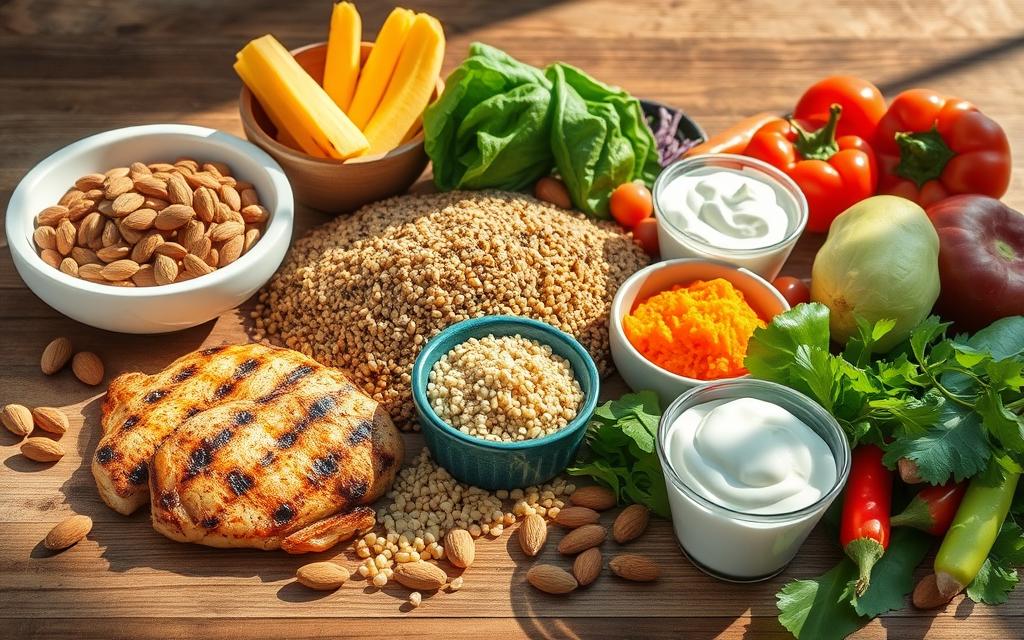
Protein is key to keeping our energy up all day. It helps us build muscle and use energy well. A study showed that eating more protein made people feel full longer16.

Nutrition experts say we need about 0.5 grams of protein for every pound of body weight. So, a 160-pound person should eat at least 80 grams of protein each day. Adding lean meats, beans, and dairy to our meals helps us stay energized.

Protein intake affects our energy levels. Even though we eat more, our energy stays the same. This is because protein helps control hunger16. It also keeps blood sugar stable, avoiding the energy crashes from carbs17.

Eating a mix of protein-rich foods boosts our energy. This makes it easier to stay active. It also helps us feel good all day, thanks to healthy eating habits.
the power of protein for sustained energy

Incorporating Healthy Fats into Your Diet

Healthy fats are key to a balanced diet for energy. They fuel our bodies and boost overall wellness. Foods like avocados, nuts, and olive oil are rich in healthy fats. They help lower heart disease risk and improve cholesterol levels18.

We should aim to get 20% of our daily calories from healthy fats19. This helps support good cholesterol and reduces heart disease risk19. Eating fatty fish like salmon and tuna daily is also crucial for heart health18.

To see which healthy fats we should eat, check out the table below:

Type of Healthy Fat Sources Benefits
Monounsaturated Fat Olive oil, avocados, nuts Lowers bad cholesterol, reduces heart disease risk
Polyunsaturated Fat Fatty fish, flaxseeds, walnuts Supports brain health, reduces inflammation
Omega-3 Fatty Acids Salmon, mackerel, chia seeds Improves heart health, lowers blood pressure

It’s important to watch our fat intake. Many people don’t get enough healthy fats, showing we need to eat better18. Choosing healthy fats for our meals can lead to a more energetic and healthy life.

Hydration and Its Impact on Energy Levels

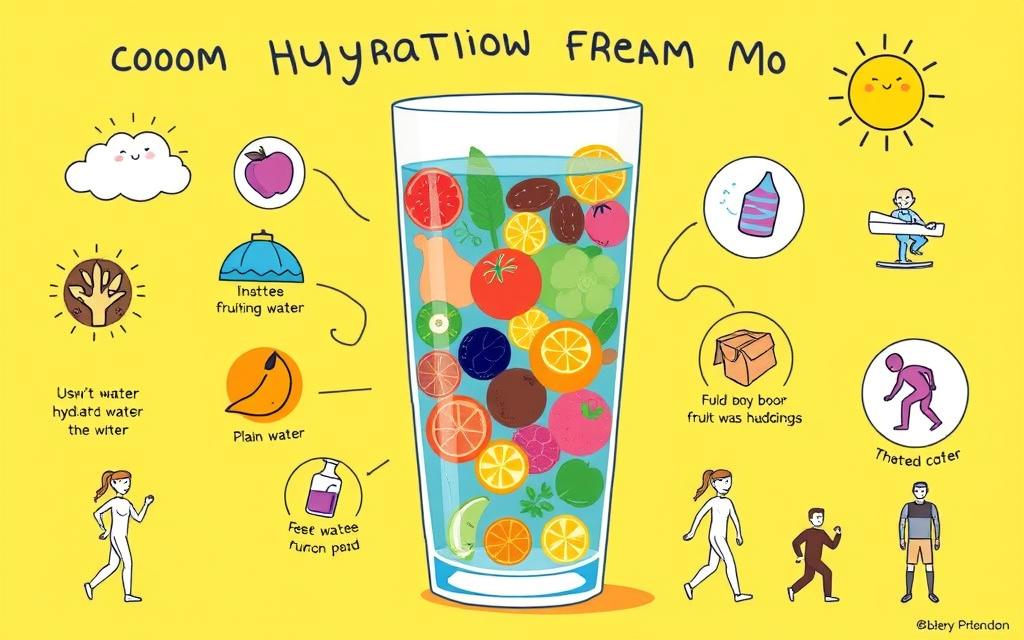
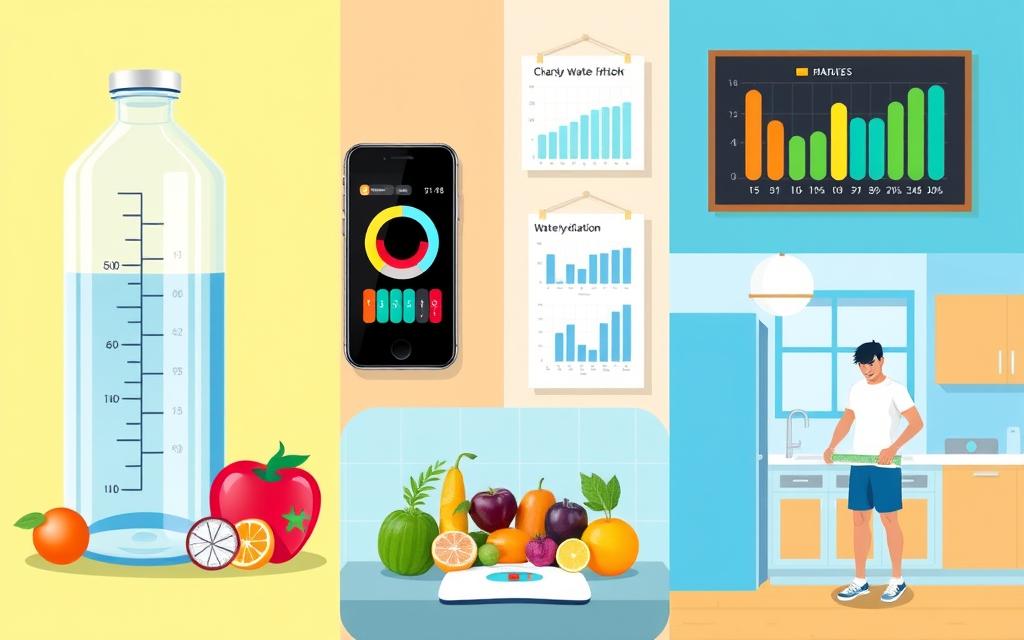
Drinking enough water is key to keeping our energy up. Our bodies are about 60% water, showing how important it is for our health20. We’re often told to drink eight 8-ounce glasses a day, known as the 8×8 rule20.

Even a little dehydration can make us tired. Losing just 2% of our body’s water can make us feel fatigued20. Athletes can lose up to 6–10% of their body weight in sweat during intense workouts20.

Drinking enough water helps us think clearly and perform better. Losing 1–3% of our body’s water can hurt our brain function a lot20. For example, losing 1.4% after working out can make us feel less focused and in a bad mood20.

Choosing water over sugary drinks is better for our energy intake. Drinking water instead of sugary drinks before meals can increase our total energy intake by 7.8%21. On the other hand, drinking water can help with weight loss. People who drank 16.9 ounces of water before meals lost 44% more weight in 12 weeks than those who didn’t2021.

The link between staying hydrated and having more energy is clear. Drinking enough water, along with eating foods high in water, helps us perform better. Making hydration a regular part of our lives can greatly improve our energy and overall health. Adding these habits to our daily routine can make our lives better.

Meal Prep for Energy: Planning for Success

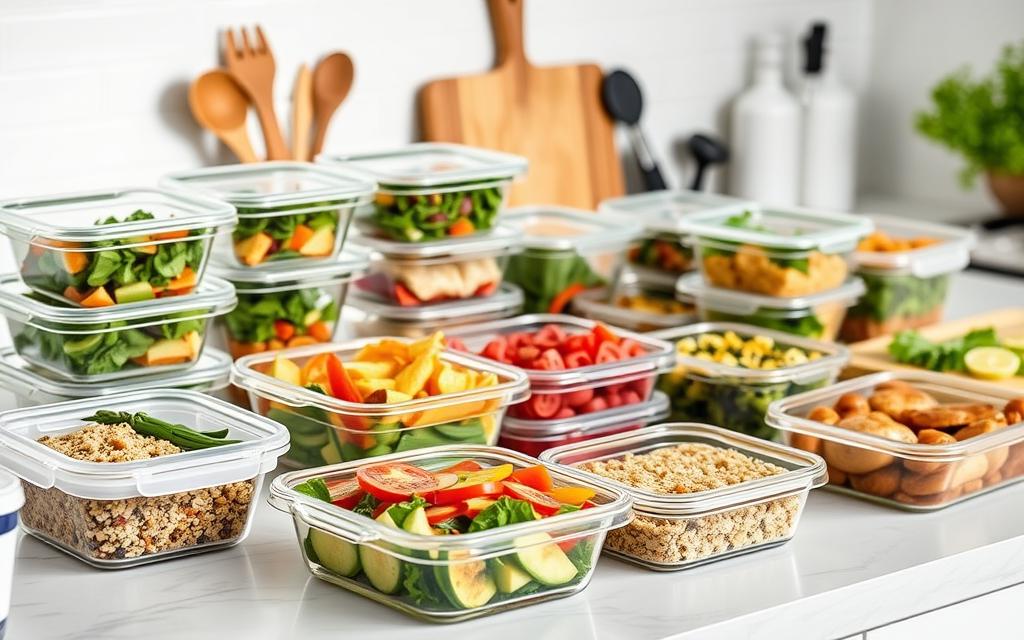
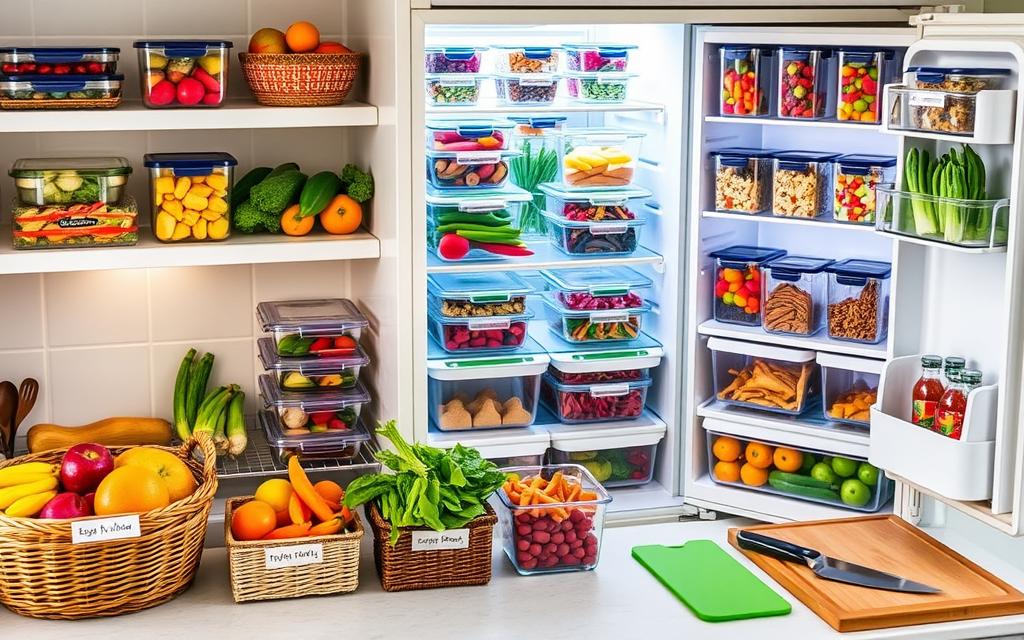
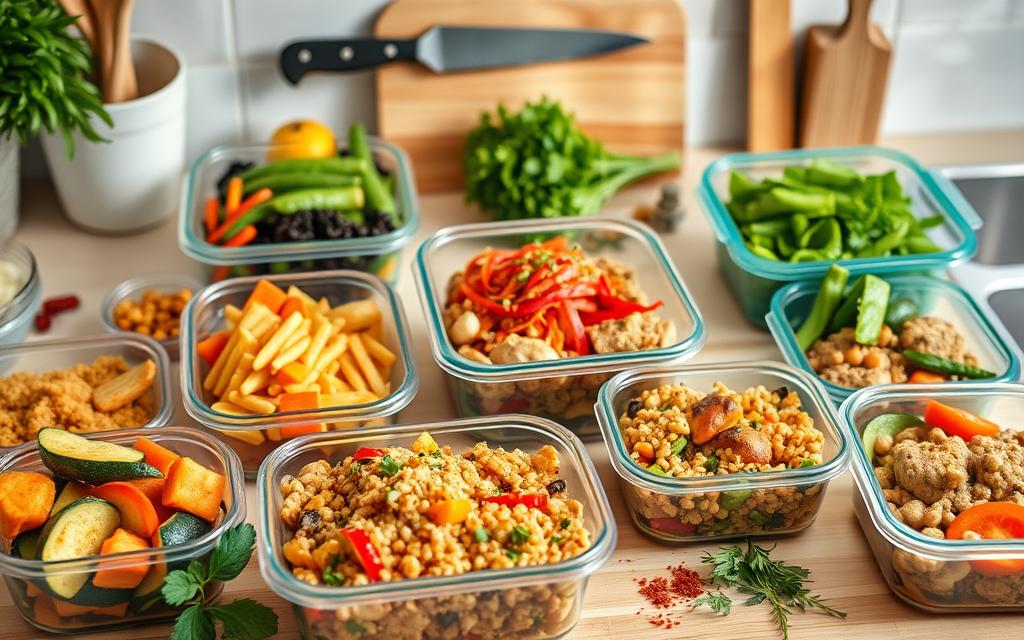
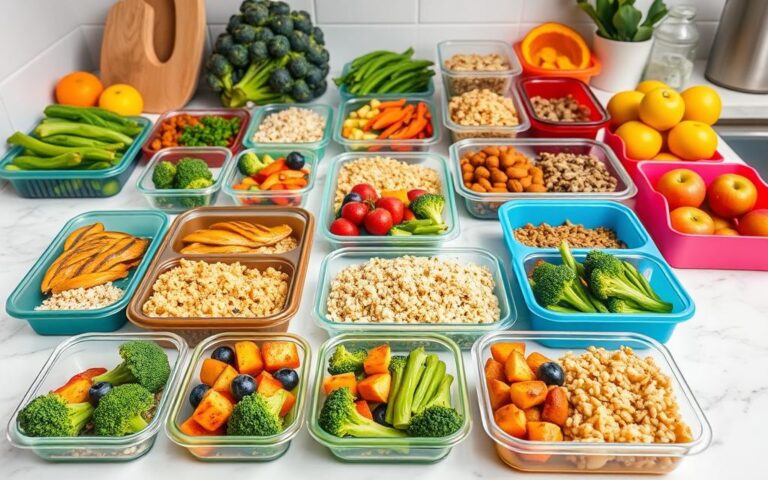
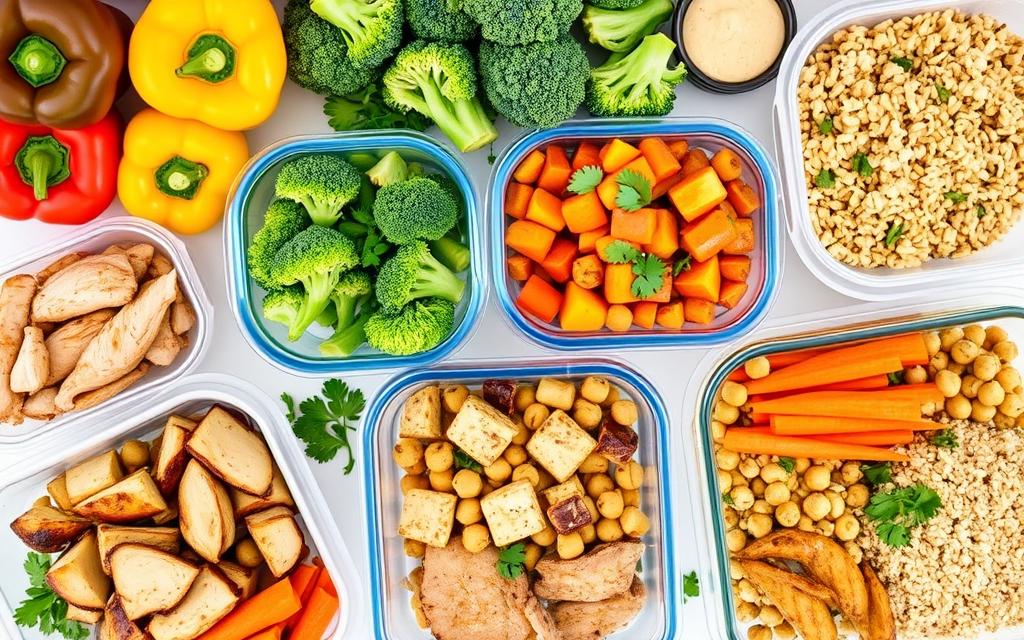
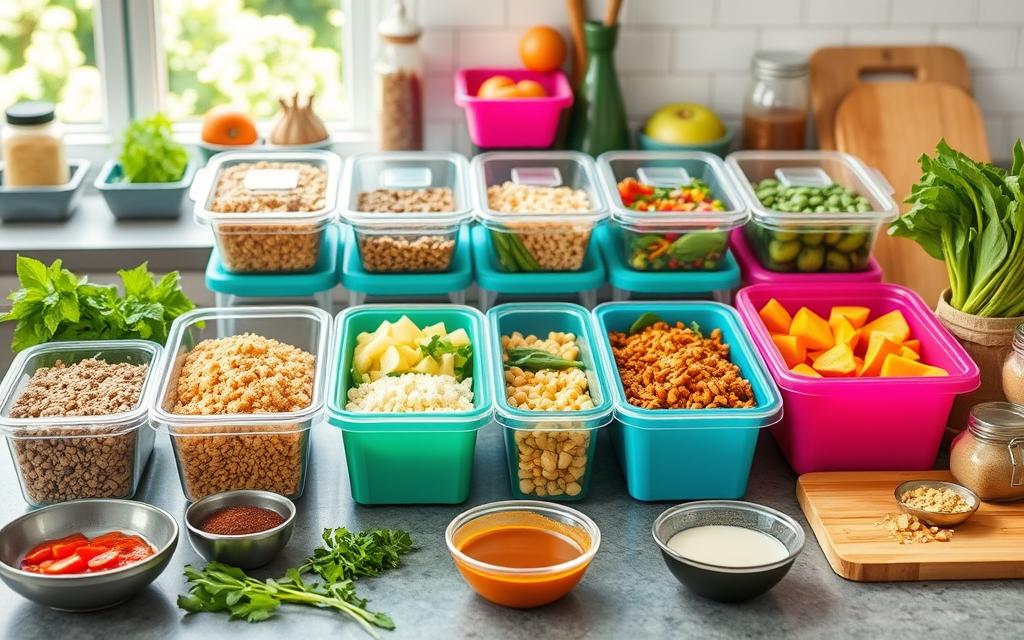
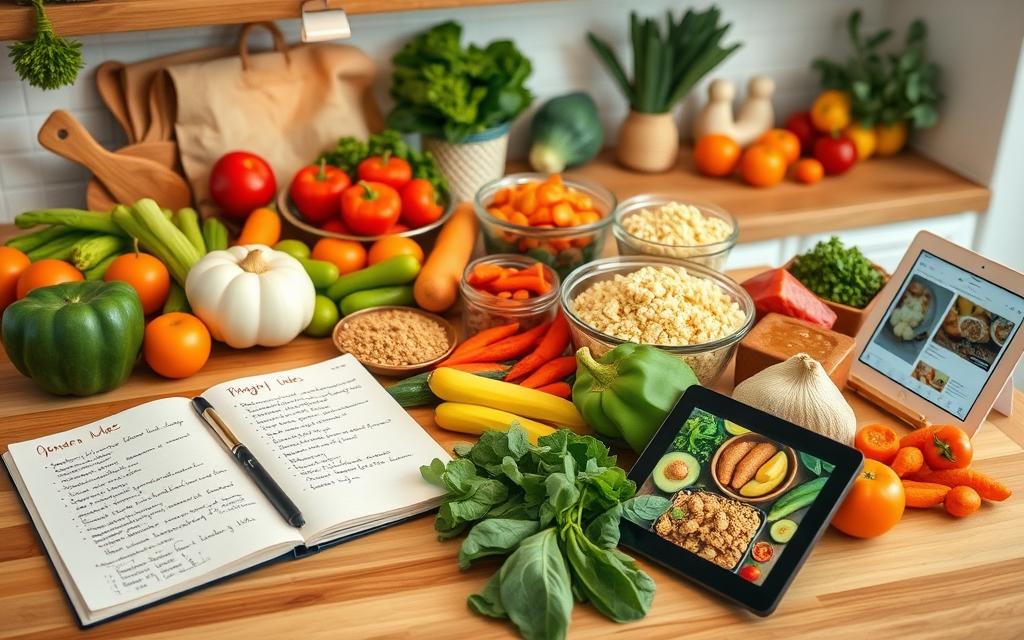
Meal prep is key to healthier eating. It helps us avoid quick, high-calorie meals that can lead to weight gain22. By planning ahead, we can save up to 20% on groceries, making our choices both nutritious and budget-friendly22.

Preparing meals before we shop helps us avoid impulse buys. Without a list, 60% of people overspend and waste food23. By planning, we can cut food waste by up to 30%23. This not only saves money but also helps us eat healthier, consuming up to 30% fewer calories2223.

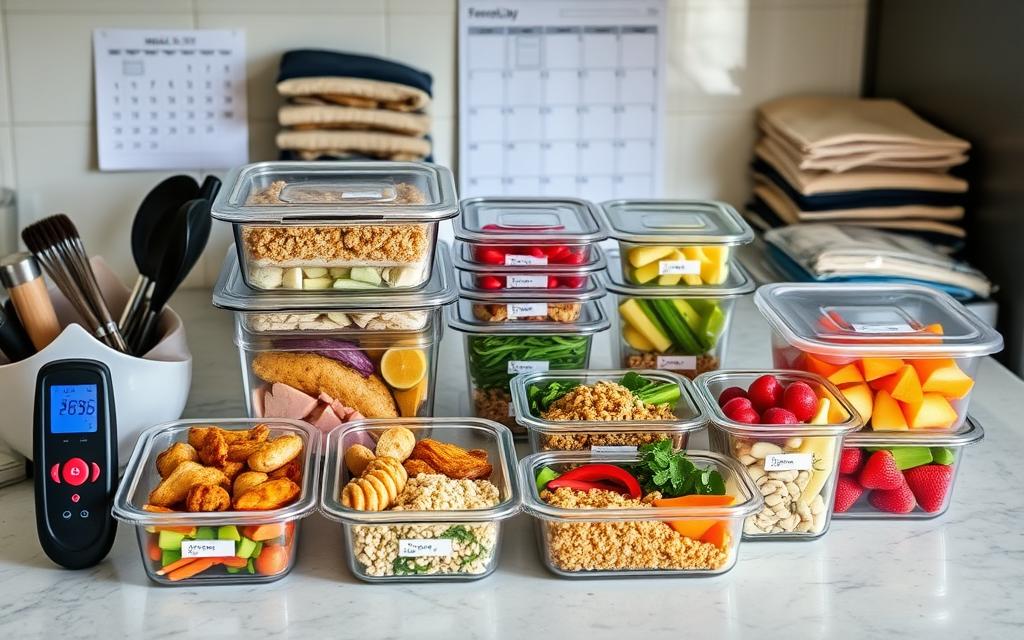
Storing food properly is crucial for keeping it fresh. Items like hard-boiled eggs and chopped veggies stay good for a week in airtight containers. Soups and stews can last 2-3 months in the freezer22. Meal prep saves us 2-3 hours a week, reducing stress and decision fatigue by 30%2223.

Energy-Boosting Recipes to Try

We’re on a mission to boost our energy with tasty and simple recipes. Quick breakfasts and healthy snacks keep us going all day. Let’s explore some great ideas to energize and satisfy us.

Quick Breakfast Options

Starting the day with the right foods is key. Try a creamy avocado toast with seeds for a healthy fat boost. Use whole-grain bread for lasting energy. Oatmeal with nuts and fruits is also a great choice, offering fiber and protein to keep us full.

Nutritious Snacks for Sustained Energy

Having healthy snacks on hand is crucial for our energy. Chickpea salad sandwiches are a tasty, protein-rich option for a midday pick-me-up24. A veggie platter with creamy hummus is another energizing snack25. Simple snacks like roasted sweet potatoes or overnight oats are full of complex carbs and fiber, keeping us focused26

Recipe Main Ingredients Energy Benefits
Chickpea Salad Sandwich Chickpeas, whole grain bread, veggies Plant-based protein, fiber
Avocado Toast Avocado, whole grain bread, seeds Healthy fats, fiber
Vegetable Hummus Dip Avocado, chickpeas, assorted veggies Vitamins, healthy fats
Overnight Oats Oats, nuts, fruits Complex carbs, protein
Roasted Sweet Potatoes Sweet potatoes, spices Complex carbohydrates

By trying these energy-boosting recipes, we can keep our bodies fueled and our minds sharp all day242625.

Natural Energy Sources: Foods to Embrace

Looking for energy and health? Whole foods, fruits, and veggies are key. Foods like bananas, oats, and nuts give us energy and keep it steady. Bananas have B vitamins and fiber, helping turn carbs into energy. Oats give a lasting energy boost because of their vitamin B2728.

Here are some foods to add to your diet for more energy:

Food Benefits
Bananas Rich in B vitamins and potassium, excellent for muscle function and pre-workout energy
Oats Sustainable energy boost from complex carbohydrates, stabilizing blood sugar levels
Nuts Provide protein, healthy fats, and fiber, essential for maintaining energy levels
Lentils Great source of fiber and complex carbohydrates, supplying steady energy
Dark Chocolate High in antioxidants and may elevate energy levels with its caffeine content
Leafy Greens Contain vitamins that balance energy levels and improve sustainability

Adding these foods to your diet can fight off tiredness. Leafy greens like spinach are packed with nutrients and help keep energy up all day29. Nuts, like almonds, offer healthy fats and magnesium for steady energy2729.

By eating different natural energy sources every day, we can stay full of energy. This boosts our health and lets us live more actively.

Conclusion

Understanding how our food choices affect our energy is key to feeling better and staying healthy. Eating foods rich in nutrients like fruits, veggies, whole grains, and lean proteins boosts our energy. It also helps us eat fewer calories than processed foods.

Bad eating habits, like eating at odd times, can lead to obesity and diabetes. This shows how important our food choices are30.

Drinking enough water and planning meals ahead helps us make better food choices. A regular eating schedule, with whole, balanced meals, lowers the risk of heart disease and high blood pressure. Sticking to healthy eating habits greatly improves our energy and health31.

By adopting these habits, we can do our best every day. A mindful diet not only energizes us but also builds long-term health. Let’s keep making better food choices for our energy and well-being.

FAQ

What are some energy-boosting foods I can include in my diet?

Eating fruits, vegetables, whole grains, lean proteins, and healthy fats can boost your energy. Try bananas, oats, nuts, and avocados for a natural energy boost.

How does hydration affect my energy levels?

Drinking enough water is key to keeping your energy up. Dehydration can make you feel tired and less energetic. So, drink plenty of water and eat hydrating foods like fruits and veggies.

Why are complex carbohydrates important for energy?

Complex carbs like whole grains and legumes give you energy slowly. They help keep your blood sugar stable, giving you energy for longer than simple sugars do.

What is nutrient density, and why does it matter?

Nutrient density is how much nutrition a food has compared to its calories. Eating foods high in nutrients but low in calories is important for energy. It helps you get the vitamins and minerals you need without too many calories.

How can meal prep contribute to better energy levels?

Meal prep lets you plan and make healthy meals ahead of time. This makes it easier to eat well even when you’re busy. It helps keep your energy levels steady all week.

What role does protein play in maintaining energy?

Protein helps keep your muscles strong and makes you feel full longer. Eating protein-rich foods like lean meats, beans, and dairy can help keep your energy up. This is because your body uses more energy to digest protein.

Can eating fats actually boost my energy?

Yes, healthy fats are important for energy and overall health. They help your body make energy and absorb nutrients. Foods like nuts, seeds, avocados, and fatty fish are great for keeping your energy up.

How often should I eat to maintain energy levels?

Eating every three to four hours is good for keeping your energy steady. It helps prevent big drops in energy throughout the day.

Mindful Eating: How to Stop Overeating and Enjoy Your Food

Have you ever eaten a meal without even noticing it? We all have those moments when we eat for comfort, reward, or habit. Research shows that emotional reasons cause 75% of overeating1. This shows how much our feelings affect our eating.

Many of us feel guilty after eating too much. But, what if we could enjoy our meals more? Mindful eating can help us do just that. It makes us more aware of our eating and the feelings it brings. This way, we can stop overeating and enjoy our food again2.

Key Takeaways

  • Mindful eating helps establish a healthier relationship with food.
  • Awareness can significantly reduce episodes of emotional eating.
  • Emotional triggers contribute to over 75% of overeating.
  • Practicing mindfulness may lead to better self-regulation during meals.
  • Understanding hunger cues can aid in recognizing when to eat.

Introduction to Mindful Eating

In today’s fast world, many of us eat quickly, with most Americans taking less than 30 minutes for lunch3. This rush can harm our eating habits and make us less connected to our meals. Mindful eating offers a new way by asking us to be fully present while we eat. It changes how we see food by making us more aware3.

Mindful eating helps us see how our eating habits affect our health and feelings. For example, binge-eating affects 1-3% of people and can be linked to stress and dieting4. It often leads to eating more processed foods, which are high in sugar and fat. This is a big problem in the U.S., where about 42.4% of adults are obese4.

By focusing on mindful eating, we can enjoy our meals more and choose better foods. Research shows that mindfulness can cut binge-eating by 50% in those who try it4. It helps us eat more balanced and can even help us lose weight, with most losing 5-10% of their body weight in 6-12 months4.

By using mindful eating, we can better connect with our bodies and hunger signals. This leads to a more fulfilling and healthy eating experience. In a world full of distractions, it’s crucial to value our meals. Mindful eating teaches us to eat without distractions for at least 20 minutes3.

Understanding Overeating and Its Consequences

Understanding overeating is key to tackling its effects. Overeating can lead to weight gain, obesity, and health problems. It often starts as a way to cope with stress, turning into binge eating.

Binge Eating Disorder (BED) is common in the U.S., affecting many who seek weight loss. It’s more common than anorexia and bulimia combined. To be diagnosed with BED, someone must binge eat at least once a week for three months5.

These episodes are marked by eating a lot in a short time. People often feel out of control and guilty afterward. This affects their health and well-being.

A study found that binge eating can involve eating quickly or until feeling uncomfortable5. Feelings of disgust, depression, or guilt often follow. Weight stigma and the weight loss industry can make things worse5.

Worldwide, 70 million people struggle with eating disorders, a major health issue6. In industrialized countries, up to 5% of the population is affected6. Eating disorders have a strong genetic link, making them complex6.

Our biology, including hormones and genes, plays a role in overeating. Genes like SLC6A4 and DRD2 are linked to eating disorder severity6. Understanding these factors is crucial in addressing overeating’s impact on people’s lives.

What is Mindful Eating?

Mindful eating means being fully present and using all our senses when we eat. It helps us enjoy our food more and have a better relationship with it.

Origins of Mindful Eating

Mindful eating comes from Buddhist traditions. These traditions teach us to be aware and present in the moment. This way, we can make our eating habits more mindful, which helps with eating disorders.

Key Principles of Mindful Eating

There are important principles for mindful eating:

  • Being Present: Eat without distractions, enjoying the taste and texture of our food.
  • Listening to Our Bodies: Pay attention to when we’re hungry or full to eat right.
  • Practicing Gratitude: Be thankful for the food we eat, building a positive connection with it.
  • Controlling Portions: Use smaller plates and utensils to eat the right amount7.
  • Avoiding Environmental Distractions: Turn off devices and avoid talking to eat better.

By following these principles, we can use mindfulness to stop binge eating. Binge eating affects about 3% of people, leading to obesity8. Mindful eating also helps us feel better mentally7.

The Science Behind Mindful Eating

The science of mindful eating shows us how it changes our eating habits. It teaches us to eat slowly and notice when we’re full. This approach helps us eat better, making mindful eating a key part of our diet9.

How Mindfulness Affects Eating Behaviors

Studies show that mindfulness can help reduce binge eating. When we combine mindfulness with cognitive behavioral therapy, we see less emotional eating10. Mindfulness also helps us ignore tempting food packaging and listen to our body’s hunger signals10.

Studies Supporting Mindful Eating

A review of 68 studies found that mindful eating improves our eating habits. But it doesn’t always lead to weight loss. For example, a study with 194 adults with obesity found that mindfulness reduced sweets intake and kept blood sugar levels stable9.

While some participants lost weight, the difference was small. This shows that mindfulness alone might not be enough. We need other methods too9.

science of mindful eating

Mindful Eating vs. Mindless Eating

Mindful eating and mindless eating are two different ways we eat. Mindless eating happens when we’re distracted, like watching TV or using our phones. This can make us eat more than we want to11.

On the other hand, mindful eating means paying full attention to our food. It helps us enjoy our meals more and eat better12. By focusing on our food, we can control our emotions better and make healthier choices11.

Mindless eating can mess with our energy and hormones12. But mindful eating can help us feel more balanced and reduce stress about food11. James Rouche says starting with one mindful meal a day can be a great first step.

Aspect Mindful Eating Mindless Eating
Awareness High Low
Caloric Intake Regulated Excessive
Food Choices Health-focused Convenience-driven
Emotional Impact Reduced anxiety Possible binge eating
Enjoyment Level Increased satisfaction Decreased enjoyment

Exploring the differences between mindful and mindless eating helps us make better choices. It’s about understanding how our eating habits affect our health1211.

Why Should You Try Mindful Eating?

Mindful eating changes how we see food, making meals a chance to care for our bodies and minds. It’s not just about feeling good right away. It also helps with keeping a healthy weight and improves our emotional health.

Benefits for Weight Management

Mindful eating helps us eat less and slower. Studies show eating slowly can cut down on how much we eat, leading to fewer calories13. It teaches us to listen to our hunger, so we eat when we’re really hungry and stop when we’re full14.

This method stops unhealthy cravings and helps us eat better. It’s key in avoiding overeating and binge eating14. Using smaller plates and taking smaller bites also helps control how much we eat13.

Connection to Emotional Well-Being

Mindful eating is deeply linked to our emotional health. It lowers stress and anxiety, making meals better for our mental health13. Enjoying flavors and textures more makes meals more satisfying.

It helps us have a better relationship with food, leading to healthier choices. By eating healthy most of the time and enjoying treats sometimes, we find a balance14.

benefits of mindful eating

Learning to Identify Hunger Cues

Understanding hunger cues is key to mindful eating. It helps us have a better relationship with food. By learning to identify hunger cues, we can tell the difference between physical vs emotional hunger. This helps us avoid unhealthy eating habits.

Differentiating Between Physical and Emotional Hunger

Physical hunger shows up in different ways, like feeling irritable, getting headaches, or feeling tired. Emotional hunger is about eating due to feelings, like boredom or seeking comfort. Knowing the difference is crucial for our eating habits.

Physical hunger is our body’s way of saying it needs energy. Emotional hunger comes from our feelings and situations. We need to listen to our bodies to avoid eating mindlessly.

Recognizing Unhealthy Eating Triggers

Mindful practices can help us avoid unhealthy eating triggers. Busy lives or certain meds can make it hard to know when we’re hungry15. By spotting these triggers, we can make choices that support our health.

Good sleep and self-care help us better hear our hunger signals15. It’s important to create a space where we can listen to and act on our hunger cues. This supports healthier eating.

Mindful Eating Techniques to Curb Overeating

Mindful eating can help us eat less and feel better about food. It’s about slowing down and being thankful for what we eat. This makes our meals more enjoyable and improves our health.

Slowing Down Your Eating Pace

Slowing down helps our brain feel full. Studies show we need about 20 minutes to feel full after eating16. By chewing well and pausing between bites, we eat more mindfully. This stops us from eating too much.

Fostering Gratitude for Your Food

Being thankful for our food makes meals better. Thinking about where it comes from and how it’s made makes us appreciate it more. This helps us enjoy our food and avoid bad eating habits17.

Mindful Eating and Weight Loss

Mindful eating can be a great way to lose weight and keep healthy habits. It helps us pay more attention to how we eat. This can lead to lasting changes in our eating habits.

Studies show that mindful eating can help us eat less when we’re stressed or upset. This is important because eating too much when we’re stressed can lead to weight gain. A study found that people who practiced mindful eating ate less and felt better about food18.

Mindful Eating as a Long-Term Strategy

Mindful eating helps us understand when we’re hungry and what makes us want to eat. It makes us think more about our food choices and how we eat. This can lead to eating healthier and controlling our portions better.

Using smaller plates or planning meals can help us make better food choices. It can also reduce the urge to eat impulsively19. This approach makes eating more enjoyable and helps us stick to our weight loss goals for the long term20.

Real-Life Success Stories

Many people have found success with mindful eating. They’ve improved their relationship with food and managed their weight well. For example, those who join mindful eating programs often eat less and feel less anxious18.

They also learn to listen to their bodies better. This leads to lasting changes in their eating habits20. These stories and studies show that mindful eating can be a powerful tool for weight loss.

Addressing Binge Eating and Overeating Disorder

Binge eating disorder (BED) is common, affecting about 2.8% of adults in the U.S. at some point. It impacts 1.6% of adult women and 0.8% of adult men. People with BED often eat too much at least once a week for three months or more, which is dangerous21.

It’s important to tackle overeating disorder with the right strategies. Cognitive Behavioral Therapy (CBT) helps by looking at behaviors and thoughts behind eating habits22. Interpersonal Therapy (IPT) also helps, focusing on solving conflicts linked to binge eating22.

BED can also be linked to other eating disorders like bulimia nervosa, where people try to make up for binge eating21. Those with BED might also face malnutrition, leading to cravings for unhealthy foods. A meal plan can help reduce stress about food choices22.

binge eating disorder

Knowing how common BED is and the treatment options is key to finding solutions. Working together with healthcare experts is crucial for treating BED22. Mindful eating and therapy can help those struggling with BED towards a healthier path.

How to Practice Mindful Eating Daily

To make mindful eating a part of our lives, we need a supportive environment and daily exercises. A calm place to eat helps us enjoy our food and listen to our body’s hunger and fullness signals.

Creating a Mindful Eating Environment

Creating a mindful eating space means less distraction and more focus on food. Here are some steps:

  • Choose a spot for meals where screens are off, helping us focus on food and talk.
  • Use colors and dishes that make meals feel special, encouraging us to slow down.
  • Eating with others can make meals more enjoyable and help us eat just the right amount23.

Simple Exercises to Begin with

Starting with simple mindful eating exercises can change how we see food. Here are a few:

  • Eat a small food like a raisin slowly, noticing its taste and texture. This can make us enjoy healthier foods more23.
  • Plan out when to eat, avoiding eating too much or too little14.
  • Chew each bite 20 to 40 times for better digestion and understanding when we’re full24.

By making these small changes, we can improve our eating habits. Regular mindful eating helps us enjoy meals more and understand our hunger and fullness better. These habits lead to a healthier relationship with food, helping us meet our mindful eating goals1424.

Overeating: Understanding Its Triggers

Figuring out why we overeat is key to changing our habits. We must look at both outside factors and our emotions. These can greatly influence how much we eat.

External Influences on Eating Habits

Our surroundings shape our eating habits. Having food always available at home can lead to eating too much25. Social events, like parties, can also make us eat without thinking25. Plus, eating with others can make us eat more because we match our pace25.

Setting regular meal times helps control our hunger. It keeps our hunger hormones in check25.

Emotional Factors Leading to Overeating

Feeling stressed, bored, or celebrating can make us eat more25. For people on the autism spectrum, eating can be a way to calm down or feel something26. Stressful times often lead us to turn to food for comfort25.

Not getting enough sleep can also make us crave more food25. Being mindful when we shop and cook can help us avoid buying too much. This can prevent us from eating too much25.

overeating triggers

The Role of Nutrition in Mindful Eating

The role of nutrition in eating habits is key to mindful eating. Eating foods full of essential nutrients boosts digestion and nutrient absorption. This improves our overall health. Studies show that mindful eating can lead to better digestion by allowing for optimal nutrient absorption27.

By enjoying the flavors and textures of food, we enjoy our meals more27.

Choosing a balanced diet shapes our eating habits. Eating fruits, vegetables, whole grains, lean proteins, and healthy fats gives us all the vitamins and minerals we need28. These foods support our health and help us have a better relationship with food. This reduces emotional eating, which affects about 40-60% of adults29.

Using mindful eating techniques, like eating slowly and without distractions, helps us feel fullness cues better. Eating slowly can cut food intake by 15-20%27. Removing distractions lets us focus more on our meals, paying 30% more attention29.

Using a hunger/fullness scale helps us eat wisely, aiming for a balanced state of fullness27. This self-awareness can greatly improve our eating habits.

Resources for Further Exploration of Mindful Eating

As we start our mindful eating journey, many mindful eating resources are available. These resources come in different forms, like books and online platforms. They help deepen our understanding and use of mindful eating.

Books and Online Courses

Books on mindful eating give us the basics and useful tips. They show how paying attention to food can make eating better30. Online courses also teach mindfulness in our meals, helping us eat less and feel fuller30.

Learning about mindful eating is key. It teaches us to eat with care, not just follow strict diets.

Guided Meditations and Workshops

Workshops offer a hands-on way to learn. They let us practice mindful eating with others, making it more fun. Guided meditations focus on the emotional side of eating.

Research shows that most adults eat for reasons other than hunger, like emotional needs30. Understanding this helps us eat better and reach our health goals.

mindful eating resources

Potential Pitfalls of Mindful Eating Practices

When we start mindful eating, we face some challenges. Misunderstanding mindfulness can lead to frustration. Also, expecting quick results can make it harder to stick with it. Knowing these obstacles is key, as studies show mindfulness can greatly improve how we eat.

A study found mindfulness cuts binge eating by about 50%31. But, about 15% of people start eating too much again within three months31. This shows we need to work on keeping it up over time.

Learning to listen to our hunger and fullness signals is a big part of mindful eating. It takes time, but it can lead to a 60% better understanding of these signals31. Still, controlling portion sizes remains a challenge, even with mindfulness31.

For those with serious eating issues, getting professional help is crucial. Emotional eating, often tied to anxiety and depression, needs special attention. It’s linked to unhealthy eating habits, making mindful eating harder32.

Despite its benefits, mindful eating comes with its own set of challenges. By understanding these, we can approach it with better expectations and support when needed.

Conclusion

Mindful eating is a powerful tool for changing how we view food. It helps us understand our hunger and appreciate our meals. This practice can help us stop overeating and improve our health.

It’s important to know why we eat the way we do. Studies show that some foods can act like drugs in our brains, making us eat more than we need3334. Mindful eating teaches us how to deal with these cravings, helping us manage our weight and live better.

By making mindful eating a part of our lives, we take care of our health. We learn to recognize what drives our eating and make better choices. This leads to a healthier, happier life.

FAQ

What is mindful eating?

Mindful eating means being fully present and aware when we eat. It involves using our senses and listening to our body’s hunger signals. This practice helps us have a healthier relationship with food and can stop us from eating too much or eating because we’re upset.

How can mindful eating help with overeating?

Mindful eating helps us know when we’re hungry and when we’re full. This stops us from eating too much. By eating slowly and enjoying our food, we can still enjoy it but know when to stop, breaking bad eating habits.

What are some techniques for practicing mindful eating?

To practice mindful eating, eat slowly and focus on how food tastes and smells. Pay attention to when you’re hungry or full. Being thankful for our meals helps too. These steps help us make better food choices and avoid bad eating habits.

Can mindful eating support those with binge eating disorder?

Yes, mindful eating can help those with binge eating disorder. It helps them notice when they’re feeling emotional and find better ways to deal with it. This approach gives them tools to manage their urges and improve their relationship with food.

What role does nutrition play in mindful eating?

Knowing what’s in our food makes mindful eating better. When we choose nutritious foods, we make choices that are good for our health. This aligns with the goals of mindful eating.

What are some common challenges faced when practicing mindful eating?

Challenges include misunderstanding what mindful eating is and setting unrealistic goals. It can also be hard to change how we eat because of emotions. It’s important to be flexible and seek help, like from a professional, if we have serious eating issues.

How can we create an environment conducive to mindful eating?

To eat mindfully, remove distractions and have a special place for eating. Prepare meals with care. Simple steps like breathing before we eat and not using our phones can also help us be more present.

Are there resources available to help us with mindful eating?

Yes, there are many resources like books, online courses, and workshops. These offer insights and strategies to make mindful eating a part of our daily lives.

The Best Snacks for Weight Loss and Sustained Energy

Starting a healthier lifestyle can be tough, with many wondering what snacks help with weight loss and energy. It’s easy to grab quick, sugary foods when we’re busy. But, finding healthy snacks can change our lives, improving our health and energy.

Research shows that the right snacks can control hunger, boost energy, and aid in weight management1. Imagine having a snack that fuels your body and supports your weight loss goals. It’s not just a dream; it’s possible with the right snacks.

Choosing the right snacks for weight loss gives us the energy we need all day. From whole foods’ fiber to yogurt’s protein, our snack options are exciting and varied. Let’s dive into the best snacks for weight loss that make staying on track fun.

Key Takeaways

  • Healthy snack options can support weight loss and energy management.
  • Choosing nutrient-dense snacks helps control hunger more effectively.
  • Protein and fiber are crucial components of weight loss friendly snacks.
  • Whole foods often provide better nutritional benefits than processed snacks.
  • Balanced snacks can enhance our overall well-being and help maintain focus.

The Importance of Healthy Snacking

Snacking is key in our daily eating habits. It’s important to choose healthy snacks to get more nutrients and better digestion. Research shows that snacking can help or hurt weight loss, depending on the snack type2.

Good snacking habits keep our energy up and help with weight control2. Eating snacks of 100-200 calories can stop us from eating too much2.

Healthy snacking improves our overall health. People who eat fruits and veggies tend to have better diets2. Also, most Americans have 2.2 snacks a day, which is a lot of calories3.

Snacks high in fiber and protein, like carrots with bean dip, keep blood sugar steady3. Snacking at mid-morning and afternoon helps keep energy up and prevents overeating2.

It’s also important to watch portion sizes with healthy snacks3. Eating mindfully helps control how much we eat, so we can enjoy snacks without gaining weight4. By making healthy snacking a part of our daily life, we can improve our diet, boost energy, and feel more satisfied between meals.

Healthy Snack Types Calories Benefits Examples
Fruits 50-100 Rich in vitamins and fiber Apple slices, berries
Vegetables 25-50 Low in calories, high in nutrients Carrots, cucumber sticks
Nuts and Seeds 150-200 Source of healthy fats and protein Almonds, sunflower seeds
Whole Grain Snacks 100-200 Good source of fiber and energy Whole grain rice cakes, popcorn
Dairy Products 80-150 High in protein and calcium Yogurt, cheese sticks

Understanding Nutrient Balance for Weight Loss

Keeping a nutrient balance for weight loss is key to reaching our health goals. Adding enough protein, fiber, and healthy fats to our snacks boosts fullness and cuts calories. Experts say we should get 10-35% of our calories from protein, which is 56 grams for men and 46 grams for women5.

A balanced diet includes foods from different groups, like protein and healthy fats. This helps control hunger and keeps blood sugar and digestion in check. Eating half our meals with fruits and veggies boosts fiber intake, which aids in feeling full and supports digestion6.

It’s also important to choose the right fats. Healthy fats, making up 20-35% of our calories, help us feel full and support our health5. A diet rich in essential nutrients is vital for losing weight effectively6. By making smart food choices, we can fuel our bodies and help manage our weight.

Nutrient Recommended Intake Function in Weight Loss
Protein 10-35% of daily calories (56g men, 46g women) Enhances fullness, supports muscle retention
Healthy Fats 20-35% of daily calories Promotes satiety, regulates hormone levels
Fiber At least 25g daily Improves digestion, increases fullness

Best Snacks for Weight Loss

Choosing the right snacks is crucial for weight loss. We offer a variety of tasty and healthy options. These include high protein snacks, low calorie ideas, and fiber-rich choices.

High Protein Snacks

High protein snacks keep us full and help preserve muscle. Greek yogurt has about 12 grams of protein per 1/2 cup7. Cottage cheese has around 25 grams of protein per 1 cup8.

Beef jerky is a great portable snack with 9 grams of protein per ounce8. Protein smoothies are also a good choice, as long as they’re made with quality ingredients.

Low Calorie Snack Ideas

Low calorie snacks help control our calorie intake. A large red bell pepper with 1/4 cup of guacamole is under 200 calories8. Fresh fruit, like an apple with 2 teaspoons of peanut butter, is under 90 calories7.

Popcorn is a volume snack at just 100 calories for 6 cups, with 6 grams of fiber7.

Fiber-Rich Snack Options

Fiber-rich snacks support digestion and keep us full. Edamame has 18 grams of protein and 8 grams of fiber per cup8. Mixed nuts, about 1 ounce or 1/4 cup, are also a good choice8.

Pear slices with ricotta cheese are a tasty mix of fiber and protein. They’re perfect for a mid-afternoon snack. Fiber-rich snacks help us feel satisfied and improve our health.

Whole Food Snack Choices

Choosing whole food snacks can greatly improve our nutrition and health. These snacks are full of vitamins, minerals, and fiber. They also help keep our calorie intake low. Adding healthy snacks to our daily routine boosts our digestion and keeps our energy up.

Fruit and Nut Combinations

Fruit and nut combinations are tasty and good for you. For example, apple slices with peanut butter mix sweet and savory flavors. They also give us the right balance of nutrients. Plus, mixed nuts help us stay full and avoid unhealthy snacks9.

These snacks not only curb hunger but also help with weight management.

Vegetable-Based Snacks

Vegetable-based snacks are great for adding more nutrients to our diet. Cucumber slices with hummus are a refreshing and filling choice, packed with vitamins and minerals9. Carrot sticks are another good option for managing hunger and are low in calories.

We suggest trying different vegetables and dips to make snacking fun and healthy.

Easy Weight Loss Snacks for Busy Lifestyles

In today’s world, finding healthy snacks is key. We need snacks that fit our busy lives and help us reach our health goals. Options like on-the-go snacks and meal prep ideas help us stay energized and full all day.

On-the-Go Options

When we’re always on the move, we need snacks that are easy to carry. Here are some great choices:

  • Greek yogurt: It has 17 grams of protein and 200 milligrams of calcium for just 120 calories, making it perfect for a quick protein boost10.
  • Baby carrots with hummus: Enjoy 18 baby carrots with a quarter-cup of hummus for just 200 calories, giving you 10 grams of fiber10.
  • Mixed nuts: A handful of nuts is full of nutrients. A quarter-cup of raw almonds has 170 calories, 6 grams of protein, and 4 grams of fiber11.

Meal Prep Snack Ideas

Meal planning makes it easier to eat healthy. Here are some meal prep ideas to try:

  • Vegetable packs: Pre-cut veggies like celery sticks with peanut butter offer 8 grams of protein and 5 grams of fiber for a quick snack10.
  • Protein shakes: Make protein shakes ahead of time with one cup of sliced strawberries, adding fiber and potassium to your diet10.
  • Guacamole with jicama: A quarter-cup of guacamole with jicama sticks has 136 calories and 10 grams of fiber, making it a tasty and healthy choice10.
Snack Calories Protein (g) Fiber (g)
Greek Yogurt 120 17 0
Baby Carrots & Hummus 200 4 10
Mixed Nuts 170 6 4
Celery & Peanut Butter 100 8 5
Guacamole & Jicama 136 3 10

By adding these snacks to our daily routine, we can manage hunger and energy well. This helps us stay focused even when we’re very busy11.

High Protein Snacks for Weight Loss

High protein snacks are key for losing weight. They keep us full and happy without losing flavor. Adding protein-rich foods to our snacks cuts down calories, making snacking healthier for weight control12.

Beef jerky has about 9 grams of protein per ounce13. Greek yogurt gives us 20 grams of protein in every 200-gram serving13.

High protein snacks fight off cravings, like those afternoon hunger pangs. Turkey roll-ups have around 12 grams of protein per wrap13. Greek yogurt and blueberries mix protein with fiber for extra nutrition12.

Canned tuna has 20 grams of protein in just 3 ounces13. Energy balls, like chocolate chip ones, have about 4 grams of protein each13.

High protein snacks do more than just build muscle; they boost overall health. Cottage cheese has about 14 grams of protein13. A hard-boiled egg gives us roughly 6 grams13.

Mixing cottage cheese with sunflower seeds and raspberries adds vitamins and calcium12. This mix makes our snacks not only good for us but also tasty!

High protein snacks for weight loss

Easy Recipes for Low Carb Snack Ideas

Looking into low carb snack recipes can change how we snack. It helps us lose weight and enjoy tasty snacks. Let’s explore some simple recipes.

Low Carb Trail Mix

Making a low carb trail mix is a great snack idea. It’s full of nuts and seeds, which are good for our heart. Each serving has 14 grams or less of carbs, fitting well into a low-carb diet14. Here’s a quick recipe to start:

  • 1 cup of almonds
  • 1 cup of walnuts
  • 1/2 cup of sunflower seeds
  • 1/2 cup of unsweetened coconut flakes
  • 1/4 cup of dark chocolate chips (optional)

Mix all ingredients in a bowl, portion into bags, and enjoy these easy snack recipes at home or on the go!

Tasty Hummus Variations

Hummus is another great low carb snack option. We can make it with different ingredients for unique tastes. Adding Greek yogurt boosts protein, making us feel full14. Here are a few ideas:

  • Avocado Hummus: Blend 1 ripe avocado with 1 can of drained chickpeas, a squeeze of lemon juice, and garlic.
  • Roasted Red Pepper Hummus: Combine roasted red peppers, tahini, and olive oil with our traditional hummus base for an extra kick.
  • Spicy Jalapeño Hummus: Mix in fresh or pickled jalapeños for a spicy twist!

With these easy recipes, we can make tasty dips for veggies or low carb crackers. This way, we keep our snacks healthy and our energy stable15.

Snacks for Weight Loss: What to Avoid

Starting a weight loss journey means knowing which snacks to skip. Snacks high in sugar and processed ingredients can slow us down. They might seem like a quick fix but can actually make us hungrier and crave more.

High Sugar and Processed Snacks

Snacks with lots of sugar can cause our blood sugar to spike and then drop. This can make us want to eat even more unhealthy snacks. Foods like sugary cereals, candy, and sweet drinks often have hidden sugars that can make us gain weight.

Processed snacks usually don’t have the nutrients we need and are full of empty calories. This makes it hard to keep a healthy weight. For example, eating just one serving of chips can lead to eating more without getting the good stuff.

Studies show that eating fewer processed snacks helps us stay on track with our weight loss goals. It helps us eat healthier16.

Mindful Eating Practices

Mindful eating helps us listen to our hunger and make better choices. It’s about eating slowly and enjoying our food. This way, we avoid eating too much and know what our body really needs.

Choosing fruits and veggies for snacks is a smart move. Eating more fruits can help us lose weight better17. By picking healthy snacks and avoiding the bad ones, we make our weight loss journey easier and more fun.

snacks to avoid during weight loss

The Role of Snacks in Weight Management

In today’s fast-paced world, knowing how snacks fit into our diet is key. Snacks make up about one-third of our daily calories, showing how important they are18. Choosing healthy snacks helps control hunger and prevents overeating, leading to a better diet.

Healthy snacking is all about controlling portions. Snacks rich in protein, fiber, and whole grains help us feel full longer19. Snacks with at least 10 grams of protein and 5 grams of fiber are best for keeping hunger at bay. Using natural ingredients in our snacks helps us stay on track with our weight goals.

Eating more fruits and veggies can lower the risk of chronic diseases20. But, eating too many high-calorie snacks can lead to weight gain. It’s crucial to watch our portion sizes and be mindful of our snacking habits. Keeping a food diary can help us make better choices and manage our weight better.

Snack Type Protein (grams) Fiber (grams) Calories
Two hard-boiled eggs with ¼ cup of almonds 19 5 250
1 cup of edamame 17 8 190
Greek yogurt parfait 15 4 180
Wholemeal crackers 12 6 150

Staying Hydrated: The Importance of Beverages

Hydration is key for weight loss. Drinks help us stay hydrated and are good for our health. Choosing healthy drinks can boost our metabolism and help manage weight.

Healthy Drink Options

Right drinks can help with hydration and weight loss. Drinking water instead of sugary drinks cuts calories since water has none. Women should drink about 9 cups of water a day, and men should aim for 13 cups21.

Fruits and veggies add nutrients and help with hydration, making up about 20% of our fluid needs22.

The Benefits of Green Tea

Green tea is loved for its taste and health perks. It boosts metabolism, which is a big plus. Drinking two cups of cold or room temperature water can increase energy use by 2–3%21.

Green tea also helps break down fats for energy21. Switching to green tea can help our weight loss journey.

hydration and weight loss

Creative Snack Ideas for Losing Weight

Exploring new snack ideas can help us lose weight. We should look for snacks that are full of nutrients and keep us full. Snacks like hummus, trail mix, and crunchy chickpeas are low in calories but rich in fiber, aiding in weight loss23.

Vegetables and fruits are great bases for snacks. Smoothies, loaded with greens and frozen fruits, are a cool and healthy choice24. We can also make veggie “chips” from kale, baked at 375ºF for 8 to 9 minutes, turning them into a tasty snack24.

It’s important to mix things up. Making fresh fruit kebabs with different fruits adds color and nutrition to our snacks24. For a sweet treat, air-fryer apple chips from Honeycrisp apples and spices are a better choice than regular sweets23.

Having healthy snacks ready can save us from bad choices. Carrot & Banana Muffins are not only a healthy snack but also a great breakfast option, boosting our diet23.

Trying out these snack ideas keeps us on track with our weight goals and makes the journey fun. Whether it’s enjoying baked veggie “fries” or a fruit salad with lime yogurt dressing, every choice helps us make better food choices without losing flavor2423.

Understanding the Caloric Impact of Snacks

Knowing how snacks affect our calorie intake is key to losing weight. Many of us snack often, with 25% of Americans snacking multiple times a day25. This can lead to eating too much if we’re not careful. Snacks make up about 27% of daily calories for kids25, showing why controlling portions is crucial for everyone.

Portion Control Strategies

Effective portion control is essential to manage calories. Health experts suggest snacks should be 150 to 250 calories to promote healthy eating25. We can snack mindfully by using small plates and measuring food. Also, knowing the calorie content of our snacks is important.

About 40% of Americans sometimes skip meals for snacks, often at lunch25. This can increase calorie intake if we’re not careful with our choices.

caloric impact of snacks

When we snack mindfully, we tend to choose better foods. A study found that mid-morning snackers lost 7.0% of their weight26. But those who skipped this snack lost even more, at 11.4%26. Storing snacks in small containers helps avoid overeating and stick to portion sizes.

Understanding snack calories helps us make better choices. We can create a mindful snacking culture. This way, we enjoy our snacks without overdoing it.

The Benefits of Incorporating Whole Grains

Adding whole grains to our snacks is key for better health, like losing weight. The Dietary Guidelines for Americans say we should eat at least 50% whole grains27. Whole grains are full of fiber, which helps our digestion, keeps us full, and aids in weight loss. Research links eating more whole grains to lower disease risks28.

Eating three 1-ounce servings of whole grains a day can lower heart disease risk by 22%29. People who eat more whole grains have a 47% lower risk of heart problems29. Whole grains also help improve our cholesterol levels, lowering bad cholesterol and raising good cholesterol27. They can also lower the risk of type 2 diabetes, heart disease, and some cancers27.

Choosing whole grain snacks like oatmeal or whole grain bread is a smart choice. A 40-gram portion of rolled oats adds over 4 grams of fiber. Two slices of whole wheat bread add about 3.8 grams of fiber to our diet28. These foods boost our fiber intake and help lower blood pressure and cholesterol, reducing heart disease risks28.

How to Choose the Right Store-Bought Snacks

Choosing the right snacks from stores can really help with weight loss. It’s important to know what to look for on labels and pick brands that are healthy. This way, we can make choices that help us stay healthy.

Nutritional Labels: What to Look For

Reading labels is key to finding good snacks. Look for:

  • Protein content: Choose snacks with lots of protein, like Chomps Original Beef Sticks. They have 10 grams of protein and only 100 calories30.
  • Added sugars: Keep an eye on added sugars. Try to limit them to 10% of your daily calories, about 12 teaspoons30.
  • Fiber: Find snacks with at least 3 grams of fiber per serving. More fiber can help with weight loss30.

Healthy Brands to Consider

Here are some healthy snack brands to look at:

  • Icelandic Provisions Skyr Yogurt: It has more protein and less sugar than regular yogurt.
  • Forager Project: Their unsweetened cashew milk yogurt has 120 calories per cup and no sugar.
  • Three Bridges: Their Egg Bites have 20 grams of protein per serving, making them a great protein snack.

best store-bought snacks

By reading labels and picking healthy brands, we can find great snacks for weight loss. These steps help us make choices that keep us healthy for a long time31.

Conclusion

Healthy snacking is key to our weight loss journey. Snacks affect our calorie intake, feelings of fullness, and energy. For adults, snacks make up about one-third of daily calories32.

Choosing snacks with protein and fiber is crucial. Foods like Greek yogurt, high-fiber fruits, and whole foods keep us full and energized. Nuts and fiber-rich snacks like berries and carrots are good for our health3334.

Healthy snacking, along with a balanced diet and exercise, is essential for weight management. It’s all about making smart choices and finding balance. By focusing on whole foods and controlling portions, we support our health and weight loss goals.

FAQ

What are the benefits of healthy snacks for weight loss?

Healthy snacks help manage hunger and prevent overeating. They provide essential nutrients. Snacks high in protein, fiber, and healthy fats keep you full and give you energy.

Can snacking help with appetite control?

Yes, balanced snacks throughout the day can control hunger. This leads to better food choices and sticking to a weight loss plan.

What are some easy weight loss snack ideas for busy people?

For busy lives, try pre-portioned nuts, Greek yogurt with fruit, and vegetable packs with hummus. Prepping snacks in advance makes healthy choices easier.

How important is protein in snacks for weight loss?

Protein is key for weight loss as it keeps you full and helps maintain muscle. Snacks like hard-boiled eggs, beef jerky, and Greek yogurt are great for weight management.

What are some low-calorie snack ideas?

Low-calorie snacks include fresh fruits and veggies, air-popped popcorn, and homemade dips like hummus. These are low in calories but high in fiber and nutrients.

Should I avoid whole grains when snacking?

No, whole grains are good in snacks because they’re high in fiber. This aids digestion and keeps you full. Whole-grain crackers or oatmeal snacks are great choices.

What snacks should I avoid while trying to lose weight?

Avoid snacks high in sugar and processed foods. They can lead to weight gain and disrupt hunger. Choose nutrient-dense snacks for better weight management.

How can I control portions when snacking?

Control portions by measuring snacks in advance and listening to your hunger. This prevents overeating and supports weight loss.

What role do beverages play in weight management?

Beverages are important for weight management. Choose hydrating options like green tea for weight loss. Avoid sugary drinks to cut down on calories.

How can I choose healthful store-bought snacks?

When buying snacks, read labels for high protein and fiber, and low sugar. Brands like KIND and RXBAR are good choices.

The Truth About Carbs: Should You Avoid Them?

When we walk through grocery stores, we see many labels saying “low carb” or “high carb.” This makes us wonder about carbs in our diets. Some think all carbs are bad, but that’s not true. Carbs are key for our health, giving us energy like proteins and fats do.

It’s important to know not all carbs are bad. Many are good for us. Experts say we should get about 50% of our calories from carbs like fruits, veggies, grains, and legumes1. This shows we don’t have to cut out carbs completely.

Let’s look into carbs’ role in our diets. We’ll see the types and how they affect our health. Our choices can make carbs good or bad.

Key Takeaways

  • Carbohydrates are a key macronutrient contributing approximately 50% of our caloric intake.
  • Not all carbs are created equal; understanding the differences between simple and complex carbohydrates is essential.
  • Excess carbohydrate intake can lead to health issues, including elevated blood sugar levels.
  • Complex carbs are generally healthier and help in controlling cravings and supporting weight management.
  • Embracing healthy carbs can significantly enhance our energy levels and overall health.

Understanding Carbohydrates and Their Role in Our Diet

Carbohydrates are key nutrients that fuel our bodies. They come in three types: starches, sugars, and fiber2. It’s good to have healthy carbs make up half of our meals3. Whole grains should be about one fourth of our meals3.

Choosing whole grains boosts our health and energy. They are packed with nutrients.

Whole fruits are better than juice. An orange has more fiber and less sugar than orange juice3. This shows why we should pick whole fruits over juice.

Potatoes might be common, but they can lead to weight gain. Beans are better because they digest slowly3. Eating a variety of whole foods helps us get the carbs we need in a healthy way.

The Body’s Primary Source of Energy: Glucose from Carbs

Our body mainly uses glucose, made from carbs, as a key energy source. We should eat 45% to 65% of our daily calories as carbs, about 275 grams for a 2,000-calorie diet4. Most carbs we eat get broken down into glucose and then released into our blood5.

Carb-rich foods give us quick energy, great for our brain and body. Our liver holds about 100 grams of glycogen, helping keep blood sugar stable5. Our muscles can store up to 500 grams of glycogen, depending on the person5.

If we don’t get enough glucose, our body might use fat or protein for energy. This isn’t good for our health. It’s important to eat diets low in unnecessary sugars and high in fiber. Fiber helps with digestion, lowers cholesterol, and keeps blood sugar in check4.

The Importance of Carbs for Brain Function

The brain needs a lot of energy, about 130 grams of carbohydrates daily for it to work well6. This is about 40% of what an adult eats every day. Even though it’s only 2% of our body’s weight, it uses 20% of our carbs’ energy6. Carbs help us remember things and keep our mood stable.

Carbs turn into glucose, which is what our brain runs on. It can’t use protein or fats because of the blood-brain barrier7. If we don’t get enough glucose, we might feel irritable and have trouble focusing7. Keeping glucose levels steady is key for our mood and mental sharpness.

Complex carbs give us glucose slowly because of their fiber. This helps keep our brain’s energy steady7. Simple carbs, on the other hand, give us a quick energy boost but then crash7.

What we eat affects our brain a lot. For example, carbs help make serotonin, which improves mood. But eating too much sugar can hurt our brain’s ability to learn and remember6. It’s important to eat a balanced diet with healthy carbs to keep our brain working well.

Importance of carbs for brain function

Carbohydrate Type Speed of Breakdown Energy Provided
Complex Carbohydrates Slow Steady and sustained
Simple Carbohydrates Fast Quick but short-lived

Types of Carbohydrates: Simple vs. Complex

Understanding the difference between simple and complex carbs is key for our health. Simple carbs, or sugars, are quickly digested, causing blood sugar spikes. They are found in foods like raw sugar, brown sugar, and fruit juice concentrate. This can lead to a quick energy boost followed by a crash.

Research shows that simple carbs can make us feel less alert and more tired soon after eating8. Eating too much of them can cause weight gain and increase the risk of chronic diseases9simple carbs

Defining Simple Carbs and Their Effects

Simple carbs include sugars like glucose, fructose, and sucrose. They give quick energy but don’t keep us full for long. Studies link them to increased fatigue8.

The American Heart Association advises limiting added sugars to 25 grams a day for women and 36 grams for men10. Too much of simple carbs can harm our health.

What Are Complex Carbs and Why They Matter

Complex carbs have longer sugar chains that the body digests slowly. This slow digestion gives us steady energy and keeps blood sugar levels balanced. Foods like quinoa, barley, and brown rice are good sources of complex carbs.

These carbs are more filling and provide important nutrients. They support our health and wellness910. Eating fiber-rich foods like fruits and vegetables helps us meet our daily fiber needs910. Complex carbs help lower the risk of diseases like type 2 diabetes and heart disease, making them essential for a healthy diet.

How Carbs Provide Fuel for Physical Activity

Carbohydrates are key for our physical activities, helping us perform better and longer. They are stored as glycogen in our muscles, ready to be used for energy. When we do low- to moderate-intensity activities, carbs and fats work together for energy. But at high intensities, carbs are the main source of energy for our muscles11.

fuel for activity

It’s important to eat carbs at the right time for best performance and recovery. Eating carbs before working out helps fill up glycogen stores, giving us the energy we need. After hard workouts, our body still needs carbs to refill glycogen stores and help recover; a 3:1 carb-to-protein ratio can really help12.

The amount of carbs we need changes based on how active we are. For example, athletes doing long, hard workouts might need 30-60 grams of carbs per hour13. A fit person can keep going for hours at a moderate pace, but high-intensity activities can make us tired in 1-2 hours because of glycogen use13.

Activity Level Carbohydrate Intake (g/kg) Duration
Low-Intensity Exercise 3-5 g/kg Up to 1 hour
Moderate to High Intensity Non-Endurance 5-7 g/kg 1 hour per day
High-Intensity Endurance Exercise 6-10 g/kg 1-3 hours per day
Extreme Commitment 8-12 g/kg 4-5 hours per day

As we try to do more, knowing how carbs work is crucial. By paying attention to the types and timing of carbs, we can boost our performance and recovery. This helps us get the most out of every workout.

Why Not All Carbs Are Created Equal

Not all carbs are the same when it comes to health. Processed sugars can harm us by causing blood sugar spikes. This can lead to diseases like diabetes and heart disease14. On the other hand, we should eat more whole grains and fiber-rich foods.

The Impact of Processed Sugars on Health

Many foods, like candies and sugary drinks, have a lot of processed sugars. These foods give us quick energy but can cause weight gain and health problems14. In the U.S., only about 5% of carbs come from whole grains, showing a big need for better choices15.

Choosing Healthy Carb Sources

We should choose healthy carbs for better health. Whole grains, fruits, and veggies are great because they give us nutrients and energy that lasts. Studies show women who eat whole grains daily are healthier and live longer15.

The Surgeon General suggests eating three whole grain servings a day. But most Americans only get half of that15.

healthy carb sources

We should also look for foods with enough fiber. Bread should have at least 3 grams of fiber per slice, and cereals should have 5 or more grams per serving15. By choosing wisely between simple and complex carbs, we can make better food choices.

Recommended Daily Carb Intake for Adults

Adults need a certain amount of carbs to stay energized and healthy. Studies show that we should eat at least 130 grams of carbs daily16. This makes up about 25% of our daily calories if we follow a 2,000 calorie diet16.

The Dietary Guidelines for Americans suggest carbs should be 45% to 65% of our daily calories. This means we should aim for 225 to 325 grams of carbs each day1617.

Our carb needs can change based on our age, gender, and how active we are. The average American eats around 250 grams of carbs, which might be too much for some, like those with diabetes17. So, it’s important to know how much we need and follow carb guidelines to reach our health goals.

Eating more high-fiber foods like whole fruits, veggies, and grains is a good idea. They give us important nutrients and can help us avoid gaining weight16. Also, try to limit added sugars to less than 10% of our daily calories16. Tailoring our carb intake can improve our health and well-being.

recommended daily carb intake for adults

Daily Caloric Intake Carbohydrate Percentage Grams of Carbohydrates
2,000 calories 45% – 65% 225 – 325 grams
2,000 calories 25% 130 grams (minimum)
300 grams (reference) 12% DV 37 grams

The Role of Carbs in Weight Management

Understanding carbs is key to managing weight. They give our bodies the energy we need for daily tasks and exercise. Eating the right carbs, like those high in fiber, helps keep our blood sugar stable18. This also makes us feel full, which helps control hunger and lower calorie intake19.

The Dietary Guidelines for Americans recommend 45-65% of our calories come from carbs. For a 2,000-calorie diet, that’s about 275 grams20. This balance supports our energy and can improve how well we exercise, which is vital for losing and keeping off weight18.

While low-carb diets might lead to quick weight loss, they’re hard to stick with long-term20. Instead of cutting carbs, focusing on their quality is better. Foods like whole grains, starchy veggies, and legumes help us manage weight and get the nutrients we need19.

Eating Low Carb: Short-Term Gains vs. Long-Term Health

Many people start a low carb diet to lose weight fast. Studies show it can help reduce fat and even help with Type 2 Diabetes. But, the diet’s benefits often fade after six months, making it hard to keep up21.

Low carb diets limit carbs to under 130 grams a day, which is less than 26% of a 2000-calorie diet21. They are high in fats and protein, unlike balanced diets. This shows a big difference in how we view weight management.

Right away, we might see good results. But, low carb diets can be bad for our health and gut over time21. They can make us tired and lead to nutrient deficiencies, harming our health.

Research suggests that healthy low-carb diets, full of plant-based proteins, slow down weight gain better than unhealthy ones22. A study of 123,332 healthy adults over 30 years found that younger, overweight, and less active people benefit more from healthy diets22.

When we aim for a healthy lifestyle, we should think about long-term health, not just quick weight loss. It’s important to balance our diet and focus on sustainable eating for lasting results.

Carb Counting: Is It Necessary?

Carb counting helps people, like those with diabetes, keep track of carbs. It lets us know how much we eat. This way, we can choose better foods and stay healthy.

Strategies for Effective Carb Counting

First, learn about carb servings. One serving has about 15 grams of carbs. This makes planning meals easier23.

A small baked potato has 30 grams of carbs, or 2 servings24. A daily diet of 1,800 calories might include 200 grams of carbs, or 13 servings24.

Spread carbs evenly in your meals. Aim for 60 grams per meal and 15-20 grams for snacks25. Keeping a food log helps track carbs and how they affect blood sugar.

Knowing what foods have carbs is key. For example:

Food Item Carbohydrate Content
Bread (1 slice) 15 grams
Bagel (large) 45 grams
Pancakes (2 small) 30 grams
Cherios (1 cup) 20 grams
Oatmeal (1 cup) 30 grams
Rice (1 cup) 45 grams
Medium baked potato (1 cup) 30 grams

Knowing carb content helps us make better food choices. By focusing on whole foods and not just calories, we can manage our diet better. This makes tracking carbs easier and helps us stay healthy.

Common Myths Surrounding Carbohydrates

Many people believe carbohydrate myths that lead to carbs misconceptions. One myth is that carbs make you gain weight. But, whole grains, fruits, and veggies are full of nutrients we need. The Dietary Guidelines say carbs should make up 45-65% of our calories26.

But, eating too many simple carbs in processed foods can lead to weight gain. This is because they often have a lot of added sugars26.

Some think cutting carbs is the best way to stay healthy. But, eating whole grains can lower the risk of diabetes and heart disease27. Also, foods high in fiber can make you feel full longer, helping you avoid fatigue and low energy26.

It’s important to know not all carbs are the same. Foods like cakes and cookies can make you gain weight. But, carbs like potatoes and bananas are full of nutrients like potassium, which is good for your heart26.

High-fiber foods are also good for you. They help with weight management and give you important vitamins and minerals27.

Knowing the truth about carbohydrate myths helps us make better food choices. It’s key to watch portion sizes and pick whole foods to keep blood sugar stable. This way, carbs can be a good part of our diet, not something to fear.

Myth Fact
All carbs lead to weight gain Whole grains and complex carbs can aid in weight maintenance and provide essential nutrients.
Cutting carbs entirely improves health Whole grain intake reduces risks of chronic diseases and supports overall health.
Simple carbs are always bad Not all simple carbs are harmful; some, like fruits, provide essential nutrients.
High-fiber foods are unnecessary High-fiber foods support fullness and help reduce cravings for unhealthy snacks.

Health Risks Associated with Avoiding Carbs

Not eating carbs can harm your health. Some think cutting carbs helps them lose weight fast. But, the dangers of avoiding carbs often outweigh the benefits.

Very low-carb diets limit carbs to less than 10% of what you eat. This means you get only 20 to 50 grams of carbs daily28. Such a low intake can lead to missing out on nutrients from fruits, veggies, and whole grains. These foods are key for staying healthy.

When you start a very low-carb diet, your body goes into ketosis. This change takes about 2 to 3 weeks. During this time, you might feel weak and tired, like you have the flu28.

Some people also get sick to their stomach, feeling nauseous, in pain, or vomiting. This is because they’re not getting enough nutrients28. These symptoms show the digestive problems that can come with low-carb diets.

Thinking about the long-term effects of avoiding carbs is important. Eating too few carbs can cause constipation, but this usually goes away in a few weeks28. Also, diets low in carbs might lead to eating too much saturated fat. This can increase the risk of heart disease29.

Psychologically, avoiding carbs can make you crave food more and worry about what you eat. Studies show that low-carb diets can lower serotonin levels. This hormone imbalance can affect your mood and mental health28. This shows how extreme diet changes can impact your well-being.

Conclusion

Understanding carbs is key to a balanced diet. They are the body’s main energy source, giving 4 calories per gram. The FDA suggests we eat 275 grams of carbs daily for a 2,000-calorie diet30.

This shows how important it is to choose healthy carbs. We should eat whole grains, veggies, and beans. These foods help lower the risk of diseases like type 2 diabetes and heart disease30.

It’s also crucial to watch out for added sugars. Too much can harm our health and make our diets less nutritious31.

By picking healthy carbs and avoiding processed sugars, we can improve our health. Eating the right carbs helps us live better, longer lives.

FAQ

Are all carbohydrates bad for me?

No, not all carbs are bad. It’s key to know the difference between good carbs and bad ones. Good carbs are found in whole grains, fruits, and veggies. Bad carbs are in processed foods. Knowing this helps us make better food choices.

What is the difference between simple and complex carbohydrates?

Simple carbs are sugars that digest fast, giving quick energy but can raise blood sugar. Complex carbs digest slower, giving steady energy and nutrients. They’re better for our health.

How do carbohydrates affect my energy levels?

Our body turns carbs into glucose, which is our main energy source. Eating healthy carbs keeps our energy up all day. This is true for our brain and when we’re active.

Can I still lose weight if I eat carbohydrates?

Yes, you can lose weight eating carbs. Healthy carbs help keep blood sugar stable, make you feel full, and give energy for workouts. This helps burn fat.

What are some healthy sources of carbohydrates?

Good carb sources are whole grains like quinoa and brown rice, legumes, veggies, and fruits. These give us nutrients, unlike refined carbs in sugary snacks and white bread.

Is carb counting necessary for everyone?

Carb counting helps those with diabetes, but it’s not for everyone. Instead, focus on eating whole, nutritious foods. This supports a healthy lifestyle.

What are the risks of a low-carb diet?

Low-carb diets can cause nutrient deficiencies, digestive problems, and fatigue. It’s important to eat healthy carbs for energy and well-being.

How can carbohydrates benefit my brain function?

Our brain needs glucose for fuel. Eating healthy carbs helps keep blood sugar steady. This improves mood, memory, and mental clarity.

How can I include more carbohydrates in my diet safely?

To safely add more carbs, choose whole foods like grains, fruits, and veggies. Avoid refined sugars and processed foods. This supports health and gives us needed nutrients.

What is the recommended daily carbohydrate intake?

The Dietary Guidelines say 45-65% of daily calories should be carbs. This is about 225-325 grams on a 2,000-calorie diet. Needs vary based on activity and age.

How to Plan Your Meals for a Week of Healthy Eating

Starting a healthier eating journey means looking at our daily habits. Meal planning helps us eat well and save time and money. It stops us from making quick, unhealthy choices.

Imagine going to your kitchen and finding all ingredients chosen for health and taste. This makes cooking less stressful and more enjoyable.

Healthy eating can seem hard with our busy lives. But planning meals for the week can make cooking easier. With a budget of £55 for two, we can eat well without spending too much1.

This way, we eat a variety of foods and avoid wasting food. We use leftovers and make sure our meals are balanced1. It’s about making choices that are good for our health.

Let’s dive into the steps of meal planning. We’ll look at what we have, pick recipes, and make a meal plan that fits our needs.

Key Takeaways

  • Meal planning can help us save time and money while promoting healthy eating.
  • A well-structured meal plan allows us to enjoy diverse foods throughout the week.
  • Incorporating leftovers minimizes waste and enhances our culinary creativity.
  • Setting a budget for meals ensures we remain within our financial goals while eating healthily.
  • Understanding portion sizes is crucial for balanced nutrition and maintaining overall health.

Understanding the Importance of Meal Planning

Meal planning is key to organizing our meals and making healthier choices. It helps us avoid last-minute take-out, which is often unhealthy2. Restaurant meals are usually high in calories, fats, sugars, and sodium2. Knowing this helps us make better choices for our health.

Meal prepping saves time and makes cooking more efficient. It can save an hour a week compared to not prepping2. This is great for busy weekdays when we might not feel like cooking. Plus, 70% of people find they eat more balanced meals when they plan2.

Creating a shopping list from our meal plans can cut impulse buying by 50%3. This approach supports our health goals and can save up to 60% on grocery bills compared to eating out3. Meal prepping also reduces food waste and helps us stay on track with our diet3.

Benefits of Meal Prepping for Healthy Living

Meal prepping is more than just saving time in the kitchen. It gives us control over our diet, leading to healthier eating. Research shows that meal planning helps us choose better foods4. It also keeps us from grabbing unhealthy takeout when we’re in a rush5.

Preparing meals ahead of time can save us 2 to 3 hours a week5. This extra time can be used for exercise or family activities. Meal prep also cuts down on cooking stress by about 40%5. With meals ready, we can focus on living a balanced life.

Meal prep can also save us money on groceries, up to 50%5. This money-saving aspect, along with having healthy food ready, encourages us to eat more fruits, veggies, and whole grains4. Meal prep supports our nutritional goals and helps reduce stress, improving our health overall.

Assessing What You Already Have

Before we start planning meals, we need to check what food we already have. We should look in our fridge, pantry, and freezer for ingredients we can use. This helps us avoid wasting food and saves money. It also makes meal planning more efficient.

Keeping a food journal for a few days can help us understand our eating habits. Studies show that tracking food for three days gives us a clear picture of our eating patterns6. Adding protein-rich foods to our meals can also improve their quality and keep us full. Many people find it hard to stick to strict diets for long7.

Here’s a list of common food items and how we can use them:

Food Item Usage Suggestion Meal Ideas
Chickpeas Use in salads or soups Chickpea salad, hummus
Quinoa Base for grain bowls Quinoa salad, stuffed peppers
Frozen Vegetables Quick addition to stir-fries Stir-fried vegetables, casseroles
Chicken Breasts Grill or bake as a protein source Grilled chicken wraps, chicken stir-fry
Whole Grain Pasta Serve with sauces or vegetables Pasta primavera, chicken alfredo

By checking what we already have, we make meal planning more sustainable and cost-effective. This approach helps us organize meals and encourages creative cooking with what we have8.

Creating a Weekly Meal Plan

Creating a meal plan can make our weekly meal prep simpler and more fun. We can do this in just 30 minutes with tools like a meal master list and a family calendar9. By planning out breakfast, lunch, dinner, and snacks for the week, we get a variety of meal ideas.

The Meal Planning Workbook offers 192 meal ideas to inspire our menus9. Setting aside a day, like Sunday, for meal planning helps us focus and save on grocery shopping10.

It’s important to plan meals for busy days, so we can eat healthy without losing time10. Planning meals also helps us stick to a budget, with about $100 a week for family meals11.

Using leftovers is a smart move, as it saves money and time10. Spending about 1.5 hours on Sunday to prep meals in advance can reduce stress during the week11. These strategies help us create a meal plan that fits our family’s tastes and schedules.

Easy Meal Prep Ideas to Get Started

Starting your meal prep journey is exciting. We’ll look at simple ideas to make it easier. Begin with quick items like hardboiled eggs and pre-washed greens. They’re fast to make, taking just 15 minutes, and are great for snacks or meals12.

Using staple foods is smart too. Cook big batches of grains like brown rice or quinoa. Store them in containers for easy mixing and matching all week. These grains stay fresh in the fridge for 3-5 days or can be frozen for up to 3 months13.

Choose recipes that are easy for beginners. Look for ones that can be made in bulk. This saves time and ensures we have healthy meals ready. Many recipes can serve 2 to 12 people, perfect for family meals or trying new dishes12.

Gathering Healthy Meal Ideas

Exploring healthy meal ideas is key. We look for options that are both nutritious and tasty. Our meal plans offer at least 8 main dishes, catering to different tastes and diets14. We love recipes that can be made in 30 minutes or less, perfect for busy weekdays15.

It’s important to include whole grains, lean proteins, and lots of fruits and veggies in our meals. We often use leftovers to save time14. This not only cuts down on waste but also sparks new dinner ideas. Each meal we plan uses these ingredients well, from quick 15-minute meals to longer 6 hour and 50 minute dishes16.

We focus on recipes that fit specific diets, like gluten-free options for many dishes15. Family-friendly meals, like one-pan recipes, make cleanup easier15. Our resources offer over 15 easy family recipes, helping us avoid preservatives and excess calories15.

Our aim is to enjoy a variety of nutritious recipes that promote healthy eating and make cooking fun. By mixing and adapting recipes, we keep our meals exciting and diverse.

healthy meal ideas

Recipe Name Preparation Time Servings Calories
Slow Cooker Tomato Soup 10 minutes 6 138
Creamy Beef and Shells 30 minutes 4 398
Hibachi Chicken 30 minutes 4 250
Oven Roasted Veggies 45 minutes 8 180
Brown Butter Tortellini with Spinach 15 minutes 2 320
Oven Baked Salsa Chicken 30 minutes 5 250
Garlic Smashed Potatoes 40 minutes 6 220
Crowd Favorite Family Dish 1 hour 8 300

Meal Prep Recipes for Every Day

Adding different daily meal prep recipes to our routine makes eating exciting. Choosing recipes that can be made ahead helps us stick to our meal plans. This leads to better eating habits. Soups, stews, and casseroles are great because they keep their taste and texture when reheated.

Efficiency is key when planning meals for the week. The Stay Fit Mom Meal Prep Cookbook offers over 40 recipes for 5 days of meals. This makes planning easy, even for busy people17. Many people prep 5 meals on Sundays. This way, they enjoy good food without the daily cooking stress.

Using seasonal ingredients adds flavor and nutrition to our meals. For instance, a chickpea and rice mix has 402 calories. It’s balanced with 12g of fat and 11g of protein per serving18. Korean Beef and Rice, on the other hand, has 413 calories and 27g of protein in just half a cup18.

We can also try new recipes like Chicken Quinoa Bowls. They have 491 calories and 42g of protein. Switching to Egg Roll Noodle Bowls adds variety, with 302 calories and 14g of protein per 1-1/2 cups18.

Meal prep time varies from 15 minutes to 1 hour 30 minutes, with 40 minutes average18. Spending this time on meal prep can guide us to healthier eating. By using these daily recipes, we can meet our dietary needs and save time during the week.

Planning Your Meals for a Week

To make meal prep more efficient and fun, we should plan our week carefully. This helps us create balanced meals that fit our busy lives. It’s all about finding the right balance.

How to Structure Your Week

Planning meals can cut down on grocery trips. Try planning just five meals for the workweek. This leaves weekends free for trying new recipes or going out.

This approach saves time and reduces stress. It also helps us avoid the temptation of takeout. Meal planners often spend 50% less on takeout19.

Using what we already have in the pantry saves time and money. It’s good for our wallets and the planet20.

Balancing Nutritional Needs

To meet our nutritional needs, we must balance carbs, proteins, and fats in our meals. Adding fruits and veggies to every meal is key. This ensures we get all the nutrients we need.

Studies show meal planning leads to healthier eating and more satisfaction2120. It also reduces stress related to cooking. This improves our physical and mental health19.

By planning our meals, we take control of our time and health. It’s a win-win for everyone.

weekly meal planning

Creating an Organized Grocery List

Having an organized grocery list is key when you’re meal prep shopping. Spending 5-10 minutes on weekly meal planning can save a lot of time and money22. By organizing items by store section, you can shop faster and stay on budget22.

Studies show that 73% of people find meal planning helpful for managing their grocery lists23. Writing down items by category makes shopping easier22. It’s also important to track duplicate items to get the right amount22. Being flexible with your meal plans is crucial, like planning for five out of seven days23.

Using a meal planner can also reduce stress about what to eat22. It helps make healthier choices and saves families 3-4 hours a week23. Remember, snacks throughout the day boost energy and metabolism22.

Choosing the Right Meal Prep Containers

Choosing the right meal prep containers is key for keeping food fresh. Containers come in sizes from 1 cup to over 7 cups. This range helps fit different meals, from snacks to full meals24. For example, 29 oz (3 cups) is great for many meals, while 7-cup containers are best for salads24.

Think about the material when picking containers. Plastic is light, perfect for carrying meals, but glass is better for microwaving and baking24. Quality plastic containers can last over seven years, like Rubbermaid Brilliance25.

Look for containers that are air-tight and leak-proof. They should also be strong enough to hold up when turned upside down25. Single compartment containers are best to keep food fresh25. Start with 3-4 for breakfast and 5-6 for main meals, adjusting as needed24.

Labeling containers with freezer tape and a Sharpie helps keep food safe and track what you have. Switching to reusable containers helps reduce plastic waste25.

meal prep containers

Cooking Techniques for Efficient Meal Prep

Using efficient cooking methods is key to saving time on meal prep. We can prepare 4-6 recipes in 1-2 hours, including proteins and veggies26. This approach not only saves time but also cuts down on food waste by 70%27.

Batch cooking proteins, grains, and legumes is a smart move. It makes cooking easier throughout the week and keeps meals nutritious and tasty28. Adding versatile ingredients like proteins and veggies makes planning and prep faster27.

Methods like steaming, roasting, or skillet cooking keep nutrients in our food. Preparing fruits and veggies daily makes quick snacks or lunches easy27. For small households, smart shopping lists help avoid overspending and waste, saving money and the planet28.

These tips help us enjoy meal prep while living healthier. By using efficient techniques, we can make our cooking better and enjoy our meals more.

Tips for Storing Prepped Meals

Storing prepped meals right is key to keeping them fresh and safe. We should cool our food down within 2 hours of cooking. Labeling containers with dates helps us keep track of what we have29.

Different foods have different storage times. Chicken and rice can stay good for 5 days in the fridge. Meal prep salads last about 3 days29. Soups and stews are best eaten within 4 days for the best taste29.

Using airtight containers is important to keep food moist. This is key for fridge storage29. For big families, prepping meals for 7 to 10 days can be smart. For singles, 3 to 4 days might be enough29.

For foods to be eaten more than 4 days later, freezing is best. This includes pizza, pasta, and meats29.

Reheating meal prep foods should not be done more than twice for safety and quality29. Keeping whole grain staples like brown rice and quinoa is a good idea. They can be stored in the fridge for days when cooked in big batches30. These tips help us have easy and healthy meals all week.

storage tips

Portion Sizes and Serving Control

Knowing how much food we eat is key to managing calories and eating well. We should aim for 2½ cups of vegetables daily, like 2 cups of salad greens or 1 cup of cut veggies31. For fruits, we need 2 cups a day, with one medium fruit or 1 cup of cut fruit counting as one serving31.

It’s important to control how much we serve ourselves to fight obesity. Studies show we usually eat all we serve, so knowing portion sizes is crucial32. For example, a good serving of pasta or rice is about ½ cup32.

We also need to think about our daily intake of grains, dairy, proteins, and fats. Aim for 3 to 6 servings of grains, with half being whole grains, to keep our diet balanced31. We should have 3 cups of dairy daily, like 1 cup of milk31. For proteins, aim for 1 to 2 servings or 5½ ounces a day31.

Using smaller dishes can help us eat less, making our plates look fuller33. Skipping meals can lead to eating more later, so it’s important to eat the right amount33. Keeping a food diary can help us understand our eating habits better, aiding in weight loss32.

Food Group Recommended Serving Size Examples
Vegetables 2½ cups 2 cups raw leafy greens, 1 cup cut vegetables
Fruits 2 cups 1 medium whole fruit, 1 cup cut fruit
Grains 3 to 6 servings 1 slice whole-grain bread, ½ cup cooked rice
Dairy 3 cups 1 cup milk, 1 cup yogurt
Protein 1 to 2 servings 3 ounces cooked meats, ¼ cup beans
Fats/Oils 2 to 3 servings 1 teaspoon oil, 2 tablespoons light dressing

Using Leftovers to Your Advantage

Using leftovers is key to reducing food waste in meal planning. In the U.S., up to 40% of food goes uneaten, showing a big chance to do better34. By making more food than needed, we have plenty for the next day35.

Before shopping, cleaning out the fridge helps us see what leftovers we have. This makes meal planning cheaper and can save up to $1,500 a year3436. Busy parents find that planning meals reduces stress at dinner time36. It lets us enjoy more variety without the daily cooking hassle.

We can turn leftovers into new meals like adding roasted veggies to salads or making omelets. About 40% of families get creative with leftovers, making new dishes36. This saves time and makes our kitchen work more efficient.

Batch cooking every other night ensures we have leftovers for weeks. Surveys show 75% of people find this cuts down on cooking time36. Using versatile proteins in our meals helps reduce waste and offers many meal options36.

Leftover Meal Ideas Usage Tips
Roasted Vegetables Add to salads or omelets
Cooked Grains Mix into soups or stir-fries
Meat and Proteins Use in wraps or sandwiches
Casseroles Reheat or modify for a new dish
Sauces Pair with fresh ingredients for a new meal

Using leftovers in meal planning

Strategies for Staying on Track with Meal Planning

To keep up with meal planning, we need a flexible yet steady plan. We should regularly check and update our meal plans. This lets us use fresh ingredients and follow our taste preferences, keeping us interested.

Setting aside time each week for meal planning and prep helps us stay on track. Aiming for 90% of our meals to follow the plan is realistic. It shows that some changes are okay while still focusing on healthy eating.

It’s important to mix up our recipes. Starting with 4-5 recipes we know well helps avoid feeling overwhelmed. Then, we can add one new recipe each week to keep things interesting. Grouping recipes with similar ingredients makes shopping easier and saves money.

Using technology can make meal planning easier. Apps for grocery lists help everyone in the house stay on the same page. Ordering groceries online saves time and helps us avoid buying things we don’t need. Keeping basic ingredients like maple syrup and smoked paprika ready helps us make quick meals when we’re in a hurry.

Batch cooking, like using an Instant Pot, can save a lot of time. It helps us stay on track without feeling stressed or unprepared.

Strategy Description
Flexible Planning Regularly adjust meal plans based on seasonal ingredients.
Consistent Scheduling Designate specific days for meal planning and prepping.
Recipe Variety Start with familiar recipes and introduce new ones weekly.
Ingredient Grouping Group similar recipes to simplify grocery shopping.
Technology Utilization Use apps for shared shopping lists to avoid duplicates.
Batch Cooking Prepare multiple recipes requiring the same ingredients.

By using these strategies, we can easily stay on track with meal planning. This way, we enjoy the benefits of healthy eating3738.

Conclusion

Our journey to meal planning success boosts our healthy eating and time management. It also helps us save money. By meal prepping, we can save up to 30 minutes daily and cut grocery bills by 20%39. This makes our weekly meals healthier and more convenient.

Understanding our nutritional needs and organizing our grocery lists makes meal planning fun. It improves our lifestyle.

In the first week, we lost 4 lbs by sticking to our meal plan and avoiding alcohol most days40. This shows the power of meal planning for weight loss. As we continue, we can track our progress and stay on track with our healthy eating goals.

Meal planning positively changes our daily lives. It combines enjoyment, nutrition, and efficiency. By sticking to this routine, we build habits that improve our health and quality of life.

FAQ

What is meal planning?

Meal planning is about organizing our meals for a week. It helps us eat healthy, save time, and stay within our budget.

How can meal prepping help with healthy eating?

Meal prepping lets us prepare meals ahead of time. This makes it easier to eat well. It also reduces cooking stress and helps control calories and portions.

What should I consider when creating a weekly meal plan?

When planning meals, think about what ingredients you already have. Balance your diet and consider your schedule. Choose meals that are easy to make and store well.

How do I organize my grocery list for meal prep?

Organize your list by store sections. Use apps to keep track. Make sure it matches your meal plan.

What containers are best for meal prepping?

Choose BPA-free, microwave-safe containers. They should be portion-controlled and come in different sizes. Clear containers help you see what’s inside, encouraging you to use your meals.

Can meal prepping help me save money?

Yes, meal prepping helps you buy in bulk and reduce waste. This way, you use ingredients better and save on groceries.

How do I safely store prepped meals?

Label containers with dates and rotate stock. Know which foods to refrigerate or freeze. This keeps your meals fresh and prevents spoilage.

What are some easy meal prep ideas for beginners?

Start with simple ideas like hardboiled eggs and chopped veggies. Cooking big batches of grains or proteins and portioning them is also helpful.

How can I use leftovers in my meal planning?

Plan to make more food so you have leftovers. Use leftovers in new meals, like turning roasted veggies into salads or omelets.

What are some strategies for staying on track with meal planning?

Set aside days for planning and prepping. Regularly review and adjust your plans. This keeps your meal planning fresh and aligned with your tastes and seasonal changes.

The Importance of Hydration: How Much Water Do You Really Need?

As we rush through our daily lives, we often forget about something very important: staying hydrated. We might wake up thirsty, but then we get busy and forget to drink water. Our bodies are made up of about 50% to 70% water1.

It’s surprising how easily we can forget to drink water, even when our bodies are crying out for it. Drinking enough water is not just about carrying a water bottle. It’s about understanding how water affects our health. Not drinking enough water can lead to serious health problems like heart failure and diabetes, which are common in middle-aged people2.

Our bodies send us signals when we need water. Paying attention to these signs can greatly improve our health and well-being.

Key Takeaways

  • Hydration is crucial since about 50% to 70% of our body weight is water.
  • Men should aim for approximately 15.5 cups (3.7 liters) of fluids daily, while women should target about 11.5 cups (2.7 liters)1.
  • Inadequate hydration can lead to chronic diseases and increased mortality rates2.
  • Signs of dehydration include thirst, headaches, and darker urine2.
  • Pregnant or breastfeeding women require additional fluids beyond standard recommendations.

Understanding Hydration: What Does It Mean?

Hydration means making sure our bodies get enough fluids to work right. It helps with digestion, blood flow, and keeping our body temperature stable. The hydration definition isn’t just about drinking water. It also includes eating foods that are full of moisture.

Keeping our bodies hydrated is key for our health. The importance for hydration is huge. Drinking enough water helps avoid dehydration, which can cause tiredness, headaches, and confusion3. Adults should drink about 3.7 liters for men and 2.7 liters for women each day. This shows how much water we need at different ages34.

Drinking fluids and eating the right foods help keep us hydrated. For example, fruits and veggies, which are mostly water, make up a big part of our daily water intake5. Listening to our body’s signs, like the color of our urine, helps us know if we’re drinking enough water. If our urine is pale straw, we’re good. But if it’s darker, we need to drink more4.

Food Item Water Content (%)
Fat-free milk 90–99%
Cantaloupe 90–99%
Strawberries 90–99%
Watermelon 90–99%
Lettuce 90–99%
Carrots (cooked) 80–89%
Broccoli (cooked) 80–89%
Bananas 70–79%
Rice (cooked) 60–69%

The Role of Water in the Body

Water is key to our health, making up about 60% of our body weight6. It’s not just for drinking; it’s vital for many body functions. This liquid helps our body work right.

Water as a Chemical Component

Water is crucial in our bodies. It helps with life’s basic needs, like blood flow7. It also helps move nutrients and get rid of waste.

Water’s Role in Cellular Function

Cells need water to stay healthy and work well6. It helps nutrients get to where they need to go. Without enough water, cells can get damaged, leading to serious problems8.

The Importance for Hydration: Why We Need It

Drinking enough water is key to our health. It helps prevent dehydration, which happens when we lose more water than we take in. Signs of dehydration include feeling tired and dizzy. So, it’s important to know these signs to keep our bodies hydrated5.

Preventing Dehydration

It’s important to drink enough water to avoid dehydration. Adults need about 1.5–2 litres of water each day. This is like 8-10 drinks, assuming each drink is 200 millilitres. Kids should drink 6-8 drinks a day to stay hydrated.

Newborns have more water in their bodies than adults, while older people have less. This shows we need to drink the right amount based on our age4.

Hydration for Energy and Efficiency

Drinking enough water boosts our energy. It helps us perform better physically and mentally. Athletes use special drinks to replace lost water and salts during hard workouts.

These drinks are needed because athletes lose a lot of water when they exercise4.

Contributing to Overall Health

Drinking water is good for our health in many ways. It helps with digestion, keeps our body temperature right, and keeps our joints moving smoothly. It also helps our immune system fight off sicknesses.

Drinking water from food is also important. Fruits and veggies are full of water, helping us stay hydrated4.

How Much Water Should You Really Be Drinking?

Knowing how much water we need is key to staying healthy. Experts say we should drink about 6 to 8 cups (48 to 64 ounces) of water each day. This advice comes from the Eatwell Guide9 and other health sources10. Water is the best drink for staying hydrated.

Drinking water regularly helps keep us hydrated. Signs of dehydration include dry mouth, feeling tired, and dark urine. These signs show why drinking enough water is important10.

Some groups need more water than others. Pregnant or breastfeeding women, for example, need more water to support their health and their babies’ growth10. It’s also good to limit sugary drinks like fruit juices and soda. Water is the best choice for staying hydrated9.

daily water intake chart

Group Daily Fluid Intake Recommendation
Adults (Men) 15.5 cups (3.7 liters)
Adults (Women) 11.5 cups (2.7 liters)
Children 6 to 8 cups
Pregnant Women Increased intake needed
Breastfeeding Women Increased intake needed

Drinking enough water helps our bodies work right. By focusing on water, we can improve our health and stay hydrated.

Factors Influencing Daily Water Needs

Our need for water changes based on several key factors. These include the climate, how active we are, and our health. Knowing these helps us stay hydrated.

Climate and Temperature Effects

In hot or humid places, we lose more water through sweat. This means we need to drink more to stay hydrated. About 75% of Americans struggle with dehydration, showing how important it is to drink the right amount based on the weather11.

The National Academies suggest drinking 2.7 to 3.7 liters of water daily in mild climates. This helps keep us hydrated12.

Impact of Physical Activity

Being active changes how much water we need. Before exercise, we should drink 14-22 ounces of water 2-3 hours ahead. Then, another 5-10 ounces half an hour before intense activities12.

During hard workouts, we lose about 1.5 grams of salt for every kilo of sweat. This increases our need for water, showing why drinking before exercise is crucial12.

Medical Conditions and Water Intake

Some health issues affect how much water we need. For example, diets high in protein or too much caffeine or alcohol can increase our fluid needs11. Hormonal changes during the menstrual cycle can also lead to dehydration, affecting our health11.

Factor Impact on Hydration Recommendations
Climate Increased sweat loss, higher fluid needs 2.7-3.7 L fluids per day
Physical Activity Higher perspiration, significant fluid loss 14-22 ounces 2-3 hours before exercise
Medical Conditions Condition-specific hydration needs, may require increased intake Monitor intake based on health status

Knowing these factors helps us make better choices about drinking water. This supports our health and well-being1211.

Debunking the 8 Glasses a Day Myth

The idea that we need to drink eight glasses of water a day is common. But, this eight glasses of water misconception makes hydration seem simpler than it is. The U.S. National Academies of Sciences, Engineering, and Medicine suggest adults drink between 92 to 124 ounces of water daily. They note that our needs vary based on many factors13.

The US Food and Nutrition Board advised drinking about 2.5 liters of water a day in 1945. This shows how different our hydration needs can be14.

Our bodies lose about 1.5 to 2 liters of water each day. This loss comes from breathing and sweating14. Physical activity or hot weather can increase this loss. For example, losing a pound while exercising means we need an extra 24 ounces of water to recover13.

It’s important to listen to our body’s thirst signals. Not drinking enough water can lead to dehydration13.

Stories of water intoxication show the importance of finding the right balance in water intake. Drinking too much water too fast can be dangerous13. By understanding our hydration needs and listening to our body, we can overcome these myths and stay healthy.

hydration myths

The Benefits of Staying Hydrated

Staying hydrated is key for our health and mind. The cognitive benefits of hydration are big, affecting our mood and thinking. Drinking enough water boosts our emotional health and brain function.

Boosting Mood and Cognition

Even a little dehydration can make us feel grumpy and tired. Studies show 75% of Americans don’t drink enough water, which hurts our mood and focus15. Drinking enough water helps keep our hydration and mood balanced, making us feel better emotionally.

Regulating Body Temperature

Drinking water is vital for hydration and temperature regulation. Our bodies are about 60% water, and keeping the right amount helps us stay cool when we’re active16. Without enough water, we risk getting sick from the heat, making it crucial to drink water, even when it’s hot17.

For example, a high school football player can lose a lot of sweat during practice. They need to drink about 5 pints of water to replace it17.

Improving Sleep Quality

Hydration and sleep are connected. Not drinking enough water can make it hard to sleep well. Drinking enough water helps us sleep better, with fewer wake-ups and better relaxation16.

Signs of Dehydration: How to Recognize Them

It’s important to know the signs of dehydration to stay healthy. Dehydration can show up in many ways, often with simple signs we should notice.

Thirst and Urine Color Indicators

Feeling thirsty is a key sign we need water. Another way to check if we’re hydrated is by looking at our urine. If it’s pale yellow, we’re good. But if it’s darker, we need more water.

Adults might feel dry mouth, tired, and really thirsty when they’re dehydrated. Older adults might not feel thirsty until they’re already dehydrated. So, it’s key to watch urine color to see if we’re hydrated18.

Other Symptoms of Dehydration

Other signs of dehydration include feeling dizzy, having headaches, and dry skin. Kids might get irritable, have fewer wet diapers, and dry mouth19. Spotting these signs early helps us drink enough water and avoid dehydration problems.

Dehydration Symptoms Indicators
Thirst Feeling thirsty indicates a need for hydration.
Urine Color Pale yellow means hydrated; dark yellow suggests dehydration.
Fatigue Feeling unusually tired can signal dehydration.
Dizziness Dizziness can occur as a result of insufficient fluid intake.
Dry Skin Skin loses elasticity and feels dry when dehydrated.
Fewer Diapers (in infants) Less than six wet diapers a day can indicate dehydration in infants.

By knowing these signs, we can keep our hydration levels up and stay healthy20.

Staying Hydrated: Practical Tips and Tricks

It’s key to add better hydration habits to our lives. Knowing how to stay hydrated is crucial for our health. We can make drinking water and eating hydrating foods a part of our daily routine.

Incorporating Water into Your Daily Routine

Drinking a glass of water with each meal is a smart move. Carrying a refillable water bottle is another easy way to stay hydrated. Setting reminders on our phones to drink water every hour can also help.

Adults usually need about 64 ounces of water a day. This is roughly eight 8-ounce glasses21.

Hydrating Foods to Include

Eating foods rich in water can also help us stay hydrated. Adding foods like watermelon, strawberries, cucumbers, and leafy greens to our meals is beneficial. These foods are not only nutritious but also help keep us hydrated21.

Hydrating Foods Water Content (%) Serving Size (1 cup)
Watermelon 92 154 grams
Cucumber 95 104 grams
Strawberries 91 152 grams
Spinach 91 180 grams

By focusing on these hydrating foods and drinking plenty of water, we keep our bodies working well. Using these tips to track our hydration helps us feel great every day22.

The Importance of Water Intake for Athletes

For athletes, staying hydrated is key to better performance and avoiding dehydration. Dehydration of just 2% can really hurt performance in strength and endurance23. Sadly, about 66% of athletes start their practice dehydrated24. It’s important to know how much water we need, which changes based on our weight and activity level. Youth athletes should drink about ½ to 1 ounce of water per pound of body weight each day23.

It’s crucial to keep an eye on how much water we lose during exercise. Losing no more than 2% of body weight is recommended. For example, a 100-pound athlete should not lose more than 2 pounds during a workout23. Athletes should also drink back what they lose during exercise quickly. After working out, they should drink about 24 ounces of water for every pound lost23.

To figure out how much water we need, we can measure our weight before and after workouts. This helps us understand our hydration needs better23. If workouts last over an hour, sports drinks with carbs and sodium can be helpful25. These drinks should have between 110 to 240 mg of sodium per 8 ounces23. This helps replace lost electrolytes, which is important for long workouts.

hydration for athletes

Hydration Guidelines Recommendation
Fluid intake before exercise 500-600 ml (17-20 oz) 2-3 hours prior and 200-300 ml (7-10 oz) 10-20 min before24
Fluid intake during exercise 200-300 ml (7-10 oz) every 10-20 minutes25
Fluid replacement post-exercise 20-24 oz for every pound lost25
Maximum weight loss during exercise ≤2% of body weight23

In conclusion, knowing how much water athletes need is crucial for good performance. By following these tips, we can keep our bodies hydrated and ready for challenges.

Alternatives to Water: What Else Can Keep You Hydrated?

Water is still the top choice for staying hydrated. But, we can also try other healthy drinks to meet our fluid needs. Options like herbal teas, low-sugar fruit juices, and milk are great fluid intake alternatives. It’s important to avoid sugary drinks, as they can actually dehydrate us.

Choosing Healthy Beverages

There’s more to hydration than just water. For example, whole cow’s milk has about 87% water, making it a good choice26. Broth-based soups and gazpacho are also good, as they provide hydration and nutrients26. If you want something refreshing, try herbal teas with fruits or flavors that don’t add sugar.

Flavored Water and Natural Hydration Sources

Flavored water can make staying hydrated more enjoyable. Adding things like lemon, cucumber, or mint can make it taste better without sugar. We can also get hydration from natural sources like fruits and veggies. Zucchini and lettuce have about 95% water, and tomatoes and strawberries have similar amounts2726. Adding these to our meals not only feeds our bodies but also helps us stay hydrated in a fun way.

Food Item Water Content
Cucumber 96%
Iceberg Lettuce 96%
Local Cow’s Milk 87%
Tomatoes 94%
Strawberries 92%
Broth-based Soup Varies (primarily liquid)
Zoodles (Zucchini Noodles) 95%

By trying different drinks and adding foods high in water to our diet, we can improve our hydration27.

Over-Hydration: Can You Drink Too Much Water?

Hydration is key, but too much water can be harmful. Drinking more water than our kidneys can handle leads to hyponatremia. This condition is serious and can cause health problems if not treated.

Understanding Hyponatremia

Hyponatremia is dangerous. It can cause confusion, seizures, and even brain damage if not treated right. In extreme cases, it has led to deaths, like the 2007 case of a contestant who drank almost two gallons in two hours28.

Healthy kidneys can process about 1 liter of fluid per hour. But for athletes, like marathon runners, the risk is higher because they drink more29. Men should drink about 15 cups and women about 11 cups of fluid each day28. It’s important to know how much water we’re drinking to stay safe.

Managing Fluid Intake During Sports

For athletes, managing fluid intake is crucial. It’s recommended to drink 14-22 ounces of fluids two to three hours before exercise29. Also, about 20% of our daily fluid comes from food, which helps in planning our hydration28.

In extreme heat or high activity, we need to adjust our water intake. Following guidelines and monitoring our hydration helps avoid dehydration and over-hydration. This ensures we perform well without risking our health.

over-hydration risks

Special Considerations for Certain Populations

Our need for water changes at different stages of life and with health issues. It’s important to know how pregnant women, seniors, and those with health problems need to stay hydrated.

Hydration During Pregnancy and Breastfeeding

Women who are pregnant need to drink more water. Their bodies are changing a lot, and water helps keep them and their babies healthy. The National Academy of Medicine suggests pregnant women drink about 10 cups (80 ounces) of water each day.

For breastfeeding moms, they need even more water. They should aim for 13 cups (104 ounces) daily to stay hydrated while feeding their babies30.

Water Intake for Seniors

Seniors have special hydration needs because of their age-related changes. Dehydration affects 17% to 28% of older adults in the U.S31.. They might not feel thirsty as much and some medicines can affect their fluid balance.

It’s crucial for seniors to keep an eye on how much water they drink. This helps meet their hydration needs.

Considerations for Individuals with Health Conditions

People with health issues need to focus on their water intake. Conditions like diabetes or heart disease can affect how much water is right for them. It’s best for them to talk to their doctors about how much water they should drink.

Knowing how much water you need based on your health can help avoid dehydration31. It also helps keep you feeling your best.

Monitoring Your Hydration Levels

Knowing how much water we need is key to staying healthy. We can track our water intake by listening to our body’s thirst signals. When we feel thirsty, it’s a sign we need more water.

Looking at the color of our urine can also tell us if we’re drinking enough water. If it’s light, we’re good. But if it’s dark yellow or amber, we need to drink more32. There are also devices that track how much water we drink and how much we sweat. They give us tips based on our own habits and how active we are32.

When we’re working out, it’s important to drink the right amount of water. Adults should drink 6 to 12 ounces of water for every 20 minutes of exercise33. Athletes should also drink 16–24 ounces of water for every pound they lose during exercise33. Using apps like Waterlogged or iDrated can make tracking easier and help us stay on top of our hydration32.

Dehydration can really hurt our performance. It can make us slower, less flexible, and affect our mood33. By keeping an eye on our hydration, we can avoid headaches, muscle cramps, and even heat stroke33. Using water bottles with time markers can help us remember to drink enough water all day34.

hydration monitoring strategies

Conclusion

Knowing how important hydration is for our health is key. Water makes up about 60% of our body weight, showing its crucial role in our bodies35. It’s important to understand how much water we need each day. Adult men should drink about 3.0 liters, while women should aim for 2.2 liters3536.

By focusing on staying hydrated, we can avoid dehydration. This can cause tiredness and lower our brain function. Even a small amount of dehydration can affect our thinking36. So, drinking enough water is very important.

When we prioritize hydration, we do better in our daily tasks. We stay energized and support our health. By following these tips, we can live a healthier and more vibrant life.

FAQ

Why is hydration important for our health?

Hydration is key because water makes up 50% to 70% of our body. It helps every cell, tissue, and organ work right. Drinking enough water prevents health problems and keeps us feeling good.

How do I know if I’m staying adequately hydrated?

Check if you’re thirsty, look at your urine color—it should be pale yellow. Also, watch for signs like feeling tired, dizzy, or having a dry mouth.

How much water should we be drinking daily?

Men should drink about 15.5 cups (3.7 liters) of fluids daily. Women should aim for 11.5 cups (2.7 liters). This includes water and fluids from food, showing we need enough water.

What are the signs of dehydration I should look for?

Signs of dehydration include feeling thirsty, dark urine, tiredness, dizziness, headaches, and dry mouth. Spotting these signs helps us drink more water.

Can dehydration affect my mood and cognitive performance?

Yes, dehydration can make us feel grumpy and less sharp. It can cause irritability and affect our mood and focus. So, drinking enough water is important for our mental health.

What are some helpful tips for staying hydrated throughout the day?

Staying hydrated is simple. Drink water with meals, carry a water bottle, and set reminders. Also, eat foods with lots of water like watermelon and cucumbers.

How can athletes ensure they are properly hydrated?

Athletes should drink water before, during, and after exercise. Making a hydration plan based on their activity level helps avoid dehydration and improves performance.

Are there alternatives to plain water for staying hydrated?

Yes! While water is best, herbal teas and low-sugar juices can also help. Flavored water and soups can add to our hydration too.

What should I know about over-hydration?

Drinking too much water can lead to hyponatremia, a dangerous low sodium level. It’s vital to watch how much we drink to stay safe.

How do specific populations, like pregnant women or seniors, need to consider hydration?

Pregnant and breastfeeding women need more fluids for their health and baby. Seniors have special hydration needs due to age-related changes. It’s important for them to drink enough water regularly.

Top Superfoods to Add to Your Diet This Year

As we start a new year, we think about our health and how to feel better. Imagine waking up full of energy and excitement, knowing our choices make our bodies strong. Superfoods are at the heart of this, offering vitamins, minerals, and antioxidants to help us thrive.

In 2024, we’re learning how these foods boost our immune system and fight chronic diseases. A survey of 564 dietitians shows fermented foods are key for gut health this year. The Mediterranean diet is also a big hit, seen as the best for wellness by U.S. News & World Report1.

This year, let’s look at the top superfoods to add to our meals. They can make our lives more vibrant and healthy.

Key Takeaways

  • Superfoods are nutrient-dense foods that offer various health benefits.
  • Fermented foods have been identified as key for gut health in 2024.
  • The Mediterranean diet is recognized as the best for overall health.
  • Incorporating superfoods can help boost energy and vitality.
  • Understanding the benefits of various superfoods can guide healthier eating choices.
  • This year, we focus on practical ways to include superfoods in our meals.
  • Superfoods differ widely, appealing to a diverse range of dietary preferences.

What are Superfoods and Why are They Important?

Superfoods are foods packed with nutrients and health benefits. The term “superfood” is not officially defined but has become popular in marketing. It has shaped food trends in recent years2. These foods are important because they can improve our health and fight chronic diseases.

Dark green leafy vegetables (DGLVs) can lower the risk of heart disease and type 2 diabetes2.

Eating a variety of nutrient-rich foods boosts our immunity and energy. Berries, for example, can reduce the risk of heart disease, cancer, and inflammation because of their antioxidants2. Many people believe that what they eat affects their health, with over 75% of individuals agreeing3.

Using foods to prevent ailments like obesity and diabetes is a growing trend. Nearly 80% of consumers are involved in this nutritional movement3.

Superfoods come in many colors, showing their high levels of vitamins, minerals, and antioxidants. Adding these foods to our meals supports our health affordably. It makes healthy eating accessible to everyone.

The Role of Nutrient-Dense Foods in Our Diet

Nutrient-dense foods are key for a healthy diet. They give us important vitamins and minerals with few calories. Eating these foods helps us stay healthy and manage our weight.

Superfoods, with their high nutritional value, play a big role in our diet. They help prevent diseases like heart disease and cancer4.

Adding a variety of nutrient-dense foods to our diet is beneficial. Leafy greens like kale are packed with nutrients. One cup of kale gives over 680% of vitamin K, with just 9 calories5. Eating fruits and vegetables regularly also lowers the risk of health problems6.

Foods like wild Atlantic salmon are full of omega-3 fatty acids and protein. They greatly improve our nutrition5. Eating at least 400 grams of fruits and vegetables daily helps prevent diseases6. Including them in our meals ensures we get the nutrients we need and enjoy their health benefits.

Health Benefits of Incorporating Superfoods

Adding superfoods to our meals can greatly improve our health. These foods are packed with nutrients like vitamins, minerals, and antioxidants. They also have fiber7. Eating them regularly can help fight inflammation, boost our immune system, and lower the risk of chronic diseases like heart disease and diabetes8.

Blueberries are famous for their antioxidants, which help keep our hearts healthy and our bones strong. They also support our skin7. Kale is another superfood, full of vitamin K, which is key for bone health and preventing blood clots7. Not getting enough vitamin K can cause health problems, making these foods even more important.

Quinoa is a complete protein, meaning it has all the amino acids we need for growth and repair7. It’s essential to eat a variety of foods to get all the nutrients our bodies need7. Chia seeds are high in fiber, which helps control cholesterol and supports heart health8.

Avocados are good for our hearts because they contain healthy fats8. The American Heart Association says berries can lower heart attack risk in women8. Beets, with their anti-inflammatory compounds, may help fight Type 2 diabetes and heart disease8.

Adding superfoods to our daily meals is a simple way to boost our health. It’s important to try different types of superfoods to find what works best for us.

Top Superfoods to Consider

Adding top superfoods to our diet boosts our health and well-being. These foods include fruits, vegetables, nuts, and grains. They offer great benefits. Studies say we need about 30 grams of fiber daily for health9.

One way to get enough fiber is to eat two-thirds of our meals with plant foods9.

Here’s a list of superfoods that are easy to add to our diet:

Superfood Key Nutritional Benefits
Blueberries High in antioxidants and linked to reduced heart attack risk10.
Kale Rich in carotenoids and vitamins A, C, and K; help protect against some cancers10.
Quinoa A complete protein source providing all nine essential amino acids11.
Salmon Packed with omega-3 fatty acids beneficial for heart health10.
Greek Yogurt High in protein, supports gut health11.
Garlic May help lower cholesterol and reduce cancer risk10.
Dark Chocolate Contains flavonoids, potentially preventing heart disease10.

To stay healthy, eat at least three cups of dark leafy greens a week11. Following a superfood list helps us make smart food choices. This ensures we get the most from these nutrient-rich foods.

Top Superfoods to Consider

Dark Leafy Greens: The Powerhouse of Nutrients

Dark leafy greens like kale, spinach, and collard greens are packed with nutrients. They are a key part of a healthy diet. These greens give us 10% or more of 17 nutrients in just 100 calories, as the CDC says12. They are low in calories but high in fiber, helping us stay full and manage our weight13.

Varieties of Dark Leafy Greens

Each type of dark leafy green has its own health benefits. Kale, for example, is rich in vitamin K and antioxidants like beta-carotene and lutein. These help protect our immune system12. Romaine lettuce has more vitamin A than iceberg lettuce, making it a better choice for our meals12. Collard greens are full of fiber, calcium, and vitamin C, while arugula is high in folate and potassium12.

How to Include Dark Leafy Greens in Your Meals

It’s easy to add dark leafy greens to our meals. We can toss them into salads, blend them into smoothies, or add them to soups. Here are some ways to do it:

  • Adding spinach or kale to smoothies for a nutrient-dense breakfast.
  • Using arugula as a base for salads alongside various toppings.
  • Stir-frying bok choy or collard greens with garlic for a savory side dish.
  • Mixing leafy greens into scrambled eggs or omelets for added flavor and nutrients.

By making dark leafy greens a regular part of our diet, we can boost our health. They help reduce oxidative stress and improve brain function13. Dark leafy greens make our meals more varied and nutritious.

Berries: Antioxidant-Rich Delights

Berries add sweetness to our meals and offer great health benefits. They are full of vitamins, minerals, and fiber. Blueberries, strawberries, and raspberries fight inflammation and reduce disease risk14. Adding different berries to our meals boosts nutrition and adds flavor.

Types of Berries to Add to Your Diet

Choosing various berries can improve our health in many ways. Here are some great choices:

  • Blueberries: Have 84 calories per cup and 16% of Vitamin C daily value14.
  • Strawberries: With 46 calories per cup, they give 94% of Vitamin C daily value14.
  • Raspberries: Only 64 calories per cup, they offer 36% of Vitamin C and manganese daily value14.
  • Cranberries: Low in calories but rich in antioxidants, with 46 calories per cup14.
  • Bilberries: These small berries have 48 calories and 49% of Vitamin C daily value14.

Berry Smoothies: A Quick and Tasty Recipe

Making a berry smoothie is a simple way to enjoy berries. Here’s a quick recipe:

  1. Put 1 cup of mixed berries (blueberries, strawberries, and raspberries) in a blender.
  2. Add 1 cup of Greek yogurt for creaminess and protein.
  3. Use 1 cup of milk (dairy or non-dairy) for the right consistency.
  4. Blend until smooth and enjoy!

This smoothie is not only tasty but also packed with antioxidants and nutrients15.

berries antioxidant-rich foods berry recipes

Avocados: Healthy Fats for Heart Health

Looking for ways to improve heart health through diet? Avocados are a great choice. They are full of monounsaturated fats, which can lower bad LDL cholesterol and increase good HDL cholesterol16. Eating at least two avocados a week can lower heart disease risk by 16% compared to those who rarely eat them17.

Avocados have about 322 calories in a 7-ounce serving. They offer around 30 grams of healthy fats and 14 grams of fiber18.

Avocados are packed with 22 essential nutrients, including Vitamin K, Vitamin E, and potassium16. They’re versatile, making them great for salads, spreads, or smoothies. This makes it easy to eat them regularly, which is important since avocado consumption has risen a lot in the U.S. over the past 20 years17.

Nutritional Component Amount per Serving (Half Avocado)
Calories 161
Healthy Fats 15 g
Monounsaturated Fats 5 g
Polyunsaturated Fats 1 g
Fiber 7 g
Vitamin C 22% DV
Vitamin E 28% DV
Vitamin K 35% DV

Eating avocados regularly can add flavor and texture to meals. It also helps a lot with heart health. By choosing healthier fats over saturated and trans fats, we can improve our heart health16. Avocados are a key part of a healthy diet, thanks to their nutrients and heart benefits.

Cruciferous Vegetables: Nature’s Cancer Fighters

Cruciferous veggies like broccoli, Brussels sprouts, and cauliflower are packed with benefits. They contain glucosinolates that may fight cancer types such as breast, pancreatic, and colon cancer19. Adding these foods to our diet can boost our health and help prevent cancer.

One cup of broccoli gives us 5 grams of fiber, helping us meet our daily fiber goal19. Broccoli also has 80 milligrams of Vitamin C per cup, and Brussels sprouts have 75 milligrams19. These vitamins strengthen our immune system and help prevent cancer by supporting cell health.

Half a cup of collard greens has 530 micrograms of Vitamin K, far exceeding the daily recommended amount19. Cruciferous veggies are also rich in folate, crucial for DNA repair. Half a cup of cooked broccoli has 84 micrograms of folate, close to the FDA’s daily adult recommendation19. The American Cancer Society suggests a diet rich in plants, making these veggies a key part of our meals20.

cruciferous vegetables

The health perks of cruciferous veggies are immense. We should make them a staple in our diet to fight cancer and enjoy their nutritional benefits.

Greek Yogurt: A Probiotic Powerhouse

Greek yogurt is a great choice for our diet because of its high protein and probiotics. It has about 20 grams of protein in 7 ounces, making it a filling and healthy snack. This can help us eat fewer calories later in the day21.

The live cultures in Greek yogurt are key for a healthy gut. They help our immune system work better22.

Adding Greek yogurt to our meals is easy and fun. We can mix it into smoothies, use it in dressings, or enjoy it with fruits and honey. Eating it regularly can improve our digestion and help with issues like irritable bowel syndrome21. It also helps with diarrhea caused by antibiotics22.

Greek yogurt is packed with nutrients that boost our gut and immune health. It has a lot of calcium, giving us almost half of what we need in one cup. This is good for our bones and overall health21. By eating Greek yogurt, we get to enjoy its taste while supporting our well-being.

Green Tea: The Antioxidant Beverage

Green tea is packed with antioxidants, like EGCG, which is great for our heart and reduces inflammation. Drinking it regularly can help prevent type 2 diabetes and some cancers. But, some benefits need more research23.

green tea health benefits

How to Brew Perfect Green Tea

To get the most out of green tea, follow these steps:

  1. Use fresh, cold water and heat it to 175°F (80°C) for the best taste.
  2. Add 1 to 2 teaspoons of loose leaf green tea or one tea bag per cup.
  3. Steep for 2 to 3 minutes. Steeping too long can make it bitter.
  4. Drink it plain or with lemon for extra vitamin C.

Drinking green tea daily can lead to great benefits. For example, four or more cups a day can lower the risk of belly fat, mainly in women24. Enjoying three to five cups a day can also boost our health. Some studies suggest it might even help us live longer24.

Mushrooms: Versatile and Nutrient-Rich

Mushrooms are a great addition to our diets. They are low in calories and have no cholesterol or sodium25. They are packed with B vitamins, vitamin D, antioxidants, potassium, fiber, and copper26. Eating mushrooms can help lower heart disease, cancer, and other chronic illnesses risks25

Mushrooms have been a part of human diets for over 19,000 years26. Their popularity has grown with plant-based diets, making them a good meat substitute26. You can find many types like Button, Cremini, Portobello, Porcini, and Shiitake25.

Mushroom Type Production Percentage
Agaricus bisporus (white mushroom) 22%
Lentinus edodes (shiitake) 19%
Pleurotus spp. (oyster mushroom) 15%
Flammulina velutipes (enoki mushroom) 11%

To keep mushrooms fresh, store them in a paper bag or breathable container in the fridge. They should be eaten within a few days to avoid spoilage25. Mushrooms are good for our gut health, thanks to their prebiotic activity27. Their nutritional value and versatility make them essential for healthier eating.

Olive Oil: The Heart-Healthy Fat

Olive oil is key in the Mediterranean diet, offering healthy fats for well-being. One tablespoon has about 119 calories, with 73% from monounsaturated fats like oleic acid. These fats are good for the heart28.

Drinking olive oil regularly can lower blood pressure and improve blood vessel function. It also gives us important vitamins, like 13% of Vitamin E and 7% of Vitamin K per tablespoon28.

Olive oil’s benefits go beyond just numbers. Countries following the Mediterranean diet, with lots of olive oil, have fewer heart disease deaths than the U.S29. This diet, rich in unsaturated fats, lowers bad cholesterol and heart disease risk29.

Studies show olive oil fights inflammation and lowers disease risks, including heart disease, cancer, and Alzheimer’s28.

Adding olive oil to our meals adds flavor and nutrition. It’s a simple way to boost our health while enjoying tasty food.

olive oil health benefits

Nuts: Snack Smart with Superfoods

Nuts are a top choice for healthy snacks, full of nutrients that boost our well-being. They’re rich in healthy fats, like monounsaturated fats, which lower bad cholesterol and heart disease risk30. Adding nuts like almonds, walnuts, and pistachios to our diet boosts our nutrient intake. They’re packed with vitamins and minerals like vitamin E, magnesium, and selenium, vital for our health31.

Nuts are good for our hearts and have anti-inflammatory effects, helping those with inflammatory diseases31. They help control blood sugar, great for people with diabetes or metabolic issues. The fiber in nuts also makes us feel full, helping with weight management and reducing calories31. Adding nuts to breakfast can start our day right and prevent cravings later.

Even though nuts are high in calories, watching portion sizes is crucial for their health benefits without overeating30. Aim for 30 grams most days, making it simple to add them to our diet. With their diverse flavors, nuts are versatile in cooking, from snacks to recipes, adding superfood benefits to our meals30.

Conclusion

Adding superfoods to our diet brings many health benefits. It can greatly improve our overall health and help prevent diseases. The term “superfood” has almost 10 million search results online, showing its popularity and interest in food and health32.

Superfoods are fruits and veggies that offer more health benefits than regular foods. This makes them great for our health.

For example, blueberries are full of anthocyanins. These have been shown to stop cancer cells from growing and may prevent memory loss32. With 136 foods labeled as superfoods, it’s important to try them out and mix up our meals33.

Trying different superfoods in our cooking not only increases our nutrition. It also introduces new flavors and dishes to our meals. This exploration can lead to better health and lasting wellness.

FAQ

What exactly are superfoods?

Superfoods are foods that are very good for us. They are full of vitamins, minerals, and antioxidants. These nutrients help boost our immune system and prevent diseases.

How can superfoods improve our health?

Eating superfoods can make our immune system stronger. It also helps reduce inflammation and lower the risk of diseases like heart disease and diabetes. Plus, they fight oxidative stress and protect our cells.

Are superfoods expensive?

No, many superfoods are affordable. You can find dark leafy greens, berries, and nuts at good prices. They’re available in most grocery stores or local markets.

Can I include superfoods in my smoothies?

Yes, you can! Spinach, berries, and Greek yogurt are great in smoothies. They add flavor and nutrients to your drinks.

What are some easy ways to incorporate superfoods into our meals?

There are many ways to add superfoods to your meals. Try adding dark leafy greens to salads, berries to smoothies, or olive oil to dishes. It’s fun to try new recipes.

Are there any superfood supplements available?

Yes, there are many superfood supplements. You can find powders made from spirulina, acai, and chlorella. They’re good for boosting your nutrient intake if you can’t eat enough whole foods.

What is the best way to store superfoods to maintain their benefits?

To keep superfoods healthy, store them right. Keep berries and leafy greens in the fridge. Store nuts and seeds in a cool, dark place in airtight containers. This keeps them fresh longer.

Meal Prep 101: A Beginner’s Guide to Healthy Eating All Week

Finding time to cook healthy meals can seem impossible in today’s busy world. We often end up ordering takeout after a long day, feeling guilty and unsatisfied. Meal prep changes this by saving time and making eating enjoyable again.

It saves money and effort, helping us stick to our diet goals. Studies show meal prepping can save up to $200 a month on groceries1. Just 30 minutes of planning and prep can make our week’s meals simpler2. This guide, Meal Prep 101, aims to teach you how to make healthy meal prep a regular part of your life.

Key Takeaways

  • Meal prepping can help save time, energy, and money while promoting healthier eating habits.
  • With planning, we can reduce food waste by up to 30%.
  • Studies indicate that the optimal meal prep duration for freshness is about four days.
  • Meal prep can make grocery shopping easier, with up to 33% creating lists based on pre-planned meals.
  • Two to three distinct recipes introduce variety into our meals.

What is Meal Prep?

Meal prep means preparing and portioning meals ahead of time. It lets us enjoy healthy, easy-to-grab food all week. We usually make food for 3-7 days, saving time and effort in our busy lives1. This approach can save 1-2 hours each week in the kitchen3.

Many people choose Sundays for meal prep4. On this day, we can cook several meals at once. Cooked grains stay fresh in the fridge for 3-4 days4. This way, we cook less during the week and keep our meals fresh and nutritious.

Using pantry staples like rice, lentils, and pasta helps us on busy days3. We can also use leftovers, like roast chicken, in different meals4. Using one recipe for multiple meals makes cooking easier1.

To succeed in meal prep, good containers are key. Choose glass or BPA-free ones for safe storage and heating4. This habit cuts down food waste by 25% and improves our eating habits1.

Benefits of Meal Prep

Meal prep has many benefits that improve our lives in different ways. One big advantage is saving money on groceries. Studies show that meal planning can cut grocery costs by up to 30%5. This is great for those watching their budgets in today’s fast world.

It also helps us eat healthier by avoiding fast food. Fast food is tempting when we’re busy, but meal prep lets us control what we eat. This can lead to a 50% better diet5. Plus, it reduces stress from making last-minute food choices, lowering stress by up to 40%6.

Meal prep also saves time. Some people save up to 2 hours a week by cooking in batches5. This extra time lets us do other important things, improving our life quality. It also helps reduce food waste, making our kitchens more sustainable6.

Benefit Impact
Cost Savings Up to 30% reduction in grocery bills5
Nutritional Balance 50% improvement in diet quality5
Time Efficiency Savings of up to 2 hours per week5
Stress Reduction 40% less food-related stress6
Food Waste Minimization Effective repurposing of leftovers6

Meal Prep 101: Getting Started

Starting with meal prep means learning some meal prep basics. This helps us eat better all week. By cooking meals ahead, we can make our lives easier and healthier.

Understanding the Basics of Meal Prepping

Beginners should start by prepping meals for 3-4 days, not a whole week. This makes things less overwhelming7. Setting aside a few hours on Sunday works well, depending on the dishes7. Learning meal prep basics helps us avoid daily meal stress, cutting it by 70%8.

Choosing the Right Foods to Prep

Choosing the right foods for meal prep is key. Pick items that stay good for days, like grains, beans, meats, and veggies. Avoid soft fruits and delicate greens that spoil fast7. Cooking grains and pasta ahead saves time, as they take longer to prepare7. Smart choices in foods for meal prepping can cut down on waste and save time, reducing waste by 20-30%8.

Food Type Recommended Storage Time Quality
Cooked Grains 3-4 days (refrigerated) Holds well
Meats 3-4 days (refrigerated) High quality
Hearty Vegetables 3-4 days (refrigerated) Long lasting
Soft Fruits 1-2 days (refrigerated) Quickly degrades
Salads Prepped ingredients only when needed Best quality if chopped before consumption

Meal prepping boosts nutrition and helps us eat healthier. About 60% of people eat better after starting87.

Essential Meal Prep Tips

Starting meal prep can change how we eat and save time. By following key tips, we can make cooking easier and more efficient.

Start Small for Success

Starting small is key when we begin meal prep. Preparing leftovers or one meal at a time helps us learn without feeling stressed. It’s better to start with small steps than to try too much at once.

Create a Meal Plan Before Shopping

Having a meal plan is crucial before we go shopping. It helps us know what we need and avoid buying too much. This way, we waste less food and stay on track with our healthy eating goals9.

Stick to Simple and Familiar Recipes

For beginners, it’s best to use simple recipes with common ingredients. This way, we avoid mistakes and stay calm while cooking. Recipes with lean proteins, healthy carbs, and veggies make our meals nutritious and fun9.

easy meal prep recipes

Choosing the Right Meal Prep Containers

Choosing the right meal prep containers is key to keeping our meals fresh all week. There are many types, like plastic, glass, and silicone. Each has its own benefits for storing meals.

Types of Containers

There are many meal prep containers to choose from, each meeting different needs. Sizes range from 24 oz to 30 oz, perfect for single servings or sauces10. Plastic is great for those who take public transport because it’s light10.

Beginners often start with a 29 oz container for most meals. A 7-cup circular container is best for salads11.

Investing in Quality Containers

Quality meal prep containers might cost more upfront. But, they save money in the long run by lasting longer. For example, Rubbermaid Brilliance plastic containers can last up to five years10.

Look for BPA-free materials for safety when heating in the microwave11. Glass containers are also durable and keep food fresh, making them a great choice11. Choosing the right containers is crucial for successful meal prep.

Easy Meal Prep Recipes for Beginners

Starting meal prep can feel daunting, with so many choices for breakfast, lunch, and dinner. Easy breakfast ideas and meal prep for breakfast can make mornings simpler. For lunches and dinners, there are many recipes that are quick and nutritious, making mealtime easier all week.

Breakfast Meal Prep Ideas

Busy mornings can make breakfast hard, but we can tackle it with simple recipes. Overnight oats are great because they’re ready in the morning. Microwaveable oatmeal is another quick option, ready in just minutes1213.

Egg muffins and breakfast burritos are also great for busy days. They make four servings at once, perfect for a week12. Chia pudding is a light option that only takes 10 minutes to prepare, then it chills12.

Lunch and Dinner Meal Prep Recipes

For lunches and dinners, choose recipes that reheat well. Sweet chili salmon, honey sesame chicken, and turkey taco bowls are all tasty options. They can be made in big batches, making weeknights easy12.

Casseroles are another great choice, serving six people at once12. These meals can last 3-5 days in the fridge, saving us time14.

easy breakfast meal prep

Recipe Type Preparation Time Average Servings Key Ingredients
Overnight Oats 5 minutes 4 Oats, Milk, Fruits
Egg Muffins 20 minutes 12 Eggs, Spinach, Cheese
Taco Bowls 30 minutes 6 Ground Turkey, Rice, Beans
Chia Pudding 10 minutes 4 Chia Seeds, Milk, Sweetener
Casserole 1 hour 6 Pasta, Chicken, Cheese

Using frozen and pre-grilled ingredients can save time, making meals in 20 minutes or less14. Planning ahead means we have healthy meals ready, keeping everyone happy all week.

Batch Cooking Techniques for Meal Prep

Batch cooking is a smart way to make meal prep easier. It uses effective cooking techniques to save time during the week. By cooking in bulk on weekends, we can have healthy meals ready all week15.

This method lets us spend more time with family or on hobbies. It also helps avoid the temptation of ordering takeout15.

How to Effectively Batch Cook

To make batch cooking work, we need the right kitchen tools. Items like 1/4 sheet pans, an Instant Pot, and good storage containers are key15. It’s important to pick containers that keep food fresh and are easy to use15.

Using seasonal produce makes batch cooking better. It keeps food fresh and helps the planet by using local ingredients15. Getting creative with leftovers means we can use ingredients in many ways15.

Prioritizing Time-Saving Techniques

Batch cooking can save us 2-3 hours of cooking time each week. This makes cooking feel less overwhelming16. We should aim to make recipes that give us leftovers for other meals16.

Preparing meals like soups and burgers helps us save time. These dishes can last all week, showing the benefits of batch cooking16.

Reheating meals like Creamy Roasted Butternut Squash Soup and Sesame Chicken Quinoa Bowl is convenient. Quick snacks like nuts, fruits, and dark chocolate also help with meal prep16.

How to Store Your Meal Preps

Knowing the right meal prep storage guidelines can really help with meal prep. Using the best refrigeration practices keeps our meals fresh and safe. The USDA says almost all food can be frozen for later, making our meal preps last longer than usual17.

Refrigeration Guidelines

We should eat our refrigerated meals within 3-4 days18. This follows the best food storage techniques, like cooling food fully before sealing. This keeps the texture and quality good. Also, using a dry paper towel in veggie containers helps keep them fresh, showing how important it is to store our meal preps right.

Freezing for Longer Shelf Life

Freezing our meal preps can cut down on food waste, making food last longer and reducing waste17. Good meal prep freezing tips include marking containers with dates and using airtight seals to avoid freezer burn. Most cooked meals can stay in the freezer for 3-4 months, which is great for long-term storage17.

meal prep storage guidelines

Meal Planning Guide for Beginners

Creating a good meal planning system can really improve our cooking and health. By planning meals ahead, we can make our cooking easier, waste less food, and try new recipes. Planning meals saves time and helps us eat healthier, as we think more about what we eat.

Setting Up a Weekly Plan

First, we should plan out our meals for the week. This helps us fit cooking into our busy schedules and avoid last-minute decisions. Studies show that meal planning with family can improve communication and make mealtime more enjoyable19.

Planning 3-4 dinners a week is common and keeps our meal prep flexible yet structured20.

Incorporating Varied Options

It’s important to mix up our meal prep to avoid getting bored and to eat healthier. Trying new recipes each week, like 58% of planners do, keeps our meals interesting21. Meal prep can also save us time, with 65% saying it makes cooking quicker during the week20.

Using leftovers for lunch, as 72% of planners do, is another great way to save time and reduce waste20.

Day Meal Recipe Type
Monday Grilled Chicken & Vegetables Single Meal Prep
Tuesday Vegetarian Pasta Diverse Option
Wednesday Beef Stir-Fry Batch Cooking
Thursday Quinoa Salad Ingredient Prep
Friday Homemade Pizza Multi-Day Prep
Saturday Turkey Chili Batch Cooking
Sunday Egg Muffins Easy Breakfast Prep

By following this guide, we can make meal prep fun and support our health goals202119.

Foods That Work Well for Meal Prep

When we start meal prepping, we look for foods that taste good and are healthy. Choosing the right ingredients makes our meals better and easier to prepare.

The Best Ingredients for Prepping

It’s important to use a variety of ingredients for meal prep. Here are some top picks:

  • Cooked grains such as quinoa and brown rice
  • Beans and legumes for protein and fiber
  • Lean meats like chicken breast and turkey
  • Roasted vegetables such as sweet potatoes and bell peppers
  • Nuts and seeds for healthy fats
  • Whole fruits that can be eaten fresh or added to smoothies

Planning meals ahead is key. We prep at least 2 proteins, 1 veggie recipe, and 1 breakfast or lunch recipe. This makes our meals varied and efficient22.

Spending time cooking is crucial for healthy eating, even when we’re busy23. Setting aside 1-2 hours for meal prep lets us make 4-6 recipes at once. This helps us stay on track with our healthy eating goals.

meal prep ingredients

Avoiding Foods that Don’t Freeze Well

Some foods are great for meal prep, but others don’t freeze well. Knowing which to avoid helps keep our meals fresh:

  • Delicate greens like spinach and arugula
  • Soft fruits such as berries and bananas
  • Fried items which may lose their texture

Freezing tips help keep our food tasting and feeling good. Using high-quality reusable containers, like those with lid-locking technology, also helps keep food fresh longer22.

Choosing the best ingredients and avoiding those that don’t freeze well makes meal prep more enjoyable and nutritious23.

Common Mistakes to Avoid in Meal Prepping

Starting meal prep can be tricky. Knowing the mistakes in meal prep helps us avoid them. This way, we can make meal prep easier and more fun.

Overcomplicating Recipes

One big mistake is making recipes too hard. While it’s fun to try new things, complex dishes can be a hassle. They often waste our time and make us frustrated.

Simple recipes are better for beginners. They help us build confidence and stick to meal prep. Studies show that 65% of people like recipes with 3-5 ingredients because they’re easy24. Choosing simple dishes makes meal prep easier.

Ignoring Portion Sizes

Getting the right meal prep portion control is key. If we ignore portion sizes, we might waste food or not have enough to eat. Most meal preppers find that portioning out meals helps them eat better.

Using measuring cups or a scale helps us use ingredients wisely. This reduces waste and makes meal prep more rewarding25.

Ideas for Customizing Your Meal Prep

Customizing meal prep is key for our family’s varied tastes and dietary needs. We can offer a variety of proteins, grains, and veggies. This way, everyone can make their own perfect meal. It saves time and makes sure everyone is happy with their food.

Making Meals Family-Friendly

To make meals fun for everyone, we use customizable meal prep ideas. For example, a taco bar with lots of toppings lets everyone create their own meal. Here’s how to do it:

  • Choose different proteins like chicken, beef, and beans.
  • Have a range of toppings, like cheese, lettuce, and salsa.
  • Let everyone mix and match what they like.

This makes meal prep a fun family activity. It encourages everyone to get creative and involved.

Accommodating Dietary Restrictions

It’s easy to include meal prep dietary restrictions in our plans. With a little planning, we can make meals for different diets without it being hard. Here are some tips:

  • Use plant-based alternatives for those who can’t have dairy.
  • Replace gluten with quinoa or rice for those with allergies.
  • Have different veggie stir-fries or salads for vegans.

By being accommodating in our meal prep, we make meals that everyone can enjoy. This makes healthy eating possible for our whole family.

customizable meal prep ideas

Spending time on meal prep planning is worth it. It makes our cooking better and brings our family closer together over food2627.

The Importance of Portion Control

Learning about portion control in meal prep helps us make better food choices. By portioning out our meals, we can control how much we eat. This ensures we get the right amount of food for our health goals.

This approach not only helps us eat right but also makes it easier to manage our food portions.

How Meal Prep Helps Manage Portions

Meal prep is a smart way to keep portion sizes in check. It lets us measure and divide our food before eating. This way, we avoid eating too much.

For example, a good serving size for meats is about the size of a deck of cards28. Fish servings should be the size of a checkbook28.

Vegetables and fruits should be about the size of a baseball for a serving28. This makes it easier to control how much we eat. Also, using the 50/25/25 rule helps balance our meals. It means half our plate should be fruits and veggies, a quarter protein, and a quarter grains or starchy veggies29.

There are many ways to manage portions better. Using smaller plates can make our meals look and feel smaller, helping us eat less28. Eating slowly and taking breaks also helps us feel full faster28.

Choosing the right containers for meal prep is key. They help us keep our food separate and make mealtime more enjoyable. This keeps us on track with our health goals.

Staying Motivated with Meal Prep

Keeping up with meal prep is key to a healthy life. We must create a meal prep routine that works for us. Setting aside time each week makes meal prep a fun weekly activity.

Creating a Routine

Creating a routine is more than just planning. It’s about setting achievable goals. Start by planning meals ahead and prep on the weekend. This saves time and ensures healthy meals for busy days.

By prepping early, we reduce stress at meal times. Meal prep can save us 5 hours a week compared to cooking daily30.

Experimenting with New Recipes

Don’t be afraid to try new meal prep recipes. Adding recipe diversity in meal prep makes meals more interesting. A mix of new dishes keeps things exciting and helps us stay on track.

Those who meal prep regularly are 50% more likely to meet their dietary goals30. Exploring different flavors and techniques makes meal prep rewarding.

Using these strategies in meal prep boosts our cooking skills and keeps us motivated to eat well31.

Meal Prep for Different Diets and Goals

Meal prep can be tailored to suit our specific dietary goals, such as weight loss or muscle gain. By customizing our approach, we can achieve desired results while enjoying flavorful meals.

Meal Prepping for Weight Loss

For meal prep for weight loss, choose low-calorie, nutrient-dense foods. This helps control portions and lower overall calories. Studies show that meal prep improves diet adherence by up to 50% for those aiming to lose weight32.

Meal planning also cuts down on dining out, saving 20-30% on food costs each month33.

Nutrition for Muscle Gain

Building muscle requires protein-rich meal prep. Adding more protein to our meals ensures we meet our dietary needs. Using bulk proteins in various meals saves food and reduces waste32.

Good meal planning boosts nutrient intake by 10-15%, making meals more satisfying for muscle growth33. Using pre-prepped proteins like rotisserie chicken makes cooking easier and adds variety to our meals.

Using Leftovers in Meal Prep

Using leftovers is a smart way to prep meals. It turns last night’s dinner into tasty lunches. This approach helps reduce food waste and saves resources. It also makes our cooking habits more sustainable.

Transforming Last Night’s Dinner into Lunch

Setting aside 1 to 2 hours on Sundays for meal prep is key. It lets us make meals from leftovers easily. This saves time and money on groceries.

Using leftovers can cut food costs by 20% compared to cooking fresh every day34. Storing leftovers properly keeps them fresh for 3-4 days in the fridge8.

Making the Most of Food Waste

Being mindful of kitchen ingredients can cut down food waste. Good meal planning helps use up perishables, saving money35. Adding a “leftovers night” to our meal plan can reduce waste by 15%8.

Resources for Meal Prep Enthusiasts

Learning more about meal prep can make cooking at home better. There are many resources like cookbooks and online sites. They teach us new recipes and ways to plan meals well.

These cookbooks give us structured plans and creative ideas. They help us save time and money while making sure we eat a variety of foods.

Finding Meal Prep Guides and Cookbooks

Quality meal prep cookbooks are great for both beginners and experienced cooks. It’s wise to start with books that offer simple and healthy recipes. They help us stick to healthy eating and reduce the stress of making choices.

Meal prep can also increase our intake of fruits and veggies. It can even cut our grocery bills by up to 25% by reducing impulse buys.

Online Communities for Meal Prep Sharing

Online communities for meal prep are a great way to connect with others. These groups offer support, where we can share ideas and advice. They keep us motivated and inspired to keep up with our meal prep plans.

Being part of these communities helps us stay on track with our goals. It can save us over 8 hours a week on food prep.

Spending time on meal prep resources can make cooking easier and healthier. It ensures we make good choices without much effort36.

Conclusion

Meal prep can change how we eat, making it easy and fun. By using the tips from this guide, we can make our meals better and healthier. “Meal Prep for Weight Loss” shows us how important it is to plan meals well for weight control3738.

It’s also key to eat foods that are full of nutrients. This helps us stay healthy, even when we’re busy. By focusing on these habits, we see big improvements in our health and how we feel39.

Starting meal prep can lead to better eating choices and a more rewarding cooking experience. Let’s dive into meal prep and see how it can improve our lives. It’s not just about saving time, but also enjoying every meal.

FAQ

What is meal prep?

Meal prep means preparing meals ahead of time. You portion them out for later. This makes meals quick and helps avoid food waste.

What are the benefits of meal prepping?

Meal prep helps you eat healthy every day. It controls how much you eat and saves money. Plus, it saves a lot of time during the week.

How do we get started with meal prepping?

Start by planning your meals for the week. Pick foods that last long. Begin with small amounts and grow as you get better.

What types of foods are best for meal prep?

Choose foods that stay good for days, like grains, beans, lean meats, and roasted veggies. Avoid soft fruits and greens that spoil fast.

How do we choose the right meal prep containers?

Pick containers that are BPA-free, like plastic, glass, or metal. Glass is good because it keeps food warm and is eco-friendly.

What are some easy meal prep recipes for beginners?

Try simple recipes like overnight oats, egg muffins, honey sesame chicken, and turkey taco bowls. They’re easy to make in big batches.

How can we effectively batch cook?

Set aside a few hours for meal prep. Cook big dishes and divide them into portions for the week. Slow cookers can make things easier.

What are the refrigeration guidelines for meal preps?

The FDA says to eat refrigerated meals in 3-4 days. This keeps them fresh and safe.

Can we freeze meal preps for later use?

Yes, most cooked meals can freeze for 3-4 months. Just remember to label them with the date to keep them fresh.

How do we maintain portion control while meal prepping?

Right portion sizes are key in meal prep. Pre-portioning helps you eat healthier and prep more efficiently.

What are some common mistakes to avoid in meal prepping?

Beginners often make recipes too hard or ignore portion sizes. Start simple and focus on portioning for better results.

How can we customize meal prep for families?

Offer different proteins and toppings to please everyone. This way, everyone gets a meal they like.

Are there resources available for learning more about meal prep?

Yes! There are many cookbooks, online guides, and communities. You can share ideas and get support from others who meal prep.

How to Eat Healthy on a Budget Without Sacrificing Flavor

We all want to eat healthy and nutritious foods, but it often seems too expensive. The idea of buying groceries that turn into fast food can be scary. Family meals can cost $20 to $30, which is a lot for just a few hours of food1. But, what if we could eat well without spending a lot?

Meal prepping helps us plan and prepare meals, sticking to our grocery lists and avoiding impulse buys2. By shopping the perimeter of grocery stores, we find more whole foods, which are often cheaper and healthier2. We can cut our grocery bills by 20%-30% by choosing whole grains and seasonal veggies2. This guide will show you how to make healthy, tasty meals without breaking the bank.

Key Takeaways

  • Meal prepping reduces impulsive spending and helps stick to a grocery list.
  • Shopping the perimeter of the store increases whole food purchases.
  • Whole foods are often 20-30% cheaper than processed options.
  • Being mindful of shopping while hungry can save up to 30% in expenses.
  • Seasonal produce can save significant costs, being 20-50% cheaper than out-of-season items.
  • Budget-friendly meals can be healthier and more satisfying than fast food.

Understanding the Importance of Eating Healthy

Eating well is key for our health, affecting our mind, mood, and body. Eating at least five fruits and veggies a day helps a lot. A diet rich in these can lower risks of obesity, heart disease, and diabetes.

Choosing unsaturated oils and keeping fats under 30% of our energy intake is also good.

Healthy eating boosts our mood and energy. It also helps our brain work better, which is vital for daily tasks. Eating oily fish like salmon once a week is great for our heart.

But, obesity and high cholesterol are big health risks, leading to heart disease and high blood pressure. These conditions can cause serious problems if not managed.

When money is tight, finding cheap, healthy food is important. We should aim to eat less sugar, below 10% of our total energy intake, for better health. Also, keeping salt intake under 5g daily can help lower blood pressure risk.

Every food choice we make affects our health now and in the future. It’s important to be mindful of this.

Planning Meals to Maximize Budget and Nutrition

Effective meal planning is key to saving money and eating well. By setting aside one day a week for meal prep, we can make a detailed grocery list. This helps us avoid buying things we don’t need and reduces food waste, which can be up to 30% less.

Also, meal planning can save us about 20% on grocery bills compared to buying on impulse.

Creating a Weekly Meal Plan

When planning meals for the week, aim for three meals a day and snacks. For example, a budget of £55 can cover meals for two people in the UK. Eating fruits and veggies daily and using leftovers can make our meals balanced and cost-effective.

Cooking at home can save us around $1,000 a year compared to eating out. It’s a smart way to save money.

Avoiding Impulse Buys with a Grocery List

Having a detailed grocery list helps us stick to our meal plan and avoid impulse buys. Before shopping, check what you already have at home. This way, you won’t spend extra money.

Home-cooked meals are about 50% lower in calories than restaurant food. Choosing heart-healthy foods, like unsaturated fats, makes our meals tasty and good for us.

meal planning

Smart Grocery Shopping Tips for Healthy Eating

Smart grocery shopping can lead to healthier eating without breaking the bank. Start by making a list based on your meal plan. This helps avoid impulse buys and keeps you on track with your health goals7. Shopping when hungry can increase spending by up to 50%.

Buying produce in season not only saves money but also tastes better. It can be 20-40% cheaper than out-of-season produce. This makes meals more enjoyable.

Choosing “no salt added” items can cut sodium by up to 50%. Shopping the store’s perimeter for fresh foods is also wise. It’s where you find dairy, produce, and lean proteins. Frozen fruits and veggies are just as nutritious and can be 50% cheaper than fresh.

grocery shopping tips

Understanding unit pricing can save 10-20% on your shopping9. Check nutrition labels to compare healthier options. Whole grains are better than refined grains because they have more fiber.

Beans and lentils are affordable protein sources, costing about $0.80 per pound. This is much cheaper than meat, which can cost $3.00 to $5.00 per pound.

By following these tips, you can avoid processed foods and make choices that support your health goals.

Buying Whole Foods: The Cost-Effective Choice

Choosing whole foods over processed items is a smart move for our health and wallet. Fresh produce and whole grains are packed with nutrients and often cheaper than processed foods. Cooking at home can save up to 50% compared to eating out, depending on what we choose. Buying whole foods in bulk and cooking at home can also save a lot of money.

Benefits of Whole Grains and Fresh Produce

Adding whole grains and fresh produce to our diet boosts our health and saves money. These foods are rich in fiber, minerals, and vitamins. They can help lower the risk of heart disease, cancer, and type 2 diabetes. Shopping at local farmers’ markets can get us fresh produce at good prices, even more so if we buy at the end of the day.
Using a shopping list can cut impulse buys by up to 30%, saving us money. Frozen fruits and vegetables are also a good choice. They’re cheaper than fresh and just as nutritious. Committing to whole food meals can cut our food costs by 15-20% each month as we get better at cooking.

whole foods cost-effective choices

How to Eat Healthy on a Budget without Processed Foods

To avoid processed foods on a tight budget, focus on whole ingredients. Meal planning is key. It helps us avoid unhealthy foods and saves money, up to 20% of grocery costs. Cooking with fresh fruits and veggies makes half our plates full of nutrients.

How to Eat Healthy on a Budget without Processed Foods

Whole grains like rice and oats are cheap and good for our hearts. Beans and legumes are also affordable and high in fiber, saving us 30%-50% on protein costs. Adding black beans and lentils to our meals boosts nutrition and satisfaction.

Cooking at home lets us control what we eat, saving money on dining out. Meals out can cost up to three times more. Being mindful of portion sizes helps manage calories, as restaurant portions are often too big.

Shopping for seasonal produce saves money and ensures freshness. Whole foods are 10% to 50% cheaper than processed ones, reducing sugars and unhealthy fats.

In short, making smart choices and cooking from scratch balances affordability with nutrition. This way, we avoid the unhealthy aspects of processed foods.

Shopping Seasonally and Locally for Fresh Ingredients

Shopping for seasonal produce lets us get the freshest ingredients and support local farmers. Foods in season are often cheaper because there’s more of them. They also have more vitamins, nutrients, and antioxidants, which is good for our health.

In South Carolina, over 120 farmers’ markets offer fresh crops. This makes it easy to buy directly from producers. Some markets, like the Abbeville County Farmers Market, are open all year. This means we can always find the best local produce.

  • Dark green leafy vegetables are full of antioxidants and fiber, key for a healthy diet
  • Yellow and orange fruits and veggies, like carrots and squash, are packed with vitamin C, A, and potassium, boosting our health
  • Shopping at local farmers’ markets connects us with our community and shows us where our food comes from

CSA programs help us get more local, seasonal produce. This makes it simple for families to eat fresh. By choosing seasonal shopping, we get a variety that’s good for our health and lowers disease risk.

Seasonal produce and local farmers

Incorporating Plant-Based Meals Into Your Diet

Switching to a plant-based diet is a smart choice for better nutrition and health. Legumes are a great source of affordable protein. They help us make healthy meals that are tasty and good for us. Since ancient Greece, people like Pythagoras have praised plant-based diets.

Legumes give us the protein we need, making it easy to meet our daily needs. They are also easy to make and won’t break the bank.

Affordable Protein Alternatives

Beans, lentils, and chickpeas are top choices for affordable protein. They meet our nutritional needs and are great in many recipes. Eating vegetarian can lower heart disease, diabetes, and cancer risks, making plant-based meals key to our health.

By eating enough protein, we can easily add legumes to our meals. This boosts their nutritional value.

Versatile Legume Dishes for Every Meal

Making meals with legumes is easy and delicious. From lentil soups to bean stews, these dishes save time and money. Adding whole fruits, veggies, and grains makes our meals balanced and nutritious.

It’s important to eat whole foods for better digestion and health. Cooking with family or friends makes meal prep fun. It also helps everyone enjoy the variety of plant-based meals.

Legume Type Protein Content (per cup) Best Uses
Black Beans 15g Salads, tacos, soups
Lentils 18g Soups, stews, curries
Chickpeas 14g Salads, hummus, stews
Kidney Beans 15g Chili, salads, side dishes

Adding legumes to our meals makes our diet richer and healthier. Starting a plant-based diet can greatly improve our health and well-being18.

Buying in Bulk: A Key Strategy for Savings

Buying in bulk is a smart way to save money on groceries. It offers healthy options and cuts down our bills. For example, a case of 10 cans of diced tomatoes costs $11, down from $20 for the same amount. This shows how buying in bulk can save us money.

Items like grains, dried beans, and pasta last a long time. This makes them perfect for storing in bulk. By buying in bulk, we can eat healthy and save cash at the same time.

Recommended Bulk Items for a Nutritious Diet

Choosing the right items to buy in bulk is key. Here are some top picks:

  • Grains (such as rice and quinoa)
  • Canned goods (like beans and vegetables)
  • Pasta and whole grain options
  • Nuts and seeds for healthy snacks
  • Frozen fruits and vegetables
  • Oils, like extra-virgin olive oil

For example, a 5-pound bag of quinoa costs about $30, compared to $8 for 1 pound. This shows how buying in bulk can lower our costs per unit. These items not only boost our nutrition but also help us save up to 15% on our grocery bills each month.

How to Store Bulk Purchases Properly

Storing bulk items right is important. It keeps them fresh and extends their shelf life. Here’s how:

  1. Use airtight containers for grains and cereals to prevent staleness.
  2. Store nuts and seeds in the freezer to maintain freshness and avoid rancidity.
  3. Keep canned goods in a cool, dark place, as they can last several years.
  4. Store hard cheeses like Parmesan in the freezer for up to six months.
  5. Bought in bulk, eggs and butter can last well past their expiration dates when stored correctly.

By following these storage tips, we can enjoy the benefits of bulk buying. It helps us keep our food fresh and safe while sticking to our budget. Bulk food storage is a great way to eat well and save money.

The Benefits of Frozen and Canned Foods in Your Diet

Adding frozen and canned foods to our meals can be a budget-friendly and nutritious choice. Frozen fruits and veggies are often picked and frozen quickly, keeping their nutrients intact21. This way, we can enjoy their health benefits all year without worrying about them going bad. Canned foods, while processed more, still offer a good way to get essential nutrients21.

When we plan our meal prep, it’s best to choose canned foods without added sugars or salt. Canned items often have a lot of sodium to hide taste changes. Look for ones with no salt added, which have less than 5 mg of sodium22. Some canned fruits come in their own juice or water, which means less added sugar.

Having a balanced diet with lots of fruits and veggies is key for a strong immune system, no matter if they’re canned, frozen, or fresh. For those facing grocery store challenges, nutritionists say frozen foods are better than canned. Freezing blanches produce first, which helps keep its nutrients similar to fresh.

The table below shows the main differences between frozen and canned foods:

Type Processing Steps Nutritional Retention Convenience Shelf Life
Frozen Foods Blanching, Freezing High retention of nutrients Requires cooking, but simple to prepare Lasts longer than fresh
Canned Foods Processing, Sealing, Heating Often less nutritional value; watch for added sodium Ready to eat, but may require rinsing Has a long shelf life

Knowing the benefits of frozen and canned foods helps us make better choices. This way, we can improve our meals, stay healthy, and save money.

Using Coupons and Discounts Efficiently

We can make our money go further by using couponing and healthy food discounts. By smartly using these tools, we can spend less and still eat well. Learning to find great deals helps us save a lot on groceries.

Finding Valuable Deals on Healthy Food

Creating a meal plan and shopping list can save us up to 30% on groceries. Digital coupons, used by over 90% of shoppers, are key in this effort. Using these coupons with sales can cut our grocery bills by 10-20%.

Shopping at farmers’ markets can save us 20-50% on fresh produce. Vendors often give discounts to clear out stock. CSA programs also offer savings of 10-25% on quality produce.

Stocking Up During Sales

Stocking up on non-perishables during sales is another smart move. Buying in bulk can save us 10-50% on items like grains and oils. Cooking large batches can cut food costs by 20-25% and reduce waste by over 50% if stored right.

Loyalty programs can add up to 10% in savings when paired with coupons. By using these tactics, we can shop smartly and stay within our budget while focusing on quality and health.

Creative Cooking Techniques to Enhance Flavor

Exploring new cooking methods can make our meals flavorful without breaking the bank. Using herbs and spices brings out the best in our food, making every bite tasty. Home cooks often don’t season enough, which can make food less tasty.

Experts say to season in stages for better flavor. Sea salt, like Jacobsen Salt Co., adds depth and minerals to food25.

Using Herbs and Spices for Flavor Boosts

Adding fresh herbs at the end keeps their flavor and nutrients. Dried herbs like oregano, basil, or thyme can make simple dishes taste better without costing much. Natural acids like citrus and vinegar can also cut down on calories while keeping flavors rich.

Ingredients like garlic, onion, and fresh herbs can help reduce the need for unhealthy fats and condiments.

Batch Cooking to Save Time and Money

Batch cooking lets us make meals in large amounts, saving time and money. Slow cooking makes food tender and flavorful, even with cheaper cuts of meat26. We can freeze leftovers for future meals, avoiding expensive takeout.

Grilling adds a smoky taste to our dishes, making them more interesting without expensive ingredients. This way, we can enjoy healthy, varied meals while exploring different cooking techniques.

Mindful Eating: Enjoying Your Meals on a Budget

Mindful eating helps us enjoy our meals more. It makes digestion better and satisfaction higher. Sharing meals with family or friends turns eating into a fun event.

This shared joy makes healthy food more appealing. It also strengthens our bonds with others.

Making Mealtime a Social Experience

Eating together brings us closer to each other. It helps us stick to healthy eating, even when money is tight. Mindful eating during meals is possible, even on a budget.

It’s about being kind and flexible with our food choices. Around 80% of mindful eaters feel more connected to their food.

Meal-prepping and sharing recipes makes cooking fun. It saves money and increases our appreciation for food. Eating nutrient-rich foods like beans and canned veggies is affordable and healthy.

Even with tight budgets, finding joy in eating is key. It helps our mental health. Enjoying smaller portions of our favorites makes us happier with our meals30.

Conclusion

Eating healthy on a budget is definitely possible. We’ve looked at ways to get more nutrition without losing flavor. This includes planning meals and choosing the right groceries.

Choosing whole foods and seasonal items helps us save money and eat well. Adding plant-based meals to our diet is also a smart move. It lets us enjoy tasty food while taking care of our health and wallets.

Studies show that eating lots of fruits, veggies, and whole grains helps with weight control. It also lowers the risk of heart disease and diabetes31. Plus, eating right can make us feel better mentally.

With a little planning and creativity, we can start a healthy lifestyle. Making smart food choices and watching our spending helps us enjoy many delicious meals. This way, we improve our health and save money, setting a good path for the future.

FAQ

How can we eat healthy on a budget?

Eating healthy on a budget is easy. Plan your meals, shop smart, and cook from scratch. Use whole foods and seasonal produce. A plant-based diet and nutritious choices help you enjoy healthy meals without spending too much.

What are some tips for meal planning?

Set aside one day a week for meal prep. Make a grocery list based on your meal plan. Check what you already have at home to avoid buying duplicates. This helps you avoid impulse buys and saves money.

Why is shopping for whole foods cost-effective?

Whole foods like grains, fruits, and veggies are cheaper and healthier. They offer more nutrients than processed foods. This way, you get better taste and more servings for less money.

What should we look for when buying seasonal produce?

Buying seasonal produce boosts flavor and nutrition and is often cheaper. Shopping at local farmers’ markets can save money and support local farmers.

How do we incorporate plant-based meals into our diet effectively?

Include legumes like beans and lentils for affordable, nutritious protein. They’re great for many dishes, making it easy to eat well on a budget.

What strategies can help us save money on grocery shopping?

Save by buying in bulk, using coupons, and watching for sales. Focus on discounts for whole foods to stock up on healthy items when they’re cheaper.

How do frozen and canned foods fit into a healthy diet?

Frozen and canned foods are good substitutes for fresh produce. They’re often just as nutritious. Choose options without added sugars or preservatives for better value and to prevent waste.

What cooking techniques can enhance flavor without extra cost?

Use herbs and spices to boost flavor without spending more. Batch cooking saves time and money, ensuring healthy meals are always ready.

How can we practice mindful eating on a budget?

Mindful eating makes meals more enjoyable, improving digestion and satisfaction. Sharing meals with family or friends adds to the experience, making healthy eating more enjoyable.

Plant-Based Diets: Benefits and Tips for Going Vegan

Choosing plant-based diets is a big step towards a better life. It’s about more than just what we eat; it’s about how our choices affect our health and the planet. By eating plant-based, we can feel better and help the environment at the same time.

About 40% of people choose their food based on wanting to help the planet1. Going vegan means we care about our health and the planet. It’s a way to live that’s good for us and the Earth.

Exploring plant-based nutrition can lead to a healthier life. It might be hard at times, but the benefits are worth it. Let’s look at the good things and how to start eating more plants.

Key Takeaways

  • The trend toward plant-based diets is growing, reflecting a shift towards cleaner eating.
  • Plant-based diets enhance energy levels and have the potential to increase lifespan.
  • Engaging in “plant-forward” eating allows for incorporating a variety of food types with flexibility.
  • Starting with one plant-based meal per day can ease the transition to a fully vegan diet.
  • Plant-based foods are high in fiber and low in unhealthy fats, benefiting heart health.

Understanding Plant-Based Diets

A plant-based diet mainly includes foods from plants like fruits, vegetables, nuts, seeds, and whole grains. It might also include legumes and beans. This diet often has little to no animal products, making it vegan or vegetarian. Knowing about plant-based diets helps us choose foods that are good for our health and the planet.

Studies show that almost 31% of adults are overweight, and over 42% are obese2. A plant-based diet can help with weight loss. A review of 12 studies found that people on such diets lost about 4.5 lbs (2 kg) over 18 weeks compared to those who ate meat2. This diet is also full of nutrients and can meet all our nutritional needs3.

Choosing plant-based nutrition is good for our health and the environment. Switching to less animal-based foods could cut greenhouse gas emissions by 70% and land use by 70% too. It could also reduce water use by 50% in Western diets2. It’s advised to make at least two-thirds of our meals plant-based, with animal products making up no more than one-third3.

By eating foods like tofu, lentils, beans, nuts, seeds, and quinoa, we can get enough protein. This makes the vegan lifestyle healthy and sustainable.

Health Benefits of a Plant-Based Diet

Switching to a plant-based diet can greatly improve our health. It helps with weight management and boosts heart health and cancer prevention.

Weight Loss and BMI Improvements

Studies show that plant-based diets help people lose weight and lower their BMI. A review found that vegans and vegetarians lose about 1 pound a week4. They also have lower obesity rates than those who eat meat4.

Plant foods are often lower in calories. This makes it easier to manage weight5.

Cardiovascular Health

A well-planned vegan diet can improve heart health. Research shows it lowers heart disease, high blood pressure, and cholesterol risks6. Eating more fruits, vegetables, and legumes can also help lower blood pressure and heart disease risk4.

People who eat more plant-based foods see big improvements in their cholesterol and blood pressure. This is great for their heart4.

Lowering Cancer Risks

Choosing a vegan diet can help lower cancer risks. Studies link eating more fruits and legumes to lower cancer risk, like colorectal cancer6. The World Health Organization says diet changes can help prevent cancer5.

By cutting out red and processed meats and eating more plant foods, we can fight cancer better4.

Health benefits of plant-based diets

Vegan Diet vs Vegetarian Diet

It’s important to know the differences between vegan and vegetarian diets if you’re thinking about eating more plants. A vegetarian diet doesn’t include meat, fish, or shellfish but does include dairy and eggs. On the other hand, a vegan diet doesn’t include any animal products, including dairy and eggs.

Both diets have health benefits, but they differ. Vegetarians tend to eat more vitamins like C and E, and minerals like folic acid. This can lower the risk of diseases like obesity and heart disease7. Vegans also tend to have lower BMI and cholesterol levels8. But, vegans might face more risks of not getting enough nutrients, like vitamin B12 and iron7.

It’s also important to think about lifestyle. Both diets should include lots of fruits, vegetables, whole grains, and water. How we plan our diet can greatly affect our health and happiness.

Aspect Vegetarian Diet Vegan Diet
Animal Products Excludes meat, fish, shellfish; includes dairy and eggs Excludes all animal-derived foods
Health Benefits Lower risk of certain chronic diseases, higher vitamin intake Lower BMI, reduced LDL cholesterol, may risk deficiencies
Nutritional Focus Varied diet; emphasis on dairy sources for calcium Focus on plant sources but potential for nutrient gaps
Risk of Deficiency Less risk compared to vegans; mainly iron and B12 Higher risk for vitamin B12, iron, omega-3 fatty acids

Differences between vegan and vegetarian diet

Essential Nutrients in a Plant-Based Diet

Understanding essential nutrients is key to a healthy vegan lifestyle. By focusing on vegan nutrient planning, we can make sure our diets are balanced and nourishing. Important elements include plant-based protein sources and essential vitamins and minerals, crucial for health.

Importance of Protein Sources

Getting enough vegan protein is vital for our well-being. Proper planning helps most vegetarians and vegans meet their protein needs. Adults need about 0.8 grams of protein per kilogram of body weight, which is about 55 grams for a 150-pound person9.

High-quality plant-based protein sources include legumes, nuts, seeds, and fermented soy products like tempeh. These foods provide necessary proteins and boost our nutrient intake.

Getting Enough Vitamins and Minerals

A vegan diet must include essential vitamins and minerals. Vitamin B12 is mainly found in animal products, so vegans need fortified foods or supplements10. We must focus on iron and calcium too.

Non-heme iron from plants is less absorbed than heme iron from meat, but many vegetarians manage their iron intake well10. Foods rich in vitamin C can help increase iron absorption from plant-based sources10. Fortified non-dairy alternatives and vegetables like kale and broccoli can also meet our calcium needs11.

Nutrient Recommended Intake Plant-Based Sources
Protein 0.8 g/kg body weight Legumes, nuts, seeds, tempeh
Calcium 1,000 mg/day (1,200 mg for women over 50) Kale, broccoli, fortified non-dairy milk
Iron Varies by age and sex Legumes, grains, dark leafy greens
Vitamin B12 Varies Fortified foods, supplements
Omega-3 (ALA) 1.6 g/day (males), 1.1 g/day (females) Flaxseeds, chia seeds, walnuts

essential vitamins and minerals in vegan diet

Knowing these nutrient needs helps us plan our meals well. This ensures a happy and healthy lifestyle through our plant-based diet. It helps us avoid deficiencies and supports our health and energy10911.

Challenges When Transitioning to a Vegan Diet

Switching to a vegan diet can be tough, both physically and mentally. It’s hard when you’re out with friends or at family events and there’s little vegan food. This can make you feel left out or worried about being the only vegan.

Planning meals is another hurdle. You have to learn new recipes and ingredients, which can take time. Also, checking food labels is crucial since many products have animal products hidden inside. With more people going vegan, from 4 million in 2014 to 19.6 million in 2017, finding vegan options in animal-based markets is harder12.

It’s important to eat a variety of foods to get all the nutrients you need. Finding enough protein, vitamins, and minerals can be confusing. A 2018 survey showed that about two-thirds of people had cut down on meat, showing they face similar challenges. Yet, with support and effort, you can overcome these obstacles12.

To tackle these challenges, planning is essential. Create a meal plan with different plant-based foods. Following guidelines that focus on sustainability can help you stay on track with your health goals13. With the right mindset and preparation, you can enjoy the journey to a vegan lifestyle.

How to Start a Plant-Based Diet

Starting a plant-based diet can seem daunting. We need to plan carefully and set achievable goals. This helps us adjust slowly and confidently.

Setting Realistic Goals

It’s important to set realistic goals when starting a plant-based diet. About 25% of Americans are eating less meat, showing a trend toward plant-based eating14. We can set personal milestones and celebrate small wins. Talking to family and friends about our goals can also help us stay on track.

Creating a Meal Plan

A detailed meal plan is key for a smooth transition to veganism. Planning ahead ensures we eat a variety of fruits, vegetables, and more. This makes grocery shopping and cooking easier and more fun. A good plan can even save us money, with a whole-food, plant-based diet saving about $750 a year per person15.

Here’s a basic meal plan to get you started:

Day Breakfast Lunch Dinner
Monday Oatmeal with fruits Lentil salad with greens Quinoa stir-fry with vegetables
Tuesday Smoothie with spinach and banana Chickpea wrap with veggies Stuffed bell peppers
Wednesday Avocado toast with tomatoes Vegetable sushi rolls Black bean tacos
Thursday Chia seed pudding with almond milk Homemade vegetable soup Sweet potato and kale hash
Friday Pancakes with maple syrup Falafel salad Vegetable curry with rice
Saturday Smoothie bowl with nuts Grilled vegetable sandwich Pasta with marinara sauce and greens
Sunday Fruit salad Quinoa and black bean bowl Roasted vegetables with quinoa

plant-based meal plan

Tips for Adopting Vegan Living

Starting a vegan lifestyle can be rewarding, even more so when we share it with our loved ones. Talking openly about our food choices helps build understanding and support. Explaining why we chose veganism can make meals together more enjoyable and meaningful.

Discussing how veganism helps the environment can unite us. It shows we’re all working towards a common goal.

Communication with Family and Friends

Talking about vegan cooking can make it seem less intimidating. Sharing our vegan meal successes can spark curiosity in others. Inviting friends to try our vegan dishes can be a fun way to share our new lifestyle.

Exploring Plant-Based Recipes

Exploring vegan recipes is a thrilling part of the journey. We can try out different cuisines that are naturally vegan. This opens up new possibilities in the kitchen.

Using vibrant recipe resources can improve our cooking skills and meet our nutritional needs. As we get better at vegan cooking, we can become more creative. This makes our meals not only tasty but also good for the planet.

Tips for Going Vegan with Family

Plant-Based Diets for Weight Loss

Understanding our dietary needs for weight loss is key when going plant-based. Focus on whole foods rich in fiber and low in calories. This helps manage weight while keeping us well-nourished. Vegan diets often lead to more weight loss than traditional diets.

Understanding Dietary Needs

Many Americans struggle with weight management. In fact, 95% have tried to lose weight in the last five years16. Yet, 44% say they’ve gained weight16. Choosing the right diet is crucial, as plant-based diets are often lower in calories but full of nutrients. For example, a study found people on a plant-based diet lost an average of 16 pounds in three months16.

Research Findings

Research on plant-based diets shows they’re great for losing weight. A study found those on a low-fat vegan diet lost 5.1 kg in 22 weeks, while the control group gained weight17. Another study showed those on a whole-food, plant-based diet lost an average of 11.5 kg in a year, compared to 1.6 kg for the control group17. Vegans also tend to have a lower BMI, averaging 23.6 kg/m², while nonvegetarians average 28.8 kg/m²17. These results prove plant-based eating is effective for weight loss and better health.

Balancing a Vegan or Vegetarian Diet

For a vegan diet, it’s key to get all the nutrients we need for good health. The American Heart Association says we should not eat more than 2,300 milligrams of sodium a day. This is important for our heart health18. Also, we should watch how much sugar we eat. Men should not have more than 9 teaspoons of added sugar a day, and women should limit it to 6 teaspoons18.
It’s important to eat a variety of foods. For a good vegetarian diet, we should eat 2 ½ cups of vegetables, 2 cups of fruits, and 6 ½ ounces of whole grains every day19. We also need to make sure we get enough iron and calcium. Vitamin C can help us absorb iron better, which is good for our health19.

Vegans have to be careful about getting enough vitamin B12. This vitamin is mostly found in animal products, which can lead to a deficiency19. Eating fortified foods or taking supplements can help. Also, our calcium needs change based on our age, gender, and family history. So, it’s important to choose foods that meet our specific needs18.
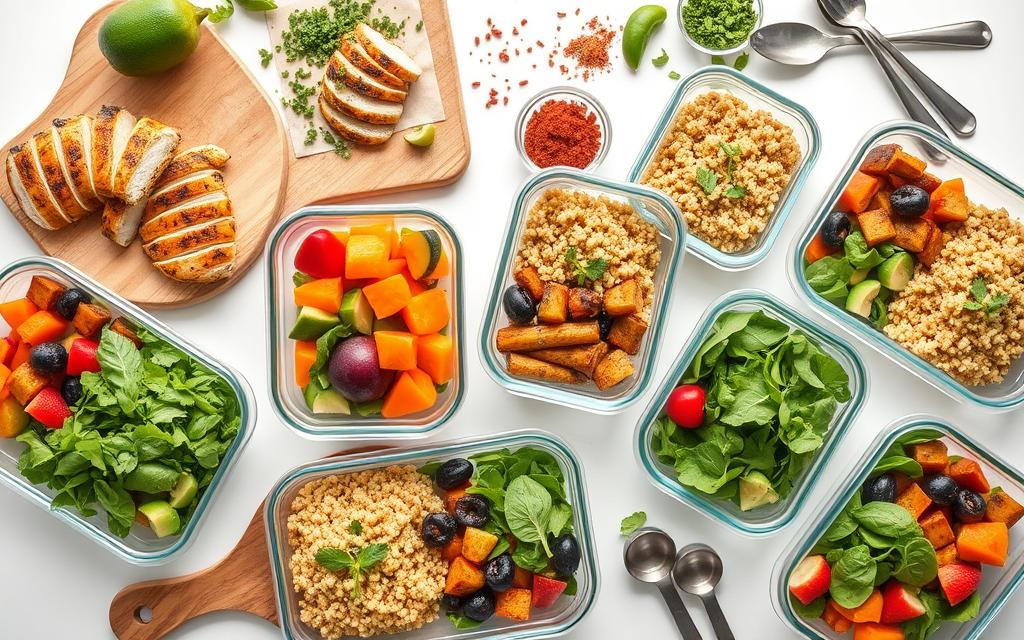
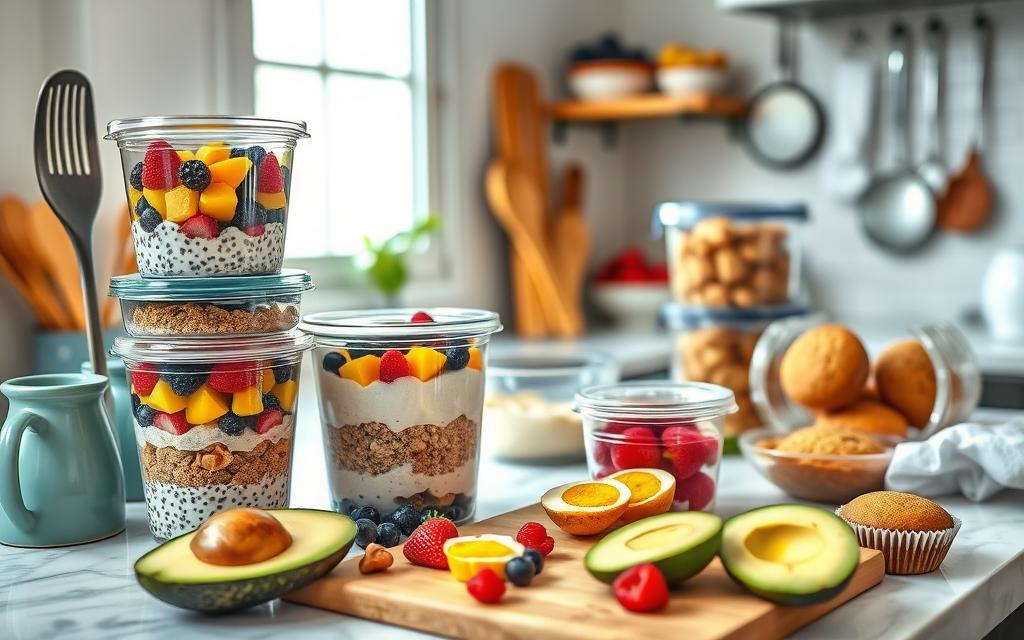
Starting a vegan or vegetarian diet can be done slowly. We can replace one meat or dairy product with a plant-based option each week. This makes it easier to adjust and helps us balance our diet over time18.

Finding Support for a Plant-Based Transition

Starting a plant-based diet can feel overwhelming. But, finding support makes it easier. Joining vegan support groups gives us great resources and encouragement. These groups are where we can share our experiences, recipes, and challenges.

Being part of a community is key to our success. Whether online or in-person, connecting with others helps us feel accountable and part of a group. Local centers host activities, cooking classes, and sessions that help us understand a community support for plant-based diet.

It’s important to know that many health organizations support plant-based diets. They highlight how these diets can lower disease risks and improve health20. These groups offer tips on meal planning and whole foods, helping us transition smoothly21.

Key Ingredients for Plant-Based Recipes

In our kitchen, we often use a variety of essential ingredients for plant-based cooking. These ingredients not only provide nutrition but also add flavor and creativity to our meals. Understanding these vegan cooking staples helps us make hearty and satisfying dishes.

Some common staples include lentils, chickpeas, quinoa, and various spices. For example, canned lentils help us meet our daily fruit and vegetable intake22. Dried lentils, which don’t need soaking, cook fast and are great for weeknight meals.

Quinoa is also a great choice because it has all essential amino acids, making it a complete protein source22. When paired with edamame, which gives almost 20% of daily fiber needs in just half a cup22, these ingredients offer many nutritional benefits.

Chickpeas are very versatile; we can make them in many ways, like in a quick hummus recipe that takes only 10 minutes23. Many recipes use canned tomatoes, garlic, and vegetarian chili seasoning for a rich flavor. With these ingredients, we can make meals like one-pot soups in about 20 minutes or hearty fritters in just 10 minutes23.

Each of these vegan cooking staples is crucial in our culinary adventures. They let us experiment and enjoy the rich diversity of plant-based cuisine. As we explore more plant-based recipes, we find that our meals can be both delicious and nourishing.

Common Misconceptions About Veganism

Many think vegan diets are low in protein. But, this is a common vegan myth. A varied vegan diet gets enough protein from legumes, tofu, and whole grains. It’s both nutritious and filling24.

Some believe vegan diets are too strict. They think you can’t enjoy your favorite foods anymore. But, eating small amounts of animal products can still meet your nutritional needs24.

Others think vegan diets are expensive. But, foods like beans and potatoes are often cheaper than meat. These foods were key in many historical diets24. Plus, even pricey fruits and veggies offer lots of nutrition in small amounts25.

Some worry vegan diets limit social dining. But, many restaurants now have plant-based options. This makes it easy to enjoy meals with friends and family24. Vegan diets can be both healthy and social25.

By debunking these myths, we can better understand vegan diets. This can lead to more acceptance and appreciation of plant-based eating.

Conclusion

Exploring the benefits of vegan diets shows they’re good for our health and the planet. A plant-based diet can lower blood pressure and cholesterol, reducing heart disease and Type II diabetes risks2627.

More people are choosing plant-rich diets, with a big increase in the last decade27. With the right plan and support, going vegan can be rewarding and healthy.

Going vegan can cut our carbon footprint by 50% and lower cancer risks by 40%26. This change is good for us and the planet.

FAQ

What is a plant-based diet?

A plant-based diet mainly includes foods from plants like fruits, veggies, nuts, seeds, and whole grains. It might also include legumes and beans. This diet often has little to no animal products, making it vegan or vegetarian.

What are the health benefits of a plant-based diet?

Eating plant-based can help you lose weight and improve your BMI. It also lowers cholesterol and heart disease risk. Plus, it might reduce cancer risks, thanks to eating more whole plant foods.

How can we ensure we get enough protein on a vegan diet?

Getting enough protein is key. Eat legumes, nuts, seeds, and soy products like tempeh and miso. There are many plant proteins that can meet our needs.

What nutrients should we be mindful of on a plant-based diet?

Watch out for Vitamins B12, D, calcium, iron, and zinc. These might be low in plant-based diets. Use fortified foods and supplements to avoid deficiencies.

How can we transition smoothly to a vegan diet?

Start by setting achievable goals and making a meal plan. Addressing challenges helps too. Slow changes make sticking to a vegan lifestyle easier.

What strategies can help us balance a vegan or vegetarian diet?

Rotate foods and check nutrient levels. Make sure meals have a variety of food groups. This keeps our diet balanced and healthy.

Are there misconceptions about following a vegan diet?

Yes, people often think vegan diets lack protein or are too strict. But, there are many nutritious vegan options. It’s important to share the truth about vegan diets.

How can we find support while transitioning to a plant-based diet?

Look for online and local support groups. Sharing our experiences and recipes helps build a community. This makes the transition more enjoyable.

What are some essential ingredients for plant-based cooking?

Must-haves include lentils, chickpeas, quinoa, tofu, and spices. These help make tasty, healthy meals. They keep our diet interesting and satisfying.