Monday, June 1, 2026
spot_img
Home Blog Page 8

The Link Between Gut Health and Your Diet

Modern life can make us forget about our gut health and diet connection. Have you ever thought about how food affects our health and mood? Our diet shapes the gut microbiome, which is key for our immune system and mood. Research shows diet greatly impacts our gut health1.

Making healthy food choices is more than just looking good. It’s about keeping our gut healthy and balanced with our overall well-being.

In this article, we explore the strong bond between gut health and diet. We’ll see how choosing our food wisely can boost our gut microbiome and improve our lives.

Key Takeaways

  • A thriving gut microbiome is crucial for overall health and well-being.
  • Our dietary choices significantly shape the diversity and function of gut microorganisms.
  • Dietary patterns like the Mediterranean diet offer protective benefits against various diseases.
  • High-fiber foods enhance gut health by fostering a diverse microbial community.
  • Understanding the connection between our food and gut health can empower better lifestyle choices.

Introduction to Gut Health

Understanding gut health is key to our overall well-being. It involves the health of our intestinal barrier and a balanced mix of bacteria. This balance is crucial for our body’s health.

A healthy gut has trillions of bacteria that protect us from harmful invaders. When our gut microbiome is balanced, different bacteria work together. This boosts our health and helps us fight off diseases2.

Dysbiosis, or an imbalance of bacteria, can cause many health issues. These include stomach problems and inflammation2. Signs of gut health problems include bloating, gas, and stomach pain. These can turn into serious chronic conditions3.

Our lifestyle, stress, and diet greatly affect our gut health. Most Americans don’t get enough fiber, which is important for digestive health3.

Choosing a gut-friendly diet can greatly improve our health. Eating right helps prevent dysbiosis, which is linked to diseases like Inflammatory Bowel Disease (IBD)2. Our diet is crucial for keeping our digestive system healthy.

Understanding the Gut Microbiome

The gut microbiome is a huge community of tiny life forms that are key to our digestive health. Inside our intestines, there are about 3.8 × 10^13 microbes. This number is much higher than the number of our host cells, which is around 3.0 × 10^134. These tiny beings help break down our food and absorb nutrients, showing how what we eat affects our gut.

What is the Gut Microbiome?

Every person has at least 160 types of microorganisms from a total of 1150 that can live in our gut. The most common ones are Firmicutes and Bacteroidetes, making up about 90% of our gut microbiota4. A healthy gut microbiome is important for our overall health. But, an imbalance, or dysbiosis, can lead to problems like obesity, diabetes, and inflammatory bowel disease (IBD)4.

The Role of Microorganisms in Digestion

Microorganisms in our gut are crucial for digesting food, like dietary fibers. They also make short-chain fatty acids (SCFAs), which are good for us. Eating foods high in fiber, like raw garlic or legumes, helps our gut microbiota make SCFAs. These SCFAs can make our intestinal lining stronger5.

A diet low in fiber can harm our beneficial microbes and increase harmful ones. This shows how important it is to eat foods that support our gut health to keep our digestion balanced5.

The Importance of a Healthy Gut

A healthy gut is key for our overall health. It’s the base of our immune system, metabolism, and mental health. The gut is about 20 to 24 feet long, home to trillions of microbes. These microbes help digest food and affect our mood and thinking through the gut-brain axis67.

Connection to Overall Health

Good gut health is essential for our health. About 90% of serotonin, which helps us feel good, is made in the gut7. A diverse gut microbiome helps us digest food better and absorb nutrients. It also protects us from health problems like allergies and depression7.

Poor gut health can cause heartburn, stomach pain, constipation, or diarrhea6. Research shows that an imbalanced gut microbiome is linked to obesity and inflammatory bowel disease (IBD)8.

Impact on Immunity and Metabolism

Keeping our gut healthy is vital for our immune system and metabolism. Eating foods high in fiber, like veggies, beans, nuts, and whole grains, is important for gut health7. Bad gut health can lead to more inflammation, weakening our immune system7.

Getting enough sleep, staying hydrated, and eating fermented foods can greatly improve our gut health6. Our diet can quickly affect our gut, causing gas or bloating within 24-48 hours6.

gut health

The Impact of Diet on Gut Microbiota Composition

Our diet greatly affects the balance of gut bacteria. It influences the variety and function of microbes in our gut. Knowing how different nutrients impact this balance is key to good gut health.

How Macronutrients Shape Our Microbiome

Macronutrients like proteins, fats, and carbs have unique effects on our gut bacteria. For example, people eating more protein and animal fats tend to have more Bacteroides and Firmicutes. On the other hand, vegetarians often have more Prevotella.

The way we eat has changed a lot over the years. This has made our gut bacteria less diverse9. Hunter-gatherers, who mostly eat plants, have healthier gut bacteria9.

Dietary Fiber and Its Role

Dietary fiber is very important for a healthy gut. It helps grow good bacteria like Bifidobacterium and Lactobacillus10. It also makes short-chain fatty acids, which are energy for our gut cells and keep them healthy11.

Eating fiber can also lower the risk of colon cancer. It helps remove toxins by making our stool bulkier11.
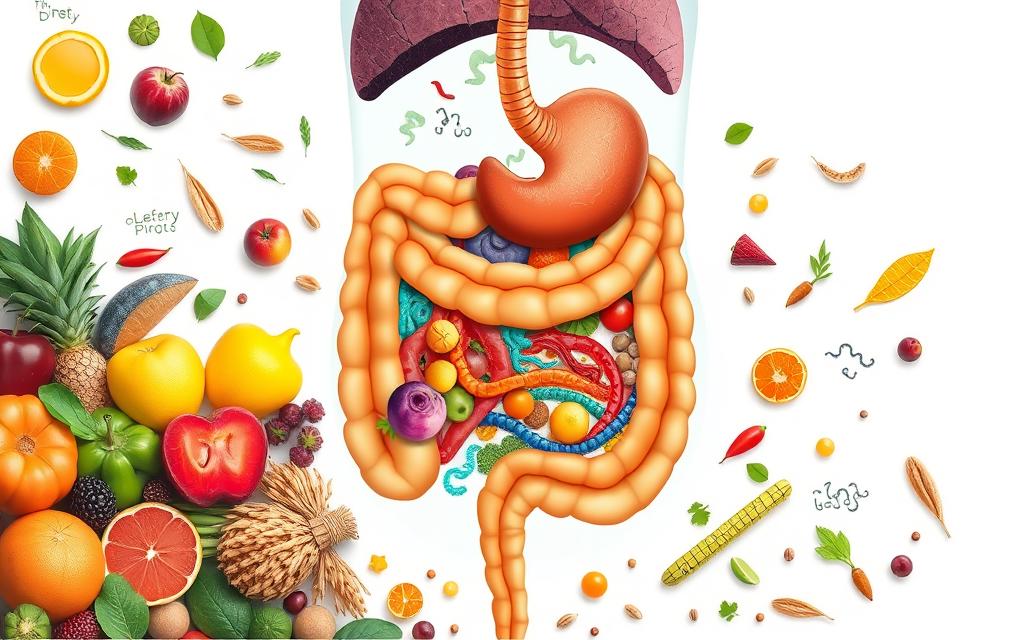
dietary fiber and gut microbiota composition

Gut Health and Your Diet: Key Dietary Components

To keep our gut healthy, we need to eat certain foods. These foods help good bacteria grow and improve our health. Eating foods that are good for our gut can help us digest better and keep our gut balanced.

Essential Foods for Gut Health

We should eat foods rich in fiber and fermented foods. These include:

  • Vegetables: Foods like avocados and sweet potatoes are full of fiber. They help us meet the daily fiber goal of 22-38 grams.
  • Fruits: Raspberries and blackberries are not only high in fiber but also in polyphenols. These can make our gut healthier.
  • Whole grains: Oats and brown rice are great for fiber. They help our digestive system work well.
  • Fermented foods: Yogurt and sauerkraut add good bacteria to our gut. This keeps our gut microbiome healthy.
  • Cold water fatty fish: Salmon and mackerel are full of omega-3s. These can reduce inflammation in our gut.

Identifying Gut-Healthy Foods

It’s important to know which foods are good for our gut. Here are some tips:

Food Category Examples Key Benefits
High-Fiber Vegetables Avocados, Sweet Potatoes Supports digestion, promotes regularity
Fruits Rich in Polyphenols Raspberries, Blueberries Aids in reducing inflammation
Whole Grains Oats, Brown Rice Enhances gut microbiota diversity
Fermented Foods Yogurt, Sauerkraut Boosts probiotic intake
Omega-3 Fatty Fish Salmon, Mackerel Improves gut wall integrity

Eating these foods helps us have a healthy gut. It leads to a better lifestyle. Whether it’s through planning meals or snacks, choosing gut-healthy foods improves our digestion and overall health.

gut-healthy foods

The Role of Prebiotics and Probiotics

Understanding prebiotics and probiotics is key for a healthy gut. Probiotics are live bacteria in foods or supplements that help our good bacteria. Prebiotics, like high-fiber foods, feed these microbes. Both are vital for a healthy gut and overall health.

The Difference Between Prebiotics and Probiotics

Probiotics are in foods like yogurt and sauerkraut, helping keep our gut balanced. They can help those with gut issues like IBS or IBD, affecting 1.3% of Americans12. Prebiotics, like whole grains and bananas, feed the good bacteria in our gut13. Most adults can safely add both to their diet, with rare side effects13.

How to Incorporate into Your Diet

Adding prebiotics and probiotics to meals is easy. Here are some ways to boost your gut health:

  • Breakfast: Oatmeal with banana slices (prebiotic) and yogurt (probiotic).
  • Lunch: A salad with onions, garlic, and sauerkraut.
  • Dinner: Whole grain pasta with garlic sauce and grilled veggies.

Studies show prebiotics can grow good bacteria by up to 70%12. Eating a variety of prebiotics can also increase beneficial bacteria, as most adults don’t eat enough variety12. Combining prebiotics and probiotics, or synbiotics, can improve gut health by 50-60%12.

prebiotics and probiotics for gut-friendly diet

Food Source Type Gut Health Benefits
Yogurt Probiotics Improves digestion and boosts immune response
Sauerkraut Probiotics Supports gut microbiome diversity
Garlic Prebiotics Nourishes beneficial bacteria
Bananas Prebiotics Aids in digestion and promotes bowel health
Whole Grains Prebiotics Enhances nutrient absorption and gut function

Adding prebiotics and probiotics to your diet is easy and beneficial. These foods are great for our digestive health, leading to overall well-being14.

Maintaining Digestive Health with Nutritional Choices

Our diet greatly affects our digestive health. Choosing the right foods can boost our gut health and overall well-being. We’ll look at the best foods for digestion and the ones to avoid for a healthy diet.

Foods to Embrace for Optimal Digestion

Eating a high-fiber diet is key for good digestion. Aim for at least 30 grams of fiber daily. Sadly, only 10% of U.S. adults meet this goal. Foods like whole grains, nuts, fruits, and veggies are vital for a healthy gut.

Fermented foods, like yogurt and kefir, are also great. They add important probiotics to our gut, helping keep it balanced1516.

Foods to Avoid for Gut Health

Some foods can harm our digestion. Avoid processed foods, which are full of bad stuff like emulsifiers and artificial ingredients. These can upset our gut and cause inflammation1716.

Stay away from foods high in sugar and fats too. They can mess with our gut health and make digestion worse. Spicy foods can cause heartburn in 30% of people, and acidic foods like tomatoes and citrus fruits affect 15%15.

Many people experience bloating and irritable bowel syndrome from cereals and grains. This affects about 25% of people15. So, picking our food carefully is crucial.

digestive health diet

Effects of Dietary Fats on Gut Microbiome

Dietary fats have a big impact on our gut microbiome. There are two main types: healthy fats and unhealthy fats. Healthy fats, like those in avocados and nuts, help our gut bacteria. Unhealthy fats, found in processed foods, can upset the balance of our gut microbiome.

Healthy vs. Unhealthy Fats

Healthy fats, like omega-3s, improve our gut health. They help balance the Firmicutes/Bacteroidetes ratio. Eating more healthy fats can make our gut microbiome better, leading to better health.

On the other hand, eating too much fat, like saturated fats, can harm our health. It can lead to obesity and diabetes18.

How Fats Influence Gut Health

Fats also affect how we feel full or hungry. Healthy fats help us feel full by sending signals to our brain. Unhealthy fats, like those in processed foods, make us want to eat more.

High-fat diets can mess with how our gut talks to our brain. This can make us eat more than we should18. Studies show that eating less fat can make our gut bacteria more balanced19.

What we eat is key to keeping our gut healthy. Choosing healthy fats is good for our digestion and overall health.

Research shows cutting down on fat can fix problems with appetite control18.

The Role of Proteins in Gut Health

Understanding how proteins affect gut health is key to a good diet. The type of protein we eat greatly influences digestion and gut health. Choosing the right protein sources is crucial for better health.

Types of Proteins and Their Digestibility

Protein digestibility varies by source. Animal proteins are usually easier to digest than plant proteins. About 90% of protein is absorbed in the small intestine, showing how well our bodies use it20. But, the digestibility can change based on the protein’s origin, affecting how much is left undigested20.

High-quality proteins, like those from legumes, lean meats, and fermented dairy, are good for gut health. They help create a diverse microbiome and meet our protein needs.

Protein-Rich Foods Beneficial for Gut Microbiome

Adding certain protein-rich foods to our diet can boost gut health. Legumes and lean meats help produce good metabolites and reduce harmful ones. A diet high in protein but low in fiber can lead to bad metabolites and health problems21.

The quality of proteins affects the metabolites released, impacting gut microbiota diversity22. It’s important to eat enough fiber with protein-rich foods. This balance helps keep the microbiome healthy and prevents inflammation from high protein diets21.

Consequences of Unbalanced Diets

Unbalanced diets can harm our gut health, causing dysbiosis—a big imbalance in gut bacteria. This imbalance can lead to serious health issues, like inflammatory bowel disease (IBD). It’s important to know this to make better food choices.

Dysbiosis and Its Health Implications

Dysbiosis comes from eating the wrong foods, affecting our gut’s bacteria. Each person has about 200 types of bacteria, viruses, and fungi in their gut. A healthy diet keeps these in balance, helping us stay well.

But, eating too much sugar and not enough fiber can harm our gut. This can cause inflammation and weaken our immune system23. Symptoms of dysbiosis include stomach problems, trouble absorbing nutrients, and feeling tired24. It’s also linked to metabolic and inflammatory diseases, showing we need to eat better25.

Connection between Diet and Inflammatory Bowel Disease (IBD)

Eating foods low in fiber can increase the risk of IBD. Our food choices are key in preventing this disease25. Research shows that eating more fiber can lower the risk of IBD and colon cancer25.

Fiber helps good bacteria grow, making short-chain fatty acids. These acids are good for our gut and overall health23. But, eating too much protein can upset this balance, leading to health problems25.

Gut Health Tips for a Balanced Diet

To have a strong digestive system, we must add gut health tips to our daily routine. Making a meal plan that’s good for our gut is key. This helps our gut microbiome and boosts our gut health. Here are some easy ways to eat well and focus on gut wellness.

How to Create a Gut-Friendly Meal Plan

To make a meal plan that’s good for your gut, eat foods rich in prebiotics and probiotics. Foods like plain nonfat Greek yogurt are full of good bacteria. They help our immune system and give us protein.

Adding fermented foods like kefir to our diet daily can also help. It makes our gut microbiome better, lowers inflammation, and helps with heart health26. Including artichokes and dragon fruit in our meals adds fiber. This helps with digestion and feeds the good bacteria in our gut26.

Practical Tips for Improving Your Gut Health

To better our gut health, we should drink plenty of water, eat enough fiber, and manage stress. Men should drink about 125 ounces of water a day, and women about 91 ounces27. Eating 25 grams of fiber a day for women and 38 grams for men helps our digestion27.

Adding mushrooms and oats to our diet can quickly improve our gut microbiome because of their fiber. It’s also important to cut down on ultra-processed foods, added sugars, and preservatives. These can harm our gut health27.

By following these tips, we can make a meal plan that’s great for our gut. Simple changes like staying active and eating mindfully help us on our way to a healthier gut2627.

Exploring the Future of Nutritional Science

We are on the edge of big changes in nutritional science that could change how we see gut health. New emerging research shows the gut microbiome is complex, with over 100 bacterial species and more genes than our genome. Our gut microbiota can differ a lot, making it hard to define what’s “normal”28. Changes in diet can quickly alter our gut microbiota, showing the link between what we eat and our health28.

This connection highlights the importance of personalized nutrition. It shows how our dietary choices affect our gut health.

Emerging Research on Gut Microbiome

Studies now show that eating lots of fiber, like fruits and whole grains, boosts our immune system. This is because fiber makes short-chain fatty acids (SCFAs)28. Diets like the Mediterranean and green Mediterranean diets also change our gut bacteria for the better29.

For example, the Mediterranean diet increases good bacteria like Faecalibacterium prausnitzii and lowers bad bacteria29. This research shows that diet can affect us differently, making personalized nutrition key29.

Potential Dietary Interventions

Understanding how diet affects our gut microbiota is growing. High-fiber diets can lower the risk of diseases like type 2 diabetes and some cancers29. Also, eating fermented foods regularly might have health benefits, but we need to study them more30.

Studying how our gut and host interact is still in its early days. We need more research to understand its health effects30. This could lead to a future where tailored diets play a big role in keeping our gut healthy.

Conclusion

Taking care of our gut health and diet is key to feeling our best. Our gut is home to trillions of microorganisms, which help our body work right and keep us healthy31. What we eat greatly affects these tiny helpers, with fiber being a big supporter of good bacteria and a foe to bad ones31.

Eating a variety of fruits, veggies, and whole grains can boost our gut health. This, in turn, can make us feel better physically and mentally. It’s all about making smart food choices that help our gut thrive.

It’s also important to know how processed foods, not enough sleep, and not moving enough can harm our gut32. Drinking enough water and using probiotics wisely can help our gut, too, like after we’ve taken antibiotics31. Let’s focus on making better food choices to keep our gut happy and healthy.

FAQ

How does my diet affect gut health?

Our diet is key to our gut health. The foods we eat can help our gut bacteria stay balanced. Eating foods rich in prebiotics and probiotics can greatly improve our gut health.

What are prebiotics and probiotics?

Prebiotics are fibers that feed good gut bacteria. Probiotics are live bacteria in fermented foods. Both are vital for a healthy gut and digestion.

What are some gut-healthy foods I should include in my diet?

Focus on high-fiber foods like fruits, veggies, and whole grains. Also, eat fermented foods like yogurt and sauerkraut. These foods help our gut bacteria thrive.

How can I improve my gut health?

Eat more fiber, cut down on sugar and processed foods. Include prebiotics and probiotics in your diet. Stay hydrated and manage stress to boost digestive health.

What are the consequences of poor gut health?

Bad gut health can cause many problems. It can lead to digestive diseases, inflammation, and even obesity and IBD. Eating right and keeping a healthy gut is crucial.

Are there specific dietary patterns that can promote gut health?

Yes, a gut-friendly diet focuses on whole foods like fruits, veggies, and nuts. Avoid processed foods and unhealthy fats. This diet supports a healthy gut microbiome.

How do dietary fats influence gut health?

The fats we eat matter. Healthy fats like those in avocados are good for our gut. But unhealthy fats can harm our gut health.

Can dietary changes really impact my mental health?

Yes! Our gut and brain talk to each other. A healthy gut can help our mental health, reducing anxiety and depression.

What role does fiber play in gut health?

Fiber is essential for our gut. It feeds good bacteria and makes anti-inflammatory compounds. A fiber-rich diet boosts our digestive health.

How can I create a gut-friendly meal plan?

Make a gut-friendly meal plan by eating a variety of healthy foods. Include fruits, veggies, whole grains, and fermented foods. Reduce processed and sugary foods to improve your gut health.

What I Eat in a Day: A Nutritionist’s Guide to Healthy Living

Once, I felt lost in a sea of diet advice. From quick fixes to timeless wisdom, it was hard to know what to follow. But, the real secret to a healthy life isn’t about chasing trends. It’s about making choices that respect our bodies.

Our journey showed us that nutrition’s guide is simple. A diet full of whole foods can boost our health and clear our minds. By sharing our daily meals, we aim to encourage others to find a healthy eating plan that fits their life. We focus on the importance of each ingredient in our meals.

This is our quest for wellness. It starts with the choices we make at every meal.

Key Takeaways

  • Understanding a balanced diet is crucial for overall health.
  • Informed meal choices can enhance physical and mental well-being.
  • The journey to wellness is about progress, not perfection.
  • Whole foods are the foundation of a nutritious and satisfying diet.
  • Every meal is an opportunity to nourish our bodies effectively.

The Importance of a Balanced Diet

Eating a balanced diet is key for our health. It gives us the nutrients we need and helps us stay energetic. By following nutritional guidelines, we can avoid diseases like heart disease and diabetes. These are big health risks today.

Adults need about 2,500 calories a day, while women should aim for 2,000. We should get these calories from different foods to meet our nutritional needs.

Adding some nutrition tips can help us eat better. We should eat starchy carbs for over a third of our food. Our plates should have at least 5 portions of fruits and veggies daily. A portion is 80g of fresh produce or 150ml of juice1.

We should also eat healthy proteins like fish, beans, and nuts. They are important in our diet.

To have a balanced diet, veggies and fruits should fill half our plates. Whole grains should take up a quarter. Healthy proteins should fill the last quarter2. It’s important to eat less red meat and processed meats for our health and the planet.

We should drink 6 to 8 glasses of water or unsweetened drinks a day. We should limit sugary drinks for our health2.

Following nutritional guidelines is very important. They help us make better food choices. A balanced diet boosts our energy and overall health. It also helps the environment, as food production affects greenhouse gas emissions3.

Understanding Healthy Eating Plans

A healthy eating plan is key for our well-being. It focuses on whole foods like fruits, veggies, healthy fats, whole grains, and lean proteins. Knowing the importance of these foods helps us make better choices.

Creating a healthy eating plan should fit our individual needs and lifestyle. This includes our activity level and any dietary restrictions.

Up to 80% of premature heart disease and stroke can be prevented through lifestyle choices, including a healthy diet and physical activity.

Following diet advice helps us create plans that meet our specific needs.

Studies show making small changes over time can greatly improve our health. Switching to healthier diets can lead to better health in a few months. Keeping calorie balance is key for weight management, as over 70% of nutritionists agree4. About 60% of people who understand calorie principles see weight loss success4.

Knowing our nutritional guidelines helps us choose the right foods. We should eat half our plate with veggies and fruits. Adding whole grains and proteins is also important. For example, eating three meals a day with healthy snacks in between helps avoid unhealthy food choices5.

healthy eating plan

We should cut down on added sugars, as the 2020-2025 Dietary Guidelines suggest. Measuring food portions with our hands helps manage calories. This ensures we eat a variety of foods in each meal. This approach helps us adopt healthier eating habits for life6.

Food Group Recommended Portion Benefits
Fruits and Vegetables 50% of our plate Rich in vitamins, minerals, and fiber
Whole Grains 25% of our plate Provides fiber, protein, and B vitamins
Protein 25% of our plate Essential for muscle and bone health; include fish

Starting a healthy eating plan takes time and effort. But, the benefits will improve our life quality.

Nutritional Guidelines for Everyday Eating

Nutritional guidelines are key to our daily eating habits. They encourage us to eat a variety of nutrient-rich foods. The plate model suggests filling half our plate with veggies and fruits, a quarter with whole grains, and the rest with healthy proteins.

By following these guidelines, we can improve our health and live longer. This approach helps us stay full of energy and vitality.

The Dietary Guidelines for Americans have changed over time. The 1980 guidelines had seven recommendations, a trend that continued in the 1985 and 1990 versions7. The 1995 guidelines focused on balanced eating and healthy weight7. In 2000, they expanded to ten guidelines for different nutritional needs7.

By 2005, the guidelines grew to 41 key recommendations. They were tailored for everyone and specific groups7.

Healthy eating plans include specific fruit and vegetable intake. Adults should eat 2 cups of fruit and 2½ to 2.5 cups of vegetables daily. This is according to the American Heart Association and the Dietary Guidelines78.

Whole grains should make up half of our grain intake. We should aim for 3 or more ounce-equivalents per day78.

Dairy intake should be about 3 cups daily, with a focus on low-fat or fat-free options. Protein should come from both plant and animal sources78.

It’s important to manage our fat intake. Total fat should be 20% to 35% of total calories. Saturated fats should be less than 10%7. Regular exercise also boosts the benefits of a balanced diet. Adults should aim for at least 30 minutes of moderate-intensity exercise most days7.

Nutritional guidelines for healthy eating

Nutrition’s Guide: Building Healthy Meals

Learning to make healthy meals is key for our health. It begins with knowing the important food groups we need. A balanced diet keeps our bodies strong and gives us energy for the day.

Adding colors and variety to our meals boosts nutrition and makes them look good. This way, we get the most nutrients and enjoy our food more.

Essential Food Groups

To make a balanced meal, focus on these food groups:

  • Fruits: Mix different colors and types for a variety of vitamins.
  • Vegetables: Add leafy greens and other veggies for fiber and nutrients.
  • Whole Grains: Pick brown rice or quinoa over white rice for more fiber.
  • Proteins: Choose animal or plant-based proteins based on what you like.
  • Healthy Fats: Use avocados, nuts, and olive oil for flavor and nutrition.

Portion Control and Meal Composition

Controlling portions is crucial for a balanced diet and managing calories. The “MyPlate” guide helps us fill half our plates with fruits and veggies. The other half should be grains and proteins.

A traditional steak meal can have 1,500 calories. But, a balanced steak dinner with variety can have about 700 calories. These changes help us feel full and stay healthy.

Food Type Typical Calories Balanced Approach Calories
Restaurant Steak Meal 1,500 700
Typical Burrito with Sides 1,000+ Under 750
Conventional Diner Breakfast 700 400

Eating a variety of nutrient-rich foods improves our health and life span. As we learn more about food, planning our meals becomes more important. This lets us adjust our diet to meet our needs and goals69.

nutrition's guide

Meal Planning Tips for Busy Lives

Many of us choose quick takeout meals because of our busy lives. This choice can lead to eating more calories and gaining weight10. Meal planning is a great way to save time, reduce stress, and improve our health11. Planning meals helps us make healthier choices, with 75% of people avoiding unhealthy options10.

Setting aside a day for meal prep can help us stay on track 80% of the time10. Preparing proteins like roasted chicken or ground turkey 3-4 days in advance11 makes quick meals easy. Having pre-cooked starches like brown rice or quinoa ready also helps.

Meal planning can even cut our grocery bills by up to 30%12. It saves us 7-15 hours of meal prep time each week10. Cooking in bulk saves time and reduces food waste by 30% through better storage and planning12.

meal planning

Having 3-4 staple breakfast options that include protein, healthy fats, and complex carbs simplifies mornings11. With the right strategies, like dedicating just 15 minutes for meal prep, 65% of busy people find it easier12.

The Role of Water and Hydration

Water is crucial for our body’s functions and health. About 60% of an adult’s body is water13. The National Academy of Medicine suggests that men drink 13 cups (104 ounces) of fluids daily. Women should aim for 9 cups (72 ounces)13.

Food, like fruits and vegetables, can also contribute to our hydration. They provide about 20% of our daily water intake14.

hydration

Hydration is key for digestion, nutrient absorption, and energy. Dehydration can lead to urinary tract infections and kidney stones14. It can also lower physical performance, needing 1 cup of water every 15-20 minutes for workers14.

  • Newborns: Water makes up about 75% of their body weight.
  • Adults: The percentage drops to around 55% in the elderly.
  • In the United States, an average of 22% of daily water intake is from food15.

To increase our water intake, we can try infused or flavored water. It’s a tasty way to avoid sugary drinks14. Adding fruits like lemon, cucumber, and berries can make it more appealing. Sparkling water is also a good choice if it’s unsweetened.

Remembering to drink enough water is vital for a balanced diet. It’s important for our overall health and well-being1315.

Incorporating Healthy Fats in Your Diet

Healthy fats are key to a balanced diet. They give us energy and help our cells work right. They also help us absorb important vitamins. To stay healthy, eat foods like olive oil, avocados, and nuts. But, cut down on trans fats.

Experts say healthy fats should be 20% to 35% of our daily calories. Saturated fats should be less than 10%16.

Healthy fats fight fatigue, improve mood, and boost brain function17. Eat fatty fish like salmon at least twice a week. Omega-3 rich foods, such as eggs and soy drinks, are also good choices16.

Nuts are another excellent option. A small serving of nuts, about 1 ounce, has 160 to 180 calories. They add good fats to our diet16.

To keep our hearts healthy, we should keep LDL cholesterol low and HDL high17. The World Health Organization wants us to avoid trans fats. Choosing healthy fats is crucial for our heart health17.

The Benefits of Whole Grains

Adding whole grains to our meals offers many health benefits. They help lower disease risk and boost nutritional intake. Whole grains are packed with fiber and essential nutrients, making them key to a healthy diet.

Types of Whole Grains

Some common whole grains are:

  • Quinoa
  • Brown rice
  • Whole-wheat bread
  • Barley
  • Oats

Choosing these grains helps us meet our health goals. They also make our meals more varied and follow dietary guidelines.

Whole Grains vs. Refined Grains

Whole grains and refined grains differ significantly. Whole grains keep all parts of the grain, offering fiber and nutrients. Refined grains, on the other hand, lose much of their nutritional value during processing.

Dietary guidelines recommend that half our grain intake should be whole grains18. Sadly, most Americans don’t meet this goal19. Studies show that eating three servings of whole grains daily can cut heart disease risk by 22%20.

More whole grain intake also lowers type 2 diabetes risk and mortality rates1819. This highlights the importance of choosing whole grains over refined ones in our meals.

Health Benefit Statistic
Lower Risk of Heart Disease 22% lower with three servings daily
Reduced Mortality Risk 22% lower risk for those eating 70 grams daily
Lower Risk of Type 2 Diabetes 30% reduction for those consuming 2-3 servings
Protective Effect Against Colorectal Cancer 21% risk reduction

Adding a variety of whole grains to our diet is good for our health. It aligns with healthy eating plans and provides essential nutrients. By choosing whole grains wisely, we improve our diet and health outcomes18.

Fruits and Vegetables: A Must-Have

Eating a variety of fruits and vegetables is key for a balanced diet. Research shows that eating more fruits and veggies can lower heart disease risk by 4% for each serving21. It’s best to get most of our fruit from whole fruits, not juices, for better nutrition22.

We should aim for 8 or more servings of fruits and veggies every day. This can lower heart attack or stroke risk by 30% compared to eating less21. Eating over 5 servings daily can also cut coronary heart disease and stroke risk by 20%21.

Fruits and veggies are good for our hearts and can help fight cancer. The Nurses’ Health Study found no big drop in cancer risk for those eating the most fruits and veggies21. But, premenopausal women eating 3 servings of fruit a day had a 25% lower breast cancer risk21.

The DASH study showed that a diet rich in fruits and veggies can lower blood pressure by 11 mm Hg21. Adding healthy fats or proteins can make this effect even stronger21.

To hit our fruit goals, we can use simple serving size guides. For example, one large banana, 22 grapes, or a cup of fresh blueberries count as one standard cup22.

Mixing up our non-starchy veggies and fruits can make our diet richer and protect against cancers like mouth, throat, and stomach cancers21. Adding these nutrient-rich foods to our meals can lead to a healthier life.

Protein Sources: Making Healthy Choices

Making smart choices about protein sources can boost our health. It’s key to pick between animal and plant-based proteins for a balanced diet. Each option has its own benefits, fitting our lifestyle and nutritional needs.

Animal vs. Plant-Based Proteins

Animal proteins like poultry, fish, and lean beef are packed with essential amino acids. A half chicken breast has about 26.7 grams of protein, a big plus for our diet23. Plant-based proteins from beans, lentils, and quinoa also offer great protein. For example, one cup of cooked lentils has around 9.02 grams of protein, showing their value in a healthy diet23. The American Heart Association suggests eating plant-based proteins and some fish for omega-3 fatty acids24.

Balanced Protein Intake Throughout the Day

We need to eat the right amount of protein all day to keep our energy up and muscles strong. Aim for about 30 grams of protein per meal. Daily protein needs change with age and gender. Toddlers need 2 oz-equiv, while kids aged 2-3 should get 2 to 4 oz-equiv25. For girls aged 9-13, it’s 4-6 oz-equiv, and for boys aged 14-18, it’s 5½ to 7 oz-equiv25. Knowing these amounts helps us meet our nutritional needs at every meal.

Protein Source Protein Content (grams)
Chicken Breast (1/2 breast) 26.7
Greek Yogurt (200 g) 19.9
Cooked Lentils (1 cup) 9.02
Salmon (1/2 fillet) 30.5
Cottage Cheese (1 cup) 28
Almonds (1 oz) 6

Nutritional Education: Learning About Your Food

Nutritional education is key in making smart food choices and knowing how diet impacts health. By understanding the Nutrition Facts label, we can make better choices about calories, serving sizes, and sugars. This knowledge helps fight diseases like obesity and heart disease26. The new Nutrition Facts label helps us grasp these details better, making it vital for healthy eating27.

There are many resources to help health educators share important info. Materials and videos can help explain food labels, teaching us how to pick healthier foods26. The Health Educator’s Nutrition Toolkit aims to teach people how to use labels well, helping them eat a balanced diet26.

When we aim for a balanced diet, programs like the 30-Day Fruit and Veggie Challenge show us the value of eating a variety of fruits and veggies27. Knowing how sodium affects health also makes us read labels more carefully to cut down on it. This helps not just individuals but also families and communities as they start eating healthier together26.

Healthy Eating Tips for Long-Term Success

To keep our health journey on track, we need to focus on good nutrition. A key part of this is meal planning. It helps us make smart food choices that we can stick to. By planning our meals, we can avoid getting bored and stay on track with dietary recommendations.

Studies show that eating off smaller plates can help us feel full and eat less. This is a great tip for anyone trying to manage their weight28.

Cooking at home is also important, and it’s good for kids too. It can make our diets better and help prevent obesity28. Adding lots of fruits and veggies to our meals makes them look good and gives us more nutrients. Try to include a variety of colors, like dark greens and bright fruits, to get all the vitamins and minerals we need29.

It’s also important to eat slowly. It takes about 20 minutes for our brains to tell us we’re full. Eating mindfully can help us control how much we eat28. Foods high in fiber, like legumes and whole grains, can also help us feel full and keep our blood sugar stable29.

Lastly, eating foods high in protein, like Greek yogurt, can help us eat less throughout the day28. By following these tips, planning our meals well, and sticking to good dietary recommendations, we can make lasting changes for our health.

Nutrition Tips Benefits
Meal Planning Helps control portions and reduces impulsive eating
Cooking at Home Improves diet quality and lowers obesity risk
Eat Slower Allows time for fullness signals to reach the brain
Fiber-Rich Foods Promotes satiety and assists in blood sugar control
High-Protein Meals Assists in appetite control and reduces calorie consumption

By following these tips, we can start a healthier lifestyle and achieve long-term success with our diet.

Conclusion

Understanding and using a nutrition guide can really change how we eat every day. A healthy eating plan gives us all the nutrients we need for energy and health. Studies show that good nutrition is key for kids’ growth and learning, setting them up for a healthy life30.

By following this guide, we can live healthier and happier lives. It helps us start eating well early on30.

Also, to fight diet-related diseases, the Dietary Guidelines for Americans suggest cutting down on added sugars, saturated fats, and sodium. This promotes a balanced diet31. With good school nutrition programs and nutrition education, we can make our community healthier30.

In the end, focusing on a balanced diet and making smart food choices leads to a better future for us and our kids.

FAQ

What is a balanced diet, and why is it important?

A balanced diet has a mix of foods in the right amounts. It gives us the nutrients we need to stay energetic and healthy. Eating this way helps prevent diseases and keeps our weight in check.

How can I create a healthy eating plan that caters to my needs?

To make a healthy eating plan, think about your health needs, how active you are, and any food limits you have. Eat whole foods like fruits, veggies, whole grains, lean proteins, and healthy fats.

What are some essential nutritional guidelines for everyday eating?

For good nutrition, eat half your plate with fruits and veggies. Use a quarter for whole grains and the last quarter for protein. This helps you stay healthy and live longer.

How do I effectively plan meals when I have a busy schedule?

Plan meals by preparing ingredients early and cooking batches of recipes. Use pantry items for quick meals. This makes eating healthy easier, even when you’re busy.

Why is hydration important in a balanced diet?

Drinking enough water is key for your body’s functions, digestion, and absorbing nutrients. Stick to water, teas, or coffee without sugar to stay hydrated.

How can I incorporate healthy fats into my diet?

Choose healthy fats like olive oil, avocados, and nuts. Avoid trans fats. Adding these fats to your meals supports your health.

What are the benefits of consuming whole grains?

Whole grains give you nutrients and fiber, boosting your energy and health. Learn about grains like quinoa and brown rice to improve your diet.

How can I ensure I am consuming enough fruits and vegetables daily?

Make sure to eat a lot of colorful fruits and veggies. They’re packed with nutrients and help prevent diseases, keeping you healthy.

What are the best sources of protein for a balanced diet?

Go for lean meats like poultry and fish, or plant-based options like beans and lentils. Eating protein at regular times keeps your energy up and supports muscles.

How does nutritional education affect my eating habits?

Learning about food helps you make better choices. It lets you eat a balanced diet and reach your health goals.

What should I focus on for long-term success in healthy eating?

For lasting success, plan meals that you can stick to, be flexible with food, and try new things. Keep learning about nutrition to stay motivated.

The Ultimate Guide to Eating Clean and Feeling Great

We’ve all been there, standing in front of the pantry, wondering what to choose. The brightly colored packages promise quick fixes and health benefits. But eating clean is more than a diet; it’s a journey to nourish our bodies and regain our energy.

It’s about changing how we think, focusing on whole foods that help us, not harm us. As we dive into this clean eating guide, remember, every small step counts. It can lower the risk of obesity and heart disease, linked to too much sugar in processed foods.

We invite you to join us on this journey. Together, we’ll discover the “how” and the “why” behind a healthy lifestyle. It’s about putting our health and happiness first12.

Key Takeaways

  • Clean eating promotes better overall health and reduced heart disease risk.
  • Whole foods are packed with essential nutrients compared to processed options.
  • Transitioning to whole foods helps manage blood sugar levels, preventing diabetes.
  • Meal preparation can lead to healthier eating habits and reduced cravings.
  • Shopping for fresh produce supports local farmers and provides seasonal benefits.

What is Clean Eating?

Clean eating means eating whole, unprocessed foods. It’s about adding fruits, veggies, whole grains, lean proteins, and healthy fats to our meals. We should also cut out foods high in sugar and unhealthy additives.

About 50% of people say they follow clean eating. They avoid processed foods, eat fresh produce, and choose organic options with simple ingredient lists3.

Choosing foods with clean ingredients is key to clean eating. This means picking foods that are fresh, organic, or natural over artificial ones. In fact, 64% of people make these choices3.

Younger people are more likely to follow clean eating. They often learn about it from social media3.

Fruits and veggies are at the heart of clean eating. Fresh fruit is always a good choice4. Whole grains like brown rice and quinoa are also great because they have only one ingredient. We prefer plain Greek yogurt over flavored ones because they have less sugar4.

Clean eating started in the 1990s in bodybuilding. It focused on high protein and low carbs, avoiding sugars and junk food5. Books like “Eat-Clean” by Tosca Reno made it popular among the public5.

But, it’s important to watch out for the dangers of strict clean eating. It can lead to unhealthy eating habits in some5.

Overall, clean eating can help us eat better and feel better. It’s about making smart choices about what we eat.

Importance of Eating Clean for Your Health

Eating clean is key for our health. It focuses on whole foods, giving us the vitamins and minerals we need. This diet can help us lose about 3 pounds a week with exercise6. Plus, regular cardio workouts improve our health even more6.

Studies show that meals with veggies, fruits, lean proteins, and grains are good for us7. Eating small meals throughout the day keeps our energy and metabolism balanced6. Fresh fruits and veggies give us fiber and nutrients, vital for our health.

Following a clean eating diet can prevent diseases like heart disease and diabetes6. It can also help with high blood pressure and cholesterol, maybe even cutting down on medication6. This diet is also affordable and healthy, making it easy for many to follow7.

Understanding Whole Foods

Whole foods are natural and close to their original form. They include fruits, vegetables, whole grains, legumes, nuts, seeds, and high-quality animal proteins. Eating these foods boosts our nutrition and lowers health risks like heart disease and some cancers. Studies show that whole food diets can reduce heart disease risk by 19% and overall death risk by 11% compared to processed food diets89.

Choosing whole foods helps us follow a clean eating plan. This way, we get the good stuff from food without the bad stuff from processed foods. For example, whole food diets can help us avoid extra calories and weight gain. On the other hand, they can lead to losing about 10 pounds in six months and keeping it off8.

Our diets should be high in fiber, with women needing at least 25 grams and men needing 38 grams daily. Fiber helps prevent chronic diseases and keeps our guts healthy8. Whole grains are key for gut health and reducing inflammation. They’re better than refined carbs, which can cause obesity and insulin resistance9. Eating whole foods boosts our immune system and overall health, thanks to vitamins like C, zinc, and selenium8.

Whole Foods Benefits
Fruits & Vegetables Lower risk of cancer and heart disease
Whole Grains Reduce inflammation and promote gut health
Nuts & Seeds Provide essential fatty acids and nutrients
Legumes High in protein and fiber
High-Quality Proteins Support muscle maintenance and overall health

Benefits of Eating Clean

Eating clean does more than help you lose weight. It boosts your energy and sharpens your mind. Studies show that eating foods like fruits, vegetables, fish, and nuts can make your brain work better by 24%10. Also, eating more than 569 grams of produce daily can cut your risk of death by 10%10.

Benefits of eating clean

Nutrient-rich foods are key to a healthy lifestyle. They give us the nutrients we need and help us avoid junk food. For example, eating whole grains can lower your risk of dying by 5% for every 28-gram serving per day10. This shows how important it is to eat a variety of foods, which is good for your gut11.

Also, eating foods full of polyphenols can protect your heart. Cooking at home most of the week can help you eat fewer calories and less sugar10. This can help you and your family eat healthier for a long time.

Benefit Research Findings
Energy Boost Eating clean can enhance overall energy levels.
Mood Improvement Nutrient-dense foods contribute to better mood regulation.
Reduced Mortality Risk Increased produce intake can lower risk of death by 10%10.
Brain Function A diet rich in certain foods improves brain function by 24%10.
Gut Health Varied diet supports a healthier gut microbiome11.

How to Start Your Clean Eating Journey

Starting our clean eating journey can seem daunting, but it’s not. We can begin by adding more whole foods to our diet. Choosing foods rich in nutrients helps us feel more energetic and improves our health, from our brain to our heart12. We can start by making one meal a day completely clean, slowly getting used to this new way of eating13.

Cooking at home lets us pick what goes into our meals. Using fresh, local produce boosts our nutrition and helps us avoid foods with high pesticide levels13. Paying attention to how our bodies react to different foods helps us understand what healthy eating means for us12.

Replacing unhealthy foods with better options is a good start. For example, choosing raw nuts over chips helps us make healthier choices. This approach, known as the 80/15/5 rule, guides us to eat 80% whole foods, 15% better processed foods, and only 5% junk13. Being aware of sugar in packaged foods helps us focus on the quality of ingredients, not just calories13.

Step Action
1 Choose whole foods for most meals to ensure nutrient density.
2 Gradually replace one non-clean item at a time, like trading chips for fresh fruit.
3 Cook at home to better manage our ingredient choices.
4 Pay attention to the Dirty Dozen list to minimize pesticide exposure.
5 Listen to our body’s responses to identify what works best for us.

By following these clean eating tips, we can make big changes towards a healthier lifestyle. Enjoying the benefits of wholesome nutrition is within reach12.

Eating Clean: Tips for Transitioning

Starting a clean eating journey can greatly improve our health. It’s a step-by-step process that makes it easier and more fun. We don’t have to change everything at once. Instead, we can slowly add more healthy foods to our diet.

Gradually Swap Processed Foods for Whole Foods

It’s smart to slowly switch from processed to whole foods. Processed foods make up about 60% of what we eat. Knowing which foods are processed is key14. By choosing whole fruits, veggies, lean proteins, and healthy fats, we can live healthier15.

Focus on Nutrient-Dense Foods

Choosing nutrient-dense foods like fresh veggies, lean proteins, and whole grains is key. Foods high in added sugars can lead to health problems and weight gain14. Eating foods rich in nutrients boosts our immune system, helps us stay healthy, and keeps our energy up15.

Experiment with Simple Clean Eating Recipes

Trying out simple clean eating recipes is a great way to make mealtime fun. Chef and nutritionist Pederson’s Farms stresses the value of planning and preparing meals15. Adding different ingredients to our meals makes clean eating exciting and improves our health.

clean eating tips

Common Misconceptions About Eating Clean

Many people think clean eating means strict diets. But it’s really about enjoying a variety of foods without feeling guilty16. Some also believe it’s too pricey, but using seasonal and local produce can save money17.

About 50% think healthy eating is too costly, even though affordable choices like frozen fruits and veggies are available16. Those who try extreme diets often regain weight, showing moderation is key16.

Some get too caught up in clean eating, leading to unhealthy habits17. Clean eating claims are often exaggerated, with no clear proof of benefits17. It’s better to eat a balanced diet than follow strict rules.

Knowing the truth about clean eating helps us make better food choices. It lets us enjoy healthier eating without stress.

Shopping for Clean Foods: A Guide

Starting a clean eating journey means we need to shop smart. We must learn to find healthy foods in stores and avoid unhealthy ones. Good grocery shopping and reading labels are key to better health.

Shopping the Perimeters of the Grocery Store

Shopping the edges of the store is a great tip. Here, we find fresh fruits, veggies, lean meats, and dairy. About 79% of people think food should be simple and natural, which matches what we find here18.

More and more, people choose organic foods for their health benefits. About 63% of shoppers prefer organic products18. Also, 33% are willing to spend 10% more for organic, showing they value quality18.

Reading Food Labels Effectively

Knowing how to read labels is vital for healthy choices. Look for simple ingredient lists and avoid added sugars or artificial stuff. About 25% of shoppers actually read labels18.

As we focus on clean eating, we should choose products with fewer ingredients. 63% of shoppers like products with fewer than five ingredients19.

shopping for clean foods

Category Tips for Clean Eating
Produce Choose seasonal and organic options when possible.
Proteins Opt for lean meats or plant-based alternatives.
Dairy Select organic or grass-fed options for higher nutritional value.
Grains Prioritize whole grains over refined ones.

Good shopping habits mean being aware of what we eat. Clean eating has grown 33% in five years18. Our choices in the store are key to a healthier life.

Eating Clean at Home: Meal Prep Essentials

Meal prep for clean eating is key to a healthy lifestyle. It helps us plan and prepare healthy foods. This way, we can stick to our clean eating goals.

Planning meals ahead saves time and cuts down on food waste. In the U.S., about 40% of food is wasted. By planning, we can avoid this waste20. Using different cooking techniques makes our meals more nutritious.

How to Plan Your Meals Ahead

Start by picking recipes that fit your clean eating goals. Choose meals with whole, unprocessed ingredients for better nutrition21. For example, Mediterranean chicken salad is healthy with about 400 calories per serving21.

Prep meals in bulk to save time. It can take just an hour a week20. This also helps cut down on grocery costs, sometimes by up to 50%20.

Cooking Techniques for Clean Eating

Choosing the right cooking methods is important. For example, using spaghetti squash instead of pasta cuts down carbs by 75%21. Steaming or slow cooking helps keep nutrients in and saves cleaning time by 20-30%20.

Use fresh, seasonal veggies for better taste and nutrition21. Focus on pantry staples and leftovers to make diverse, appealing meals. This also helps the environment.

By following these meal prep tips, we can make our clean eating routine more sustainable. This keeps our health and wellness a top priority22.

Eating Clean While Dining Out

Dining out doesn’t have to ruin our clean eating plans. By planning ahead and knowing the menu, we can keep our healthy habits. Restaurants in the U.S. often serve too much food, so we need to watch our portions23. Looking for healthy restaurant options means knowing what to look for. Words like “grilled,” “broiled,” and “steamed” are good, while “fried,” “breaded,” or “creamy” are not23.

Talking to the restaurant staff can also make our meal better. They can help us get clean eating dining out options.

Choosing Healthy Options at Restaurants

For clean eating, choose lean proteins like chicken, fish, and steak. These choices help us eat low-fat, high-protein meals23. Drinking water or flavored water instead of sugary drinks also cuts calories. Light sauces and dressings on the side help control fat, sodium, and calories23.

About 70% of restaurant meals have too much sodium, which can harm our health24.

Sharing entrees can cut calorie intake by up to 30%24. Also, ask about healthy oils like olive oil. Only 15% of restaurants have the American Heart Association’s Heart-Check mark, so knowing what we eat is key24. With the right approach, we can enjoy dining out while eating clean.

clean eating dining out

Support Local Farmers for Clean Eating

Supporting local farmers is key for a clean eating lifestyle. Buying local produce gives us fresh, organic ingredients. Studies show 70% of people are willing to pay more for locally sourced food25.

This choice is good for our health and helps local businesses. Businesses that buy locally see a 15-30% boost in customer happiness25.

Food cooperatives and farmers markets are great for this. They offer over 50% of their products from local farmers25. Farmers markets have 150-300 vendors, showing off fresh produce and proteins25.

CSA programs also help, keeping 30-50% of members each year25. Working with local farmers cuts down on food transport emissions25.

Urban gardening is also on the rise. 90% of city folks want to grow some food, even in small spaces25.

Stop Eating “Diet” Foods

As we start our clean eating journey, it’s key to stop diet foods. These foods often have artificial ingredients, added sugars, and unhealthy fats. By choosing clean eating options, we can focus on our health without strict dieting.

Studies show that whole foods like fish, fruits, and vegetables are great for our health. For example, whole grains can lower bad cholesterol by 5-10% with regular eating26. Switching to nutrient-rich foods helps our overall health and lowers heart disease and stroke risks, which are big killers in the U.S26..

Changing our diet might seem hard, but it’s worth it. Unprocessed foods are much better for us than refined ones. Refined foods like white bread and rice lose important nutrients like fiber and iron during processing27. Eating a variety of fruits and vegetables can cut our risk of chronic diseases by up to 50%26.

To start, add more whole foods to our meals. There are tasty and healthy alternatives out there. Let’s make a change and choose better foods for our plates.

clean eating alternatives

Focus on Ingredients, Not Calories

Our journey to a healthier lifestyle is better with an ingredients focus than just counting calories. Only 53% of people look at calorie info on menus, and even fewer use it28. This shows that calorie counts often hide the real value of good ingredients, making us think unhealthy foods are okay.

Switching to clean eating changes our mindset. Foods like veggies, whole grains, and nuts are great for more than just calories. They’re full of nutrients and help us feel full29. Studies show that foods like chips and sugary drinks can make us gain weight, while healthy foods help us lose it29.

By focusing on food quality, we build a better relationship with it. This is key because 30 million Americans deal with eating disorders, and 42% of young girls want to be thinner30. These issues often come from focusing too much on calories instead of nourishing our bodies.

We should see that some foods, calorie count aside, can improve our health and balance our lives. Clean eating helps us enjoy good ingredients over counting calories. This leads to lasting health improvements.

Embrace a Plant-Based Diet

Choosing a plant-based diet is a great way to follow clean eating principles. It means eating more fruits, vegetables, legumes, nuts, and whole grains. These foods give us the vitamins and minerals we need for good health. Eating more plant-based meals can make us healthier, boost our immune system, and help our bodies work better31.

Studies show many health benefits from eating plant-based foods. Eating less meat can lower cholesterol, blood pressure, and inflammation. This can help prevent heart disease32. Plant-based meals are also good for weight management because they have fewer calories and fats3132.

Whole plant foods are full of fiber, which helps with digestion and bowel health31. This diet helps us eat less sugar and processed foods. It keeps our energy stable and avoids the energy crashes from sugary snacks31.

  • Plant-based diets are often anti-inflammatory, which can fight chronic inflammation caused by too much sugar.
  • Plant-based foods are rich in nutrients that improve brain function and mental clarity. This helps us stay focused all day31.
  • Also, plant-based diets are good for the planet. They use fewer resources and produce less pollution than animal farming3233.

Our food choices affect our health and the environment. If we all ate less meat, even just one day a week, it would make a big difference. It would be like taking millions of cars off the road33.

Make Clean Eating Sustainable

Sustainable clean eating is more than just a diet. It’s about building habits that last. We need to eat a variety of healthy foods and enjoy treats sometimes. Having a flexible plan for cooking and shopping makes clean eating easy to do every day.

At the heart of sustainable clean eating is avoiding processed foods. These foods often have unhealthy additives. So, we should eat more whole foods like fruits, veggies, and grains. Eating this way can lower the risk of serious diseases and improve our gut health3435.

Studies show that clean eaters tend to eat fewer calories, which helps with weight control34. Shopping at local farmers’ markets is great for getting organic foods and supporting local farming. These markets have fresh, seasonal produce that’s good for us. Also, eating less sugar, like no more than 6 teaspoons for women and 9 for men, is good for our health34.

The path to sustainable clean eating is about making small changes that we can stick to. By choosing healthy foods, we set ourselves up for a healthier future.

Eating Clean: A Balanced Approach

We know that clean eating is about balance, not cutting out all foods. Aiming for a balanced clean eating way helps us stay healthy and enjoy food. About 70.8% of people see clean eating as a healthy choice, making it easier to eat whole foods36.

This way of eating helps us have a good relationship with food. We focus on eating in moderation, not cutting out everything.

Knowing that clean eating means enjoying treats too helps us feel less guilty. The 80/20 rule is a good guide. It says to eat healthy 80% of the time and enjoy less healthy foods 20% of the time37. This way, we avoid getting too strict with our diet, which can lead to unhealthy habits.

Our goal is to eat a variety of foods, mainly whole foods, but also enjoy treats sometimes. By eating fruits, veggies, whole grains, lean proteins, and healthy fats, we get all the nutrients we need. It’s important to remember that clean eating doesn’t mean giving up on tasty foods. This balance helps us live a healthier life.

Percentage Description
70.8% Identify clean eating as healthy36.
18% Recognize both beneficial and harmful aspects36.
80/20% Healthy foods vs. indulgences37.

We support a balanced clean eating approach that makes our lives better and healthier. By focusing on the quality of our food, we can enjoy a more fulfilling and satisfying healthy lifestyle.

Conclusion

Our clean eating guide shows how to live healthier by eating whole, natural foods. It helps fight diseases like obesity, diabetes, and high blood pressure. It also boosts our well-being and sharpens our minds38.

But, we must find a balance. Too much focus on clean eating can cause malnutrition or make us feel isolated. Studies show that young adults are facing eating disorders, showing the need for balanced eating3839.

We aim to help you make smart food choices for better health. Let’s start this journey together. Every meal is a chance to care for our bodies and minds.

FAQ

What is clean eating?

Clean eating means eating foods that are as close to nature as possible. This includes fruits, veggies, whole grains, lean proteins, and healthy fats. It avoids foods with lots of sugar and unhealthy additives.

Why is clean eating important for our health?

Clean eating helps prevent diseases like heart disease, obesity, and diabetes. Whole foods give us the vitamins, minerals, and antioxidants we need. They help our bodies work well and keep us healthy.

How can we start our clean eating journey?

Start by adding more whole foods to your meals. Swap processed snacks for healthier ones. Cook at home more often. Meal prep and learn to read food labels can help.

What are some common misconceptions about clean eating?

Some think clean eating is too strict or expensive. But it’s actually flexible and can be affordable. Using seasonal and local foods can save money.

How can we effectively shop for clean foods?

Shop the store’s edges for fresh produce, meat, and dairy. Learn to read labels to find healthy foods. Look for items with few ingredients and no added sugars.

How does meal prep support a clean eating lifestyle?

Meal prep helps by planning and preparing meals in advance. It ensures you have clean options ready. Make grocery lists and cook in bulk to save time.

Is it possible to eat clean while dining out?

Yes, you can eat clean when dining out. Look at menus ahead or ask for healthy modifications. Choose lean proteins, whole grains, and veggies to stay on track.

What are the benefits of focusing on whole foods?

Whole foods are packed with nutrients and fewer calories than processed foods. They boost health, energy, and mental clarity. They also help develop lasting healthy eating habits.

Healthy Dieting During the Winter: What You Need to Know

When it gets cold and the days get shorter, we often crave comfort foods. These foods warm our hearts but can add extra pounds. The holiday season is filled with joy, but it also brings many tempting foods that make it hard to stick to a healthy diet.

It’s a common struggle we all face. We want to enjoy the festive tastes without losing our focus on staying healthy. Studies show that adults often gain about one pound between November and January. This weight gain can stick with us over time1.

So, it’s important to find ways to satisfy our cravings while staying true to our health goals. In this article, we’ll look at effective tips for staying healthy during the winter. We’ll cover how to keep a balanced diet and stay active, even when it’s cold outside.

Key Takeaways

  • Understanding and addressing the psychological impact of winter on our eating habits is vital.
  • Emphasizing the 80/20 rule can help balance indulgence with healthier choices2.
  • Staying hydrated is crucial for managing cravings and avoiding overeating.
  • Planning ahead with snacks and portion control can aid in navigating social gatherings.
  • Incorporating seasonal foods can enhance our diet while maintaining variety.

Understanding Winter Weight Gain

As winter approaches, many of us worry about gaining weight. Studies show that Americans often gain 5 to 7 pounds during this time. This is due to holiday foods and less activity3. It’s also common to gain 1 to 3 pounds during holidays, thanks to sweet treats and festive foods4. Knowing why we gain weight in winter is key to losing weight during this time.

Several reasons lead to this weight gain. Stress, sleep changes, and thinking weight gain is normal can make us eat more5. Eating three healthy meals a day can help control hunger and avoid bad snacks5. Also, eating the right amount is crucial, as eating too much can increase calories by 20-30%5.

Exercise is a big help in fighting winter weight gain. It helps with stress and sleep. While it may not stop weight gain, it’s important for burning calories4. Aim for 150 minutes of moderate exercise a week to stay healthy in winter5. Make sure to schedule workouts like you would any important meeting.

To manage winter weight gain, we need to be proactive about what we eat and do. Eating more fruits, veggies, and lean proteins while cutting down on extra calories can help a lot. Adding physical activities to our routine is also crucial for losing weight in winter43. Being aware and understanding these tips can help us stay healthy during the season.

The Importance of Maintaining Healthy Habits

Keeping up with healthy habits is key, even more so in winter. We might feel less like exercising and might eat more rich foods. It’s important to think about what we eat.

Healthy eating in winter means keeping things simple. We should eat meals full of vitamins and minerals. Foods rich in nutrients help our immune system fight off winter illnesses like colds and flu6.

Also, taking care of our mental and physical health is crucial. It can make us feel better overall.

Doing aerobic exercises and strength training helps us deal with winter stress7. Drinking enough water is also important for digestion and health6. Getting enough sleep is another must. Adults should aim for seven to eight hours of sleep each night to stay healthy and full of energy7.

Going outside in sunlight can also help with winter blues. It can help with Seasonal Affective Disorder (SAD) caused by less sunlight in winter7. By adding these habits to our daily routine, we can improve our well-being and stay healthy through winter’s challenges.

Cold Weather Diet Tips for Healthy Eating

Winter brings a desire for warm, hearty foods. To stay healthy, focus on nutrient-rich foods. Broccoli and cauliflower boost our immune system with Vitamin C, important as colds spread8. Root vegetables like carrots and turnips offer vitamins A and C, and beta-carotene8. These thrive in cold weather, making them great for winter meals.

Start your day with slow-release breakfasts, like porridge with seeds and nuts. This keeps you full and energized8. Foods rich in Vitamin B12, like eggs and fish, fight fatigue and boost immunity8. Choose low-fat dairy for nutrition without extra calories8.

Staying hydrated is key in winter. Drink 0.5 to 1 oz of fluid per pound of body weight daily to avoid hypothermia9. Bright-colored fruits and veggies, rich in Vitamin C, fight winter illnesses and improve mood9. Following these tips keeps you healthy and full of energy all winter.

Food Group Benefits Key Nutrients
Leafy Greens Boosts immune function Vitamins A, C
Root Vegetables Provides energy and vitamins Beta-carotene, Vitamin C
Dairy Products Supports immune health Vitamin B12
Whole Grains Sustains energy levels Fiber, Complex carbohydrates
Fruits Protects against illnesses Vitamin C

Strategies for Staying Fit in Winter

Winter can make us less active, so it’s key to find ways to stay fit. Aim for 150 minutes of moderate exercise weekly. This can be broken into 30 minutes, five days a week, or 22 minutes daily10. Regular activity lowers diabetes and cancer risks and fights winter fatigue10.

It’s hard to stay motivated in cold weather. Fun exercises can boost our drive. Try dance classes or mall walks as indoor alternatives11. Using step counters and activity trackers also helps stay active12.

Planning workouts in advance helps stick to routines. Start with a Monday routine to keep up all week12. Even five to ten minutes of daily movement can lift our mood and heart health11.

Being active is crucial to avoid losing fitness. A short period of inactivity can lead to fitness decline12. Simple actions like taking stairs or short activity bursts can improve fitness11.

staying fit in winter

Strategy Description Benefits
Schedule Workouts Plan exercise sessions at the start of the week Increases adherence to fitness routines, specially on Mondays
Enjoyable Activities Engage in classes or indoor activities Enhances motivation and makes fitness fun
Use Activity Monitors Track daily movement with counters Encourages ongoing physical activity throughout the day
Short Exercise Bursts Incorporate quick movements into your day Improves mood and heart health
Opt for Stairs Choose stairs over elevators when possible Contributes to daily physical activity, specially in colder months

Monitoring Portion Control During Winter

As we move into the colder months, monitoring portion control is key to staying healthy. Winter brings us warm, comforting foods that can lead to eating too much. To stay on track, try filling half your plate with veggies. They’re full of nutrients, keep you full, and have fewer calories.

Adding lean proteins to your meals is also smart. Choose chicken, fish, or plant-based options to feel full without too many calories. Paying attention to how much you eat is important. Enjoying each bite helps you know when you’re full, so you don’t overeat.

Here are ways to improve portion control:

  • Use smaller plates to make your food look more.
  • Focus on the taste and texture of your food while eating.
  • Choose foods that need more chewing to help you feel full.

Keeping an eye on portion sizes in winter is vital. It helps us enjoy the season’s foods while keeping our health in check. By following these tips, we can enjoy our winter diet plan without feeling deprived.

Dieting During Winter: Navigating Holiday Temptations

As we enter the holiday season, managing our diets becomes crucial. About 70% of people feel stressed about keeping their diets during this time. Also, 45% say they overeat at gatherings because of the food and social pressure13.

The temptation to indulge makes dieting in winter tough. Eating a balanced plate with fruits, veggies, proteins, and carbs helps keep our nutrient levels up even at celebrations13.

To stay on track, we can use practical strategies. Preparing light snacks before events helps us manage hunger and avoid overeating. We can also tell ourselves that food will be available later, easing the urge to eat too much in one sitting. Studies show that mindful eating can cut our food intake by 20% or more, helping us eat healthier during these tempting times13.

It’s also key to keep routines of balanced meals and exercise all season. Even small weight gains, like 1 pound, can add up and affect our weight management goals over time14. Drinking enough water can also help us snack less, as nearly 50% of people notice it affects their hunger13.

dieting during winter

By using these strategies, we can enjoy the holidays while sticking to our diet. Making small, sustainable changes is better than extreme measures. Remember, losing weight is a journey, and we have the tools to handle these festive challenges well.

Choosing Seasonal Foods for Your Winter Diet Plan

Winter brings us a wide range of nutritious seasonal foods. These foods are key to a good winter diet plan. They are picked at their best time, which means they have more vitamins, minerals, and antioxidants1516. Eating foods like leafy greens, root vegetables, and citrus fruits makes our meals better and boosts our immune system during the cold months.

Root vegetables like carrots, turnips, and sweet potatoes are full of fiber and important nutrients. They are essential for a balanced diet in winter16. Adding these to our meals helps us get more nutrients and follow the seasonal dieting idea. Winter squashes, like butternut and acorn, are also great. They are rich in fiber, which helps with digestion.

Seasonal produce is often cheaper, sometimes up to 30% less than out-of-season options15. This makes it easier to stay within our food budget while enjoying fresh, tasty meals. Local farmers’ markets offer produce picked within 24 hours. This means we get fresher, more nutritious food16.

Eating seasonally is good for our health and helps local economies. Buying from local farmers’ markets keeps money in the community15. It also reduces our environmental impact. Local food means less transportation, which cuts down on carbon emissions.

Adding a variety of seasonal foods to our winter diet meets our nutritional needs. It also helps us eat better during the cold months. This way, we enjoy diverse flavors and improve our overall health.

The Role of Hydration in Winter Wellness

Keeping hydrated is key in winter for our health. The air gets drier and we use more heaters, making our homes dry17. This can dry out our skin and make us feel tired. Drinking at least eight glasses of water a day helps our bodies work well and boosts our energy18.

Eating hydrating foods like fruits and veggies is also important. Dermatologists say using moisturizer often can fight dry skin from washing hands and dry air17. Choosing water over sugary drinks helps us stay hydrated without extra calories18.

Reducing stress is another way to stay healthy in winter. Stress can make us dehydrated18. Exercising regularly gives us vitamin D and helps our blood flow and blood pressure18. Remember to drink water before, during, and after working out.

hydration in winter

In short, staying hydrated is vital in winter. By drinking enough water, eating hydrating foods, and managing stress, we can stay healthy. These tips will help us stay energized all winter long.

Hydration Tips Benefits
Drink at least 8 glasses of water daily Improves energy levels and hydration
Incorporate fruits and vegetables Boosts hydration while providing essential nutrients
Apply moisturizer multiple times Prevents dry skin and irritation
Engage in regular exercise Enhances circulation and vitamin D levels
Stay mindful of stress Supports overall wellness and heart health

Following these winter wellness tips will help us stay hydrated and healthy all season.

Incorporating Leafy Greens and Root Vegetables

Winter is here, and it’s time to focus on leafy greens and root vegetables. These foods are packed with vitamins and minerals that boost our immune systems. Kale, spinach, carrots, beets, and sweet potatoes are all great choices. They are at their best when in season, offering more nutrients and antioxidants19.

Root vegetables are not just versatile; they’re also full of fiber and nutrients. Carrots, for example, are rich in vitamin A, which is good for our eyes and immune system20. They also help with digestion and keep us full during winter. Plus, they add color and flavor to many dishes.

Leafy greens are also key in winter cooking. Broccoli, cauliflower, and Brussels sprouts are full of vitamins A, C, and K19. Adding them to our meals boosts our nutrient intake. Their vibrant colors and textures make our winter dishes more appealing and healthy.

Choosing seasonal ingredients is good for our health and the planet. Seasonal produce is cheaper and better for the environment19. By eating more leafy greens and root vegetables, we improve our health and enjoy the flavors of winter.

Adjusting Your Eating Schedule for Better Health

Keeping a regular eating schedule is key for our health in winter. It helps keep our energy steady and controls blood sugar. Studies show we might gain 1 to 2 pounds in winter, more for those who are overweight21. Eating three to six small meals a day helps meet our nutritional needs and stops us from overeating or skipping meals.

Adding seasonal fruits and veggies to our meals makes them better. Kale, brussels sprouts, pomegranates, and oranges are great choices for winter22. Preparing healthy snacks helps avoid cravings, which are common in winter due to Seasonal Affective Disorder (SAD)21. These cravings can make us eat more carbs, leading to hunger after meals.

It’s important to eat at set times each day. Adding healthy snacks helps control cravings and keeps energy levels stable. Also, getting 7 to 8 hours of sleep each night helps our metabolism22. Our winter diet should avoid high-sodium foods and focus on homemade meals to keep our health in check.

Meal Time Content Suggestions Benefits
Breakfast Oatmeal with fruits High in fiber, aids digestion
Mid-Morning Snack Nuts and yogurt Provides protein and energy
Lunch Leafy green salad with chicken Packed with vitamins and minerals
Afternoon Snack Fruit like an orange or an apple Boosts vitamin C intake
Dinner Homemade vegetable soup Low in sodium, rich in nutrients

By sticking to a thoughtful eating schedule and eating a variety of seasonal foods, we can tackle winter’s challenges. This approach supports our health and well-being.

eating schedule and winter diet plan

Moderate Alcohol Consumption and Its Effects

As we enjoy winter celebrations, it’s important to think about drinking in moderation. Drinking too much can harm our health. So, it’s best to stick to one drink a day for women and two for men. This can help us stay healthier.

Research shows that too much alcohol is linked to many deaths worldwide. In 2014, about 5.9% of all deaths were due to alcohol misuse, up from 4% in 200423. In the U.S., alcohol misuse costs over $249 billion each year23.

Drinking can also affect our mood and motivation. There’s a link between colder weather and more drinking23. This means we might drink more in the winter, which can be risky.

But, drinking wine in moderation might not be bad for us. It’s part of a healthy Mediterranean diet24. Drinking in moderation could even lower our risk of heart disease and diabetes24. So, choosing low-calorie drinks is a good idea during celebrations.

It’s also important to think about how our drinking affects others. By drinking less, we help keep our friends and family safe. Most CU Boulder students support not drinking at parties25. This shows we value our health and safety together.

Finding Joy in Healthy Meal Preparation

Healthy meal preparation is a great way to get better nutrition in winter. Cooking at home lets us control what we eat. We can try new recipes and use seasonal produce, which is often more nutritious26.

Many of us love comfort foods in cold weather. We might eat more chocolate and biscuits27. But we can make healthier choices without losing flavor. For example, making snacks with fruits and nuts is both tasty and good for you.

Doing bulk cooking and freezing meals can save time and help us eat healthier27. Using seasonal foods is cheaper and better for us26. Eating at least five fruits and veggies a day boosts our immune system in winter27.

healthy meal preparation

Preparing healthy meals can make cooking fun. It turns a chore into a joy. By focusing on healthy meals, we nourish our bodies and enjoy the kitchen.

How to Stay Motivated During the Cold Months

Winter can make it hard to stay motivated. Seasonal Affective Disorder (SAD) affects about 5% of adults in the U.S., mostly in winter. It’s key to find ways to stay motivated during this time28.

Being active is a great way to fight the winter blues. People who exercise regularly are 25% less likely to feel down28. Setting fitness goals and sticking to a workout plan can help avoid weight gain.

Trying indoor fitness classes or new hobbies like dance or yoga can be helpful. Outdoor exercise boosts mood, with fresh air making us feel 25% more alive than indoor workouts29. Light therapy lamps can also help, improving mood for 20-60% of people with SAD29.

Meal planning is also important for motivation. In winter, 80% of people eat differently, often choosing comfort foods29. Meal prep can save 32 hours a year and help us eat healthier29. Combining healthy eating with outdoor activities improves both physical and mental health.

Having friends or family to work out with is also key. It keeps us motivated and happy during the cold months. Celebrating our small wins helps us live a more active and fulfilling winter30.

Conclusion

Reflecting on winter weight loss, we see it’s all about mindful eating and habits. Understanding winter’s challenges helps us stay healthy. Choosing foods like citrus fruits and root vegetables boosts our immune system and energy31.

Keeping active is key, as studies show less activity harms our health. Even a short break from exercise can lower our heart rate variability. So, it’s vital to stay active, even when it’s cold32.

By focusing on healthy eating and exercise, we can thrive in winter. With the right approach, we can overcome winter’s diet challenges and stay healthy33.

FAQ

What are some effective strategies for dieting during winter?

To diet well in winter, eat nutrient-rich foods and eat mindfully. Plan meals and use seasonal produce. Limit foods high in calories.

How can we combat winter weight gain from holiday temptations?

Prepare for holidays by making smart food choices. Enjoy treats in small amounts and bring healthy snacks. Remember, there’s always more time to eat later.

What are some cold weather diet tips?

For cold weather, eat warming foods like soups and stews. Include lots of veggies and whole grains. Drink water and eat hydrating foods. Choose lean proteins and healthy fats to stay full.

What seasonal foods should we include in our winter diet plan?

Include leafy greens, root veggies, citrus fruits, and grains in your diet. These foods add flavor and nutrients, boosting your immune system in winter.

How can we maintain motivation to stay fit during winter?

Stay fit by setting achievable goals and working out regularly. Get support from friends or family. Enjoy activities and celebrate small wins to stay on track.

Why is monitoring portion control important in winter?

Controlling portions helps manage calories and prevent overeating. Eat half your plate with veggies, choose lean proteins, and watch portion sizes.

What role does hydration play in our winter wellness?

Hydration aids digestion, prevents snacking, and boosts energy. Drink at least eight glasses of water a day and eat hydrating foods like fruits and veggies.

How can we adjust our eating schedule for better health during winter?

Eat regular meals and healthy snacks all day. Aim for three to six small meals to keep energy stable and blood sugar balanced.

What are the effects of moderate alcohol consumption during the winter months?

Moderate alcohol helps keep health in check during winter. Limit drinks to one for women and two for men to enjoy celebrations without harming health.

How can we find joy in preparing healthy meals during winter?

Find joy in cooking by trying new recipes and using seasonal ingredients. Make traditional meals healthier. Meal prep can make healthy eating easier and fun.

What are some ways to stay motivated during the winter months?

Stay motivated by doing fun activities, setting realistic goals, and working out with friends. Celebrate small victories to keep up with a healthy lifestyle.

10 Simple Nutrition Hacks for a Healthier You”

In today’s world, we’re bombarded with different diet advice. This can make us feel lost and unsure about what to eat. But, starting a healthier lifestyle doesn’t have to be hard. By following simple nutrition tips, we can make eating a fun and natural part of our lives.

It’s important to remember that simple nutrition isn’t about strict rules. It’s about making small, lasting changes. This guide will show you easy diet hacks that fit into your daily routine. These changes can boost your health and happiness without the stress of complicated rules1.

Key Takeaways

  • Simple nutrition tips can lead to a healthier lifestyle without overwhelming us.
  • Making small dietary changes can significantly impact our overall wellness.
  • Focus on sustainable eating practices rather than restrictive diets.
  • Nutrition should feel intuitive and enjoyable, not stressful.
  • We can implement easy diet hacks into our everyday routines.

Understanding Simple Nutrition

Seeking a healthier lifestyle often leads us to simple nutrition. It focuses on minimalism, balance, and easy access to healthy foods. This approach makes it simpler to make good food choices, leading to better health.

What Is Simple Nutrition?

Simple nutrition is all about keeping things simple in our diet. It tells us to eat whole, unprocessed foods and avoid foods that are bad for us. Eating too much of the wrong foods can lead to serious health problems2.

Simple nutrition offers clear rules for making tasty, healthy meals. This makes it easier to enjoy eating well.

Benefits of Simplifying Your Diet

Simple eating has many advantages. It lowers stress and helps us eat more mindfully, leading to better choices3. It also keeps our gut healthy, helps with weight, and fights off diseases2.

Using the MyPlate Model is a great way to start. It suggests eating half of our meals as veggies and fruits. This helps us get the right mix of nutrients for good health.

Principles of Simple Nutrition Benefits
Focus on whole foods Reduced health risks and better overall nutrition
Limit processed foods Decreased likelihood of chronic diseases
Emphasize balance Promotes satisfaction and sustained energy
Practice mindful eating Improved food choices and reduced intake

Eat More Whole Foods

Adding more whole foods to our diets is key to better health. Whole foods are natural and unprocessed. They include fruits, vegetables, nuts, seeds, and legumes. These foods are great alternatives to processed ones.

By choosing whole foods, we nourish our bodies. We also lower the risk of chronic diseases.

What Are Whole Foods?

Whole foods are in their natural state, without artificial additives. They keep essential nutrients and fiber that processed foods often miss. For example, eating more fruits and vegetables can lower cancer and heart disease risks4.

Unlike ultra-processed foods, whole foods are good for our hearts4.

How Whole Foods Improve Health

Eating whole foods daily brings many health benefits. People who eat more plants have a 19% lower risk of heart disease death5. Whole food diets also lower type 2 diabetes and stroke risks5.

A study showed those on whole-food diets lost 10 pounds in six months. Those eating processed foods gained weight5. This shows why we should choose whole foods over processed ones.

Portion Control Is Key

In today’s fast world, we often forget about portion control. It’s key for healthy eating. Obesity is a big problem, and many struggle to lose weight6. Since the late 1980s, fast food portions have grown a lot. We need to rethink how we serve food6.

Using Smaller Plates

Using smaller plates is a good way to control portions. Research shows big plates can make us eat more and feel full later6. Smaller plates make food seem bigger, helping us eat less and feel more satisfied.

Understanding Ideal Portion Sizes

We need to know what’s a good portion size. Here are some guidelines:

Food Group Recommended Serving Size Calories
Cooked Pasta or Rice 1/2 cup (75-100 grams) Approximately 100-150 calories
Vegetables & Salad 1-2 cups (150-300 grams) 25-50 calories
Breakfast Cereal 1 cup (40 grams) Approximately 150 calories
Cooked Beans 1/2 cup (90 grams) Approximately 100 calories
Nut Butter 2 tablespoons (16 grams) Approximately 190 calories
Cooked Meats 3 ounces (85 grams) Approximately 200-250 calories

Knowing these sizes helps us eat right. Keeping a food diary can also help us lose weight by being more aware of what we eat7.

By controlling portions and knowing serving sizes, we can eat healthier and stay well for a long time6.

Prioritize Fresh Fruits and Vegetables

We should make fresh fruits and vegetables a big part of our meals. They are full of antioxidants, which are good for our health. The American Heart Association says to fill half our plate with them. This matches the USDA MyPlate guidelines for 5-9 servings a day89.

The Importance of Antioxidants

Antioxidants fight oxidative stress in our bodies. They help prevent heart disease and some cancers. Eating more fruits and vegetables rich in carotenoids can protect our hearts109.

Health Benefits of a Colorful Plate

A colorful plate makes our meals look good and gives us more nutrients. Eating a variety of colors means we get lots of vitamins and minerals. Eating at least five servings a day can lower cancer and stroke risks109.

Choosing healthy snacks like pre-cut veggies and fruits is easy. They help us meet our daily goals and add fun colors and tastes to our meals8.

colorful plate of fruits and vegetables

Make Simple Swaps

Making simple swaps in our meals can greatly improve our health. These changes are easy and don’t need big adjustments. For example, choosing whole grains over refined ones can lower diabetes and heart disease risks by 20 to 30 percent11. Whole grains like quinoa have more protein, fiber, and nutrients than regular pasta12.

Choosing Whole Grains Over Refined

Switching to whole grains is a simple yet powerful choice. For instance, steel-cut oats have more fiber than instant oats, helping manage blood sugar better11. Also, using whole grain bread instead of white bread adds important nutrients and cuts down on refined carbs. These simple swaps not only boost health but also add variety to our meals.

Finding Healthier Snack Alternatives

We can make our snacks healthier by choosing healthy snacks. For example, swapping high-sugar granola bars for nuts or homemade kale chips is a smart move. These snacks are low in calories but packed with nutrients13. Plus, making snacks at home means avoiding preservatives found in store-bought ones, getting us closer to real, nutritious foods12.

Traditional Option Healthier Swap Health Benefits
Regular Soda Kombucha Reduces calorie intake by approximately 33%13
Fried Potato Chips Baked Snack Chips Lower fat content
Iceberg Lettuce Dark Leafy Greens Rich in vitamins A and C
Sour Cream Greek Yogurt Protein-rich alternative for dips
White Bread Whole Grain Bread Higher nutritional value

These changes not only make our meals better but also help us live healthier. By making simple swaps, we can cut down on bad calories, fat, sugar, and salt. At the same time, we increase our nutrient intake131112.

Plan Your Meals in Advance

Adding meal planning to our weekly routine can greatly boost our health. By planning our meals, we avoid quick takeout that often leads to unhealthy eating. A busy life often pushes us towards these easy foods, making meal planning key to staying healthy.

The Benefits of Meal Planning

Meal planning has many benefits that fit well with a healthy eating plan. Preparing meals ahead saves time and money and helps with weight control. By controlling what we eat, we see big improvements in our diet. Studies show that up to 60% of U.S. adults prep meals weekly, saving 2-3 hours each week14.

Shopping with a meal plan can also cut grocery bills by 15-20%14. This method reduces stress about what to eat, as 25% of adults feel stressed about meal prep14.

How to Create a Weekly Menu

Creating a simple weekly menu is easy. Start by setting aside specific days for certain meals, like Meatless Mondays or Stir-Fry Fridays. This adds structure and consistency to our eating. Proper storage of meals can cut down food waste by 30%14.

Make sure to check the expiration dates of stored foods. Cooked meats should be eaten within 3-4 days, and beans in up to 5 days14. With good planning, we can eat well and save time.

meal planning for straightforward nutrition plan

Meal Type Caloric Content Healthier Alternative Calories
Typical Fast Food Burrito Over 1,000 Grilled Chicken with Vegetables Less than 750 (or under 500 without rice)
Traditional Diner Breakfast Approximately 700 Balanced Breakfast with Fruits and Whole Grains About 400
Standard Restaurant Meal 1,500 Balanced Meal with Variety Around 700

By using these meal planning tips, we set ourselves up for success in our nutrition journey15.

Simple Nutrition Hacks: Eat Your Greens First

Starting meals with vegetables is a great nutrition hack for better health. It’s a simple change that can make a big difference. Eating greens first boosts our nutrition intake and makes meals more satisfying.

Why Start with Vegetables?

Eating veggies first can change how we digest food. Studies show starting with veggies can cut calorie intake by 20% in later meals16. This helps us feel full without eating too much of heavy foods. It also helps manage blood sugar levels by slowing down carb absorption17.

Influence on Nutritional Intake

Starting with greens promotes better eating habits and supports our nutritional goals. Only 10% of Americans eat enough veggies, which is about 2.5 cups a day18. By eating greens first, we’re more likely to meet this goal and might eat fewer calories. Planning meals in advance can also lead to eating 12% fewer calories16. This simple habit can greatly improve our health.

Benefit Description
Increased Satiety Eating greens first can help us feel fuller, leading to reduced calorie intake.
Improved Blood Sugar Control Vegetables eaten before carbs help slow their absorption into the bloodstream.
Enhanced Nutritional Intake Starting with vegetables increases the likelihood of meeting daily vegetable recommendations.
Lower Caloric Consumption Individuals eating veggies first tend to consume fewer calories overall.

Hydration: The Often Overlooked Element

Hydration is key to our health, but we often overlook it. Our bodies are about 60% water, showing its vital role in keeping us healthy19. Drinking enough water helps our bodies work right, boosts our brain power, and improves how we perform physically.

Benefits of Drinking Water

The benefits of water are many. Even a small amount of dehydration can hurt our memory, mood, focus, and quickness20. Drinking water also helps us handle heat better, which can prevent heat sickness20. It helps our body get rid of waste, like through pee and sweat20.

Drinking more water can also help us lose weight. Studies show that drinking water before meals can lead to less weight and better body shape in women who are overweight20.

Creative Hydration Alternatives

We can make drinking water fun with creative ideas. Instead of sugary drinks, try infused water or herbal teas19. Adding fruits like lemon, berries, or cucumber to our water makes it taste good without extra sugar. This keeps us hydrated and adds important nutrients to our diet.

hydration tips

Cook at Home More Often

Cooking at home has many benefits. It improves our cooking skills and helps our health and wallet. By cooking at home, we can make meals that fit our tastes and save money.

Cost-Effective Cooking

Cooking at home can save you money. People who cook at home save about $60 a month compared to eating out21. Restaurants often serve too much food, leading to overeating and spending more21.

By controlling how much we eat at home, we can save money and eat healthier. This helps prevent food from going to waste.

Boost Your Cooking Skills

As we cook more at home, our skills get better. Studies show that home cooks eat more fruits and veggies, up to 160 grams more daily22. This leads to healthier eating and a lower risk of being overweight by 28%22.

Cooking also boosts our mental health. It gives us a creative outlet, reduces stress, and brings us closer to family during meals.

Try New Recipes for Variety

Adding new recipes to our meals brings excitement and variety. This is key for a healthy diet. We suggest trying one to two new recipes each week. This can lead to 8 to 16 new dishes in just two months23.

This approach not only adds to our cooking variety. It also helps avoid food boredom, which can lead to unhealthy choices23. Introducing fresh herbs and flavors makes our meals more enjoyable. It does this without adding extra calories.

Benefits of Experimenting in the Kitchen

Exploring new recipes in the kitchen has many benefits. With over a million cookbooks, we have a vast source of healthy recipes. Starting with five days of new recipes might seem daunting23. But, the joy and excitement in cooking make it all worth it.

Trying different ingredients like avocado, shrimp, and various proteins boosts our diet’s nutrition. For example, Garlic Lime Shrimp has 309 calories and 19g of protein24.

Sources for Healthy Recipe Ideas

There are many places to find inspiration for healthy recipes. Cookbooks are still a great source, even with digital platforms growing. Social media is full of creative ideas and new dishes to try.

Blogs and websites focused on healthy recipes offer valuable insights and new cooking methods. For easy protein-rich meals, Black Bean Chicken with Rice is a good option, with 32g of protein per serving24.

healthy recipes

Recipe Calories Protein (g)
Avocado Crab Boats 325 13
Garlic Lime Shrimp 309 19
Grilled Chicken Salad 455 24
Black Bean Chicken with Rice 400 32
Spinach Shrimp Fettuccine 283 17

By embracing cooking variety through these healthy recipes, our meals become both nutritious and tasty. Diversifying our cooking helps us enjoy a more satisfying and healthy culinary journey.

Increase Your Protein Intake

Protein is key to a healthy diet. It helps keep muscles strong, boosts our immune system, and keeps us full. For a 145-pound person, about 52 grams of protein a day is recommended25.

Why Protein Matters

Protein is vital for our health. It makes us feel full and satisfied. Eating protein from different sources gives us fats, carbs, vitamins, and minerals25.

Experts say to eat 25-30 grams of protein at each meal. Snacks should have 10-15 grams for best results25.

Easy Protein-Rich Foods to Incorporate

Adding protein-rich foods to our meals is simple and tasty. Here are some great options:

  • Beans and legumes like lentils
  • Dairy products such as Greek yogurt and cheese
  • Lean meats, including chicken and fish
  • Eggs, which provide about 19 grams of protein per three large eggs26
  • Nuts and seeds, such as almonds and sunflower seeds
  • Soy products, including tofu and tempeh

Knowing the protein in common foods helps us choose better. For instance, Greek yogurt has about 10 grams of protein per 3.5 ounces, double that of regular yogurt26. A 3-ounce T-bone steak has 21 grams of protein26. Paying attention to protein helps keep muscles strong and improves health.

Mindful Eating Practices

Mindful eating is key to healthier eating habits. It teaches us to enjoy our meals slowly and notice our hunger and emotions. Studies show it can change bad eating habits, like emotional and binge eating, and help avoid obesity27.

The Importance of Slowing Down

Eating slowly can greatly improve how we eat. A study found that mindful eating helps us feel full faster and eat less27. People who ate slower ate less and felt full sooner27.

It can also help with weight loss. Women in a 12-week mindful eating program lost about 4 pounds (1.9 kilograms)28.

Avoiding Distractions While Eating

Eating without distractions is crucial for mindful eating. Mindfulness can reduce emotional and binge eating, often caused by stress28. People who practiced mindful eating saw big improvements, like fewer binge eating episodes28.

By focusing on our meals and stopping when we’re 80% full, we can avoid overeating. This builds a healthier relationship with food27.

mindful eating practices

Simple Nutrition: Avoid Processed Foods

We need to examine the foods we eat for better health. It’s key to know the difference between processed and whole foods. Processed foods have long lists of ingredients, often with salt, sugar, and preservatives that harm us. Whole foods, on the other hand, are simple and packed with nutrients.

Understanding Processed vs. Whole Foods

In the U.S., about 60% of our calories come from ultra-processed foods29. These include bread and frozen meals, which are big in our diet29. These foods are often empty of nutrients and can cause obesity, diabetes, and heart disease because of their sugar and lack of fiber29. But, whole grains and foods that are not heavily processed are safer for our health30.

Health Risks Associated with Processed Foods

Eating too much processed food can harm our health. For example, sugary drinks increase the risk of obesity, diabetes, and heart disease29. Also, processed meats are linked to cancer, showing their dangers30. To eat better, we can switch to healthier foods like whole-grain bread and low-sugar cereals30.

Conclusion

As we wrap up our look at simple nutrition hacks, it’s key to think about how these tips can change our eating habits. We’ve talked about the value of *whole foods*, being mindful, and choosing fresh produce. These steps can really boost our health.

Recent studies show that almost 40% of people are cutting down on added sugars. This shows a big move towards healthier eating31. It’s a sign that people are making better choices for their health.

Also, efforts like the WHO’s goal to get rid of trans fats are in line with our goal for a healthier world. By planning meals and trying new recipes, we can make our diets better in a lasting way32. Starting small makes it easier to make lasting changes for better health.

So, let’s all start using these simple nutrition tips in our daily lives. Small changes, like eating greens first or choosing whole grains, can make a big difference in our health. By making informed choices, we improve our health and help achieve bigger health goals3132.

FAQ

What is simple nutrition?

Simple nutrition is about eating healthy in a simple way. It’s about choosing whole foods, controlling portions, and eating mindfully. This makes it easier to eat well every day.

How can whole foods improve my health?

Whole foods are foods that are not heavily processed. They keep their nutrients. Eating these foods can lower the risk of diseases and boost our immune system.

Adding fruits, veggies, nuts, legumes, and whole grains to our meals can greatly improve our health.

What portion sizes should I be using?

Start by using smaller plates to feel full with less food. Portion sizes vary, but aim for half your plate to be fruits and veggies. A quarter should be lean proteins, and another quarter whole grains.

Why is it important to eat a variety of fruits and vegetables?

Eating a variety of fruits and veggies gives us lots of antioxidants and nutrients. Different colors offer different health benefits. This helps prevent diseases and boosts our energy.

How can meal planning help with healthy eating?

Meal planning helps us prepare healthy meals ahead of time. It stops us from eating impulsively and keeps our kitchens stocked with good food. It helps us make better choices, save money, and waste less food.

What are some alternative drinks to improve hydration?

Instead of just water, try herbal teas and infused waters. Add fruits or herbs for flavor without sugar. These drinks help us stay hydrated and taste good.

How can I incorporate more protein into my diet?

Add protein-rich foods like dairy, beans, lean meats, and nuts to your meals. This makes you feel full longer and helps keep your muscles strong. It balances your nutrition.

What does mindful eating involve?

Mindful eating means eating slowly and fully enjoying your food. Listen to your hunger and eat in a quiet place. This improves your food relationship and helps you make better choices.

Why should I avoid processed foods?

Processed foods often have unhealthy additives and less nutrition than whole foods. Eating too much of them can lead to health problems like obesity and chronic diseases. Choosing natural foods is better for our bodies.

How to Build a Balanced Diet: Tips for Beginners

Every day, we have a chance to improve our health by choosing what we eat. A balanced diet is more than just numbers; it’s a way to care for ourselves. It can make us feel more energetic and alive.

Studies show that up to 80% of early heart disease and stroke can be prevented by eating right and staying active. This means every meal we eat can help us live longer and feel better1. Learning about balanced diets can change how we view food and nutrition. Let’s start this journey together, finding easy ways to eat better for our bodies.

Eating half our plates full of veggies and fruits is a big step towards being healthy. We should also eat whole grains and proteins, aiming for at least two fish servings a week1. As we learn more about balanced diets, we see it’s a journey to better health, not just a task.

Key Takeaways

  • A balanced diet is key for long-term health and preventing diseases.
  • Eating lots of veggies and fruits boosts our nutrition.
  • Whole grains and proteins are important for a complete meal.
  • Healthy eating boosts our energy and overall health.
  • Knowing what we eat shapes our health and future.

Understanding a Balanced Diet

A balanced diet includes a variety of foods in the right amounts. This ensures we get all the nutrients our bodies need. Eating at least five portions of fruits and vegetables daily is key. They should make up about one-third of our food intake2.

Fresh, canned, or frozen fruits and veggies are 80g each. Dried fruits are 30g, and fruit juices or smoothies should be 150ml or less. This is because they have a lot of sugar2.

Eating five portions of fruits and veggies daily can help prevent heart disease and some cancers2. Starchy foods should also be a big part of our diet. Dairy products are good for protein and calcium, which are important for strong bones2.

To keep our hearts healthy, we should eat at least two portions of fish a week. Include one portion of oily fish for omega-3 fatty acids2.

Knowing how many calories we need is important for a balanced diet. On average, a person needs about 2,000 calories a day to stay at a healthy weight. Kids and teens need different amounts based on their age and how active they are3.

By focusing on nutritious foods and watching our calorie intake, we support our health3.

The Importance of Nutrition in a Balanced Diet

Nutrition is key to a balanced diet. It helps keep us healthy by lowering disease risks like obesity and heart disease. A good diet should have 50-60% carbs and 10-12% protein4.

This balance helps with weight control and recovery from illness. It also boosts overall well-being4.

Essential vitamins and minerals are crucial in our diets. We need vitamins A, C, B, and D for immune health and organ function4. Without them, our immune systems weaken, making us sick easier5.

Also, eating less saturated fat and more fiber can prevent type 2 diabetes5.

Fruits and vegetables boost our nutrition and lower health risks6. They help prevent obesity, heart disease, and some cancers6. It’s also important to keep fat intake under 30% to avoid weight gain6.

Choosing unsaturated fats over saturated ones lowers heart disease risk. Eating oily fish, rich in omega-3s, is good for the heart5. We should also watch our salt and sugar intake. Sugars should be less than 10% of our energy intake for health benefits6. Less than 5g of salt daily helps prevent high blood pressure and heart disease6.

How Many Calories Do We Need?

Knowing how many calories we need is key for a balanced diet and managing weight. Adults usually need about 2,500 kcal daily if male and 2,000 kcal if female. This depends on age and how active we are78. So, men generally need more calories than women.

Children’s calorie needs change as they grow. Kids aged 2-3 need about 1,000 calories. Those 4-8 years old need 1,200-1,400 calories. By age 9-13, they need 1,400-1,600 calories, and teens aged 14-18 should eat around 1,800 calories daily7.

Adults also have different calorie needs. Women aged 19-30 usually need 1,800-2,000 calories. Men in the same age group need about 2,400-2,600 calories78.

To lose weight, cutting 500-600 kcal daily is advised. This should lead to losing 1-2 pounds a week8. It’s also important to know where our calories come from. Fats have 9 calories per gram, while carbs and proteins have 4 calories per gram7.

Base Your Meals on Higher Fibre Starchy Carbohydrates

When planning meals, focus on higher fibre starchy carbs. They should make up just over one-third of what we eat, as the Eatwell Guide suggests. It’s key to include at least one starchy food with each main meal9. Foods like whole grains, legumes, and potatoes boost our fiber intake, aiding digestion and keeping energy levels up9.

Starchy foods, like *wholegrain* options, offer fewer calories than fats. They also add vital nutrients to our meals9. Wholegrain cereals, for example, are rich in iron, B vitamins, and fiber, all important for a balanced diet9. Choosing wholemeal, granary, and brown breads over white increases our fiber, helping us feel full and digest better9.

When meal planning, remember that cooking methods matter. Boiling or baking potatoes with little fat is healthier than frying them9. Cook starchy foods until they’re golden yellow or lighter to avoid acrylamide, a risk with overcooked foods like potatoes and bread9.

high-fibre carbohydrates

Incorporate Fruits and Vegetables into Your Eating Routine

Fruits and vegetables are key to a healthy diet. We should aim to eat a variety every day. The 5 a day goal is a good start, aiming for five servings a day.

Studies show eating more fruits and veggies can lower disease risks. This includes heart disease and some cancers. It shows how important they are in our diet1011.

How to Achieve 5 A Day Goal

Reaching the 5 a day goal is easier than you think. Here are some tips to help:

  • Start with a smoothie full of spinach, banana, and berries.
  • Add berries or sliced bananas to your cereal.
  • Keep cut-up veggies for quick, healthy snacks.
  • Have a side salad with lunch or dinner.
  • Roast a mix of colorful veggies for a tasty side.

Creative Ways to Include More Vegetables

Adding veggies to meals doesn’t have to be dull. Here are some creative ideas:

  • Blend spinach into pasta sauce for a veggie boost.
  • Use lettuce wraps for sandwiches for a crunchy twist.
  • Make zucchini noodles as a low-carb pasta substitute.
  • Mix bell peppers into scrambled eggs for breakfast.
  • Try grilling or steaming veggies for different flavors.

Include Seafood: The Benefits of Fish for Nutrition

Eating seafood is key for better nutrition and health. Fatty fish like salmon and mackerel are full of omega-3 fats, which are good for the heart. We should eat at least two fish meals a week. Health groups say this can cut heart disease risk by up to 36%12.

But, not many Americans follow this advice. Only about one in five eat fish regularly12. This means many miss out on heart health benefits. Each fish meal adds important nutrients like vitamin B12 and zinc. For example, clams offer over 3,500% of the Daily Value for vitamin B1213.

Pregnant women also benefit from seafood, but in moderation. Eating fish twice a week helps mom’s health and baby’s brain development. Studies show that enough fish can improve kids’ test scores1214.

seafood and nutrition benefits

To get the most from seafood, choose wisely. Pick lower-mercury fish like shrimp and pollock. They offer omega-3s without the risks1314. In short, seafood is a must for a healthy diet.

Choosing Healthy Fats

Choosing the right fats is key for good nutrition and a balanced diet. We should eat 20% to 35% of our daily calories as healthy fats. This means about 10 to 15 grams of saturated fat each day, which should be less than 10% of our calories1516.

Healthy fats are found in foods like avocados, olive oil, and nuts. For example, a small bag of nuts (1 ounce) has 160 to 180 calories and lots of good fats15.

Fatty fish like salmon and mackerel are great for heart health because of their omega-3s. We should eat fish at least twice a week to get enough omega-3s1516. Ground flaxseed is also good for omega-3s because our bodies can’t break down whole flaxseeds well15. Avocados are full of monounsaturated fat and important vitamins and fiber15.

To keep our hearts healthy, we should eat more foods with healthy fats. It’s also important to avoid trans fats since they’re not safe. Foods with added omega-3s, like certain eggs and milk, are good for our fat intake1516.

Eating foods rich in healthy fats and omega-3s can lower inflammation and cholesterol. Making these changes can help us stay healthy and enjoy tasty, nutritious meals.

Understanding Portion Control for Weight Management

Portion control is key to a balanced diet and weight management. Big portions can lead to eating more, making it hard to lose weight. A 2023 study found that people using big bowls ate 27% more than those with small bowls17. Also, research shows that teens ate 44% more on large plates, showing how plate size affects how full we feel17.

To control portions, we can use visual guides. It’s suggested to fill half our plates with veggies, a quarter with protein, and the last quarter with grains18. This not only helps balance our diet but also controls calories. We also have serving sizes for different foods to guide us:

Food Group Recommended Serving Size Approximate Calories
Cooked Pasta or Rice 1/2 cup (75-100 grams) 70-100 calories
Vegetables and Salad 1–2 cups (150-300 grams) 25-50 calories
Breakfast Cereal 1 cup (40 grams) 150 calories
Cooked Beans 1/2 cup (90 grams) 100 calories
Nut Butter 2 tablespoons (16 grams) 190 calories
Cooked Meats 3 ounces (85 grams) 180 calories

Improving our portion control can greatly help with weight management. A 2021 study found that fast eaters had higher body mass indexes and waist sizes, showing the importance of eating slowly17. Drinking water before meals can also make us feel fuller, which might reduce our calorie intake18.

Limiting Sugar and Salt Intake

Keeping a balanced diet means watching how much sugar and salt we eat. Too much of either can harm our health, leading to obesity, high blood pressure, and heart disease. It’s key to control these in our diet for good health and wellness.

Identifying Hidden Sugars in Packaged Foods

Many foods in packages have hidden sugars, making it hard to keep sugar intake low. The goal is to have less than 10% of our daily calories from free sugars for adults and kids. Ideally, it should be below 5% for even more health benefits19.

Too much sugar can cause tooth decay and lead to being overweight or obese because of extra calories19. We need to check food labels for sugar and know that names like glucose, fructose, and sucrose mean hidden sugars.

For salt, we should aim for 5 grams a day, but most of us eat 9-12 grams, way over the limit19. Eating too much salt can make us retain water and raise our blood pressure, affecting everyone20. Foods like ready meals, processed meats, and cheese are high in sodium19. Cutting down on salt can greatly improve our heart health.

Reducing sugar and salt is crucial for a healthier life. It’s not just good, it’s necessary for a better future.

Get Active: The Role of Exercise in a Balanced Diet

Regular exercise is key for a healthy lifestyle and goes hand in hand with a balanced diet. Aim for 150 minutes of moderate-intensity aerobic activity weekly for health21. Or, choose 75 minutes of vigorous activity for a tougher workout21. Strength training is also vital, with two days a week recommended to boost muscle strength and fitness22.

Brisk walking is a great example of moderate-intensity activity. It’s fast enough to keep your heart rate up but slow enough to hold a conversation21 and22. Moderate activities include brisk walking, biking, and yard work. Vigorous activities, like running or swimming, are more intense22.

Exercise is crucial for weight management. It helps burn calories and prevent weight gain22. Most weight loss comes from eating fewer calories. But, to keep the weight off, you need to stay active21. Fun activities like hiking and dancing also help burn calories, depending on your weight and how hard you’re working21.

exercise in a balanced diet

Exercise offers many health benefits, like better cholesterol, improved brain function, and lower disease risk22. By adding exercise to our daily lives, we show our dedication to a lasting balanced diet and a rewarding healthy lifestyle.

Don’t Forget About Hydration

Drinking enough water is key to a healthy diet. We should aim for 1.5 to 2 liters of fluid each day. This is about 8-10 drinks of 200 milliliters each23. Our bodies are made up of 71% water, showing how important hydration is for our health24.

Children need 6-8 drinks a day until they’re teenagers. Then, their needs are similar to adults23. Athletes need more water because they sweat a lot during exercise23.

Eating foods like fruits and veggies helps with hydration. These foods are very water-rich, over 90%23. Check your urine color to see if you’re drinking enough water. If it’s pale straw, you’re good. Darker urine means you need more23.

Be careful with sugary drinks. They can harm your teeth and increase diabetes risk23. Drinking water helps with digestion and boosts energy. Dehydration can make you feel 15% less energetic24.

Drinking enough water can improve physical performance by 25-30%. It’s crucial for healthy eating and a balanced diet24.

Try drinking low-sugar beverages like milk or herbal teas. Make sure to drink water regularly. It’s essential for our overall wellness.

What are Macro and Micronutrients?

Knowing about macro and micronutrients is key for a good balanced diet and better nutrition. Macronutrients are carbs, fats, and proteins. They give us energy and help our bodies work right. Carbs have 4 calories per gram, fats have 9, and proteins also have 42526.

The Dietary Guidelines say we should get 45% to 65% of our calories from carbs, 20% to 35% from fats, and 10% to 35% from proteins. This mix helps us stay healthy and meet our energy needs2526.

Micronutrients, like vitamins and minerals, are important for our health. They help our bodies in many ways. For example, Vitamin B1 in white rice and black beans is good for us, and calcium in yogurt and milk keeps our bones strong.

macro and micronutrients in balanced diet

Vitamin Food Sources
Vitamin B1 (Thiamine) White rice, fortified cereals, black beans
Vitamin B6 (Pyridoxine) Chickpeas, tuna, potatoes
Vitamin B12 (Cobalamin) Beef liver, salmon, milk
Vitamin C (Ascorbic Acid) Red peppers, oranges, grapefruits

Micronutrients are as important as macronutrients. They help our health in many ways. Getting help from a registered dietitian can make sure we get all the nutrients we need. They look at what we eat and how our body is doing to plan meals just for us25.

Planning Your Meals for a Balanced Diet

Meal planning is key to a simpler week and a balanced diet. It helps us avoid unhealthy choices by planning our meals in advance. This way, we can make sure our meals are full of nutrients.

Simple Meal Prep Ideas

To plan our meals, we can follow a simple structure. Experts say to fill half our plate with veggies and fruits, and the other half with whole grains and proteins27. This not only makes our meals better but also follows dietary guidelines for a variety of nutrients.

Here are some steps to make meal planning easier:

  1. Plan a Weekly Menu: Spend some time each week planning meals. Make sure to include different food groups.
  2. Choose Recipes Wisely: Pick recipes that offer a balanced diet. Look for ones with lean proteins, whole grains, and lots of veggies.
  3. Batch Cooking: Cook big batches of healthy meals. Then, divide them into servings for the week.
  4. Snacks and Sides: Prepare easy snacks like fruits, nuts, and yogurt. They help with healthy eating.

Using the plate method can also help us balance our meals. For example:

Food Group Portion Size
Vegetables and Fruits ½ Plate
Whole Grains ¼ Plate
Healthy Proteins ¼ Plate

By avoiding potatoes, we can make better choices27. This balanced eating can cut down calories. For instance, a balanced meal with veggies and fruit has about 700 calories, compared to a high-calorie steak dinner of 1,500 calories28.

By following these meal planning tips, we can reach our health goals. It helps us develop a mindful, healthy eating lifestyle2728.

Utilizing Dietary Guidelines for Balanced Eating

To achieve balanced eating, following dietary guidelines is key. ChooseMyPlate.gov helps us structure meals with the right proportions. Our plate should have 50% veggies and fruits, 25% whole grains, and 25% protein29. This ensures we make healthy choices and meet our nutritional needs.

The Food Guide Pyramid also guides us towards balanced eating. It suggests we vary our food intake. For example, we should have 6-11 servings from grains and 3-5 servings of veggies and fruits daily30. Eating more fruits and veggies helps us get essential nutrients and feel full.

Many Americans need to improve their diet. The Dietary Guidelines for Americans recommend more fiber, calcium, vitamin D, and potassium for health31. We should also watch our sodium intake, as most comes from processed foods31. Cutting down on sugary drinks and choosing healthier options can greatly improve our health.
Following these guidelines helps us eat meals that are balanced and full of nutrients. It’s important to regularly check our eating habits and make changes to stay on track.

dietary guidelines for balanced eating

Food Group Recommended Servings Examples
Bread, Cereal, Rice, Pasta 6-11 servings Whole wheat bread, brown rice, oatmeal
Vegetables 3-5 servings Spinach, broccoli, carrots
Fruits 2-4 servings Apples, bananas, berries
Meat, Poultry, Fish, Beans 2-3 servings Chicken, lentils, salmon
Milk, Yogurt, Cheese 2-3 servings Low-fat yogurt, cheese, milk

By following these principles, we create a diet that is varied and enjoyable. It allows us to enjoy meals that are both nutritious and satisfying.

Adopting a Mindful Eating Approach

Mindful eating helps us enjoy our food more. It teaches us to listen to our hunger and savor each bite. This way, we eat better and feel more satisfied. A study found that mindful eating helped many people lose weight, but more research is needed to understand how32.

Our body tells us when we’re full about 20 minutes after our brain does. If we don’t slow down, we might eat too much. Eating with others can make meals more enjoyable and help us eat less33.

Mindful eating is about being flexible, not strict with our meals. It’s helpful during holidays. Breathing and meditation can also help us stay mindful, even when it’s hard34.

Mindful eating helps us avoid eating too much or too little. It supports a healthy weight. People who practice mindful eating tend to choose better foods, avoiding too much junk33. Knowing where our food comes from can make us more thankful and happy.

Avoiding Common Pitfalls in Healthy Eating

When we try to eat healthy, we often face obstacles. Some think skipping meals helps with weight loss. But, skipping breakfast can lead to eating more later, as we get hungrier35. This can make it hard to stick to a balanced diet.

Fad diets are another trap. They promise quick results but often lack important nutrients. Eating smaller, more frequent meals can help us lose weight, about 15-20% more35. So, it’s better to focus on regular meals than quick fixes.

Managing our food budget is crucial. Sales at grocery stores can make healthy meals cheaper. Fruits and veggies like bananas, apples, and carrots are often affordable36. We can also find help through programs like the USDA’s Spend Smart-Eat Smart, which offers over 100 budget-friendly recipes36.

Improving our cooking skills is vital. It lets us make healthy meals that fit our needs. We should avoid eating too much of low-fat foods, as they can have more calories than full-fat ones35. Local libraries and colleges offer cooking classes to help us.

Health issues like arthritis or Parkinson’s can make cooking hard. Getting help from occupational therapy is important36. Also, dental problems can affect how we eat, and age can change our taste and smell. This shows how important it is to be mindful of our nutrition.

Conclusion

We know that eating a balanced diet is key to staying healthy and avoiding chronic diseases. Eating a variety of fruits, whole grains, veggies, and lean proteins helps a lot. It can lower risks of heart disease, diabetes, and some cancers37.

It’s not just about how much we eat, but also what we eat. Choosing nutrient-rich foods helps us get the vitamins and minerals we need. These nutrients boost our immune system and energy38.

By following the tips from this article, like eating mindfully and controlling portions, we can make better food choices. These choices help us manage our weight or just improve our eating habits. Making nutrition a priority leads to better health over time39.

Let’s keep working on our diet, knowing every step we take helps our health. Let’s make sure to keep improving our eating habits for better well-being.

FAQ

What does a balanced diet include?

A balanced diet has a mix of foods in the right amounts. It includes fruits, vegetables, grains, proteins, and healthy fats. This ensures we get all the nutrients we need while watching our calorie intake.

Why is nutrition important for our health?

Nutrition is key to keeping us healthy. It helps prevent diseases like heart disease, diabetes, and obesity. It gives our bodies the nutrients they need to work well.

How can we manage our calorie intake effectively?

To manage calories, know how many you need based on your age, gender, and activity level. Practice portion control and choose nutrient-rich foods.

How can we increase our fiber intake?

To boost fiber, eat more whole grains, legumes, fruits, and veggies. Include starchy carbs for better digestion and energy.

What are some creative ways to incorporate more fruits and vegetables into our diet?

Make smoothies, add them to salads, or snack on them. Aim for at least 5 servings a day.

How often should we eat fish for its health benefits?

Eat fish, like salmon and mackerel, at least twice a week. This boosts omega-3 intake.

What types of fats should we choose for a healthy diet?

Choose unsaturated fats from avocados, nuts, and olive oil. Limit saturated fats from dairy and fatty meats for heart health.

Why is portion control important in maintaining a balanced diet?

Portion control helps manage calories and nutrients. It prevents overeating and keeps us at a healthy weight.

How can we identify hidden sugars in packaged foods?

Look for sucrose, glucose, fructose, and high-fructose corn syrup on labels. Limit sugar intake to avoid hidden sugars.

What role does physical activity play in a balanced diet?

Exercise complements a balanced diet. It helps with weight management, improves heart health, and boosts overall well-being.

How much water should we be drinking daily?

Drink 6 to 8 glasses of fluid daily, mainly water, tea, and coffee. Avoid sugary drinks for hydration.

What are macronutrients and micronutrients?

Macronutrients are carbs, proteins, and fats for energy. Micronutrients are vitamins and minerals needed in smaller amounts for body functions.

How can we plan our meals effectively for a balanced diet?

Plan meals with a weekly menu. Include a variety of nutrient-rich foods. Prepare simple, healthy recipes that meet your nutritional goals.

What resources can assist us in following dietary guidelines?

Use ChooseMyPlate.gov for visual tools and guidelines. It helps make balanced food choices and ensures nutritional needs are met.

How does mindful eating contribute to a balanced diet?

Mindful eating makes us more aware of our food. It promotes healthier eating by helping us recognize hunger and enjoy meals.

What common pitfalls should we avoid when trying to eat healthy?

Avoid skipping meals, fad diets, and ignoring portion sizes. Plan meals, stick to balanced eating, and listen to your body’s hunger signals.

How to Prevent Type 2 Diabetes: Lifestyle Changes That Matter

We make choices every day that affect our health. Sometimes, we think about how our diet and exercise habits shape our lives. Many people in the U.S. are at risk for diabetes but don’t know it. It’s important to know that small changes can help prevent type 2 diabetes.

For example, losing just 7% of your body weight can cut diabetes risk by 60%1. Eating well and staying active can improve your blood sugar levels. This empowers you to fight off this serious disease.

Learning about diabetes risk can help us take steps to prevent it. The American Diabetes Association says a healthy lifestyle can lower diabetes risk by 58%1. This shows that it’s never too late to make a difference. Let’s look at how we can make these lifestyle changes for a better future.

Key Takeaways

  • Weight management through lifestyle changes can greatly reduce the risk of type 2 diabetes.
  • Regular physical activity is essential, with 150 minutes recommended per week.
  • Losing as little as 5% to 7% of body weight can lead to significant health improvements.
  • Healthy dietary choices directly influence blood sugar levels.
  • It’s vital to recognize symptoms of prediabetes to take early action.
  • Embracing community resources can aid in maintaining healthy habits.

Understanding Type 2 Diabetes and Its Impact

Type 2 diabetes mainly affects adults over 45. It’s the most common type, linked to insulin resistance and hyperglycemia. This can lead to serious health issues23. In the U.S., about 88 million adults have prediabetes, which raises the risk of getting type 2 diabetes2.

Being overweight or obese increases the risk of type 2 diabetes. This is true for 7 out of 10 adults with the condition23.

Type 2 diabetes affects not just individuals but also public health. Nearly 50% of adults over 65 have diabetes or prediabetes2. Those with a family history of diabetes are 2 to 3 times more likely to get it2.

Diabetes can cause serious problems. Up to 70% of people with diabetes will get high blood pressure. The risk of heart disease is two to four times higher for those with type 2 diabetes23.

Diabetes can also lead to kidney disease in 25% of those affected. Nearly 60-70% of people with diabetes will experience nerve damage2. It’s crucial to prevent and treat diabetes early.

Doing at least 150 minutes of moderate exercise a week can help lower diabetes risk2. Awareness and lifestyle changes can reduce the impact of diabetes on our health and society.

The Importance of Lifestyle Changes in Diabetes Prevention

Preventing diabetes starts with making lifestyle changes. Simple diet and exercise tweaks can cut our diabetes risk. Losing just 7% of body weight can lower diabetes risk by over 50%4.

Regular exercise is key for a healthy life. Adults should do at least 150 minutes of moderate activity weekly4. This boosts health and helps prevent diabetes.

Diet is also crucial. We should limit added sugars to less than 10% of daily calories from age two4. Eating fiber-rich foods and avoiding saturated fats can reduce obesity and diabetes risk5. Studies show lifestyle changes can cut diabetes risk by 58% in people with impaired glucose tolerance6.

Preventing diabetes is a team effort. By focusing on healthy eating and exercise, we improve our health. This strong defense helps fight type 2 diabetes.


Recognizing the Symptoms of Prediabetes

Prediabetes often doesn’t show clear signs, making it crucial to stay alert. Look out for symptoms like constant tiredness, more thirst, and needing to pee a lot. These signs can show up in over half of people with high blood sugar, showing the importance of keeping an eye on it7.

But, a big problem is that 80% of people with prediabetes don’t know they have it8. This is scary because prediabetes can turn into type 2 diabetes, affecting 88 million adults in the U.S. It’s also more common with age, hitting those 45 and older hard7.

Being overweight and not moving much also play big roles in glucose issues. Almost 90% of people with type 2 diabetes are either overweight or obese7. High blood pressure and bad cholesterol levels are also common, affecting 70% and 60-70% of those with type 2 diabetes7.

Don’t ignore blurred vision, which affects 40% of those with high blood sugar7. Making lifestyle changes and getting regular check-ups can really help. These steps can cut the risk of getting type 2 diabetes by up to 58%8.

prediabetes symptoms

Symptom Percentage Affected
Persistent Fatigue Approximately 50%
Increased Thirst More than 50%
Frequent Urination More than 50%
Blurred Vision Up to 40%
Unexplained Weight Loss About 10%

Setting Realistic Weight Loss Goals

Setting realistic weight loss goals is key to preventing diabetes. We should aim to lose 1 to 2 pounds (0.5 to 1 kilogram) each week. This can greatly reduce the risk of type 2 diabetes and heart disease.

Losing just 5% of our current body weight can bring big health benefits. For example, someone weighing 180 pounds (82 kilograms) needs to lose about 9 pounds (4 kilograms) to reach this goal910.

Target Weight Loss Percentage for Diabetes Prevention

To see real results in managing our weight, we should aim for a 5 to 10 percent weight loss. This is what health experts recommend for better health outcomes10. To help us reach our goals, burning 500 to 750 calories more than we eat daily is beneficial.

Consulting a Healthcare Professional for Weight Management

Getting advice from a healthcare provider can boost our weight management efforts. They can create a plan just for us. This might include eating more veggies and fruits and choosing high-fiber foods over refined grains9.

It’s also good to do at least 30 minutes of aerobic exercise most days. Adding strength training twice a week can help us lose weight and prevent diabetes.

Incorporating Regular Physical Activity

Adding regular physical activity to our daily lives is key to avoiding Type 2 diabetes and boosting health. The Centers for Disease Control and Prevention (CDC) says doing at least 150 minutes of moderate activity weekly helps lower diabetes risk11. This means about 30 minutes of activity most days, a goal many can reach11. Regular exercise improves insulin use and helps manage weight, both crucial for avoiding Type 2 diabetes12.

Recommended Levels of Exercise to Lower Diabetes Risk

About 34.3% of Americans with diabetes are inactive, doing less than 10 minutes of activity weekly13. Only 23.8% meet the 150-minute exercise goal. Studies show that regular activity can cut diabetes risk by 42% for the most active compared to the least13. Setting goals like 30 minutes of activity each weekday or walking a mile daily can help fight diabetes risk11.

The Benefits of Aerobic and Resistance Training

Aerobic and resistance training both help prevent diabetes. Aerobic exercises like brisk walking or cycling help manage weight and lower blood sugar levels12. Resistance training boosts muscle strength and metabolism, increasing lean body mass for better blood sugar control12. Vigorous exercises can cut Type 2 diabetes risk by 16% and more, depending on how often you do them13. So, mixing both types of exercise in your routine is best for health and diabetes prevention.

The Role of a Healthy Diet in Preventing Diabetes

Eating well is key to avoiding Type 2 diabetes and managing blood sugar. Choosing healthy foods can greatly lower diabetes risk. It’s important to know how carbs affect blood sugar, pick the right foods, and include plenty of fiber.

Understanding Carbohydrate Impact on Blood Sugar Levels

Carbs are crucial for managing blood sugar. We should focus on complex carbs like whole grains over simple sugars and processed foods. These can cause blood sugar to rise too high.

Studies show eating whole grains, fruits, and veggies can cut Type 2 diabetes risk by 20-30%14. Also, eating less processed foods can lower Type 2 diabetes risk by 30%14.

Foods to Embrace and Avoid for Diabetic Diet

For a diabetic diet, choose non-starchy veggies, legumes, healthy fats, and lean proteins. These foods boost health and help prevent diabetes. On the other hand, avoid foods high in sugars and low in fiber like white bread and sugary drinks.

Reducing added sugars can lower Type 2 diabetes risk by up to 35%14.

The Importance of Dietary Fiber in Diabetes Management

Fiber is vital for managing blood sugar. Foods high in fiber slow down sugar absorption and help us feel full. This is important for keeping a healthy weight.

A study found that increasing fiber intake by 10% can lower Type 2 diabetes risk by 13%14. Foods rich in fiber also support digestive health and help manage diabetes.

healthy diet for blood sugar management

Food Type Foods to Embrace Foods to Avoid
Vegetables Non-starchy vegetables (spinach, broccoli) Starchy vegetables (potatoes, corn)
Grains Whole grains (brown rice, quinoa) Refined grains (white bread, pastries)
Proteins Lean proteins (chicken breast, fish) Processed meats (bacon, hot dogs)
Fats Healthy fats (olive oil, nuts) Saturated fats (butter, lard)
Sugars Natural sugars (fruit) Added sugars (soda, candies)

Making smart food choices can greatly reduce Type 2 diabetes risk, leading to a healthier life151416.

Managing Blood Sugar Levels Through Meal Planning

Effective meal planning is key to managing blood sugar levels. It helps us keep our blood sugar stable all day. By using the plate method and carbohydrate counting, we can make better food choices. A well-planned plate can help control our blood sugar after meals.

Strategies for the Plate Method of Meal Planning

The plate method is a great way to make balanced meals. The American Diabetes Association says to fill half your plate with non-starchy veggies, a quarter with lean proteins, and the last quarter with healthy carbs17. Using a 9-inch dinner plate helps with portion control, preventing us from eating too much.

Portion sizes are important. Here are some estimates:

Food Type Portion Size
Meat, Fish, or Poultry 3 ounces (palm of hand)
Fruits 1 cup (fist)
Nuts 1–2 ounces (cupped hand)

Regular meal planning helps us eat healthy foods in the right amounts. It supports blood sugar management17. Having a routine with set meal times helps control blood sugar levels. Diabetes education and support services can tailor meal plans to fit our needs18.

Understanding Carbohydrate Counting Techniques

Carbohydrate counting is another effective way to manage blood sugar. It helps us track carbs and adjust insulin doses. This balance is key to preventing blood sugar spikes.

Eating high-fiber foods like veggies, fruits, nuts, legumes, and whole grains helps a lot17.

The Benefits of Healthy Fats in Your Diet

Adding healthy fats to our meals is key for staying healthy and controlling cholesterol. It’s important to know the different types of fats. This helps us make better food choices and keep our hearts healthy.

Good Fats vs. Bad Fats: What You Need to Know

We must know the difference between good and bad fats. Good fats include unsaturated fats. Bad fats are mostly saturated and trans fats. The American Diabetes Association (ADA) suggests eating more monounsaturated and polyunsaturated fats19.

Monounsaturated fats help lower LDL cholesterol, which is good for the heart19. We should limit saturated fat to less than 10% of our daily calories19. For a 2,000 calorie diet, that’s 20 grams or less of saturated fat19.

Trans fats are even worse than saturated fats. So, we should eat as little of them as possible for heart health19. Always check food labels for hydrogenated oils. Foods can say they have 0 grams of trans fat if they have less than 0.5 grams per serving19.

Examples of Healthy Fats to Include in Your Meals

We should add healthy fats to our meals to make them more nutritious. Foods rich in Omega-3 and Omega-6 fatty acids are essential because our bodies can’t make them19. Good sources include oily fish, walnuts, flaxseeds, and canola oil for Omega-3s19.

For Omega-6s, choose tofu, walnuts, flaxseed, eggs, and sunflower seeds19. Replacing saturated fats with unsaturated fats, like those in vegetable oils, nuts, and seeds, helps with insulin sensitivity20. It’s crucial to make smart food choices to keep our hearts and metabolism healthy.

The Connection Between Stress Management and Diabetes Prevention

Stress and diabetes are closely linked. High stress can harm insulin-producing cells, leading to less insulin and possibly type 2 diabetes21. Long-term stress can also cause insulin resistance, raising blood sugar levels21. This can increase the risk of diabetes complications21.

Practices like mindfulness and relaxation can help manage stress. Regular exercise is also key for our health22. Just five minutes of meditation daily can reduce stress22.

Diabetes can also affect mental health, causing anxiety and depression. People with diabetes are 20% more likely to feel anxious and up to three times more likely to feel depressed23. Diabetes distress, feeling overwhelmed by diabetes management, affects 18% to 35% of those with diabetes23.

Managing stress is crucial for both mental and diabetes health. Getting enough sleep and exercising regularly can help control blood sugar21. By tackling stress, we can keep blood sugar stable and improve our life quality.

stress management and diabetes risk

Sleep Hygiene: Its Role in Diabetes Prevention

Sleep hygiene is key to keeping us healthy and preventing diseases like type 2 diabetes. Good sleep helps our body manage glucose and insulin better. Adults need at least seven hours of sleep each night for the best health24.

The rise in type 2 diabetes worldwide shows we must focus on lifestyle changes, like better sleep24.

Link Between Sleep Quality and Insulin Resistance

Not getting enough sleep can upset our hormones, leading to insulin resistance. People who sleep less than six hours a night are more likely to get type 2 diabetes25. Short sleepers have higher fasting glucose and insulin levels, and more insulin resistance24.

Poor sleep hygiene also means higher blood sugar levels in people with diabetes24.

Using electronic devices at night can mess with our sleep. About 70% of adults sometimes have trouble sleeping, which hurts their health and insulin sensitivity25. Good sleep habits are essential. Keeping a regular sleep schedule can help sleep by 30 minutes to an hour25.

Long sleep times, over nine hours, also raise the risk of type 2 diabetes, but less than short sleep24. The Sleep Heart Health Study found a 251% higher risk of type 2 diabetes with less than five hours of sleep per night26. Both how much and how well we sleep are crucial for insulin control and diabetes prevention.

The Need for Regular Health Screenings

To prevent diabetes and keep our health in check, regular health screenings are key. These check-ups help spot diabetes early and start treatments early. It’s also important to get a full diabetes risk check to stay healthy.

Recommended Tests for Diabetes Risk Assessment

The American Diabetes Association suggests several tests for diabetes risk. A1C levels below 7 percent are good, but levels above 6.5 percent mean diabetes. Levels between 5.7 and 6.4 percent show prediabetes27.

People 45 and older or with a BMI of 25 or higher should get tested every three years. This is true even if their blood sugar is normal28. The tests include:

Test Type Target Level Frequency
A1C Test Less than 7% Every 6 months if in range; every 3 months if not or after medication changes
Albumin-to-Creatinine Ratio (ACR) Less than 30 mg/g Once a year for adults with type 2 diabetes
Blood Pressure Less than 130/80 mmHg At every healthcare visit
Estimated Glomerular Filtration Rate (eGFR) Higher than 80 ml/min/1.73 m² Annually for type 2 diabetes; every 5 years for type 1

By following these guidelines, we stay on top of our health. This helps us understand our diabetes risk and take steps to prevent problems.

In short, understanding the importance of health screenings helps us manage diabetes risk better. Regular checks and proactive steps can greatly improve our health2827.

Community Support and Resources for Diabetes Prevention

Community support is key in our fight against diabetes. It helps us find important educational programs and support groups. These resources help us live healthier lives.

The National Diabetes Prevention Program (NDPP) has over 500 locations in the U.S. These include YMCAs, community centers, and clinics29. People in these programs learn to make lifestyle changes to lower their diabetes risk29.

Community-based organizations (CBOs) help us join the NDPP. They offer diabetes education and support. This helps us reach our health goals30. Many CBOs are certified by the American Diabetes Association or the Association of Diabetes Care & Education Specialists. They provide detailed diabetes education and support30.

The Diabetes Support Toolkit is designed to help us manage diabetes long-term. It follows the National Standards for Diabetes Self-Management Education and Support31. This toolkit helps us create a personalized diabetes plan. It boosts our knowledge and confidence in managing diabetes31.

The Faith Leaders Toolkit encourages faith communities to adopt healthy lifestyles. This expands our support network30. Resources like the bilingual fotonovela for Latina communities make diabetes education relatable30.

By working with community support, we get better access to diabetes resources. This builds a strong base for living healthy and preventing diabetes.

Understanding Diabetic Neuropathy and Its Risks

Diabetic neuropathy is a big risk for people with diabetes, hitting up to 50% of them. It mainly affects the feet and legs first, and can spread to hands and arms3233. It starts slowly, often without symptoms until the damage is severe. Poor blood sugar control makes it more likely, along with other diabetes problems32.

It’s important to keep checking for diabetic neuropathy. The American Diabetes Association (ADA) says to start screenings right after a type 2 diabetes diagnosis or five years after a type 1 diagnosis. Do these checks every year after that32. The longer you have diabetes, the higher the risk, and bad blood sugar control makes it worse32. Being overweight also increases the risk.

Not feeling pain or sensations can lead to infections and even amputation of toes, feet, or parts of legs32. It can also cause urinary tract infections because of nerve damage to the bladder. Keeping blood sugar under 7.0% is key to lowering neuropathy risk32. Regular foot checks are also vital to catch problems early, like sores or ulcers, before they get worse32.

Staying Hydrated: A Key Factor for Diabetes Management

Drinking enough water is key for managing diabetes. Even a little dehydration can raise blood sugar levels by 50 to 110 mg/dL34. Women need about 1.7 liters (6.5 US cups) of water a day, and men need 2.0 liters (8.5 US cups)34.

Staying hydrated helps keep us healthy and lowers the risk of chronic diseases. This is very important for people with diabetes35. About 20% of our daily water can come from foods like fruits and veggies35. Not drinking enough can cause tiredness, dry mouth, and headaches, making it hard to do daily tasks34.

Hot weather and more exercise can lead to dehydration. This can make blood sugar levels go up, which is risky for diabetics34. Also, studies show that diabetics can better control their blood sugar when they drink enough water36. If we’re not drinking enough, antidiuretic hormones can raise blood sugar levels by 10%-15%36.

It’s important to watch our hydration, planning meals and daily activities. Signs of dehydration include dark yellow urine, which means we need more water35. Drinking water should be our main choice, as many people don’t drink enough36.

Medication and Its Role in Diabetes Prevention

Understanding the different medications for diabetes is key. For those with type 1 diabetes, insulin is a must since their pancreas can’t make it. They need to take insulin several times a day to keep blood sugar in check37.

For type 2 diabetes, good news is that up to 80% can manage blood sugar with lifestyle changes37. But, about 30% will need insulin later on to control their blood sugar37.

Newer diabetes drugs like GLP-1 RAs and SGLT2i are also important. Research shows lifestyle changes can cut the risk of type 2 diabetes by 58%38. For women with gestational diabetes, walking briskly for 150 minutes a week is advised37.

Insulin delivery has gotten better. Insulin from vials works best when injected in the abdomen. But, it can also be used in the thigh, buttocks, or upper arm. People might need two to four insulin shots a day to meet their blood sugar goals37.

Insulin pens are easy to use, even if they cost more than syringes. Thanks to tech, CGMs give real-time blood sugar info. This lets infusion pumps adjust insulin as needed.

Insulin types vary in how fast they work. Rapid-acting insulin starts in about 15 minutes. Long-acting insulin takes up to 2 hours to kick in37.

As we look into these diabetes medications, it’s vital to use them with lifestyle changes. This way, we can manage and prevent diabetes more effectively.

diabetes medication

Adapting to Lifestyle Changes: Behavioral Strategies That Work

It’s key to use effective strategies to change our lifestyle and prevent type 2 diabetes. Sticking to healthy habits is crucial for keeping weight off and controlling blood sugar. Studies show that lifestyle changes can delay diabetes by up to four years39.

But, only about 3% of adults make the necessary changes to reduce diabetes risk40. Learning about these strategies can help us make lasting changes.

Long-term Commitment to Healthy Habits

For lasting change, we need to be consistent and accountable. Regular exercise, at least 150 minutes a week, is vital for blood sugar control41. Eating well and controlling portion sizes also boosts our health.

Nonstarchy vegetables should be half of our meals for better nutrition and blood sugar control41. This dedication to health can improve glucose control and reduce diabetes risk.

  • Regular physical activity can lower blood sugar levels.
  • Meal timing and composition greatly impact glucose tolerance.
  • Awareness of the risks associated with sugary drinks is vital.

Staying informed and seeking support can strengthen our commitment to lifestyle changes. Together, we can create a healthier community focused on preventing diabetes.

Conclusion

Dealing with diabetes prevention shows us how crucial a healthy lifestyle is. We must make big changes, like eating right and staying active. These steps help us manage our blood sugar and stay healthy.

The number of people with diabetes is expected to double in 25 years. This highlights the urgent need for us to take action42.

We can fight type 2 diabetes by learning what works. It’s key to know how to eat well and get regular check-ups. Building a strong community support system also helps a lot43.

By choosing wisely what we eat and living healthily, we can prevent diabetes. Working with doctors, we can make a big difference. This way, we can all live healthier lives as we get older42.

FAQ

What is type 2 diabetes?

Type 2 diabetes is a long-term condition. It happens when our body’s cells don’t use insulin well. This leads to high blood sugar levels.

It can cause serious problems if not managed right.

How can we prevent type 2 diabetes?

To prevent type 2 diabetes, we need to make healthy lifestyle choices. Eating well, exercising regularly, and keeping a healthy weight are key.

Studies show these changes can cut diabetes risk by up to 58%.

What are the primary symptoms of prediabetes?

Prediabetes symptoms can be hard to notice. They might include feeling tired, thirsty, needing to pee a lot, and blurry vision.

Spotting these signs early is crucial for early action.

How much weight should I aim to lose for diabetes prevention?

The American Diabetes Association suggests losing 7% to 10% of our body weight. This can greatly lower diabetes risk, even if we’re already in the prediabetes range.

How does physical activity help in preventing diabetes?

Exercise boosts insulin sensitivity and helps manage weight. These are key for lowering diabetes risk.

The CDC recommends at least 150 minutes of moderate aerobic activity weekly for the best results.

What dietary changes should we consider to manage blood sugar?

Focus on a diet rich in whole, plant-based foods. Choose complex carbs like whole grains over simple sugars and avoid processed foods.

This helps keep blood sugar stable.

How important is fiber in a diabetic-friendly diet?

Fiber is very important for managing diabetes. It slows down sugar absorption and helps us feel full, aiding in weight management and digestive health.

What meal planning strategies are effective for managing blood sugar?

The plate method and carbohydrate counting are good strategies for meal planning. The plate method suggests filling half our plate with non-starchy vegetables.

Carbohydrate counting helps track our daily intake.

What types of fats should we include in a diabetic diet?

Include healthy fats like those from olive oil, avocados, and fatty fish. Avoid saturated fats. These good fats support heart health and cholesterol management.

How does stress management relate to diabetes?

Stress can raise blood sugar levels and increase insulin resistance. Using stress management techniques like mindfulness and relaxation is key for diabetes prevention.

How does sleep affect insulin sensitivity?

Quality sleep is linked to better insulin sensitivity. Not getting enough sleep can lead to hormonal imbalances that increase insulin resistance and diabetes risk.

What health screenings should we expect for diabetes risk assessment?

We should expect blood glucose tests and HbA1c assessments. These screenings help evaluate our diabetes risk, which is important for those with a family history or higher weight.

What community resources are available for diabetes prevention?

Community support programs, educational workshops, and support groups are available. They promote healthy lifestyles and offer a supportive environment for diabetes prevention.

What is diabetic neuropathy and why is it a concern?

Diabetic neuropathy is nerve damage caused by high blood sugar levels. It’s a serious complication that requires ongoing monitoring and lifestyle adjustments to reduce its risks.

Why is hydration important for managing diabetes?

Proper hydration is crucial because dehydration can increase blood sugar levels. Drinking enough fluids throughout the day is vital for effective blood sugar regulation.

What role do medications play in diabetes prevention?

Medications can help manage diabetes but should be used with lifestyle changes. Following prescribed treatments is essential for effective prevention strategies.

How can we foster long-term commitment to healthy habits?

To stay committed, set realistic goals and maintain consistency in our lifestyle changes. This empowers us to stay dedicated, enhancing our efforts in preventing diabetes.

Source Links

  1. Diabetes prevention: 5 tips for taking control – https://www.mayoclinic.org/diseases-conditions/type-2-diabetes/in-depth/diabetes-prevention/art-20047639
  2. Type 2 Diabetes – NIDDK – https://www.niddk.nih.gov/health-information/diabetes/overview/what-is-diabetes/type-2-diabetes
  3. Type 2 diabetes – Symptoms and causes – https://www.mayoclinic.org/diseases-conditions/type-2-diabetes/symptoms-causes/syc-20351193
  4. Living Healthy with Diabetes – https://www.heart.org/en/health-topics/diabetes/prevention–treatment-of-diabetes/living-healthy-with-diabetes
  5. Lifestyle and the Prevention of Type 2 Diabetes: A Status Report – https://pmc.ncbi.nlm.nih.gov/articles/PMC6125024/
  6. Lifestyle Modification for Diabetes and Heart Disease Prevention – StatPearls – https://www.ncbi.nlm.nih.gov/books/NBK585052/
  7. 10 Early Warning Signs of Prediabetes You Shouldn’t Ignore – https://www.carearc.org/latest-news-posts/10-early-warning-signs-of-prediabetes-you-shouldnt-ignore
  8. Prediabetes (Borderline Diabetes) – https://www.webmd.com/diabetes/what-is-prediabetes
  9. 6 proven strategies for weight-loss success – https://www.mayoclinic.org/healthy-lifestyle/weight-loss/in-depth/weight-loss/art-20047752
  10. Practical Goals for Weight Loss – https://www.emoryhealthcare.org/stories/wellness/Practical-Goals-for-Weight-Loss
  11. Get Active – https://www.cdc.gov/diabetes/living-with/physical-activity.html
  12. The essential role of exercise in the management of type 2 diabetes – https://pmc.ncbi.nlm.nih.gov/articles/PMC5846677/
  13. The Role of Exercise in Diabetes – Endotext – https://www.ncbi.nlm.nih.gov/books/NBK549946/
  14. Eating Well & Managing Diabetes – https://diabetes.org/food-nutrition/eating-healthy
  15. Prevention and Management of Type 2 Diabetes: Dietary Components and Nutritional Strategies – https://pmc.ncbi.nlm.nih.gov/articles/PMC4751088/
  16. Patient education: Type 2 diabetes and diet (Beyond the Basics) – https://www.uptodate.com/contents/type-2-diabetes-and-diet-beyond-the-basics/print
  17. Diabetes diet: Create your healthy-eating plan – https://www.mayoclinic.org/diseases-conditions/diabetes/in-depth/diabetes-diet/art-20044295
  18. Diabetes Meal Planning – https://www.cdc.gov/diabetes/healthy-eating/diabetes-meal-planning.html
  19. What is Fat | ADA – https://diabetes.org/food-nutrition/reading-food-labels/fats
  20. Dietary fats and prevention of type 2 diabetes – https://pmc.ncbi.nlm.nih.gov/articles/PMC2654180/
  21. Stress and diabetes – https://www.diabetes.org.uk/living-with-diabetes/emotional-wellbeing/stress
  22. The Connection Between Stress and Diabetes – https://health.umms.org/2024/09/20/connection-between-stress-and-diabetes/
  23. Relationship Between Diabetes, Stress, and Self-Management to Inform Chronic Disease Product Development: Retrospective Cross-Sectional Study – https://pmc.ncbi.nlm.nih.gov/articles/PMC7787890/
  24. The Link Between Sleeping and Type 2 Diabetes: A Systematic Review – https://pmc.ncbi.nlm.nih.gov/articles/PMC10693913/
  25. New Beginnings Mini-Lesson: Sleep Health – https://www.cdc.gov/diabetes/php/toolkits/new-beginnings-sleep-health.html
  26. Sleep Optimization and Diabetes Control: A Review of the Literature – https://pmc.ncbi.nlm.nih.gov/articles/PMC4674464/
  27. Health Checks for People with Diabetes – https://diabetes.org/living-with-diabetes/newly-diagnosed/health-checks-people-with-diabetes
  28. The Growing Importance of Diabetes Screening – https://pmc.ncbi.nlm.nih.gov/articles/PMC2890385/
  29. Support Your Patients with Resources & Referrals – NIDDK – https://www.niddk.nih.gov/health-information/professionals/clinical-tools-patient-management/diabetes/game-plan-preventing-type-2-diabetes/help-patients-make-lifestyle-changes-after-prediabetes-diagnosis/support-your-patients-with-resources-referrals
  30. Community-Based Organizations – https://www.cdc.gov/diabetes/php/cbo-guidance/index.html
  31. Diabetes Support Resources | American Diabetes Association – https://professional.diabetes.org/diabetes-support-resources
  32. An often preventable complication of diabetes-Diabetic neuropathy – Symptoms & causes – Mayo Clinic – https://www.mayoclinic.org/diseases-conditions/diabetic-neuropathy/symptoms-causes/syc-20371580
  33. Diabetic Neuropathy – NIDDK – https://www.niddk.nih.gov/health-information/diabetes/overview/preventing-problems/nerve-damage-diabetic-neuropathies
  34. Staying Hydrated When You Have Diabetes – https://health.umms.org/2023/02/15/staying-hydrated-when-you-have-diabetes/
  35. Why You Should Drink More Water – https://diabetes.org/food-nutrition/eating-healthy/why-drink-more-water
  36. Watering down diabetes | ASU News – https://news.asu.edu/20190514-discoveries-watering-down-diabetes
  37. Insulin, Medicines, & Other Diabetes Treatments – NIDDK – https://www.niddk.nih.gov/health-information/diabetes/overview/insulin-medicines-treatments
  38. Pharmacological approaches to the prevention of type 2 diabetes mellitus – https://pmc.ncbi.nlm.nih.gov/articles/PMC10033948/
  39. Diabetes Self-Management: Facilitating Lifestyle Change – https://www.aafp.org/pubs/afp/issues/2017/0915/p362.html
  40. Five Evidence-Based Lifestyle Habits People With Diabetes Can Use – https://pmc.ncbi.nlm.nih.gov/articles/PMC7364446/
  41. Diabetes management: How lifestyle, daily routine affect blood sugar – https://www.mayoclinic.org/diseases-conditions/diabetes/in-depth/diabetes-management/art-20047963
  42. The prevention and control the type-2 diabetes by changing lifestyle and dietary pattern – https://pmc.ncbi.nlm.nih.gov/articles/PMC3977406/
  43. Summary and Conclusion – A Practical Guide to Diabetes-Related Eye Care – https://www.ncbi.nlm.nih.gov/books/NBK582430/

Living with Diabetes: Real Stories, Real Inspiration

Diabetes is more than a health issue; it’s a daily fight that touches every part of our lives. We’ve all faced the ups and downs of managing blood sugar and following a strict routine. Each A1C result tells a story of our hard work and challenges.

For example, one person’s A1C levels were steady at first, but then jumped to 12.7 during a health crisis1. This is a common story. It shows us that diabetes can be tough, but we’re not alone.

We share these stories to light the way for those with type 2 diabetes. Every victory, like keeping an A1C around 6% for years, shows our strength2. We hope to build a community of support and hope.

Key Takeaways

  • Diabetes affects everyone differently, creating unique challenges and triumphs.
  • Monitoring A1C levels can offer insights into our diabetes management journey.
  • Sharing personal stories fosters a sense of community and support among individuals dealing with diabetes.
  • Resilience is key; many individuals have achieved significant improvements in their A1C levels through lifestyle changes.
  • We are not alone in our struggles; every story shared strengthens our collective resolve.

Understanding Diabetes: Types and Symptoms

Diabetes is a long-term health issue that changes how we use food for energy. It affects 34.2 million Americans, or 10.5% of the population3. Knowing the types of diabetes and their signs is key to managing it well.

What is Type 1 Diabetes?

Type 1 diabetes often starts in kids or teens but can happen at any age. It happens when the body can’t make insulin, a hormone that controls blood sugar. About 1.25 million Americans have type 1 diabetes, making up 5-10% of all diabetes cases4. Spotting diabetes symptoms early is crucial for those with type 1 to manage their health.

Understanding Type 2 Diabetes

Type 2 diabetes is the most common form, affecting 90-95% of diabetes cases4. It’s linked to insulin resistance and not enough insulin. It’s more common in adults over 40, but it’s also rising in kids and teens. In fact, 11.5% of adults aged 18 and up have diagnosed diabetes3.

Common Diabetes Symptoms to Look Out For

Spotting diabetes symptoms early helps manage the condition better. Key signs include:

  • Excessive thirst
  • Frequent urination
  • Fatigue
  • Blurred vision
  • Slow healing of wounds

In the U.S., nearly 1 in 5 people with diabetes don’t know they have it3. Ignoring diabetes symptoms can harm your quality of life. It’s important to understand them for timely action.

Real Stories of Living with Type 2 Diabetes

Living with type 2 diabetes can change our lives for the better. We hear from people who have turned their struggles into strengths.

Roger’s Journey: From Diagnosis to Management

At 45, Roger found out he had type 2 diabetes. He knew he had to act fast with his A1C levels high. He started a low-carb diet and walked five miles a day, drinking two gallons of water.

His A1C went from 12.7% to 6.3%, showing how diet and exercise can help. Roger also sees his doctor often to keep his diabetes in check.

Annette’s Struggles and Triumphs

Annette started her journey a decade after her dad died from diabetes. She was scared and wanted to avoid the same fate. She made big changes in her life5.

These changes helped her control her blood sugar. Annette’s story shows that with hard work, we can overcome big challenges.

How Jane Became an Advocate for Her Health

Jane’s battle with diabetes led her to help others. She faced three chronic conditions and wanted to make a difference6. She talks about the need for support and understanding in the community.

Jane’s work shows how important education and support are. She encourages others to take care of their health, just like she does.

Type 2 diabetes management

Heart Health and Diabetes Management

It’s important to know how diabetes affects heart health. People with diabetes are at a higher risk of heart disease7. Coronary artery disease is a big challenge for managing diabetes7. Also, peripheral arterial disease (PAD) is a sign of heart problems in diabetics7.

Understanding the Link Between Diabetes and Heart Disease

Those with diabetes are almost twice as likely to get heart disease or stroke8. Regular A1C tests are key to tracking blood sugar levels8. Keeping blood pressure under 140/90 mm Hg is also crucial8. Being overweight, with a waist over 40 inches for men or 35 inches for women, increases risks8.

Preventing Cardiovascular Risks Through Lifestyle Changes

Regular exercise boosts insulin sensitivity and lowers blood sugar7. Losing a bit of weight can also help with blood sugar and triglycerides7. Stress management is important for heart health, as stress can raise blood pressure7.

Working with a diabetes educator can help avoid heart disease7. Quitting smoking can also improve blood sugar and cholesterol levels8. With lifestyle changes, monitoring, and professional help, we can manage diabetes and heart health well.

Diabetes Treatment Options: What Works?

Managing diabetes means knowing the treatment options. We use medicines and lifestyle changes together. This helps us manage diabetes well. We’ll look at medicines, insulin, and other treatments.

Medications for Diabetes Management

For Type 2 diabetes, metformin is the first choice for most patients9. These medicines help the body use insulin better or make more insulin. As Type 2 diabetes gets worse, over 80% of patients need more than one medicine9.

Insulin Therapy: When It’s Needed

Type 1 diabetes means the body can’t make insulin. People with Type 1 need insulin all day, more during meals9. There are different insulins, like fast-acting and long-acting. Fast-acting insulin works quickly, while long-acting lasts longer9.

Many use insulin pumps for steady insulin, but pens are popular for their ease9.

Alternative Treatment Approaches

Changing our lifestyle is also key in managing diabetes. We should exercise regularly, aiming for 150 minutes a week10. Eating right and getting help from doctors is also important. Keeping blood sugar levels in check is crucial10.

diabetes treatment options

Effective Diabetes Management Strategies

Managing diabetes well is key to staying healthy. By making a plan that fits us, we can better control our blood sugar. This helps prevent diabetes too.

Creating a Diabetes Management Plan

A good plan sets goals, checks blood sugar often, and talks to doctors. People with diabetes should keep their blood sugar in a safe range11. Goals like an A1C below 7% and blood pressure under 130/80 mm Hg are common12.

Monitoring Blood Sugar Levels Regularly

Checking blood sugar often is crucial. It’s important to talk to doctors about how often to test, if taking insulin or other meds12. Aim for blood sugar between 80 to 130 mg/dL before meals and under 180 mg/dL two hours after12. Using a continuous glucose monitor (CGM) helps keep sugar in a good range most of the time12.

The Importance of a Support System

Having a strong support system is vital. Family and healthcare teams offer encouragement and help. For those dealing with anxiety or depression, mental health support is key13.

Strategy Importance Key Factor
Create a Management Plan Sets achievable goals Personalization
Regular Monitoring Ensures blood sugar levels are controlled Frequent Testing
Support System Provides motivation and resources Emotional Well-being

By focusing on these strategies, we can manage diabetes better. This reduces risks and improves our life quality111213.

The Role of Diet in Managing Diabetes

A well-planned diabetic diet is key to managing diabetes. It helps control blood sugar and provides essential nutrients. Choosing the right foods is crucial for health, energy, and weight management, important for type 2 diabetes patients.

What is a Diabetic Diet?

A diabetic diet focuses on foods that keep blood sugar stable. It’s all about managing carbs, as they affect blood sugar the most. Eating foods rich in nutrients but low in sugars and refined carbs is essential. Losing 5% to 10% of body weight can improve blood sugar control14. Regular meals also help insulin work better, which is vital for managing blood sugar14.

Foods to Include and Avoid

To make a balanced diabetic diet, include these foods:

  • Whole grains (brown rice, quinoa, oatmeal)
  • Lean proteins (chicken, turkey, fish)
  • Non-starchy vegetables (broccoli, spinach, peppers)
  • Healthy fats (avocado, nuts, olive oil)
  • Fiber-rich foods (fruits, vegetables, legumes)

Avoid these foods:

  • Processed sugars (sodas, candies)
  • Refined carbohydrates (white bread, pastries)
  • Saturated fats (fatty cuts of meat, full-fat dairy)
  • High-sodium foods (fast foods, canned soups)

The American Diabetes Association suggests limiting cholesterol to 200 mg daily and sodium to 2,300 mg daily, for those with high blood pressure14.

Sample Meal Plans for Diabetics

Sample meal plans help us see what to eat daily. Here’s a balanced meal plan example:

Meal Food Options
Breakfast Oatmeal topped with berries and a sprinkle of cinnamon
Lunch Grilled chicken salad with mixed greens and vinaigrette
Snack Apple slices with almond butter
Dinner Baked salmon, steamed broccoli, and quinoa
Snack Greek yogurt with sliced strawberries

This meal plan keeps calorie intake in check, aiming for 1,200 to 1,600 calories daily. It balances carbs, proteins, and healthy fats15. By eating the right foods, we can better manage blood sugar and lower diabetes risks.

Inspiring Stories of Overcoming Diabetic Complications

Living with diabetes is tough, but many have turned their struggles into inspiring journeys. These stories show how managing diabetes well can lower the risk of serious problems. They also show how people can live full and happy lives despite diabetes.

Michael’s Transformation After Decades of Neglect

Michael had type 2 diabetes for years without taking care of his health. He didn’t know how his lifestyle affected his condition. This led to serious problems that made everyday tasks hard.

But Michael hit a turning point and started managing his diabetes better. He changed his diet, started exercising more, and checked his blood sugar often. His hard work paid off, and he needed less medicine and felt better overall.

Michael’s story is common for many with diabetes. It shows that no matter how tough things seem, change is always possible.

Tim’s Athletic Journey: A Life of Resilience

Tim’s story is about achieving big goals while managing diabetes. He was diagnosed young and faced many challenges, including fears about sports and diabetes. But Tim didn’t let that stop him. He became an athlete, training for marathons while keeping his diabetes in check.

Tim’s success shows that managing diabetes doesn’t mean giving up on dreams. By exercising regularly and eating right, he lowered his HbA1c levels and improved his health. His story inspires others to chase their dreams, even with diabetes.

Michael’s and Tim’s stories show how managing diabetes can change lives. They turned what seemed like limits into chances for success. Their stories highlight the importance of tackling diabetic complications early and getting support. They remind us that with the right approach, amazing things can happen161718.

The Impact of Lifestyle Changes on Diabetes

Lifestyle changes are key in managing diabetes. We see how these changes can greatly improve our health. For example, one person lost 90 pounds, showing how weight loss can help manage diabetes and reduce medication needs. By adopting a healthier lifestyle, we can lower the risks of Type 2 diabetes.

lifestyle changes for diabetes management

Weight Loss Success: Nan’s Inspiring Journey

Nan’s story shows the benefits of losing weight for diabetes management. Studies show that losing 7% of body weight can cut diabetes risk by over 50% for those who are overweight19. Many struggle with weight and diabetes, as it affects 6.1% of the world’s population, or 529 million people, as of 202120. Nan’s dedication to lifestyle changes shows how it can lead to significant improvements.

Fitness and Exercise: The Keys to Better Health

Regular exercise is vital for those with diabetes. It’s recommended to do at least 150 minutes of moderate-intensity aerobic activity each week19. Exercise helps with weight loss and improves heart health, which is crucial since people with Type 2 diabetes are at higher risk for heart disease and stroke20. We can all make a difference by managing stress, diet, and physical activity for better diabetes management and overall health.

Aspect Nan’s Journey Statistics
Weight Loss 90 pounds 7% weight loss can reduce diabetes risk by 50%19
Global Prevalence of T2DM Individual Story 6.1% (approximately 529 million people)20
Recommended Physical Activity 150 minutes/week Increased physical activity lowers T2DM risk19

Community Support: Finding Your Tribe

Building a support system is key for those dealing with diabetes. Joining diabetes support groups lets us share our stories and get advice. It makes us feel like we belong and boosts our motivation.

Joining Diabetes Support Groups

Support groups offer valuable resources and emotional support. They share practical tips for managing diabetes. The Special Diabetes Program for Indians (SDPI) has funded over 300 programs across the U.S. These programs focus on diabetes prevention and management21.

Such efforts increase community involvement and help people manage their health better.

The Benefits of Sharing Your Story

Sharing our stories in support groups can heal and motivate us. Our experiences connect with others, creating a strong bond. This bond helps us stay committed to managing our diabetes.

Studies show that community programs improve health, notably in American Indian and Alaska Native communities22. Together, we build a supportive network that positively impacts our health.

Future of Diabetes Management: Innovations to Watch

Looking ahead, new tech in diabetes management is promising better health. Smart insulin pens and continuous glucose monitors (CGMs) are making a big difference. They give us real-time feedback to better control blood sugar.

Advancements in Diabetes Technology

Our tech for diabetes has grown a lot. Now, more people use insulin pumps and CGMs. About 2.4 million in the U.S. use CGMs, helping them keep blood sugar in check23.

Telehealth has also changed how we manage diabetes. It lets us get help and check our health from home. This has shown to really help lower blood sugar levels24. It’s making care more personal and flexible.

The Role of Continuous Glucose Monitors

CGMs are key for managing diabetes. They give us instant info on our glucose levels. This helps us make quick changes to our care plans.

With over 100,000 health apps out there, we can track our health better than ever24. Artificial pancreas systems are also getting better. They’re making diabetes care more automatic23. The 21st Century Cures Act will help make these tools even better.

diabetes technology innovations

Empowering Yourself to Take Control

Managing our health is key to living with diabetes. Knowledge empowers us to handle diabetes well. Diabetes education is crucial for making smart choices about our health and treatment.

Education as a Tool for Managing Diabetes

Good diabetes education means understanding many health factors. Exercise is vital as it helps control blood sugar and lowers risk of diabetes problems25. For type 1 diabetes, learning to manage blood sugar is essential from the start26.

Keeping track of blood sugar levels helps spot patterns. This leads to better diabetes care26.

Becoming Your Own Health Advocate

Being our own health advocates means talking to our doctors. A good team includes a primary care doctor, endocrinologist, and others25. Regular visits can prevent serious issues like heart disease and nerve damage25.

Gratitude has health benefits like more determination and stress resistance26. Facing challenges helps us deal with diabetes better26.

Key Aspects Description
Physical Activity Recommended at least 150 minutes of moderate aerobic exercise per week
Monitoring Regular blood sugar level checks to maintain control
Healthcare Team Includes multiple professionals for comprehensive support
Mindfulness Increases understanding of how behaviors impact health
Education Regular updates to empower informed health decisions

Conclusion

Living with diabetes brings both challenges and chances for growth. It’s clear that diabetes is a complex disease needing a big team for the best care27. With over 400 million adults worldwide diagnosed in 2021, type 2 diabetes is the main issue, showing we need better ways to manage it28.

Many patients still can’t get the care and screenings they need27. We must support each other, sharing our stories and tips to build a healthier community. With the right info and tools, we can lower our risks. Women who had gestational diabetes are at a higher risk of getting type 2 later28.

By spotting symptoms early and making lifestyle changes, we can manage diabetes well. We also inspire others going through the same thing.

Our shared stories, strength, and dedication give us hope for a brighter future. We focus on better health and well-being, knowing our support networks are key. We look forward to new ways to manage diabetes that will empower us all29.

FAQ

What is diabetes, and how does it affect our bodies?

Diabetes is a long-term health issue that changes how we turn food into energy. It affects insulin production and use, mainly in type 1 and type 2 diabetes. This leads to ups and downs in blood sugar levels.

What are the main symptoms of diabetes we should be aware of?

Signs include too much thirst, needing to pee a lot, feeling tired, blurry vision, and wounds that don’t heal. Spotting these symptoms early helps manage diabetes better and prevents serious problems.

How can lifestyle changes help manage diabetes?

Making lifestyle changes helps a lot. Keep a healthy weight, exercise often, eat a balanced diet, and check your blood sugar. These steps improve diabetes control and overall health.

What are common medication options for managing type 2 diabetes?

For type 2 diabetes, metformin is often used to improve insulin sensitivity. Sometimes, insulin therapy is needed if the body can’t make enough insulin.

How can we create an effective diabetes management plan?

A good plan sets realistic goals, checks blood sugar often, and adjusts diet. It’s also key to talk with healthcare providers to tweak treatment as needed.

What role does a diabetic diet play in managing diabetes?

A diabetic diet controls blood sugar by eating foods rich in nutrients and avoiding sugars and refined carbs. Eating whole grains, lean proteins, healthy fats, and veggies is crucial for better diabetes control.

How important is community support in managing diabetes?

Support groups are very helpful. They offer emotional support, share experiences, and provide strategies for living with diabetes. This sense of community is vital for motivation and staying strong.

What innovations in diabetes technology should we look out for?

New tech like smart insulin pens and continuous glucose monitors (CGMs) are changing how we manage diabetes. They give real-time blood sugar feedback, helping tailor care and improve management.

How can education empower us in managing diabetes?

Learning about diabetes helps us make better choices about treatment and lifestyle. It empowers us to work closely with healthcare providers and advocate for our health.

Source Links

  1. Sharing My Story: Roger | American Diabetes Association – https://diabetes.org/blog/sharing-my-story-roger-hare
  2. Diabetes Success Stories | UMass Diabetes Center of Excellence – https://www.umassmed.edu/dcoe/diabetes-care/success-stories/
  3. Diabetes – Symptoms and causes – https://www.mayoclinic.org/diseases-conditions/diabetes/symptoms-causes/syc-20371444
  4. Type 1 vs Type 2 Diabetes – https://uvahealth.com/services/diabetes-care/types
  5. Anthony Anderson’s Type 2 Diabetes Story | Get Real About Diabetes™ – https://www.getrealaboutdiabetes.com/anthony-andersons-diabetes-story.html
  6. Breaking the silence on World Diabetes Day, hearing from people living with diabetes – https://www.who.int/news-room/feature-stories/detail/breaking-the-silence–stories-from-people-living-with-diabetes
  7. Diabetes and Your Heart – https://www.cdc.gov/diabetes/diabetes-complications/diabetes-and-your-heart.html
  8. Diabetes, Heart Disease, & Stroke – NIDDK – https://www.niddk.nih.gov/health-information/diabetes/overview/preventing-problems/heart-disease-stroke
  9. Insulin, Medicines, & Other Diabetes Treatments – NIDDK – https://www.niddk.nih.gov/health-information/diabetes/overview/insulin-medicines-treatments
  10. Diabetes – Diagnosis and treatment – https://www.mayoclinic.org/diseases-conditions/diabetes/diagnosis-treatment/drc-20371451
  11. Diabetes management: How lifestyle, daily routine affect blood sugar – https://www.mayoclinic.org/diseases-conditions/diabetes/in-depth/diabetes-management/art-20047963
  12. Managing Diabetes – NIDDK – https://www.niddk.nih.gov/health-information/diabetes/overview/managing-diabetes
  13. Diabetes care: 10 ways to avoid complications – https://www.mayoclinic.org/diseases-conditions/diabetes/in-depth/diabetes-management/art-20045803
  14. Diabetes diet: Create your healthy-eating plan – https://www.mayoclinic.org/diseases-conditions/diabetes/in-depth/diabetes-diet/art-20044295
  15. Patient education: Type 2 diabetes and diet (Beyond the Basics) – https://www.uptodate.com/contents/type-2-diabetes-and-diet-beyond-the-basics/print
  16. Inspirational Stories | Know Diabetes by Heart™ – https://www.knowdiabetesbyheart.org/type-2-diabetes-support/inspiring-stories/
  17. Shivali’s story: eating healthily and losing weight reversed my diabetes – https://www.diabetes.org.uk/living-with-diabetes/your-stories/shivali-remission
  18. Going the Distance with Diabetes | Beyond Type 1 – https://beyondtype1.org/running-diabetes-mackenzie-story/
  19. Living Healthy with Diabetes – https://www.heart.org/en/health-topics/diabetes/prevention–treatment-of-diabetes/living-healthy-with-diabetes
  20. Lifestyle Modification for Diabetes and Heart Disease Prevention – StatPearls – https://www.ncbi.nlm.nih.gov/books/NBK585052/
  21. Tribal Communities Prevent Type 2 Diabetes – https://www.cdc.gov/diabetes-ndwp/prevent-type-2/index.html
  22. Western Tribal Diabetes Project | NPAIHB – https://www.npaihb.org/western-tribal-diabetes-project/
  23. Diabetes technology: the future is today, UAB expert says – https://www.uab.edu/reporter/patient-care/advances/item/10135-diabetes-technology-the-future-is-today
  24. Six Digital Health Technologies That Will Transform Diabetes – https://pmc.ncbi.nlm.nih.gov/articles/PMC9846384/
  25. Effective Strategies for Managing Diabetes and Maintaining Health – https://www.atlantamedicalclinic.com/empowering-yourself-effective-strategies-for-managing-diabetes-and-maintaining-health/
  26. Living with an Empowered Diabetes Mindset | Beyond Type 1 – https://beyondtype1.org/living-with-an-empowered-diabetes-mindset/
  27. Summary and Conclusion – A Practical Guide to Diabetes-Related Eye Care – https://www.ncbi.nlm.nih.gov/books/NBK582430/
  28. Diabetes, its causes, its symptoms and conclusion – https://www.thcjbp.com/blog/diabetes-its-causes-its-symptoms-and-conclusion
  29. The prevention and control the type-2 diabetes by changing lifestyle and dietary pattern – https://pmc.ncbi.nlm.nih.gov/articles/PMC3977406/

The Impact of Diet on Diabetes: What You Need to Know

Diabetes can feel overwhelming, with so many people affected and managing blood sugar levels being a big challenge. But, our diet is key to our health journey. By picking the right foods, we help our bodies manage diabetes and feel better overall. Today, over 463 million adults worldwide live with diabetes, and this number is expected to grow to 700 million by 20451.

Managing diabetes is not just about cutting out certain foods. It’s about taking control of our health. With the right information, we can fight off diabetes complications, better manage our blood sugar, and get our health back.

Understanding how diet affects diabetes is more than just counting calories. It’s about making choices that fit our lives. By learning about important nutrients and which foods to eat or avoid, we can take a big step towards a healthier life. In this article, we’ll explore the link between diet and diabetes, offering insights and practical tips to help us succeed.

Key Takeaways

  • Diet plays a crucial role in diabetes management and overall health.
  • Choosing healthy foods helps in controlling blood sugar levels.
  • Many adults globally are affected by diabetes, emphasizing the urgent need for effective dietary strategies.
  • A structured, balanced diet can prevent diabetes complications.
  • Knowledge of dietary nutrients aids in making informed food choices.

Understanding Diabetes and Its Types

Diabetes is a big health issue in the United States. It affects about 34.2 million people, or 10.5% of the population. Most of these cases, about 90-95%, are type 2 diabetes2.

Type 1 diabetes happens when the immune system attacks insulin-making cells. It mostly affects kids and young adults3. On the other hand, type 2 diabetes is often caused by insulin resistance. This is linked to being overweight, not moving much, and what we eat3.

By 2019, 37.3 million people, or 11.3% of the U.S. population, had diabetes4. This number is growing. It’s worrying that nearly 1 in 4 adults with diabetes don’t know they have it3.

Not managing diabetes can lead to serious health problems. These include heart disease, kidney failure, and vision issues3.

Being overweight, having a family history of diabetes, and gestational diabetes during pregnancy increase the risk of type 2 diabetes4. Knowing these risks helps us take steps to prevent and manage diabetes.

The Role of Diet in Diabetes Management

Diet plays a key role in managing diabetes. Making smart food choices can greatly affect our blood sugar levels and health. For those with prediabetes, changing their diet can prevent type 2 diabetes5. Eating well helps keep a healthy weight and lowers heart disease risk.

Studies show that diet changes can lower blood sugar levels by 0.5% to 1%5. Adding non-starchy veggies to meals is good; they can be up to 50% of a meal5. Lean proteins also help control blood sugar by lowering glycemic load5.

The American Diabetes Association recommends that carbs make up 45-60% of daily calories5. Eating high-fiber foods can lower blood sugar by 10-20%5. Fruits, eaten in moderation, can also reduce type 2 diabetes risk by 15%5.

Healthy fats are important for heart health. Eating monounsaturated and polyunsaturated fats can lower heart disease risk by 25%5. A Mediterranean diet can lower type 2 diabetes risk by 28%5.

In conclusion, managing diabetes well depends on what we eat. A balanced diet with less sugar helps control blood sugar and weight5. The Diabetes Plate and ADA’s Nutrition Consensus Report help us make better food choices6. Understanding these diet and diabetes links can lead to better health.

Essential Nutrients for Blood Sugar Control

Managing diabetes effectively requires focusing on key nutrients. Adding healthy carbs, fiber-rich foods, and heart-healthy fats to our meals is crucial. These help keep blood sugar stable and boost our health.

Healthy Carbohydrates

It’s important to choose the right carbs for diabetes management. Whole grains, fruits, and veggies give energy without raising blood sugar too much. They’re full of nutrients and fiber, which help our bodies work better.

Research shows that high glycemic diets can block nutrient absorption, affecting our health78.

Fiber-Rich Foods

Fiber is key in fighting diabetes. It slows down carb digestion, helping control blood sugar7. Experts suggest eating 25-35 grams of fiber daily9.

Eating enough fiber also reduces anxiety and improves gut health, which is good for our minds7.

Heart-Healthy Fats

Adding heart-healthy fats to our diet can lower heart disease risk in diabetes. Fats from avocados, nuts, and fatty fish improve insulin sensitivity and blood sugar control. Studies found that eating enough fatty fish can greatly improve blood sugar levels8.

Essential nutrients for blood sugar control

Foods to Include in a Diabetic Diet

When planning a diabetic diet, focus on adding a variety of healthy foods. These foods help manage blood sugar and improve overall health. It’s key to include non-starchy veggies, lean proteins, and whole grains in your meals.

The Diabetes Plate method is a simple guide. It suggests filling half your plate with non-starchy veggies. Protein should take up 25%, and the last 25% should be high-fiber carbs. Foods like beans, legumes, and whole grains are not only nutritious but also affordable for those with diabetes10.

  • Non-Starchy Vegetables: Such as leafy greens, peppers, and broccoli, which are low in calories yet high in vital nutrients.
  • Lean Proteins: Including chicken, turkey, and fish, like salmon, which should be eaten at least two times a week for omega-3s10.
  • Whole Grains: Choose options where “whole” is the first ingredient for more fiber.
  • Nuts and Seeds: An ounce of nuts can add healthy fats, aiding in appetite control and overall health10.
  • Legumes: Half a cup of beans or peas can match the protein of one ounce of meat without the saturated fat10.
  • Fruits: Berries and other low-sugar fruits offer vitamins and antioxidants without added sugars, satisfying sweet cravings naturally10.

Regular exercise helps control blood sugar, blood pressure, and cholesterol levels11. Include strength training at least twice a week to boost muscle and bone strength. Practice balance and stretching 2-3 times weekly for better mobility11.

Foods to Avoid for Diabetes Management

Managing diabetes means being careful about what we eat. Some foods can make health problems worse and mess with our blood sugar. Knowing what to avoid is key to making better food choices.

Saturated and Trans Fats

Foods with lots of saturated and trans fats can harm our hearts. These fats are in many processed snacks, fried foods, and fatty meats. It’s important for people with diabetes to eat less of these to stay healthy.

Choosing healthier fats like those in olive oil and avocados is better. These fats help our health in many ways.

High-Sugar Foods and Beverages

High-sugar foods and drinks are bad for diabetes. They cause blood sugar to rise quickly. This makes it hard to keep sugar levels stable.

We should watch out for foods with refined sugars like candies, sodas, and sweets. The American Heart Association says women should have no more than 25 grams (6 teaspoons) of added sugar a day. Men should have no more than 36 grams (9 teaspoons) a day12.

The Glycemic Index: A Helpful Tool for Diabetics

The glycemic index (GI) is key for managing blood sugar. It ranges from 0 to 100, with pure glucose at 100. Foods with a GI of 0 to 55 are good for diabetics because they release glucose slowly13.

On the other hand, foods with a GI of 70 or higher can quickly raise blood sugar. These include white bread and some cereals13.

Low to medium GI foods help keep blood sugar stable. They are vital for people with type 2 diabetes mellitus (T2DM), which is common worldwide. The risk of getting diabetes is high, with 33% for men and 39% for women born in 2000 in the U.S14..

Eating foods high in fiber or fat can lower a meal’s GI. This makes them better for our diet13. Cooking methods also affect GI, with al dente pasta being lower than soft-cooked pasta13.

Understanding the glycemic load (GL) is also important. It looks at how much and what kind of carbs we eat. Eating too many high-GI foods can increase the risk of diabetes, high blood pressure, and heart disease15.

Working with a dietitian can help create a personalized diet. This diet balances GI awareness and carb counting for better blood sugar management.

glycemic index

Importance of Regular Meal Times

Keeping regular meal times is key for managing diabetes well. Studies show that eating at the same times each day helps keep blood sugar stable and controls hunger16. It also helps avoid big swings in blood sugar levels, which is good for our health17.

People with diabetes should eat breakfast within 1.5 hours of waking. Then, they should eat every 4 to 5 hours after that17. Adding a snack before bed helps keep blood sugar levels even17. Eating late at night can lead to a 20% spike in blood sugar, showing how important meal timing is16.

It’s also important to time medications with meals to avoid blood sugar spikes17. A short walk after meals can help manage blood sugar levels better17.

A study in Chicago found that eating before 8:30 a.m. can lower insulin resistance16. This shows we need to tailor our meal plans to how we react to food.

Weight Management in Type 2 Diabetes

Managing weight is key for those with type 2 diabetes. Studies reveal most patients with type 2 diabetes are overweight or obese. This raises insulin demand and health risks18. Losing 5% to 10% of body weight can improve metabolic risk factors, helping manage diabetes and achieve a healthy weight19.

Targeting weight loss helps control blood sugar and boosts overall health. It’s not just about losing weight; it’s about improving health.

Regular exercise is crucial for a healthy lifestyle. The American Diabetes Association suggests at least 150 minutes of moderate aerobic activity or 75 minutes of vigorous activity weekly20. Adding strength-training exercises for major muscle groups twice a week can help manage weight.

Studies show initial weight loss leads to better blood sugar control. The Look AHEAD study found an 8.6% weight loss in the intensive lifestyle group, helping manage T2DM18. Working with a dietitian for personalized weight loss plans is beneficial. Keeping a food diary can also aid in weight management, requiring just a few minutes daily.

Maintaining a healthy body weight is vital. It affects diabetes control and reduces long-term complication risks. It’s important to follow waist circumference guidelines; above 35 inches for women and 40 inches for men increases risk20. By following these tips, we can improve our weight management and overall health.

Creating a Diabetes-Friendly Meal Plan

Creating a meal plan for diabetes means balancing food groups well. The plate method is a simple way to do this. It helps make sure we eat right. We focus on nonstarchy veggies, making them a big part of our diet.

Using the Plate Method

The plate method is a visual guide for balanced meals. It suggests filling half of a 9-inch plate with veggies like broccoli and spinach. One quarter should be lean protein, and the last quarter carbs.

This method cuts down on sugars and refined grains like white bread and pasta2122. Eating at regular times keeps blood sugar stable. Eating similar carbs in each meal helps too21.

Carbohydrate Counting

Carb counting is key in a diabetes meal plan. It tracks carbs, aiming for 12 to 15 grams per serving. Choosing whole fruits over juices boosts fiber.

Knowing portion sizes is crucial. For example, meat should be as big as our palm, cheese as our thumb, and fruit as our fist2122. Paying close attention to what we eat helps control blood sugar and improves health.

diabetes-friendly meal plan

Personalized Diet Plans with a Dietitian

Working with a dietitian helps us create diet plans that fit our health needs and likes. Over 127 active members use these services, finding they help manage diabetes well23. Dietitians help us eat healthy by planning meals that keep blood sugar stable and focus on foods that keep us full2324.

Getting help from dietitians is often covered by insurance, making it easier for more people to get help. For $60 a month, or $150 for three months, we get meal plans that fit our lives and diets23. More people are choosing personalized meal plans because they meet our health needs, cultural tastes, and preferences better than generic apps24.

Dietitians have a lot of training, including in diabetes management. They can create many types of diets, like low-carb, gluten-free, and vegan, to help prevent chronic diseases25. Using an AI-powered meal planner can also make managing our diets easier and more effective24.

Monitoring Blood Sugar Levels

Knowing our blood sugar levels is key to managing diabetes. Regular checks help us fine-tune our diet and meds for better glucose control. We’ll look at why keeping a consistent eye on blood sugar is important and how to do it.

The Importance of Consistency

Living with diabetes means sticking to a routine. The American Diabetes Association suggests aiming for an A1C under 7%, which means our average glucose should be under 154 mg/dL26. To control glucose well, we should aim for blood sugar levels between 80 to 130 mg/dL before meals and under 180 mg/dL after meals27.

Testing blood sugar regularly helps us hit these targets. It also helps us spot patterns that might mean we need to tweak our diabetes care plans27.

People using insulin need to test their blood sugar often, like before meals and at night28. Continuous Glucose Monitors (CGMs) offer extra data, giving us readings every few minutes28. Keeping track of what affects our blood sugar, like what we eat and how active we are, is also crucial26.

It’s important to check our blood glucose records often. This helps us catch any big changes that might need a talk with our doctor about our monitoring27. Testing for ketones in our urine when our blood sugar is high or we’re sick is another safety step26.

Preventing Complications Through Dietary Choices

Choosing the right foods is key to avoiding diabetes problems. Studies show that losing about 7% of body weight can cut diabetes risk by almost 60%29. For those with prediabetes, losing 7% to 10% of body weight is advised to stop the disease from getting worse29. Eating a diet full of fiber helps control blood sugar and lowers diabetes-related health risks.

Focus on whole grains, fruits, and veggies to keep blood sugar in check. This helps avoid heart disease and nerve damage. It’s also good to do at least 150 minutes of moderate to hard exercise each week29. Adding 2 to 3 times of resistance exercises a week can help with weight control29.

For a good diet, aim for half of your meal to be fruits and veggies. Whole grains and protein should make up a quarter each. This not only helps with blood sugar but also boosts overall health.

Regular health checks are vital, more so for adults over 45. Catching diabetes early can greatly reduce serious complications30. Sadly, about 50% of U.S. adults with diabetes don’t manage their condition well31.

Dietary Component Effect on Diabetes Recommended Intake
Fiber Helps manage blood sugar levels and reduces health risks At least 14 g fiber per 1,000 kcal
Whole Grains Inversely associated with diabetes risk One-quarter of each meal
Resistance Exercise Aids in weight management 2 to 3 times a week
Aerobic Exercise Promotes weight loss and general health At least 150 minutes per week
Routine Screening Early detection to prevent complications Age 45 and older, or younger with risk factors

preventing diabetes complications

The Link Between Diet and Insulin Resistance

Insulin resistance is a big risk factor for type 2 diabetes. It shows how our diet affects our health. When our body can’t use insulin well, blood sugar levels go up. Knowing how to eat to improve insulin sensitivity is key to preventing diabetes.

Studies show that eating lots of added sugars makes insulin resistance worse. This increases the risk of obesity and metabolic syndrome. But, people who eat vegetarian or vegan diets often have better blood work. This means they have lower insulin resistance and a lower risk of diabetes3233.

The Mediterranean diet is great for improving blood sugar control and insulin sensitivity. It’s full of foods that are good for us and helps lower heart disease risk. This shows how important our food choices are for managing insulin resistance32.

Eating whole foods and cutting down on processed foods helps insulin sensitivity. Drinking caffeine regularly can also help with glucose metabolism. But, people with sleep apnea drink more caffeine, which might affect their insulin sensitivity32.

Insulin resistance is getting more common in older adults. It’s linked to a sedentary lifestyle and being overweight. Losing weight through diet can greatly improve insulin sensitivity and overall health33.

Diet Type Impact on Insulin Resistance
Mediterranean Diet Improves HbA1c levels and insulin sensitivity
Vegetarian/Vegan Diets Lower insulin resistance and risk of type 2 diabetes
High Sugar Intake Increases insulin resistance and metabolic disease risk
Low-Fat, High-Carbohydrate Diets May worsen insulin resistance

Exploring the link between diet and insulin resistance shows how diet changes can prevent type 2 diabetes. It’s a chance to improve our metabolic health.

Success Stories: Real-Life Impact of Dietary Changes

Dietary changes can greatly improve diabetes management, as shown by many success stories. Roger, for example, saw his A1C drop from 12.7% to 6.3% in just three months. He also lowered his fasting glucose to 94 mg/dL34. This shows how sticking to a low carb diet and exercise can make a big difference.

Danielle Blanchard has kept her A1C around 6% by making smart dietary choices35. Jason Winters also lowered his A1C from 12.3% to below 7% with the right diet and treatment. These stories prove the power of diet in managing diabetes and the help of dietitians and doctors.

Michael O’Rourke’s A1C fell from 8.5% to 6.4% in a year, thanks to his dedication and support35. Nan Hilton lost 90 pounds and stopped taking diabetes meds with lifestyle changes. These stories show that diet and medical advice can lead to great health improvements.

These inspiring stories highlight the key role of dietary changes in better health management. They offer valuable lessons for improving our own diabetes care.

Conclusion

Diet is key in managing diabetes. A personalized diet can greatly improve our health. It’s important to check blood sugar levels and work with doctors to manage diabetes well.

Diabetes is a growing concern worldwide. It’s expected to affect 325 million people in 25 years36. To fight this, we need to eat healthy and stay active. Learning more about diabetes helps us make better choices for our health.

A healthy diet can help avoid diabetes complications and improve our life quality. Let’s focus on eating well and taking care of our health. This way, we can better manage diabetes and live healthier lives.

FAQ

What is the difference between type 1 and type 2 diabetes?

Type 1 diabetes happens when the immune system attacks insulin-making cells. Type 2 diabetes is caused by insulin resistance, often due to diet and lifestyle. About 90-95% of diabetes cases are type 2.

How does diet affect blood sugar management?

Eating a balanced diet is key to keeping blood sugar levels stable. Choosing the right foods helps control blood sugar, keeps weight healthy, and lowers diabetes risks.

What foods should we include in a diabetic diet?

Good foods for diabetes include whole grains, lean meats, legumes, and lots of veggies. These foods help make balanced meals and control blood sugar.

What foods should we avoid for effective diabetes management?

Avoid foods high in saturated and trans fats, sugar, and processed snacks. They can increase heart disease risk and cause blood sugar spikes.

How can the glycemic index help manage diabetes?

The glycemic index (GI) shows how foods affect blood sugar. Foods with lower GI, like legumes and whole grains, release glucose slowly. This is good for diabetes management.

Why is it important to have regular meal times?

Eating at the same times every day helps keep blood sugar stable. This makes managing diabetes easier, even with a busy schedule.

What are some strategies for weight management in type 2 diabetes?

To manage weight, track calories, exercise regularly, and work with a dietitian. They can help create a weight loss plan that fits you.

How can we create an effective diabetes-friendly meal plan?

Use the Plate Method to balance food groups and carbohydrate counting to monitor intake. Tailoring meal plans to your preferences is also key.

What role do dietitians play in diabetes management?

Dietitians create personalized diet plans, offer education, and support. Regular visits can lead to lasting health improvements.

Why is monitoring blood sugar levels important?

Monitoring blood sugar helps make diet and medication adjustments. Knowing standard ranges and how to respond to changes is crucial for managing diabetes.

How can dietary choices prevent complications associated with diabetes?

Making smart dietary choices can lower risks of heart disease and nerve damage. A diet, exercise, and health check-ups approach is essential.

What dietary patterns can improve insulin sensitivity?

Eating whole foods and avoiding processed foods can boost insulin sensitivity. Foods like healthy fats, lean proteins, and fiber-rich carbs support insulin function.

Can you share some success stories of individuals who changed their diets to manage diabetes?

Many have improved their diabetes management through diet changes. Their stories often highlight the importance of dietitians and the positive health outcomes they achieve.

Source Links

  1. Diabetic Diet | MedlinePlus – https://medlineplus.gov/diabeticdiet.html
  2. Type 1 vs Type 2 Diabetes – https://uvahealth.com/services/diabetes-care/types
  3. Diabetes Basics – https://www.cdc.gov/diabetes/about/index.html
  4. What Is Diabetes? – NIDDK – https://www.niddk.nih.gov/health-information/diabetes/overview/what-is-diabetes
  5. Eating Well & Managing Diabetes – https://diabetes.org/food-nutrition/eating-healthy
  6. Eating for Diabetes Management | American Diabetes Association – https://diabetes.org/food-nutrition/eating-for-diabetes-management
  7. Key Nutrients for Optimal Blood Glucose Control and Mental Health in Individuals with Diabetes: A Review of the Evidence – https://pmc.ncbi.nlm.nih.gov/articles/PMC10536295/
  8. 17 Foods to Lower Your Blood Sugar – https://www.healthline.com/nutrition/foods-to-lower-blood-sugar
  9. VA.gov | Veterans Affairs – https://www.va.gov/WHOLEHEALTHLIBRARY/tools/supplements-to-lower-blood-sugar.asp
  10. What superstar foods are good for diabetes? – https://diabetes.org/food-nutrition/food-and-blood-sugar/diabetes-superstar-foods
  11. Healthy Living with Diabetes – NIDDK – https://www.niddk.nih.gov/health-information/diabetes/overview/healthy-living-with-diabetes
  12. Diabetic diet: Best foods to eat and avoid with diabetes – https://www.medicalnewstoday.com/articles/324416
  13. Glycemic index and diabetes: MedlinePlus Medical Encyclopedia – https://medlineplus.gov/ency/patientinstructions/000941.htm
  14. Can the Glycemic Index (GI) be Used as a Tool in the Prevention and Management of Type 2 Diabetes? – https://pmc.ncbi.nlm.nih.gov/articles/PMC1783579/
  15. Glycemic index: A helpful tool for diabetes? – https://www.mayoclinic.org/diseases-conditions/diabetes/expert-answers/diabetes/faq-20058466
  16. Why when you eat matters (not just what) – https://www.bswhealth.com/blog/meal-timing-with-diabetes-why-when-you-eat-matters-not-just-what
  17. Timing Your Meals and Insulin Doses Properly Can Help Keep Your Blood Sugar Steady – https://www.webmd.com/diabetes/meals-insulin-timing
  18. The importance of weight management in type 2 diabetes mellitus – https://pmc.ncbi.nlm.nih.gov/articles/PMC4238418/
  19. Weight Management: Obesity to Diabetes – https://pmc.ncbi.nlm.nih.gov/articles/PMC5556579/
  20. Healthy Weight – https://www.cdc.gov/diabetes/living-with/healthy-weight.html
  21. Diabetes Meal Planning – https://www.cdc.gov/diabetes/healthy-eating/diabetes-meal-planning.html
  22. Diabetes diet: Create your healthy-eating plan – https://www.mayoclinic.org/diseases-conditions/diabetes/in-depth/diabetes-diet/art-20044295
  23. Dietitian Prescribed Meal Plan by a Nutritionist Near Lawrenceville, Suwanee, GA – https://www.nutritionsolutionsforme.com/personalized-meal-plan-by-dietitian/
  24. Personalized Flexible Meal Planning for Individuals With Diet-Related Health Concerns: System Design and Feasibility Validation Study – https://pmc.ncbi.nlm.nih.gov/articles/PMC10436119/
  25. Meal Plans – https://www.julienutrition.com/services/meal-plans/
  26. Diabetes Tests | ADA – https://diabetes.org/living-with-diabetes/treatment-care/checking-your-blood-sugar
  27. Monitoring Your Blood Sugar – https://www.cdc.gov/diabetes/diabetes-testing/monitoring-blood-sugar.html
  28. Blood sugar testing: Why, when and how – https://www.mayoclinic.org/diseases-conditions/diabetes/in-depth/blood-sugar/art-20046628
  29. Diabetes prevention: 5 tips for taking control – https://www.mayoclinic.org/diseases-conditions/type-2-diabetes/in-depth/diabetes-prevention/art-20047639
  30. Prevention and Management of Type 2 Diabetes: Dietary Components and Nutritional Strategies – https://pmc.ncbi.nlm.nih.gov/articles/PMC4751088/
  31. Dietary Advice For Individuals with Diabetes – Endotext – https://www.ncbi.nlm.nih.gov/books/NBK279012/
  32. Impact of Diet Composition on Insulin Resistance – https://pmc.ncbi.nlm.nih.gov/articles/PMC9505491/
  33. Insulin Resistance and Diabetes | ADA – https://diabetes.org/health-wellness/insulin-resistance
  34. Sharing My Story: Roger | American Diabetes Association – https://diabetes.org/blog/sharing-my-story-roger-hare
  35. Diabetes Success Stories | UMass Diabetes Center of Excellence – https://www.umassmed.edu/dcoe/diabetes-care/success-stories/
  36. The prevention and control the type-2 diabetes by changing lifestyle and dietary pattern – https://pmc.ncbi.nlm.nih.gov/articles/PMC3977406/

Diabetes and Exercise: How Physical Activity Can Help You Thrive

Living with diabetes can feel overwhelming and isolating. But, adding exercise to our daily lives can help us manage our condition. It gives us a sense of control over our lives.

Regular physical activity boosts our insulin sensitivity and lowers blood sugar levels. This makes exercise a strong ally in managing diabetes. Every step we take is a step towards better health and well-being.

By choosing an active lifestyle, we can look forward to a brighter future. Diabetes won’t define our lives anymore. It will just be a part of our journey to thrive1.

Key Takeaways

  • Regular exercise is vital for lowering blood sugar levels and improving insulin sensitivity.
  • The improvement in insulin sensitivity allows better glucose uptake during and after physical activity.
  • Monitoring blood glucose before exercise helps prevent hypoglycemia.
  • Type 2 diabetes is increasingly common among older adults, making physical activity essential.
  • Engaging in regular physical activity can significantly enhance both physical and mental well-being.
  • Every step we take can contribute to effective diabetes management and overall health.

The Importance of Exercise in Diabetes Management

Exercise is key in managing diabetes, helping control blood sugar levels. Studies show that regular exercise can lower HbA1c levels, which is good for those with diabetes2. People with diabetes should aim for 150 minutes of moderate exercise each week3. Exercise helps us get better blood glucose readings before and after we do it4.

Exercise is not just good for our bodies but also for our minds. Sticking to a workout routine helps us build healthy habits and feel part of a community. Even small actions, like taking the stairs or walking pets, can boost our activity levels4.

Using apps or wearables to track our progress can motivate us to keep exercising. It’s also important to mix up our activities to avoid getting bored. We should not go more than two days without exercising4.

In short, making exercise a part of our daily lives greatly improves diabetes management. This leads to better health and lowers the risk of diabetes-related problems. With nearly 29.1 million people in the U.S. living with type 2 diabetes2, it’s crucial we understand how exercise can help control this disease.

Understanding Diabetes: Types and Symptoms

Diabetes is a complex condition that affects millions worldwide. It can be divided into three main types: type 1, type 2, and gestational diabetes. Each type has its own set of symptoms and characteristics. Knowing these is key to managing the condition effectively.

Type 1 Diabetes

Type 1 diabetes is an autoimmune condition where the body can’t make insulin. It’s often diagnosed in children and young adults, before they turn 30. As of 2023, about 422 million people worldwide live with diabetes, with type 1 being a smaller but important part5.

Type 2 Diabetes

Type 2 diabetes is caused by insulin resistance and is more common in adults over 40. But, it’s also seen in younger people. In the U.S., over 37.3 million people, or about 11.3% of the population, had diabetes in 20196. About 90% to 95% of diabetes cases are type 26.

Gestational Diabetes

Gestational diabetes happens during pregnancy and can be risky for both mom and baby. It affects 2% to 10% of pregnancies in the U.S5.. Women with gestational diabetes are at a higher risk of getting type 2 diabetes later. It’s important to understand this type for good care before and after birth.

Understanding diabetes types and symptoms

How Exercise Lowers Blood Sugar Levels

Physical activity is key in managing diabetes by lowering blood sugar levels. Doing moderate exercise helps muscles use more glucose, reducing blood sugar7. Regular exercise also boosts insulin sensitivity, helping muscles absorb glucose better8.

Adults with diabetes should aim for 150 minutes of aerobic activity weekly. Children and teens need at least 60 minutes daily9. Strength training 2 to 3 times a week also helps manage blood sugar levels9.

It’s important to know how exercise affects blood sugar before starting. If blood sugar is below 90 mg/dL, a small snack is needed. Levels between 90-124 mg/dL require about 10 grams of glucose for safety9. Exercise can impact blood sugar levels for 4 to 8 hours after, so constant monitoring is crucial8.

Regular physical activity greatly improves diabetes management over time. It leads to better A1C scores, helping us control diabetes9

Exercise Recommendations for Diabetes Management

To manage diabetes well, we need to do different kinds of exercises. We should mix aerobic and strength training. The American Diabetes Association says we should exercise for at least 150 minutes a week at a moderate level. This helps control blood sugar and lowers the risk of health problems from not moving enough10.

By changing up our workouts, we stay interested and get more benefits.

Types of Exercise

There are many exercises we can do, each with its own benefits:

  • Aerobic Exercises: Walking, running, cycling, and swimming improve heart health and help with weight control.
  • Strength Training: Using weights or bands makes muscles stronger, which can improve how well insulin works.
  • Flexibility and Balance Exercises: Yoga and Pilates keep us mobile and prevent falls, which is important for older people.

Duration and Intensity

How long and how hard we exercise is key to managing diabetes. We should aim for 150 minutes of moderate exercise each week, spread over five days. Starting with short sessions, like 10 minutes, helps us keep up with exercise over time11.

Research shows that short, frequent workouts can be as good as longer ones. For example, three 10-minute workouts a day can be as effective as one 30-minute workout10.

It’s important not to take long breaks from exercise. Not moving for more than 48 hours can make it harder to control blood sugar10. Also, knowing how exercise affects our diabetes meds is crucial. Working out two to three hours after eating might mean we need to adjust our insulin to avoid low blood sugar after exercising12.

Exercise Type Recommended Duration Intensity Level
Aerobic Activities At least 150 minutes/week Moderate
Strength Training 2-3 times/week Varied
Flexibility Exercises As needed Low to Moderate

By mixing different exercises, we can improve our health and manage diabetes better.

Getting Started: Safe Exercise Practices

Starting an exercise routine can greatly improve our health, even if we have diabetes. It’s important to begin carefully, focusing on safe practices. A doctor consultation is key to check if we’re ready and to create a plan that fits our health needs. This helps us know our limits and start exercising effectively.

Consulting with Your Doctor

Before starting any exercise, talking to our doctor is crucial. This doctor consultation lets us get advice that’s just right for us, considering our diabetes. Exercise can help control blood sugar and blood pressure, but personalized advice is vital to stay safe. Talking to our doctor helps us figure out the best exercises, how often, and for how long.

Setting Realistic Goals

Setting realistic goals is key to success in exercising regularly. Starting slow helps us feel accomplished and keeps us going. We might start with walking for 30 to 45 minutes, five days a week. As we get better, we can try different exercises like stretching and strength training.

Having clear goals helps us stay motivated and committed. This makes it easier to add exercise to our daily life.

Monitoring Blood Sugar Levels during Exercise

It’s important to know how to check blood sugar levels when we exercise. This helps us see how our bodies react to different activities. For example, running can quickly lower blood sugar, while weightlifting might raise it for people with type 1 diabetes13.

Understanding Blood Glucose Response

To keep blood sugar safe during workouts, we need to know our starting levels. If our sugar is 270 mg/dL or higher, we should avoid hard exercise until it goes down. A level under 100 mg/dL means we need a snack with 15 to 30 grams of carbs to avoid low blood sugar14.

Checking blood sugar often is key, even more so for longer workouts. We should check every 30 minutes if we’re working out for an hour or more.

Preventing Hypoglycemia

It’s crucial to prevent low blood sugar, which is more common for those on insulin. If our levels are below 54 mg/dL in the last 24 hours, we should avoid hard exercise14. Eating a snack 15 to 30 minutes before and every 30 minutes during exercise helps, based on how we react to exercise.

If we get low blood sugar during exercise, we need to eat 10 to 15 grams of fast-acting carbs quickly. After working out, eating slowly absorbed carbs like dried fruit or granola bars helps keep levels stable. People with diabetes might need to cut their insulin dose by 30 percent before or during exercise. But, this should only be done after talking to a doctor13.

blood sugar monitoring

The Benefits of Regular Physical Activity

Regular physical activity is key for managing diabetes well. It improves insulin sensitivity, helps with weight management, and boosts heart health. These benefits are crucial for people with diabetes.

Improved Insulin Sensitivity

Exercise makes our cells better at using insulin. This is very helpful for those with type 2 diabetes. Exercise can lower blood sugar for up to 24 hours after, showing why we need to stay active15.

Weight Management

Regular exercise also helps with weight control. Keeping a healthy weight is vital for managing blood sugar and avoiding diabetes complications. The CDC suggests at least 150 minutes of moderate exercise a week for weight loss and better metabolism15.

Enhanced Cardiovascular Health

Exercise is crucial for heart health, which is a big concern for people with diabetes. They are at higher risk for heart disease. Regular exercise can lower this risk. It helps keep the heart healthy and reduces diabetes-related health risks15.

Benefits of Regular Physical Activity Details
Improved Insulin Sensitivity Exercise enhances insulin efficacy, aiding in blood sugar management.
Weight Management Aids in maintaining a healthy weight, contributing to lower blood glucose levels.
Enhanced Cardiovascular Health Reduces the risk of heart diseases, crucial for diabetes management.

By making physical activity a priority, we can manage diabetes better. This improves our overall quality of life16.

Incorporating Exercise into Daily Life

Making exercise a daily habit can be tough. Doing activities we love makes it easier and keeps us going. Enjoyable activities like hiking, swimming, or fitness classes boost our motivation to exercise regularly.

Regular exercise offers many benefits, like better insulin sensitivity and lower blood sugar. These activities are key for our health1718.

Finding Activities You Enjoy

Finding fun activities is key to loving physical activity. We might try different exercises to find what we like. Here are some ideas:

  • Group fitness classes
  • Outdoor sports
  • Dancing
  • Cycling with friends
  • Yoga or Pilates sessions

By making exercise fun, we stay committed to being active.

Making Exercise a Social Event

Adding social fun to exercise makes it more rewarding. Social exercise builds a support network and keeps us accountable. Joining a running club or sports league can boost our motivation.

The social aspect helps us stay on track. This leads to better health and more fun19.

Social exercise activities for diabetes management

Enjoyable activities and social exercise help us live a healthy, active life17.

Case Studies: Success Stories of Diabetes Management through Exercise

We often look to diabetes success stories to see how exercise affects our health. T.J., diagnosed with type 1 diabetes at 4 in 2017, has made exercise a big part of his life. This has greatly improved his blood sugar levels and overall lifestyle20. Christine Croteau, diagnosed at 31, shows determination by running a marathon after her diagnosis. Her story shows how setting fitness goals can lead to amazing achievements20.

Danielle Blanchard and Tim Weeden are also inspiring. Danielle has kept her A1c around 6% since being diagnosed at 16 months in 1983. Tim has kept his A1c between 5.8% and 7% for over 35 years20. Their stories show that sticking to an exercise routine can improve health for a long time.

Jim Cormier’s story is also uplifting. He lowered his A1c below 7% with the help of an insulin pump and exercise20. Jason Winters came to a diabetes center with an A1c of 12.3%. After treatment, his A1c dropped below 7%, showing the benefits of a full diabetes management plan that includes exercise20.

Ms. L’s story shows how lifestyle changes can be effective. She was admitted with an HbA1c of 11.1% but improved to 4.9% with exercise and diet changes21. Ms. A also saw her HbA1c drop from 9.9% to 6.0% with similar lifestyle changes21.

These stories show how powerful exercise is in managing diabetes. Regular physical activity not only helps control blood sugar but also improves overall health. This is seen in people of different ages and lifestyles.

Creating a Supportive Environment for Physical Activity

Creating a supportive environment is key for boosting physical activity, even for those with diabetes. A community-focused culture can motivate people by offering support and making them feel responsible. Feeling connected to others and the environment encourages health-promoting activities.

Community Engagement

Community engagement is vital for promoting physical activity. Working with local groups can boost exercise initiatives, like fitness clubs and wellness events. This can help reduce the number of inactive people, as 34.3% of Americans with diabetes don’t meet activity goals22.

By offering social activities, we can encourage more people to reach the 150 minutes of activity weekly goal. Currently, only 23.8% of Americans with diabetes achieve this22.

Access to Facilities

Having easy access to fitness spots is essential for a healthy lifestyle. Gyms, parks, and trails make exercise convenient and fun. Ensuring everyone can access these places helps everyone stay active.

Communities should aim to make physical activities available to all, regardless of income. This approach can greatly improve overall health. By making fitness easy and welcoming, we can reduce the global rate of insufficient physical activity, affecting 27.5% of the world’s population22.

supportive environment

Understanding the Role of a Diabetic Diet in Conjunction with Exercise

A balanced diet is key to managing diabetes, paired with regular exercise. A diabetic diet helps control blood sugar and supports physical activity. Choosing the right foods can boost fitness and keep glucose levels stable.

Balanced Nutritional Choices

Our meals should include whole grains, lean proteins, and healthy fats. Studies show that a structured diet improves insulin use and helps manage weight. This is vital for those with type 2 diabetes.

A well-planned diet can lower HbA1c levels, showing better blood sugar control over time2324. Eating at regular times boosts insulin effectiveness, supporting our exercise goals.

Hydration and Recovery

Hydration is crucial for recovery after exercise. It keeps energy levels up and aids in muscle repair. Drinking enough water is important, as it helps with nutrient transport and muscle recovery23.

Incorporating foods rich in dietary fiber can help with digestion, hydration, and blood sugar control. This contributes to our overall health and wellbeing.

Long-Term Effects of Exercise on Diabetes Management

Regular physical activity greatly improves diabetes management. About 29.1 million people in the United States have diabetes25. Exercise is key to better health. Studies show that active adults see big improvements in their health2.

Exercise also lowers heart disease risks. People with diabetes are 2 to 4 times more likely to get heart disease25. Just 30 minutes of aerobic activity can help control blood sugar2. Resistance training boosts strength and insulin use22.

But, 34.3% of Americans with diabetes don’t exercise enough22. Meeting activity goals can lower diabetes risks and improve control22.

Conclusion

Adding regular exercise to our lives is a strong way to manage diabetes well. It helps improve how our bodies use insulin and keeps our hearts healthy. With nearly 34 million people in the U.S. living with diabetes, it’s clear we need to make exercise and healthy eating a big part of our lives26.

Setting achievable goals and creating supportive spaces helps us take charge of our health. This leads to a healthier life. Also, working with a team of healthcare experts is key to getting the best health results2728. Their teamwork helps us get the care we need, like treatment for eye problems linked to diabetes.

In short, focusing on both exercise and healthy eating is crucial for our well-being. Let’s all work together to improve our health and manage diabetes better. This way, we can live a more fulfilling life and lower the risks of long-term health problems.

FAQ

What types of exercise are best for managing diabetes?

A mix of aerobic exercises like walking and running, and strength training is best. The American Diabetes Association suggests 150 minutes of moderate aerobic activity weekly. Also, do strength training on two or more days.

How does exercise impact blood sugar levels?

Exercise lowers blood sugar by making muscles use glucose better. It also helps muscles take in more glucose, keeping blood sugar stable.

Can I exercise if I have diabetes?

Yes, you can! Exercise is key for managing diabetes and staying healthy. But, talk to your doctor before starting any new workout routine, if you have health issues.

What precautions should I take when exercising with diabetes?

Check your blood sugar before, during, and after working out. Always carry quick carbs with you. Know how your body reacts to different activities. Follow the 15-15 rule if your sugar drops.

How does a balanced diet support diabetes management with exercise?

Eating a balanced diet with whole grains, lean proteins, and healthy fats helps with blood sugar control. Proper nutrition and exercise together improve health and manage diabetes better.

What are some enjoyable ways to integrate physical activity into my daily life?

Choose activities you like, like hiking or swimming. Joining group classes can make exercise more fun. Socializing while exercising boosts motivation and enjoyment.

How can community support help in managing diabetes through exercise?

Being part of a community for exercise can be very supportive. It encourages and holds you accountable. Local gyms, parks, and trails make it easier to stay active.

What are the long-term benefits of regular exercise for individuals with diabetes?

Regular exercise lowers the risk of diabetes complications. It improves insulin sensitivity, helps with weight management, and boosts heart health. These are all key for managing diabetes well.

What should I do if I experience hypoglycemia during exercise?

If you get hypoglycemia, eat fast-acting carbs like glucose tablets or juice right away. Follow the 15-15 rule: eat 15 grams of carbs and check your sugar in 15 minutes.

How can I set realistic exercise goals if I’m new to physical activity?

Begin with small, achievable goals that get more challenging over time. Celebrate your successes. Start with simple activities like taking the stairs or walking.

Source Links

  1. Understanding Blood Glucose and Exercise – https://diabetes.org/health-wellness/fitness/blood-glucose-and-exercise
  2. The essential role of exercise in the management of type 2 diabetes – https://pmc.ncbi.nlm.nih.gov/articles/PMC5846677/
  3. Diabetes and physical activity – https://idf.org/about-diabetes/diabetes-management/physical-activity/
  4. Get Active – https://www.cdc.gov/diabetes/living-with/physical-activity.html
  5. Diabetes – Symptoms and causes – https://www.mayoclinic.org/diseases-conditions/diabetes/symptoms-causes/syc-20371444
  6. What Is Diabetes? – NIDDK – https://www.niddk.nih.gov/health-information/diabetes/overview/what-is-diabetes
  7. Exercises to Lower Your Blood Sugar – https://www.webmd.com/healthy-aging/features/exercise-lower-blood-sugar
  8. Does exercise lower blood sugar levels? – https://www.diabetes.org.uk/living-with-diabetes/exercise/blood-sugar-levels
  9. Diabetes and exercise: When to monitor your blood sugar – https://www.mayoclinic.org/diseases-conditions/diabetes/in-depth/diabetes-and-exercise/art-20045697
  10. Weekly Exercise Targets | American Diabetes Association – https://diabetes.org/health-wellness/fitness/weekly-exercise-targets
  11. Exercise and Type 2 Diabetes: The American College of Sports Medicine and the American Diabetes Association: joint position statement – https://pmc.ncbi.nlm.nih.gov/articles/PMC2992225/
  12. Exercise Guidelines – https://www.uclahealth.org/medical-services/endocrinology/diabetes/type-1-diabetes/exercise-guidelines
  13. Exercise and Glucose Metabolism in Persons with Diabetes Mellitus: Perspectives on the Role for Continuous Glucose Monitoring – https://pmc.ncbi.nlm.nih.gov/articles/PMC2769951/
  14. Patient education: Exercise and medical care for people with type 2 diabetes (Beyond the Basics) – https://www.uptodate.com/contents/exercise-and-medical-care-for-people-with-type-2-diabetes-beyond-the-basics/print
  15. Physical exercise for type 2 diabetes: Benefits and types – https://www.medicalnewstoday.com/articles/type-2-diabetes-physical-exercise
  16. Exercise & diabetes – Diabetes Australia – https://www.diabetesaustralia.com.au/living-with-diabetes/exercise/
  17. Benefits of Physical Activity for Managing Diabetes | Banner – https://www.bannerhealth.com/healthcareblog/better-me/how-exercise-can-help-you-manage-diabetes
  18. Energizing Your Journey: Physical Activity Goals for People with Diabetes – Allison Medical – https://www.allisonmedical.com/physical-activity-goals-for-people-with-diabetes/
  19. Physical Activity/Exercise and Diabetes: A Position Statement of the American Diabetes Association – https://pmc.ncbi.nlm.nih.gov/articles/PMC6908414/
  20. Diabetes Success Stories | UMass Diabetes Center of Excellence – https://www.umassmed.edu/dcoe/diabetes-care/success-stories/
  21. Two Cases of Successful Type 2 Diabetes Control with Lifestyle Modification in Children and Adolescents – https://pmc.ncbi.nlm.nih.gov/articles/PMC6484933/
  22. The Role of Exercise in Diabetes – Endotext – https://www.ncbi.nlm.nih.gov/books/NBK549946/
  23. Diet and exercise are a fundamental part of comprehensive care for type 2 diabetes – https://pmc.ncbi.nlm.nih.gov/articles/PMC10360374/
  24. Diabetes diet: Create your healthy-eating plan – https://www.mayoclinic.org/diseases-conditions/diabetes/in-depth/diabetes-diet/art-20044295
  25. The essential role of exercise in the management of type 2 diabetes – https://www.ccjm.org/content/84/7_suppl_1/S15
  26. Summary and Conclusion – A Practical Guide to Diabetes-Related Eye Care – https://www.ncbi.nlm.nih.gov/books/NBK582430/
  27. Diabetes, its causes, its symptoms and conclusion – https://www.thcjbp.com/blog/diabetes-its-causes-its-symptoms-and-conclusion
  28. The prevention and control the type-2 diabetes by changing lifestyle and dietary pattern – https://pmc.ncbi.nlm.nih.gov/articles/PMC3977406/