Monday, June 1, 2026
spot_img
Home Blog Page 3

Understanding the Impact of Caffeine and Alcohol on Sleep

16

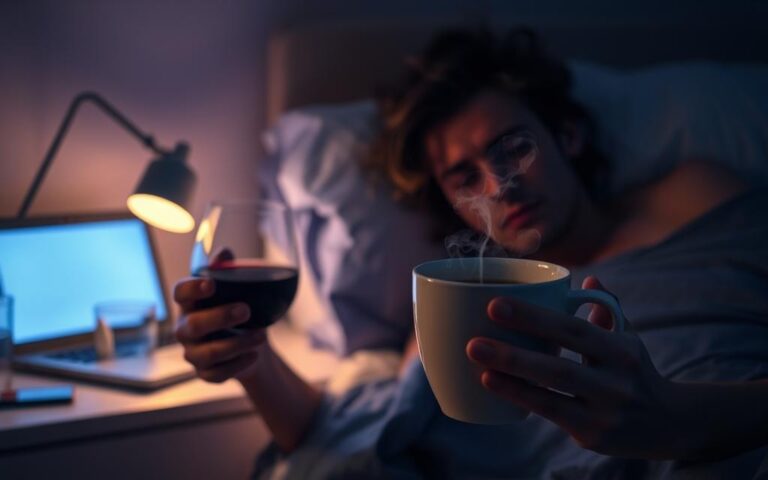
Have you ever had trouble sleeping, feeling wide awake and uncomfortable? Many of us face sleepless nights, but we often don’t know why. We might drink caffeine in the morning or alcohol at night to relax. But these habits can harm our sleep quality.

Caffeine and alcohol can make it hard to sleep well. Studies show that caffeine can cut down on sleep time. Drinking alcohol can also lead to poor sleep quality1. It’s important to understand how these substances affect our sleep, as millions struggle with sleep deprivation from them.

  • Caffeine can significantly reduce sleep duration, impacting overall restfulness.
  • Alcohol consumption correlates with poor sleep quality and increased night-time awakenings.
  • Both substances can create a cycle of sleep disruption, making it challenging to achieve restful sleep.
  • Many individuals may not realize how caffeine and alcohol together exacerbate their sleep issues.
  • Understanding these impacts is key for improving sleep quality and health.

Introduction to Sleep and Substances

Sleep is key to our health, but many struggle to get enough rest. Caffeine and alcohol are big culprits, affecting how well we sleep. Almost 90% of people who drink alcohol at night have sleep problems2. Doctors say to stop drinking alcohol 3 hours before bed to sleep better2.

Caffeine is also a big problem, with 90% of Americans drinking it every day3. The average American drinks about 200 mg of caffeine daily. Those who drink it often take in 154 to 1285 mg3. This has led to more people sleeping less than 6 hours a night, going from 13% to 20% between 1999 and 20093. Caffeine makes it hard to fall asleep and lowers melatonin levels, making sleep worse3.

Caffeine and alcohol make it hard to sleep well. Knowing how they affect sleep is important for our health. It helps us avoid the dangers of substance use.

substances and sleep

Caffeine and Its Widespread Use

Caffeine is a widely used substance found in coffee, tea, and soft drinks. It’s consumed by about 80% of the world’s population every day4. Almost 90% of adults drink caffeinated beverages weekly, showing how common it is5. It helps people feel more alert and focused, improving their brain function.

The FDA says adults can safely have up to 400 milligrams of caffeine daily. Drinking it in moderation can make you feel better and more focused6. But too much can cause anxiety and trouble sleeping. Drinking caffeine can cut down your sleep by about 10 minutes per cup the next day5.

Knowing how much caffeine is in different drinks is key to controlling how much you have. Here’s a list of some common sources:

Beverage Caffeine Content (mg)
Coffee (8 ounces) 100-200
Energy drink (8-16 ounces) 50-300
Soda (12 ounces) 0-70
Tea (8 ounces) 40-120

caffeine consumption

Even though many people love caffeine, how it affects you can vary. Its effects start about 30 minutes after drinking and can last up to five hours or more6. As you get used to it, you might need more to feel the same effects. Understanding how caffeine fits into our lives can help us use it wisely.

Alcohol Consumption Trends Worldwide

Alcohol is a substance many people use, but it can harm health and sleep. About 74% of people aged 15 and older drink regularly. This means the average person drinks around 6.4 liters of alcohol each year7. Drinking habits differ by culture, with some groups drinking more than others.

In Korea, for example, 21.8% of adult men drink too much, while only 6.0% of women do7. Drinking can mess up sleep, making it hard to get a good night’s rest8. It can lead to insomnia and broken sleep patterns.

Drinking too much alcohol is linked to many health problems. Poor sleep, like snoring, is also tied to drinking too much7. This shows how drinking affects not just our health but also how we sleep.

Global alcohol use trends and their impact on sleep

The Science of Sleep

The science of sleep is complex, involving many stages that help us rest. These stages include REM and non-REM sleep. Each stage is important for our body’s repair, brain function, and emotional balance. Caffeine stays in our system for about 5–6 hours, affecting sleep if we drink it too late9. It can also make pain worse, which is bad for those with chronic pain9.

Alcohol, by contrast, cuts down on REM sleep, which is key for our mental and emotional health. Drinking alcohol regularly can make our sleep broken, with us waking up a lot8. Almost 90% of people who drink alcohol at night have sleep problems2. Drinking too much can also lead to long-term sleep issues, like insomnia2.

science of sleep

Keeping our sleep quality safe is very important. The science of sleep shows that bad sleep can cause health problems. It’s key to control how much caffeine and alcohol we have. Tracking our intake is also helpful. Drinking water, keeping electrolytes balanced, and using herbal teas can help us sleep better, fitting into a healthy lifestyle.

Sleep Stage Description Role in Sleep Health
REM Characterized by rapid eye movement, dreaming, and increased brain activity. Critical for emotional regulation and cognitive restoration.
NREM Stage 1 Light sleep where one drifts in and out of sleep. Prepares the body for deeper sleep stages.
NREM Stage 2 Moderate sleep where heart rate slows, and body temperature drops. Supports memory consolidation and healing.
NREM Stage 3 Deep sleep, essential for physical recovery and growth. Crucial for overall health and well-being.

Impact of Caffeine and Alcohol on Sleep

Caffeine and alcohol change how we sleep, affecting sleep quality differently. Caffeine cuts sleep short, reducing it by 10 minutes for each cup the day before10. It also makes falling asleep harder and shortens total sleep time1. On the other hand, alcohol messes with our sleep cycle, hurting REM sleep. This is key for thinking and remembering things11.

Caffeine might make us feel less tired after drinking alcohol, but it doesn’t really wake us up or fix sleep problems11. Yet, mixing caffeine and alcohol might lessen their sleep-harming effects. This could lead to needing more of both to feel awake, which worsens sleep quality11.

Drinking these beverages can also make us dehydrated, which hurts sleep. Even a little dehydration can make us wake up more during the night11. Using caffeine and alcohol together is common, but it can lead to dependence on both10. It’s important to think about how these habits affect our health, including our sleep.
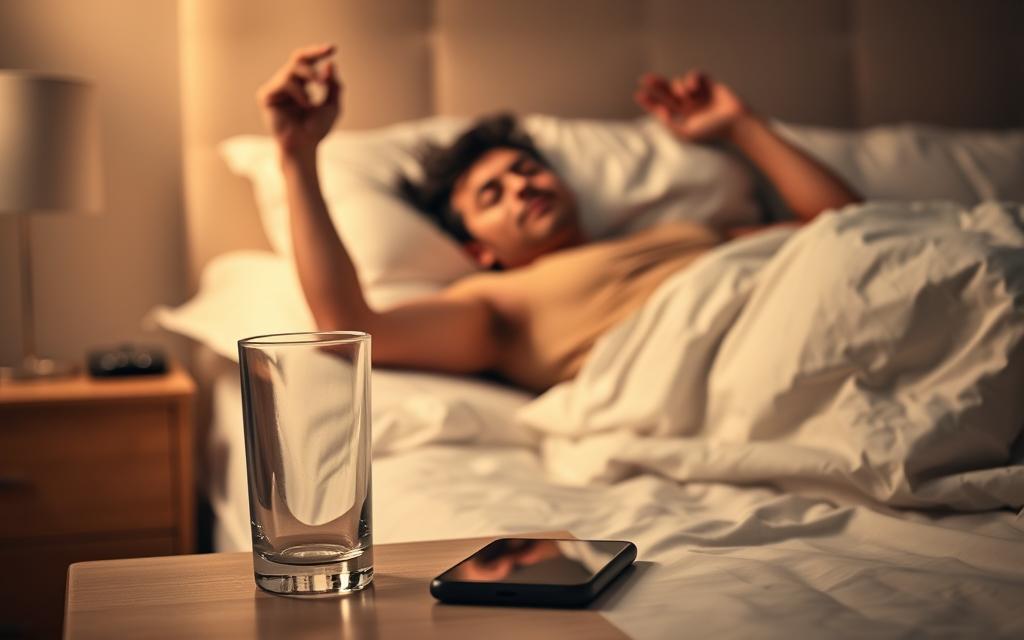
impact on sleep patterns

Effects of Caffeine on Sleep Quality

Caffeine affects sleep patterns and how long we sleep. Research shows that each cup of caffeine cuts sleep by about 10 minutes10. This shows that even a little caffeine, if it’s too late in the day, can build up sleep debt over time1.

It also delays when we enter REM sleep, which is key for good sleep10. This can mess up our natural sleep cycle, hurting our sleep quality10.

People in studies found it harder to fall asleep after drinking caffeine in the evening1. As more people deal with insomnia, knowing how caffeine affects sleep is very important10. Some think caffeine helps with tiredness from bad sleep, but this can actually harm our sleep and health1.
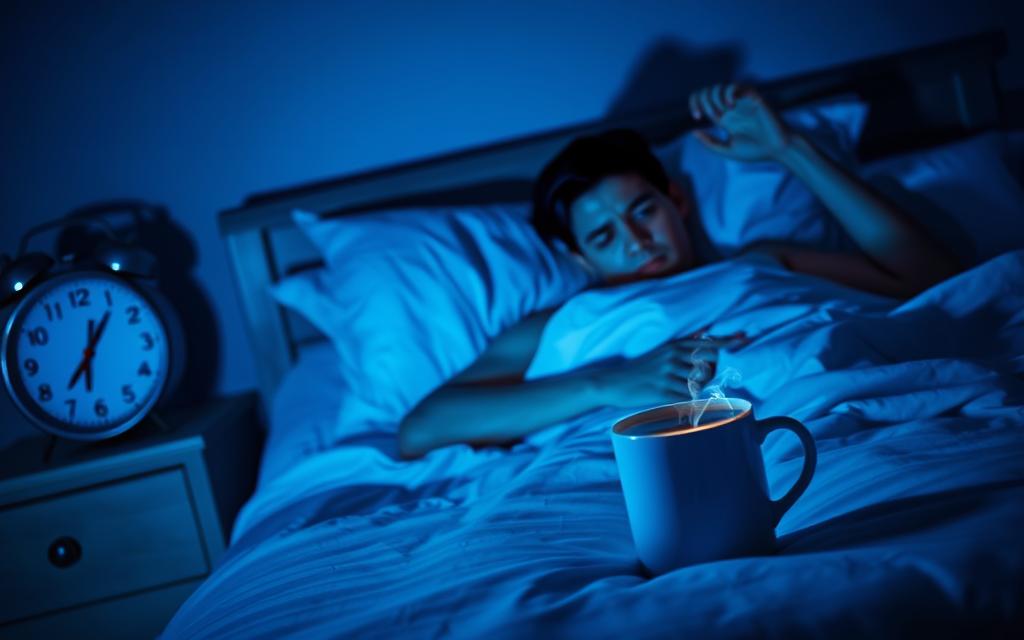
effects of caffeine on sleep patterns

Effects of Alcohol on Sleep Quality

Alcohol affects sleep quality a lot. Many people struggle with sleep issues after drinking. About 50% of adults over 65 have had alcohol in the past year. Among those with ongoing insomnia, 30% use alcohol to help them sleep12.

Even though 67% think alcohol helps them sleep, the truth is different. Up to 70% of drinkers actually have insomnia. This shows a big gap between what people think and what really happens12.

Alcohol also messes with REM sleep. A small amount can make sleep quality drop by 9.3%. A moderate amount can make it worse by 24%. And a big amount can lower sleep quality by 39.2%13.

Drinking more often means waking up a lot at night. This breaks up sleep and causes many interruptions13.

alcohol effects on REM sleep

Drinking regularly can lead to serious problems. It can increase the risk of sleep apnea by 25%12. It can also turn sleep issues into long-term problems. People might wake up many times at night and feel tired during the day12.

Drinking before bed makes sleep problems worse. Studies show it makes insomnia symptoms worse and changes sleep patterns. This leads to poor REM sleep1213. Using alcohol to deal with sleep issues can start a cycle of poor sleep and health problems.

Caffeine Intake and Sleep Disorders

Between 50 to 70 million Americans deal with sleep disorders. These issues can lead to heart disease and diabetes14. Drinking too much caffeine can make these problems worse, linking caffeine to sleep disorders15.

Caffeine hits its peak in the blood 30 to 60 minutes after drinking it. It stays in the body for 3 to 5 hours15. Drinking caffeine before bed can mess up sleep and make it poor quality14.

A study with 785 people found that caffeine 6 hours before bed cuts sleep by about 1 hour15. Heavy caffeine users might face a higher risk of insomnia. The average U.S. adult drinks about 300 mg of caffeine daily, much more than the global average15.

Older adults and those sensitive to caffeine might feel caffeine’s effects more strongly15.

It’s key to know how caffeine affects sleep. The FDA says caffeine is safe, but it’s not regulated tightly. This means we need to be careful with how much caffeine we drink, even more so for those with sleep issues.

Alcohol Consumption and Sleep Disturbances

Alcohol and sleep problems are closely related, affecting many people’s sleep. Drinking alcohol before bed can cause more wake-ups, mainly in the second half of the night. This leads to broken sleep patterns.

Alcohol can make you sleep better at first but worsens sleep quality over time. For example, 2 to 3 standard drinks before bed might help sleep at first. But these benefits fade after a few days16.

In the U.S., about 70% of adults drink alcohol, with many facing alcohol-related issues16. Around 15–28% of those with insomnia use alcohol to help them sleep16. Yet, drinking too much before bed can cause severe daytime tiredness, showing alcohol’s complex effects on sleep16.

Studies show that 16% of people have severe insomnia, and 34% have mild insomnia16. Alcohol’s effects last beyond the night, causing daytime fatigue that can harm daily life. About 10% of Americans drink alcohol every day, which may lead to more sleep problems16.

There’s a strong connection between alcohol and sleep issues. Alcohol abuse is common among those with insomnia, showing a cycle of worsening problems17. Men who drink over 21 units a week wake up more at night17. It’s important to know how alcohol affects sleep to get better rest.
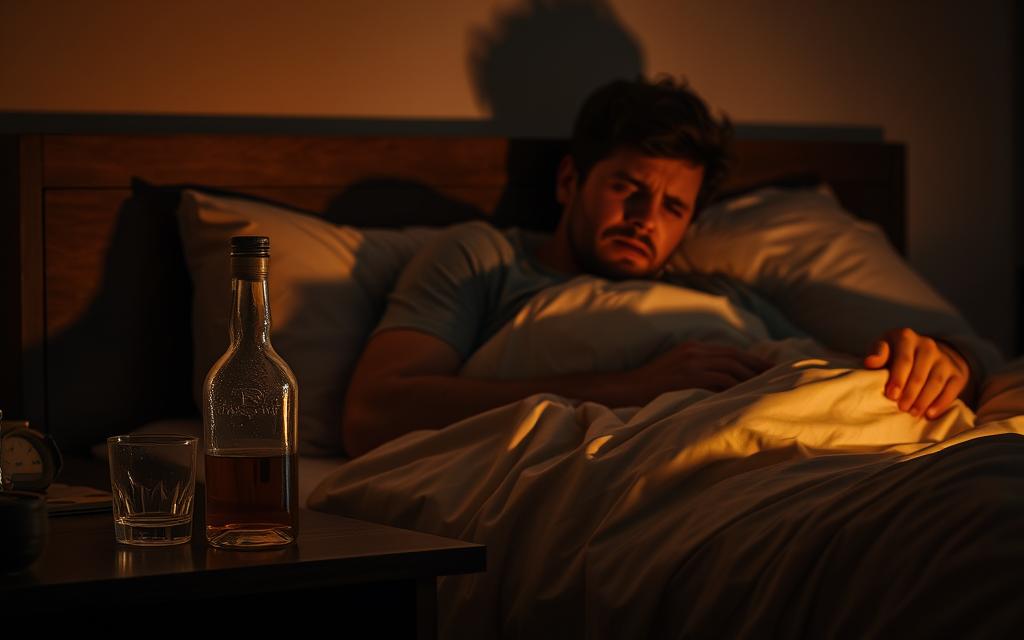
alcohol consumption and sleep disturbances

Sleep Disruption from Alcohol and Caffeine

Alcohol and caffeine can make it hard to sleep. Even a small amount of alcohol can cut sleep quality by 9.3%13. Drinking more can lower sleep quality by up to 24%13. Drinking a lot can even cut sleep quality by 39.2%13.

Drinking alcohol before bed can lead to insomnia. This can cause broken sleep and more wake-ups at night13.

Caffeine, often drunk during the day, can shorten sleep. But, drinking caffeine and alcohol together might not have the usual bad effects on sleep1. This means caffeine might help you stay awake after a bad night’s sleep from drinking1.

Many people use caffeine to fight off tiredness from bad sleep caused by drinking. This is like a cycle of self-medication1.

sleep disruption from alcohol and caffeine

Alcohol can also make sleep apnea worse, raising the risk of airway collapse by 25% during sleep13. It makes you need to go to the bathroom more, disrupting sleep13. It also cuts down on REM sleep, which is key for healing and memory13.

This shows how important it is to know how alcohol and caffeine can harm sleep. We need to be careful about how much we drink and when.

Interactive Effects of Caffeine and Alcohol

The mix of caffeine and alcohol is complex. It affects how people act and sleep. Many use caffeine to fight off alcohol’s sleepiness, thinking it keeps them awake. A study showed 57% of women and 50% of men mix energy drinks with alcohol at parties18. Among those who drank three or more energy drinks, 49% did it to mix with alcohol18.

Drinking caffeine can cut sleep by 10.4 minutes per cup the next day19. Drinking alcohol can lower sleep quality by almost 4% the next night19. Mixing these can lead to unexpected sleep issues, even though caffeine is meant to help19. A study found that mixing them might not improve sleep as expected19. Participants reported no drop in sleep quality but less overall sleep19.

Self-medication with caffeine and alcohol can be harmful. People often try to balance caffeine’s wakefulness with alcohol’s sleepiness. Those who drink energy drinks more often face more alcohol problems18. Knowing this can help improve sleep by avoiding mixing these substances.

The Bidirectional Relationship Between Substance Use and Sleep

The link between substance use and sleep is complex. Poor sleep can make people use more substances. At the same time, using more caffeine and alcohol can make sleep worse. Studies show that substance abuse can mess with sleep, affecting how long it takes to fall asleep and how well you sleep20.

When people stop using substances, they might feel more cravings and want to act on impulse. This can make them more likely to go back to using substances21.

People who have trouble sleeping often have drug or alcohol problems. Using substances for a long time can make it hard to fall asleep and reduce the amount of sleep you get20. Also, sleep problems can make it harder to think clearly, making recovery from substance use disorders harder21.

For example, using stimulants like cocaine can make sleep light and broken. Alcohol might help you sleep at first but can cause big sleep problems later because of withdrawal20. A study showed that many people on methadone and buprenorphine have sleep issues, showing how substance use affects sleep21.

People who use substances more often tend to have irregular sleep patterns. About 63% of adult psychiatric inpatients have sleep problems because of drug and alcohol use20. It’s important to address sleep issues to help manage substance use disorders better.

Strategies to Mitigate Sleep Issues from Substances

To get better sleep, people can try different things. Setting a regular sleep schedule helps a lot. It makes it easier to relax at night.

It’s also important to watch how much caffeine you drink, and when. Drinking caffeine in the afternoon can mess up your sleep. Try to avoid caffeine for at least 8 hours before bedtime to sleep better6.

It’s good to know how much caffeine you can safely have each day. The FDA says adults can have up to 400 milligrams of caffeine daily6. If you have trouble sleeping, knowing how long caffeine stays in your system is key. This can help you decide when and how much to drink6.

Drinking alcohol in moderation is also important for sleep. Many people use alcohol to help them sleep, but it can actually make sleep problems worse. If you have trouble sleeping, it might make you drink more alcohol, which can make sleep even harder. People with insomnia are more likely to develop alcohol problems22.

Trying relaxation techniques, like progressive relaxation training, can help with sleep. It’s good for people with alcohol issues23. It helps create a calm space for better sleep. Talking to a healthcare provider for advice on managing substance use and sleep can also be helpful.

Long-Term Implications of Poor Sleep Quality

Chronic sleep problems from caffeine and alcohol harm our health a lot. They can make our brains and emotions worse, leading to more stress and anxiety. Almost 90% of people who drink alcohol at night have sleep issues, showing how alcohol affects sleep2.

Long-term drinking can cause serious sleep problems like insomnia and sleep apnea. These issues can really hurt our health2.

Caffeine makes us sleep less, which is bad for our health. Drinking caffeinated drinks can cut our sleep time by about 10 minutes each. This shows how caffeine can hurt our sleep over time24.

Drinking alcohol to help sleep can also lead to breathing problems at night. This is true for people with sleep apnea2.

Sleep problems cost society a lot. They make us less productive and increase healthcare costs. Drinking caffeine and alcohol together can make health problems worse. This shows a cycle of needing more of both substances1.

Research Insights: Recent Studies on Caffeine and Alcohol

Recent studies show how caffeine and alcohol affect sleep. Over 80% of people worldwide drink caffeine, with college students leading the way at 92%. They average 159 mg of caffeine daily, sometimes going over 400 mg, which harms sleep and alertness25.

Alcohol, on the other hand, seems to help you fall asleep faster. But it messes with your sleep later on, when your blood alcohol levels are high. Long-term drinking can make sleep worse, leading to less deep sleep and more restless sleep. This can make it hard to stay asleep, which is bad for your health and can lead to drinking more26.

College students also drink a lot of caffeine, saying it boosts their sports performance and social life. But, this can make it harder to sleep well. Studies show that caffeine before bed makes it tough to fall and stay asleep. This shows we need more research on how these substances affect our sleep25.

Conclusion

Caffeine and alcohol both have big effects on how well we sleep. Studies show that caffeine can make it hard to fall and stay asleep. This is a big problem for many people27.

Alcohol might help us fall asleep at first. But it can also mess up our deep sleep and make our heart rate go up. This is shown by changes in heart rate and sleep patterns28.

Knowing how these substances affect sleep is key to better sleep. We should watch how much caffeine and alcohol we use. This helps us sleep well and feel good all day29.

FAQ

How does caffeine affect sleep quality?

Drinking caffeine can make it harder to fall asleep and cut down on sleep time. Even a little caffeine in the evening can mess up your sleep. This can build up and make you feel tired all day.

What are the impacts of alcohol on sleep?

Drinking alcohol can wake you up during the night and hurt the quality of your REM sleep. It breaks up your sleep, making you feel groggy and tired the next day.

Can caffeine contribute to sleep disorders?

Yes, too much caffeine can lead to sleep disorders like insomnia. It can make sleep problems worse and even cause new ones, mainly for people who are already sensitive.

What is the relationship between alcohol consumption and sleep disturbances?

Drinking alcohol can cause sleep to break up and become less efficient. It can make you sleep less well overall. This can make you feel very tired during the day.

How do caffeine and alcohol interact to affect sleep?

Drinking both caffeine and alcohol at the same time can make sleep problems worse. They each affect sleep in different ways, making their combined effects very concerning.

What strategies can help mitigate sleep issues related to caffeine and alcohol?

To avoid sleep problems from caffeine and alcohol, drink less of them, and avoid them before bed. Experts say to cut down and watch how they affect you to sleep better.

How can poor sleep quality lead to increased substance consumption?

Poor sleep can make you want to drink more caffeine and alcohol to feel awake. But, drinking too much can make sleep even worse. This creates a cycle.

What are the long-term implications of chronic sleep disturbances due to caffeine and alcohol?

Long-term sleep problems from caffeine and alcohol can harm your brain, mood, and health. It’s important to fix these issues to stay healthy.

Are there ongoing studies regarding caffeine and alcohol’s effects on sleep?

Yes, scientists are still studying how caffeine and alcohol affect sleep together. They want to know how these substances work together in real life. This research could help make better health guidelines and choices.

Source Links

  1. The Unexpected Impact of Caffeine and Alcohol on Sleep – https://www.sleepfoundation.org/sleep-news/the-unexpected-impact-of-caffeine-and-alcohol-on-sleep
  2. Alcohol and Sleep – https://www.sleepfoundation.org/nutrition/alcohol-and-sleep
  3. Effects of caffeine on sleep quality and daytime functioning – https://pmc.ncbi.nlm.nih.gov/articles/PMC6292246/
  4. The impact of daily caffeine intake on nighttime sleep in young adult men – Scientific Reports – https://www.nature.com/articles/s41598-021-84088-x
  5. A (brief) surprise in study of alcohol, caffeine and sleep – UW Medicine | Newsroom – https://newsroom.uw.edu/news-releases/a-brief-surprise-in-study-of-alcohol-caffeine-and-sleep
  6. Caffeine and Sleep – https://www.sleepfoundation.org/nutrition/caffeine-and-sleep
  7. The Effects of Alcohol on Quality of Sleep – https://pmc.ncbi.nlm.nih.gov/articles/PMC4666864/
  8. No title found – https://www.rupahealth.com/post/the-effects-of-alcohol-and-caffeine-on-sleep-how-to-enjoy-wisely
  9. Override: How Substances Affect Both Sleep and Chronic Pain: The Science Behind Caffeine, Alcohol, Nicotine, and Soda – https://www.override.health/blog/how-substances-affect-both-sleep-and-chronic-pain-the-science-behind-caffeine-alcohol-nicotine-and-soda
  10. How do alcohol and caffeine affect sleep? – https://www.medicalnewstoday.com/articles/alcohol-caffeine-hurt-sleep-quality-sleep-quantity
  11. Refresh Snoring & Sleep Apnea Center – https://www.refreshedsleep.com/blog/6-unexpected-effects-of-caffeine-and-alcohol-on-sleep
  12. Alcohol and Sleep: What You Need to Know – https://www.ncoa.org/article/how-alcohol-affects-your-sleep/
  13. Here’s How Alcohol Affects Your Sleep – https://www.hackensackmeridianhealth.org/en/healthu/2023/06/14/heres-how-alcohol-affects-your-sleep
  14. Caffeine before bedtime has little effect on sleep quality, but alcohol and nicotine does – https://www.news-medical.net/news/20190808/Caffeine-before-bedtime-has-little-effect-on-sleep-quality-but-alcohol-and-nicotine-does.aspx
  15. Sleep and caffeine – https://sleepeducation.org/sleep-caffeine/
  16. Disturbed Sleep and Its Relationship to Alcohol Use – https://pmc.ncbi.nlm.nih.gov/articles/PMC2775419/
  17. The association between alcohol consumption and sleep disorders among older people in the general population – Scientific Reports – https://www.nature.com/articles/s41598-020-62227-0
  18. Alcohol and Caffeine: The Perfect Storm – https://pmc.ncbi.nlm.nih.gov/articles/PMC3621334/
  19. How alcohol + caffeine together can affect your sleep – https://www.advisory.com/daily-briefing/2023/11/16/alcohol-caffeine
  20. Circadian Rhythms, Sleep, and Substance Abuse – https://pmc.ncbi.nlm.nih.gov/articles/PMC3177010/
  21. Drugs, sleep, and the addicted brain – Neuropsychopharmacology – https://www.nature.com/articles/s41386-019-0465-x
  22. TREATMENT OPTIONS FOR SLEEP DISTURBANCES DURING ALCOHOL RECOVERY – https://pmc.ncbi.nlm.nih.gov/articles/PMC2936493/
  23. Treatment for Sleep-Wake Disorders Alongside Co-Occurring Drug Abuse – https://americanaddictioncenters.org/health-complications-addiction/insomnia
  24. Sleep, alcohol, and caffeine in financial traders – https://pmc.ncbi.nlm.nih.gov/articles/PMC10631622/
  25. Caffeine: Effects on sleep and academic performance in college students – Journal of Family and Child Health – https://www.familyandchildhealth.com/content/health-promotion/caffeine-effects-on-sleep-and-academic-performance-in-college-students/
  26. Alcohol and the Sleeping Brain – https://pmc.ncbi.nlm.nih.gov/articles/PMC5821259/
  27. Caffeine consumption, insomnia, and sleep duration: Results from a nationally representative sample – https://pmc.ncbi.nlm.nih.gov/articles/PMC6230475/
  28. The Effects of Caffeine, Alcohol, and Exercise on Sleep: Analyzing the Surprising Results – https://medium.com/better-humans/the-effects-of-caffeine-alcohol-and-exercise-on-sleep-analyzing-the-surprising-results-117330af2480
  29. Frontiers | Effects of Caffeine on Event-Related Potentials and Neuropsychological Indices After Sleep Deprivation – https://www.frontiersin.org/journals/behavioral-neuroscience/articles/10.3389/fnbeh.2020.00108/full


Healing with Sound: The Benefits of Sound Therapy for Your Mind and Body

Have you ever felt a song or rhythm wash away your worries? It’s as if the music wrapped you in a warm hug. This special bond between sound and our feelings is key to sound therapy. Let’s explore how sound healing can boost our mental and physical health.

Studies show sound therapy can change our brain waves, making us feel calm and relaxed. It helps us escape the daily hustle and find peace within. Sound vibrations also affect our brain, nerves, muscles, and organs, leading to healing and relaxation1.

In today’s busy world, sound therapy offers a way to focus on ourselves. It’s a path to mindfulness, self-care, and renewal.

Key Takeaways

  • Sound therapy enhances mental and physical well-being by promoting relaxation.
  • Scientific studies indicate that sound can alter brain waves and induce calm states.
  • Sound vibrations help promote healing by influencing body functions.
  • Sound baths provide a soothing experience that encourages self-care.
  • Healing with sound has ancient roots with instruments like the didgeridoo used for over 40,000 years.
  • Sound therapy may assist in alleviating symptoms of anxiety, depression, and chronic pain.

Understanding Sound Therapy

Sound therapy is a form of alternative therapy that uses sound waves to balance our body’s vibrations. It’s an ancient healing method that uses sound and vibration to help us relax and feel better2. During sessions, we find ourselves in peaceful places, surrounded by calming sounds from instruments like gongs and singing bowls3.

The science behind sound therapy involves the physics of vibrations and how our brain reacts to these sounds3. It can help us relax deeply, heal emotionally, sleep better, and even reduce pain3. It’s also been shown to lower blood pressure and cholesterol, reducing heart disease risk and easing anxiety and depression3.

For centuries, cultures like the Egyptians and Greeks have used sound for healing2. Today, studies show that sound therapy can improve focus and relaxation, thanks to techniques like binaural beats4. Sound healing also uses frequencies like the Schumann resonances to uplift and ground us4.

What is Healing with Sound?

Healing with sound is an ancient practice that uses sound waves to heal the body, mind, and spirit. It involves lying down during sound baths to enjoy the calming sounds of gongs, crystal singing bowls, and tuning forks. This creates a peaceful environment for deep meditation and relaxation.

The role of the practitioner is key in sound healing. They guide participants to achieve a therapeutic effect beyond just listening. The principles of vibration, entrainment, and cymatics are used. Vibration aligns sound with the body’s natural frequencies, entrainment synchronizes body systems with sound, and cymatics shows how sound patterns affect the body on a cellular level5.

Sound healing benefits people of all ages and backgrounds. It’s a non-invasive practice where you can just relax while the sounds work through you5. Low-frequency sound waves can relax muscles, reduce tension, and improve blood flow. High-frequency waves can boost mood and reduce stress6. After a session, activities like stretching, drinking water, or walking barefoot can help ground you. This holistic approach promotes relaxation, better mood, and overall well-being6.

healing with sound

The Science Behind Sound Healing

Exploring the science of sound therapy reveals how sound healing works. It’s based on vibrations that affect us in many ways. The idea of resonance is key, allowing sound to fix cells with bad frequencies7.

Sound can also change the way matter looks, as seen in cymatics. This shows how sound can physically alter things7.

Studies show sound healing can change how cells work. It can even wake up dormant cells and help them function right again7. Quantum science also plays a part, saying sound can change our reality by changing our vibrational state7.

Sound healing can also make our brain waves slow down. This can lead to deep relaxation and healing7.

For thousands of years, people have used sound for healing. The Australian Aborigines used the didgeridoo, and Tibetans used singing bowls8. Sound travels fast through our bodies, making it great for healing8.

Today, we have new tools like tuning forks and electronic devices. They help balance our brain activity, making sound therapy even better8.

Also, new tech like SleepEngine™ from Cambridge Sleep Sciences uses sound to help us sleep better8. Sound therapy can also make us feel good by releasing happy chemicals in our brain8.

sound healing benefits

Benefits of Sound Therapy for Mental Health

Exploring the sound healing benefits of sound therapy, we uncover its profound impact on our mental health. This approach focuses on reducing anxiety and stress while enhancing our overall emotional well-being.

Reducing Anxiety and Stress

Sound therapy employs various techniques to promote relaxation and facilitate stress relief. The vibrations produced during sessions can effectively reduce feelings of tension, anger, and fatigue. Studies show participants reporting significant reductions in these areas after meditation.

Historical practices, dating back to Ancient Greece, highlight sound therapy’s role in addressing mental disorders such as depression and anxiety9. Sound vibrations also influence brainwave frequencies, which can support emotional balance and overall mental well-being9. A 30-minute music therapy session has been demonstrated to aid in recovery after surgery, showcasing its practical benefits in managing pain and discomfort10.

Enhancing Mood and Emotional Balance

In our pursuit of emotional balance, sound therapy offers transformative effects on our mood. Research indicates that participants experienced marked improvements in feelings of spiritual well-being and a decrease in depressive moods following sound meditation (all p 3. Sound therapy not only reduces anxiety and stress but also fosters enhanced mood and fewer mood swings9. As we engage in these sound healing techniques, we find our emotional states rejuvenated, which is essential for our overall mental health.

sound healing benefits

Physical Healing and Sound Therapy

Sound therapy plays a big role in physical healing, helping with chronic pain and better sleep. It uses special frequencies and vibrations to relax the body and ease pain. Studies show it can lower stress hormones by 15%, helping with relaxation and pain relief11.

It also helps with muscle tension, making us feel more comfortable11.

Managing Chronic Pain

Sound therapy is a strong tool for managing chronic pain. People using it see up to a 50% drop in stress symptoms11. It boosts happy neurotransmitters like dopamine and serotonin, easing depression linked to chronic pain12.

Combining sound healing with other holistic practices boosts well-being. It improves mobility and offers significant pain relief for those in discomfort.

Improving Sleep Quality

Sound therapy also helps improve sleep quality. Calming sound healing music can help those with insomnia or sleep disorders. It leads to deeper, more restorative sleep.

Research shows it balances body systems, like heart rate and blood pressure, helping manage stress and relax11. It also helps enter a meditative state, aiding in physical relaxation and overcoming sleep issues13. These benefits highlight sound therapy’s significant impact on our health.

sound therapy improving sleep quality

Popular Sound Healing Instruments

In the world of sound therapy, many instruments help us feel better. Gongs and Tibetan singing bowls are key for their special sounds and benefits. Let’s see how they help us in sound healing.

The Role of Gongs in Sound Therapy

Gongs are amazing for their deep, rich sounds. They help us relax and meditate better. In group sessions, they create a space for emotional release and balance14.

Their strong vibrations reach deep inside us. This helps us feel calm and improves our meditation15.

Benefits of Tibetan Singing Bowls

Tibetan singing bowls are made from metals that match the planets. Their soothing sounds connect with our body’s energy centers. They’re great for relaxation, both alone and in groups15.

Using them in meditation can bring us peace and well-being. They’re easy to carry and use, fitting well into our routines14.

Sound Healing Techniques We Can Try

Adding sound healing to our wellness routines can boost relaxation and mental clarity. Sound baths are a favorite, using instruments like Tibetan singing bowls and drums. They create a deep sense of calm, helping us connect with our inner selves. Before starting, we can set intentions like feeling optimistic or harmonious16.

sound baths

Exploring Sound Baths

Sound baths offer a deep dive into sound, shifting our brain waves to relax. Tibetan singing bowls, for instance, help with relaxation and pain relief with their sound17. For the best experience, we need a quiet space, fewer distractions, and maybe some candles or crystals to set the mood16.

Incorporating Binaural Beats

Binaural beats are another great sound healing method. They play two different sounds in each ear, making us feel a third sound. This can help us heal and meditate better. Listening to these sounds can make us feel more relaxed, less anxious, and even help with chronic pain, thanks to frequencies between 60-600 Hz17. Adding vocal toning or chanting with binaural beats can make these effects even stronger18.

Sound Healing Frequencies and Their Impact

We explore the world of sound healing frequencies to see how they affect our well-being. It’s key to understand these frequencies to grasp their impact on our mental and physical health. For instance, a 2018 study in Frontiers in Psychiatry found that specific sound frequencies helped 17% of people with depression feel better after three months. This number rose to 33% after a year19.

The Solfeggio frequencies are also popular, believed to have deep healing powers. Yet, there’s no solid historical link to ancient practices20. The modern idea of Solfeggio frequencies started in the 1970s, thanks to Dr. Joseph Puleo’s work, not scientific proof20. This shows how important it is to separate marketing claims from real science.

Recent studies also show the power of specific frequencies. For example, the 40 Hz sound helped fibromyalgia patients feel less pain19. A 2018 MIT study found that using 40 Hz light and sound together boosted brain activity and memory19. Also, the 528 Hz frequency was shown to lower stress hormones in just five minutes19.

sound healing frequencies

We should approach sound healing with both awareness of its benefits and its limits. By trying out different frequencies, we can find what works best for our health goals.

The Importance of a Safe Environment for Sound Healing

Creating a safe space is key for sound therapy to work well. When people feel safe and comfy, they can really get into the healing sounds. Some might need softer sounds or special instruments to feel good21. Sessions that involve the person can keep them focused, which is great for kids or those with special needs21.

Choosing a Qualified Practitioner

Finding a good sound healer is very important. A certified expert can make sure you have a safe and effective session. Moms have felt relaxed with their babies in these sessions22. Kids can move around, which keeps them comfy and interested22.

Look for a practitioner who knows how to create a calm space. Comfortable seating and room to move are important21. A special rating for sound spaces can make the healing sounds clearer and more private23. This care makes sure each session is healing and important.

safe environment

Guidelines for a Successful Sound Healing Experience

To get the most out of sound healing, we can follow some simple steps. Arriving early helps us relax and get ready for the session24. Turning off our phones also helps us focus better24.

Setting a personal intention can make our experience even deeper. It could be a word, phrase, or feeling that means a lot to us. Wearing warm clothes and bringing extra items like socks and blankets can also help24.

If we have mobility issues, talking to our practitioner before the session is a good idea24. Eating light meals and staying hydrated with water and herbal teas is also key24.

Doing activities like gong baths and drumming can make sound therapy even more effective25. These activities help us relax and can even help our bodies heal25. Listening to music tuned to 432 Hz can also help us feel more relaxed25.

sound healing experience

Emerging Research on Sound Therapy

The field of sound therapy is growing fast. New studies are finding big sound therapy benefits for both mind and body. They show that some sounds can slow down our breathing and heart rates, helping us relax26.

Also, research says the Schumann frequency (7.8 Hz) can make workers more productive and happy in offices26. Scientists are also looking into using sound therapy for mental health issues like PTSD, anxiety, and depression27.

Looking ahead, sound healing is becoming more accepted in health care. For example, devices like NaviFUS and SonoCloud-9 are being tested for treating serious illnesses like glioblastoma and epilepsy27. This shows sound therapy could become a big part of medicine.

Studies on tools like Tibetan singing bowls are also promising. They’ve been shown to lower stress, depression, and anger during therapy28. This supports the idea that sound therapy could be key in holistic medicine.

emerging research on sound therapy

Sound Healing Music to Enhance Our Practice

Adding sound healing music to our practice can really boost sound therapy. The right tunes help us meditate and relax deeply, which is key for healing29. Different songs and melodies can stir our emotions and create a healing space, helping us find inner peace.

For example, traditional Indian ragas like “Raga Basant Bahar” by Kishori Amonkar are more than just songs. They’re connected to certain times of the day, making them even more powerful30. Tracks like “Shanti-Mantra” by Ravi Shankar or “Organum: Part 1” by Peter Michael Hamel bring hope and joy, which are crucial for our well-being30.

Sound healing music is a strong tool in therapy. It works well with yoga, tai chi, or acupuncture to improve our health. It can balance our energy and help with issues like anxiety and digestive problems29. Adding affirmations to the music makes it even more effective, guiding us toward our goals.

To get the most from sound healing music, use wired headphones or speakers for the best sound quality29. This lets us dive fully into the healing sounds, making our therapy more effective. By embracing these elements, we can deepen our relaxation and well-being.

Cultural Perspectives on Sound Healing

Sound healing practices vary across the world, showing the deep importance of sound in healing. In India, mantras were used to heal the mind and body. Vedic studies highlighted sound vibrations’ healing power31.

In ancient Egypt, music therapy was used in temples to heal physical and spiritual issues31. Ancient Greeks like Plato and Aristotle saw music as a way to heal emotions and minds32.

The Inca used wind instruments to talk to ancestors and heal the sick31. Aboriginal Australians used the didgeridoo in ceremonies to connect with spirits31. Tibetan Buddhists used singing bowls and drums for meditation31.

Mongolian throat singing was used in animistic rituals to connect with nature31.

Ancient Chinese believed music could heal the body, linking it to medicine32. Native American healers used music to talk to spirits and heal illnesses32. Traditional Chinese Medicine still uses music to heal emotions and restore balance33.

The power of music connects us all, showing its universal healing power33.

How to Prepare for Your First Sound Healing Session

Getting ready for your first sound healing session is key. Bring a mat or blanket and a pillow for support. Wear loose, comfy clothes to move freely and enjoy the session34.

Don’t forget to bring a water bottle. Staying hydrated helps remove toxins during and after the session34. The setting will be calm, where you can lie down or sit comfortably. You’ll hear sounds from singing bowls, gongs, and tuning forks, making each session unique34.

Think about what you want to get from the session. It could be relaxation, clarity, or healing35. Practice mindfulness or meditation before the workshop to be more open35. Cut down on caffeine and alcohol a day or two before to relax better35.

Get a good night’s sleep before the session. Eat light, easy-to-digest meals on the day to avoid discomfort35.

After the session, drink water to help detoxify. Bring an eye mask or fuzzy socks for extra relaxation. With these steps and an open mind, you’re ready for a calming sound healing experience.

Conclusion

Sound therapy is a holistic approach that benefits our mind, body, and soul. It helps us relax and reduces stress. It also improves our emotional health by easing anxiety and depression, boosting mental clarity, and enhancing focus3637.

This ancient practice is now backed by science, combining traditional wisdom with modern research38. It’s a powerful tool for healing, used in cultures worldwide.

Sound healing techniques like sound baths and tuning fork therapy can be part of our daily lives. They help us relax and improve energy flow. Instruments like singing bowls and gongs release emotions and support our well-being37.

In today’s world, sound therapy is more than just a treatment. It’s a valuable tool for personal growth and self-care.

We encourage everyone to try sound therapy for better mental and physical health. By adding these practices to our routines, we can manage stress, ease pain, and connect with ourselves. This enriches our lives with the healing power of sound3638.

FAQ

What is sound therapy?

Sound therapy uses sound vibrations to help heal and improve well-being. It uses different techniques and tools to create a calm space for self-care and renewal.

How does sound healing benefit mental health?

Sound healing can lower anxiety and stress, ease tension, and balance emotions. The calming sounds help clear the mind and boost well-being by changing brainwaves.

What are sound baths, and how do they work?

Sound baths are experiences where you lie down surrounded by sounds from instruments like gongs and singing bowls. It helps relax and deepen meditation, leading to self-healing.

How does sound therapy affect physical health?

Sound therapy may help manage chronic pain by reaching deep into the body. It also improves sleep by using specific sound frequencies.

What instruments are commonly used in sound therapy?

Sound therapy often uses gongs, Tibetan singing bowls, tuning forks, and crystal bowls. Each instrument creates unique sounds that help in healing.

How do sound frequencies influence our health?

Sound frequencies can change how we feel physically and emotionally, helping us relax. Knowing how each frequency affects us helps in using sound therapy effectively.

What should I look for in a sound therapy practitioner?

Choose a certified and skilled sound therapy practitioner. Look for their credentials, testimonials, and professionalism to ensure a safe and rewarding experience.

How can I prepare for my first sound healing session?

For your first session, wear comfy clothes, arrive on time, and relax your mind. Being open and ready will make the experience more beneficial.

Source Links

  1. Sound Healing for Self-Care – https://www.verywellmind.com/sound-healing-for-self-care-8384146
  2. Healing Types of Sound Therapy Explained – https://thesoundartist.com/blogs/news/healing-types-of-sound-therapy-explained?srsltid=AfmBOooUD7-oT0daZzFRUBilkatICoYojeaYWe6BAIEMF-173_rr3sq-
  3. The Benefits of Sound Healing – Elite Hospital Kingwood – https://elitekingwood.com/the-benefits-of-sound-healing/
  4. I Tried $10,000 Sound Therapy—Here’s Everything You Need to Know – https://www.elle.com/beauty/health-fitness/a61597532/sava-sound-therapy-pod-healing-explained/
  5. What is Sound Healing? How does it work and what is the science behind it? – https://www.sensoryland.com/blog1/what-is-sound-healing
  6. Everything You Need to Know About Sound Healing – Soundhealing.gr – https://www.soundhealing.gr/the-timeless-healing-power-of-sound-everything-you-need-to-know-about-sound-healing/
  7. Science of Sound Healing — Sage Academy Of Sound – https://sageacademyofsound.com/science-of-sound-healing
  8. The science and history of sound therapy – Cambridge Sleep Sciences – https://cambridgesleepsciences.com/news/the-science-and-history-of-sound-therapy/
  9. Sound Healing Therapy: What is it and How Can It Benefit You? – https://sensoryretreats.com/blogs/news/sound-healing-therapy?srsltid=AfmBOopakMTcpU8iCoRj6Zog6bQEKwbqcy7Yb22zoQA22x170DnxXazC
  10. The Uses and Benefits of Music Therapy – https://www.healthline.com/health/sound-healing
  11. Sound Healing: How It Works, Types, Benefits, Applications, and Management – Olympic Behavioral Health – https://olympicbehavioralhealth.com/rehab-blog/sound-healing-therapy/
  12. Sound Healing – https://www.scbh.com/therapies/sound-healing/
  13. How Vibrational Sound Therapy Can Restore Balance – https://astutecounseling.com/how-vibrational-sound-therapy-can-restore-balance/
  14. The Best Sound Healing Instruments For Beginners – SHA Blog – https://www.academyofsoundhealing.com/blog/a-guide-to-the-best-sound-healing-instruments-for-beginners
  15. 26 Sound Healing Instruments for Sound Therapy and Relaxation (UPDATED) – Soundhealing.gr – https://www.soundhealing.gr/20-sound-healing-instruments-for-sound-therapy-and-relaxation/
  16. Sound Healing Tips for Beginners That Will Change the Game – https://www.soundmedicineacademy.com/pages/sound-healing-blog/sound-healing-tips-for-beginners-that-will-change-the-game
  17. I Tried Sound Healing and This is What I Learnt — DESIGN THYSELF – https://www.designthyself.com/blog/i-tried-sound-healing-and-this-is-what-i-learnt
  18. Introduction to Healing with Sound: A Comprehensive Guide – https://www.donovanhealth.com/blog/introduction-to-healing-with-sound-a-comprehensive-guide
  19. Healing the Body with Frequencies: The Basics Explained – https://www.donovanhealth.com/blog/healing-the-body-with-frequencies-the-basics-explained
  20. Healing Sound Frequencies What’s The Frequency? – https://www.soundmedicineacademy.com/pages/sound-healing-blog/healing-sound-frequencies
  21. Is Sound Healing Safe for All Children? Important Considerations for Parents & Practitioners – https://www.sensoryland.com/blog1/is-sound-healing-safe-for-all-children
  22. The Healing Power of Sound: Unlocking Benefits for Children – https://www.sensoryland.com/blog1/sound-healing-for-children
  23. Acoustics in healing environments – https://www.dirtt.com/insights/acoustics-in-healing-environments/
  24. How to prepare for a sound healing? 5 top tips — Resonant Being – https://www.resonantbeing.com/blog/how-to-prepare-sound-healing-sound-therapy-top-tips
  25. The NOW Guide to Sound Healing – NOW – https://www.itmustbenow.com/feature/be-well/now-guide-sound-healing/
  26. Think You’ve Heard It All? New Research Into ‘The Science Of Sound’ Proves Otherwise – https://www.forbes.com/councils/forbestechcouncil/2022/12/21/think-youve-heard-it-all-new-research-into-the-science-of-sound-proves-otherwise/
  27. Sound healing and beyond – Nature Biotechnology – https://www.nature.com/articles/s41587-025-02566-3
  28. Research Reveals That Sound and Frequency Can Reduce Stress – https://www.psychologytoday.com/us/blog/less-stress-more-peace/202410/research-reveals-sound-and-frequency-reduce-stress
  29. Six Healing Sounds – https://www.mettamindfulnessmusic.com/products/six-healing-sounds?srsltid=AfmBOoq4ZtIzPbejyx7pgaLTb8cFUKI4RO9guT0vsYOYIMz5oMxy43gr
  30. Songs for Practicing Sound Healing at Home | The Slowdown – https://www.slowdown.media/article/sound-healing-playlist-samer-ghadry
  31. Sound as medicine in different cultures – https://himalayanacademyofsound.com/sound-as-medicine-in-history
  32. Sound Healing: An Ancient-Modern Comparison of the Uses of Music and Sound for Therapy – https://louis.uah.edu/cgi/viewcontent.cgi?article=1621&context=honors-capstones
  33. Music As A Universal Language Of Healing – Harmony & Healing – https://www.harmonyandhealing.org/music-as-a-universal-language-of-healing/
  34. Your First Soundbath: What to Expect and How to Prepare | One Down Dog – https://onedowndog.com/2021/10/21/your-first-soundbath-what-to-expect-and-how-to-prepare/
  35. How to Prepare for a Sound Healing Workshop ? – https://fiveelementscentre.com/how-to-prepare-for-a-sound-healing-workshop/
  36. The Therapeutic Effects Of Sound Healing – SHA Blog – https://www.academyofsoundhealing.com/blog/finding-calm-the-therapeutic-effects-of-sound-healing
  37. Benefits Of Sound Healing For Wellness And Relaxation — Altha – https://www.altha.com/journal/discover-the-benefits-of-sound-healing-for-wellness-and-relaxation
  38. Sound healing: The Therapeutic Power Of Vibrations For Wellness – https://www.vinyasayogaashram.com/blog/sound-healing-the-therapeutic-power-of-vibrations-for-wellness/

Is Homeopathy Effective? Understanding the Science Behind It

Many of us search for health answers in a world full of options like homeopathy. Imagine standing in a crowded pharmacy, looking for relief. We want a treatment that feels right for our health and well-being.

Homeopathy seems appealing with its gentle remedies and natural approach. But, is it truly effective, or just a source of hope? We aim to explore this, looking into homeopathy’s principles, history, and effectiveness. We’ll consider both its promise and the doubts it raises in today’s medicine.

Our journey into homeopathy will uncover its principles, results, and the mixed views around it. This debate is not just about treatments. It’s about trusting the science behind them and how that affects our health choices1.

Key Takeaways

  • Homeopathy offers an alternative perspective on healing but is often questioned for its effectiveness.
  • Despite numerous studies, many professional reviews indicate lack of evidence supporting homeopathy beyond placebo effects.
  • The principles of homeopathy, including the principle of similarity, face criticism from the scientific community.
  • While some studies suggest positive outcomes, the overall consensus leans towards skepticism regarding its efficacy.
  • Understanding homeopathy requires us to critically assess both its historical roots and modern scientific scrutiny.

What is Homeopathy?

Homeopathy is a unique form of alternative medicine. It was created in the late 18th century by German doctor Samuel Hahnemann. It’s based on the idea that “like cures like,” meaning a substance that causes symptoms in a healthy person can help similar symptoms in a sick person23.

This method uses highly diluted substances. These are made through a process called succussion, which involves shaking the substance after dilution. This often results in remedies with very little of the original ingredient24.

Homeopathic remedies often include plants and minerals like onions, chamomile, arnica, and hypericum. People use homeopathy for various issues, including allergies, colds, and headaches24. Even though many see it as a natural remedy, scientific studies have raised doubts about its effectiveness. They point out a lack of solid evidence supporting its use beyond a placebo effect3.

History of Homeopathic Practices

Homeopathy started with Samuel Hahnemann in the late 18th century. He published his first work in 1796. It explained the “principle of similars,” where substances causing symptoms in healthy people are used to treat those symptoms in patients5.

Hahnemann also introduced “potentization.” This involves diluting and shaking substances to make them more effective. This method has sparked both curiosity and doubt in the medical field6.

In the early 19th century, homeopathy became more popular. This was because traditional medicine was often not working well. For example, during cholera outbreaks, homeopathic hospitals had lower death rates than traditional ones7.

Homeopathy spread widely, leading to the creation of institutions like five homeopathic hospitals in Britain. This helped increase its credibility5.

In the 20th century, homeopathy saw a comeback, thanks to figures like George Vithoulkas. His work and advocacy in the 1970s helped revive it. The New Age movement also supported homeopathy, focusing on holistic health7.

Important figures like Constantine Hering helped establish homeopathy in the United States6. The North American Academy of the Homeopathic Healing Art, founded in 1834, was a key milestone. It helped homeopathy grow and influence many practitioners and patients over the years6.

Basic Principles of Homeopathy

Homeopathy is based on key ideas that guide its practices. The principle of similarity is a main idea. It says a substance that causes symptoms can treat those symptoms when diluted.

For example, a substance that causes a cough can help cure a cough when diluted. Many think that the more a substance is diluted, the more powerful it becomes8. But, some remedies are so diluted they have almost no original substance left, just water.

The idea that water can hold an “imprint” of the original substance is crucial in homeopathy.

Principle of Similarity

This principle is central to homeopathy. It’s based on the idea that “like cures like.” Substances that cause diseases can treat those diseases in small doses.

Supporters say this idea comes from understanding how the body responds. It helps heal by mimicking the symptoms of illness.

Dilution and Potentiation

The dilution process is linked to potentization. This means diluting a remedy and shaking it vigorously. This practice is believed to make the remedy more effective.

But, some scientists question this, saying extreme dilutions have no scientific basis9. The idea that water can remember the original substance, even without its molecules, is a core belief in homeopathy.

homeopathy principles

Is Homeopathy Evidence-Based?

Looking into homeopathy, we see both personal stories and scientific doubts. Studies help us understand if homeopathy really works. Many say it helps, but science often finds it no better than a placebo for many health issues. The fact that homeopathic remedies are so diluted raises big questions about their effectiveness10.

Review of Scientific Studies

Many studies show homeopathy is safe and seems to work for some11. But, most rigorous tests don’t back up its claims. For example, some studies show it might help with endometriosis pain, but more research is needed11. The science leans towards caution, suggesting the benefits might be due to the mind’s power to heal.

Placebo Effect and Homeopathy

The placebo effect is key when we talk about homeopathy. People often feel better, but studies say it’s mostly the mind’s doing. This means homeopathy might ease symptoms but not fix the real problem10. So, understanding the placebo effect is vital in seeing how homeopathic remedies really affect our health.

homeopathy studies

Homeopathy vs. Conventional Medicine

Looking at homeopathy and conventional medicine, we see big differences. Conventional medicine uses drugs and surgery to fight diseases. It often comes with side effects and risks of infection12. On the other hand, homeopathy uses diluted natural substances to boost the body’s healing. It focuses on overall health and well-being13.

Homeopathy uses natural ingredients in small doses. This helps strengthen the immune system and aid in healing12. It works with the body’s healing process, often without the side effects of conventional treatments14.

Doctors in conventional medicine have medical degrees. Homeopathic practitioners are trained in natural remedies and diluted substances12. This training leads to different ways of treating health issues. Homeopathy looks at physical, mental, and emotional health, improving conventional treatments13.

Conventional medicine manages symptoms, while homeopathy aims to find the illness’s root cause. This approach can help our conventional treatments work better14. Homeopathy treats many health problems at once, offering a wider treatment range than conventional medicine13.

homeopathy comparison

The Role of Homeopathy in Public Health

Homeopathy is a big part of our healthcare choices. It’s seen as a good alternative to traditional medicine. In the United States, about 2% of people use homeopathy. They use it for things like breathing problems, ear and nose issues, and muscle pain1516.

Mostly, people buy homeopathic products themselves. Only 19% see a homeopathic doctor1516.

Homeopathy’s popularity is linked to its benefits. It can help save money on healthcare. Studies show it can cut costs by 25-30% for some health issues16.

It also helps people recover from colds and manage mental health better16.

Homeopathy affects public health in many ways. It offers a natural way to improve health. Some people worry it’s not enough on its own. But it shows there are many healthcare options out there.

As we look at homeopathy and public health, it’s key to understand its role. This helps us make better choices for our health.

homeopathy public health

Cultural Acceptance of Homeopathy

Homeopathy’s acceptance varies globally. In Europe and India, many trust these natural remedies. For example, France, Switzerland, Germany, and Austria see over 10% of their people using homeopathy17. The idea of “like treats like” is a key factor in its acceptance worldwide18.

In the U.S., opinions on homeopathy are mixed. Some in the medical field doubt its benefits. In the early 1900s, homeopathy was strong, with 20 medical schools. But, this number dropped over time17. Despite a resurgence in interest in the late 1900s, many Americans still question its place in healthcare.

cultural acceptance of homeopathy

Regulatory Status of Homeopathic Remedies

Homeopathic remedies face different rules in various countries. In the United States, they are seen as unapproved “new drugs.” This means they don’t need strict approval unless they meet certain FD&C Act criteria19. The FDA says these products are “homeopathic” if they only have ingredients and dilutions in the Homeopathic Pharmacopeia of the United States (HPUS)20.

No homeopathic product has been FDA-approved. This means they haven’t been fully checked for safety, effectiveness, or quality21. This lack of approval worries about patient safety, as the FDA focuses on high-risk products20. Since 2020, over 20 warning letters have been sent for sterility and contamination issues21.

Getting a New Drug Application (NDA) for homeopathic remedies is hard and costly. This is because these products often use common substances that can’t be patented19. This confusion among consumers is why it’s best to talk to healthcare professionals before using homeopathic products21.

homeopathy regulations

Criticisms of Homeopathy

When we explore homeopathy, we find a lot of skepticism from scientists. This skepticism comes from homeopathy’s principles that go against science. Critics say homeopathy doesn’t work beyond the placebo effect22.

They also question the basic ideas of homeopathy, like the similarity and dilution principles. These ideas don’t have strong scientific backing22.

Scientific Doubts and Challenges

Many scientific groups worldwide have found no solid evidence for homeopathy. For example, in 2015, Australia’s National Health and Medical Research Council said there’s no proof homeopathy works for any health issue23.

This raises big concerns about using homeopathy for serious illnesses. It could cause harm by delaying or not helping treatment22. Also, some health insurance in Germany covers homeopathy, even though there’s no solid evidence it works22.

Homeopathy being promoted in our health systems can confuse people and hurt science22. Homeopathic remedies are so diluted they often have no active ingredients. This means any benefits are likely just the placebo effect23.

This shows why we need to base our health choices on science. It’s crucial for our well-being.

criticisms of homeopathy

Consumer Trends and Homeopathic Products

Consumer trends are shifting towards homeopathic products. The global market for homeopathy is expected to grow a lot. It will jump from USD 9.63 billion in 2024 to USD 26.01 billion by 2032, with a growth rate of 13.22%24.

North America is leading this growth because of more spending on healthcare and a big interest in alternative therapies24. Asia-Pacific is also growing fast, thanks to a love for alternative medicine and government support24.

Homeopathic products like tinctures, dilutions, biochemics, and ointments are getting more popular. People want natural solutions25. There’s a big push for treatments that fit each person’s health needs24.

More people are looking for holistic health options. This has made the homeopathic market grow even more25.

Homeopathic products are now easier to find, online and in pharmacies. This makes them more accessible to everyone25. As more people look for natural health solutions, the demand for homeopathic products keeps rising25.

homeopathic products consumer trends

Alternatives to Homeopathy

Looking for alternatives to homeopathy, we find many options. Traditional treatments like acupuncture and Ayurveda are popular. They aim to improve physical, mental, and emotional health26.

Body therapies like chiropractic care and yoga offer healing through movement. Massage is another way to heal through touch27.

Nutritional therapies and herbal medicine are also well-liked. They help manage health conditions by focusing on nutrition and avoiding harmful substances26. Meditation and visualization are great for mental health, adding to the holistic approach27.

Naturopathy is another option that blends traditional healing with science. Naturopathic doctors use natural therapies like supplements and acupuncture. They aim to solve health problems at their source28. This method helps not just treat symptoms but also promotes long-term health.

alternative treatments

How to Approach Homeopathic Treatments

When we think about homeopathic treatments, a careful and informed patient approach is key. Homeopathic remedies are made just for you, based on your unique symptoms and health29. This means we need to talk openly with healthcare experts about our health choices and current conditions. It’s important to check how these remedies might mix with other treatments to make sure they’re safe and effective for us30.

Homeopathic remedies are made by diluting natural substances in water or alcohol and shaking them vigorously31. This process makes us question their effectiveness and safety. It’s interesting to know that homeopathy is recognized worldwide, including by the World Health Organization. Yet, not all homeopathic remedies meet today’s safety standards30.

Choosing over-the-counter homeopathic products requires careful thought. Their quality and dosage can differ a lot, and the FDA doesn’t check them for safety or effectiveness31. In the past, like with the FDA’s warning on teething tablets for babies, some homeopathic treatments have been risky31. So, we must be careful and consider everything before making health choices to ensure they’re good for us.

Conclusion

Homeopathy’s effectiveness is a topic of much debate. After looking at many studies, including seventeen systematic reviews and meta-analyses, most found little proof of its benefits for health issues32. The National Health and Medical Research Council (NHMRC) also looked at 225 studies. They found no solid evidence that homeopathy works for any health problem and warned about its risks33.

Even though homeopathy is seen as safe, we need to understand its safety fully. Studies show that side effects are usually mild and short-lived. Five out of six systematic reviews found it to be safe34. But, we must be careful and make choices based on the latest scientific evidence.

Choosing our healthcare means looking at both the good and bad sides of homeopathy. As we try different treatments, talking openly about their safety and effectiveness helps us find the best path to health and wellness.

FAQ

What is homeopathy?

Homeopathy is a type of alternative medicine. It was created in the late 18th century by Samuel Hahnemann. It’s based on the idea that “like cures like.” This means substances that cause symptoms in healthy people can help treat similar symptoms in sick people.

How does homeopathy work?

Homeopathy uses very diluted substances. These are made by diluting and shaking them. It aims to help the body heal itself. But, many scientists doubt if such extreme dilutions really work.

Is there scientific evidence supporting homeopathy?

Lots of research has been done on homeopathy. But, it shows that homeopathic remedies don’t work better than placebos. Health organizations like the Australian National Health and Medical Research Council say there’s no proof that homeopathy works for any health condition.

What are the main principles of homeopathy?

Homeopathy has two main ideas. The first is the Principle of Similarity. It says a substance that causes symptoms can also cure them. The second idea is about Dilution and Potentiation. It claims that the more a remedy is diluted and shaken, the more powerful it becomes.

How does homeopathy differ from conventional medicine?

Homeopathy and conventional medicine are very different. Homeopathy relies on personal stories and experiences. On the other hand, conventional medicine uses scientific evidence and clinical trials to find treatments.

What is the role of homeopathy in public health?

Homeopathy is often used as a complementary treatment. People use it as part of a holistic approach to health. But, it’s important to think about how it affects public health. Using homeopathy might make some people not get the treatments they really need.

Why is homeopathy more accepted in some cultures?

Homeopathy is more accepted in places like Europe and India. This is because it has been part of their healthcare systems for a long time. In the United States, many doctors are skeptical about its effectiveness.

How are homeopathic remedies regulated?

The rules for homeopathic remedies vary. In some countries, they are legal and need a prescription. In the United States, they are seen as drugs but don’t need to prove they work before they can be sold.

What are the criticisms of homeopathy?

Many people criticize homeopathy. They say its basic ideas don’t match scientific laws. They also point out that there’s no solid evidence that it works. This can be dangerous and erode trust in healthcare.

What consumer trends impact homeopathy?

More and more people are interested in homeopathy. They see it as a natural and safer way to heal. But, relying on personal experiences raises questions about protecting consumers.

What are some alternatives to homeopathy?

Instead of homeopathy, people can try other treatments. Options like acupuncture, herbal medicine, and nutritional therapies are available. Each has its own level of scientific support and can be part of a holistic approach to health.

How should one approach homeopathic treatments?

When thinking about homeopathic treatments, be careful and informed. It’s best to talk to a healthcare professional. They can help you understand any risks and make sure it fits with your health goals.

Source Links

  1. Homeopathy—where is the science? A current inventory on a pre‐scientific artifact – https://pmc.ncbi.nlm.nih.gov/articles/PMC6399603/
  2. What Is Homeopathy and Does It Work? – https://health.clevelandclinic.org/what-is-homeopathy
  3. Homeopathy – https://versusarthritis.org/about-arthritis/complementary-and-alternative-treatments/types-of-complementary-treatments/homeopathy/
  4. Homeopathy uses and evidence base – https://www.nhsinform.scot/tests-and-treatments/medicines-and-medical-aids/complementary-medicine/homeopathy/
  5. A brief history of homeopathy – https://pmc.ncbi.nlm.nih.gov/articles/PMC1676328/
  6. Early Homeopathic Medicine – https://drexel.edu/legacy-center/the-collections/research-guides/early-homeopathic-medicine/
  7. Homeopathy – https://en.wikipedia.org/wiki/Homeopathy
  8. Homeopathy – https://www.nhs.uk/conditions/homeopathy/
  9. Homeopathy Philosophy – https://www.news-medical.net/health/Homeopathy-Philosophy.aspx
  10. Homeopathy is scientifically implausible – https://www.mcgill.ca/oss/article/medical-pseudoscience/homeopathy-scientifically-implausible
  11. “Scientific Evidence for Homeopathy” – PMC – https://pmc.ncbi.nlm.nih.gov/articles/PMC10413079/
  12. Homeopathy vs. Allopathy – What’s The Difference? – https://www.auamed.org/india-blog/how-is-allopathy-different-from-homeopathy/
  13. Understanding The Difference Between Homeopathy And Conventional Medicine – Dr.Tathed’s Homeopathy – https://drtathed.com/health-tips/understanding-the-difference-between-homeopathy-and-conventional-medicine/
  14. How Homeopathy Can Complement Conventional Medicine? – Integrated Medicine – https://integratedmedicine.co/homeopathy-help-articles/how-homeopathy-can-complement-conventional-medicine/
  15. Homeopathy Use in the USA and Implications for Public Health: a review – https://pmc.ncbi.nlm.nih.gov/articles/PMC5989719/
  16. Thieme E-Journals – Homeopathy / Abstract – https://www.thieme-connect.com/products/ejournals/abstract/10.1055/s-0037-1609016
  17. Against all odds—the persistent popularity of homeopathy – https://pmc.ncbi.nlm.nih.gov/articles/PMC7253376/
  18. What is the cultural background to homeopathy? – https://www.bmj.com/rapid-response/2011/10/28/what-cultural-background-homeopathy
  19. Homeopathy Industry Threatened by New FDA Guidance – https://advocacy.sba.gov/2020/01/27/homeopathy-industry-threatened-by-new-fda-guidance/
  20. Homeopathic Drug Products – https://www.fda.gov/media/163755/download
  21. Homeopathic Products – https://www.fda.gov/drugs/information-drug-class/homeopathic-products
  22. Homeopathy—A lively relic of the prescientific era – https://pmc.ncbi.nlm.nih.gov/articles/PMC10036975/
  23. BAD science: Homeopathy – can the undetectable cure? – British Dental Journal – https://www.nature.com/articles/sj.bdj.2018.94
  24. Homeopathy Products Market – Global Market Size, Share, and Trends Analysis Report – Industry Overview and Forecast to 2032 | Data Bridge Market Research – https://www.databridgemarketresearch.com/reports/global-homeopathy-products-market?srsltid=AfmBOorb0V87r4PfTDpalwS5p77bvBIePyGTR68r_w9BUAaiHYTL16Fz
  25. Homeopathic Medicine Market Research, 2020-2024 & 2025-2030 – Industry to Reach $19.56 Billion by 2030, Led by Boiron, Biologische Heilmittel Heel, and A Nelson & Co. – https://www.globenewswire.com/news-release/2025/03/07/3038845/0/en/Homeopathic-Medicine-Market-Research-2020-2024-2025-2030-Industry-to-Reach-19-56-Billion-by-2030-Led-by-Boiron-Biologische-Heilmittel-Heel-and-A-Nelson-Co.html
  26. Holistic Medicine vs. Homeopathy…Is There a Difference? | Interstitial Cystitis Association – https://www.ichelp.org/holistic-medicine-vs-homeopathyis-there-a-difference/
  27. Types of Complementary and Alternative Medicine – https://www.hopkinsmedicine.org/health/wellness-and-prevention/types-of-complementary-and-alternative-medicine
  28. What is the Difference Between Homeopathy and Naturopathy? – https://www.evergladesuniversity.edu/blog/what-is-the-difference-between-homeopathy-and-naturopathy/
  29. Homeopathy: Theory, Examples, Effectiveness – https://www.healthline.com/health/what-is-homeopathy
  30. Homeopathy Pocket Guide – Dr. Wayne Jonas – https://healingworksfoundation.org/resource/homeopathy-pocket-guide/
  31. Homeopathy: What It Is, Benefits, Risks, and More – https://www.webmd.com/balance/what-is-homeopathy
  32. A systematic review of systematic reviews of homeopathy – https://pmc.ncbi.nlm.nih.gov/articles/PMC1874503/
  33. Homeopathy not effective for treating any condition, Australian report finds – https://www.theguardian.com/lifeandstyle/2015/mar/11/homeopathy-not-effective-for-treating-any-condition-australian-report-finds
  34. How safe is homeopathy? – https://www.hri-research.org/resources/homeopathy-faqs/how-safe-is-homeopathy/

How to Combat Insomnia Without Medication

0

Has the quiet of night ever turned into a battlefield for you? For more than 60 million Americans, sleep has become a dream that’s hard to catch1. Getting quality sleep is key for feeling good both inside and out. Without it, you might struggle with memory, focus, and even mood swings1.

Insomnia can lead to bigger problems like depression, obesity, and heart disease1. Let’s look at ways to fight insomnia without using drugs. We’ll find out how to sleep better without relying on medication.

Key Takeaways

  • Over 60 million Americans suffer from insomnia, highlighting its prevalence.
  • Sleeping well is vital for mental clarity and emotional stability.
  • The body naturally releases melatonin, which is essential for sleep.
  • Creating a peaceful environment can significantly improve sleep quality.
  • Physical activity plays a crucial role in promoting restful sleep.
  • Establishing good sleep habits can help reduce reliance on medications.

Understanding Insomnia and Its Symptoms

Insomnia affects about 30% of adults at some point, with up to two-thirds experiencing symptoms now and then23. People often struggle to fall or stay asleep. Chronic insomnia lasts more than three months, happening at least three days a week3. Symptoms include feeling tired, mood swings, and trouble concentrating.

These symptoms can also raise the risk of health problems like anxiety, depression, diabetes, and heart disease2.

It’s key to know these symptoms to fight sleep disorders. Untreated insomnia can cause serious daytime problems like fatigue and poor memory3. One in ten people deal with chronic insomnia, showing the need to understand sleep better and find treatments3Symptoms of Insomnia

Common Causes of Insomnia

Insomnia affects nearly 30% of adults at some point. It can come from stress, anxiety, and depression, impacting about 50% of those with these conditions4. Too much noise and uncomfortable beds also disrupt sleep5. Lifestyle choices like irregular schedules and using alcohol, caffeine, and nicotine can lead to insomnia6.

Women are 1.5 to 2 times more likely to have insomnia than men, often due to hormonal changes6. As people get older, sleep problems can worsen due to health issues or medication4. Long-term insomnia can hurt job performance and increase accident risks6. Knowing what causes insomnia is key to finding better ways to sleep without medication.

causes of insomnia

Physical Activity and Its Role in Sleep

Regular physical activity greatly affects sleep, making it essential to include movement in our daily lives. Moderate aerobic exercise boosts slow wave sleep and improves overall sleep quality. Adults who exercised for 30 minutes a day slept 15 minutes longer than those who didn’t7.

For those with insomnia, exercising 30 minutes, three times a week for eight weeks greatly improved sleep7. Research shows that physical exercise improved sleep quality by 0.59 in both insomnia and non-insomnia groups7.

Moderate-intensity aerobic exercise, like for older adults, significantly improves sleep quality when done regularly for 12 weeks to six months7. Elderly individuals who exercised five or more days a week saw a decrease in insomnia7. Also, at least 30 minutes of moderate aerobic exercise can improve sleep quality on the same night8.

It’s important to exercise at the right time. Workouts should be done 1 to 2 hours before bedtime to avoid disrupting sleep. Exercise raises body temperature, making us more awake, and it takes 30 to 90 minutes to cool down, helping us sleep8.

While moderate exercise helps sleep, too intense workouts can make it hard to fall asleep7. So, it’s key to find a balanced exercise routine that suits you. Even fun activities like power lifting or yoga can help improve sleep8.

exercise impact on sleep

Sleep Hygiene Tips for Better Sleep

Improving sleep hygiene is key for a good night’s rest. By focusing on a few key practices, you can greatly improve your sleep. A consistent sleep routine helps your body’s natural cycles.

The recommended sleep for adults is at least seven hours. Most people don’t need more than eight hours to feel rested9. A structured approach can lead to better sleep quality and duration10.

Establishing a Sleep Schedule

Creating a consistent sleep schedule is vital. It makes sleep a regular part of your day. Adjusting sleep times by 1-2 hours helps keep things stable10.

If you can’t fall asleep in 20 minutes, leave the bedroom. Do something relaxing to get ready for sleep9. Your pre-sleep routine should be calming, lasting about 30 minutes10.

Creating a Comfortable Sleep Environment

A comfortable sleep environment is crucial. The ideal bedroom temperature is around 65 degrees Fahrenheit10. Heavy curtains or eye masks block out light, while white noise machines or fans mask sounds10.

Dimming lights before bed helps your body make melatonin. This prepares you for sleep10.

Limiting Screen Time Before Bed

Limiting screen time before bed is essential. Too much light from devices can make it hard to fall asleep9. Try to stay device-free for 30-60 minutes before bed to avoid blue light10.

Following these tips can greatly improve your sleep. It’s good for your overall health.

sleep hygiene tips

Nutrition’s Impact on Sleep Quality

The link between what we eat and how well we sleep is strong. Some foods can help us sleep better, while others can make it harder. It’s key to eat foods for better sleep and watch what we eat all day and night.

Foods that Promote Sleep

Some foods can improve our sleep. Foods with tryptophan, like turkey and dairy, help us sleep well. Eating foods rich in fruits, veggies, and fiber, and low in bad fats, also helps.

Diets missing carbs, proteins, and fats can hurt our sleep. About one-third of U.S. adults don’t get enough sleep, showing we need better diets for sleep11. A balanced diet also fights off sleep problems like obesity and diabetes12.

Avoiding Caffeine and Alcohol

Drinking caffeine and alcohol can mess with our sleep. Caffeine close to bedtime cuts down our sleep time and quality12. Alcohol might make us fall asleep fast but can disrupt our sleep later11.

Not getting enough sleep can make us crave unhealthy snacks13. It’s important to avoid caffeine and alcohol before bed to manage dietary effects on insomnia.

nutrition and sleep

Natural Remedies for Insomnia

Many people look for non-pharmaceutical sleep solutions. They often choose natural remedies for insomnia. Warm milk and chamomile tea are two popular choices. They help improve sleep quality.

Warm Milk and Chamomile Tea

Warm milk is known for its soothing effects. It contains L-tryptophan, which helps make serotonin and melatonin. These are key for good sleep cycles14.

Chamomile tea is also famous for its calming effects. Studies show it can greatly improve sleep quality, mainly in older adults15. Drinking warm chamomile tea or soy milk before bed can make you relax better. This leads to a better night’s sleep14.

Tart Cherry Juice Benefits

Tart cherry juice is known for boosting melatonin production15. Drinking it regularly can increase melatonin levels. This, along with good sleep habits, can improve sleep onset and duration.

Even though scientific proof varies, these remedies are safe. They are good options for those who don’t want to use drugs15.

natural remedies for insomnia

Relaxation Techniques for Better Sleep

Using effective relaxation techniques can greatly improve sleep for those with insomnia. Almost one-third of adults suffer from chronic insomnia, showing the need for good solutions. Stress and anxiety are big reasons for sleep problems, making relaxation techniques key to solving these issues.

Techniques like progressive muscle relaxation and mindfulness are at the heart of stress reduction. They help lead to peaceful sleep.

Progressive Muscle Relaxation

Progressive muscle relaxation is easy to do. It involves tensing and relaxing different muscle groups. You can start with your toes, move up to your legs, stomach, and neck.

This practice helps calm you down. It also starts a relaxation response. Just ten deep breaths can calm you16. Regular practice of this technique can bring lasting benefits.

Meditation and Mindfulness Practices

Meditation and mindfulness can greatly improve sleep. A 2011 study showed that regular mindfulness meditation helped people sleep better. These practices help reduce stress and create a calm space for sleep.

While they might not work right away, they get better with time17. It’s important to make them a regular part of your day.

relaxation techniques for better sleep

Cognitive Behavioral Therapy for Insomnia (CBT-I)

Cognitive Behavioral Therapy for Insomnia (CBT-I) is a key method for treating insomnia. It focuses on changing negative thoughts and behaviors linked to sleep. Studies show that 70% to 80% of patients with primary insomnia see big improvements after this therapy18.

The American College of Physicians recommends CBT-I as the top treatment for adult insomnia. This highlights its crucial role in treating sleep issues18.

CBT-I helps people develop good sleep habits and reduce sleep anxiety. Treatment usually involves 6 to 8 sessions, each lasting 30 to 90 minutes19. In these sessions, people learn relaxation techniques and how to change their thinking to better manage insomnia19.

CBT-I works well for many groups, including those with PTSD and pregnant women18. Digital CBT-I is also effective, offering similar results to in-person therapy18. It can cut sleep latency by 19 minutes and boost total sleep time by 8 minutes, making it a strong alternative to medication20.

Despite its benefits, CBT-I is not used as much as it could be. This is due to a lack of trained therapists and more people knowing about sleep meds20. It’s important to overcome obstacles like keeping sleep diaries and sticking to sleep schedules to get the best results19. Patients may face initial challenges like sleep deprivation, but these usually lessen as they get used to their new routines20.

cognitive behavioral therapy for insomnia

Managing Stress as a Component of Insomnia

Stress is a big problem for sleep, with about one-third of adults dealing with insomnia21. The stress impact on insomnia makes a cycle. Stress makes it hard to sleep, and insomnia makes stress worse. A study found 44 percent of adults had trouble sleeping because of stress in the past month22.

Stress hormones like cortisol and adrenaline can build up because of worry or pain22. To fight stress, it’s key to use stress management for sleep methods. Techniques like deep breathing and muscle relaxation can help sleep and reduce stress22.

Yoga, tai chi, and meditation also help by lowering stress hormones22. People with stress-related insomnia often feel tired, irritable, and can’t focus21. Long-term stress can lead to serious health problems like heart disease and obesity21.

Writing down feelings and changing how you think about things can help21. Learning to manage stress can lead to better sleep and a healthier life.

stress management for sleep

Insomnia Management Strategies

Effective strategies for managing insomnia include various non-medication approaches. One key method is stimulus control therapy. It aims to link the bed only with sleep and intimacy. This helps people stick to a regular sleep schedule and use their bed only for rest.

Stimulus Control Therapy

This method makes the bedroom a sleep-only zone. It helps people sleep better by avoiding stimulating activities in bed. For example, watching screens in bed can disrupt sleep. So, making the bedroom sleep-friendly is essential.

Studies reveal that 70% of those with insomnia face daily challenges because of their sleep problems23.

Sleep Restriction Techniques

Sleep restriction techniques limit bed time. It might seem odd, but it can improve sleep quality. On average, sticking to a sleep schedule can cut insomnia symptoms by 50%24.

Regular exercise also boosts sleep quality by up to 65% for those with insomnia24. When done right, these methods can greatly improve sleep and overall health for those with insomnia.

Light Regulation and Sleep Quality

Keeping the right light regulation for sleep is key for good rest. With tech, many stay up late, messing with their natural sleep cycles. Even a little light at night can mess up sleep cycles and cut down on deep sleep25.

Light therapy helps a lot, mainly for those with insomnia or sleep rhythm problems. It’s a big help.

The Use of Light Therapy

Light therapy acts like sunlight, helping sleep and managing the body’s clock. It uses a light source of 10,000 lux, about 16 to 24 inches from your face26. Sessions last 20 to 40 minutes, boosting sleep and health.

For night shift workers, it fights off sleep problems caused by working at odd hours25.

Studies show it works best with daily use. Many see improvements in a few days to weeks26. It’s great for keeping sleep patterns natural. It’s also good for seasonal depression, with 36% of users feeling less sad26.

Combat Insomnia Without Medication: Holistic Approaches

Many people look for ways to fight insomnia without drugs. Holistic methods aim to heal both body and mind for better sleep. Yoga and tai chi improve physical flexibility and calm the mind, helping sleep quality.

Research shows that regular exercise boosts sleep by 65%. It helps people fall asleep quicker and stay asleep longer27.

Mindfulness and meditation are great for sleep. They reduce anxiety and stress, common in insomnia sufferers. Yoga classes often lead to better sleep, proving its natural benefits28.

Specific therapies, like sleep restriction therapy, show great results. About 75 to 80 percent of people see improvement in four weeks29.

Magnesium-rich foods are key for better sleep. Studies find that supplements help 80% of those with a deficiency sleep better27. Adding these holistic methods to your daily life can solve sleep problems. It shows how important physical and emotional health are together.

Consulting a Healthcare Professional

If you can’t sleep well, even after trying different things, it’s time to see a doctor. A healthcare professional can check for health issues like anxiety or depression that might be causing your sleep problems30. They can also suggest treatments like Cognitive Behavioral Therapy for Insomnia (CBT-I), which is known to help a lot30.

Doctors can also talk about the pros and cons of sleep medicines. They’ll explain the possible side effects and the risk of becoming dependent30. If you’re looking for help, they might suggest sleep studies or relaxation methods like deep breathing or muscle relaxation to improve your sleep30. Getting the right help quickly is key to feeling better and sleeping better.

Conclusion

Many ways exist to fight insomnia naturally. These include changing your lifestyle, eating right, relaxing, and using behavioral methods. About 30% of adults deal with insomnia symptoms every day3132. Finding what causes your insomnia helps you find the right solution for better sleep and health.

This is key because insomnia costs the workplace over $100 billion a year28.

Managing insomnia requires a whole-body approach. Cognitive Behavioral Therapy for Insomnia (CBT-I) has shown to work well, helping 70% to 80% of people28. Adding healthy sleep habits, like a regular sleep schedule and a balanced diet, also helps32.

For those looking to sleep better without drugs, there is hope. By trying these methods and understanding your needs, you can find relief.

FAQ

What is insomnia?

Insomnia makes it hard to fall or stay asleep. It can make you feel tired, moody, and unfocused. It also raises the risk of depression and heart disease.

What are some natural remedies for insomnia?

Try warm milk, chamomile tea, or tart cherry juice. They help you relax and boost melatonin, a safer choice than medicine.

How can I improve my sleep hygiene?

Stick to a sleep schedule and make your bedroom cool, dark, and quiet. Avoid screens before bed to keep melatonin levels up.

What relaxation techniques can I use for better sleep?

Use progressive muscle relaxation, focused breathing, meditation, or mindfulness. They calm your mind and help you sleep better.

How does physical activity affect sleep quality?

Exercise improves sleep by releasing endorphins and promoting deep sleep. But, avoid intense workouts before bed.

What foods should I eat for better sleep?

Eat sleep-promoting foods like warm milk or chamomile tea. Avoid big meals, caffeine, and alcohol close to bedtime.

What is Cognitive Behavioral Therapy for Insomnia (CBT-I)?

CBT-I is a top treatment for insomnia. It changes negative sleep thoughts and behaviors. It’s as good as medication.

How can I manage stress to help with insomnia?

Manage stress with time management, deep breathing, and relaxation. This improves sleep and overall health.

What are some insomnia management strategies?

Use stimulus control and sleep restriction. These strategies help establish a consistent sleep routine and improve sleep quality.

How can light regulation improve sleep quality?

Light therapy in the day and less at night helps your body’s clock. This boosts melatonin and improves sleep.

Are holistic approaches effective for combating insomnia?

Yes, yoga, tai chi, and meditation help. They combine physical activity with mental calm, improving sleep and health.

When should I consult a healthcare professional about insomnia?

See a doctor if insomnia doesn’t get better with home remedies. They can find underlying issues and suggest treatments.

Source Links

  1. Natural Sleep Aids: Home Remedies to Help You Sleep – https://www.hopkinsmedicine.org/health/wellness-and-prevention/natural-sleep-aids-home-remedies-to-help-you-sleep
  2. Insomnia treatment: Cognitive behavioral therapy instead of sleeping pills – https://www.mayoclinic.org/diseases-conditions/insomnia/in-depth/insomnia-treatment/art-20046677
  3. Insomnia: Symptoms, Causes, and Treatments – https://www.sleepfoundation.org/insomnia
  4. Insomnia – Symptoms and causes – https://www.mayoclinic.org/diseases-conditions/insomnia/symptoms-causes/syc-20355167
  5. Insomnia – https://www.nhs.uk/conditions/insomnia/
  6. Insomnia: What It Is, Causes, Symptoms & Treatment – https://my.clevelandclinic.org/health/diseases/12119-insomnia
  7. The Effect of Physical Activity on Sleep Quality and Sleep Disorder: A Systematic Review – https://pmc.ncbi.nlm.nih.gov/articles/PMC10503965/
  8. Exercising for Better Sleep – https://www.hopkinsmedicine.org/health/wellness-and-prevention/exercising-for-better-sleep
  9. 6 steps to better sleep – https://www.mayoclinic.org/healthy-lifestyle/adult-health/in-depth/sleep/art-20048379
  10. Mastering Sleep Hygiene: Your Path to Quality Sleep – https://www.sleepfoundation.org/sleep-hygiene
  11. Nutrition and Sleep: Diet’s Effect on Sleep – https://www.sleepfoundation.org/nutrition
  12. Nutritional Elements in Sleep – PMC – https://pmc.ncbi.nlm.nih.gov/articles/PMC9859770/
  13. Effects of Diet on Sleep Quality – https://pmc.ncbi.nlm.nih.gov/articles/PMC5015038/
  14. It Is Possible to Treat Insomnia Without Drugs – https://www.samitivejhospitals.com/article/detail/insomnia-without-drugs
  15. Home remedies for insomnia: 9 options – https://www.medicalnewstoday.com/articles/home-remedies-for-insomnia
  16. Relaxation Exercises To Help Fall Asleep – https://www.sleepfoundation.org/sleep-hygiene/relaxation-exercises-to-help-fall-asleep
  17. 8 Insomnia Home Remedies: Exercises, Oils, and More – https://www.healthline.com/health/healthy-sleep/insomnia-home-remedies
  18. Cognitive Behavioral Therapy for Insomnia (CBT-I): An Overview – https://www.sleepfoundation.org/insomnia/treatment/cognitive-behavioral-therapy-insomnia
  19. Cognitive Behavioral Therapy for Insomnia (CBT-I): A Primer – https://pmc.ncbi.nlm.nih.gov/articles/PMC10002474/
  20. Cognitive-Behavioral Therapy for Insomnia: An Effective and Underutilized Treatment for Insomnia – https://pmc.ncbi.nlm.nih.gov/articles/PMC6796223/
  21. 5 Ways to Keep Stress From Sabotaging Your Sleep – https://www.verywellmind.com/stress-related-insomnia-3144827
  22. Sleepless Nights? Try Stress Relief Techniques – https://www.hopkinsmedicine.org/health/wellness-and-prevention/sleepless-nights-try-stress-relief-techniques
  23. Insomnia self-care: 10 strategies to manage sleeplessness — Calm Blog – https://www.calm.com/blog/insomnia-self-care
  24. Remedies for Insomnia – https://www.webmd.com/sleep-disorders/remedies-for-insomnia
  25. Light and Sleep – https://www.sleepfoundation.org/bedroom-environment/light-and-sleep
  26. Light Therapy for Insomnia Sufferers – https://www.sleepfoundation.org/light-therapy
  27. Natural Remedies for Insomnia: A Guide to Restful Sleep | AGAPE Institute – https://www.agapefhc.com/blog/wellness-blog/natural-remedies-for-insomnia-a-guide-to-restful-sleep/
  28. Natural Cures for Insomnia: From Acupressure to Yoga – https://www.sleepfoundation.org/insomnia/treatment/natural-cures-for-insomnia
  29. How to Relieve Insomnia Without Medications: Part 2 – https://www.onemedical.com/blog/chronic-conditions/how-to-relieve-insomnia-without-medication-part-2/
  30. Patient education: Insomnia treatments (Beyond the Basics) – https://www.uptodate.com/contents/insomnia-treatments-beyond-the-basics/print
  31. Non-Pharmacological Treatment of Insomnia – PMC – https://pmc.ncbi.nlm.nih.gov/articles/PMC3480569/
  32. Tips for Reducing Insomnia without Medication – Epic Wellness Clinic – https://www.epicwellnessclinic.com/tips-for-reducing-insomnia-without-medication/

The Best Way to Lower Cholesterol

Have you ever had a moment when you realized something was off with your health? Maybe it was during a routine check-up when your doctor mentioned high cholesterol. This term can make you feel scared and unsure.

But, managing cholesterol levels is more than just avoiding medication. It’s about taking control of your health through knowledge and lifestyle changes. By making heart-healthy choices and adding cholesterol-lowering foods to your diet, you can greatly reduce the risks of high cholesterol. Let’s explore how to take this journey together and find the best ways to keep your heart healthy.

Key Takeaways

  • Understanding cholesterol is key to managing levels.
  • High cholesterol can lead to serious health issues.
  • Heart-healthy foods play a crucial role in lowering cholesterol.
  • Incorporating lifestyle changes can significantly improve cholesterol levels.
  • Regular monitoring is essential for maintaining optimum health.

Understanding Cholesterol and Its Types

Cholesterol is a waxy substance in your blood that helps build healthy cells. This cholesterol definition shows its importance for health. But, too much cholesterol can raise heart disease risk. Knowing the two main types of cholesterol is key to heart health.

Low-Density Lipoprotein (LDL) cholesterol is called “bad” cholesterol. High LDL levels can cause plaque buildup in arteries. This narrows blood vessels and raises the risk of heart attack and stroke.

On the other hand, High-Density Lipoprotein (HDL) cholesterol is “good” cholesterol. HDL cholesterol carries cholesterol away from arteries to the liver. There, it’s processed and removed from the body. This shows why keeping cholesterol levels balanced is crucial.

Why High Cholesterol Matters

High cholesterol is a big health problem in the United States. It affects millions of people. High levels of LDL cholesterol increase the risk of heart disease.

Too much LDL cholesterol can cause atherosclerosis. This is when plaque builds up in arteries. It narrows blood vessels and can lead to heart attacks and strokes.

It’s important to check cholesterol levels often. This helps catch high cholesterol early. It makes it easier to make lifestyle changes or get medical help.

Knowing about high cholesterol is key to avoiding heart disease. It helps keep you healthy for a long time.

A close-up view of an unhealthy human heart, partially obscured by a tangled network of cholesterol plaques in rich, vivid detail. The heart appears strained and inflamed, with a deep-red, mottled texture. In the middle ground, a dramatic cross-section reveals the interior blockages, while the background is hazy and atmospheric, conveying a sense of medical concern. The lighting is soft and dramatic, creating chiaroscuro effects that emphasize the gravity of the situation. The overall mood is one of urgency and alarm, highlighting the critical importance of addressing high cholesterol levels.

Cholesterol Levels: What You Need to Know

Knowing your cholesterol levels is key to understanding your heart health. A cholesterol test shows your total cholesterol, LDL, HDL, and triglycerides. Each one is important for your overall health. A total cholesterol level under 200 mg/dL is good, showing less risk for heart disease.

A close-up view of a human hand holding a cholesterol test kit, with a clear glass vial containing a sample of blood. The hand is positioned against a plain, neutral-colored background, with soft, even lighting that creates a calm, clinical atmosphere. The test kit is rendered in high detail, showcasing its various components and the process of extracting a blood sample. The overall composition is clean, focused, and designed to highlight the central subject, conveying a sense of medical professionalism and the importance of understanding one's cholesterol levels.

Getting regular cholesterol tests is crucial for your heart. This is even more important if you have diabetes, obesity, or a family history of heart disease. Finding high cholesterol early can help you make changes to lower your heart disease risk.

By watching your cholesterol levels and following testing guidelines, you can help keep your heart healthy. Taking care of your cholesterol can greatly improve your long-term health.

Heart-Healthy Foods to Lower Cholesterol

Eating heart-healthy foods every day can really help your cholesterol levels. A low cholesterol diet includes many foods full of nutrients. For example, fatty fish like salmon and mackerel are great for your heart. They have omega-3 fatty acids that help lower bad cholesterol.

Whole grains are also key in a low cholesterol diet. Foods like oats and barley have soluble fiber. This fiber is great for keeping cholesterol levels balanced. Nuts and seeds, like almonds and flaxseeds, add healthy fats and fiber. They’re tasty and good for you.

Fruits and vegetables are essential in your diet. They’re full of antioxidants, vitamins, and minerals that boost your health. Eating a variety of colorful fruits and veggies gives you lots of nutrients. They’re perfect cholesterol lowering foods.

A neatly arranged still life of heart-healthy foods against a light, minimalist background. In the foreground, a variety of fresh fruits and vegetables - vibrant red tomatoes, crisp green kale, juicy oranges, and succulent avocados. In the middle ground, a selection of nuts and seeds, such as almonds, walnuts, and chia seeds, scattered across a wooden surface. The lighting is soft and natural, accentuating the colors and textures of the ingredients. The overall composition evokes a sense of health, wellness, and balance, reflecting the theme of lowering cholesterol through a nutritious diet.

Planning your meals with these heart-healthy foods can bring lasting benefits. Choosing a variety of these foods regularly makes your diet healthier. It supports a strong heart and overall wellness.

Reducing Saturated and Trans Fats

Managing cholesterol levels starts with what we eat, focusing on saturated and trans fats. Saturated fats are in red meat, butter, and full-fat dairy. These fats can raise LDL cholesterol, known as “bad” cholesterol.

Trans fats, found in processed and fried foods, are worse for cholesterol. They increase bad cholesterol and lower good HDL cholesterol.

To improve heart health, we should choose healthier fats. Olive oil, avocado oil, and nuts are good alternatives. They can replace harmful fats in our diet.

A detailed cross-section illustration showcasing the structure and content of saturated fats, trans fats, and cholesterol. In the foreground, a magnified view of fatty acid molecules with distinct saturated and trans configurations. In the middle ground, a detailed depiction of a cholesterol molecule, surrounded by simplified representations of saturated and trans fats. The background features a soft, muted gradient, evoking a clinical, informative atmosphere. Rendered in a precise, technical style with a neutral color palette, optimal for educational purposes. Lighting is diffused and shadowless, emphasizing the clarity of the scientific visualization.

Incorporating Omega-3 Fatty Acids

Adding omega-3 fatty acids to your diet can greatly improve heart health. They help lower triglycerides and boost HDL cholesterol. Salmon, mackerel, and herring are great sources of these fats. They are not only good for you but also taste great as cholesterol lowering foods.

Plant-based foods like walnuts and flaxseeds also contain omega-3s. This means vegetarians and vegans can enjoy these benefits too. Eating a variety of these foods can lead to better cholesterol levels and heart health.

high-quality, beautifully detailed digital illustration of a selection of omega-3 fatty acid compounds, including EPA and DHA, floating and suspended in a vibrant, light-filled, slightly blurred background, with a sense of depth and three-dimensionality, rendered in a photorealistic style with warm, natural lighting and soft shadows, highlighting the molecular structures and highlighting the visual importance and health benefits of omega-3s

Try to eat foods rich in omega-3s a few times a week. This small change can make a big difference in your cholesterol levels. It’s a step towards a healthier lifestyle.

The Role of Soluble Fiber in Lowering Cholesterol

Soluble fiber is key in managing cholesterol. It helps reduce how much cholesterol is absorbed into the blood. This fiber forms a gel in the gut, which traps cholesterol and helps remove it from the body. This leads to better cholesterol levels.

Eating foods high in soluble fiber can lower LDL cholesterol, or “bad” cholesterol. Good sources include:

  • Oatmeal
  • Kidney beans
  • Lentils
  • Apples
  • Pears

A diet rich in soluble fiber is good for the heart and overall health. Eating these fiber-rich foods regularly can bring long-term benefits. It’s great for those trying to manage their cholesterol effectively.

A close-up view of a glass filled with a transparent golden liquid, representing soluble fiber. In the background, a pile of cholesterol-rich foods, such as eggs, cheese, and red meat, symbolizing the role of soluble fiber in cholesterol management. The lighting is warm and natural, creating a soothing, contemplative atmosphere. The image is captured with a shallow depth of field, focusing the viewer's attention on the central glass of soluble fiber. The overall composition conveys the connection between soluble fiber and its ability to help lower cholesterol levels.

Whey Protein: A Natural Cholesterol Reducer

Whey protein comes from cheese making and is good for heart health. Adding it to your diet can lower LDL cholesterol. Studies show it can also cut down total cholesterol and blood pressure.

Whey protein is popular for its health perks. It helps control cholesterol and gives important amino acids for muscle repair. This makes it a key part of a healthy diet for the heart.

Using whey protein can boost heart health when combined with other foods that lower cholesterol. A diet rich in whey protein supports better heart health.

Exercise: A Key Factor in Managing Cholesterol

Regular exercise is key to managing cholesterol levels. It leads to many health benefits, like better heart health. People who exercise often see their HDL (good) cholesterol go up and their LDL (bad) cholesterol and triglycerides go down.

To get the best results, try to do at least 150 minutes of moderate-intensity aerobic activity each week. This can include:

  • Brisk walking
  • Swimming
  • Cycling

These activities boost your heart health and help with weight management. Both are important for keeping cholesterol levels healthy. Here’s a simple overview of the effects of different types of exercise on cholesterol:

Type of Exercise Effect on HDL Effect on LDL
Aerobic Activities Increase Decrease
Strength Training Moderate Increase No Significant Change
High-Intensity Interval Training (HIIT) Significant Increase Decrease

Mixing up your exercises keeps things interesting and boosts health benefits. With regular exercise, managing cholesterol levels becomes easier.

A well-lit, dynamic scene of a person engaged in various exercises that are known to help manage cholesterol levels. The foreground features the figure performing cardio exercises like running or cycling, their body in motion with a sense of energy and determination. The middle ground showcases them lifting weights, their muscles straining against the resistance. In the background, a visual representation of cholesterol levels is depicted, with a graph or chart showing the positive impact of the exercises on reducing cholesterol. Warm, inviting lighting illuminates the scene, creating a sense of vitality and health. The overall composition conveys the powerful connection between exercise and cholesterol management.

Quitting Smoking and Its Benefits

Quitting smoking is great for your health, mainly for managing cholesterol. Smoking lowers the “good” cholesterol, known as high-density lipoprotein (HDL). Soon after quitting, HDL levels can start to rise, sometimes in just a few weeks.

Boosting HDL is key to lowering heart disease risk. Smoking’s harm makes it harder to keep cholesterol healthy. Quitting is a big step towards better heart health. It also helps lower the risk of many chronic diseases.

There are many ways to stop smoking. You can join support groups, get counseling, or try nicotine replacement therapy. Choosing a smoke-free life is crucial for better cholesterol and overall health.

A clean and well-lit studio scene showcasing the benefits of quitting smoking for cholesterol management. In the foreground, a clear glass jar filled with colorful pills, representing cholesterol medication. Behind it, a serene landscape with rolling hills and a bright blue sky, conveying a sense of wellness and improved health. In the middle ground, a pack of cigarettes and a lighter, partially obscured, symbolizing the act of quitting. Diffused, warm lighting illuminates the scene, creating a calming and aspirational atmosphere. The overall composition guides the viewer's eye towards the positive outcomes of abandoning the smoking habit for better cholesterol control.

Losing Weight to Improve Cholesterol Levels

Losing weight can greatly help manage cholesterol and improve heart health. Studies show that losing just 5-10% of body weight can make a big difference. This can lead to better LDL cholesterol levels, which is good for your overall health.

Eating healthier is key to losing weight and improving cholesterol. Focus on whole foods like fruits, veggies, lean proteins, and whole grains. These foods support your weight loss and help your cholesterol levels. Adding regular exercise to your routine also brings many health benefits.

Here are some tips to manage weight and cholesterol:

  • Incorporate daily physical activity, such as walking, jogging, or cycling.
  • Focus on portion control and mindful eating practices.
  • Limit intake of processed foods high in sugar and unhealthy fats.
  • Stay hydrated by drinking plenty of water throughout the day.

Working on weight loss can lead to better cholesterol management and heart health.

A vibrant, dynamic image showcasing the journey of weight loss to improve cholesterol levels. In the foreground, a confident, health-conscious individual engages in a brisk outdoor jog, their body silhouetted against a warm, golden sunset. In the middle ground, a visual representation of the body's internal systems, with arteries and veins depicted in a vivid blue hue, gradually clearing of cholesterol buildup. The background features a serene, natural landscape, with lush greenery and a peaceful lake, symbolizing the calm and balance that comes with a healthier lifestyle. The overall scene is captured through a wide-angle lens, with soft, diffused lighting that creates a sense of hope and optimism.

Drinking Alcohol in Moderation

Drinking alcohol in moderation can have both good and bad effects on cholesterol levels. Some studies show that moderate drinking may raise HDL cholesterol, the “good” kind. This could improve heart health.

But, drinking too much alcohol is risky. It can lead to high blood pressure, liver disease, and heart failure. Knowing what moderation means is key. For women, it’s about one standard drink a day. Men can have up to two.

It’s important to consider your own situation when drinking alcohol. Things like age, health, and medicines can change how alcohol affects you. Talking to a healthcare provider can help figure out what’s best for you.

Category Women Men
Moderate Drinking Limit Up to 1 drink/day Up to 2 drinks/day
Potential Positive Effect Increase HDL cholesterol Increase HDL cholesterol
Negative Effects of Excessive Drinking High blood pressure, liver disease High blood pressure, heart failure

When to Consider Cholesterol Medication

Starting with lifestyle changes like diet and exercise is often the first step in managing cholesterol. But, for some, these steps might not be enough. That’s when cholesterol medication, like statins, becomes a key option to lower LDL cholesterol levels.

Deciding when to start cholesterol medication involves looking at several factors. These include age, family history of heart disease, and past health issues. Working closely with a healthcare provider is essential to find the right approach for you.

It’s important to weigh the benefits of cholesterol medication against its possible side effects. You might need to adjust your treatment if it doesn’t work as expected. This could mean making changes over time.

Monitoring Cholesterol Levels Effectively

Regularly monitoring cholesterol levels is key to keeping your heart healthy. Adults should get a cholesterol test every 4-6 years, starting in early adulthood. This helps spot risks early and lets you make changes or get medical help on time.

Checking cholesterol levels isn’t just one test; it’s about understanding the results and acting on them. Here’s what you need to know about a cholesterol test:

Component Description Importance
Total Cholesterol Measures overall cholesterol in the blood. Provides a snapshot of cardiovascular health.
LDL (Low-Density Lipoprotein) Often referred to as “bad” cholesterol. High levels can lead to plaque buildup in arteries.
HDL (High-Density Lipoprotein) Known as “good” cholesterol. Aids in transporting cholesterol away from arteries.
Triglycerides Measures the type of fat in the blood. High levels may increase the risk of heart disease.

Understanding these results helps you make smart choices about your diet, exercise, and medication. Regular monitoring cholesterol is vital for good heart health. So, everyone should take an active role in their health.

Conclusion

Lowering cholesterol is key for a healthy heart and less risk of heart disease. Eating a diet rich in whole grains, fruits, veggies, and healthy fats can help. Making smart food choices is the first step to a healthier life.

Regular exercise is also crucial for managing cholesterol. It raises good cholesterol (HDL) and lowers bad cholesterol (LDL). Adding habits like not smoking and drinking in moderation can also boost heart health.

It’s important to check your cholesterol levels often and get help when needed. Being proactive and informed helps you keep your cholesterol in check. This way, you can improve your overall health and well-being.

FAQ

What is cholesterol and why is it important?

Cholesterol is a waxy substance in your blood. It’s key for making healthy cells. But, too much, like Low-Density Lipoprotein (LDL), can cause heart disease.

What is the difference between LDL and HDL cholesterol?

LDL, or “bad” cholesterol, can clog arteries. HDL, or “good” cholesterol, helps remove cholesterol from your blood. This reduces heart disease risk.

What constitutes a healthy cholesterol level?

A good total cholesterol level is under 200 mg/dL. LDL should be under 100 mg/dL. HDL should be 60 mg/dL or higher for heart health.

How can I lower high cholesterol levels through diet?

Eating heart-healthy foods like fatty fish, whole grains, nuts, and fruits can help. Avoid saturated and trans fats in red meat and processed foods.

What foods are considered cholesterol-lowering?

Foods like oats, barley, legumes, apples, and fatty fish can lower cholesterol. Also, foods high in soluble fiber and whey protein are beneficial.

How much exercise is recommended for lowering cholesterol?

Aim for 150 minutes of moderate activity weekly. This can include brisk walking, cycling, or swimming. It raises HDL and lowers LDL.

Does quitting smoking affect cholesterol levels?

Yes, quitting smoking boosts HDL cholesterol quickly. It also lowers heart disease risk, making it a key step for heart health.

Is alcohol consumption beneficial for cholesterol?

Moderate alcohol can increase HDL cholesterol. But, it’s important to limit it to one drink a day for women and two for men. Too much is risky.

When should I consider cholesterol medications?

If diet and exercise don’t lower cholesterol enough, medications like statins might be needed. Talk to your doctor about the right treatment plan.

How often should I get my cholesterol tested?

Testing cholesterol regularly is key. It’s advised to check every 4-6 years, starting in early adulthood. More frequent tests are needed if you have risk factors.

8 Best Ways to Reduce The Risk of Heart Attack

Every moment with loved ones shows us life’s fragility and our heart’s importance. Heart disease is the top killer in the U.S. So, preventing heart disease is a personal and shared goal. We can lower heart attack risk by choosing healthy lifestyles and habits.

We’ll look at the eight best ways to cut down cardiac arrest risk and boost health. We’ll cover what causes heart disease and how to stay healthy. Let’s journey together for better heart health.

Key Takeaways

  • Heart attacks can be prevented through lifestyle changes.
  • Understanding our risk factors empowers us to make healthier choices.
  • A heart-healthy diet plays a crucial role in heart disease prevention.
  • Regular physical activity is essential for maintaining heart health.
  • Managing stress effectively can reduce the risk of heart complications.
  • Regular screenings can help us stay proactive about our heart health.

Understanding Heart Attacks and Their Risks

Heart attacks are a serious health threat. They happen when blood can’t reach the heart muscle. This is usually because of plaque buildup in the arteries, known as atherosclerosis.

This blockage stops oxygen from getting to the heart. As a result, the heart muscle gets damaged.

Heart health is a big concern. Certain factors increase our risk of heart disease. These include high blood pressure, high cholesterol, smoking, diabetes, and obesity.

Knowing these risks helps us protect our heart. We can take steps to keep our heart healthy.

It’s important to know the signs of a heart attack. Symptoms include chest pain, shortness of breath, sweating, or nausea. Recognizing these signs helps us get help quickly.

Some people are more at risk for heart attacks. This includes those over 45, women after menopause, and those with a family history of heart disease. Learning about heart attacks helps us take care of our heart health.

The Importance of a Heart-Healthy Lifestyle

Living a heart-healthy lifestyle is key to preventing heart disease. It includes regular exercise, eating right, and managing stress. These habits help keep our hearts in top shape. Research shows they can even reverse early heart disease signs, boosting our health.

heart-healthy lifestyle

Adding simple habits to our daily routine can make a big difference. For example, eating more fruits, veggies, and whole grains is good for our hearts. Exercise not only strengthens our heart but also improves our mood. This shows how our physical and mental health are connected.

Healthy Habits Benefits
Regular Exercise Improves cardiovascular health, maintaining a healthy weight
Nutrient-Rich Diet Reduces cholesterol levels, enhances energy
Stress Management Promotes emotional balance, reduces heart strain

As we move forward, focusing on a heart-healthy lifestyle is crucial for our long-term health. By working together, we can improve our heart health and live a more fulfilling life. Let’s take these steps together for a healthier future.

Don’t Smoke or Use Tobacco

Quitting smoking is a big step towards better health, and it’s key for preventing heart attacks. Tobacco harms our blood vessels, making our heart rate and blood pressure go up. It’s important to see the benefits of quitting for a healthier life.

Benefits of Quitting Smoking

Stopping smoking is a big step towards better health. It not only lowers our risk of heart problems right away. But it also brings long-term benefits like:

  • Reduced risk of heart disease: Our heart health gets better with each day we don’t smoke.
  • Improved circulation: Our blood flow gets better, and our heart works better soon after quitting.
  • Lower blood pressure: Quitting helps keep our blood pressure stable, which is good for our heart.
  • Enhanced lung function: Our lungs work better, improving our overall health and fitness.

How to Stop Smoking Successfully

Quitting smoking can be tough. But there are ways to make it easier:

  1. Seek support: Joining support groups or talking to a counselor, like the American Lung Association, can help a lot.
  2. Consider medication: There are medicines and nicotine replacement therapies that can help with cravings and withdrawal.
  3. Set a quit date: Pick a date to quit and get ready for the change.
  4. Avoid triggers: Stay away from things that make you want to smoke to help you stay on track.

quitting smoking for heart attack prevention

Stay Physically Active

Regular physical activity is key for a healthy heart. We should mix different types of movement into our daily routine. Enjoyable exercise routines make it easier to stay active and improve heart health.

Recommended Exercise Routines

Here are some exercise tips for a healthy heart:

  • Do 150 minutes of moderate aerobic activity each week, like brisk walking or cycling.
  • Do 75 minutes of vigorous activity, such as running or swimming.
  • Do at least two strength training sessions each week, focusing on big muscle groups.

These routines strengthen our heart, improve blood flow, and lower blood pressure.

Making Movement a Daily Habit

Making movement a part of our daily lives is crucial. Simple changes can greatly benefit our heart health:

  • Take the stairs instead of the elevator whenever you can.
  • Use a bike for short trips instead of driving.
  • Try activities like gardening, walking, or dancing with friends.

By making these habits part of our daily routine, we can keep our hearts healthy even with a busy schedule.

physical activity for heart health

Eat a Heart-Healthy Diet

A heart-healthy diet is key to our well-being and lowers heart disease risk. It focuses on whole foods and avoids unhealthy fats. Foods like fruits, vegetables, whole grains, lean proteins, and healthy fats like olive oil are important.

Key Foods for Heart Health

  • Fruits and Vegetables: They give us vitamins, minerals, and fiber that are good for the heart.
  • Whole Grains: Foods like quinoa, brown rice, and whole wheat bread are full of fiber and nutrients.
  • Lean Proteins: Fish, poultry, and legumes help keep muscles strong without too much fat.
  • Healthy Fats: Avocados, nuts, and seeds are good fats that replace unhealthy ones in our diet.

Foods to Avoid for Better Heart Health

To fight heart disease, we should limit certain foods. Here are some to avoid:

  • Saturated and trans fats found in processed foods and fatty meats.
  • Added sugars that can lead to weight gain and increase heart disease risk.
  • High-sodium foods that can raise blood pressure and strain the heart.

Choosing the right foods can greatly improve our heart health. It helps lower heart disease risk and supports a healthier lifestyle.

heart-healthy diet

Maintain a Healthy Weight

Keeping a healthy weight is key to lowering heart disease risk. We can check our weight with the Body Mass Index (BMI). It tells us if we’re underweight, normal, overweight, or obese.

Knowing our BMI helps us focus on heart health. It guides how we should live to stay healthy.

Understanding Body Mass Index (BMI)

BMI is a helpful tool to see if our weight matches our height. If our BMI is over 25, we’re considered overweight. This can lead to more health problems.

Checking our BMI often can push us to aim for a better weight. Being in the normal BMI range can help avoid heart issues.

The Importance of Waist Measurement

Waist measurement is also crucial for health checks. Too much belly fat raises heart disease risk. Men with waists over 40 inches and women with waists over 35 inches should be cautious.

Monitoring our waist size helps us spot health risks. It encourages us to make lifestyle changes for a healthier weight.

healthy weight

Get Quality Sleep for Heart Health

Getting enough sleep is key for our heart health. We need 7-9 hours of sleep each night. This helps our body heal and stay healthy.

Research shows that not enough sleep can harm our health. It can lead to obesity and high blood pressure. These issues can raise our risk of heart attacks. It’s important to know how sleep impacts our heart.

To improve our sleep, we can try a few things. Keeping a regular sleep schedule helps our body rest better. Making our bedroom quiet and dark is also helpful.

If we think we might have sleep apnea, we should see a doctor. Treating sleep problems can help our health and lower heart disease risks.

sleep quality and heart health

Sleep Quality Factors Effects on Heart Health
Consistent Sleep Schedule Regulates heart function and reduces stress hormones
Restful Environment Promotes deep sleep, necessary for heart recovery
Treating Sleep Disorders Minimizes complications from stress and obesity
Duration of Sleep Lowered risk of hypertension and heart attack

Manage Stress Effectively

Stress management is key to keeping our health in check. Chronic stress can harm our bodies in many ways. It can lead to high blood pressure and faster heart rates. This is a big risk for heart disease that we need to tackle early.

By managing stress well, we can boost our mental health. This also lowers the chance of heart issues.

Healthy Stress Management Techniques

There are many ways to handle stress and keep our hearts safe:

  • Regular exercise releases endorphins, which make us feel better and less stressed.
  • Relaxation exercises calm our minds and bodies, bringing peace.
  • Mindfulness and meditation help us stay aware and emotionally stable.
  • Yoga combines physical and mental relaxation, helping us feel better.

The Connection Between Stress and Heart Disease

It’s important to tackle mental health issues like anxiety and depression. These can raise blood pressure and lead to unhealthy habits. Getting help from doctors can lead to good stress management plans.

stress management

Regular Health Screenings

Regular health screenings are key to keeping our hearts healthy. They help spot risks for heart disease early. This lets us make lifestyle changes and get medical help when needed.

Blood pressure checks and cholesterol tests are important. They give us clues about our heart health. Knowing our numbers helps us stay on track.

Essential Tests for Heart Disease Risk

There are several tests to check our heart disease risk. Blood pressure checks show how hard our heart is working. Cholesterol tests look at the types of cholesterol in our blood.

High LDL cholesterol is a heart disease risk. These tests help us catch problems early. This way, we can make changes and get medical advice.

Frequency of Blood Pressure and Cholesterol Checks

We should stick to a regular schedule for these tests. Blood pressure checks are needed every two years starting at 18. Cholesterol tests are recommended every five years from age 9.

If we have risk factors, we might need more tests. For those over 40 or with risk factors, more frequent checks are important. These tests help us make choices for a healthy life.

health screenings

Take Steps to Prevent Infections

Preventing infections is key to keeping our hearts healthy. Some infections can make heart problems worse. Knowing how infections affect our hearts helps us stay well.

The Link Between Infections and Heart Health

Studies show infections can harm our heart health. For example, gum disease can lead to heart disease. Good oral hygiene is crucial to avoid these risks.

Essential Vaccinations for Heart Disease Prevention

Staying current with vaccinations is important for heart health. Key vaccines include:

  • Flu vaccine: Helps avoid flu, which can cause serious health issues.
  • Pneumonia vaccine: Guards against pneumonia, a serious lung infection that’s risky for heart patients.
  • COVID-19 vaccine: Offers vital protection against severe COVID-19 illness, which can strain the heart.

infection prevention

By focusing on vaccinations and understanding infections’ impact on heart health, we can protect our hearts. Taking steps to prevent infections helps us live healthier lives.

Conclusion

Reducing heart attack risk is possible with a focus on heart health. By making lifestyle changes, we can lower our risk. This includes eating right and managing stress.

Our daily habits greatly affect our health. By using heart attack prevention methods, we can live better and longer. Learning and taking action are key to good heart health.

Let’s keep our hearts healthy by using these strategies. With effort and smart choices, we can all live healthier lives. Together, we can create a future full of energy and well-being.

FAQ

What are the common symptoms of a heart attack?

Heart attack symptoms include chest pain or discomfort. You might also feel short of breath, nauseous, or lightheaded. Pain in the arms, back, neck, jaw, or stomach is also common. Recognizing these symptoms early is key to getting quick medical help.

How can we prevent heart disease?

Preventing heart disease starts with a healthy lifestyle. This means regular exercise and eating well. Quitting smoking and managing stress are also important. Regular health screenings help too.

What treatments are available for a heart attack?

Heart attack treatments include medicines and lifestyle changes. Medicines like antiplatelet drugs and statins are used. Surgery, like angioplasty or stenting, may also be needed.

Why is regular health screening important for heart health?

Regular screenings help find heart disease risk factors early. This includes high blood pressure or cholesterol. Finding these issues early lets us take action to prevent serious problems.

How does diet impact heart health?

Diet is crucial for heart health. Eating whole foods and avoiding unhealthy fats and sugars helps. This can lower heart disease risk and improve heart function.

What is the impact of stress on heart health?

Stress can increase heart disease risk. It can raise blood pressure and heart rate. Finding ways to manage stress is important for heart health.

Is it possible to reverse heart disease?

Yes, in some cases, heart disease can be reversed. A heart-healthy diet and exercise can help. Studies show these lifestyle changes can significantly lower health risks.

What role does sleep play in preventing heart disease?

Good sleep is vital for heart health. Poor sleep can lead to obesity and high blood pressure. Aim for 7-9 hours of sleep each night to support your heart.

How does smoking affect heart health?

Smoking damages blood vessels and reduces oxygen in the blood. It raises heart rate and blood pressure, increasing heart disease risk. Quitting smoking is a major step for heart health.

What vaccinations are important for heart disease prevention?

Vaccines like flu, pneumonia, and COVID-19 prevent infections that can harm the heart. Staying up to date with these vaccinations helps avoid severe illnesses that can strain the heart.

How To Raise A Blood Pressure Quickly Emergency

We’ve all felt lightheaded or weak without warning. Low blood pressure can sneak up on us, making us feel vulnerable. It’s important to know how to handle this to keep ourselves safe and healthy.

When we’re in a crisis, knowing how to quickly raise our blood pressure is key. This knowledge can turn a scary moment into a quick recovery. Let’s look at some important steps to tackle low blood pressure and take charge of our health.

Key Takeaways

  • Understanding low blood pressure is crucial for recognizing symptoms.
  • Emergency measures can provide quick relief from hypotension.
  • Proper hydration plays a significant role in managing blood pressure.
  • Caffeinated beverages can act as a short-term solution.
  • Awareness of personal health patterns is essential for prevention.
  • Regular check-ups help maintain overall health and monitor blood pressure.

Understanding Low Blood Pressure

Low blood pressure, or hypotension, can really impact our health. It’s key to know what causes and symptoms it has. This knowledge helps us deal with hypotension better.

Definition of Hypotension

Hypotension means blood pressure is under 90/60 mmHg. It shows our heart might not send enough blood to our body. Some people naturally have low blood pressure, but it’s a problem if it causes symptoms.

Common Causes of Low Blood Pressure

There are many reasons for low blood pressure. Here are some common ones:

  • Dehydration: Not drinking enough water lowers blood volume.
  • Medications: Some drugs, like diuretics and antidepressants, can drop blood pressure.
  • Heart problems: Issues like bradycardia or heart valve problems can affect blood flow.
  • Endocrine issues: Problems with the adrenal glands, like Addison’s disease, can cause low blood pressure.
  • Severe infections: Septicemia can cause a big drop in blood pressure.

Symptoms Indicating Low Blood Pressure

It’s important to know the symptoms of low blood pressure. This way, we can get help quickly. Common signs include:

  • Dizziness or lightheadedness
  • Fainting
  • Cold, clammy skin
  • Nausea
  • Fatigue

Why Low Blood Pressure Can Be Dangerous

Low blood pressure is often ignored but it’s very serious. It harms our vital organs, which need constant blood flow to work right. Knowing the risks of low blood pressure is key to staying healthy.

Impact on Vital Organs

Low blood pressure can hurt organs like the heart, brain, and kidneys. They don’t get enough blood, oxygen, or nutrients. This can cause serious problems, like organ damage and failure, over time.

Potential Risks of Sudden Drops in Blood Pressure

A sudden drop in blood pressure is even more dangerous. It can cause dizziness, fainting, or shock. In bad cases, it might even lead to losing consciousness, which can cause injuries from falls or accidents. We need to watch for these signs to avoid the dangers of hypotension.

A dark, foreboding scene depicting the perils of low blood pressure. In the foreground, a person collapses, their face pale and features sunken, as they struggle to remain conscious. Behind them, a shadowy figure representing the dangers of low BP - dizziness, fainting, organ damage. The middle ground shows a medical monitor displaying dangerously low readings, casting an ominous glow. In the background, a blurred hospital setting, conveying the urgency of the situation. Dramatic lighting creates dramatic shadows, enhancing the sense of tension and peril. Shot with a wide-angle lens to emphasize the scale of the crisis unfolding.

Symptom Potential Consequence
Dizziness Increased risk of falls
Fainting Possible head injury from falls
Shock Organ failure

Recognizing a Blood Pressure Emergency

It’s important to spot the signs of a blood pressure emergency early. We need to know that some symptoms mean we need help right away. Acting fast can help avoid serious problems.

Signs of a Critical Situation

When we face a blood pressure emergency, we must watch for warning signs. Fainting or feeling dizzy, having very cold or sweaty skin, and feeling extremely weak are big red flags. Seeing these signs can tell us a lot about our health.

When to Seek Immediate Medical Attention

If we see these serious symptoms, we should get medical help fast. Quick action is key because these signs might mean we have a serious health issue. Ignoring them can be very dangerous, so getting checked out right away is vital.

A tense, high-contrast scene of a medical emergency: A person's hand gripping their chest, face twisted in pain, sweat beading on their forehead, as they sit upright in a chair, surrounded by an uncluttered, dimly lit room. The lighting is harsh, casting dramatic shadows that heighten the sense of urgency. The camera angle is slightly low, emphasizing the subject's vulnerable, strained posture. The image conveys a palpable feeling of panic and the need for immediate medical attention.

Emergency Measures to Raise Blood Pressure

When blood pressure drops, we must act fast to stay safe. Quick strategies can help raise blood pressure. By adjusting our body position, staying hydrated, and using counterpressure, we can tackle low blood pressure.

Adjusting Body Position Safely

Getting our body in the right position is key. If blood pressure is low, lie down and lift your legs. This helps blood flow back to the heart and boosts circulation.

Keeping your upper body flat is also important. It helps keep enough blood in important areas.

The Importance of Hydration

Drinking enough water is vital for blood pressure. Drinking water or electrolyte-rich drinks can increase blood volume. This keeps our body working well, which is crucial when blood pressure is low.

Counterpressure Techniques to Consider

Using counterpressure methods can help raise blood pressure quickly. Tensing leg muscles, for example, can improve blood flow. These methods, along with others, can quickly stabilize blood pressure.

A dramatic close-up of a person's hand holding a glass of red liquid against a stark, clinical white background. The liquid appears to be a potent, fast-acting medication or supplement, casting an intense crimson glow. The hand's fingers are poised to quickly take the dose, conveying a sense of urgency and the need for rapid action. Dramatic, directional lighting creates deep shadows and highlights the tense, gripping motion, emphasizing the "emergency" nature of the situation. The overall mood is one of heightened intensity, underscoring the importance of this "emergency measure" to raise blood pressure.

Using Compression Garments Effectively

Managing low blood pressure can be a challenge. One effective solution is using compression garments. These items apply pressure to certain body areas. This helps improve blood circulation.

Types of Compression Garments

There are different types of compression garments for various needs:

  • Compression stockings: These are often worn on the legs to prevent blood from pooling.
  • Abdominal binders: These support the abdominal region and help stabilize blood flow.
  • Arm sleeves: Designed to enhance circulation in the upper extremities.

How They Aid in Blood Circulation

Compression garments improve blood circulation. They apply pressure to help blood flow back to the heart. This reduces the risk of low blood pressure.

Wearing these garments can help keep blood pressure stable. It’s a valuable part of managing low blood pressure.

A meticulously crafted scene featuring a pair of compression garments for improving blood circulation. In the foreground, the garments - perhaps knee-high stockings or sleeves - are shown in a neutral, earthy tone, their fabric texture clearly visible under soft, diffused lighting. The middle ground showcases the garments being worn, gently hugging the contours of the limbs, creating a sense of support and therapeutic pressure. The background subtly fades into a clean, minimalist setting, allowing the compression garments to take center stage. The overall mood is one of medical functionality and wellness, inviting the viewer to consider the practical applications of such specialized attire.

Type of Compression Garment Benefits
Compression Stockings Helps to prevent blood pooling and reduce swelling in the legs.
Abdominal Binders Encourages blood flow back to the heart and stabilizes blood pressure.
Arm Sleeves Improves circulation in the arms and reduces fatigue.

Dietary Adjustments for Increased Blood Pressure

Making changes to our diet can greatly affect our blood pressure. One key change is to increase our salt intake for blood pressure. It’s also important to stay hydrated to keep fluid balance in the body. These steps help keep our health in check and stabilize our blood pressure.

Importance of Salt Intake

Increasing salt intake can help raise our blood pressure levels. Sodium is crucial for fluid balance and blood volume. It’s important to watch our salt intake to avoid too much, as it can cause other health problems.

Hydration Strategies with Water

Drinking enough water is key for managing blood pressure. It helps improve blood volume, which is good for blood pressure. We can make drinking water a habit by carrying a water bottle and setting reminders to drink it throughout the day.

A kitchen counter with a variety of healthy foods and ingredients for blood pressure management. In the foreground, a plate of steamed vegetables, grilled salmon, and whole grain bread. In the middle ground, bowls of nuts, berries, and leafy greens. In the background, a glass of water and a bottle of olive oil. The scene is well-lit with warm, natural lighting, captured at a slightly elevated angle to create a sense of abundance and nourishment. The overall mood is one of health, balance, and mindful dietary choices.

Caffeinated Beverages: A Quick Fix

Caffeinated drinks can quickly help with low blood pressure. Coffee is a top choice because it’s so popular and effective. Knowing how coffee affects blood pressure helps us choose our caffeine wisely.

How Coffee Affects Blood Pressure

Caffeine in coffee boosts the nervous system, raising blood pressure briefly. This effect changes based on how our body handles it. People who drink coffee often might not feel as much of an effect. It’s smart to watch how our body reacts to stay safe.

Other Sources of Caffeine

Other than coffee, many drinks have caffeine too. Tea, energy drinks, and some soft drinks are examples. Each has different caffeine levels, so knowing what we drink is key. For instance, a coffee cup often has more caffeine than a black tea cup. Understanding these differences helps us manage our blood pressure better.

A dimly lit cafe scene, with a variety of caffeinated beverages prominently displayed on a wooden table. In the foreground, a mug of steaming coffee sits next to a bottle of energy drink and a can of soda. In the middle ground, various pills and medications are scattered, suggesting a connection between the caffeine intake and blood pressure. The background is hazy, with muted colors and soft lighting, creating a sense of unease and tension. The overall composition conveys the idea of a quick fix for raising blood pressure, but with an underlying sense of the potential risks and consequences.

Physical Maneuvers to Elevate Blood Pressure

Doing specific physical activities can help increase our blood pressure. Certain exercises boost our heart rate and improve blood flow. It’s key to stay active, mainly when we feel dizzy or have low blood pressure.

Exercises to Encourage Blood Flow

Targeted exercises can really help improve circulation and raise blood pressure. Here are some good ones:

  • Leg-Crossing Exercises: Crossing and uncrossing our legs while sitting can help enhance blood circulation.
  • Wall Sits: Sitting against a wall and engaging our leg muscles promotes blood flow.
  • Calf Raises: Standing and raising our heels can improve circulation to the heart.
  • Light Jogging in Place: This exercise raises our heart rate and boosts circulation instantly.

Breathing Techniques for Stress Relief

When we’re anxious or feeling stressed, it’s important to use stress relief techniques. Controlled breathing helps lower stress and keeps blood pressure healthy. Here are some methods:

  • Deep Breathing: Breathe in deeply through the nose, hold, and then breathe out slowly through the mouth. It calms our nervous system.
  • 4-7-8 Breathing: Breathe in for four seconds, hold for seven, and breathe out for eight. It helps us relax.
  • Diaphragmatic Breathing: Using our diaphragm for deeper breaths can also reduce stress.

Combining physical activity and stress relief techniques helps us manage blood pressure changes well.

An athletic person performing a physical maneuver to elevate their blood pressure, captured in a high-contrast, dramatic lighting setup. In the foreground, the subject stands upright, face flushed and muscles tensed, as they perform a Valsalva maneuver by forcefully exhaling against a closed airway. Behind them, a stark, minimalist background in shades of gray and black creates a sense of intensity and focus. The image is shot from a slightly high angle, lending an authoritative, clinical perspective to the scene, as if observed by a medical professional. The overall mood is one of purposeful action and physiological exertion, reflecting the need for urgent blood pressure management.

The Role of Stress Management

Stress management is key to keeping our health in check, focusing on blood pressure. Chronic stress can cause blood pressure to swing, making it vital to find ways to lessen its impact.

How Stress Affects Blood Pressure

Stress sets off our body’s fight-or-flight response, releasing hormones that raise blood pressure. This reaction speeds up our heart rate and narrows blood vessels. If stress isn’t managed, it can keep blood pressure high. By controlling stress, we can help keep our blood pressure stable and protect our heart.

Deep Breathing Techniques

Adding deep breathing exercises to our day can really help with stress. Methods like box breathing or the 4-7-8 technique calm our minds and lower anxiety. Doing these exercises often can help manage stress and might even help keep blood pressure in check.

A serene, sun-dappled meadow with swaying wildflowers in the foreground. In the middle ground, a person sitting cross-legged on the grass, eyes closed, deeply immersed in a meditative pose. The background features a tranquil forest with gentle, rustling leaves, creating a calming, soothing atmosphere. Soft, diffused lighting casts a warm, healing glow over the entire scene, promoting a sense of inner peace and stress relief.

Recognizing Symptoms of Low Blood Pressure

When we talk about low blood pressure symptoms, we often think of the obvious signs. Knowing these signs is key to our health. Spotting early symptoms like dizziness and cold skin can help us act fast.

Dizziness and Lightheadedness

Dizziness is a common sign of low blood pressure. It can feel like a mild wobble or a strong feeling that makes us lose balance. It usually happens when we stand up too fast or after sitting or lying down for a long time. These feelings can be scary and make us check our blood pressure.

Cold, Clammy Skin and Sweating

Cold, clammy skin is another sign of low blood pressure. It might also make us sweat a lot, even when it’s not hot. Our body tries to cool down when blood pressure is low, making us feel cold. Spotting this symptom early is important to keep our health safe.

A detailed scene of a person experiencing low blood pressure symptoms. In the foreground, a person looking pale, with droopy eyelids and a fatigued expression. Subtle beads of sweat on their forehead. In the middle ground, the person appears unsteady, grasping a chair for support as they struggle to maintain balance. The background is slightly blurred, suggesting a home or indoor setting, with muted, natural lighting casting soft shadows. The overall mood is one of concern and discomfort, capturing the unsettling experience of low blood pressure.

Understanding Long-Term Management

Managing low blood pressure well needs careful planning. Regular check-ups help us keep in touch with our doctors. This way, we can watch our condition and change our plans if needed.

Blood pressure checks become a key part of our daily routine. They help us know how our health is doing.

Regular Check-Ups and Monitoring

Seeing our doctor regularly helps us notice any blood pressure changes. These visits are great for talking about our health ups and downs. We can also check if our long-term plans are working well together.

By keeping track of our blood pressure, we can spot any big changes. This helps us know when we need to take action.

How to Measure Blood Pressure at Home

Learning to check your blood pressure at home is powerful. Using an automatic cuff makes it simple to get accurate readings. It’s good to check your blood pressure at different times to get a full picture.

Writing down these readings helps us see patterns. We can share this info with our doctor during visits.

When to Contact Healthcare Providers

It’s important to notice when low blood pressure happens often. If it keeps happening or gets worse, it might mean there’s a bigger issue. We should watch for these signs and talk to our doctors to make sure we’re okay.

Patterns of Recurring Low Blood Pressure

Keep an eye on your blood pressure and look for any odd patterns. If you feel dizzy, tired, or faint a lot, it’s time to see a doctor. Spotting these patterns can help find the cause and guide what to do next.

Collaborating with Your Doctor for Treatment Options

Talking openly with our doctors about treatment is key. We can work together to find the best way to handle low blood pressure. This teamwork helps us try different treatments, change medications, or make lifestyle changes for better health.

Alternative Treatments and Their Effectiveness

Managing hypotension involves looking at both standard and alternative treatments. While some may need medication, others find relief in natural remedies. Knowing these options helps us choose what’s best for our health.

Medications for Low Blood Pressure

Doctors often prescribe certain drugs to increase blood pressure. Here are some common ones:

  • Fludrocortisone – a corticosteroid that helps the body retain salt, leading to increased blood volume.
  • Midodrine – an alpha-adrenergic agonist that raises blood pressure by constricting blood vessels.
  • Droxidopa – a synthetic amino acid used to manage neurogenic orthostatic hypotension, often providing rapid relief.

Natural Remedies Worth Considering

There are also natural ways to help raise blood pressure:

  • Salt intake – increasing sodium consumption can help raise blood pressure levels.
  • Herbal supplements – options such as licorice root have traditionally been used to boost blood pressure.
  • Caffeine – drinking coffee or tea can lead to short-term increases in blood pressure.

These natural remedies can work alongside medication. They help us manage low blood pressure in a more holistic way. By exploring both, we can find what works best for us.

Preventive Measures for Future Episodes

To avoid low blood pressure episodes, we need to take preventive steps. A healthy lifestyle and smart choices are key. Simple changes like eating right, exercising, and staying hydrated can help a lot.

Healthy Eating and Lifestyle Choices

Eating a balanced diet is crucial for our health. Foods high in fiber and potassium are good for our heart. It’s also important to cut down on sugar and salt.

Getting enough sleep and managing stress are also vital. These habits help keep our blood pressure in check.

Exercising Safely to Promote Blood Health

Exercising regularly helps keep our blood pressure balanced. Activities like walking, swimming, or cycling are great. They raise our heart rate without being too hard on our bodies.

Start slowly and increase the intensity over time. This approach is better for our blood pressure and overall health. Remember to drink water before, during, and after exercising to avoid blood pressure drops.

Conclusion

Managing blood pressure is crucial, and knowing how to raise it quickly in emergencies is key. Understanding hypotension helps us act fast when blood pressure drops. We’ve looked at ways like changing our diet, staying hydrated, and using physical methods to help.

This guide shows how important it is to spot symptoms early and work closely with doctors. This teamwork helps us keep our blood pressure in check and avoid the dangers of low blood pressure. By being proactive, we can respond quickly when needed.

Learning and using these strategies makes us healthier and safer. By staying alert and using the methods we’ve talked about, we can handle low blood pressure better. This helps us stay well overall.

FAQ

What is considered low blood pressure?

Low blood pressure, or hypotension, is when blood pressure is below 90/60 mmHg. If we see this or lower, it’s a sign to act fast.

What are the common symptoms of low blood pressure?

Signs include dizziness, fainting, and cold skin. We also might feel lightheaded or extremely weak. Spotting these symptoms early is key.

Why is low blood pressure dangerous?

It can harm vital organs by cutting off blood flow. This might lead to shock or organ failure. If symptoms show up, we need to act quickly.

How can we quickly raise blood pressure in an emergency?

To quickly raise blood pressure, try changing body positions or staying hydrated. Counterpressure techniques and compression garments can also help improve circulation.

What dietary changes can help manage low blood pressure?

Eating more salt can help raise blood pressure. Drinking plenty of water is also crucial to increase blood volume.

How do caffeinated beverages affect blood pressure?

Drinks like coffee can quickly raise blood pressure. But, it’s important to drink them in moderation and stay hydrated.

Can physical exercises help with low blood pressure?

Yes, doing leg crosses or light exercises can boost blood flow. This can help raise blood pressure levels.

What role does stress management play in blood pressure control?

Stress can change blood pressure. Deep breathing can help reduce stress and keep blood pressure stable.

How can we monitor our blood pressure effectively?

Regular doctor visits and learning to measure blood pressure at home are key. This helps us track levels and talk to doctors effectively.

When should we consult a healthcare provider about low blood pressure?

If low blood pressure happens often or symptoms get worse, see a doctor. They can find the cause and suggest treatments.

Are there alternative treatments for managing low blood pressure?

Yes, there are medicines to stabilize blood pressure. Some people also find natural remedies helpful as part of their treatment plan.

What preventive measures can we take to avoid low blood pressure episodes?

Eating well, staying hydrated, exercising regularly, and managing stress are important. These habits help keep blood pressure stable and prevent episodes.

Chiropractic Care: How It Can Help Relieve Chronic Pain

Imagine waking up every day to a dull ache instead of the sun’s warmth. For many, chronic pain is a constant companion that affects our bodies, emotions, and relationships. We face a choice: take medication with its side effects or try chiropractic care for holistic healing.

Chiropractic care can significantly improve our lives and well-being. In the U.S., about one in five adults suffer from chronic pain1. Chiropractic services offer a promising solution, tackling physical and emotional pain aspects.

Key Takeaways

  • Chiropractic care offers a holistic approach to managing chronic pain.
  • It addresses both physical and emotional aspects of pain.
  • Chiropractic adjustments can provide effective, drug-free pain relief.
  • Maintaining open communication with your chiropractor is essential for treatment success.
  • Consulting with a chiropractor can guide you through personalized pain management strategies.

Understanding Chronic Pain and Its Impact

Chronic pain affects nearly 100 million Americans, causing big emotional consequences and disrupting daily life. It lasts for at least three to six months, even after the injury or illness is treated2. People not only face physical pain but also mental health issues, with about 25% developing chronic pain syndrome (CPS), which includes depression and anxiety3.

Prevalence of Chronic Pain in the United States

Pain costs the economy a lot, between $560 billion and $635 billion a year, due to healthcare and lost work3. Chronic pain is more than a medical problem; it’s a big challenge for society that needs our focus.

Physical and Emotional Consequences of Chronic Pain

The physical consequences of chronic pain include fatigue, sleep problems, and changes in appetite, making health worse34. It also changes how the brain and nervous system handle pain, making it more sensitive4. We often forget the deep emotional effects of living with constant pain, like feeling isolated and having a lower quality of life; these add to the pain of chronic pain4.

What is Chiropractic Care?

Chiropractic care is a holistic approach that looks at how the body’s structure and function work together. It focuses on the spine’s alignment as key to overall health. Chiropractors use different techniques to help the body heal itself.

Definition and Principles of Chiropractic Practice

Chiropractic care is a non-invasive way to improve health and function. It relies on the body’s natural healing abilities, with spinal adjustments playing a big role. This approach helps correct misalignments in the spine.

Common Techniques Used by Chiropractors

Chiropractors use many techniques to meet patient needs. These include spinal adjustments, joint mobilization, and exercises for physical wellness. At places like Western Reserve Hospital, chiropractic care helps manage chronic pain5.

Patients see big improvements in pain and quality of life after 6 months of treatment. This leads to less opioid use6.

Chiropractic care techniques

Chiropractic care is all about personalized treatment. Chiropractors assess each patient carefully. They use methods that not only treat symptoms but also improve long-term health and well-being.

How Chiropractic Care Can Relieve Chronic Pain

Chiropractic care offers new ways to manage pain, helping those with chronic conditions. It focuses on chiropractic adjustments to relieve pain and boost wellness. These adjustments align the spine, reducing inflammation and improving nerve function.

Patients often see big improvements in pain management and their overall life quality.

The Mechanism of Pain Relief through Adjustments

Chiropractic adjustments involve physical spine and joint manipulation. This boosts mobility and lowers muscle tension. Spinal decompression therapy is a key method that widens the space between vertebrae.

This reduces nerve pressure, effectively treating back pain. Chiropractors explain the benefits and risks, helping patients choose their treatments7. Many feel better and more mobile right after, though some might feel a bit sore later7.

Studies show chiropractic adjustments are a good alternative for managing pain8.

Benefits of Chiropractic Adjustments for Pain Management

Chiropractic adjustments offer many benefits for pain management. They improve function and make other treatments more effective. Joint mobilization through chiropractic manipulation is key in managing chronic back pain9.

Other therapies like exercise, TENS, and hydrotherapy can also help, leading to better results9. A complete treatment plan ensures the best outcomes for chronic pain sufferers.

relieve chronic pain

The Role of Spinal Adjustments in Pain Relief

Spinal adjustments are key in easing pain by aligning the spine and boosting function. It’s important to understand these techniques to see their benefits. Chiropractors use methods like the Activator method and Cox protocol to help heal. These methods aim to lessen pain and improve movement.

When our spine is out of alignment, we might feel pain or tension. That’s when spinal adjustments step in.

Understanding Spinal Manipulation Techniques

Spinal manipulation involves applying force to specific spinal joints. It helps fix alignment and function, tackling pain and mobility issues. Joint mobilization, with its gentle movements, also plays a big role. It helps loosen stiffness and eases discomfort.

Adjustments might cause temporary pain as the body adjusts. This usually goes away within a week1. To manage pain after treatment, gentle exercises and ice on sore spots can help1. These steps can lead to better spinal mobility and less need for medication in the long run1.

Joint Mobilization and Its Importance

Joint mobilization is often paired with spinal adjustments in our treatment plans. It’s a crucial part of pain relief9. Research shows that spinal adjustments work best as part of a bigger treatment plan, not alone9.

By combining spinal adjustments with joint mobilization, we can heal better and recover faster.

spinal adjustments

How Chiropractic Care Addresses Specific Pain Conditions

Chiropractic care is great for treating neck and back pain. These issues can really affect our daily lives. Chiropractic treatments help fix the root of the problem, improving our mobility and quality of life.

Neck Pain: Understanding and Chiropractic Solutions

Neck pain can come from bad posture, injury, or stress. Chiropractors use special treatments to align the spine and ease muscle tension. They might do gentle adjustments to relieve pressure on nerves.

This is key to reducing pain. Chiropractors often work with other doctors to give the best care for chronic pain10.

Back Pain: Effective Chiropractic Treatments

Back pain is a big problem in the U.S. A study showed that combining medical care with chiropractic care works better for back pain than just medical care alone10. Chiropractors use spinal manipulation and massage to help.

Studies from Mountain View Pain Center found that 98% of pain patients got relief from chiropractic care11. These methods can really help us move better and feel better.

Other Chronic Conditions Treated by Chiropractors

Chiropractors also help with sciatica, migraines, and joint pain. They offer a wide range of treatments for chronic pain. Many patients say chiropractic care has greatly improved their pain management and recovery11.

Chiropractic treatments for neck pain and back pain relief

“Chiropractors are trained professionals who use manual manipulation of the spine and other joints to alleviate pain and improve mobility.”

Condition Chiropractic Treatments Success Rate
Neck Pain Spinal Adjustments, Massage Therapy High
Back Pain Spinal Manipulation, Combined Care 98% found relief
Other Conditions Various Techniques Effective Recovery

Exploring chiropractic care shows it offers personalized solutions for our pain. It helps us take back control of our health.

Integrative Approach to Chronic Pain Management

Combining chiropractic care with traditional medicine leads to better results. This teamwork helps us tailor care plans to meet each patient’s needs. Adding nutrition and exercise to the mix helps us fight chronic pain from all sides. Making dietary changes can also help reduce inflammation and improve overall health.

Combining Chiropractic Care with Traditional Medicine

Chiropractors team up with doctors and other experts for a complete treatment plan. The F.I.N.E.R. program is a great example, focusing on pain education and skills training in virtual meetings12. It includes bi-monthly workshops with specialists, making treatment more effective12. Many people find their copays are worth it for these important services.

Role of Nutrition and Exercise in Treatment

Nutrition and exercise are key parts of our treatment plan. For example, magnesium can help with fibromyalgia, and vitamin D is important for muscle pain13. Exercise keeps muscles strong and helps with pain recovery. Capsaicin cream is also effective for chronic pain, showing how different methods can work together13.

integrative approach to chronic pain management

Supplement Recommended Dosage Benefits
Magnesium 400-800 mg Reduces fibromyalgia symptoms
Vitamin D Supplement as needed May improve pain and quality of life
Devil’s Claw 240 mg salicin Efficacy comparable to NSAIDs for back pain
Omega-3 Fatty Acids Exceeding 2 g/day Improves joint tenderness and morning stiffness

Finding a Chiropractor Near You

Choosing a chiropractor is key to managing pain well. It’s important to find someone who meets your health needs. Look at their credentials and experience to see if they match your goals. Knowing what to expect at your first visit can make a big difference.

Tips for Choosing the Right Chiropractor

Here are some tips for finding a chiropractor:

  • Research Credentials: Check if they are educated and licensed.
  • Seek Recommendations: Ask people you trust for their opinions.
  • Assess Treatment Philosophy: Choose one whose methods you like.
  • Review Online Reviews: See what others say about their service.

What to Expect During Your First Visit

Your first visit will include a detailed check-up. The chiropractor will ask about your health and symptoms. They might do some tests and explain the treatment plan.

This helps you understand what to expect. It can make you feel more comfortable and excited about your care. Knowing what to expect can make your first visit better.

Chiropractor near me

Personalized Chiropractic Treatment Plans

Creating personalized chiropractic treatment plans is key to meeting each patient’s unique needs. Chiropractors assess health concerns, medical history, and lifestyle to develop tailored plans. Good communication between the chiropractor and patient is crucial for success.

Assessing Individual Needs and Conditions

Chiropractors start by conducting thorough assessments. This includes a detailed medical history, physical exam, and diagnostic imaging. These steps help create personalized treatment plans for each patient’s needs14.

Techniques like spinal manipulation and soft-tissue therapy are used based on the assessment. This approach aims to relieve pain and improve physical function15.

Importance of Communication in Treatment Success

Good communication is vital for the treatment’s success. Regular visits let chiropractors check progress and adjust plans as needed14. This ensures the treatment stays effective and meets individual goals15.

Teaching patients about their conditions and expected outcomes builds trust. This trust is essential for long-term benefits from personalized chiropractic care15.

personalized treatment

Holistic Healing Through Chiropractic Care

Chiropractic care is a key part of holistic healing. It uses natural treatments that help our bodies heal themselves. It focuses on fixing the root of pain, like spinal alignment, to get rid of chronic pain.

Chiropractors don’t just treat symptoms. They aim to find and fix the real cause of pain. This way, they make sure we’re well on our healing path.

Chiropractic Philosophy: Natural Treatment Options

The chiropractic philosophy is all about natural treatments. It uses methods like spinal manipulation and exercises made just for us16. It also teaches us about body mechanics and how to live better.

By learning about our bodies and how to take care of them, we can live better lives17. Chiropractic care, along with healthy living and stress management, helps us feel our best.

Improving Overall Wellness with Chiropractic Care

Getting regular chiropractic care can really help. It can make us feel less pain, more flexible, and move better17. Chiropractors keep checking in with us to make sure we’re getting the right care for our needs16.

When we combine chiropractic care with healthy eating and exercise, we take charge of our health. This leads to a healthier life for us.

Success Stories: Real Patients, Real Relief

We are proud to share inspiring success stories from individuals who have found significant chiropractic relief. This relief has transformed their quality of life. These stories show how chiropractic care has helped real patients overcome chronic pain through dedicated treatment.

Case Study: Relief After a Traumatic Injury

One remarkable case is Steve, who improved his low back pain. After five years of limited mobility, he could cook for his family again. This shows the big impact chiropractic care can have on personal well-being18.

Another patient, C.B., saw a 50% drop in daily pain. This led to more energy, looking younger, and feeling better mentally18.

Improvement in Quality of Life through Chiropractic Care

Patient Jean’s pain level went from 6/10 to 0/10, and she had more energy. This big change let her enjoy life more18.

Valerie, who had 15-18 migraines a month, saw a big improvement. This not only reduced her pain but also improved her quality of life19.

Many patients, like Julia and Holly, found relief at MHRPA. They had migraines and headaches for years. Their success stories show chiropractic care’s power in addressing chronic pain and improving life19.

success stories chiropractic relief quality of life

Risks and Considerations of Chiropractic Care

It’s important to know the risks and safety of chiropractic treatments. Chiropractic adjustments are usually safe when done by licensed professionals. But, serious problems like herniated disks, nerve compression, and stroke can happen. This shows we need to be careful20.

Knowing these risks helps us make smart choices about our health.

Understanding the Safety of Chiropractic Adjustments

About 50% of people might feel soreness, stiffness, or headaches after spinal manipulation21. Though rare, severe problems like cervical arterial dissection can occur. The risk is about 1 in 8.06 million visits21.

In 2021, a case report showed a serious condition linked to chest and spine manipulation. This shows how important it is to know what treatments can cause21.

Who Should Avoid Chiropractic Treatments?

Some people might face higher risks and should be careful with chiropractic care. Those with health issues should talk to their doctor before going to a chiropractor21. If you have sudden neck pain, dizziness, or trouble speaking, get medical help right away21.

risks of chiropractic treatments

Exploring the Cost-Effectiveness of Chiropractic Care

Chiropractic care is often cheaper than traditional treatments for chronic pain. It’s important to know how it can save money on healthcare. Studies show chiropractic care can lead to lower costs, which is good for managing pain.

Chiropractic Care vs. Traditional Medical Treatments

Studies show chiropractic care is cheaper than other healthcare options. In 12 studies, costs were 36% lower on average22. For workers’ compensation, chiropractic care was also cheaper in 6 studies22.

Even though chiropractic care might not always be the most effective, it’s still cheaper. This makes it a good choice for managing pain without breaking the bank22.

Insurance Coverage and Chiropractic Services

How much insurance covers chiropractic care affects its cost. Some studies say chiropractic care is cheaper for low back pain. Others say traditional medicine is better23.

Low back pain affects 9.4% of the world’s population. Finding affordable treatments is key to managing pain23.

Chiropractic Care in Federally Qualified Health Centers

Federally Qualified Health Centers (FQHCs) are key in making chiropractic care available to those who need it most. They offer affordable services to people without insurance or resources. Thanks to the Affordable Care Act, more people are getting chiropractic care, leading to better health and fewer opioids for chronic pain24.

Access to Chiropractic Services for Underserved Populations

Chiropractic care is crucial for those in underserved areas. It improves their health and well-being. A study showed a 61-year-old woman got relief from back pain at an FQHC, stopping her opioid use25.

This example shows how well holistic care works with nutrition and exercise. It helps manage chronic pain25.

Challenges and Opportunities in Integrating Care

Integrating chiropractic care into FQHCs has its challenges. We need enough money and staff to make it work well. Chronic pain affects 70 million Americans, making it a big problem24.

Studies, like those from the Community Health Center, Inc. (CHCI), show it can lead to happy patients and better health26.

The Importance of Movement and Exercise in Pain Management

Moving and exercising every day is key to managing pain well. Physical activity helps reduce discomfort and boosts our physical health. Studies show that moving and exercising can lessen pain and improve physical function, mainly for those with musculoskeletal pain27. Adding these activities to our daily lives helps create a healing environment.

Recommended Exercises to Complement Chiropractic Care

There are many exercises that can help with chiropractic care and improve our health. For example, strengthening exercises can be more effective than drugs like paracetamol in reducing pain in lower limb osteoarthritis27. Doing exercises like Sit to Stand and Bridges can also help improve posture and reduce pain28. Walking and stretching can ease muscle soreness and lower pain chances29.

Creating a routine of pacing and setting realistic goals helps us gradually increase our activity. This approach allows for effective pain management without risking pain flares.

How Chiropractic Care Encourages Active Living

Chiropractic care encourages us to live an active life by highlighting the importance of regular movement. It’s important to address fears about pain and movement to recover fully. Through education and guided exercises, we can overcome these fears and achieve better health outcomes27.

Regular physical activity strengthens muscles, improves joint lubrication, and reduces joint pain and stiffness29. By making movement and exercise a priority, we can manage chronic pain and improve our overall quality of life.

Empowering Patients: Take Control of Your Pain Management

We know that empowering patients is key to managing pain well. Learning about chronic pain and how to manage it is a big step towards recovery. Using different resources helps us understand our condition and how chiropractic care can help reduce pain.

Having a strong support system is also important. This can include family, friends, and healthcare professionals. Together, we can work towards healing and create a supportive environment.

Education and Resources for Chronic Pain Sufferers

Knowing how to control pain is crucial for recovery. We should talk to our doctors about pain medications, considering any past issues with drugs or sensitivity30. It’s also important to know how much acetaminophen is in our meds to avoid liver damage30.

Using heating pads or cold packs as advised can be a good home remedy for pain30. Listening to soft music or practicing guided imagery can also help ease pain30.

Building a Support System for Your Healing Journey

A strong support system is essential for dealing with chronic pain. Connecting with supportive groups and finding activities that mean something to us can improve our well-being31. Setting realistic goals and breaking tasks into smaller steps helps us listen to our bodies31.

Practicing mindfulness can help us stay positive and resilient32. Compassionate care makes us feel heard and understood in our pain journey32. Let’s build a supportive environment that validates our experiences and helps tailor treatments for each of us32.

Conclusion

Chiropractic care is a holistic way to manage and relieve chronic pain. It focuses on both physical and emotional aspects of discomfort. This approach is seen as an alternative to traditional pain management methods.

Studies show that chiropractic therapy is a recognized part of complementary and alternative medicine (CAM). It is often suggested as part of a broader strategy for dealing with chronic pain33.

Chiropractic treatment is also a top choice for back pain relief, with some trials showing it works well34. While opinions vary, ongoing research is looking into its benefits for chronic conditions34. We suggest considering chiropractic care for those with chronic pain to improve health and quality of life.

Chronic pain affects up to 55.2% of people globally, costing the U.S. economy $560 billion to $635 billion each year35. Chiropractic care can be a key part of managing this, alongside physical therapy. Our aim is to take back control of our pain and improve our well-being through smart choices.

FAQ

What is chiropractic care?

Chiropractic care is a way to improve health by focusing on the spine and body function. It uses spinal adjustments, joint mobilization, and exercise to help the body heal itself.

How can chiropractic care help with chronic pain?

Chiropractic care is a drug-free way to manage chronic pain. It corrects spinal misalignments, reduces inflammation, and improves nervous system function. This leads to better overall health.

Are chiropractic adjustments safe?

Chiropractic care is usually safe, but some people should be careful. This includes those with certain medical conditions or neurological disorders. Always talk to your chiropractor first.

What should I expect during my first visit to a chiropractor?

At your first visit, you’ll get a full assessment. This includes a health history review and symptom check. Your chiropractor will explain your treatment and what you can expect, making sure you understand your care plan.

How does chiropractic care differ from traditional pain management methods?

Chiropractic care focuses on natural healing, unlike traditional methods that often use drugs. It treats the whole person, not just the pain, to promote healing.

What specific conditions can chiropractors treat?

Chiropractors are great for neck and back pain. They also help with headaches, joint pain, and other chronic issues. They offer a full health approach to pain management.

Can chiropractic care be integrated with other medical treatments?

Yes! Combining chiropractic care with traditional medicine can improve health outcomes. Chiropractors work with other doctors to create personalized plans that include diet and exercise.

What are the benefits of spinal adjustments?

Spinal adjustments improve spinal alignment, reducing inflammation and enhancing mobility. They help alleviate pain, improve movement, and reduce medication use for chronic pain.

How do I choose the right chiropractor for my needs?

Look for a chiropractor’s credentials, experience, and treatment style. Have a consultation to discuss your needs. Make sure they listen and address your concerns for a positive experience.

Is chiropractic care cost-effective compared to traditional treatments?

Studies show chiropractic care can be cheaper than traditional treatments for chronic pain. Most insurance covers it, making it more accessible.

What role does exercise play in chiropractic care?

Exercise is key in chiropractic care. It promotes recovery and physical activity. Chiropractors suggest exercises to strengthen and flex while managing pain.

Source Links

  1. How to Manage Pain Post-Spinal Decompression Therapy? – https://www.cristchiropractic.com/how-to-manage-pain-post-spinal-decompression-therapy
  2. Acute Pain vs. Chronic Pain: Differences & Causes – https://my.clevelandclinic.org/health/articles/12051-acute-vs-chronic-pain
  3. What Is Chronic Pain Syndrome? – https://www.webmd.com/pain-management/chronic-pain-syndrome-overview
  4. Living with chronic pain | NHS inform – https://www.nhsinform.scot/illnesses-and-conditions/brain-nerves-and-spinal-cord/chronic-pain/living-with-chronic-pain/
  5. Understanding Chiropractic Care for Chronic Pain – https://www.westernreservehospital.org/blog/understanding-chiropractic-care-chronic-pain
  6. Chiropractic Management of a Patient With Chronic Pain in a Federally Qualified Health Center: A Case Report – https://pmc.ncbi.nlm.nih.gov/articles/PMC6112063/
  7. Pain After Spinal Decompression Therapy | HSRC – https://hoganchiropractic.com/pain-after-spinal-decompression-therapy/
  8. Total Body Pain – https://www.thepaincenter.com/conditions/total-body-pain/
  9. Rehabilitation Approaches And Issues In Chronic Pain – Pain and Disability – https://www.ncbi.nlm.nih.gov/books/NBK219257/
  10. Which Doctor to Consult for Lower Back Pain – https://www.healthline.com/health/back-pain/which-doctor-to-consult-for-lower-back-pain
  11. Mountain View Pain Center – https://www.mvpc.com/
  12. – F I N E R Program – https://finerprogram.org/
  13. VA.gov | Veterans Affairs – https://www.va.gov/WHOLEHEALTHLIBRARY/tools/supplements-for-pain.asp
  14. Individualized Approaches to Relieve Chronic Pain – https://www.ketteringjointcenter.org/chiropractic-treatment-plans-individualized-approaches-to-relieve-chronic-pain.html
  15. The Importance of a Custom Chiropractic Treatment Plan – Core Medical Center – https://www.coremedcenter.com/2021/12/17/the-importance-of-a-custom-chiropractic-treatment-plan/
  16. Holistic Pain Management With Chiropractic Care: A Comprehensive Approach – Comfort Rehab & Chiropractic Center of Cedar Hill – Cedar Hill, TX Chiropractors – https://dallasaccidentandinjuryrehab.com/holistic-pain-management-with-chiropractic-care-a-comprehensive-approach/
  17. Holistic Strategies for Combatting Chronic Pain – https://improvemyagility.com/combatting-chronic-pain-holistic-approaches-for-long-term-relief/
  18. Chronic Pain – Success Stories From Bonita Springs Clients – https://integratedpainsolutions.com/success-stories/chronic-pain/
  19. MHRPA Pain Relief Stories – Testimonials – https://headachereliefpa.com/patient-pain-relief-testimonials/
  20. Chiropractic adjustment – Mayo Clinic – https://www.mayoclinic.org/tests-procedures/chiropractic-adjustment/about/pac-20393513
  21. Chiropractic injuries: Risks, frequency, and when to get help – https://www.medicalnewstoday.com/articles/chiropractic-injuries
  22. A systematic review comparing the costs of chiropractic care to other interventions for spine pain in the United States – https://pmc.ncbi.nlm.nih.gov/articles/PMC4615617/
  23. Effectiveness and Economic Evaluation of Chiropractic Care for the Treatment of Low Back Pain: A Systematic Review of Pragmatic Studies – https://pmc.ncbi.nlm.nih.gov/articles/PMC4972425/
  24. Evidence-Based Chiropractic Practice within a Community Health Center – https://www.bridgeport.edu/files/docs/academics/programs/postgrad/ortho-nmm/aca-eb-chiro-presentation.pdf
  25. Chiropractic Care: A Natural Path to Chronic Pain Relief at Federally Qualified Health Centers (FQHCs) — AlignWell Chiropractic & Health – https://www.alignwellchiro.com/chiropractic-thoughts/chiropractic-care-a-natural-path-to-chronic-pain-relief-at-federally-qualified-health-centers-fqhcs
  26. Chiropractic for Chronic Pain Treatment in CHCs – https://www.bridgeport.edu/files/docs/academics/programs/postgrad/ortho-nmm/aca/aca-news-health-care-reform-integration-chiropractic-chronic-pain-jan-feb-2016.pdf
  27. Movement With Pain – Pain Management – painHEALTH – https://painhealth.csse.uwa.edu.au/pain-module/movement-with-pain/
  28. How to Move with More Ease and Less Pain – Obesity Action Coalition – https://www.obesityaction.org/resources/how-to-move-with-more-ease-and-less-pain/
  29. Stuck on the Couch? How Not Exercising Makes Your Aches and Pains Worse – Lompoc Valley Medical Center – https://www.lompocvmc.com/blogs/2021/march/stuck-on-the-couch-how-not-exercising-makes-your/
  30. Pain Control After Surgery: Symptoms, Treatment – https://my.clevelandclinic.org/health/articles/11307-pain-control-after-surgery
  31. Navigating the 4 P’s of Chronic Pain – Haydel Spine Pain & Wellness – https://painspecialty.net/navigating-the-4-ps-of-chronic-pain/
  32. The Multimodal Assessment Model of Pain: A Novel Framework for Further Integrating the Subjective Pain Experience Within Research and Practice – https://pmc.ncbi.nlm.nih.gov/articles/PMC6382036/
  33. Chronic Pain Management – Managing Chronic Pain in Adults With or in Recovery From Substance Use Disorders – https://www.ncbi.nlm.nih.gov/books/NBK92054/
  34. Pain Management: Treatment Overview – https://www.webmd.com/pain-management/pain-management-treatment-overview
  35. Chronic pain – https://en.wikipedia.org/wiki/Chronic_pain

How Dementia is Linked to Battled Water

Every day, we make choices that affect our health, like what we drink. Reaching for bottled water seems like a safe choice. But, studies show it might harm our brains. Microplastics in bottled water could be linked to dementia.

It’s scary to think our daily habits might lead to serious health problems. We need to think about how our actions affect our health, like with dementia and bottled water. Let’s explore these connections and how they impact our future1.

Key Takeaways

  • Microplastics are increasingly found in human brains, with a 50% rise from 2016 to 2024.
  • Individuals with documented dementia have 3-5 times higher levels of microplastics in their brains.
  • Polyethylene constitutes 70% of detected plastic pieces in the brain.
  • Drinking bottled water exposes us to concerning levels of microplastics, which could impact cognitive health.
  • Switching from bottled to filtered tap water could significantly reduce our microplastic intake.

The Rise of Dementia: A Global Concern

Dementia is a growing global health issue, affecting about 55 million people worldwide. Experts predict this number could jump to 78 million by 20302. This neurological disorder is not just a challenge for those diagnosed but also for caregivers and healthcare systems.

Older adults, over 65, are at higher risk, with studies showing 20-30% may face dehydration2. Those with dementia often forget to drink, leading to higher dehydration rates than others2.

Alarmingly, up to 40% of dementia patients may not feel thirsty, raising their dehydration risk2. Dehydration can worsen confusion and cognitive symptoms, leading to more hospitalizations. This puts a strain on healthcare resources2.

It’s crucial to understand these statistics and trends to develop effective prevention and support strategies as numbers increase.

Understanding Dementia: Causes and Symptoms

Dementia is a group of symptoms that show a big drop in brain function. It affects memory, thinking, and how we interact with others. It’s not one disease but a syndrome caused by many things, like Alzheimer’s disease, the most common type3.

After Alzheimer’s starts, people usually live about 8 years. But, some can live up to 20 years after being diagnosed3.

Signs of dementia include memory loss, trouble speaking, and poor judgment. As dementia gets worse, it can affect basic things like breathing and digestion3. Things like pollution in water can raise the risk of brain diseases, leading to cognitive decline4. For example, water with low magnesium can increase dementia risk by 25%5.

People living in cities and those over 65 face higher risks5. The way dementia shows up and gets worse can vary a lot. This depends on a person’s health, including any health problems they already have3.

Learning about dementia’s causes and symptoms helps us make better choices for our health and water.

understanding dementia

The Connection Between Water Quality and Cognitive Health

The water we drink is key to our health, and it affects our brain health too. Bad water can have harmful stuff that hurts our brain, leading to dementia. For instance, almost 10 million new dementia cases are reported yearly, with Alzheimer’s being a big part of that6.

In 2019, about 55 million people worldwide had dementia. This shows a big problem with brain health6.

Water quality is important for understanding how bad stuff in water can harm our brain. A study looked at 10 studies about water and brain health in older adults. It found that aluminum might hurt brain health, but silica and calcium might help6.

In the U.S., even though water rules are in place, we still face problems with water contaminants7.

The Flint water crisis showed us how bad lead in water is, hurting kids the most7. To protect our brain health, we need to focus on better water quality. This can help lower the risk of dementia.

water quality and cognitive health

Impact of Microplastics on the Brain

Recent studies have found microplastics in human brains, raising big concerns. On average, a spoonful of these tiny plastics and nanoparticles is found in our brains. People with dementia have even more, up to five times, which makes us wonder about their effect on our minds89.

Recent Findings on Microplastics in Human Brains

Research on brain tissue after death shows disturbing facts. Those with dementia have up to ten times more microplastics in their brains than healthy people. The brain has 7 to 30 times more microplastics than other organs like the kidneys and liver89.

How Much Plastic is in Our Brains?

Over the last eight years, more microplastics have been found in brain samples. Researchers have identified 12 different types of plastics in these tissues. Polyethylene is the most common. Switching to tap water from bottled water can cut down microplastic intake from 90,000 to 4,000 particles a year89.

microplastics in human brains

The Role of Battled Water in Plastic Consumption

Bottled water is common in many homes, but it has hidden dangers. A liter of bottled water can have about 240,000 tiny pieces of plastic10. Most of these, around 90%, are nanoplastics that can get into our cells and cause harm11.

This high plastic use worries us about its effects on our brains. It’s not just a small issue; it’s a big problem for our health.

Studies show bottled water has more plastic particles than we thought. They found seven types of plastic, like polyamide and PET10. But there are also many plastics we don’t know about yet.

We get these plastics mainly from what we eat and drink. Bottled water is a big part of this problem. When we store bottled water in hot places, it releases even more plastic particles11.

To live healthier, we should use less bottled water. This can help cut down on plastic use and protect our health.

bottled water and microplastic sources

Plastic Source Average Number of Plastic Particles Types of Plastic Detected
Bottled Water 240,000 particles per liter Polyamide, PET, and others
Food and Drinks Varies Various (not all identified)

Dementia and Battled Water: The Alarming Link

The link between dementia and bottled water is alarming. It raises questions about our brain health. Studies show that bottled water may expose us to more microplastics, which are linked to dementia. This is a serious issue because people with dementia have up to 10 times more microplastics in their brains than others12.

Those with dementia also have three to five times more microplastics and nanoplastics in their brains than healthy people13. Since bottled water is a big source of microplastics, our choice of water is crucial.

How Bottled Water Contributes to Microplastic Intake

Bottled water is a major source of microplastics in our diet. Switching to tap water could cut our yearly intake from 90,000 particles to 4,00012. The levels of microplastics in brain samples have risen sharply over eight years, making it time to change our water habits13.

Studies Highlighting the Risks of Plastic Exposure for Dementia Patients

Research shows the dangers of microplastic exposure for dementia patients. The human brain usually has about a spoonful of microplastics and nanoplastics12. People with dementia have much higher levels of these in their brains than those without the disease14.

The increase in microplastic levels in brain samples over recent years is alarming12.

Environmental Impacts: Water Pollution and Health

Water pollution is a big problem that hurts our health. Sadly, about 2.2 billion people worldwide don’t have safe drinking water in 202215. This lack of access leads to many health problems, as over 1.4 million people die each year from bad sanitation and unsafe water15. Also, over 2 billion people live in countries with not enough water15.

Our drinking water is often contaminated. Around 1.7 billion people drink water with fecal matter15. Chemical pollutants in water can cause serious health issues like cancer and brain problems15. Contaminated water also spreads diseases like cholera and typhoid15.

Water quality problems are linked to brain disorders. Research shows a link between bad water and more dementia cases16. We need to fight for better policies to protect our water and ensure everyone has safe drinking water.

water pollution and health impacts

Steps We Can Take to Reduce Plastic Intake

We can all play a part in fighting microplastic pollution. One big step is to choose tap water over bottled water. This simple change can greatly reduce our exposure to microplastics. Studies show that switching to tap water can cut our microplastic intake from about 90,000 particles a year to just 4,000171819.

Switching from Bottled to Tap Water

Choosing tap water helps us reduce microplastic intake and promotes caring for our planet. The bottled water industry is a big source of plastic waste, releasing millions of microplastics into our environment18. By using tap water, we can make a difference and stay hydrated.

Choosing Plastic-Free Options

We can also cut down on plastic by picking products with little or no plastic packaging. Using stainless steel or glass containers for drinks and meals reduces our plastic use. Supporting local efforts to improve water quality and access ensures everyone can have clean tap water. Together, these steps lead to a healthier, more sustainable future for us all.

reduce plastic intake

Processed Foods and Their Connection to Plastic Consumption

Our food choices greatly affect our health. One big concern is the amount of microplastics in processed foods. For example, chicken nuggets can have up to 30 times more microplastics than fresh food20. This is very worrying for our health and well-being.

Studies show we eat between 78,000 and 211,000 microplastic particles every year through food and drinks21. Often, these plastics are from the containers our food is stored in. It’s alarming that brain tissue from people with dementia has much more microplastics than those without22.

This link between processed foods and microplastics makes us think about what we eat. We need to choose healthier foods to reduce plastic and protect our brains. Making small changes in our diet can help us avoid harmful substances and improve our health.

Processed foods and microplastics

It’s important to think about how much microplastics are in processed foods. We should look for healthier options to cut down on plastic and keep our brains healthy. Simple changes in our diet can help us avoid harmful substances and improve our health.

Research on Aluminum in Drinking Water and Cognitive Decline

Recent studies have found a worrying connection between aluminum in drinking water and brain decline. It shows that drinking water with more than 0.1 mg of aluminum a day can double the risk of dementia. This is seen in the PAQUID study, which followed nearly 4,000 older adults in Southwest France23.

Research also found that drinking water with 0.1 mg of aluminum a day can lead to more mental decline24. This shows a clear link between aluminum in water and brain problems14. It’s crucial to watch the aluminum and silica levels in our water, as they can harm our brain health over time14.

Looking at brain function over 15 years, studies found that more aluminum means higher risks of dementia and Alzheimer’s24. It’s clear that knowing the quality of our drinking water is key. Many people showed a big drop in brain skills due to aluminum intake23.

Maintaining Mental Health in a Plastic-Polluted World

As plastic pollution grows, we must focus on our mental health. Microplastics have been found in human brains, showing those with dementia have more than others25. This highlights the need to cut down on these harmful substances.

Eating well is key to keeping our minds sharp. Foods high in microplastics, like ultra-processed foods, can lead to depression and anxiety26. Choosing whole foods over processed ones helps us stay healthy.

Regular exercise is good for both body and mind. It can help remove plastic compounds from our bodies25. Being active keeps our minds clear and focused.

Knowing how plastic pollution affects us is crucial. Simple changes, like using filtered tap water instead of bottled, can make a big difference25. Supporting better options helps us live in a healthier, more sustainable world.

Conclusion

Looking at the link between dementia and bottled water, we see how our surroundings affect our brain health. The scary news about microplastics in dementia patients’ brains shows we must change our drinking habits. Choosing safer water can greatly help our mental health.

Studies show that dementia patients have up to 10 times more microplastics in their brains than healthy people8. Bottled water is a big part of this problem. Switching to tap water can cut down our microplastic intake a lot. Every choice we make helps our planet and our brains.

We need to work together to spread the word about microplastics and clean water. By doing so, we can create a better future for everyone. Let’s fight against dementia and other health problems caused by plastic.

FAQ

How can bottled water affect cognitive health?

Bottled water might contain microplastics. These have been linked to brain problems and a higher risk of dementia. People with dementia often have more microplastics in their brains than healthy people.

What are the key symptoms of dementia?

Dementia symptoms include memory loss and trouble speaking. It also includes poor judgment and changes in social skills. It’s a group of conditions, like Alzheimer’s disease, that cause cognitive decline.

Why is water quality crucial for cognitive health?

Water quality is key for our brain health. Bad water can harm our brain function. This might raise the risk of dementia.

What have studies shown about microplastics in the brain?

Studies found high levels of microplastics in human brains. People with dementia have three to five times more than those without brain problems.

How does bottled water contribute to plastic pollution?

Bottled water is a big source of microplastic pollution. It often leads to more plastic consumption than tap water. The waste from plastic bottles adds to this problem.

What steps can we take to reduce our plastic intake?

We can cut down on plastic by drinking tap water instead of bottled. Using products without plastic and choosing reusable containers helps too. Supporting local efforts to improve water quality is also important.

How are processed foods related to plastic intake?

Processed foods often have more microplastics, which can harm our health. Eating less of these foods can reduce our plastic intake and its risks.

What recent research suggests about aluminum exposure and cognitive decline?

Research links aluminum in drinking water to brain decline, including Alzheimer’s. It’s vital to keep an eye on aluminum and silica levels in our water for brain health.

How can we maintain our mental health amidst plastic pollution?

To keep our minds healthy, eat well, stay active, and avoid harmful substances. Knowing about environmental impacts and pushing for better choices is also key for our well-being.

Living with Asthma: Everyday Tips for Better Breathing

Living with asthma can feel like navigating a stormy sea. Each breath reminds us of our body’s fragility. But we have the power to control our breathing and live healthier lives.

In this guide, we’ll explore practical tips and effective treatments for asthma. Our shared experiences and knowledge can help us and others facing similar challenges. By understanding our symptoms and triggers, we can manage asthma better.

Key Takeaways

  • Understanding our asthma symptoms is crucial for effective management.
  • Identifying triggers helps us minimize their impact on our lives.
  • Having an asthma action plan is vital for safe daily routines.
  • Regular monitoring of symptoms can lead to better breathing and well-being.
  • Emotional support plays a key role in coping with asthma.

Understanding Asthma Symptoms and Triggers

Knowing the signs of asthma is key to managing it well. Common symptoms show when our asthma is not under control. This lets us act fast to lower risks. Knowing what triggers asthma helps us make our environment safer and live healthier.

Common Asthma Symptoms

Some common asthma symptoms are:

  • Wheezing
  • Coughing, especially at night or early morning
  • Shortness of breath
  • Chest tightness or pain

These symptoms can vary in how bad they are and how often they happen. Spotting them early helps us take steps to avoid serious attacks.

Identifying Asthma Triggers

Knowing what triggers asthma is crucial for managing it. Common triggers include:

  • Allergens like pollen, dust mites, and pet dander
  • Environmental factors like pollution and smoke
  • Physical activity, especially in cold air
  • Emotional stress from anxiety or excitement

By knowing which triggers bother us the most, we can take steps to avoid them. Being aware and taking action helps us control our asthma better.

asthma symptoms and triggers

Living with Asthma: Daily Management Strategies

Managing asthma well means being proactive. We can control our asthma better and avoid sudden attacks by following daily strategies. This part talks about the need for a personalized Asthma Action Plan and how to watch our symptoms and peak flow.

Creating an Asthma Action Plan

An Asthma Action Plan is like a guide for managing our asthma. It lists our medicines, how much to take, and what to do if symptoms get worse. Having a plan helps us stay in control during an asthma attack. It’s key for managing asthma because it helps us talk to doctors and keep our treatment right for us.

Monitoring Symptoms and Peak Flow

It’s important to watch our symptoms and peak flow regularly. This helps us keep our lungs working well. By tracking these signs, we can spot early warning signs of an asthma attack. Using a peak flow meter helps us see how our lungs are doing. This way, we make better choices about our asthma care.

asthma management tips

Effective Asthma Treatment Options

Managing asthma means knowing the treatment options. There are many asthma medications to control symptoms and prevent attacks. These fall into two main groups: rescue and long-term controllers. Both are key to keeping our airways healthy.

Types of Asthma Medications

Rescue medications, like bronchodilators, give quick relief during attacks. They relax airway muscles. Albuterol and Levalbuterol are common examples. Long-term controllers, such as corticosteroids, reduce inflammation and prevent symptoms. Using both types helps manage asthma well.

Using Asthma Inhalers Correctly

Using inhalers right is crucial for their effectiveness. Misuse can reduce how well the medication works. To use them correctly, we should:

  • Shake the inhaler well before use.
  • Breathe out fully before inhaling.
  • Seal our lips around the mouthpiece.
  • Press the inhaler while breathing in slowly and deeply.
  • Hold our breath for about 10 seconds to allow the medication to settle.

By following these steps, we can get the most out of our asthma treatment. This improves our life quality a lot.

asthma treatment options

Medication Type Purpose Examples
Rescue Medications Provide quick relief during symptoms or attacks Albuterol, Levalbuterol
Long-term Controllers Reduce inflammation and prevent symptoms Fluticasone, Budesonide

Coping with Asthma: Psychological and Emotional Support

Coping with asthma is more than just knowing about the physical side. Our emotions, like anxiety and stress, can really affect our breathing and health. By understanding these emotional triggers, we can better manage our asthma symptoms and live a better life.

Recognizing Anxiety and Stress as Triggers

Our emotions can have a big impact on our asthma. Stressful times can make our anxiety worse, which can make our asthma symptoms worse too. By paying attention to how we feel and what stresses us, we can find ways to handle these feelings better. This is a big part of managing our asthma.

Stress Management Techniques

Using good stress management can really help our mental health and control our asthma. Here are some ways we can make our daily life better:

  • Mindfulness practices: Being in the moment helps us relax and lowers anxiety.
  • Deep breathing exercises: Slow, deep breathing can calm our mind and body.
  • Cognitive behavioral therapy: This helps us change negative thoughts into positive ones.
  • Regular physical activity: Exercise boosts our mood and can also help our lungs work better.

Having our own set of coping tools helps us deal with stress and anxiety. Knowing that our mind affects our asthma is important for getting better overall.

Coping with asthma through psychological support

Stress Management Technique Benefits
Mindfulness Enhances emotional regulation and decreases anxiety levels.
Deep Breathing Promotes relaxation and lowers heart rate.
Cognitive Behavioral Therapy Helps reframe thinking patterns and reduce negative thoughts.
Physical Activity Improves mood and lung capacity while reducing stress.

Breathing Exercises for Better Lung Health

Adding breathing exercises to our daily routine can greatly improve our health. These exercises boost lung function and help manage asthma symptoms. By practicing specific techniques, we can control our breathing better, leading to a healthier life.

Benefits of Breathing Exercises

Regular breathing exercises offer many benefits. Some of the main advantages include:

  • Improved lung capacity and function
  • Enhanced relaxation and reduction of anxiety
  • Better oxygenation of the body
  • Increased awareness of our breathing patterns

Popular Breathing Techniques

There are several effective breathing techniques for better lung health. Regularly practicing these can lead to noticeable benefits:

  • Diaphragmatic breathing: This technique involves engaging the diaphragm fully while you breathe, promoting deeper inhalation and more complete exhalation.
  • Pursed-lip breathing: By inhaling through the nose and exhaling slowly through pursed lips, we can help keep the airways open longer and improve ventilation.
  • Buteyko method: Focused on controlling breaths and reducing hyperventilation, this method encourages a calmer and more controlled breathing style.

By adding these breathing exercises to our daily lives, we can see big improvements in our physical and mental health.

breathing exercises for better lung health

Living a Healthy Lifestyle with Asthma

Managing asthma well means living a healthy lifestyle. Eating right and staying active can help a lot. These steps can make us feel better and have fewer asthma attacks. Let’s learn how to balance our health.

Nutrition and Diet Considerations

Eating foods that fight inflammation is key for asthma control. We should eat lots of fruits, veggies, whole grains, and lean meats. Foods like salmon and walnuts are great because they have omega-3s. Here are some tips for our diet:

  • Eat lots of leafy greens like spinach and kale.
  • Choose fruits like berries and oranges for vitamin C.
  • Go for whole grains like brown rice and quinoa to fight inflammation.
  • Avoid foods with artificial additives and lots of sugar.

Staying Active: Exercise Tips for Asthma Sufferers

Being active is important for a healthy life with asthma. But we must be careful. Exercise can make our lungs stronger. It’s important to pick the right activities and warm up before starting. Here are some tips for exercising:

  • Try low-impact activities like walking, swimming, or cycling.
  • Do stretching or yoga to improve flexibility and reduce stress.
  • Watch the weather, as extreme temperatures can make symptoms worse.
  • Always carry our rescue inhaler when we exercise.

living a healthy lifestyle with asthma

Avoiding Common Asthma Triggers in Daily Life

Managing asthma well means knowing and avoiding common triggers. Keeping indoor air clean and controlling allergens indoors and outdoors helps a lot. Let’s see how we can do this.

Indoor Air Quality Management

Having a healthy indoor space is key, especially for asthma sufferers. Bad air inside can make symptoms worse. Here are some tips:

  • Use air purifiers with HEPA filters to catch dust and allergens.
  • Keep humidity levels between 30% and 50% to stop mold, a common asthma trigger.
  • Clean and vacuum often with a HEPA-filter vacuum to get rid of dust mites and pet dander.
  • Don’t smoke indoors and try to avoid secondhand smoke.

Managing Outdoor Allergens

Outdoor allergens are a big challenge for asthma sufferers. But, we can take steps to reduce our exposure:

  • Check pollen counts and air quality with local weather reports.
  • Stay indoors on high pollen or bad air days.
  • Wear a mask in high pollen seasons to block allergens.
  • Shower and change clothes after being outside to wash off allergens.

asthma triggers

Connecting with Asthma Support Communities

Connecting with asthma-focused organizations opens doors to valuable resources. Online forums, local support groups, and educational workshops can greatly improve our asthma management. Sharing our experiences with others who get it helps us feel less alone and boosts our emotional support.

Resources for Asthma Education

There are many resources for learning about asthma. Here are some options:

  • Local asthma clinics with educational programs
  • Websites of well-known asthma organizations, like the Asthma and Allergy Foundation of America (AAFA)
  • Social media groups focused on asthma awareness and tips
  • Mobile apps to track symptoms and learn more

Benefits of Joining Support Groups

Being part of asthma support groups has many benefits. We can look forward to:

  • More emotional support from people who understand
  • Practical *asthma management tips* from experienced members
  • Staying motivated to take care of ourselves
  • Learning better ways to cope through group problem-solving

asthma management tips

Conclusion

Living with asthma means we need to take a full approach to stay healthy. We must understand our symptoms and find out what triggers them. This helps us manage our asthma better.

Having a personal asthma action plan is key. It lets us keep track of our health and make smart choices about treatment and lifestyle.

Also, a healthy lifestyle is crucial for those with asthma. Eating right, exercising regularly, and managing stress can improve lung function and mood. The support from communities and resources helps us face asthma’s challenges and live well.

In short, with knowledge, support, and healthy habits, we can live better with asthma. By focusing on our health, we improve our lives and encourage others to do the same.

FAQ

What are the common asthma symptoms we should look out for?

Common asthma symptoms include wheezing, coughing, shortness of breath, and chest tightness. Recognizing these symptoms helps us respond promptly and effectively to our condition.

How can we identify our asthma triggers?

We can identify asthma triggers by paying attention to our environment and activities. Common triggers include allergens (like pollen and pet dander), pollution, exercise, and emotional stress. Keeping a diary can help us track patterns and pinpoint specific triggers.

What steps should we take to create an asthma action plan?

An asthma action plan should include our daily medication routine, instructions for managing worsening symptoms, and how to recognize signs of an impending attack. It’s essential to work with our healthcare provider to tailor this plan to our specific needs.

What types of asthma medications are available to us?

There are two main types of asthma medications: rescue inhalers (like bronchodilators) provide quick relief during an asthma attack, and long-term controllers (such as corticosteroids) help manage asthma over time by reducing inflammation.

How do we use asthma inhalers correctly?

Using our asthma inhalers correctly is crucial for effectiveness. We should first shake the inhaler, breathe out fully, place the inhaler in our mouth, and inhale deeply while pressing the inhaler. Holding our breath for about 10 seconds helps the medication reach our lungs more effectively.

What psychological factors can affect our asthma management?

Stress and anxiety can exacerbate asthma symptoms. Recognizing emotional triggers and implementing stress management techniques, such as mindfulness and relaxation exercises, can significantly improve our overall asthma control.

What breathing exercises can we practice for better asthma management?

Techniques like diaphragmatic breathing, pursed-lip breathing, and the Buteyko method can improve our lung function and help in controlling asthma symptoms. Incorporating these exercises into our daily routine can foster better breathing habits.

How does maintaining a healthy lifestyle impact our asthma?

A balanced diet rich in anti-inflammatory foods can help reduce asthma symptoms. Staying active is also vital, but we should be cautious with physical activities to avoid triggers. Tailoring our exercise routine can help us stay fit while managing our condition.

What are the best practices for maintaining indoor air quality?

To manage indoor air quality, we should keep humidity levels low, use air purifiers, and reduce allergens like dust mites and pet dander. Regular cleaning and using hypoallergenic bedding can also help create a safer environment for us.

How can connecting with asthma support communities benefit us?

Engaging with asthma education communities, support groups, and online forums can provide us with valuable resources and support. Sharing experiences with others who understand our challenges can enhance our coping strategies and overall emotional wellbeing.