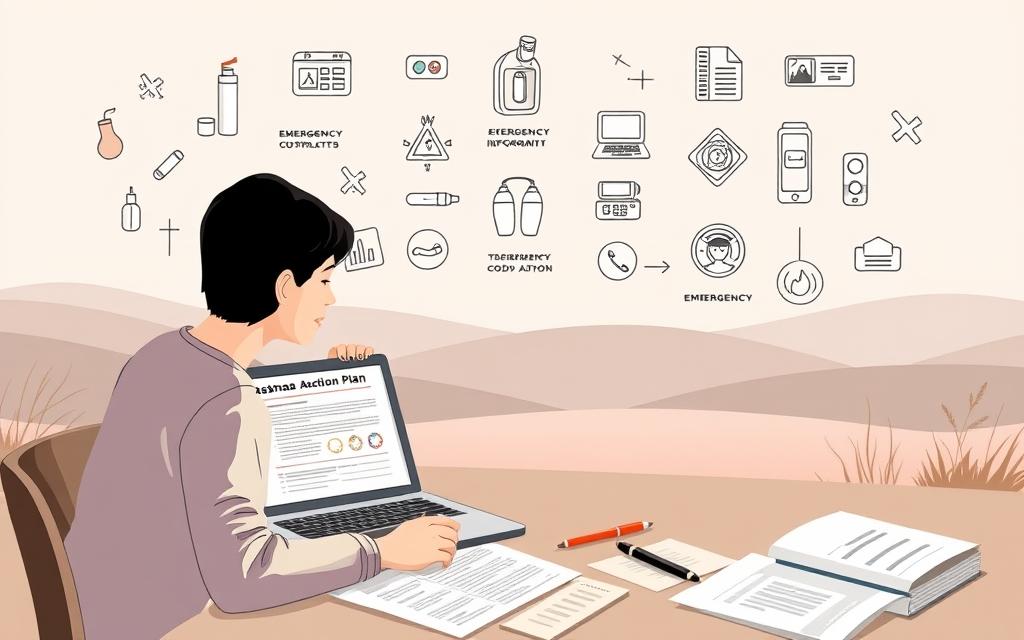
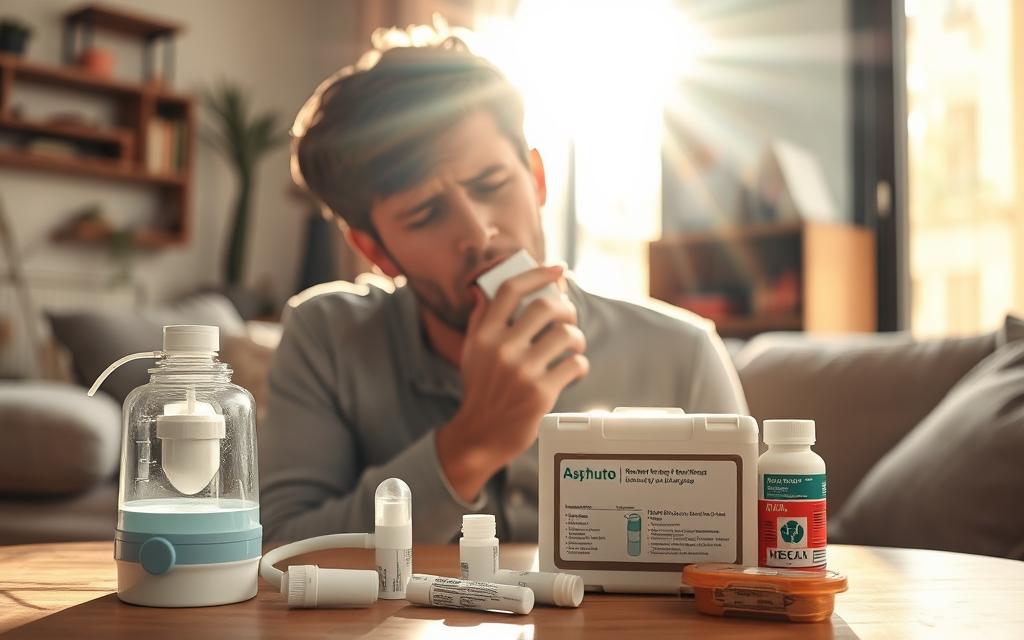
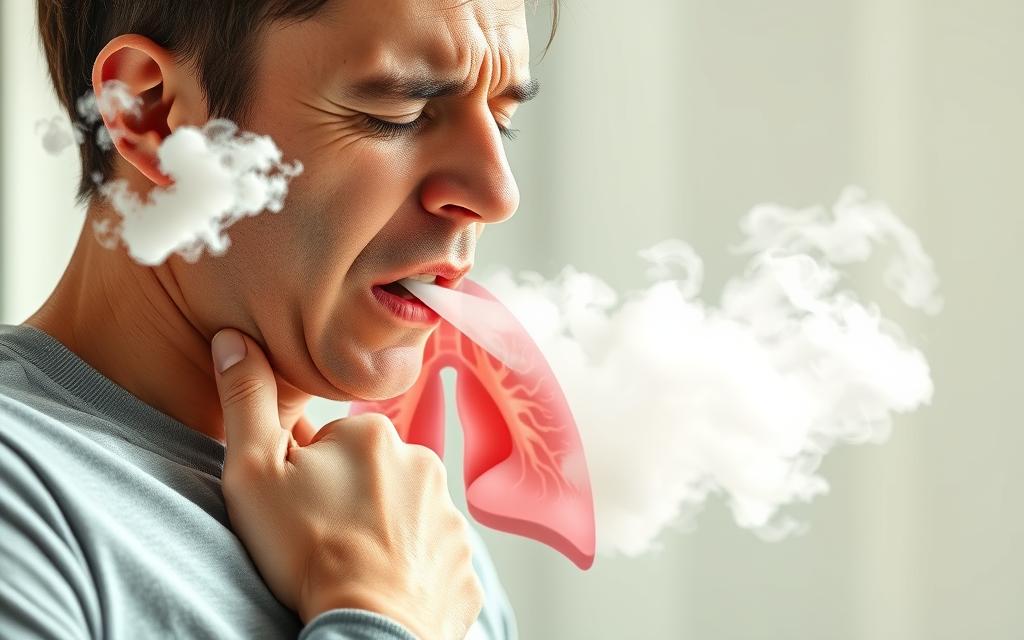
Do you know that feeling when your chest tightens and breathing gets hard? It’s scary, especially if you have asthma. An emergency asthma action plan is like a safety net. It guides us through tough times.
By learning how to manage asthma, we take charge. We reassure our loved ones that we can handle an asthma attack. A good plan helps us share what to do in an emergency. This makes everyone feel safer and less worried.
Key Takeaways
An emergency asthma action plan is essential for managing asthma flare-ups.
Understanding the symptoms and proper medication is crucial for asthma attack relief.
Personalized plans can provide clarity and guidance during emergencies.
Involving healthcare providers enhances the effectiveness of an asthma action plan.
Regular reviews of the action plan can adapt to changing needs.
Everyone around us should be aware of our action plan for better support.
Understanding Asthma and Its Impact
Asthma is a chronic respiratory condition that affects millions. It causes inflammation and narrowing of the airways. This makes breathing hard, impacting our daily lives.
Understanding asthma helps us see how different symptoms can be. Especially during severe flare-ups.
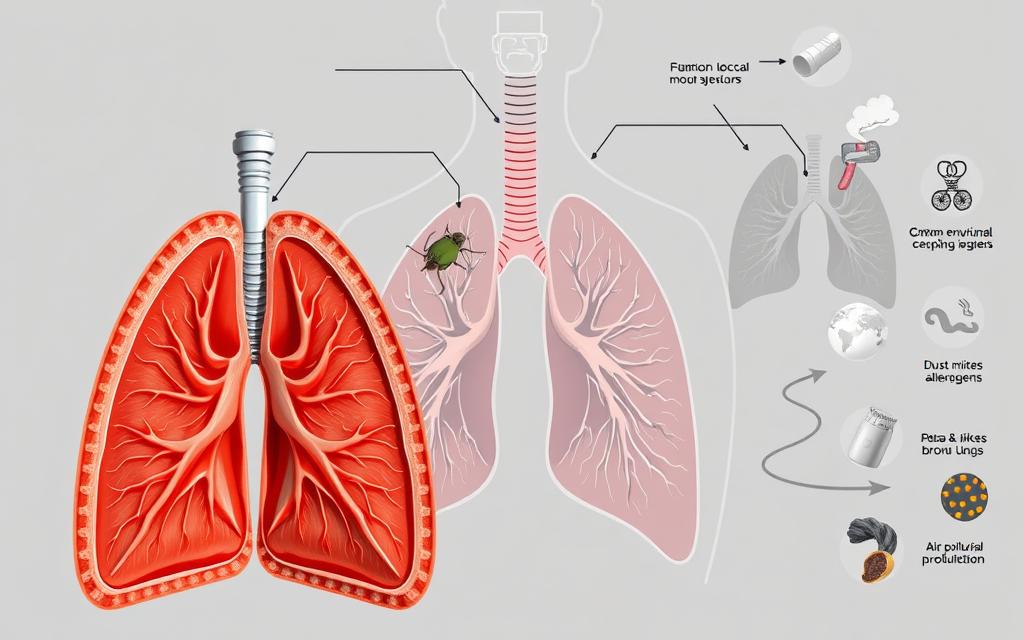
Things like pollen, smoke, or pet dander can make asthma worse. Knowing what triggers your asthma is key to managing it. By avoiding these triggers and following treatment plans, we can live better lives.
Learning about asthma helps us manage it better. This knowledge lets us quickly spot and deal with severe symptoms. It also encourages us to take care of our health.
Managing asthma means using medication and making lifestyle changes. It helps us live healthier, symptom-free lives.
What is an Emergency Asthma Action Plan?
An emergency asthma action plan is a key tool for managing asthma. It outlines steps to take when symptoms worsen. This plan helps us spot and act on worsening symptoms quickly.
This plan includes important details like medication doses and when to take them. It’s crucial for people with asthma and those who care for them. It gives us the confidence to handle asthma emergencies effectively.
Creating our action plan should reflect our personal needs and triggers. Each plan is unique, but the goal is the same: to ensure we get the right care in emergencies. With our plan, we’re ready to tackle asthma challenges and keep ourselves safe.
Importance of Having a Personalized Action Plan
A personalized asthma emergency action plan is key to managing our health well. It takes into account our unique triggers, medications, and symptoms. This makes it easier to handle an asthma emergency.
Every person’s asthma is different. So, having a plan that fits us is crucial. It helps us tackle our specific needs effectively.
Having a plan tailored to us can make asthma treatment more effective. It teaches us what to do when symptoms get bad. This reduces stress during emergencies.
Studies show that personalized plans improve how we manage our asthma. They help us visit the emergency room less and avoid hospital stays.
We should work with our healthcare team to make our asthma action plan. This way, we can find the best ways to manage our asthma together. Following our plan makes us more confident in dealing with asthma, improving our daily lives.
Benefits of a Personalized Asthma Action Plan
Impact on Health Management
Addresses individual asthma triggers
Reduces frequency of severe asthma attacks
Defines clear medication instructions
Improves adherence to prescribed treatments
Outlines specific actions for emergencies
Enhances readiness and confidence during an attack
Encourages regular monitoring
Supports proactive health management
Components of an Effective Asthma Action Plan
An effective asthma action plan is key for managing asthma well. It helps us spot symptoms, keep track of medication, and act fast in emergencies. Here are the main parts to include for good asthma care.
Identifying Symptoms and Medication
Knowing asthma symptoms is the first step in managing it. Signs include shortness of breath, chest tightness, and wheezing. We must keep a detailed record of our medications, their doses, and when to take them.
This ensures we react quickly in emergencies. We use our rescue inhaler or other meds as needed.
Understanding the Zones: Green, Yellow, and Red
The zone system makes asthma management simpler. We divide symptoms into three zones:
Zone
Symptoms
Action
Green
No symptoms; controlled asthma
Continue with regular medications
Yellow
Mild symptoms; coughing, wheezing
Use rescue inhaler and monitor closely
Red
Severe symptoms; difficulty breathing
Seek emergency care immediately
Knowing these zones helps us respond right. This prevents severe attacks and keeps us safe. Good asthma plans empower us to handle our condition with confidence.
Developing Your Emergency Asthma Action Plan
Having a good plan is key when an asthma emergency strikes. Making a plan is a team effort. We need to work with healthcare providers to understand our needs. They help make sure our plan is strong and fits us perfectly.
Consulting with Healthcare Providers
Healthcare providers are essential in managing asthma. They help us understand our condition better. They guide us on how to use emergency medication and avoid triggers. Working with them makes our asthma care safer and more effective.
Customizing the Plan for Individual Needs
Our emergency asthma plan should match our health and life. We can do this by talking about our symptoms and medications with our providers. We should also include:
Individual medication dosages
Step-by-step instructions for managing flare-ups
Contact information for our healthcare team
Emergency contacts for family members and friends
Emergency Asthma Medication: What You Need to Know
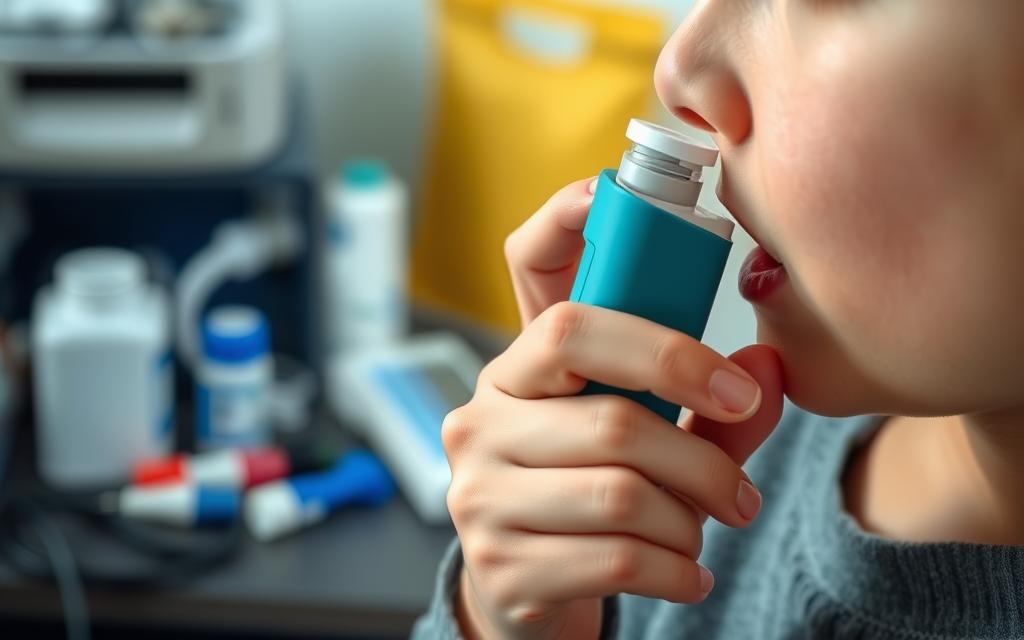
It’s key to know about emergency asthma meds for good asthma care. These meds, like quick-relief bronchodilators, help right away with symptoms like wheezing and shortness of breath. Learning how to use inhalers well can make them work better.
It’s important to know the difference between rescue and long-term meds. Rescue meds quickly help during attacks, while long-term meds prevent them. Talking often with our doctors helps us see if our meds are working and makes changes as needed.
Keeping track of how we react to emergency meds is crucial. Writing down when and how bad symptoms are helps a lot in managing asthma. This info helps us make better choices about our meds and avoid big asthma attacks.
Medication Type
Purpose
Examples
Rescue Medications
Relieve acute symptoms during an asthma attack
Albuterol, Levalbuterol
Long-term Control Medications
Prevent asthma symptoms and attacks
Inhaled corticosteroids, Leukotriene modifiers
In short, we must focus on understanding and managing our emergency asthma meds well. This helps us deal with sudden asthma attacks better, keeping us healthy and happy. Being informed and organized helps us take charge of our asthma.
Recognizing Severe Asthma Symptoms
It’s important to know the warning signs of severe asthma symptoms. Spotting these signs helps us act fast and get the right help. Being ready can really help manage our asthma and keep us healthy.
Signs That Indicate a Need for Immediate Action
Shortness of breath that is worsening or occurs at rest.
Wheezing or coughing that is persistent and does not improve.
Chest tightness that limits our ability to speak or carry out daily activities.
Signs of bluish lips or fingernails, indicating insufficient oxygen.
Declining peak flow meter readings indicating severe airway obstruction.
When to Seek Emergency Treatment
If we see severe asthma symptoms that don’t get better with our meds, we need to act fast. This includes:
Experiencing an asthma attack that lasts longer than 20 minutes.
Using a rescue inhaler more than twice in a week.
Symptoms that progressively worsen despite following the action plan.
Feeling unusually fatigued or unable to perform regular tasks.
Utilizing Peak Flow Meters for Monitoring
Peak flow meters are key asthma management tools for tracking our breathing health. They measure the fastest speed we can breathe out. This helps us see if our asthma is under control.
By using a peak flow meter every day, we can spot changes in our lungs. This lets us act fast when our breathing changes.
Using a peak flow meter means taking the same measurements every day. This makes it easier to see how our breathing is doing over time. Keeping a record of these numbers is important. It helps doctors see if our asthma is being well-managed.
Peak Flow Meter Readings
Green Zone (Good Control)
Yellow Zone (Caution)
Red Zone (Danger)
Measurement Range
80-100% of Personal Best
50-79% of Personal Best
Below 50% of Personal Best
Action Required
No action needed; continue normal medications.
Use quick-relief medications; consider contacting a healthcare provider.
Seek emergency treatment immediately.
Adding peak flow monitoring to our asthma care routine gives us more control. Knowing our numbers helps us handle our asthma better.
Emergency Response: What to Do During an Asthma Attack
When we have an asthma attack, knowing what to do can be lifesaving. First, we must stay calm. Getting anxious can make our symptoms worse. So, it’s important to breathe slowly and deeply.
Then, we should use our rescue medication. This inhaler is made to quickly ease asthma symptoms. It can really help us feel better fast.
If our symptoms don’t get better right away, we need to see a doctor. It’s key to tell others about our asthma and our plan for emergencies. This way, when we’re in trouble, help will come quickly.
Talking openly about our asthma helps others know how to help us. This is especially important when every second counts.
Tips for Managing Asthma During a Crisis
Managing asthma crises starts with being ready and quick to act. Knowing what triggers your asthma is key. Avoiding these can help prevent attacks.
Having an emergency kit with fast-acting medicines is crucial. Make sure it’s easy to find so you can act fast when needed.
Knowing the signs of an attack is vital. If you feel short of breath or wheeze, it’s time to take action. Use your peak flow meter to check how bad it is. Staying calm is also important to handle the situation better.
Talking to your doctor regularly keeps your asthma plan up to date. They can help you make it better. Following a plan during a crisis helps you know what to do.
When things get tough, breathe slowly. This helps control panic and stress, which can make breathing harder. Drinking enough water also helps keep airways clear.
Conclusion
A well-structured emergency asthma action plan is crucial for managing asthma, especially during acute episodes. Understanding our condition and tailoring our plans helps us face health crises with confidence. This preparation is essential for better asthma management during emergencies.
Regular visits to healthcare providers keep our plans up-to-date and effective. Monitoring tools help us watch our symptoms closely. By being proactive, we can control our asthma and live more active, fulfilling lives. Remember, being prepared greatly reduces risks and improves outcomes for emergency asthma plans.
FAQ
What is an emergency asthma action plan?
An emergency asthma action plan is a detailed guide for handling asthma attacks. It shows how to spot worsening symptoms and when to use certain medicines. This helps patients and their caregivers be ready.
Why is it important to have a personalized asthma action plan?
A personalized plan considers your specific triggers and symptoms. It makes emergency care more effective. This tailored approach can prevent severe attacks and improve health outcomes.
What are the key components of an effective asthma action plan?
A good plan lists symptoms, medication use, and emergency contacts. It also uses a color-coded system to track asthma control. This helps us respond quickly and effectively.
How can we recognize severe asthma symptoms?
Look out for signs like hard breathing, constant coughing, wheezing, tight chest, and trouble speaking. Spotting these early is key to managing asthma well.
What steps should we take during an asthma attack?
Stay calm and use rescue meds like bronchodilators during an attack. If symptoms don’t get better, seek medical help fast. Also, tell others about your asthma and your plan.
How can peak flow meters help with asthma management?
Peak flow meters measure breathing speed. They help track asthma control. Regular use lets us catch worsening symptoms early, helping us act fast.
What emergency asthma medications should we be familiar with?
Know your emergency meds, like bronchodilators. It’s important to understand the difference between these quick-acting meds and long-term control meds. They serve different roles in managing asthma.
How should we develop our emergency asthma action plan?
Work with healthcare providers to create a detailed, personalized plan. Regular updates based on your symptoms and triggers make it more effective.
What are some tips for managing asthma during a crisis?
Stay calm and follow your plan during a crisis. Communicate your needs and keep emergency meds handy. Regular health check-ups also help keep your asthma in check.
Living with asthma is like a daily fight. We always watch our breathing, knowing it’s hard sometimes. It’s not just about the medical terms; it’s about how asthma changes our lives.
We’ve all had moments when breathing felt hard. Simple tasks became tough. So, it’s key to learn about asthma. We need to know its symptoms and triggers to find good treatments and ways to manage it.
Let’s dive into the important parts of asthma. This way, we can not just get by, but really live well.
Key Takeaways
Asthma is a chronic lung condition affecting millions in the U.S.
Understanding asthma symptoms is vital for effective management.
Identifying triggers can significantly reduce the risk of asthma attacks.
Medications and inhalers are critical components of asthma treatment.
Creating an action plan helps in managing the condition more effectively.
Regular check-ups are essential for long-term asthma management.
What is Asthma?
Asthma is a long-term lung disease that makes breathing hard. It causes symptoms like shortness of breath, wheezing, and tightness in the chest. Knowing about asthma means understanding its definition and types.
Definition and Overview
Asthma affects millions of people around the world. It makes the airways narrow and swell, leading to more mucus. This makes breathing in and out of the lungs hard. But, with the right care, people with asthma can live full and active lives.
Types of Asthma
Knowing about the different types of asthma helps us understand it better. Each type has its own triggers and symptoms. This affects how we treat it. Here’s a quick look at the main types of asthma:
Type of Asthma
Description
Common Triggers
Allergic Asthma
Caused by allergens like pollen, pet dander, or dust mites.
Dust mites, pollen, pet dander, molds.
Non-Allergic Asthma
Caused by non-allergic factors like weather changes or stress.
Strong odors, cold air, exercise.
Exercise-Induced Asthma
Happens during or after exercise.
Cold weather, prolonged exercise.
Occupational Asthma
Caused by specific irritants at work.
Chemicals, dust, fumes, animal dander.
Learning about these asthma types helps us manage it better. Knowing our specific type can improve our health and quality of life.
Common Asthma Symptoms
It’s important to know about asthma symptoms for those who have it and their families. Asthma can show up in different ways, making it hard to understand its impact. Common signs include shortness of breath, wheezing, a chronic cough, and feeling tight in the chest. Spotting these symptoms early can help manage the condition better and make us feel more comfortable.
Identifying Key Symptoms
Key symptoms of asthma often present as:
Shortness of breath: This symptom can make it hard to do physical activities.
Wheezing: A high-pitched whistling sound during exhalation usually means airway constriction.
Cough: A persistent cough, especially at night or early morning, may signal an asthma flare-up.
Chest tightness: This feels like pressure or a band around the chest.
How Symptoms Vary Among Individuals
Symptoms of asthma can differ from person to person. Some might have mild symptoms less often, while others face ongoing issues. Triggers can include physical activity, cold air, or specific allergens, making symptoms worse. By tracking these differences, we can understand our condition better and take a more active role in managing our health.
Understanding Asthma Triggers
Knowing what triggers asthma is key to managing it well. Many things can set off symptoms, so it’s crucial to understand them. Both things in our environment and physical activities can make asthma worse. Let’s look at some common triggers.
Common Environmental Triggers
Environmental allergens are big asthma triggers. Knowing what they are helps us stay away from them. Here are some common ones:
Pollen from trees, grasses, and flowers
Dust mites in bedding and furniture
Pet dander from cats, dogs, and other animals
Mold spores in damp places
Cold air, which can make airways tight and cause symptoms
Physical Activities that Trigger Symptoms
Physical activities can also trigger asthma, especially in cold weather. Exercise-induced asthma can make breathing hard during or after intense activity. Here are some situations that can make symptoms worse:
Outdoor exercise in cold weather
Intense running or playing sports
Long activities without warming up
Asthma Causes: What We Know
Understanding asthma involves looking at many factors. It’s a complex condition that can be influenced by genetics and the environment. Each person’s triggers can be different. Let’s dive into these factors.
Genetic Factors
Genetics play a big role in asthma. If your family has asthma or allergies, you might get it too. Research shows that genes can affect airway inflammation and sensitivity, key in asthma.
By finding these genetic markers, scientists can better understand asthma’s hereditary side.
Environmental Contributors
Environmental factors are also key in asthma. Air pollution, tobacco smoke, and allergens can make symptoms worse or start asthma. Young kids exposed to infections early might be more likely to get asthma later.
Knowing these environmental factors helps us avoid them. This way, we can reduce our risk of asthma.
Factor
Description
Impact on Asthma
Genetic Factors
Family history of asthma and allergies
Increases likelihood of developing asthma
Pollution
Exposure to environmental pollutants
Can trigger symptoms and exacerbate condition
Allergens
Dust mites, pollen, pet dander
Common triggers that may lead to asthma attacks
Respiratory Infections
Early exposure to infections
Might increase asthma risk in young children
Diagnosing Asthma
Understanding how to diagnose asthma is key to managing it well. A healthcare provider will start by looking at our medical history. They will also ask about our symptoms and do a physical check-up. Each step helps find the best treatment for us.
Steps to Diagnosis
Diagnosing asthma involves a few important steps. Our healthcare provider will likely focus on these:
Reviewing our medical history and symptoms.
Conducting a physical examination to identify any signs of asthma.
Administering specific asthma tests to confirm the diagnosis.
Tests Used by Healthcare Providers
After the initial check-up, several asthma tests might be used. These tests check our lung function and how severe our condition is. Here are some tests we might see:
Test Type
Purpose
Lung Function Tests
Measure how well our lungs are working, typically through spirometry.
Peak Flow Meter
Helps us monitor our maximum speed of expiration, providing insight into asthma control.
Allergy Testing
Identifies potential allergens that might trigger asthma symptoms.
Asthma Treatment Options
Managing asthma requires a full approach. This includes different medications to control symptoms, prevent flare-ups, and help in emergencies.
Medications and Inhalers
There are many medications for asthma. Inhalers are a key part of treatment. They come in two types: rescue and maintenance.
Rescue inhalers, like albuterol, help right away during an attack. Maintenance inhalers, such as corticosteroids, manage long-term symptoms and reduce inflammation. Knowing the difference is key to managing asthma well.
Long-term Management Strategies
Long-term plans are crucial for asthma management. We need to work with our doctors to create a personalized plan. This plan includes our medications and how to avoid triggers.
Regular check-ups are important. They help keep our treatment on track and make any needed changes.
Emergency Treatments for Severe Attacks
Severe asthma attacks need quick emergency care. Rescue inhalers with rapid-acting bronchodilators can save lives. It’s important to know the signs of a severe attack and when to get help.
Having an emergency plan helps us act fast. It’s a key part of managing asthma.
Medication Type
Purpose
Examples
Rescue Inhalers
Immediate relief during asthma attacks
Albuterol, Levalbuterol
Maintenance Inhalers
Long-term control of asthma symptoms
Fluticasone, Budesonide
Oral Medications
Manage chronic asthma and reduce inflammation
Montelukast, Theophylline
Asthma Management: Living with the Condition
Managing asthma well is key to staying active. Creating a personalized asthma action plan is crucial. It helps us manage symptoms, use medication, and stay healthy. This plan lets us live our lives with more confidence.
Creating an Asthma Action Plan
An asthma action plan is a guide for managing asthma. It includes:
Details on daily medication
Signs of worsening symptoms
When to call for emergency help
Ways to avoid triggers
This plan helps us act fast when our asthma gets worse. It keeps us safe and healthy.
Keeping Track of Symptoms and Medication
Tracking symptoms is important for managing asthma. By noting changes, we can adjust our treatment. We can track symptoms in several ways:
Keeping a symptom diary
Using asthma apps
Seeing healthcare providers regularly
Monitoring symptoms helps us improve our asthma care. It lets us live fully, even with asthma.
Preventing Asthma Attacks
Keeping our health in check is key. We can’t stop asthma from happening, but we can dodge things that might set off an attack. Knowing what sets off our asthma helps us stay safe.
Identifying and Avoiding Triggers
Knowing and dodging asthma triggers can cut down on symptoms. Common culprits include:
Dust mites
Pollen
Animal dander
Smoking or secondhand smoke
Strong odors or fragrances
By keeping an eye out and steering clear of these, we boost our asthma fight. This not only keeps us comfy but also cuts down on serious attacks.
Importance of Regular Check-ups
Regular doctor visits are crucial for asthma management. They help us keep an eye on our health and tweak our treatment if needed. At these visits, we can:
Discuss any changes in symptoms
Review our asthma action plan
Explore new treatments or interventions
Being proactive with regular doctor visits helps us manage our asthma better. It’s all about staying healthy and living our best lives.
Conclusion
Understanding asthma is key to managing it well. Knowing its symptoms, triggers, and treatments is crucial. Working closely with healthcare providers helps us create plans that improve our breathing and quality of life.
Staying informed about asthma is important for our health and the health of our communities. By supporting education and resources, we make our environment safer for all. This helps everyone breathe easier.
By focusing on prevention and managing our asthma, we can live healthier, more active lives. Let’s work together to be proactive about asthma management. This way, we can all have the tools and knowledge to handle this condition successfully.
FAQ
What are the common symptoms of asthma?
Asthma symptoms include shortness of breath and chest tightness. You might also cough a lot and wheeze, especially when you breathe out. These signs can change in how often and how bad they are for each person.
What triggers asthma attacks?
Many things can set off asthma attacks. Pollen, dust mites, pet dander, mold, and cold air are common culprits. Even doing physical activities in the cold can cause asthma problems.
How is asthma diagnosed?
Doctors use a few steps to figure out if you have asthma. They look at your health history and do a physical check. They might also do lung tests, peak flow measurements, and allergy tests to see how bad it is.
What treatment options are available for asthma?
There are many ways to treat asthma. Doctors might prescribe inhalers, corticosteroids, and bronchodilators. The goal is to keep symptoms under control and avoid things that make them worse.
Can asthma be prevented?
You can’t stop asthma from happening, but you can stop attacks. Find out what makes your asthma worse and stay away from it. Stick to your asthma plan and see your doctor regularly.
What is an asthma action plan?
An asthma action plan is a special guide made with your doctor. It tells you how to handle your symptoms, when to take medicine, and what to do if you have a bad attack.
What types of asthma exist?
Asthma comes in different forms. There’s allergic, non-allergic, exercise-induced, and occupational asthma. Each type has its own causes and symptoms, which affect how you’re treated.
What should we do during a severe asthma attack?
If you have a bad asthma attack, use your quick-acting inhaler as told. If it doesn’t help, get help right away. Always follow your asthma action plan.
As twilight falls, many of us struggle with restless thoughts and loud notifications. We lie awake, watching the clock, hoping for restful sleep. But, what if small habits could change our nights into peaceful rest?
By adopting sleep hygiene, you can make your bedtime routine calm and restful. This leads to better sleep and a healthier mind for each day. Poor sleep hygiene can harm both body and mind1. Start your journey to better sleep with these simple steps.
Key Takeaways
Sleep hygiene involves practices that promote consistent, uninterrupted rest to enhance overall well-being.
A regular sleep schedule can bolster your body’s internal clock and heighten sleep quality.
Creating a calming bedtime routine can pave the way for easier sleep onset and deeper rest.
Your sleep environment, including room temperature and lighting, plays a crucial role in achieving restful nights.
Limiting screen time and managing caffeine intake are essential steps for improving sleep hygiene.
Understanding Sleep Hygiene
Sleep hygiene is about the habits and practices that affect how well and long we sleep. It’s important for people of all ages to have good sleep habits. Adults should aim for 7 to 9 hours of sleep each night for health2.
Newborns need 14 to 17 hours, and teenagers should aim for 8 to 10 hours3. Not getting enough sleep can cause serious health problems like type 2 diabetes and heart disease. So, keeping good sleep hygiene is key3
It’s important to know when your sleep isn’t good. You might find it hard to fall asleep, wake up a lot, or still feel tired even after sleeping enough3. To improve sleep, make your bedroom comfortable and quiet2.
Studies show that what you eat and do can affect your sleep. For example, dairy and caffeine can mess with your sleep. But, regular exercise can help you sleep better2.
Why Is Sleep Hygiene Important?
Good sleep hygiene is key for your health. It helps you fall asleep faster and sleep better. People with good habits sleep more soundly4.
But, many find it hard to stick to a sleep schedule. This is bad because it can make sleep quality suffer4. Studies show that good sleep habits are linked to better health. For example, those who sleep well have fewer sleep issues5.
Exercise and healthy food also help you sleep better4. Your bedroom should be cool, dark, and quiet for good sleep4. Avoiding TV and work in bed helps you fall asleep quicker4. Activities like meditation before bed also improve sleep4.
Most adults need 7 to 8 hours of sleep. But, things like your environment or bedtime habits can mess with that6.
In short, good sleep habits are crucial. They lead to better sleep, less health problems, and a happier life5.
Establishing a Consistent Sleep Schedule
Creating a consistent sleep schedule is key to better sleep and health. A regular routine helps your body’s natural rhythm. This can make you feel more alert and less sleepy during the day. Most adults need 7-9 hours of sleep each night to feel their best.
Benefits of a Fixed Routine
Having a regular sleep schedule brings many health benefits. Studies show it helps keep your body’s sleep cycle in check. This is important for your well-being and mood.
People who stick to a sleep routine often feel less stressed. This makes it easier to handle daily tasks. Also, sleeping a bit more on weekends can help balance out sleep debt from the week7.
Tips for Sticking to Your Schedule
To keep up with a sleep schedule, try these tips:
See sleep as a vital part of your life.
Change your bedtime and wake time slowly to avoid disrupting your rhythm.
Keep daytime naps short, under 1 hour, to avoid affecting your night sleep8.
Stay away from nicotine and caffeine a few hours before bed to improve sleep.
Use a calming routine to get ready for sleep.
Creating a Relaxing Bedtime Routine
A good bedtime routine tells your body it’s time to relax. It can make your sleep much better. Try to start your routine 30 to 60 minutes before bed9.
Doing things that calm you down is key. A warm bath can make you feel sleepy because it lowers your body temperature9. Yoga or stretching can relax your muscles. Reading or meditation can reduce stress quickly10.
Activities to Include for Relaxation
Warm Bath: Taking a warm bath at least an hour before bedtime.
Yoga: Incorporating daily yoga routines or simple stretches to enhance relaxation.
Meditation: Practicing mindfulness techniques to manage thoughts and emotions.
Reading: Choosing calming literature rather than exciting genres to prepare your mind for sleep.
Listening to Music: Enjoying calming sounds or pink noise to improve sleep quality.
Timing Your Routine for Success
Being consistent with your bedtime routine helps you sleep better. Start your routine at the same time every night9. If you can’t sleep, try meditation or reading for ten minutes to avoid sleepless nights10.
Make your bedroom cool, between 65 to 68 degrees Fahrenheit. Also, keep it dark and quiet for a better night’s sleep9.
Managing Your Sleep Environment
An optimal sleep environment is key for good rest. The room should be around 65 degrees Fahrenheit for most people11. Darkness helps make melatonin, but light can wake you up11 and12.
Keeping noise down is also vital. Loud sounds can disrupt your sleep11. Use curtains to block noise and keep your room dark and quiet.
Your bedding and mattress matter too. New mattresses can improve sleep and reduce back pain11. Wash your sheets every two weeks to keep your sleep area clean11 and12.
Vacuuming carpets can cut down on dust mites, which can cause allergies11. Adding things like lavender essential oil or calming music can help you relax and sleep better11.
Limiting Blue Light Exposure
Blue light from electronic devices can mess with our sleep. Many of us use these devices right before bed, which can make it hard to sleep well. Studies show that blue light affects our body clock more than other lights13.
Using devices in the evening can stop our body from making melatonin, the sleep hormone13. This can lead to health problems like metabolic issues and depression13.
Understanding Blue Light and Sleep
About half of people feel less tired from blue light, but 20% sleep worse14. Also, 33% of studies say blue light makes us sleep less, and 50% say it makes sleep less effective14. Almost half of studies found it makes falling asleep harder14.
Steps to Reduce Blue Light Before Bed
To cut down on blue light, turn off devices and other blue light sources at night. Set an alarm to remind you to do this two to three hours before bed13. Blue light-blocking glasses can help, but it works differently for everyone13.
Using lamps that give off red or orange light for reading and adjusting screen brightness can also help13.
Nutrition’s Role in Sleep Quality
Nutrition plays a big role in how well we sleep. The right foods help us sleep better, while others can make it harder. Our bodies need certain nutrients to help us sleep well, so it’s important to think about what we eat.
Best Foods for Better Sleep
Some foods can help us sleep better. For example, bananas, almonds, and turkey are good because they have magnesium and tryptophan. These help us relax at night.
Also, foods like oatmeal and whole-wheat bread are easy to digest before bed. They help us relax and sleep better1516. Eating foods high in fiber, like fruits and veggies, can also improve our sleep. The Mediterranean diet, with its focus on legumes, fruits, and whole grains, is also good for sleep1517.
Foods to Avoid Before Bed
But, some foods can make it hard to sleep. Big or spicy meals and foods high in fat can cause discomfort. This can wake us up in the middle of the night1716.
Drinking caffeine or alcohol close to bedtime can also mess with our sleep. It can make us wake up more during the night1716. Eating too much sugar or carbs can also make our blood sugar go up. This can make it hard to sleep well1716. Knowing what to eat and when can really help us sleep better.
Exercise for Improved Sleep Hygiene
Regular physical activity and sleep are closely linked. Studies show that exercise can make sleep better. Doing at least 30 minutes of moderate aerobic exercise daily can help sleep quality improve that night. It boosts slow wave sleep, which is key for feeling refreshed18.
For many, aerobic activities like swimming, biking, jogging, or brisk walking are best for sleep. They are more effective than intense workouts19. It’s important to wait 1 to 2 hours after exercising to sleep. This helps lower endorphins and body temperature, making sleep better1819.
Some research suggests exercise timing doesn’t greatly affect sleep. Yet, almost one-third of adults suffer from chronic insomnia, often due to stress20. Exercise routines can help physical health and reduce anxiety, which can disrupt sleep. So, combining exercise with sleep hygiene practices might be the best way to manage sleep issues2019.
Making Room for Naps
Napping can boost your energy and alertness during the day. It’s important to follow napping best practices to get the most benefits. The best nap length is 20 to 30 minutes. This length helps you wake up feeling refreshed, not groggy.
Longer naps can make you feel tired for about 35 minutes after waking. It’s best to nap after 3 p.m. to avoid affecting your nighttime sleep. Planning your naps is key to keeping your sleep schedule on track21.
Best Practices for Napping
Here are some tips to make your naps more effective:
Limit naps to 20-30 minutes to avoid feeling tired after waking.
Nap in the early afternoon, between 1 p.m. and 3 p.m., to avoid disrupting your nighttime sleep.
Create a calming environment that is quiet, dark, and comfortable to help you fall asleep fast.
Consistently practice good sleep hygiene to improve both your naps and nighttime sleep22.
When to Avoid Napping
Naps might not be right for everyone. You might want to skip naps if:
You struggle with nighttime sleep. Long naps can make sleep problems worse, like insomnia21.
You feel tired all day but still can’t sleep at night. This could mean there’s a health issue21.
You notice sudden changes in your napping needs. If you need more naps, it might be a sign of a health problem21.
Stress Management Techniques
Managing stress is key for good sleep. Mental practices like mindfulness meditation and yoga help relax you at night. They reduce stress levels. Studies show 44 percent of adults have trouble sleeping due to stress23.
Adding these practices to your routine can improve your sleep.
Mental Practices for Peace at Night
Mindfulness meditation helps adults sleep better. It’s shown to improve sleep quality and reduce daytime tiredness, mainly in older adults24. Gentle breathing exercises for five minutes can also calm you down.
Progressive muscle relaxation, tensing and relaxing muscles, also helps manage stress for better sleep.
Journaling to Clear Your Mind
Journaling is great for clearing your mind before bed. It helps you release worries and relax. This is because stress can lead to poor sleep24.
By journaling and using stress management techniques, you can sleep better.
Habit for Better Sleep: Forming Sustainable Practices
Creating a habit for better sleep means sticking to practices that fit your life. Getting at least 30 minutes of daylight daily helps your body’s clock stay in sync for better sleep25. Keeping a regular sleep schedule is key; people who wake up and go to bed at the same time sleep better2526. Try to nap for only 20 minutes in the afternoon to avoid messing up your night’s sleep2526.
What you eat affects how well you sleep. Eating foods like fruits, veggies, and whole grains can help you sleep better. But, some nutrients are missing in our diets and can hurt our sleep25. It’s important to get at least seven hours of sleep each night. Sadly, about one-third of adults don’t get enough26. Having a bedtime routine that you follow every night can make falling asleep and sleeping better easier25.
Also, make sure your bedroom is set up for sleep. The best temperature for sleep is between 65 and 68 degrees Fahrenheit25. A quiet room is better for sleep, so try to keep it as quiet as possible25. By following these tips, you can make lasting changes to your health and sleep.
Alcohol and Caffeine: What You Need to Know
Alcohol and caffeine can really mess with your sleep. It’s best to avoid alcohol for at least 3 hours before bedtime. This is because nearly 90% of people who drink in the evening have sleep problems, based on data from about 160,000 Sleep Foundation profiles27.
At first, alcohol might make you sleepy. But it disrupts your sleep later on, making it less quality. For those with alcohol dependence, about 75% experience insomnia when they drink27. This makes it hard to get good sleep, showing how alcohol affects sleep.
Caffeine also impacts sleep. It takes 30-70 minutes for caffeine to peak in your body. Its effects can last from 3 to 7 hours28. It’s advised to limit caffeine to 200 mg a day and avoid it for 3 to 7 hours before bed28.
Not following these guidelines can make you stay awake longer and sleep less efficiently. This worsens sleep hygiene issues.
People with alcohol in their system might find it hard to wake up. This can make it tough to recover from sleep disorders like obstructive sleep apnea27. Binge drinking can also mess with melatonin levels for up to a week, showing the importance of drinking in moderation28.
Having clear rules about alcohol and caffeine intake is key for better sleep and health.
Creating a Comfortable Sleep Space
To make your sleep space comfy, focus on your mattress and bedding. The right mattress affects how firm it is, how it feels on pressure points, and keeps your spine straight. It’s key to pick a mattress that fits your sleep style for better comfort.
According to Sleep Foundation, over two-thirds of people have had bad sleep for a long time. This shows how important a good sleep space is29.
Choosing the Right Mattress and Bedding
Look for mattresses and bedding that breathe well and support you. Memory foam and latex are great for hugging your body while keeping air flowing. Bedding made from cotton or bamboo also helps by keeping you cool.
Keeping your bedroom at 65 to 68 degrees is best for sleep30. With the right bedding, this makes your bedroom perfect for sleeping.
Temperature and Noise Considerations
Temperature and quiet are key for a good sleep space. Sleeping in a room around 65 to 68 degrees is best. A quiet room helps you sleep without being disturbed.
Using earplugs or a white noise machine can block out loud noises. This helps you sleep better and feel good overall30.
Prioritizing Sleep as an Essential Part of Life
Sleep is key to staying healthy and feeling good. Studies show that sleep quality links to our lifestyle, like exercise, diet, and stress31. Most adults need seven hours of sleep each night to be at their best32. Kids and teens need even more, with school-age children needing nine hours and teens needing eight to ten hours32.
Setting sleep boundaries is important in our fast-paced world. Reducing work stress and avoiding screens before bed can help sleep quality31. It’s also good to have tech-free times, like turning off devices from 10 p.m. to 7 a.m31.. Stress-reducing activities, like meditation and being thankful, can also improve sleep31.
Lack of sleep can lead to feeling tired, unfocused, and short-tempered33. Sleep disorders like insomnia and sleep apnea can mess up our sleep patterns and harm our health32. About one third of people deal with insomnia, which can really affect how we feel and think33. It’s vital to make sleep a priority for our own health and for the well-being of our communities.
Monitoring Your Sleepless Nights
It’s key to track your sleep quality to find out what’s causing restlessness. Using good sleep monitoring methods helps you see patterns and disturbances in your sleep. About one-third of people struggle with sleep, showing how vital it is to know your sleep habits34.
Writing down your sleep in a journal or using a phone app can help. This way, you can keep track of nights when you don’t sleep well and what might be affecting your sleep.
Not getting enough sleep can harm your thinking, mood, and health. It can even raise your risk of obesity and diabetes35. By watching your sleep, you can spot lifestyle habits that hurt your rest. Experts say to avoid caffeine and alcohol at least four to six hours before bed34.
Getting regular insights from tracking your sleep can help you change your habits. This can lead to better sleep and overall health.
Conclusion
To get better sleep, it’s key to follow good sleep habits every day. Keeping a regular sleep schedule and a calming bedtime routine helps a lot. It not only makes you sleep better but also keeps you healthy.
One in three adults in the U.S. don’t get enough sleep36. Making your sleep area cool, dark, and quiet can really help your sleep quality36. This can make you feel better overall.
What you eat matters too. Eating foods low in sugar and high in magnesium, like nuts and yogurt, helps your sleep37. Exercise is also important. Doing some physical activity during the day can make your sleep deeper37/38.
Small changes, like not using screens at night and sticking to a sleep schedule, can make a big difference. These habits not only help you sleep better but also improve your health.
By focusing on these habits and making a plan for your sleep, you can create a sleep-friendly environment. With the right habits, you’ll get the restful sleep your body needs36. This is part of living a healthy lifestyle.
FAQ
What is sleep hygiene?
Sleep hygiene is about the habits that help you sleep well. It’s about getting good sleep every night. This improves your sleep quality and habits.
How can I create a healthy bedtime routine?
Start winding down 30 to 60 minutes before bed. Try relaxing activities like reading or yoga. Doing the same things every night helps your body get ready for sleep.
Why is it important to maintain a consistent sleep schedule?
A regular sleep schedule helps your body’s natural rhythm. It reduces daytime tiredness and boosts your mood and productivity.
What impact does blue light have on sleep?
Blue light from screens can stop your body from making melatonin. This makes it hard to fall asleep. Try to avoid screens for at least an hour before bed.
What types of foods should I eat for better sleep?
Eat foods with magnesium, potassium, and tryptophan like bananas and turkey. Avoid big meals, caffeine, and alcohol close to bedtime.
How does exercise influence sleep quality?
Exercise improves sleep and helps your body’s rhythm. Do at least 30 minutes of aerobic exercise daily. But, don’t work out too close to bedtime.
Can napping affect nighttime sleep?
Yes, napping can help, but only for 20-30 minutes in the afternoon. Longer or late naps can mess up your nighttime sleep.
How can I manage stress to promote better sleep?
Use mindfulness, paced breathing, or journaling before bed. These can calm your mind and help you sleep better.
What role does alcohol play in sleep quality?
Alcohol might make you sleepy at first, but it can disrupt your sleep later. Try to limit alcohol, specially before bed.
How do I create a comfortable sleep environment?
Keep your bedroom cool, dark, and quiet. Choose a comfy mattress and good bedding. Use earplugs or a white noise machine if needed.
Why should I prioritize sleep?
Sleep is key for your health and happiness. Treating sleep as important can make you healthier and happier.
How can tracking my sleep patterns help?
Tracking your sleep can show you what’s affecting it. This info helps you make better sleep habits.
Have you ever spent a sleepless night, staring at the ceiling while the clock ticks mercilessly? You’re not alone—about one-third of Americans get less than seven hours of sleep. This frustration makes us wonder: How do what we eat and how much we move affect our sleep?
Understanding the sleep quality connection between diet and exercise is key. It’s not just for a good night’s sleep but for our overall health. Studies show that eating right and staying active can help with sleep problems. In today’s busy world, focusing on these optimal wellness practices can make our lives healthier and more fulfilling. It lets us wake up feeling refreshed and ready to tackle the day.
Research shows that eating too many calories or fats can hurt sleep quality. Not getting enough nutrients can also make sleep worse1. On the other hand, regular exercise, whether it’s aerobic or resistance training, can make sleep better2. The path to better sleep starts with knowing how our choices affect our nights and days.
Key Takeaways
Diets high in nutrients like calcium and vitamins can enhance sleep quality.
Regular exercise improves sleep duration and quality.
Sleep deprivation is linked to serious health risks like obesity and heart disease.
Even light physical activity can lead to better sleep outcomes.
Exercising close to bedtime should be done mindfully to avoid sleep disruption.
The Connection Between Diet, Exercise, and Sleep
Diet and exercise are key to good sleep. Eating right helps set a good sleep pattern. Regular workouts also improve sleep quality.
A 2020 study found that the Mediterranean Diet boosts sleep in adult women in the U.S3.. Eating more protein and less carbs and fats also leads to better sleep3. Meals high in protein and fiber, but low in sugar and unhealthy carbs, also improve sleep3.
Exercise can fight the effects of not sleeping well. Poor sleep can make us choose unhealthy foods, starting a bad cycle4. Lack of magnesium and vitamin D can cause insomnia and restless sleep34. Combining exercise with a healthy diet can lead to better sleep, more energy, and a better mood.
Importance of Maintaining Healthy Lifestyle Habits
Healthy lifestyle habits are key to feeling your best. Regular exercise and a balanced diet boost both physical and mental health. This combo is essential for quality sleep, as studies show a strong link between sleep, diet, exercise, and stress5.
Following a sleep routine is important. This includes setting a consistent sleep schedule and avoiding too much caffeine. These habits can improve your overall health5.
Adding exercise to your daily life helps your mental health too. It can lower depression and anxiety, boost self-esteem, and help you connect with others67. These habits not only improve sleep but can also increase your life expectancy5.
Impact of Nutrition on Sleep Quality
Diet plays a big role in how well we sleep. Short sleepers, who sleep less than 7 hours, often eat less varied diets. They also eat fewer important nutrients like protein, carbs, and fats. This can make them feel more tired and sleep worse8.
Eating too much junk food and processed carbs can hurt sleep. For example, eating lots of carbs, but not the good kind, can make sleep worse8. Also, eating snacks too late or skipping breakfast can mess up sleep9.
Eating enough protein is key for good sleep. Not enough protein can make it hard to fall asleep. But eating more protein can help you sleep better8. Also, eating the right amount of carbs helps keep sleep steady, showing that it’s not just about how much you eat, but what you eat8.
How Exercise Improves Sleep Quality
Exercise is key to better sleep. It lowers cortisol, the stress hormone that disrupts sleep. Studies show that intense workouts help reduce cortisol, leading to better sleep.
For those with insomnia or sleep apnea, exercise helps. A study found that HIIT improved sleep for middle-aged adults who were not active10.
When you exercise matters too. Exercising later in the day leads to deeper sleep and feeling refreshed11. Moderate to vigorous exercise also helps by making it easier to fall asleep and reducing nighttime wake-ups11.
Older adults benefit from exercise too. It improves sleep quality and reduces daytime sleepiness10. Exercise also boosts melatonin, helping you sleep naturally and stay well12.
Adults should aim for 150 minutes of moderate exercise weekly and strength training twice a week11. This shows how diet and exercise impact sleep. In short, combining exercise with good sleep habits greatly improves sleep health12.
Diet and Exercise Affect Rest
It’s important to know how diet and exercise impact sleep. What we eat can affect how well we sleep. Foods high in sugar, fat, or low in fiber can make it hard to sleep well13.
Not eating enough of the right foods can also hurt sleep quality13. Eating at irregular times can lead to obesity, which can make sleep worse13.
Influence of Diet on Sleep Patterns
Caffeine and alcohol before bed can make sleep poor13. Not getting enough sleep can make us hungrier and eat more the next day14. This can mess up our sleep even more because it changes how our body feels full or hungry14.
Role of Exercise in Sleep Stability
Exercise helps sleep by making it deeper and more stable. People who exercise regularly sleep 75 minutes more each night14. It also helps them fall asleep faster, leading to better sleep14.
Nutritional Factors That Affect Sleep Quality
Knowing what foods affect sleep can really help your health. Foods like fish, nuts, and seeds help with sleep. They have melatonin, which is good for sleep cycles15.
Foods rich in tryptophan, like poultry and eggs, can also help. They boost serotonin, making sleep better15. Magnesium in legumes and greens is key for a good sleep-wake cycle16.
But, foods high in sugar and refined carbs can hurt sleep16. Not getting enough vitamins A, C, D, E, calcium, and magnesium can also make sleep worse17. People with low nutrient levels often sleep less and wake up more16.
When and what you eat can also matter. Eating big meals before bed can make it hard to sleep16. Research shows fasting for 12 hours can make sleep better16. Eating wisely is key to better sleep.
Timing of Meals and Sleep Quality
The timing of meals greatly affects sleep quality. Eating late can make it hard to fall asleep and stay asleep. Studies show that eating at night can harm sleep in healthy people18.
Digestion problems from big meals before bed are a big reason. Experts say to wait at least three hours after dinner to sleep better18.
Effects of Late-Night Eating
Eating late can cause indigestion and make it hard to relax18. A study found that big dinners can lead to insulin resistance, unlike big breakfasts18. Eating a small dinner three hours before bed can help with sleep and reduce heartburn18.
Research also links late-night eating to obesity and metabolic syndrome18. Bad food choices during the day can also make sleep lighter and less refreshing19.
To improve sleep, it’s key to have regular meal times and a consistent sleep schedule. Following these tips can greatly improve sleep and health.
Aerobic vs. Resistance Training: Which is Better for Sleep?
The debate between aerobic vs. resistance training for sleep is common. Studies show that resistance training is better for sleep in adults under 65. It beats aerobic exercise in improving sleep quality20.
A meta-analysis of 34 studies found that exercise improves sleep in about 85.3% of cases21. Those who did resistance training slept 40 minutes more than those who did aerobic exercises20. The American Heart Association suggests doing strength training at least twice a week for better sleep20.
Over 400 overweight or obese adults were studied. They who did muscle-building exercises slept 17 minutes more each year than others22. Those who did both aerobic and resistance training saw big sleep improvements. But those who only did cardio didn’t see the same gains22.
To get better sleep, doing fun physical activities is key. Knowing the benefits of both aerobic and resistance training helps create a good fitness plan. This leads to better sleep.
The Holistic Health Approach to Sleep
A holistic health approach looks at how diet, exercise, and rest work together to improve sleep. This method not only helps you sleep better but also boosts your overall health. It’s a way to reach long-term health goals.
Integration of Diet, Exercise, and Rest
About 70 million Americans deal with sleep disorders, showing a big health problem. Adults need 7-9 hours of sleep each night for good health. But many don’t get enough23.
Keeping a regular sleep schedule is key. Studies say it can make sleep up to 30% better23.
What you eat affects your sleep too. Foods like turkey and dairy help make melatonin, which is important for sleep24. Foods with magnesium, like almonds, also help you relax and sleep better24.
Exercise is also vital. Doing 150 minutes of moderate exercise a week is good for sleep. It’s best to exercise 3-4 hours before bedtime24.
Using mindfulness and relaxation before bed can also help. Just 5-10 minutes of deep breathing or meditation can improve sleep. This shows how important a holistic approach is24.
Importance of Diet and Exercise for Optimal Wellness Practices
Diet and exercise play a big role in how well we rest. Eating right helps keep our weight in check. And, staying active boosts both our physical and mental health. Studies show that 150 minutes of moderate exercise a week is key for staying healthy25.
Regular workouts also lower the risk of serious health issues like heart disease and diabetes26.
Combining diet and exercise is more effective than just one or the other. Research shows that eating less and exercising more can lead to more weight loss than exercise alone27. By eating healthier and exercising regularly, we become more resilient to stress and sleep better. Exercise also makes us feel happier by releasing endorphins, making it essential26.
Practicing mindful eating helps us manage our diet better. This shows how crucial diet and exercise are for rest.
Maintaining a Balanced Routine for Better Sleep
Keeping a balanced routine is key for better sleep. This includes regular meal times, exercise, and a steady sleep schedule. It helps the body follow its natural sleep cycle, boosting overall health.
Research shows that those who stick to a sleep schedule sleep better by up to 30%28. Eating well is also important. People who eat healthy foods have 25% fewer sleep issues than those who don’t28.
It’s smart to avoid caffeine and alcohol before bed. Doing so can cut sleep problems by 15-30%28. Before bed, try relaxing activities like reading or yoga. A cool, dark, quiet room also helps you sleep better29.
Managing stress is crucial for better sleep. Turn off screens an hour before bed to avoid blue light’s effects. Exercise daily to improve sleep, but not too close to bedtime28.
The Effects of Sleep Deprivation on Lifestyle Choices
Sleep deprivation can lead to unhealthy eating and less motivation to exercise. People who don’t get 7 to 9 hours of sleep each night may see their mental and physical health decline30. Research shows that those who are sleep-deprived often snack late at night and choose foods high in carbs31.
More than a third of Americans don’t get enough sleep31. This lack of sleep can mess with the brain, making it hard to focus and move well30. It can also make people more impulsive and anxious, with some studies showing a 30% to 40% increase in these symptoms30.
The average sleep time has dropped from 9 hours in 1910 to under 7 hours today32. This makes sleep deprivation more common than ever.
There’s a strong link between sleep deprivation and weight gain. People who sleep less than 6 hours a night are 60% more likely to get heart disease than those who sleep 7 to 8 hours30. Sleep deprivation also messes with hunger hormones, leading to more eating and weight gain3031. This shows why getting enough sleep is crucial for a healthy lifestyle.
Promoting Healthy Sleep Patterns Through Lifestyle Adjustments
To improve sleep, we need to make smart choices and follow good practices. Keeping a regular sleep schedule is key. It helps avoid insomnia and leads to better sleep33. Also, regular exercise boosts sleep quality and helps keep our body clocks in check, which is good for aging well34.
What we eat matters too. Eating lots of veggies, fruits, and omega-3s is good for our heart and brain. It also helps us sleep better34. Foods like spinach and almonds have magnesium, which helps us relax and sleep better33. Avoiding big meals, caffeine, and nicotine before bed is also smart33.
Exercise is very beneficial. It can make sleep disorders less severe and make us happier with our sleep1. A mix of cardio and strength training improves sleep quality a lot1. Not getting enough sleep can lead to serious problems like obesity and heart disease1. By exercising and eating right, we can improve our sleep for good.
Creating a good sleep space is also important. The bedroom should be cool, between 60-67°F, for better sleep33. Good sleep habits, like not using screens before bed and relaxing, also help33. Making these lifestyle changes can greatly improve our sleep and overall health.
Lifestyle Adjustment
Benefit
Consistent Sleep Schedule
Reduces likelihood of insomnia and stabilizes circadian rhythms.
Regular Exercise
Improves sleep quality and decreases severity of sleep disorders.
Balanced Diet
Supports overall health and enhances relaxation for better sleep.
Proper Sleep Environment
Optimizes temperature and minimizes disturbances for quality rest.
Conclusion
Diet, exercise, and sleep are deeply connected. They are key to improving sleep quality. Regular exercise and a balanced diet boost health and sleep quality.
Studies show that many Americans don’t get enough sleep. This highlights the need for better lifestyle choices1.
Healthy eating and regular exercise can greatly improve sleep. They help with sleep issues like sleep apnea and restless legs1. Making smart choices for diet and exercise is crucial for better sleep and overall health35.
By focusing on diet and exercise, we improve our sleep quality. This approach helps avoid sleep deprivation risks. It ensures a healthy lifestyle supports good sleep35.
FAQ
How does diet affect sleep quality?
Diet greatly affects sleep quality. Foods high in magnesium, calcium, and vitamins help sleep. But, foods high in sugar or fat can harm sleep.
What type of exercise is best for improving sleep?
Regular exercise, like aerobic or resistance training, boosts sleep quality. Aerobic exercises help you fall asleep faster. Resistance training can lessen sleep disorders.
Why is maintaining a consistent sleep schedule important?
Keeping a regular sleep schedule is key. It helps your body get into a healthy sleep pattern. This improves your overall health and energy.
How long before bedtime should I eat dinner?
Eat dinner two to three hours before bed. This avoids discomfort and helps you sleep better.
What is the relationship between sleep deprivation and unhealthy eating habits?
Lack of sleep can make you crave unhealthy foods. This can lead to weight gain and health problems. Getting enough sleep is crucial for a healthy diet.
Can dietary choices reduce the risk of sleep disorders?
Yes, choosing the right foods can lower sleep disorder risks. Foods with tryptophan and avoiding heavy meals before bed help a lot.
What lifestyle adjustments can promote healthy sleep patterns?
To sleep better, keep a regular sleep schedule and exercise often. Also, make smart food choices, like avoiding caffeine and alcohol.
We often underestimate how our daily choices shape our long-term health. Dementia, a term that covers memory loss and cognitive decline, affects millions worldwide. While genetics play a role, research shows that lifestyle factors can significantly influence our risk.
Did you know that behaviors in mid-life, particularly between ages 40 and 65, can have a lasting impact? A recent study highlights how certain everyday actions can elevate the likelihood of developing dementia. For instance, individuals with diabetes who adopt unhealthy routines face even greater risks.
The good news? Many of these factors are within our control. By understanding which habits contribute to the problem, we can take steps to protect our cognitive health. This article explores 15 common behaviors that may increase dementia risk and offers actionable advice to help you make better choices.
If you or a loved one are concerned about dementia, support is available. Call the dementia support line at 0333 150 3456 for guidance and resources.
Key Takeaways
Dementia impacts memory and cognitive function.
Lifestyle choices can significantly affect dementia risk.
Mid-life behaviors are particularly influential.
Diabetes and unhealthy habits compound the risk.
Small changes can make a big difference in brain health.
Introduction: Understanding Dementia and Its Risk Factors
Brain health is like a savings account—what we invest now matters later. Dementia, a term for cognitive decline, includes several types, such as Alzheimer’s and vascular dementia. Alzheimer’s is marked by amyloid plaques and tau tangles, which harm brain cells. Vascular dementia stems from reduced blood flow, often due to strokes or vascular issues.
Dementia risk factors fall into two categories: modifiable and non-modifiable. Non-modifiable factors include age and genetics, like the APOE4 gene. Modifiable factors involve lifestyle and health conditions, such as high blood pressure, diabetes, and smoking.
A 12-year UK Biobank study with 160,000 participants found that better education, nutrition, and cardiovascular care have lowered dementia rates. However, rising obesity and diabetes could reverse this progress.
Diabetes, for example, doubles the risk of vascular dementia by damaging brain blood vessels. Managing blood sugar levels is crucial for reducing this risk.
Here’s a breakdown of modifiable and non-modifiable risk factors:
Modifiable Risk Factors
Non-Modifiable Risk Factors
High blood pressure
Age (65+)
Diabetes
Genetics (APOE4 gene)
High cholesterol
Smoking
Obesity
Protecting brain health involves adopting positive behaviors. Regular exercise, a balanced diet, and social engagement are key. These steps can help reduce the risk of developing dementia and improve overall well-being.
Lack of Physical Activity
Staying active isn’t just about fitness—it’s a shield for your brain. Research shows that regular physical activity can reduce risk of cognitive decline by up to 30%. Yet, many of us lead sedentary lives, which can harm our brain health over time.
Inactivity reduces cerebral blood flow, depriving the brain of essential oxygen and nutrients. Over time, this can lead to memory issues and other cognitive problems. Experts recommend at least 150 minutes of moderate exercise per week to maintain brain health.
Types of Exercise That Benefit the Brain
Both aerobic and strength training offer unique benefits. Aerobic activities, like brisk walking or swimming, improve blood flow to the brain. Strength training, on the other hand, helps maintain muscle mass and supports overall health.
For seniors, SAFE exercise videos provide guided routines that are gentle on the body yet effective. Even small changes, like taking the stairs for two floors daily, can make a big difference.
Exercise also helps manage comorbid conditions like diabetes and heart disease, which are linked to higher dementia risk. By staying active, we protect not just our brains but our overall well-being.
Excessive Alcohol Consumption
Our relationship with alcohol can have far-reaching effects on our brain health. While moderate drinking may seem harmless, excessive consumption can lead to significant cognitive decline. Understanding how alcohol interacts with our brain is key to making informed choices.
How Alcohol Affects the Brain
Ethanol, the active ingredient in alcohol, is a neurotoxin that can damage brain cells over time. Chronic consumption disrupts cognitive functions like memory, attention, and problem-solving. It also impairs the absorption of essential nutrients, such as thiamine (vitamin B1), which is vital for brain function.
One severe consequence of thiamine deficiency is Wernicke-Korsakoff syndrome. This condition starts with confusion and coordination issues and can progress to severe memory loss. Early treatment with thiamine can reverse some symptoms, but untreated cases may lead to permanent damage.
Alcohol also harms blood vessels through direct toxicity, increased blood pressure, and altered lipid profiles. These mechanisms contribute to cardiovascular diseases, which further elevate the risk of cognitive decline.
Additionally, alcoholic beverages are “empty calories,” providing energy without essential nutrients. Regular consumption can lead to weight gain and nutritional deficiencies, further compromising brain health.
Practical Steps to Reduce Risk
To protect your brain, consider limiting alcohol intake. The Canadian Centre on Substance Use and Addiction recommends no more than two drinks per week to minimize health risks. For those who enjoy social drinking, mocktails offer a flavorful alternative. Here are a few recipes to try:
South Pointe Paloma: Grapefruit juice, lime juice, and soda water.
H2No Ranch Water: Lime juice, agave syrup, and sparkling water.
Passion Fruit Lemonade: Passion fruit puree, lemon juice, and a touch of sweetness.
By making mindful choices, we can reduce the risk of alcohol-related brain damage and support long-term cognitive health.
Smoking and Its Impact on Brain Health
Smoking isn’t just a lung issue—it’s a brain issue too. Research shows that smokers face a 30-50% higher risk of developing dementia compared to non-smokers. This is due to the harmful effects of smoking on blood vessels and oxygen transport in the body.
When we smoke, carbon monoxide enters the bloodstream, reducing the ability of red blood cells to carry oxygen. Over time, this can lead to accelerated atherosclerosis in cerebral arteries, restricting blood flow to the brain. Reduced blood flow increases the risk of vascular dementia and other cognitive issues.
Secondhand smoke also poses a significant threat. Even non-smokers exposed to secondhand smoke can experience similar vascular damage, putting their brain health at risk. Protecting ourselves and our loved ones means creating smoke-free environments.
Quitting smoking is one of the best steps we can take for our brain health. Resources like nicotine patches, apps, and support groups can make the process easier. The economic cost of cigarettes far outweighs the investment in brain supplements or cessation tools.
By understanding the dangers of smoking and taking action, we can protect our cognitive function and improve our overall well-being. It’s never too late to make a change.
Poor Diet and Its Effects on the Brain
The food we eat plays a vital role in how our brain functions. A poor diet can lead to cognitive decline, while a nutrient-rich one can protect and enhance brain health. Understanding the connection between nutrition and the brain is essential for long-term well-being.
The Role of Nutrition in Brain Health
Nutrients must cross the blood-brain barrier to support cognitive function. Foods rich in antioxidants, healthy fats, and vitamins are particularly beneficial. The MIND diet, a hybrid of the Mediterranean and DASH diets, focuses on brain-boosting foods like leafy greens, berries, and nuts.
Trans fats, found in processed foods, are harmful to brain health. They increase inflammation and oxidative stress, which can damage brain cells. In contrast, omega-3 fatty acids, found in fish and flaxseeds, support brain function and reduce risk of cognitive decline.
For busy individuals, meal prep strategies can make healthy eating easier. Planning meals in advance ensures access to nutritious options, even on hectic days. The Baycrest food guide offers free resources to help create balanced meals.
Color-Coded Food Chart
Here’s a simple guide to brain-healthy foods:
Color
Food
Benefit
Purple
Blueberries, Eggplant
Rich in anthocyanins, which protect brain cells
Green
Spinach, Broccoli
High in folate and vitamin K, essential for cognition
Orange
Carrots, Sweet Potatoes
Packed with beta-carotene, which supports memory
For those caring for aging loved ones, dementia-friendly recipes like soft foods and smoothies can ensure proper nutrition. Small changes in diet can make a big difference in brain health and overall quality of life.
Social Isolation and Loneliness
Connecting with others is more than just a social need—it’s a brain health necessity. Research shows that social isolation and loneliness can significantly impact cognitive function. In the UK, depression rates are as high as 20%, often linked to a lack of meaningful interactions.
Our brains are wired for connection. The mirror neuron system, which helps us empathize and understand others, thrives on social engagement. When we isolate ourselves, this system weakens, leading to feelings of loneliness and even cognitive decline.
Volunteering is one way to combat isolation. Helping others not only builds connections but also boosts mental well-being. Community centers offer programs like book clubs, art classes, and fitness groups, providing opportunities to meet new people and stay active.
Technology can also bridge the gap. Online platforms like Zoom offer virtual classes and social gatherings, making it easier for seniors to stay connected. Pet therapy is another effective solution, as animals provide companionship and reduce stress.
Starting conversations can be challenging, but here are a few tips:
Ask open-ended questions to encourage dialogue.
Share personal stories to create a sense of connection.
Listen actively and show genuine interest.
Here’s a quick guide to reducing social isolation:
Activity
Benefit
Volunteering
Builds connections and boosts mental health
Community Programs
Encourages social interaction and learning
Tech Solutions
Provides virtual connections for isolated individuals
Pet Therapy
Offers companionship and reduces stress
By staying socially engaged, we can protect our brain health and improve our overall quality of life. Small steps, like joining a class or adopting a pet, can make a big difference.
Chronic Stress and Its Impact on the Brain
Chronic stress is more than just a mental burden—it directly impacts our brain health. When stress becomes a constant companion, it can lead to serious cognitive issues. Understanding how stress affects our brain is the first step toward managing it effectively.
One of the key players in stress-related brain damage is cortisol. This hormone, released during stressful situations, can cause hippocampal atrophy over time. The hippocampus is crucial for memory and learning, and its shrinkage is linked to cognitive decline.
Sleep plays a vital role in mitigating stress. Research suggests that getting at least 7 hours of sleep nightly helps regulate cortisol levels and supports brain recovery. Without adequate rest, the brain struggles to repair itself, making stress even more damaging.
How Stress Affects Cognitive Function
Workplace stress is a significant contributor to chronic stress. Studies show that 83% of U.S. workers suffer from work-related stress, which can lead to burnout and cognitive impairment. Finding ways to manage stress at work is essential for long-term brain health.
Mindfulness apps like Headspace and Calm offer practical tools for stress reduction. Both apps provide guided meditations and breathing exercises, but Headspace focuses more on structured programs, while Calm emphasizes flexibility. Choosing the right app depends on personal preferences and needs.
Relaxation techniques can also help. The 4-7-8 breathing method, for example, is a simple yet effective way to calm the mind. Here’s how it works:
Inhale through your nose for 4 seconds.
Hold your breath for 7 seconds.
Exhale through your mouth for 8 seconds.
For those seeking additional resources, McGill University offers a comprehensive guide on stress management. Their research-backed strategies can help individuals develop healthier coping mechanisms.
A case study on caregiver stress highlights the importance of self-care. Caregivers often face high levels of stress, which can lead to cognitive decline. By prioritizing their own well-being, caregivers can better support their loved ones.
td>Supports brain recovery and cortisol regulation
Stress Management Techniques
Benefits
Mindfulness Meditation
Reduces anxiety and improves focus
4-7-8 Breathing
Calms the nervous system
Regular Sleep
By understanding the impact of chronic stress and taking proactive steps to manage it, we can protect our brain health and improve our overall quality of life. Small changes today can lead to significant benefits tomorrow.
Lack of Mental Stimulation
Mental engagement plays a crucial role in maintaining cognitive sharpness over time. The cognitive reserve theory suggests that keeping our brains active builds resilience against cognitive decline. This means the more we challenge our minds, the better our ability to handle age-related changes.
Neuroplasticity, the brain’s ability to adapt and rewire itself, is key to this process. Activities that stimulate the brain, like learning a new language or playing an instrument, strengthen neural connections. Research shows that bilingual individuals have a lower risk of developing memory issues.
Hobbies are a great way to stay mentally active. Learning to play an instrument, for example, engages multiple areas of the brain. It improves coordination, focus, and memory. Even simple tasks like puzzles or reading can make a difference.
While brain training apps are popular, they’re not a one-size-fits-all solution. Some apps lack scientific backing, so it’s important to choose wisely. Instead, consider local library programs, which often offer free classes and workshops. These activities provide both mental stimulation and social interaction.
Here are a few ideas to get started:
Join a book club or writing workshop.
Take up a new hobby like painting or gardening.
Explore online courses on topics that interest you.
By incorporating these practices into our daily lives, we can protect our brain health and enjoy a sharper mind for years to come. Small steps today can lead to significant benefits tomorrow.
Poor Sleep Habits
Quality sleep is a cornerstone of maintaining a sharp mind and overall well-being. When we don’t get enough rest, it can lead to serious problems for our brain health. Understanding the connection between sleep and cognitive function is essential for protecting our minds.
The Connection Between Sleep and Brain Health
During sleep, our brain’s glymphatic system works to clear out toxins and waste products. This process is crucial for maintaining cognitive function and reducing the risk of memory issues. Without adequate rest, this system can’t function properly, leading to long-term problems.
Sleep apnea, a condition where breathing repeatedly stops during sleep, has been linked to a higher likelihood of developing dementia. This is because it disrupts oxygen flow to the brain, causing damage over time. Addressing sleep apnea with treatments like CPAP machines can significantly reduce this risk.
Tips for Better Sleep
Creating an ideal sleep environment is the first step toward improving rest. Here are some practical tips:
Keep your bedroom cool, dark, and quiet.
Establish a consistent bedtime routine to signal your body it’s time to sleep.
Consider using melatonin supplements under a doctor’s guidance to regulate sleep cycles.
Implement a “screen curfew” by avoiding phones and TVs at least an hour before bed.
For seniors, short naps can be beneficial, but avoid napping too late in the day.
By prioritizing good sleep habits, we can protect our brain health and enjoy a sharper mind for years to come. Small changes today can lead to significant benefits tomorrow.
Ignoring Hearing Loss
Hearing loss is more than just an inconvenience—it’s a serious threat to our cognitive health. When left untreated, it can lead to auditory deprivation, a condition where the brain loses its ability to process sounds effectively. Over time, this can contribute to memory issues and other cognitive problems.
Early intervention is crucial. Studies show that using hearing aids can reduce the risk of cognitive decline to normal levels. Affordable options are now available, making it easier for people to access the support they need. Medicare also covers certain hearing aids, providing financial relief for many.
Advancements in technology, like real-time captioning, have made communication easier for those with hearing loss. These tools help bridge the gap and reduce feelings of isolation. Social withdrawal is a common warning sign, so staying connected is essential.
Solution
Benefit
Hearing Aids
Restore hearing and reduce cognitive risk
Captioning Tech
Improve communication and accessibility
Medicare Coverage
Make hearing aids more affordable
By addressing hearing loss early, we can protect our brain health and maintain our quality of life. Small steps, like scheduling a hearing test, can make a big difference.
High Blood Pressure and Its Effects on the Brain
High blood pressure silently threatens our brain health, often without obvious symptoms. Known as the “silent killer,” it can damage blood vessels in the brain, leading to serious cognitive issues over time. Maintaining a target of 120/80 mmHg is essential for reducing these risks.
One of the most concerning effects of high blood pressure is the risk of silent strokes. These occur without noticeable symptoms but can cause small areas of brain damage, contributing to memory loss and cognitive decline. Regular monitoring at home can help detect and manage blood pressure levels effectively.
The DASH diet is a proven way to control high blood pressure. This eating plan emphasizes fruits, vegetables, whole grains, and low-fat dairy while reducing sodium intake. Studies show it can lower blood pressure within weeks.
Here are some practical steps to manage high blood pressure:
Home Monitoring: Use a reliable blood pressure monitor to track levels regularly.
Medication Adherence: Take prescribed medications consistently to maintain control.
Salt Alternatives: Use herbs, spices, or lemon juice instead of salt to flavor meals.
Exercise Precautions: Engage in moderate activities like walking or swimming, but avoid intense workouts without medical advice.
By taking these steps, we can protect our brain health and reduce the risk of cognitive decline. Small changes today can lead to significant benefits tomorrow.
Diabetes and Its Link to Dementia
Diabetes is more than a blood sugar issue—it’s a brain health concern. Research shows that individuals with diabetes face a higher risk developing dementia, particularly vascular dementia. This is due to the way diabetes affects blood vessels and brain function over time.
How Diabetes Affects Brain Health
Insulin resistance, a hallmark of type 2 diabetes, plays a significant role in cognitive decline. It impacts the brain’s ability to process amyloid, a protein linked to Alzheimer’s disease. High blood sugar levels also damage blood vessels, reducing oxygen flow to the brain.
Continuous glucose monitors (CGMs) are a game-changer for managing diabetes. These devices provide real-time data, helping individuals maintain stable blood sugar levels and reduce long-term risks.
Practical Steps to Manage Diabetes
Keeping HbA1c levels within target ranges is crucial. For most adults, the goal is below 7%, but this may vary based on individual health needs. Here are some actionable tips:
Recipe Modifications: Swap refined carbs for whole grains and add more vegetables to meals.
Foot Care: Regularly check feet for cuts or sores, as diabetic neuropathy can reduce sensation.
Community Workshops: Join local diabetes support groups to share tips and stay motivated.
By taking these steps, we can manage diabetes effectively and protect our brain health. Small changes today can lead to significant benefits tomorrow.
Obesity and Its Impact on Cognitive Function
Obesity is more than a physical condition—it’s a silent threat to our cognitive health. Research shows that carrying excess weight can increase the risk of memory issues and other cognitive problems. Understanding how obesity affects the brain is key to making informed lifestyle choices.
The debate between BMI and waist circumference highlights the complexity of measuring obesity. While BMI is widely used, waist circumference provides a better indicator of visceral fat, which is more closely linked to cognitive decline.
Leptin resistance is another critical factor. Leptin, a hormone that regulates hunger, becomes less effective in obese individuals. This resistance can lead to overeating and further weight gain, creating a vicious cycle.
Here’s a comparison of BMI and waist circumference:
Measurement
Advantages
Limitations
BMI
Easy to calculate
Doesn’t account for muscle mass
Waist Circumference
Better indicator of visceral fat
Requires accurate measurement
For those considering bariatric surgery, it’s important to weigh the benefits and risks. While surgery can lead to significant weight loss, it requires long-term lifestyle changes to maintain results.
Practical tools can help manage obesity. Adaptive exercise equipment, like resistance bands or seated ellipticals, makes physical activity accessible for all fitness levels. Portion control tools, such as smaller plates or measuring cups, can prevent overeating.
Emotional eating is another challenge. Resources like mindfulness apps or therapy can help address the root causes of overeating. A success story of losing just 5% of body weight can significantly improve cognitive function and overall health.
By taking these steps, we can reduce the impact of obesity on our brain health and improve our quality of life. Small changes today can lead to significant benefits tomorrow.
Environmental Factors and Dementia Risk
The air we breathe shapes more than just our lungs—it impacts our brain health too. While we often focus on diet and exercise, environmental factors like air quality play a silent yet significant role in our cognitive well-being. Research shows that prolonged exposure to pollutants can elevate the risk of memory issues and other cognitive problems.
The Role of Air Pollution in Brain Health
Air pollution, particularly PM2.5 particles, can penetrate the body and reach the brain. These tiny particles cause inflammation and oxidative stress, damaging brain cells over time. Studies comparing urban and rural areas reveal that those living in cities with high pollution levels face a greater risk of cognitive decline.
HEPA filters are an effective solution for reducing indoor air pollution. They can remove up to 99.97% of airborne particles, including PM2.5, providing cleaner air for your home. Adding indoor plants like spider plants or peace lilies can also improve air quality naturally.
For those living in polluted areas, wearing masks designed to filter out PM2.5 particles can offer protection. Upgrading to vehicles with better emission standards is another practical step to reduce exposure.
Solution
Benefit
HEPA Filters
Remove 99.97% of airborne particles
Indoor Plants
Improve air quality naturally
Pollution Masks
Filter out harmful PM2.5 particles
Vehicle Upgrades
Reduce emissions and exposure
By addressing air pollution and other environmental factors, we can protect our brain health and reduce the risk of cognitive decline. Small changes today can lead to significant benefits tomorrow.
Head Injuries and Their Long-Term Effects
Head injuries can have lasting effects on our cognitive health, often unnoticed until it’s too late. Traumatic brain injuries (TBI) are particularly concerning, as they can double the risk of developing dementia. This makes it essential to understand how these injuries impact our brain and what steps we can take to protect ourselves.
Helmet safety standards play a critical role in preventing head injuries, especially in sports. Wearing helmets that meet safety guidelines can significantly reduce the likelihood of severe damage. For athletes, following concussion protocols is equally important. These protocols ensure proper recovery and minimize long-term risks.
Aging athletes need to take extra precautions. As we age, our bodies become more vulnerable to injuries, and the recovery process slows down. Adaptive sports options are available for those who want to stay active while minimizing risks. These activities are designed to be safer and more inclusive.
Legal rights after injuries are another important consideration. Knowing your rights can help you access the support and resources needed for recovery. Cognitive rehabilitation programs are also available to help individuals regain lost functions and improve their quality of life.
By understanding the long-term effects of head injuries and taking proactive steps, we can protect our cognitive health and reduce the risk of dementia. Small changes today can lead to significant benefits tomorrow.
Habits to Increase Dementia Risk: What to Avoid
Our daily routines hold more power over our cognitive health than we realize. Certain lifestyle choices, especially when combined, can significantly elevate the risk factors for dementia. Understanding these synergistic risks is the first step toward protecting our brains.
Research shows that addressing multiple risk factors simultaneously can lead to a 12% reduction in dementia cases over 12 years. This highlights the importance of taking a holistic approach to brain health.
Here are some practical strategies to reduce risk and promote a healthier mind:
Habit Substitution: Replace harmful behaviors with positive ones. For example, swap sugary snacks for nuts or berries.
Progress Tracking: Use apps to monitor your daily habits and celebrate small victories.
Family Accountability: Involve loved ones in your journey to stay motivated and supported.
Workplace Wellness: Advocate for programs that promote mental and physical health at work.
Medicare Benefits: Take advantage of preventive services covered under Medicare to stay proactive.
By making these changes, we can protect our health and enjoy a sharper mind for years to come. Small steps today can lead to significant benefits tomorrow.
Conclusion: Taking Steps to Reduce Your Dementia Risk
Protecting our cognitive health starts with small, intentional changes in our daily lives. By addressing modifiable factors like lifestyle choices, we can significantly reduce risk of cognitive decline. The Alzheimer Society offers valuable resources to guide us on this journey, from educational materials to caregiver support groups.
Tools like the BrainFit app can help track progress and create personalized action plans. These plans make it easier to adopt healthier routines and stay motivated. Community challenges, such as walking groups or healthy cooking classes, provide both accountability and social connection.
Regular checkups are essential for monitoring brain health. An annual checklist can ensure we’re staying proactive. For caregivers, joining a support group can provide emotional relief and practical advice.
As the saying goes, “The best time to plant a tree was 20 years ago. The second-best time is now.” Let’s take steps today to protect our minds for tomorrow.
FAQ
How does lack of physical activity affect dementia risk?
Not staying active can harm brain health. Regular exercise improves blood flow and supports memory, reducing the chance of cognitive decline.
Can drinking alcohol increase the risk of dementia?
Yes, excessive alcohol consumption damages brain cells and can lead to memory problems, raising the risk of developing dementia over time.
Does smoking impact brain health?
Smoking harms blood vessels, reducing oxygen to the brain. This can accelerate cognitive decline and increase the likelihood of dementia.
How does a poor diet affect the brain?
A diet high in processed foods and low in nutrients can lead to inflammation and poor brain function, increasing the risk of dementia.
Can social isolation contribute to dementia?
Yes, loneliness and lack of social interaction can negatively impact mental health, potentially raising the risk of cognitive decline.
How does chronic stress affect the brain?
Long-term stress can damage brain cells and impair memory, making it harder for the brain to function properly and increasing dementia risk.
Why is mental stimulation important for brain health?
Keeping the brain active with puzzles, reading, or learning new skills helps maintain cognitive function and lowers the risk of dementia.
How does poor sleep affect brain health?
Lack of quality sleep can lead to memory problems and cognitive decline, as the brain needs rest to repair and function effectively.
Can untreated hearing loss increase dementia risk?
Yes, ignoring hearing loss can lead to social isolation and cognitive strain, both of which are linked to a higher risk of dementia.
How does high blood pressure affect the brain?
High blood pressure can damage blood vessels in the brain, reducing blood flow and increasing the risk of cognitive decline and dementia.
Is there a link between diabetes and dementia?
Yes, diabetes can harm blood vessels and nerves in the brain, leading to memory problems and a higher risk of developing dementia.
How does obesity impact cognitive function?
Obesity can lead to inflammation and insulin resistance, both of which can negatively affect brain health and increase dementia risk.
Can environmental factors like air pollution affect dementia risk?
Yes, exposure to air pollution can cause inflammation and oxidative stress in the brain, potentially raising the risk of cognitive decline.
Do head injuries increase the risk of dementia?
Repeated or severe head injuries can damage brain tissue and increase the likelihood of developing dementia later in life.
What habits should we avoid to reduce dementia risk?
Avoiding smoking, excessive alcohol, poor diet, and inactivity while managing stress, staying socially connected, and prioritizing sleep can help lower dementia risk.
Imagine lying in bed after a long day, with the world outside quiet. Your sheets gently welcome you to rest. But for many, this peaceful scene is hard to reach, with restless nights and sleepless hours getting in the way.
Creating the perfect sleep environment is key for quality rest. It affects our mood and health. Research shows that things like temperature, light, and noise can greatly improve our sleep and well-being. Making a few changes in your bedroom can lead to big results, making perfect sleep more achievable than you think.
With a little effort, you can develop healthy sleep habits. This leads to restorative rest, waking up refreshed and ready for the day. Let’s look at practical tips to improve sleep quality in your own sanctuary1.
Key Takeaways
Optimizing your sleep environment is crucial for achieving quality rest.
A comfortable mattress and bedding can drastically reduce sleep disruptions.
Maintaining a sleep temperature between 60 to 67 degrees Fahrenheit is ideal for quality sleep.
Minimizing light exposure can enhance melatonin production and improve sleep quality.
Effective noise reduction techniques can lead to deeper sleep and fewer awakenings.
Understanding the Importance of a Sleep Environment
A good sleep environment is key to your health. Circadian rhythms control our sleep patterns. Temperature, light, and noise greatly impact sleep quality and mental health.
Keeping your bedroom at 65 degrees Fahrenheit (18.3 degrees Celsius) helps sleep. Light from screens and bright lights at night can wake you up and disrupt deep sleep2.
Noise is also crucial. Low noise levels can make sleep lighter, leading to more wake-ups2. To sleep better, manage noise levels well.
Experts say a clean sleep space is important. It reduces allergens and irritants. Washing bedding regularly is beneficial2.
Wash sheets at least every two weeks. If you share your bed with pets or sweat a lot, wash them more often2.
Creating a calm atmosphere helps sleep better. Lavender essential oil can improve sleep and make you feel refreshed2. Stress management, like setting daily priorities, also boosts sleep quality3.
Optimizing Temperature for Better Sleep
Knowing how temperature affects sleep is key for a good night’s rest. The ideal room temperature for sleep is between 60°F and 65°F (15.6°C to 18.3°C). This range is crucial for better sleep quality45. Comfortable bedding helps keep your body temperature stable, making it easier to fall asleep.
Recommended Sleep Temperature
Infants need a room temperature of 60°F to 68°F (16°C to 20°C). Older adults might prefer it a bit warmer, between 68°F and 77°F (20°C to 25°C)4. A cooler room can improve sleep quality by 5% to 10% if it’s not too hot4. Keeping your bedroom cool helps your body cool down naturally, starting about two hours before bedtime5.
Adjusting Bedding for Comfort
Using breathable fabrics for bedding helps keep the temperature right. Cooling pillows can also improve sleep, keeping your head cool for better rest5. If you’re used to warmer rooms, slowly lower the temperature by 2 to 3 degrees to get to the best range5. These tips can help you create a great bedtime routine, leading to better sleep.
The Role of Light in Sleep Quality
Light is key to good sleep and health. Artificial light at night messes with our body clocks and hurts sleep. Studies show that artificial light stops melatonin production, making it hard to sleep6.
Daylight and indoor light are very different. Daylight can be up to 10,000 lux, but office lights are only 500 lux7. Knowing this helps us sleep better.
To sleep well, we should avoid light in the evening. Turning off screens two hours before bed helps8. Blackout curtains and dim lights also help. These steps reduce blue light’s effects on our body clocks6.
Getting natural light in the day also improves sleep. People who get bright light before noon sleep better8.
Limit screen time in the evening.
Implement blackout curtains for complete darkness.
Utilize red light in the evening to avoid disruptions.
Ensure at least 15 minutes of natural light exposure after waking.
Tips for Perfect Sleep: Reducing Noise Levels
Creating a peaceful sleep environment is key to better sleep. Noises like traffic, snoring, or household sounds can disrupt sleep. Studies show that poor sleep hygiene and too much noise can cause health problems. It’s important to tackle these issues for good sleep910.
Types of Noises That Disrupt Sleep
Common noises that can mess with sleep include:
Traffic sounds from nearby roads.
Snoring from partners or other household members.
Electronics and appliances running at night.
Outside disturbances, such as dogs barking or music playing.
People who are sensitive to sound often have broken sleep. This can harm both mental and physical health11.
Effective Noise Reduction Techniques
Using effective noise reduction methods can greatly improve sleep. Here are some tips:
Use white noise machines or fans to create a steady sound that covers up other noises.
Wear earplugs to block out sounds that might wake you up.
Install soundproof windows or heavy curtains to cut down on outside noise.
Create a bedtime routine that helps you relax, making it easier to ignore small noises.
Studies show that white noise machines can cut down sleep disruptions by about 70%. This leads to a more peaceful night’s sleep10.
Choosing the Right Mattress for Your Sleep Style
Finding the right mattress is key to better sleep. Most adults need seven to eight hours of sleep each night to feel good12. Knowing which mattress type fits your sleeping position can make a big difference. If you wake up sore, it might be time for a new mattress12.
When checking out a mattress, try lying down for a while. This helps you really feel how comfortable it is.
Sleeping Positions and Mattress Types
Your sleep position affects the best mattress for you. Side sleepers do well with softer mattresses to ease pressure. Back and stomach sleepers might like firmer ones for spine alignment.
Foam mattresses adjust well to different body shapes and weights. Innerspring mattresses are often cheaper13. Some mattresses are made for specific body types, showing how important it is to find the right one for you.
Importance of Upgrading Old Mattresses
It’s important to update your mattress regularly for good sleep. Experts say to change it every ten years for the best support and comfort12. If you sleep better elsewhere, it’s time for a new one12.
Prices for mattresses vary a lot. You need to find a balance between cost and quality for better sleep. A good mattress can greatly improve your sleep and health.
Enhancing Comfort with Quality Bedding
Choosing quality bedding is key for comfort and sleep hygiene. The right sheets and pillow boost comfort and help sleep better. It’s important to pick materials that breathe well and match your preferences for a good night’s sleep.
Choosing the Right Sheets and Pillow
For warm sleepers, pick sheets that wick away moisture. Cold sleepers might prefer heavier fabrics for warmth. Sleep experts say a bedroom temperature of 60 to 67 degrees Fahrenheit is best for comfort and sleep14.
A pillow that fits well is essential for neck support. Side sleepers like soft to medium pillows, while stomach and back sleepers prefer medium to firm ones.
Considerations for Allergies
Allergies can really mess with your sleep, affecting over 35% of allergy sufferers15. Hypoallergenic bedding can help. The American Academy of Asthma, Allergy, and Immunology says 55% of Americans have allergies, making hypoallergenic bedding crucial15.
It’s also smart to replace your mattress every 5 to 8 years for comfort and to avoid allergens. A mattress topper can add extra comfort without needing a new mattress.
Embracing the Use of Aromatherapy
Aromatherapy is known to help you relax and sleep better. It has a long history, with essential oils like lavender and chamomile being great for sleep. These oils can make you feel better, reduce stress, and help you recover faster while you sleep16. Using essential oils before bed can help your body relax, leading to better sleep.
Essential Oils That Promote Sleep
Lavender is the top choice for sleep because it calms you down17. Other oils that help with sleep include:
Cedarwood oil, which lowers adrenaline levels
Roman Chamomile, which eases stress and tension
Ylang-Ylang, which helps reduce anxiety
Bergamot, a calming citrus oil unlike other citrus oils
Trying out these oils can help you relax and get ready for sleep.
Methods for Incorporating Scents
There are many ways to use essential oils in your bedtime routine. Here are some good practices:
Use a diffuser 30 minutes to an hour before bed for the best effect.
Put 2-4 drops of oil on a cotton ball or tissue around the room.
Make a mist with 10-15 drops of oil and one ounce of water for your pillows or sheets.
Add essential oils to your bath for extra relaxation.
Try blends like “Rest and Relax” with Roman Chamomile, Cedarwood, and Lavender for a peaceful night.
Keep essential oils in dark glass bottles to keep them effective17. Always talk to a doctor before using them regularly. Adding these natural sleep aids to your routine can greatly improve your sleep.
Creating a Decluttered, Relaxing Space
Keeping your bedroom tidy is key for a good night’s sleep. Clutter can cause stress, leading to sleep problems. A messy room can overwhelm your senses, making it hard to relax and sleep well18.
The condition of your space greatly affects how you unwind and sleep. It’s a simple fact that a clean room helps you sleep better.
Impact of Clutter on Sleep
About 70% of people think a messy bedroom makes it hard to relax19. Feeling guilty about a messy room can also mess with your sleep. Almost 60% of people feel this way19.
So, cleaning up your space can help with insomnia and anxiety caused by poor sleep.
Tips for Keeping Your Bedroom Tidy
Adopt a minimalist style. Using calming colors in your bedroom can help you relax18.
Use smart storage to keep things hidden and organized.
Add indoor plants like aloe vera and succulents. They clean the air and reduce stress18.
Keep electronic devices out of your bedroom to avoid blue light and improve sleep19.
Use blackout blinds to block light and sleep better by about 30%19.
Utilizing Natural Remedies for Sleep Improvement
Looking into natural sleep remedies can help improve sleep quality. Options like melatonin, valerian root, and herbal teas might work well. Using these could be a great way to get better sleep.
Popular Natural Sleep Aids
Melatonin helps control the sleep-wake cycle and works best before bed. Research shows it can cut down on how long it takes to fall asleep. Most people find 0.1 to 0.3 milligrams effective20. It’s safe for short-term use, up to three months20.
Valerian root might also help you fall asleep faster. But, there’s not much proof it works for insomnia20. People usually use it for a month or six weeks. Some might experience mild side effects20. But, kava can be risky, causing liver problems21.
Research on Effectiveness of Natural Remedies
Studies show melatonin helps older adults with insomnia sleep better and feel more alert in the morning21. But, valerian hasn’t been proven to improve sleep quality over placebos21. Herbal teas like chamomile haven’t shown to help with insomnia in trials, despite being popular21.
Visual Appeal: The Effect of Color on Sleep
Colors greatly affect our mood and sleep quality. Choosing the right colors for your bedroom can make a big difference. They help create a calm space for better sleep.
Studies show certain colors can relax us, which is key for good sleep. Blue and green are great for a peaceful atmosphere. They help us sleep longer and more soundly. Blue walls can calm the brain, and light blue, green, and yellow encourage relaxation and sleep2223.
Recommended Colors for the Bedroom
Blue: Often considered the best color for sleep, blue can lower heart rate and blood pressure, supporting relaxation and serenity23.
Green: Associated with renewal and rest, green reduces anxiety and contributes to waking up feeling refreshed23.
Light Neutrals: Cream, beige, and light gray are recommended by Feng Shui principles, creating a balanced and inviting environment2223.
Soft Pink: Promotes warmth and comfort, aiding in the ability to unwind23.
Choosing Calming Decor
When decorating for sleep, avoid bright colors like loud reds and oranges. They can make us feel more awake. Instead, keep your bedroom tidy and clutter-free for a calm space. Blackout curtains can also help block out light, improving your sleep.
Choosing the right colors and decor creates a peaceful room. This supports healthy sleep habits and helps us relax better.
Maintaining Good Sleep Hygiene
Good sleep hygiene is key for a good night’s sleep. Keeping your sleeping area clean can greatly improve your sleep. Washing your bedding regularly helps get rid of dust mites and allergens that can mess with your sleep.
By following these tips, you can create a sleep-friendly environment. This helps you sleep better and feel more refreshed in the morning.
Regular Cleaning for a Healthy Sleep Environment
Cleaning your sleeping area regularly is important. Vacuuming and washing curtains can help keep dust away. It’s also good to wash your bedding once a week to cut down on allergens.
Caring for Bedding and Mattresses
Looking after your bedding and mattress is crucial. Mattresses over 10 years old might not support your body well, affecting your health24. Flipping or rotating your mattress can stop it from sagging, which is good for sleep25.
Cleaning your pillows often can also make your sleep better. Adults need 7–9 hours of sleep each night for good health25.
Practice
Frequency
Benefits
Wash Bedding
Weekly
Reduces allergens and dust mites
Vacuum Room
Biweekly
Minimizes dust accumulation
Clean Mattress
Every 3 months
Prevents sagging and improves support
Replace Pillows
Every 1-2 years
Maintains head and neck support
Implementing a Relaxing Bedtime Routine
Creating a calming bedtime routine tells your body it’s time to relax. It helps you develop healthy sleep habits. Studies show that a good bedtime routine lasts 30 to 60 minutes before sleep26.
By following specific steps, you can create a sleep-friendly environment. Knowing what to avoid helps make your bedtime routine even better.
Steps for a Conducive Pre-Sleep Routine
Reading for just six minutes before bed can reduce stress by half27.
Mindfulness or relaxation for 10 minutes can stop you from tossing and turning for hours27.
A warm bath an hour before bed helps your body temperature drop, making it easier to sleep26.
Deep, slow breathing calms your nervous system and gets your body ready for rest28.
Limiting caffeine and avoiding screens before bed is key, as screens can mess with your sleep27.
Activities to Avoid Before Bed
Try to avoid screens, as they can lower melatonin levels and make it hard to fall asleep26.
Stay away from stimulating activities and intense talks to keep your mind calm28.
Don’t have caffeine or heavy meals close to bedtime for better sleep27.
Keep your space tidy to avoid distractions and ensure a peaceful sleep environment26 and28.
Conclusion
Creating the right sleep environment is key for better sleep and overall health. Factors like temperature, light, noise, and bedding quality play a big role. By focusing on these, people can greatly improve their sleep.
Adjusting bedding and bedroom temperatures can lead to better sleep. This is shown by the growing need for personalized sleep advice in recent years29.
Good sleep habits are also important. The UK National Health Service promotes mental well-being through better sleep29. Simple steps like avoiding caffeine before bed and keeping a cool bedroom can improve sleep, studies show30.
By following these tips, people can not only sleep better but also live better. It’s all about valuing and protecting sleep.
As more people see how sleep affects their lives, using effective sleep strategies will become a big part of staying healthy.
FAQ
Why is a sleep environment important for sleep quality?
A good sleep environment is key to better sleep. Things like temperature, light, noise, and bedding affect your sleep. They also impact your overall health.
What is the recommended temperature for optimal sleep?
Keeping your bedroom at 60 to 67 degrees Fahrenheit is best for sleep. Everyone is different, so adjust your bedding and fabrics for comfort.
How does artificial light affect sleep onset?
Blue light from screens can stop melatonin production, making it hard to fall asleep. Try to avoid screens before bed and use blackout curtains.
What are effective ways to reduce noise during sleep?
Noises like traffic or snoring can disrupt sleep. Use sound machines, earplugs, or white noise devices to make your sleep area quieter.
How do I choose the right mattress for my sleep style?
Pick a mattress that fits your sleeping position for comfort and spinal alignment. A new mattress can improve your sleep and reduce nighttime disturbances.
What considerations should I have when selecting bedding?
Choose breathable, hypoallergenic fabrics for comfort and health, if you have allergies. A good pillow also supports your neck.
How can aromatherapy help improve sleep?
Essential oils like lavender and chamomile are calming. Use them in your bedtime routine with diffusers or sprays to relax your body.
What is the impact of clutter on sleep quality?
Clutter can cause stress and distractions, making it hard to relax. A clean bedroom helps you relax and sleep better.
Are there natural remedies to support better sleep?
Yes, natural sleep aids like melatonin, valerian root, and herbal teas can help. They are often safer than medicines.
What colors should I choose for my bedroom to promote relaxation?
Use calming colors like blue, green, and soft neutrals. The right colors can help you relax and sleep better.
How can I maintain good sleep hygiene?
Clean your bedding regularly to remove allergens and dust mites. Also, take care of your mattress and pillows for better sleep.
What should be included in a relaxing bedtime routine?
A calming bedtime routine signals your body to relax. Try reading, meditation, or warm baths. Avoid screens and caffeine before bed.
Have you ever felt a wave of calm when you sip herbal tea? It’s amazing how nature gives us such strong remedies. As we look for new ways to heal, herbal medicine is a treasure trove of natural solutions. It helps us feel better and connects us with the earth.
This article will show you how herbs can heal us. We’ll explore their history and how they can be part of our lives. Learning about these plants empowers us and honors ancient traditions. It reminds us of nature’s wisdom1.
Key Takeaways
Herbal medicine encompasses natural remedies that have been used for centuries.
Understanding medicinal herbs allows us to integrate them into our wellness routines effectively.
Many herbs serve various purposes, from combating anxiety to boosting the immune system.
Herbal remedies provide a holistic approach to healing that supplements conventional methods.
Choosing quality herbal products is crucial for safe and effective use.
Awareness of potential interactions with other medications is essential when using herbal medicine.
Consulting with trained herbal practitioners can guide us in our journey toward wellness.
Introduction to Herbal Medicine
Herbal medicine uses plants for health. It’s becoming more popular, with the market value nearing US $62 billion a year2. People like it because it’s a natural way to stay healthy, with 40% of adults in the US trying it2. You can find herbal remedies in many forms, like pills, powders, and teas, making them easy to use3.
In places like rural Africa and Asia, plants are a big part of healthcare for 80% of people2. Herbal medicine helps with everything from colds to serious diseases like diabetes and cancer2. This shows a growing interest in natural healing and connecting with nature for health.
It’s important to use herbal medicine wisely and talk to doctors about it. The FDA sees herbal supplements as food, not drugs, so they’re not tested as strictly as medicines3. Knowing about popular herbs like Echinacea and Ginseng helps us make safe choices and avoid problems3.
The History of Herbal Medicine
Herbal medicine is the oldest form of healthcare, dating back to the dawn of humans. Ancient civilizations used medicinal plants, as seen in Sumerian clay slabs and texts like China’s “Pen T’Sao” from around 2800 BC. The Vedas, ancient Indian holy books, also show the use of plants for healing4.
The Ebers Papyrus, from 1550 BC, lists 800 prescriptions for 700 plant species. This highlights the importance of traditional medicine in ancient times5.
Dioscorides, known as the “father of pharmacognosy,” wrote “De Materia Medica” around 100 AD. It cataloged 657 plant-based drugs, influencing medicine for centuries5. Theophrastus, the “father of botany,” identified over 500 medicinal plants. He stressed the need for careful dosing, as some plants are toxic5.
In the Middle Ages, herbal medicine became even more popular. Apprentices learned from skilled herbalists. But, as synthetic drugs became more common, herbal medicine’s use declined4.
The 18th and 19th centuries saw a comeback for herbal medicine. The discovery of active compounds like alkaloids helped understand how plants heal5. Today, the European and United States Pharmacopoeias recognize the value of plant-based drugs. Germany leads in using plants for medicine rationally5.
Our understanding of herbal medicine’s history helps us see its role in healing today. It shows how plants have been used for health and well-being across the globe.
Understanding Medicinal Herbs
Medicinal herbs are powerful allies in our health journey. They have been used for centuries for their healing effects. Understanding their uses can boost our wellness. From teas to tinctures, they offer natural remedies for our health.
What Are Medicinal Herbs?
Medicinal herbs are plants known for their healing properties. They come in forms like teas and capsules. Fresh herbs are used in tinctures and teas, while dried herbs are versatile for powders and capsules6.
These plants help us boost immunity, encourage restful sleep, and enhance alertness. They offer many benefits6.
Common Types of Herbal Remedies
There are many herbal remedies, each with unique properties to improve our health. Some examples include:
Chamomile: Often used for promoting relaxation and aiding sleep.
Ginger: Known for its digestive benefits and ability to reduce nausea.
Echinacea: Frequently used to support the immune system and combat colds.
Ashwagandha: Famous for reducing stress and balancing energy levels6.
Lion’s Mane Mushroom: Recognized for its cognitive benefits and potential to enhance mental clarity6.
When exploring herbal remedies, it’s important to choose high-quality products. A 2019 study found almost 50% of herbal products may be contaminated. This shows the need for careful sourcing6.
Always talk to a healthcare provider before using herbal medicine. This ensures safety and effectiveness1. We can use these herbs in our routine while knowing about potential interactions and side effects1.
The Science Behind Herbal Medicine
Science is proving that herbal medicine is a key part of holistic healing. For over 5,000 years, herbs have been used to treat many ailments. They are still important today, mainly in developing areas, because they are easy to get and don’t cost much7.
Studies show that herbs contain many compounds called phytochemicals. These compounds make herbs safe and effective7.
The University of Georgia teaches a class on herbs, spices, and medicinal plants. Students learn about identifying plants, herbal chemistry, and making remedies like teas and tinctures8. They also make rosemary-infused olive oil to see how herbs work8.
Noelle Joy, a doctoral candidate, studies how drying herbs affects their quality. She focuses on hemp as a case study8.
Herbal medicine is different from pharmaceuticals because it uses the whole plant. This approach helps us understand the full benefits of herbs7. The World Health Organization says herbal medicine is safe, as long as it’s used without harm. It can help with many health issues7.
Research using AI and fMRI is helping us learn more about traditional medicine. This research shows how well it works and how it works9.
Benefits of Herbal Medicine
Herbal medicine brings many benefits to our health. It helps boost our immunity and relieve stress. People from different cultures, like Africans, Indians, and Chinese, have used herbs for health for a long time.
Boosting Immunity
Herbal medicine is known for its ability to strengthen our immune system. Research shows that herbs can help in over 80% of cases with upper respiratory infections and more10. The natural compounds in herbs can boost our immune system. Traditional practices focus on both physical and mental health, which is key for a strong immune system11.
Stress Relief and Relaxation
Herbal medicine offers great ways to reduce stress. Herbs like chamomile and valerian are known for their calming effects. They help manage stress and have fewer side effects when used correctly11. Herbal treatments aim to balance and relax us, which is vital for our emotional health12.
Herbal Medicine vs. Conventional Medicine
Herbal medicine and conventional medicine show interesting differences that affect our health choices. Herbal medicine looks at the whole person, including emotions and spirit. It’s safer than synthetic drugs, leading to fewer hospital visits13.
Conventional medicine mainly treats symptoms with drugs. Herbal medicine, on the other hand, aims to fix the root cause. It’s known to help with serious diseases like cancer and diabetes13. Yet, it’s important to be careful because some herbs can be harmful or interact badly with other treatments14.
Herbal medicines vary in quality due to factors like plant source and how they’re made. This can affect how well they work. Synthetic drugs, while more consistent, can have serious side effects14.
Adding herbal medicine to our health routine can bring extra benefits. It’s good to know about both to make better choices for our health.
Forms of Herbal Medicine
Herbal medicine comes in many forms. Each form has its own benefits and suits different tastes. Knowing about these options helps us use natural remedies every day.
Tinctures
Tinctures are strong herbal extracts made with alcohol or vinegar. They keep the plant’s active parts, making it easy to get their benefits in small amounts. But, they are very strong, so we must use them carefully. Always talk to a doctor before using them, if we’re on meds or have health issues15.
Herbal Teas
Herbal teas are a soft and tasty way to take herbs. They come in many flavors like chamomile, ginger, and ginseng. Each one has its own health perks. They’re great for starting out with herbal remedies and are easy to add to our daily lives16.
When picking herbal teas, choose ones with good ingredients. This way, we get the most health benefits17.
How to Incorporate Herbs into Your Wellness Routine
Adding herbs to our wellness routine can be fun and good for us. It’s important to pick the right herbs for our health needs. We can choose mild herbs for general wellness or specific ones for certain health issues.
Learning how to use herbs in different ways makes it easy to add them to our daily life.
Choosing the Right Herbs
Herbs like Ginkgo biloba can boost brain blood flow and memory. We should take 120-240mg of it daily18. Saw Palmetto helps with prostate health, and St. John’s Wort is good for mood, helping with mild depression18.
It’s key to pick herbs that match our health goals. Always check safe usage guidelines.
Methods of Consumption
We have many ways to use herbal remedies, making it easy to find what works for us. For example, a tea with peppermint and lemon balm can help us relax and sleep better19. A bath with lavender and chamomile can also improve skin health and calm us down19.
We can also use herbal bitters before meals to help digestion. Adding herbs like turmeric and rosemary to our food can boost health19.
Herb
Benefits
Recommended Use
Ginkgo biloba
Improves blood flow and supports memory
120-240mg daily
Saw Palmetto
Supports prostate health
0.6-1.5ml extract or 0.5-1g dried berry daily
St. John’s Wort
Supports mood
Use carefully with other medications
Peppermint
Aids in digestion
Use topically diluted or in tea
Lavender
Promotes relaxation
Use in evening tea or bath
By adding these practices, we can make our wellness routine better with herbal medicine. It becomes a fun part of our daily life19.
Finding Quality Herbal Products
When we look for quality herbal products, we must focus on their safety and effectiveness. It’s important to ensure that the herbal products are standardized. This means they have consistent levels of active compounds for reliable results20. We also need to watch out for contaminants like microbes or heavy metals that can harm us21.
It’s wise to choose products that list the Latin name of the herbs. This confirms they are the right species. Herbs that meet pharmacopoeial standards are of high quality, offering the benefits we need21. Quality control is key to avoiding bad products and contaminants20.
Opting for third-party certified products, like those from the US Pharmacopeia or NSF International, is a good idea. These certifications add an extra layer of trust22. It’s also important to check how products are stored and their expiration dates to keep them effective22.
In our search for quality herbal products, we should look for brands that use advanced extraction methods. These methods help get more of the good stuff from the herbs. This way, we get potent products without extra fillers or additives20
By doing our homework on the brands we choose, we can make smart choices for our health. This way, we can fully enjoy the healing power of herbal medicine.
Sustainability in Herbal Medicine
Sustainability is key in herbal medicine. Over 1,300 medicinal plant species are used in Europe, with 90% coming from wild places23. We must use herbs responsibly to avoid harming the environment. Sadly, 15,000 species are at risk of disappearing23 and24.
Using protected areas and wild nurseries helps save these plants in their homes23. Botanic gardens and seed banks also play a role in saving these plants23. This shows how we can protect and grow these vital resources.
Organic farming and Good Agricultural Practices (GAP) are crucial for sustainable herbal medicine23. They help keep the soil healthy and reduce harm to the environment23. Techniques like tissue culture and micropropagation help grow more plants while saving endangered ones23.
We need to care for nature in herbal medicine. This means using sustainable practices to avoid harming the environment24. The World Health Organization stresses the need for sustainable practices to keep medicinal plants available25. Community-based conservation, like in Ayurveda, helps us care for nature25.
Consulting with Herbal Practitioners
Talking to qualified herbal practitioners is key for those interested in herbal medicine. They help us understand our health issues and look at our full medical history26. They work with us, helping us manage our health better26. Herbalists focus on our whole being, not just our physical health26.
They consider our lifestyle, like what we eat and how much we exercise. Then, they give us advice that fits our unique situation26. They might suggest herbal remedies like tinctures, teas, or capsules26. They also make sure these remedies won’t harm us, considering our current health and diet26.
Telling our herbalist about all our medications is important26. Even if our regular doctors don’t know much about herbal medicine, it’s good to keep them in the loop26. Getting advice from a professional is safer than using herbal products on our own26. Since herbal products aren’t FDA-approved, expert advice is crucial for their safety and effectiveness27.
Herbal products can be very different in quality, making expert advice vital for choosing good ones27. Relying only on what we find online or in stores isn’t enough; we need professional help27. Talking to a knowledgeable practitioner helps us understand if herbal supplements are right for us. They offer us the support we need as we explore alternative medicine27.
Possible Risks and Interactions of Herbal Remedies
Exploring herbal medicine, we must acknowledge the risks of herbal remedies. It’s important to know how these natural treatments can affect our health, specially when they mix with prescription drugs. The dangers of herbal remedies include direct health risks and the chance of delaying or replacing standard treatments, which can cause unexpected problems28. We need to be careful as we choose these options.
Common Interactions with Medications
Some herbal remedies can interact with common medicines, making our health concerns worse. For example, ginseng might affect medications like blood thinners, antidepressants, and cholesterol drugs29. Cat’s claw can also mess with blood thinners and blood pressure medicines. Chamomile might make oral contraceptives less effective, adding to the challenges29. This shows why we should talk to our doctor before using herbal remedies.
Side Effects to Consider
Herbal medicine also comes with potential side effects. Some herbal remedies can cause sudden toxicity symptoms, which might be clear or hidden28. When thinking about adding herbal supplements, it’s key to check the product’s quality. This can greatly impact its safety. The risk of bad reactions depends on the remedy, how much we take, and our own health, like age and genes28. Without doing our homework on herbal interactions and side effects, we risk our health.
Exploring Different Herbal Traditions
Herbal medicine traditions are diverse and shine across the globe. Each culture has its own practices and principles. For example, Traditional Chinese Medicine (TCM) uses methods like acupuncture and herbal combinations to restore energy, known as Qi30. Ayurveda, over 5,000 years old, aims for balance through diet, herbs, meditation, and yoga30.
The Gullah Geechee herbal traditions are deeply connected to community and spirituality31. They use herbs like elderflower and witch hazel for healing31. Indigenous medicine uses local plants to treat health issues, keeping a rich herbal knowledge alive30.
Understanding these traditions helps us see the value of herbal medicine. We learn about the healing power of willow bark, which led to aspirin9. This shows our respect for the knowledge passed down through generations.
Herbal Supplements: What You Should Know
Exploring herbal supplements, we must grasp their regulation and quality concerns. Unlike regular medicines, herbal supplements face less FDA oversight. This can result in products not matching their labels, possibly containing harmful substances like pesticides and heavy metals32.
Herbal supplements come with notable risks. They can interact with medications, altering their performance. For example, St. John’s Wort can change how many drugs are broken down in the body33. Also, garlic can act like a blood thinner, which is dangerous for those taking blood thinners33.
Some herbal supplements have been linked to serious health problems. Ephedra, banned in the U.S., was tied to heart issues and even death32. Black cohosh, used for menopause symptoms, might cause liver damage, but more studies are needed32.
As users of herbal medicine, safety is key. Without strict rules, makers don’t have to prove their products are safe or work before selling them32. It’s vital to do our homework, know our health, and talk to doctors before using herbal supplements.
Plant-Based Medicine and Holistic Healing
Plant-based medicine is key to holistic healing. It helps us see wellness as a whole, connecting mind, body, and spirit. This approach aims to balance and harmonize by fixing the root causes of health problems. It uses herbal medicine as a powerful treatment.
Herbal medicine helps with many health issues like allergies and mood disorders. It uses plants to heal us on many levels. Adding herbal remedies to our health plans can boost our overall well-being.
Health Concern
Herbal Remedies
Allergies
Butterbur, Quercetin
Chronic Fatigue
Rhodiola, Ashwagandha
Mood Disorders
St. John’s Wort, Lavender
Insomnia
Valerian Root, Chamomile
Inflammation
Turmeric, Ginger
Exploring herbal medicine shows its wide use in plant-based medicine and holistic healing. These practices lead to a healthier future.
Remember, holistic health addresses the entire person rather than just treating isolated symptoms.
Using these herbal remedies daily can greatly improve our health and happiness. Let’s use nature’s healing together3435.
Conclusion
Herbal medicine has been around for ages and is still important today. We’ve seen how nature’s remedies can help us. They are key to our health and wellness.
Many people use herbal medicine to treat illnesses. They might not like traditional treatments. The elderly often use it to stay healthy and prevent sickness.
Almost 1 in 5 adults in the U.S. use herbal products. Some, like St. John’s Wort, work as well as regular medicines. But, they can also have side effects and interact with other drugs.
Herbal medicine can’t cure all diseases. But, our personal stories and family traditions guide our choices. This makes herbal medicine special and meaningful to us.
We need more research and rules to make sure herbal products are safe and work well. By supporting science in herbal medicine, we can improve our health. This way, we can make better choices for our well-being.
FAQ
What is herbal medicine?
Herbal medicine uses plants for health. It focuses on healing the whole person by adding medicinal herbs to our routine.
How do herbal remedies differ from conventional medicine?
Herbal remedies treat the whole person, not just symptoms. They aim to fix the root cause and improve overall health.
What are some common types of herbal remedies?
Popular herbal remedies include chamomile, ginger, and echinacea. Each offers unique health benefits for our wellness journey.
Are there any risks associated with herbal remedies?
Yes, herbal remedies can have risks. They might interact with medicines or cause side effects. Always talk to a healthcare provider before using them.
How can we find quality herbal products?
Look for quality herbal products by researching companies. Check their sourcing and avoid products with fillers or additives.
What are tinctures and how are they prepared?
Tinctures are strong herbal extracts made with alcohol or vinegar. They keep the plant’s active parts for use in medicine.
How can we sustainably source herbs?
Choose herbs that are good for the environment and available. Support sustainable and ethically sourced products for holistic healing.
Why is it important to consult with herbal practitioners?
Talking to herbal practitioners is key for safe use. They give personalized advice based on your health and needs.
What role do herbal supplements play in our health?
Herbal supplements are vital in plant-based medicine. But, unlike regular medicines, they’re not strictly checked by the FDA. Always research their quality and effectiveness.
How can we incorporate herbs into our wellness routine?
Add herbs to your wellness by picking the right ones for your health goals. Use them in infusions, powders, or capsules.
When we feel uncomfortable, anxious, or sick, we look for solutions that feel right. Alternative medicine is like a guiding light, offering more than just fixes. It helps us connect with our bodies and minds in a meaningful way.
This approach values natural healing and care that fits us personally. It lets us take charge of our health. More people are choosing to mix alternative and traditional medicine, finding it works well together.
Understanding alternative medicine is key. It’s not just about fixing problems. It’s about how we feel and connect with our well-being on many levels1.
Key Takeaways
Alternative medicine focuses on holistic wellness by integrating mind, body, and spirit.
Studies show that acupuncture effectively treats various conditions, including pain and anxiety.
Approximately 80% of the global population utilizes herbal medicine for diverse health issues.
Chiropractic care improves overall health by addressing spinal misalignments.
Complementary therapies enhance the effectiveness of conventional medical treatments.
The integration of alternative and traditional medicine fosters a more comprehensive approach to health.
Understanding Alternative Medicine
Alternative medicine includes practices not part of traditional Western medicine. It includes acupuncture, homeopathy, and Ayurveda. About 38% of adults and 12% of children in the U.S. use it for natural healing2.
Within CAM, we find body therapies like chiropractic care and massage. Mind-body techniques include meditation and yoga. Energy therapies, such as Reiki, are also part of it2. These practices focus on the body, mind, and spirit’s connection.
Alternative medicine helps with side effects of regular treatments, like nausea and fatigue. Mind-body therapies like meditation and tai chi reduce stress and improve mental health3. They make patients feel more in control of their health.
Integrative medicine mixes alternative and conventional treatments for better patient experiences. The rise in natural healing shows a shift towards holistic practices. These practices help improve wellbeing and health.
Historical Context of Alternative Medicine
The roots of alternative medicine go back to traditional practices in ancient Egypt, India, and China. Traditional Chinese medicine and Ayurveda have been around for centuries, focusing on health and wellness. Homeopathy, created by Samuel Hahnemann in Germany, became popular in the US in the mid-19th century. It was a response to the dissatisfaction with mainstream medicine at the time.
People were unhappy with the unscientific and ineffective methods of conventional medicine. This led to the rise of homeopathy, chiropractic, and osteopathy. These alternatives challenged the established medical norms of their time45.
In the 20th century, the view of alternative medicine changed, becoming more accepted in the 1970s. This change came from frustration with the limitations and side effects of traditional treatments. The Flexner Report of 1910 had a big impact, closing many unconventional medical schools. Yet, many alternative traditions continued45.
By the late 20th century, institutions like the National Center for Complementary and Integrative Health (renamed in 2014) showed the growing acceptance of these practices. The term “alternative medicine” was first used in 1975, followed by “complementary medicine” in 1984 and “complementary and alternative medicine” in 1994. A recent study found 604 unique therapies in this field, highlighting its diversity and importance45.
Types of Alternative Medicine Techniques
There are many alternative medicine techniques, each with its own purpose. We have acupuncture, herbal medicine, yoga, tai chi, and massage therapy. Acupuncture helps with headaches, anxiety, and pain. Herbal remedies use natural ingredients to heal.
Yoga and tai chi mix physical movement with mental focus. They help improve overall well-being6.
Mind-body therapies are key in alternative medicine. Meditation and biofeedback improve the mind-body connection. They help relax and reduce stress6.
Biologically based therapies use dietary supplements and specific diets for health6. Energy-based therapies, like Reiki, use the body’s energy fields for healing and balance6.
Body-based therapies, like chiropractic care and reflexology, physically help the body. They relieve discomfort and improve function6. Each technique shows a holistic view of health, focusing on physical, mental, and emotional states.
Acupuncture: A Holistic Approach
Acupuncture comes from Traditional Chinese Medicine (TCM). It aims to balance the flow of qi, or vital energy, in our bodies. Thin needles are inserted into specific points to unblock qi and restore balance78. It treats both physical and emotional issues, showing its wide range of benefits.
What is Acupuncture?
Acupuncture has been a key part of TCM for over 2500 years8. Practitioners use needles in different ways to help. Studies show it works for many problems, like pain and anxiety, improving our health79.
Conditions Treated by Acupuncture
Acupuncture helps with many health issues. It’s good for chronic pain, headaches, and more79. It also helps with nausea, breathing problems, and menstrual pain. Choosing a skilled acupuncturist is key for safe and effective treatment9.
Herbal Medicine: Nature’s Healing Power
Herbal medicine uses plants and natural substances to help us feel better. It’s not just a supplement to regular medicine. For many, it’s a main way to stay healthy. Learning about it can help us take care of our health better.
Popular Herbal Remedies
Many herbal remedies have been around for a long time and are known to work well. Ginkgo Biloba helps with thinking and memory. Echinacea boosts the immune system, and St. John’s Wort helps with mood.
Chicken of the Woods mushrooms are also gaining attention. They support the immune system with beta-glucans10. They also have anti-inflammatory effects and are a source of vitamin D10.
Goldenrod is another important herb. It fights inflammation and is full of vitamin C, helping the immune system10. It also helps get rid of toxins, as studies have shown10.
Herbal Medicine’s Global Impact
Herbal medicine has been around for over 5,000 years. Ayurveda and traditional Chinese medicine have a lot of knowledge about natural healing11. Turmeric is known for its anti-inflammatory and antioxidant properties in Ayurveda. Ginseng is valued in traditional Chinese medicine for its ability to adapt to stress11.
Recently, herbal medicine has helped solve modern health problems. Artemisinin from Artemisia annua has been a game-changer in treating malaria. Tu Youyou won the Nobel Prize in Physiology or Medicine in 2015 for this discovery11. Herbal medicine is also driving research into new treatments, like antiviral drugs from plants11.
Mind-Body Practices in Alternative Medicine
Mind-body practices are key in alternative medicine. They focus on the link between our mental and physical health. Techniques like meditation and relaxation help with holistic wellness and managing symptoms.
Studies show that 62% of teens use prayer to manage symptoms, and 40% use relaxation techniques12. The Mayo Clinic offers meditation and resilience training. These help with fatigue, nausea, pain, and anxiety13.
Younger teens are more into meditation, showing a growing interest in these practices12. Women are more likely to use relaxation methods, showing differences in acceptance12. It’s important to mix these practices with regular treatments. This way, patients get care that fits their specific needs.
The Role of Chiropractic Care
Chiropractic care is key in fixing problems with the musculoskeletal system, like spinal health. It focuses on the spine and joints, using methods like manual spinal adjustments and physical therapy14. This is great for people with chronic back pain, joint pain, and limited movement1516.
Chiropractors use spinal manipulation to ease tension and pressure, boosting overall health15. Studies show chiropractic care works for many pain types, helping those who don’t get relief from regular medicine15. Plus, it’s safe, with few bad experiences for patients15.
Chiropractors also give exercises, self-help tips, and lifestyle advice16. This all-around method helps not just to ease pain but also to improve muscle function and energy16. Our dedication to spinal health through chiropractic care shows the growing interest in alternative medicine, expected to grow by 10% by 203114.
Complementary Therapies: Enhancing Traditional Care
Complementary therapies are key in boosting traditional medicine’s effects. More people are trying out alternative methods like acupuncture, massage, and aromatherapy. These methods help ease symptoms and improve overall well-being, aiming for a holistic health experience. In recent years, the use of complementary alternative medicine (CAM) has grown a lot, showing a big increase over the last 20 years17.
Many use CAM for different health problems, like chronic pain, breathing issues, and serious diseases like cancer17. For instance, acupuncture is shown to help with nausea after surgery and during chemotherapy18. This mix of therapies offers a more complete care plan, following holistic health principles.
In the U.S., natural products and therapies like yoga and meditation are popular, showing broad acceptance of these treatments17. Mind-body interventions, like meditation and support groups, help reduce stress and improve life quality for those facing many challenges18. The National Center for Complementary and Integrative Health (NCCIH) also points out CAM’s wide use and benefits in healthcare17.
Exploring the benefits of complementary therapies, we hear from patients about their positive experiences. Adding therapies like chiropractic care, homeopathy, and herbal remedies not only supports traditional care but also enhances the patient’s journey, backing our holistic health goals19.
Benefits of Natural Healing
Natural healing has many benefits, mainly for those dealing with traditional treatments. Many look for ways to improve their health without the downsides. By trying alternative therapies, we find methods that heal and boost our immune system.
Reducing Side Effects from Conventional Treatments
Alternative therapies are a good choice for cutting down side effects from regular medicine. Studies show they often have fewer side effects, which is why many prefer them. For example, about half of cancer patients use complementary therapies to ease symptoms like pain and anxiety20.
This approach lets people take charge of their healing. It improves their emotional state and gives them hope through different techniques.
Strengthening the Immune System
Using natural healing methods can really help our immune system. Holistic medicine looks at the whole person, aiming for total health21. Practitioners create plans that fit each person’s needs, including diet and stress reduction.
These methods help us be active in our health. They lead to better immune system health and overall well-being.
Traditional Remedies: Wisdom from the Past
Traditional remedies are a treasure trove of healing passed down through generations. They are still important today, showing their lasting value. In rural areas, about 45.7% of adults in North Carolina use home remedies for health issues22.
These remedies include castor oil, cod liver oil, and ginger tea. Each has its own role in keeping us healthy and helping us recover22.
Old beliefs about sunlight helping jaundiced babies have been proven right by science as phototherapy23. Shamanic practices and sacred plants like ayahuasca also play a role in emotional and spiritual healing24.
This mix of old wisdom and new medicine shows how traditional healing still shapes our health today. The ancient knowledge found in texts like the Ebers Papyrus supports the use of herbal remedies today24.
Integrative Medicine: A Combined Approach to Health
Integrative medicine blends traditional medicine with complementary therapies. It offers a holistic health model that values both alternative and conventional care. This method helps us create personalized treatment plans that focus on our physical, emotional, and spiritual health.
Studies show that integrative medicine can reduce mortality risk by 3% at three months and 12% at 12 months compared to traditional treatments25. In Texas, an integrative medicine program led to a 4% decrease in hospital costs due to less pain25.
Research finds that integrative medicine boosts mental and emotional well-being. A University of Michigan study showed it improved cognitive and emotional functions, and overall health, mainly in breast cancer patients2526. Practices like yoga, meditation, and acupuncture are effective in managing pain with fewer side effects than traditional methods26.
People who use integrative medicine often feel more in control of their health. They report better symptom management, like anxiety and fatigue27. We can use integrative strategies, such as dietary supplements, tai chi, and resilience training, to improve our health and lifestyle27.
Alternative Medicine and Mental Health
Alternative medicine offers many options to support mental health. It uses a holistic approach with various therapies. For example, acupuncture and herbal remedies can help with stress, anxiety, and depression.
Studies show aromatherapy may help reduce anxiety, but they often have small groups28. Acupuncture is also used for depression and insomnia28. Mindfulness-based cognitive therapy is recommended by NICE for preventing depression28. It can improve mental well-being when used with traditional treatments29.
Yoga is known for reducing stress and is often available in communities28. It’s an affordable way to improve mental health29. Pet therapy and massage therapy also help by promoting relaxation and physical activity28. It’s key to work with healthcare professionals, as some therapies might not be right for everyone, like hypnotherapy for certain conditions28.
Exploring herbal remedies can help manage anxiety and depression. But, it’s important to watch out for interactions with other medicines28. Our understanding of these therapies is growing, showing how important alternative medicine is for mental health.
Exploring Mindfulness and Relaxation Techniques
Mindfulness and relaxation techniques are key in today’s fast world. They help us manage stress and improve our mental health. Studies show they can slow down our heart rate, lower blood pressure, and make us breathe slower30.
Practicing mindfulness regularly can also reduce stress, anxiety, pain, depression, and insomnia. This makes our life better overall31.
There are many relaxation techniques to try, like deep breathing, progressive muscle relaxation, meditation, and yoga. These methods can relax our muscles, improve sleep, and help with chronic pain. Plus, they’re easy to do anywhere and are often free or cheap30.
Mindfulness exercises, such as body scan meditation and walking meditation, sharpen our focus and improve our attention31.
By adding mindfulness to our daily lives, we fight job burnout and boost our health. With regular practice for about six months, mindfulness becomes second nature. It lets us easily add these calming strategies to our lives31.
Embracing these relaxation techniques can lead to personal healing and emotional strength.
Embracing Alternative Medicine for Holistic Wellness
We see a big change in society towards alternative medicine. People are choosing natural, non-invasive treatments to avoid conventional medicine’s side effects32. This shows our desire for holistic wellness and a move towards comprehensive health32. It’s about seeing how physical, mental, and emotional health are all connected32.
Alternative medicine focuses on nature’s healing power. It aims to treat the whole person, not just symptoms33.
Practices like salt therapy and infrared sauna therapy can improve our health32. These methods are not just treatments. They are part of a bigger health approach that includes prevention and education32. This way, we can keep well and get better health in the long run32.
Using these methods in our lives helps us feel complete and in tune with our values32. It shows that alternative medicine can work with traditional treatments to manage chronic conditions33. This journey towards holistic wellness lets us take control of our health and live a more fulfilling life.
Conclusion
Looking back, we see how important alternative medicine has become in today’s healthcare. About one-third of adults in the U.S. use it, showing its big role in keeping us healthy34. Women tend to use it more than men, and those with higher education levels are more likely to try it out34.
Using alternative medicine can make our health care better. It gives us more ways to treat health issues and helps us feel better overall. We see more and more of these therapies being used in regular doctor’s offices, which shows how valuable they are34.
We need to make sure our health care system is open to these new ways of treating health. We should ask our lawmakers to make changes to help us trust dietary supplements more. This would help us make better choices for our health35.
In the end, using both old and new health treatments is key to feeling our best. By trying different things, we learn more about how to stay healthy. Let’s work together to make our health care system more welcoming to all kinds of treatments.
FAQ
What are the benefits of alternative medicine?
Alternative medicine helps reduce our need for drugs. It offers treatments tailored to each person. It focuses on the whole person, not just symptoms.
This approach leads to happier patients and better health. It’s all about treating the body, mind, and spirit together.
How does alternative medicine differ from conventional medicine?
Alternative medicine uses different methods than traditional Western medicine. It includes things like acupuncture, herbal remedies, and chiropractic care.
These methods aim for a more natural way to heal. They respect people’s beliefs about health.
What historical practices influenced modern alternative medicine?
Ancient cultures like Egypt, India, and China shaped alternative medicine. Practices like Ayurveda and Traditional Chinese Medicine are still important today.
They offer ways to view health and wellness that we still use today.
What types of techniques are included in alternative medicine?
Alternative medicine includes acupuncture, herbal medicine, yoga, tai chi, and massage therapy. Each has its own history and benefits.
They help treat many health issues. This makes people appreciate alternative health options more.
How effective is acupuncture?
Acupuncture is good for managing chronic pain, anxiety, and digestive problems. Research supports its effectiveness.
This has made it more accepted in mainstream healthcare. It’s seen as a valuable alternative treatment.
What are some popular herbal remedies?
Ginkgo Biloba helps with memory, Echinacea boosts the immune system, and St. John’s Wort improves mood. These herbs are widely used and valued.
They show how herbal medicine is a key part of healthcare worldwide.
What mind-body practices are part of alternative medicine?
Mind-body practices like meditation, yoga, and mindfulness are key in alternative medicine. They connect mental and physical health.
They help reduce stress and improve emotional well-being.
What is the role of chiropractic care in alternative medicine?
Chiropractic care focuses on spinal health and mechanical disorders. It uses manual adjustments to relieve pain and improve mobility.
It’s a holistic approach that works with traditional healthcare.
How do complementary therapies enhance traditional care?
Complementary therapies like massage and aromatherapy add to traditional medicine. They help manage symptoms and improve patient experiences.
They show the potential for integrated health solutions.
What is the impact of natural healing approaches?
Natural healing approaches reduce side effects of conventional treatments. They also boost the immune system.
Using alternative medicine empowers people. It supports their journey to wellness.
How do traditional remedies contribute to modern alternative medicine?
Traditional remedies, passed down through generations, still influence alternative medicine today. They use natural resources for healing.
They allow modern practitioners to draw from a vast knowledge base. This supports holistic health.
What is integrative medicine?
Integrative medicine combines traditional and alternative approaches. It creates comprehensive treatment plans.
It respects both methods. It offers personalized care that addresses physical, emotional, and spiritual health.
Can alternative medicine help with mental health?
Yes, alternative medicine offers many options for mental health. This includes acupuncture, herbal remedies, and mindfulness practices.
These methods can help with anxiety and depression. They work well when used with traditional treatments.
What mindfulness techniques are used in alternative medicine?
Mindfulness techniques like meditation and deep breathing are key in alternative medicine. They help connect the mind and body.
They reduce stress and improve overall health and well-being.
How can we embrace alternative medicine for holistic wellness?
Embracing alternative medicine means adopting a holistic wellness approach. It addresses all aspects of health.
This shift encourages us to use these methods in our lives. It leads to better health outcomes.
The Brief History of Complementary, Alternative, and Integrative Medicine Terminology and the Development and Creation of an Operational Definition – https://pmc.ncbi.nlm.nih.gov/articles/PMC10623279/
Many of us have had nights where we couldn’t sleep, watching as the world seemed to dream peacefully. The dark can feel like a safe haven or a prison, where worries grow and tiredness gets worse. Sleep is key to our health and happiness. With over 80 sleep disorders, like insomnia and sleep apnea, many struggle to sleep well12.
It’s important to know about these disorders to get better sleep. This can improve our lives, not just our nights.
Learning about sleep disorders can seem hard, but it’s a crucial first step. Insomnia, which affects nearly 30% of adults2, and sleep apnea, with its gasps, can be overcome with knowledge. Treatments like changing our lifestyle or therapy can greatly help. In this article, we’ll explore these disorders and how to fight them, aiming for better sleep for everyone.
Key Takeaways
Over 80 different sleep disorders exist, impacting millions.
Insomnia is the most prevalent, affecting approximately 30% of adults.
Common symptoms include difficulty falling asleep and frequent nighttime awakenings.
Effective treatments can include lifestyle adjustments, therapy, and medication.
Improving sleep hygiene is critical for better sleep quality.
Understanding Sleep Disorders
Sleep disorders mess up our normal sleep patterns, affecting our mental health and physical health. Many people deal with short-term sleep problems, but long-term ones need doctor help. Up to two-thirds of adults might have insomnia, lasting for three months or more3.
Nearly 40% of Americans sleep less than seven to nine hours a night4. This is less than what’s recommended.
Long-term sleep disorders hurt our sleep quality, leading to many health problems. About 40 million Americans live with chronic sleep disorders5. Insomnia is a big issue, with 33% of adults showing symptoms and 6% to 10% having insomnia disorder4.
Obstructive sleep apnea is another common problem. It affects about 30 million Americans, with many not knowing they have it3.
Sleep disorders not only harm our health but also increase healthcare costs to over $94 billion a year4. They can cause brain problems and raise the risk of chronic diseases. So, it’s key to understand these disorders to improve our sleep and well-being.
Types of Common Sleep Disorders
Sleep disorders can really affect people’s lives. Insomnia is one of the most common, making it hard to fall asleep and stay asleep. It’s found in many Americans, showing up in different ways like episodic, short-term, and chronic6. Things like lifestyle, stress, and health issues can cause it1.
Sleep apnea is another big problem, affecting about 18 million people. It’s when you stop breathing while you’re asleep, happening many times a night7. If left untreated, it can cause serious health problems like heart issues6. People with it often snore loudly and stop breathing, making it hard to sleep well.
Restless Legs Syndrome (RLS) is common in people over 60. It gets worse when you’re resting and can make you not sleep well. About 15% of adults have it, showing it’s a big problem for sleep61.
Narcolepsy is when you’re very sleepy during the day. It starts between 15 and 30 years old, with sleep attacks lasting about 15 minutes6. It makes it hard to fall asleep and stay asleep.
In short, sleep disorders like insomnia, sleep apnea, RLS, and narcolepsy are big challenges. Each one needs special care and treatment to help people feel better7.
Common Causes of Sleep Disorders
Lifestyle choices greatly affect how well we sleep. Irregular sleep times and not enough exercise can disrupt sleep. Drinking too much caffeine and alcohol also leads to insomnia and poor sleep.
About 30% of adults deal with insomnia at some point. Stress and hormonal changes are big contributors to this problem7. Not getting enough sleep can make us feel irritable, anxious, and less sharp. This affects our daily lives and work performance7.
Lifestyle and sleep are closely linked, not just through what we eat and drink. Chronic pain, needing to pee a lot, and mental health issues also play a part. As people get older, the risk of sleep disorders grows, hitting older adults and women hard8.
Changing our lifestyle is key to better sleep and fewer sleep disorders. This is important for all kinds of people.
Common Sleep Disorders and Their Symptoms
Sleep disorders affect millions, causing daytime impairment. Insomnia is a big problem, with over 30% of adults struggling to sleep9. It comes in three types: chronic, intermittent, and transient. Chronic insomnia lasts a month or more, leading to long sleep times and poor sleep quality8.
Women are more likely to have insomnia than men9. This can make daily life tough.
Sleep apnea is another disorder, where breathing stops for ten seconds or more during sleep. It’s common in older adults and affects daytime impairment1. Restless Leg Syndrome (RLS) makes people want to move their legs at night, making sleep hard1.
Insomnia’s signs aren’t just about not sleeping. They can also include feeling irritable, unfocused, and tired during the day8. About 10% of adults deal with insomnia for over five years, showing its big impact on life9. Knowing about these disorders and their signs is key to finding good treatments and better sleep.
Diagnosis of Sleep Disorders
Diagnosing sleep disorders starts with a detailed medical history. This includes looking at sleep habits, lifestyle, and any health issues. Doctors might recommend sleep studies to fully understand sleep patterns. For example, the Multiple Sleep Latency Test (MSLT) checks daytime sleepiness through naps, helping diagnose sleep disorders10.
Polysomnography is a key sleep study. It records brain activity, oxygen levels, heart rate, and breathing at night. It also tracks eye and leg movements, giving a complete view of the sleep cycle10. Home sleep apnea tests let people test themselves for sleep apnea, gathering important data on breathing and oxygen levels11.
Actigraphy monitors track movement during sleep, providing insights into sleep-wake cycles10. For sleep apnea, spotting big drops in oxygen levels at night helps decide on treatments like CPAP therapy11. Using these tools well is key to creating effective treatment plans.
Effective Treatments for Insomnia
Cognitive behavioral therapy is seen as the best first choice for insomnia, helping about 70% of people sleep better12. It works by changing negative thoughts about sleep. Techniques like sleep hygiene education and sleep restriction are used13. This method is often as good as, or even better than, sleep medicines14.
Doctors usually don’t recommend sleep medicines for long because of the risk of addiction14. For trouble falling asleep, medicines like Eszopiclone and Ramelteon are options14. For staying awake or waking up too early, Doxepin and Suvorexant are approved14.
Improving sleep can also come from simple lifestyle changes. Keeping a regular sleep schedule and avoiding naps can help a lot12. About 60% of people with insomnia see big improvements in their sleep this way12. Yet, insomnia costs the U.S. about $63 billion a year, showing how big of a problem it is12.
Treatment Method
Description
Effectiveness
Cognitive Behavioral Therapy (CBT)
Focuses on changing negative thought patterns regarding sleep.
70% success rate in improving sleep quality.
Prescription Medications
Includes options like Eszopiclone and Doxepin.
Generally effective, but may not be suitable for long-term use.
Lifestyle Changes
Involves maintaining a consistent sleep schedule and limiting naps.
Approximately 60% see significant improvements.
Addressing Sleep Apnea
Sleep apnea affects millions of Americans, causing serious health problems if not treated. CPAP therapy is the top choice for treating sleep apnea. It keeps airways open by sending air pressure through a mask at night. This is very effective for those with moderate to severe sleep apnea, helping prevent airway collapse and improve sleep.
About 50% of people using CPAP machines find it hard to get used to. Other options like oral appliances might be easier but less effective. Surgery is usually a last resort, after trying other treatments for at least three months.
For CPAP therapy to work, it’s key to be comfortable and consistent. Regular check-ups with doctors can help make the device fit better and work better. Also, losing weight and exercising can help with sleep apnea symptoms, showing the need for a complete treatment plan15.
Treatment Type
Effectiveness
Comfort Level
CPAP Therapy
High
Variable
Oral Appliances
Moderate
Higher
Surgical Options
Dependent on Method
Mixed
Managing Restless Legs Syndrome
Managing restless legs syndrome (RLS), also known as Willis-Ekbom Disease, requires a mix of lifestyle changes and medical treatments. Symptoms get worse when you’re not moving and are most severe at night16. People often feel an intense urge to move their legs and feel uncomfortable sensations that get better when they move.
These feelings can happen a few times a week for some, but more often for others16.
Making lifestyle changes is key to managing RLS. Regular exercise is helpful, but try to avoid it before bedtime17. Good sleep habits, like a consistent sleep schedule and at least seven hours of sleep, can also help18. Avoiding caffeine, tobacco, and alcohol in the evening can also help control symptoms17.
For more severe cases, medication is often needed. First, doctors might try anti-seizure drugs like gabapentin and pregabalin, or dopaminergic agents like ropinirole and pramipexole18. If someone has low iron, taking iron supplements can help, as iron levels in the brain are linked to RLS16. A new treatment, FDA-approved tonic motor activation (TOMAC) technology, aims to reduce symptoms and improve sleep.
Support groups are also important for finding ways to cope and for community support. Each person’s treatment plan should be unique, based on their specific symptoms and what’s causing their RLS17.
Narcolepsy Management Strategies
Narcolepsy affects about 25 to 50 people per 100,000 worldwide. Around 20% have type 1, with cataplexy, and 80% have type 2 without cataplexy19. People with narcolepsy often feel very sleepy during the day, sometimes suddenly19. To manage this, doctors might prescribe medications like modafinil to help stay alert20.
Treatment plans vary and may include lifestyle changes and medication. It’s all about finding what works best for each person.
Short naps are good for those with narcolepsy. Sleep experts help plan these naps throughout the day20. A regular bedtime routine and consistent sleep schedule also help manage symptoms20.
Exercising regularly, 4 to 5 hours before bedtime, can help sleep better at night and stay alert during the day21.
Medications like modafinil and armodafinil are often used for narcolepsy. They are less likely to cause addiction compared to older drugs21. But, they can cause side effects like headaches, nausea, and anxiety21.
Sodium oxybate helps with cataplexy and nighttime sleep. But, it might make some people feel nauseous or experience sleepwalking21. Knowing how to manage narcolepsy can greatly improve a person’s life.
Understanding Parasomnia Treatments
Treating parasomnias is key for safety and quality of life. Safety measures are crucial to prevent injuries during sleep disturbances. For example, kids with night terrors, affecting 40% of 2- to 6-year-olds, need a structured sleep environment22.
Scheduled awakenings can also help with sleepwalking. This behavior affects 15% of 2- to 6-year-olds and can happen during naps2223.
For severe cases, medication is needed. Options include topiramate, antidepressants, and melatonin, chosen based on individual needs23. Sleep-focused cognitive behavioral therapy is also effective, helping with parasomnias linked to mental health issues. About 50% of children have nightmares that can disrupt sleep22.
It’s important to understand each parasomnia type. REM sleep behavior disorder (RBD) affects less than 1.5% of people, causing them to act out dreams22. This shows the need for a tailored approach in managing parasomnias. Each case is unique, from sleepwalking to bedwetting, which is common in young children2223.
Circadian Rhythm Disorders and Treatment
Circadian rhythm disorders affect about 10% of people, causing sleep problems and daily life issues24. Delayed Sleep-Wake Phase Disorder (DSWPD) is the most common, hitting teens and young adults hard25. It leads to insomnia in 30% of adults and sleep issues in 25% of shift workers, showing the need for managing circadian rhythms2425.
Melatonin therapy is a key treatment, with success rates close to 70% in studies24. It helps people fall asleep 15 to 30 minutes faster, aiding those with these disorders24. Keeping a regular sleep schedule and avoiding bright lights before bed are crucial26.
Changing sleep habits can improve sleep quality by up to 50% for those affected24. Light therapy is a mainstay treatment, helping shift the sleep cycle by 1 to 2 hours with morning bright light2426. It’s also important to watch caffeine intake, avoiding it in the evening to support healthy sleep cycles25.
Sleep Hygiene Practices for Better Sleep
Creating a cozy sleep space is key for better sleep. Keeping your bedroom at 65 degrees Fahrenheit makes it perfect for sleep27. Using heavy curtains or eye masks helps block out light, ensuring you sleep without interruptions27.
Going to bed and waking up at the same time every day is important. It helps your body get into a regular sleep pattern, which is good for your health27.
To get better sleep, try going to bed a bit earlier or later. This helps your body adjust without messing up your routine27. Make sure your bed is only for sleeping and intimacy. This helps your brain connect bed with sleep27.
Short naps in the afternoon can give you a boost without messing up your night’s sleep27.
Regular exercise can make you healthier and sleep better27. Avoiding caffeine and alcohol in the afternoon and evening helps you sleep well27. Also, eating big meals too close to bedtime can disrupt your sleep27.
Smoking can make it hard to sleep well, so it’s best to avoid it27.
Using calming scents like lavender can help you relax and sleep better27. It’s important for everyone to have good sleep habits, no matter their age28. By following these tips, you can create a sleep-friendly environment for restful nights.
Conclusion
Dealing with sleep disorders is more than just about feeling good. It’s about keeping your health and life quality up. About 50–70 million American adults have sleep disorders, showing how common it is29. Knowing the signs, reasons, and treatments is key for those affected.
One-third of adults say they have insomnia, making sleep very important30. Good sleep habits, lifestyle changes, and doctor visits can really help. People who don’t sleep enough have worse health than those who do, showing sleep’s value9.
In short, knowing about sleep disorders helps people improve their sleep. By making smart choices and getting the right help, people can greatly improve their health and life quality. This shows how crucial it is to tackle sleep disorders for better wellness.
FAQ
What are the most common sleep disorders?
Common sleep disorders include insomnia and sleep apnea. Restless leg syndrome, narcolepsy, and parasomnias are also common. Circadian rhythm disorders affect many people too.
How can I tell if I have insomnia?
Insomnia makes it hard to fall or stay asleep. You might feel tired, irritable, and have trouble concentrating during the day. If these problems last, see a doctor.
What is sleep apnea and how is it treated?
Sleep apnea causes breathing stops during sleep. A CPAP machine helps keep airways open. Changing your lifestyle and managing your weight can also help.
What is restless leg syndrome (RLS)?
RLS makes your legs feel uncomfortable and urges you to move them at night. Try regular exercise, leg massages, and medications like dopaminergic agonists and iron if needed.
How is narcolepsy diagnosed and treated?
Narcolepsy is diagnosed with sleep studies and clinical checks. Treatment includes stimulant meds for daytime sleepiness and lifestyle changes.
What are parasomnias, and what should I do if I experience them?
Parasomnias are odd behaviors during sleep, like sleepwalking. To stay safe, take precautions. In severe cases, medication might be needed.
How can I improve my circadian rhythm disorders?
Melatonin therapy can help adjust your sleep-wake cycle. Stick to a sleep schedule and improve your sleep environment too.
What are some effective sleep hygiene practices?
Good sleep hygiene includes a regular sleep schedule and a comfy sleep space. Avoid screens before bed and limit caffeine and alcohol. Relaxation techniques also help.
Should I see a doctor if I have sleep issues?
Yes, if you have ongoing sleep problems or symptoms of sleep disorders, see a doctor. They can assess and suggest treatments to improve your sleep.
Living with a chronic illness is tough. It tests our strength and will every day. Many of us look for new ways to feel better, beyond what doctors usually suggest.
That’s when we start thinking about alternative medicine. It might help us heal and find relief. Since many Americans deal with chronic health problems, it’s key to know how these treatments can help manage our conditions1.
We’ll look at different types of alternative medicine. We’ll see how they can make our lives better.
Key Takeaways
Chronic illness affects millions of Americans, prompting interest in alternative medicine.
Complementary treatments can enhance traditional chronic disease management strategies.
Alternative medicine includes practices like acupuncture, chiropractic care, and naturopathy.
Holistic approaches focus on the whole person, addressing root causes and symptoms.
We can integrate alternative therapies with conventional methods for better health outcomes.
Introduction to Chronic Illness
Chronic illness is a long-term condition that needs ongoing medical care. It affects millions in the United States. Six out of ten Americans live with at least one chronic disease. Four out of ten have two or more, showing how common chronic conditions are2.
Examples include heart disease, cancer, diabetes, and chronic pain3. Living with a chronic condition affects more than just physical health. It also impacts emotional well-being, family life, and finances.
Managing chronic illnesses can disrupt daily activities like personal hygiene and dressing. This can lead to feeling bad about oneself and staying away from social events4. It can also strain family relationships, causing role changes in the home4.
Mood disorders like depression and anxiety are common in this group. But, they can be treated4.
Financial troubles often come when people with chronic illnesses can’t work. This affects their families too4. Managing chronic health means dealing with physical needs and emotional and financial challenges. Stress, anxiety, and uncertainty about the future are common, leading to more cognitive and physical symptoms4.
Support groups and counseling are key in coping with these challenges. They help us connect and stay strong.
Understanding the Scope of Chronic Illness in the U.S.
Chronic illnesses are a big problem for millions in the U.S. About half the population has at least one5. These diseases, like heart disease and diabetes, make up 86% of healthcare costs6. Sadly, they cause about 70% of deaths in the country5.
Managing these illnesses is key for both individuals and the healthcare system. It helps reduce the financial burden and improves health outcomes.
It’s estimated that 129 million Americans have at least one major chronic disease7. The cost to treat these diseases is around $4.1 trillion a year. This is nearly 90% of all healthcare spending7.
The number of people with these diseases has gone up by 40-150% since the 1980s6. This shows we need better ways to manage and prevent these diseases. Five of the top ten causes of death are linked to chronic diseases7.
Socioeconomic factors also play a big role, with health disparities in some areas7. Poor diet and lack of exercise make things worse5. Improving care for chronic diseases could save 30% of healthcare costs6.
Defining Alternative Medicine
Alternative medicine includes many alternative medicine practices not found in regular medical care. It includes things like acupuncture, yoga, and herbal remedies. These methods focus on treating the whole person, not just symptoms.
The term “alternative medicine” was used in the 19th century. It was to show it’s different from allopathic medicine, which uses drugs to treat symptoms8. There are five main types of complementary medicine. These are mind-body therapies, biologically based practices, manipulative and body-based practices, energy healing, and whole medical systems9.
At its heart, alternative medicine uses natural ways to heal and balance the body’s energy. It aims to treat the cause of illness, not just the symptoms8. Practices like yoga and acupuncture are safe and can help with stress and side effects of other treatments10.
It’s important to talk to healthcare providers before using these complementary medicine methods. This ensures they work well with regular treatments. About 38% of adults and 12% of children in the U.S. use alternative medicine9.
The Growing Popularity of Alternative Medicine
Alternative treatments have become more popular over the years. In 2022, about 36.7% of U.S. adults used them, up from 19.2% in 200211. People want care that fits them, not just standard treatments.
More folks are trying yoga, meditation, and massage. Yoga use jumped to 15.8% in 2022, from 5% in 2002. Meditation also rose to 17.3% from 7.5%11. These methods help with chronic pain and emotional health.
The COVID-19 pandemic boosted interest in alternative therapies. Demand for herbal supplements and mind-body practices grew. Social media helped spread the word about these treatments.
The U.S. market for alternative medicine is expected to grow a lot. It’s set to reach $229.12 billion by 2033, up from $28.65 billion in 202312. This shows more people are open to these treatments in healthcare.
Complementary and Alternative Medicine: An Overview
Complementary and alternative medicine (CAM) is key in managing chronic illnesses. Over 50% of US adults have at least one chronic condition, with 33.8% having two or more13. This shows we need good management strategies, like alternative therapies.
Many people use complementary medicine to improve their health. For example, 52.7% of adults take multivitamins, and 34.8% and 28.4% use vitamins and minerals, respectively13. Those with more chronic conditions are more likely to try CAM therapies.
Studies find that health literacy affects CAM use in the sick. People with higher education and insurance use CAM more14. This means access to info and resources can shape our choices in complementary options.
Dietary supplements are popular, with 54% of users15. Mind-body practices, used by 17%, are linked to higher absenteeism15. Our choices in alternative therapies can greatly affect our lives, mainly in managing chronic illnesses.
How Alternative Medicine Can Help Manage Chronic Illness
When dealing with chronic illnesses, we often look for new ways to treat them. Alternative medicine offers a holistic approach. It treats the whole person, not just the symptoms.
This method helps us tackle the illness from different angles. It looks at the physical, emotional, and spiritual sides of health.
Holistic Approaches to Treatment
Holistic care treats the mind, body, and spirit together. It aims to find the illness’s root cause. This way, it improves our overall quality of life16.
Practices like yoga and acupuncture can manage chronic pain well. Mindfulness techniques also boost our emotional health. They make us stronger against chronic conditions.
Studies show that making lifestyle changes can save up to 75% of U.S. healthcare costs. These changes include diet and lifestyle adjustments to prevent chronic diseases17.
Potential Benefits of Using Alternative Medicine
Looking into the benefits of alternative medicine shows great results. Nutrition counseling and herbal supplements can help with heart disease and diabetes16. Mindfulness-based therapies also improve physical function and reduce pain18.
By regularly practicing these methods, we gain control over our health. We move towards better health with more confidence.
Conventional vs. Alternative Treatment Methods
When it comes to managing chronic illnesses, we see big differences between traditional and alternative treatments. Traditional medicine often uses drugs and surgery to treat symptoms and diagnose diseases. On the other hand, about 20% of Americans choose alternative medicine instead, or use both together19.
This shift towards alternative options is driven by a desire for more personalized care. People want treatments that consider their whole health, not just symptoms.
Alternative medicine focuses on natural healing and finding the root cause of problems. It’s different from modern medicine, which might not explore these areas as much. Around 33% of those with chronic conditions use alternative treatments along with conventional ones19.
Many patients see the value in holistic medicine. They like how it aims to heal the whole body, using things like herbs and supplements20.
Combining traditional and alternative treatments is becoming more common. About 54.9% of users mix both methods21. This way, patients can create treatment plans that fit their unique needs, balancing symptom relief with overall health.
Looking at how treatments compare, we see the benefits of each. By understanding the strengths of traditional and alternative medicine, we can push for healthcare that meets patient needs. This way, we can ensure effective treatments that respect patient choices.
Exploring Various Alternative Medicine Therapies
We often look into different ways to manage chronic illness. Acupuncture and chiropractic care are two options worth checking out. They offer benefits that can improve our health and life quality.
Acupuncture and Its Benefits
Acupuncture is known for helping with chronic pain, nausea from chemotherapy, and fatigue. It works by releasing endorphins, which block pain signals to the brain. This makes it a good choice for those with ongoing pain2223.
The World Health Organization says acupuncture helps over 30 health issues. Many people see their symptoms improve after regular treatments23.
Chiropractic Care for Pain Management
Chiropractic treatments aim to relieve musculoskeletal pain and improve body function. It can help with back pain, headaches, and neck pain23. Studies show it can manage some conditions, though evidence for chronic pain relief varies.
Regular chiropractic care can reduce discomfort and boost overall health. This leads to a better quality of life24.
Integrating Alternative Medicine into Chronic Disease Management
Managing chronic illness requires teamwork among healthcare providers, patients, and alternative practitioners. This teamwork is key to avoiding harmful interactions between treatments. By being involved in our health care, we can see big improvements in our well-being.
Studies show that Ayurveda’s herbal remedies and lifestyle changes help with chronic diseases like arthritis and diabetes25. Acupuncture also helps by reducing chronic pain and lowering blood pressure25. Yoga adds to these benefits, improving blood sugar control and reducing stress, making it a great addition to our care plans25.
By taking a holistic view, we focus on all aspects of life and health, leading to better lives and health outcomes26. Using integrative methods can reduce our need for drugs by using acupuncture and physical therapy for pain26. Mindfulness practices also help manage chronic pain, fatigue, and anxiety, showing the importance of mental health in our care26.
Strategies for Managing Chronic Illness Effectively
Managing chronic illness needs a full plan. We can use many effective ways to manage it. Simple changes in our lifestyle are key to a healthier life. For example, keeping blood pressure in check helps avoid heart attacks and strokes27.
Knowing about high cholesterol and making diet changes can also improve health27. Lowering blood sugar is possible by avoiding foods that raise glucose levels27.
Being active is crucial. We should aim for 150 minutes of moderate exercise each week. Sadly, many Americans don’t get enough27. Using support groups, like the Arthritis Self-Management Program, can lead to less pain and fewer hospital visits28.
Programs tailored for specific groups, like the Latino community, have shown great success in health management28. Using treatments like TEENCOPE helps young people manage their health better28.
Weight loss of 5–10% can greatly improve health and manage chronic conditions27. Cutting down on sodium by eating less processed food can also help control blood pressure27. Quitting smoking is another step towards lowering heart disease risk27.
These steps help us on our path to better health. They show the power of a multi-faceted approach to managing chronic illnesses.
Self-Care for Chronic Conditions: Tips for Success
Living with chronic conditions means we need good self-care. Regular exercise like stretching, walking, or yoga helps a lot29. Eating a variety of fruits and veggies boosts our immune system29. Drinking water or fruit-infused water keeps us hydrated29.
Good sleep is key. Stick to a regular sleep schedule and have a relaxing bedtime routine29. Mindfulness, like deep breathing or meditation, reduces stress and improves mood29. Journaling and practicing gratitude can also boost our mental health29.
Being in nature is good for our mind and spirit. Whether it’s a walk or gardening, it helps us relax29. Joining groups or classes helps us feel connected and less lonely29. Managing our energy helps us do our daily tasks without getting too tired30.
Cognitive-behavioral therapy (CBT) is great for our emotional health30. Doing things we enjoy can lower stress and make life better30. The spoon theory helps us plan our day without feeling overwhelmed30.
Having family and friends support us is very important30. Their help improves our communication with doctors and helps us stick to our treatment plans30. Setting small goals and tracking our progress keeps us motivated30.
Support for Managing Chronic Illness
Many people in our community live with chronic illnesses. About 6 in 10 adults in the United States have one. And, 4 in 10 adults deal with two or more, making life harder31. It’s important to have a strong support system to face these challenges.
Friends and family are key. They offer strength and understanding. They help us feel less alone.
Being part of the local chronic illness community helps a lot. Support groups let us connect with others who get it. They offer comfort and motivation when we need it most32.
They also teach us how to manage stress and stay positive. This helps us find ways to deal with our illnesses better.
Also, getting psychological counseling can help us stick to our treatment plans. This leads to better health outcomes. Learning to communicate our needs clearly helps us build stronger support networks32.
Having both emotional and practical support is crucial. It helps us stay strong and manage the ups and downs of chronic illnesses.
Research and Evidence of Alternative Medicine Efficacy
Research shows that more people are turning to alternative medicine for chronic diseases. A study found that 32.8% of those with non-communicable diseases use alternative medicine for better health33. This medicine is used for many conditions, like chronic pain, mental health issues, and heart problems34.
A survey in the U.S. saw a big jump in the use of alternative health methods. From 19.2% in 2002 to 36.7% in 2022, showing a clear trend towards these methods, mainly for pain35.
Studies support using alternative medicine in regular healthcare to improve patient care34. In Saudi Arabia, a CAM center was set up to support these practices, showing a global trend34. Around 15.3% of patients use alternative medicine alone, while 17.5% use it with traditional medicine33.
People choose alternative medicine because of side effects and costs of traditional drugs34. In India, about 13% of middle-aged and older adults use alternative treatments with regular care for chronic diseases35. Higher education might make people less likely to use alternative medicine alone but more likely to use it with traditional medicine, mainly among the young33.
There’s a strong need for more clinical trials to prove the effectiveness of alternative medicine for chronic conditions35.
Conclusion
Alternative medicine is key in managing chronic illness. It shows us the need to look beyond traditional health care. This is true for conditions like asthma36.
Using evidence-based methods can improve how we talk about health. This leads to better health results.
Making lifestyle changes and managing stress helps us deal with chronic conditions37. Getting enough sleep and having a supportive network are also crucial. Working with healthcare professionals helps us manage our illnesses better.
This approach not only helps with chronic illness but also improves our quality of life. By working together, we can make our health journeys better. This way, we can achieve the best wellness possible.
FAQ
What is alternative medicine?
Alternative medicine includes practices not in standard care, like herbal remedies and acupuncture. It aims to treat the whole person, not just symptoms.
How can alternative medicine complement conventional treatments for chronic illness?
Alternative medicine can boost health when used with standard treatments. It focuses on natural healing and the person’s overall well-being.
What are some common alternative therapies used for chronic disease management?
Common therapies include acupuncture and herbal medicine. They help manage symptoms and improve life quality for those with chronic conditions.
Is there scientific evidence supporting the use of alternative medicine for chronic illness?
Yes, many studies prove alternative therapies’ effectiveness. They are key in integrative healthcare.
What role does self-care play in managing chronic health issues?
Self-care is vital for managing chronic health. Activities like exercise and mindfulness help us take control of our health.
How can we build a support system while managing chronic illness?
Building a support system means connecting with friends and family who get it. Support groups offer emotional and practical help, boosting resilience and health.
Exploring the efficacy of integrative medicine for chronic conditions: The role of combining allopathy, ayurveda, homeopathy, naturopathy, diet and lifestyle – https://www.jpmhh.org/html-article/23448